Category Archives: Impressions
Impressions: Palworld
In case you haven’t heard the news, Palworld is doing gangbusters: 2 million copies sold in the first 24 hours. And now 4 million within three days. It even hit a peak concurrent player rate of 1.2 million players on Steam, which leapfrogged it past Cyberpunk 2077 and into the top 5 of all time.
That is insanely impressive considering it’s also on Game Pass and Epic Game Store, so that’s just a fraction of its total reach.

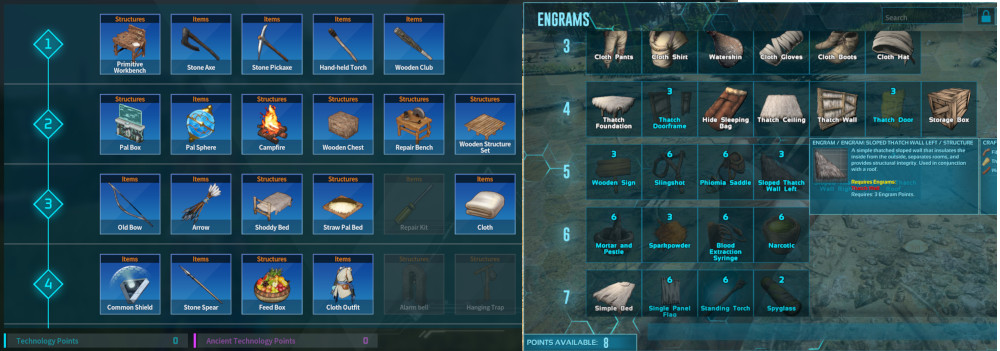
Palworld’s tagline is “Pokemon with guns,” which is basically just S-Tier marketing and nothing else. The reality is that it’s “ARK with Pokemon”… like completely. Each time you level up, you get Engram Technology points which you spend to unlock specific recipes on specific tiers. You also get Attribute points to level up one of your base stats like carry weight, attack damage, Stamina, etc. Even the building mechanism via the menu wheel feels identical. Which isn’t to say it’s all bad, just that “Pokemon with guns” is exploiting an information gap in the promotional materials that becomes apparent right away in the gameplay.
Having said that, Palworld does indeed make some good innovations in the general ARK formula. The biggest thing you notice right away is that Pals can be set to work in your camp. The work that Pals can complete differs based on their type – Lamballs hang around Ranches to self-groom their wool, Cattivas will work in your Quarries – but most of them can do basic stuff like wandering around and moving supplies to chests. The fact that they do anything at all beyond staying stock-still waiting for an mistaken Follow-All whistle makes Pals miles better than the dinosaurs of ARK.

Unfortunately, I cannot comment much further impression-wise because Palworld started to crash to desktop in 5-minute increments for me. Some Early Access releases are basically soft-launches of fully playable games (Against the Storm, etc), but Palworld is very Early Access in… let’s say, the more traditional sense. It’s been a while since I played something that lacked the ability to Exit the game. Like, you literally have to Alt-F4 to turn the game off.
…unless you are playing the Steam (or non-Game Pass) version. There has already been a patch v0.1.2 release to address various bugs, including some that cause crashes and also a bug that causes ambient sounds to not play. Which is a big deal, as the silence when running around is a bit conspicuous. Also, Steam players get an Exit button on the menu. For the Game Pass plebs like myself, such a patch has to go through Microsoft’s certification process, and who knows when that will go live. For how much Microsoft pays to have Day 1 releases on Game Pass, it’s a pretty big limiting factor for these Early Access titles.
Honestly, it almost makes me want to just buy the game on Steam. Almost.
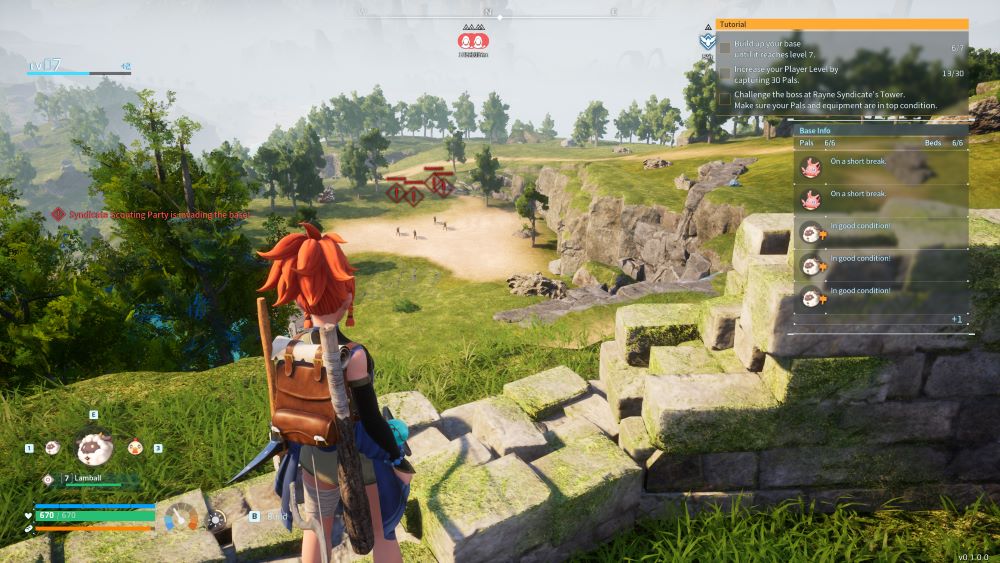
As it stands, I’m pretty conflicted about playing Palworld further at the moment. The crashes to desktop notwithstanding, there are other elements to the game that are very early Early Access. Your base can be raided by AI, for example, but the two times I got the notification, the enemies spawned down a hill and never moved even when I started attacking them. One of the v0.1.2 patch notes mentions how the arrows recipe went from 1:1 to 3:1, which is significant reduction in terms of resources you have to grind – I have not yet found a Pal that cuts trees, so I’m still manually doing that. While the EA dilemma is something you always have to consider, it’s been a while since I had to weigh it against really basic functionality like this.
Of course, the fact that the scales had to come out at all is indicative that Palworld is on to something. Is it ground-breaking innovation? Nope. I described it as “ARK with Pokemon” before and it still really feels that way. But ARK peaked at less than 250k concurrent players on Steam, ever. Sometimes the derivatives end up being better than the original. Or maybe devs should be selling their games for $30.
Impressions: Dead Island 2
Sometimes I use “Impressions” posts as a sort of “review of a game I stopped playing halfway,” but this one is legit just some first impressions. I’m still playing! For now.
To start, I loved the original Dead Island. Some people were tired of the zombie genre, even 12 years (!!!) ago, but I don’t mind it. What’s the actual difference between the hundreds of mobs you kill being zombies, mutants, nightmares, animals, dinosaurs, or other people? I guess zombie tropes can make some of the experience kind of rote, but at the end of the day what matters is if the gameplay loop is fun for you.
So, Dead Island 2. Thus far, I’m kind of… concerned?
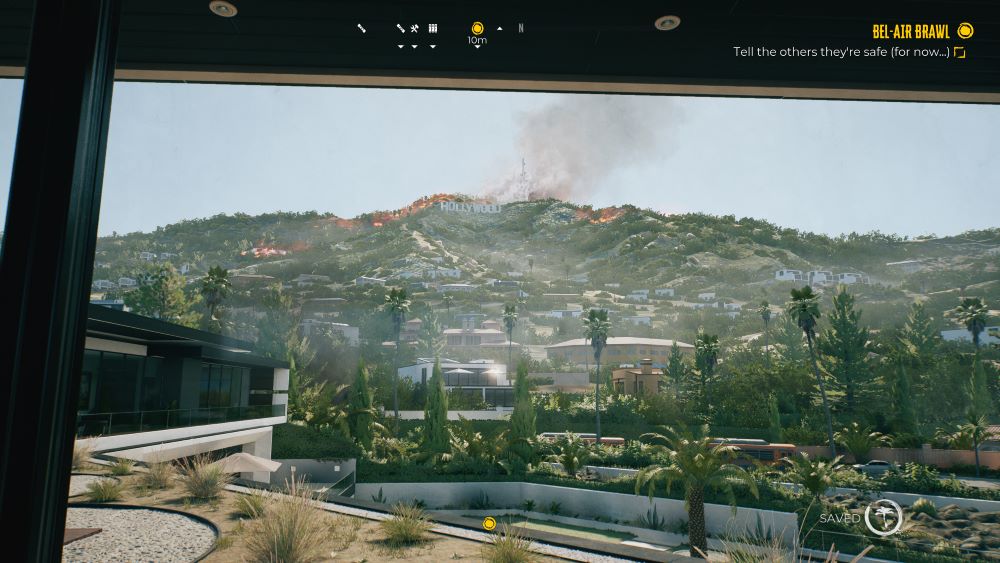
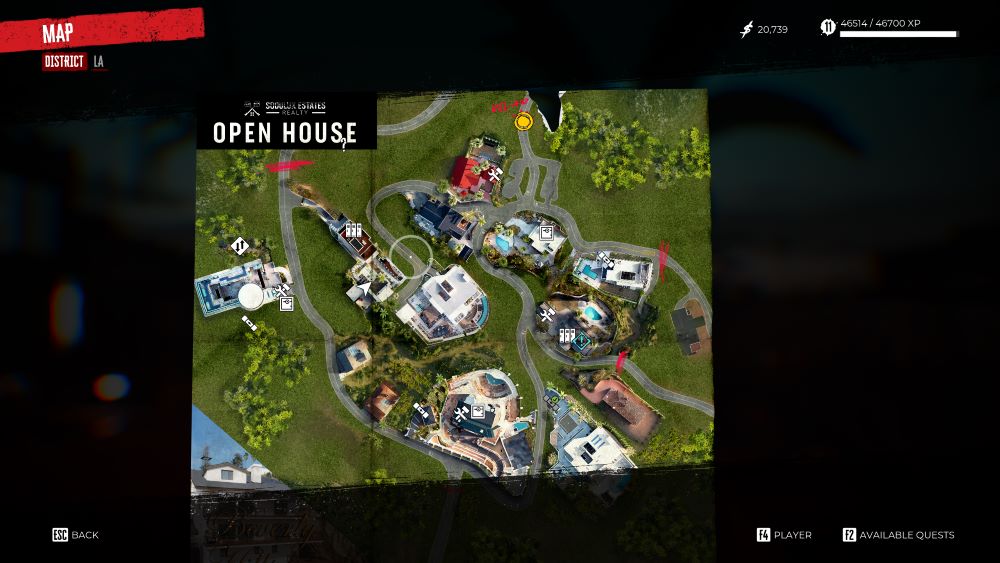
It’s been a while since the first game, but everything in DI2 feels cramped. The location is Bel-Air, so that may be accurate, but this definitely feels a lot more like a corridor shooter minus the guns. There are very specific routes you have to take to get around the map, and most of them run through the same houses and yards each time. Not sure if the later game opens up or not, but I have my doubts.
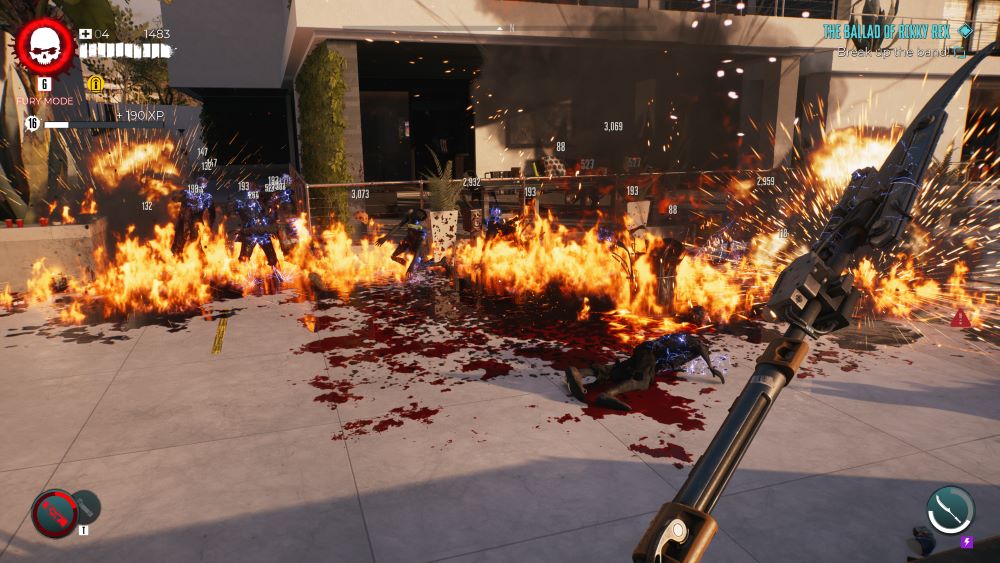
I also hate the environmental improvisations. Specifically, there are water jugs, cans of gasoline, car batteries, and other similar items strewn about everywhere. You can use these items to engineer environmental traps, such as dumping water in a big puddle, throwing a zombie-attracting item in it, and then starting a generator to electrocute them all. OK, cool.
The problem is that Dead Island 2 takes after the original in that zombies scale to your level such that even a few standard zombies can kill you if you’re not careful. The cramped areas in which you encounter zombies also makes it difficult (or outright dangerous) to run away if you get in over your head, especially once the special zombies start showing up. The end result is that I am thus incentivized to start lugging around car batteries or gas cans wherever I go, so as to have the materials for environmental shenanigans at the ready. There very well may be such items available in each area, but it’s hard to find them while getting swarmed.
So, yeah, instead of focusing on the one thing the series is excellent at – the meaty and satisfying melee game – I am running around one-shotting zombies by throwing car batteries at them. If the devs wanted to lean into traps-based combat ala Horizon: Zero Dawn, then do that. Preferably under a different title.
Another thing that is really irking me is how punished you are for what limited exploration is available. You will find locked shit all over the place, but you will never really know if its even possible to retrieve the key yet. See, keys are held by special zombies, and specific special zombies only start spawning after you encounter the “first” one, typically via Story quest. Before the first boss, for example, no Crusher zombies will spawn; that means the locked military chest you found at the beginning of the zone cannot be unlocked, because the key-holder is a Crusher zombie. But you won’t know that ahead of time, so you might be combing every room for a hidden key that doesn’t exist.
Plus, inexplicably, the devs allows for “skull-level” zombies to roam about. Want to head down an alleyway and explore there instead of following a quest marker? Too bad! Zombies above your level will eat your face off within two hits. I honestly do not ever remember that being a thing in the original game. In principle, I can understand the game sort of “organically” directing players via deadly foes – this happens in Fallout: New Vegas and Dark Souls and many places inbetween – but it just feels bad here. And, of course, contributes to the claustrophobia of an already-limited map.
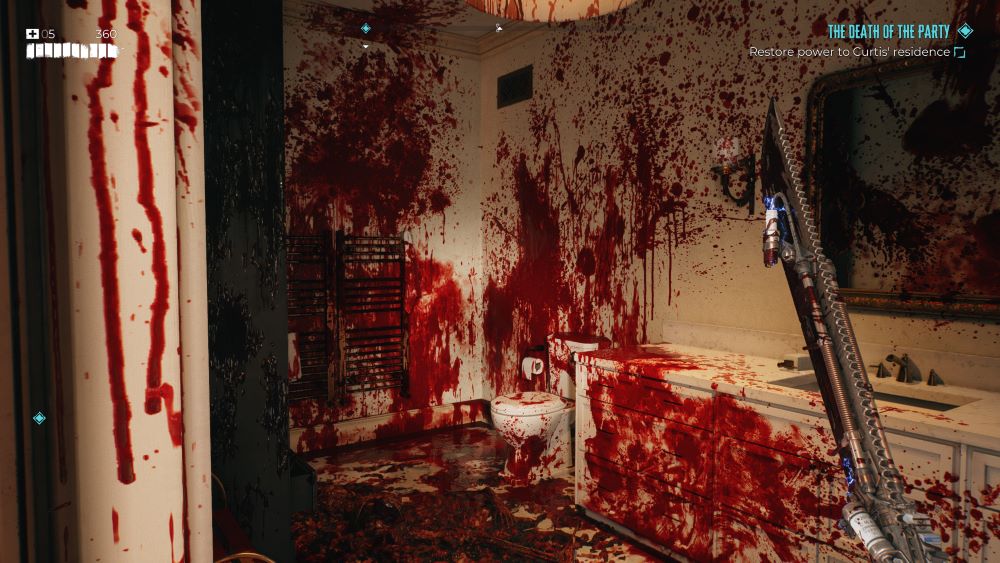
Also, it’s funny how much the FLESH system was hyped. For the uninitiated:
“This cutting-edge technology has been designed to deliver the most gruesome zombie experience ever seen in a video game. Anatomically correct layers of skin fat and muscle can be ripped away with machete point accuracy to reveal breakable bones and internal organs that are individually destructible,” Dead Island 2’s developers said during the introductory presentation.
“Blunt weapons allow players to shatter skulls, detach eyeballs and even punch holes through the undead. Sharp weapons can dismember heads or limbs at any point and slice torsos clean in half, utilising advanced fluid and soft body physics,” they continued.
(source)
Is the game gory AF? Yep. Does it matter even a little bit? Nope. The specific problem is that there are so many zombies attacking you at any given time that you are unlikely to appreciate the fact that their eyeball is swinging outside its socket in a realistic fashion or whatever. There’s no mechanical benefit either, as even a zombie bereft of both arms will still try to headbutt/bite you. Dead Space this ain’t. I suppose this does contribute to the weight behind melee attacks and how satisfying it feels, but honestly, I would trade all of it in a heartbeat for more ragdoll-esque physics instead. Zombies tripping over each other, falling on couches, bumping into walls, etc, is infinitely more immersive to me than their jaw hanging half off or ribs flying everywhere. I saw that in Fallout 3 death animations in 2008.
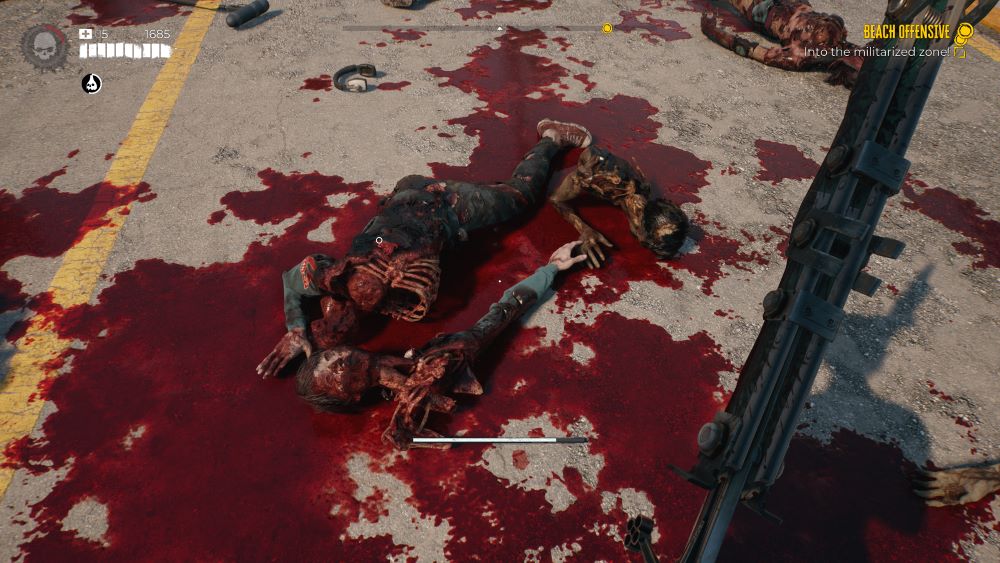
If it sounds like I’m pretty down on Dead Island 2 so far, well, you’re not wrong. The game is absolutely gorgeous running at max settings, and there are insane details in every throw-away room that you manage to find. But I’m kinda concerned that perhaps the level of detail added was exactly the cause for how closed up the game is. If I wanted to kill zombies in corridors, I would play Dead Space or Resident Evil or Silent Hill or practically any of the other games in this whole genre. What made the original Dead Island stand out was the open-world nature of the map, at least in the first two Acts. Thus far, the sequel seems to me leaning more into the Dead Rising goofiness minus its openness, which isn’t all that great of a trade.
Here’s to hoping that things improve.
Impressions: My Time at Sandrock
Seeing My Time at Sandrock in the latest Epic Games sale, I decided to snatch it up and get to scratching the itch. The result is about what you would expect: relief… followed by some abrasion.

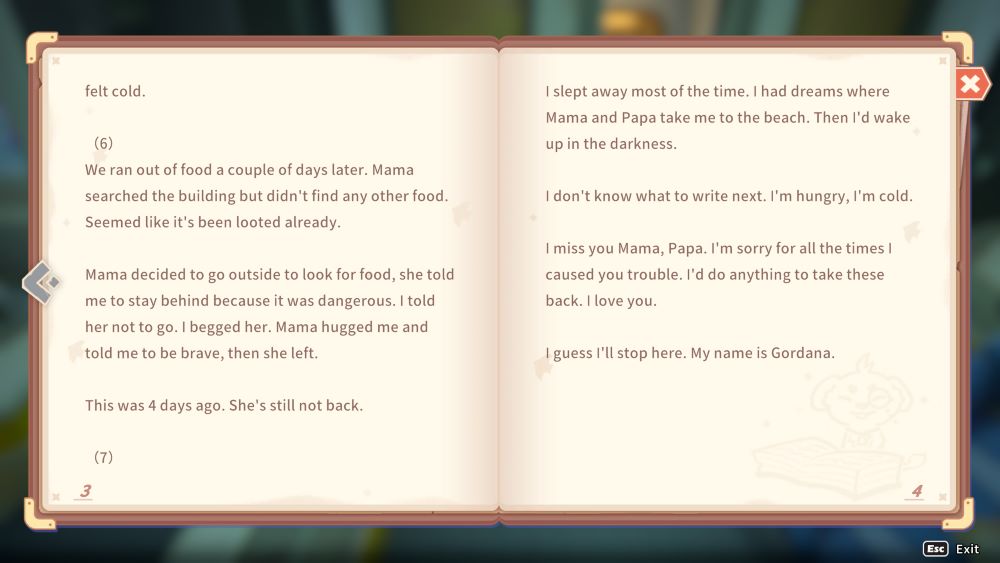
My Time at Sandrock is a sort of “sequel” to My Time at Portia, continuing the general world progress but in a different area and with new characters. This has so far included the same tonal whiplash where everything is jolly and cartoonish but you discover journals from people who sank into depression and ultimately starved to death in the apocalypse’s immediate aftermath. Originally intended to be a DLC to the first game, the devs apparently felt limited by Portia’ game engine and decided to formally release it as a different game. Or, perhaps, you know… they did it for other rea$on$.
The game engine changes were noticeable immediately, and not necessarily in a good way. The camera swings around with a bit too much gusto, the lock-on mechanic for fighting enemies is very useless when there is more than one in the area, and resource gathering is unsatisfying.
Actually, let me clarify that last bit. The act of chopping trees and smashing rocks is extremely satisfying; I cannot exactly articulate why, but your character really gets into the smashing/chopping and it feels great. Then the resources pop out around you as tiny, spinning polygons and sloooooooowly absorb into your person. So slow, in fact, that you can almost outrun them on your way to the next node. And they legit have to be absorbed before appearing on the left-side of the screen and into your inventory. Like… why? If I could turn that part off and just have the resources appear in my backpack like every other game, my enjoyment would literally increase two times, minimum.
As for the rest of the game thus far, I can’t help but compare it to my, er, time with Portia. And Sandrock, concerningly, is coming up a bit short. The game’s overall flow is beat-for-beat the same: you’re a new Builder, meet the townsfolk, take commissions from the job board, research new technology, gather relics while digging in Abandoned Ruins, fight some monsters in the overworld and/or in dungeons, complete world/town quests that unlock new areas and improve the town. And that’s all fine – in fact, that is kinda what you want in a sequel to a game you spent 108 hours playing.
The problem is that Sandrock as a location is kinda boring. It’s a desert town with a Wild West motif. I can appreciate the uniqueness of not being able to chop trees for wood (it’s against the law!), and having to worry about water for your machines, and the bizarre “sandfishing” analog to regular fishing. But Portia felt… bigger, more interesting. It’s possible that was due to Portia simply having more empty space, although that’s kinda how that works. More concerningly from the whole cozy life-sim angle though, is how I don’t really like the people. They’re fine, but mostly Wild West caricatures. There is still time for me to be surprised – barely anyone is past two hearts at the moment – but relying on the hope of something getting better doesn’t really cut it in 2023.
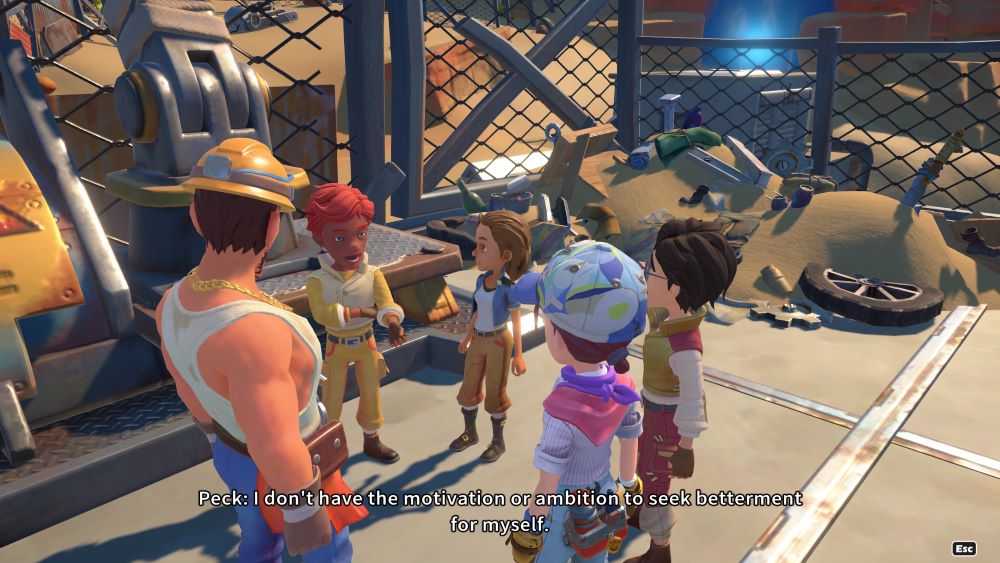
So, yeah. I’m going to stick with Sandrock for a bit longer because the same gameplay/planning bits that were compelling in Portia are still compelling here. However, when Portia became less compelling as a result of my completion of the tech tree, I was able to fall back on the relatively interesting world story and neighbor relationships. With Sandrock, I don’t even know if I want to romance any of the options. Not a particularly great situation to be in for this genre.
Impressions: Coral Island
Coral Island is a farming/life-sim straight from the Stardew Valley vein, and recently came out of Early Access. I have spent about 30 hours playing on Game Pass and the verdict is… acceptable. Pretty good, even. But the whole time I have been playing, all I can think about is that I want to play My Time at Sandrock instead.

Which to be fair, is, well, an unfair comparison. Sandrock (and My Time at Portia) at not the same kind of life-sim. But what kept striking me while playing Coral Island is how low the stakes are. That’s also an unfair criticism given that all of these life-sims are meant more for relaxation purposes but… I dunno. Sandrock/Portia have an overall narrative, Sun Haven has plot plus a combat system that is a smidge more serious, and Stardew Valley kind of sets the bar. It’s tough for Coral Island to stand on its own with those kind of peers.
Coral Island does have some things going for it. The (non-rotating) pseudo-3D graphics set it apart from the typical pixelated style in this genre. The anime-esque portraits are extremely well done, with villagers having different outfits per season, per certain cutscenes, and even bathing suits. The map allows you to both see where everyone is located in real-time, and even search for specific villagers. The diving activity where you clean up trash on the ocean floor is satisfying.
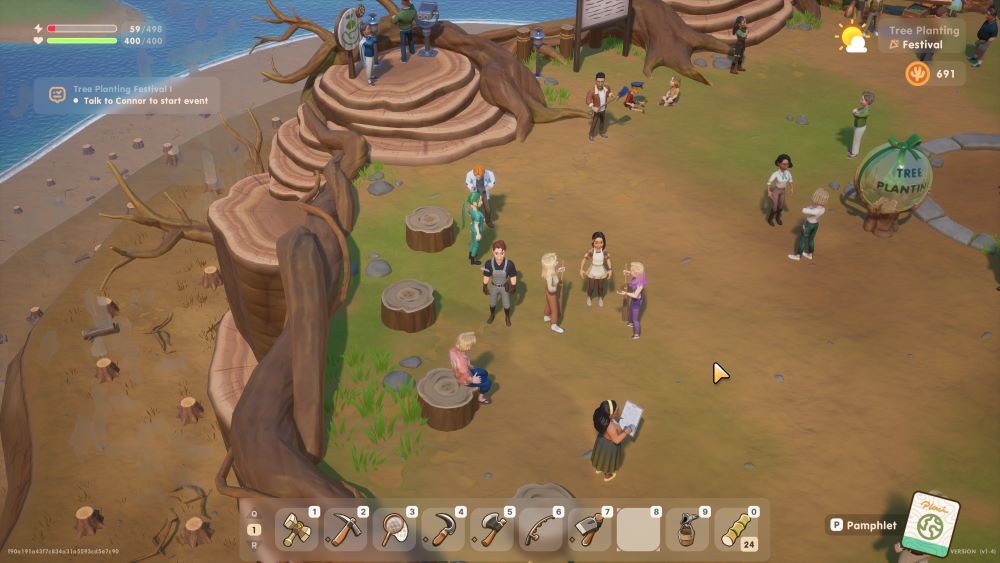
Overall, like I said, Coral Island is just fine. If you’re looking for a chill life-sim with extremely genre-typical activities, this is your stop. It did capture my attention for 30 hours and scratches some optimization itches. But if you’re looking for anything more than that, e.g. some adrenaline hit or unfolding mystery, you will have to keep on looking elsewhere.
Mainlining: Wartales
My enthusiasm for gaming has been wanning for the past month or so. Cyberpunk’s expansion has been fantastic, but even at its height, I “only” played for about two hours at a time, maximum. For some reason, I would complete a mission, sit there for a second, and then turn it off and go watch Hearthstone clips on Youtube and/or scroll vids. Nothing was really grabbing me, you feel?
Then I downloaded Wartales off of Game Pass and… goddamn. Four hours a night has never evaporated so fast.
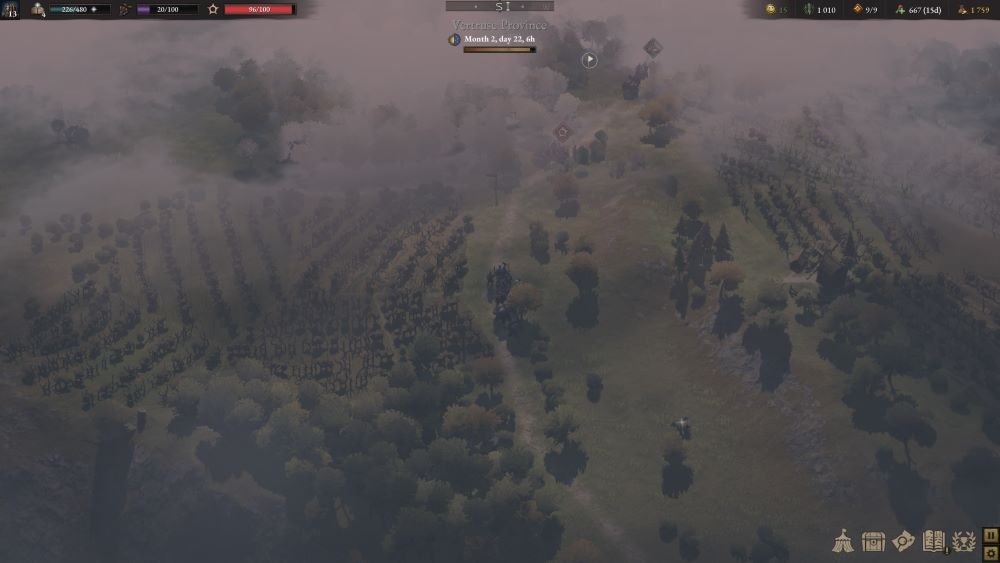
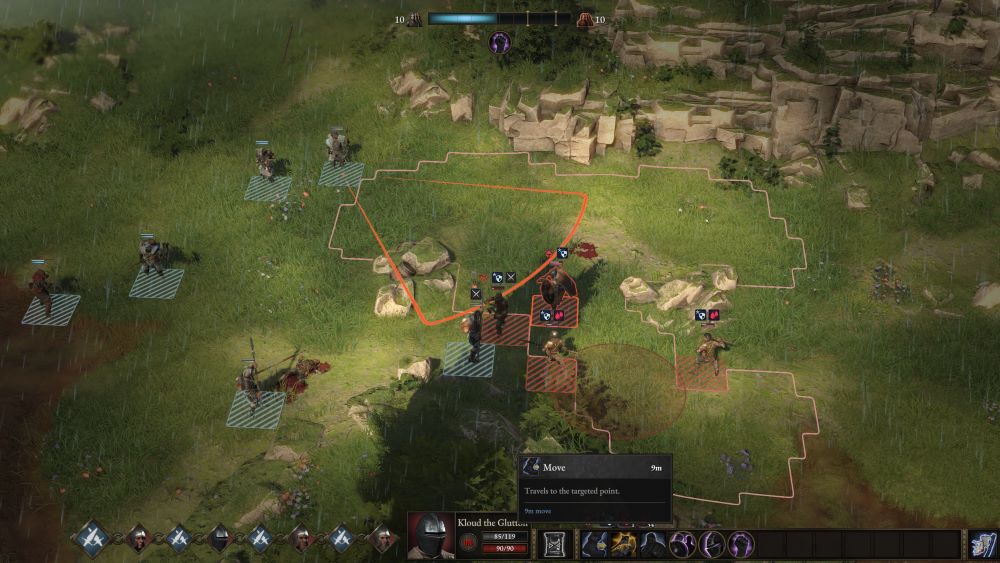
Wartales is medieval, low-fantasy mercenary RPG in the same vein as Battle Brothers. You control a small squad of mercs and endeavor to complete jobs to earn money to feed, pay, and outfit your crew. Combat is turn-based, but everything else takes place in real-time, with merchant caravans, bandits, and packs of hostile wildlife roaming the overland map (or hiding in the woods). A stamina meter acts as a clock to your escapades – requiring your team to camp and eat – but there is no other world-ending deadline like in Battle Brothers. As long as you can keep up with your food and salary, you can take as long as you want to do anything.
I started to type up explanations of the game’s various features, but let me just hit the highlights:
- Granular difficulty – You can toggle the combat and “upkeep” difficulties independently. Additionally, you choose between Free-Roam (scaling enemies) or Region-Locked. The latter mode allows you to over-level an area if you’re having trouble, and makes more sense overall (no max-level peasants afoot).
- Multiple Progression Systems – Gain Knowledge Points to unlock craftable items, learn recipes, gain permanent camp upgrades, and complete repeatable Path “achievements” to unlock more stuff.
- Optimization Galore – Choose talent specializations based on “class,” equip Legendary/unique items with powerful abilities, apply 1-2 of dozens of weapon enhancements, build your perfect merc band.
- Armored HP – Armor gives you an extra HP bar. Simple, grokkable, and you can cheese it in a few ways.
- Play As Bandits – Ambush Merchant caravans and loot all their wares. Run from the fuzz. Or play everything straight… only stealing items otherwise locked behind special currency.
Downsides? There are quite a few:
- Death Spirals – Characters get wounds when reduced to 50% HP, and require expensive medicine to cure. Armor damage also needs purchasable items to repair. Early game is rough going.
- Noob Traps Galore – Choices are everywhere, but some of them are objectively bad (or bugged!). Descriptions alone can be misleading, and there’s no good Wiki info.
- Alpha Strike Focus – inevitable with turn-based combat, but the game seems (im)balanced around killing everyone within 1-2 rounds (if not the first few character turns).
- SAVED GAME BUG – Unpatched as of this post, there’s a bug that can remove a full day’s progress.
The last item in particular is unfortunate, and happened to me. Basically, you save the game as normal, everything seems fine, but next time you open the game it’s like whatever saves you made the previous day do not exist. There is an apparent workaround of making a copy of your saved game folder, but I haven’t confirmed whether it makes a difference (bug hasn’t struck again).
Looking at my /played number though… 60+ hours. Wow. Does this mean Wartales is better than any of the other games that deserved to be playing? No. But it is the game I apparently needed right now.
Impressions: Starfield
TL;DR: Consider me… whelmed. Not overwhelmed, not underwhelmed. Just whelmed.
The initial few hours of Starfield are incredibly weak. Like, insultingly bad for a Bethesda game. I had no sense of grounding in the game world like with Skyrim, Fallout 4, Fallout 3, or even Oblivion. After an hour or so, you get dumped into New Atlantis, which is the Starfield equivalent of Dragon Age: Inquisition’s Hinterlands. There is plenty of things to do in the city, all of which you absolutely should not be doing. Not to say the quests are bad per se, but I felt myself burning out of the game after sessions 2 and 3 were all just questing in the city with zero combat.
I decided to break away from New Atlantis and things began to improve. Following the main quest, I get to Mars. Instead of going to the bar where the quest wants me to go, I instead strike out towards an unknown marker. Looks like some kind of rocket structure. I see a spaceship just sitting nearby… so I steal it. The devs have a heavy thumb on the economic scale in this game, so while you can certainly steal a better ship than you have, it costs like 90% of the sell price of a ship to register it, which you need to pay before you can sell it (or customize it). My profit is like 1700 credits, which is the equivalent of selling four guns from dead pirates.
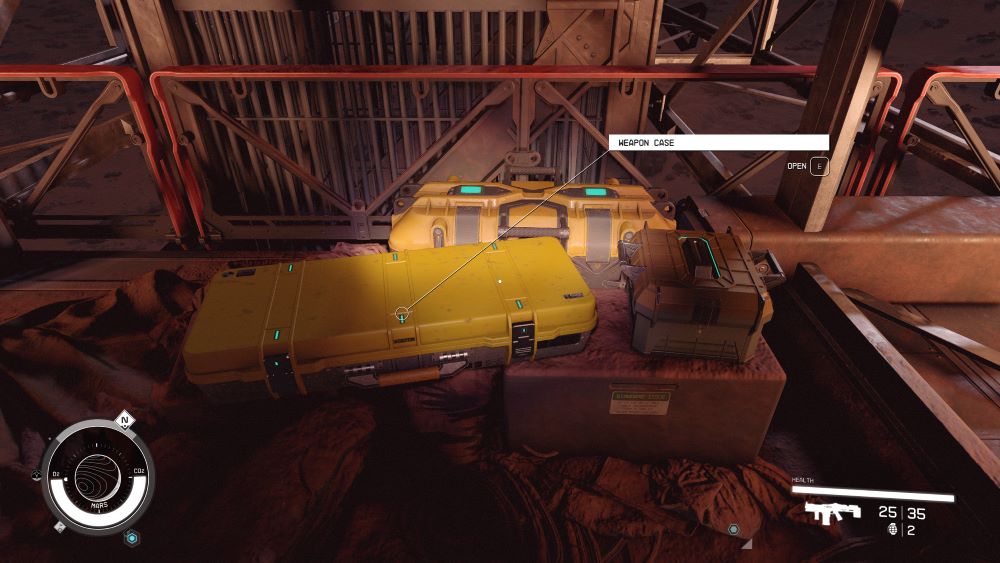
I fast travel back to the rocket pad, climb all the way to the top, which it seems like the devs intended. At the very tippy-top, I see three chests up there containing common gun drops and ammo. Yay.
That is when it hits me. “Exploration” only happens in instanced content in Starfield. Had this been a Fallout title, there would have been a skeleton up there or some other environmental storytelling (audio log, etc). Had this been Elder Scrolls, there may have been some Daedric portal or a unique item or something. The rocket pad is a Point of Interest, yes, but I will no doubt be seeing similar rocket pads across the 1000s of planets in the game, and they all need to have a chest at the tippy-top.
Or maybe I am wrong, and the launch pad on Mars was specifically hand-crafted. In which case… yikes.
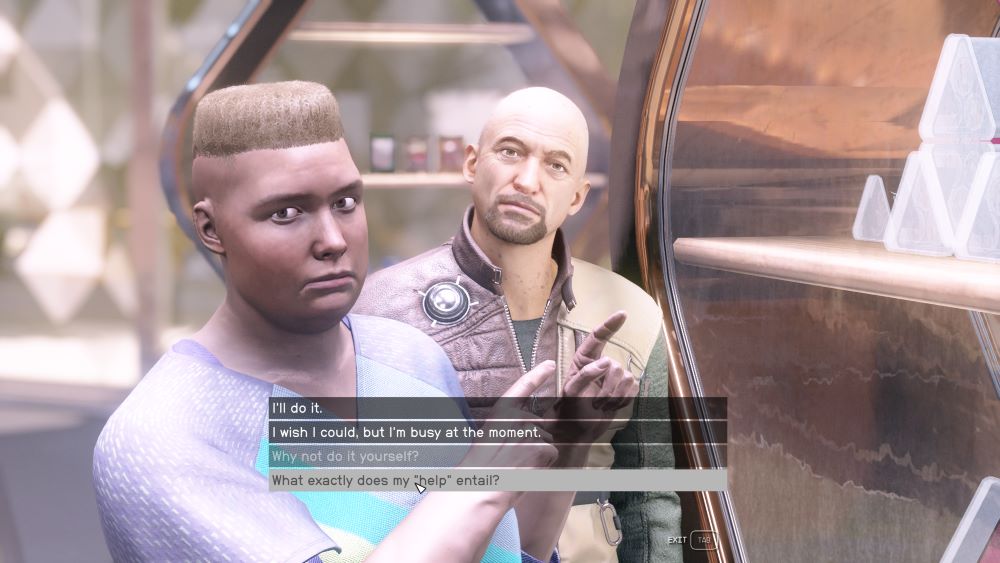
On my next play session, I go into the bar as intended. Along the way, I overhear a conversation about how some miners are being turned away by the mining supervisor. I talk with him, and he asked me to mine some Iron “off the books” so that it looks like his team exceeded quota and thus will get approval to some badly-needed upgraded equipment. I do that, and now he’s asking me to become an executive assistant to “help” the Fiscal manager to sign the paperwork. No doubt there will be further shenanigans in the space station as I try to get the request approved.
The above is the type of thing I’m actually impressed with while playing the game: mundane-sounding side-quests end up becoming more involved and interesting. There are a tons of these and you can do them or not do them at your leisure. It makes the game world feel a bit more alive and interconnected. As opposed to the literal game world, which is dead and fragmented by loading screens.
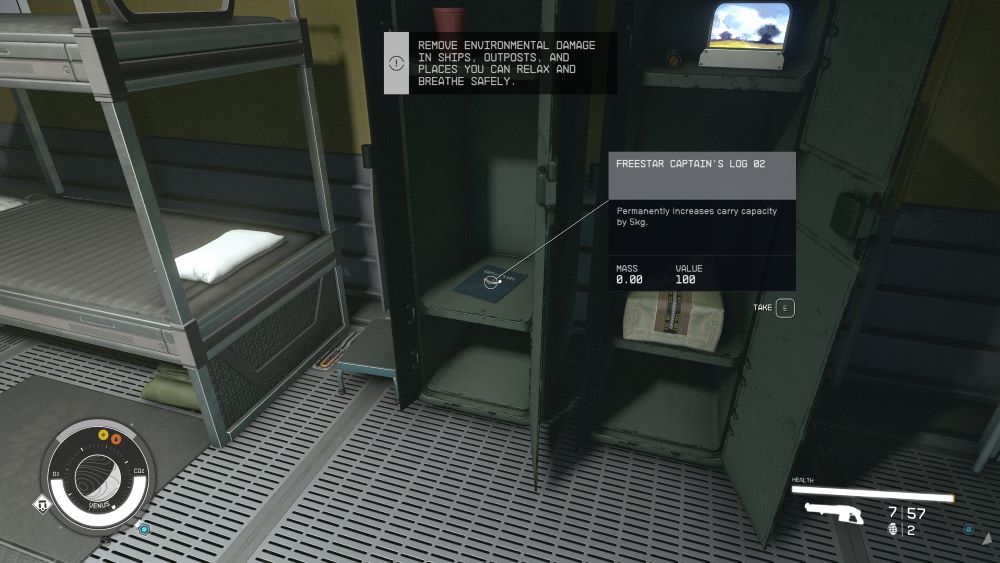
Having said all that, I am becoming increasingly okay with it. In Buddhism, “unfulfilled expectations” are the root of all suffering. In a recent Starfield play session, I cleared out a random den of Spacers on Mars, went outside, fast traveled to New Atlantis and off-loaded my loot to vendors, then fast traveled back to the Martian surface to continue looting the building. Is that, strictly speaking, dumb game design? Yes. Is it all that different than fast traveling to vendors in any other Bethesda game? Er… no. It only feels dumb because I have some unfulfilled expectations that this is a good game space games are necessarily immersive sims that play out more like No Man’s Sky.
I dunno. I typically do not mod games on a first playthrough, but I’m feeling like maybe giving myself 1000 more carry weight might actually make the game more immersive than leaving it as-is.
Impressions: Baldur’s Gate 3
Basically Divinity: Original Sin 2.5. But (more) balanced this time!
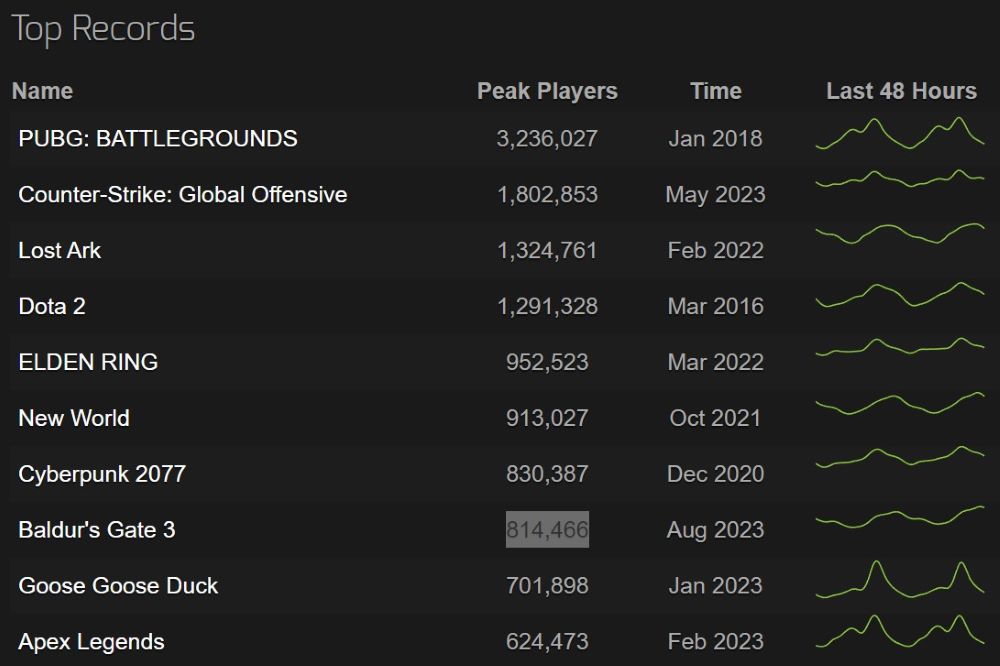
First, let’s acknowledge the obvious: Baldur’s Gate 3 (BG3) is already a smash hit. As of this post, Steam indicates a peak of 814,466 concurrent players, which makes it the 8th out of the top 10 of all time. Concurrent players doesn’t really mean much in a vacuum, but it is an impressive feat given its peers on that list. It makes me wonder if, like Elden Ring before it, BG3 will generate a renewed interest in an otherwise niche genre that no longer feels like such.
But what about the game itself? Is it as good as they say? Yes. And… sorta.
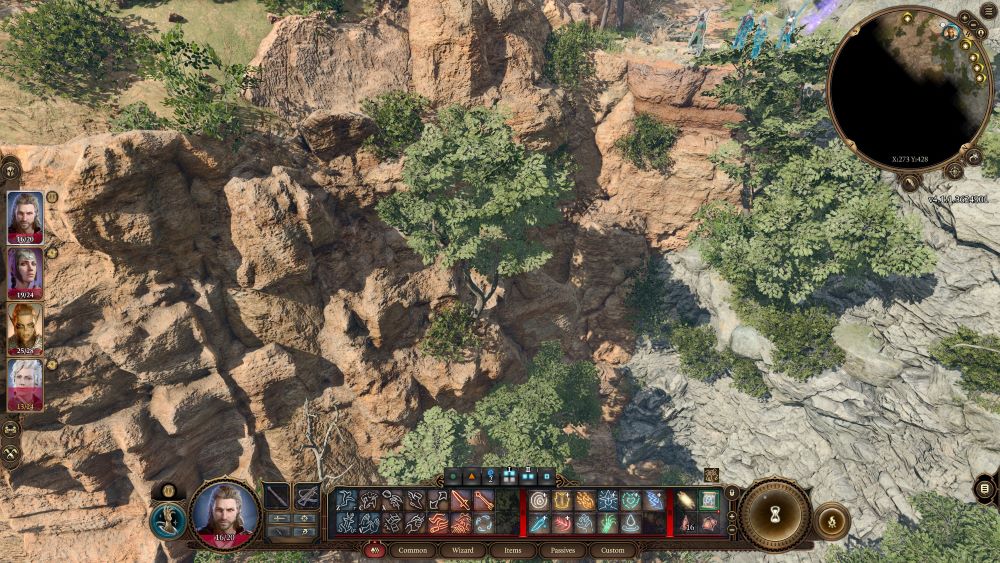
The game is gorgeous and highly, highly detailed. You have near-infinite freedom in designing your character(s), including the Cyberpunk-esque ability to mix-and-match genitals. There are Origin characters you recruit that have their own personal stories and special powers, or you can skip all that and just recruit mercs you make yourself. There are environmental dangers such as webs and oil slicks which you can combo with your spells. You can pick up damn near everything, including forks, knives, incense, exploding barrels, skulls, and most everything else your heart desires. Quests are detailed, dialog has multiple branching paths to take depending on skills, and there are many different ways to complete tasks.
Aside from the genitals though, all of that just describes Original Sin 2.
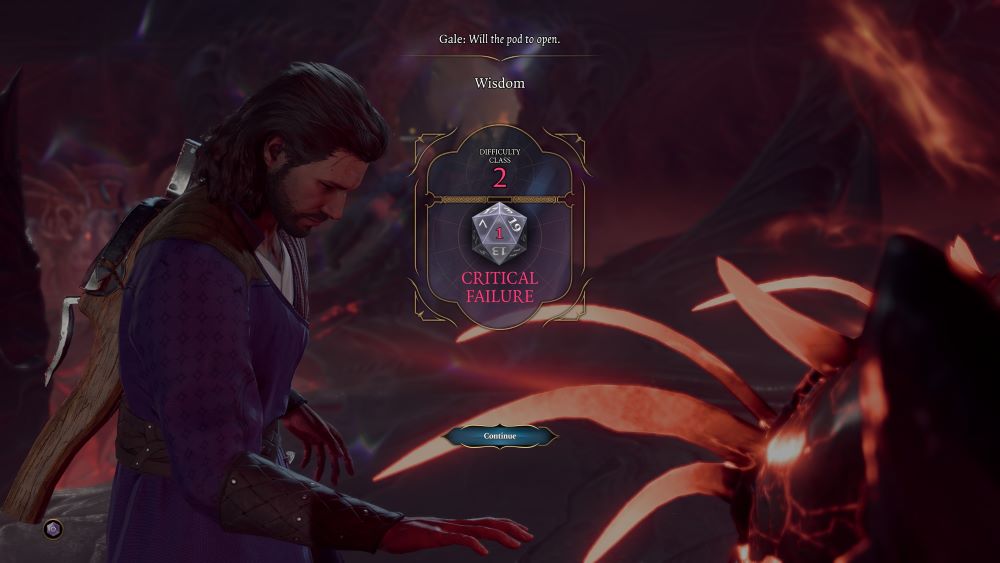
This is not necessarily a bad thing. My biggest issue with Original Sin 2 was the game balance, or lack thereof. A lot of those issues neatly evaporate in the near-RAW (Rules As Written) embrace of 5E D&D. There is no Physical Armor vs Magic Armor to worry about. Spells and abilities are much more limited, and (sometimes frustratingly) balanced thereby. You can still perform some crazy combos depending on the environment, but there is not an expectation that you will be electrifying pools of blood/water every battle without fail.
An embrace of “traditional” D&D rules can sometimes be annoying however. Spellcasters are limited to a finite amount of spell slots per Long Rest. This is perhaps more balanced than the alternative of being able to alpha-strike enemies all the time. The issue though is how the majority of attacks – at least at level 3 where I’m at – have, at best, a 65% chance of hitting. This naturally leads one to more highly consider the spells less reliant on attack rolls, which heads back into traditional Larian surface-prepping. And once you start heading (back) down that path, you start having your rogue collect explosive barrels and planting them next to foes while in stealth so you can blow up three enemies in the first surprise round of combat. While very fun to do, we’re right back into “Original Sin 2.5” territory.
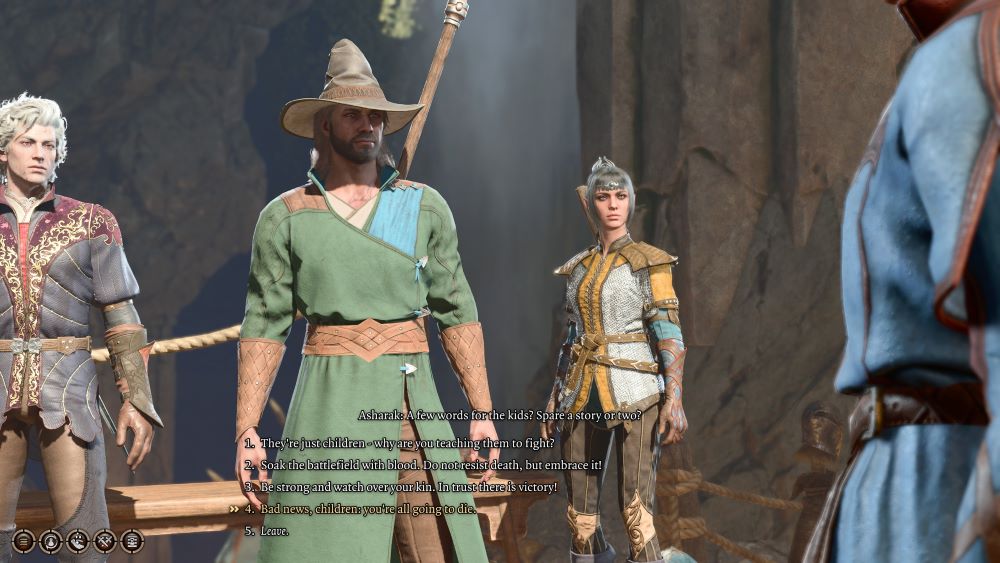
Also, can I just say that I am immensely annoyed that the devs have surpassed even Witcher 3 in the ludonarrative dissonance department? The game opens up with you getting a mind flayer parasite planted into your eye, and everyone repeatedly talking about how you will turn into an mind flayer yourself after 7 days. I am not very far into Act 1 as I understand it, but I have Long Rested twice thus far, and so I should only have five days left before I turn. But I presently see no indication that a time limit actually exists, and would probably have heard about it on the internet by now if it did. While I understand that perhaps the greater narrative will eventually expound on why we don’t turn after 7 days, this false sense of time-sensitivity – combined with the game mechanics of Long Resting for spellcasters – really rubs me the wrong way. It was absurd in Witcher 3 when you “just missed” Ciri despite spending 40 hours dithering around, and is even more absurd here in BG3.
If it seems like I’m just shitting on Baldur’s Gate 3, well… sorry. I have played for 19 hours thus far and the game came out like four days ago. It’s a fun game! But I do recognize that it is benefitting from an unusual sort of marketing zeitgeist way out of proportion to what it is currently (at least in the early stages) bringing to the table(top). It isn’t even the first game to faithfully recreate 5E rules either – Solasta came out three years ago. I have played both Solasta and Divinity: Original Sin 2, so none of what I’m seeing is particularly groundbreaking.
That said, if someone hasn’t played either of those two games or perhaps never seemed interested in CRPGs before, Baldur’s Gate 3 is probably the best place to start. It’s popular, it’s shiny, and it is certainly the most approachable the genre has ever been.
Time will tell whether Larian can stick the landing past Act 2 or if it’s all downhill after the bear sex.
Impressions: Craftopia
A lot of developers, even in the indie space, like to play things safe. Even if the genre is something out of left field, a lot of the basic game design still feels like +10% skill bonus here, clearly defined tutorial there. Early Access is treated as a soft launch – which it definitely is – of the final product instead of an opportunity to just go nuts.
Meanwhile, Craftopia is the nuts. I don’t remember the last time I played something where you could just feel the devs sitting around a whiteboard saying “That sounds cool, let’s try it out.” And since the team is from Japan, they are already coming at design from sometimes extra weird angles.
On the face of it, Craftopia is… well, let me just post this from the Steam store page:
Craftopia is the brand new multiplayer open-world survival action game.
We have imagined what would happen when we combine our favorite video games altogether.
Chop trees and mine stones as in Sandbox,
Explore the world as in Open-world,
Fight the hunger as in Survival,
Cultivate and harvest as in Farming,
Collect loots in dungeons as in Hack-and-slash,
Automate activities as in Factory management,
Hunt monsters and creatures as in Hunting action,
Cast magical spells as in Fantasy RPG.Now we have a utopia for all of us. That is Craftopia.
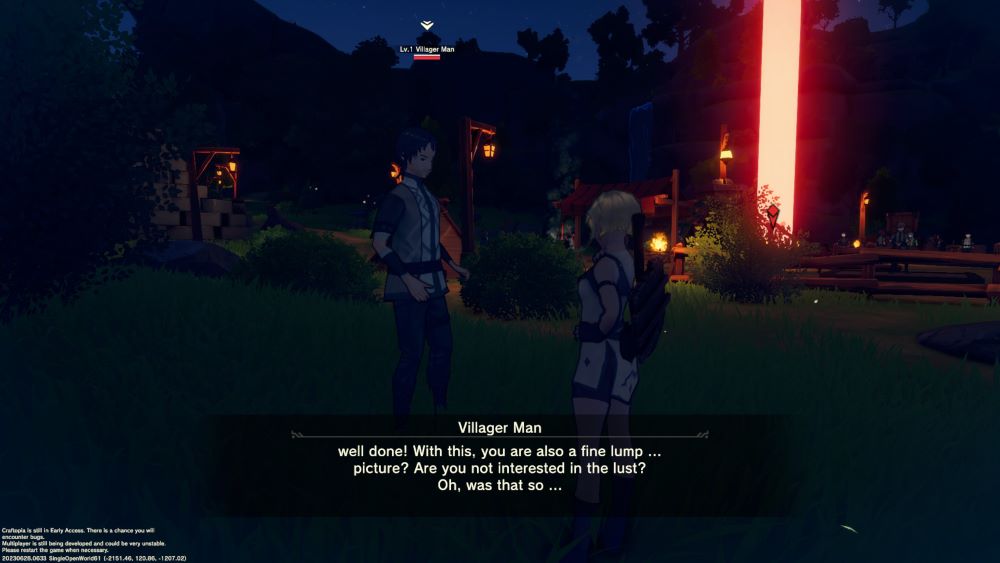
After destroying the world in the opening credits, your character emerges from a tutorial cave and you can basically do whatever you want. The game looks like Breath of the Wild and/or Genshin Impact, including the ability to gecko-climb up every surface from the get-go (and build a glider soon after). Following the breadcrumb quests will take you to some NPCs and a small town where you can get acquainted to the crafting. The thing to know is that you can basically build anywhere, which will be important later.
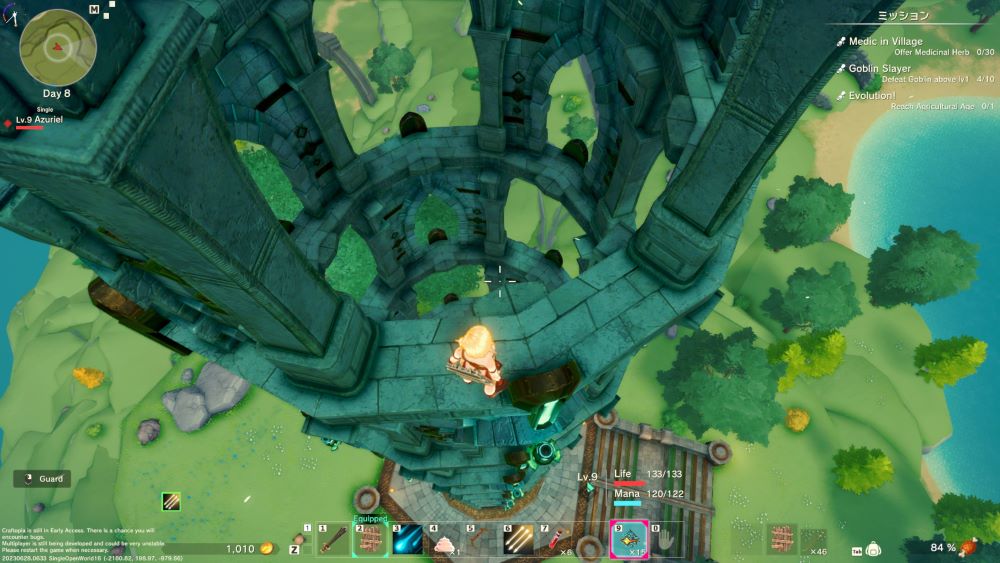
Before the big Seamless World update in late June, the game was basically a series of instanced islands and you needed to unlock things to open portals to other places. Now, you can basically go anywhere you want right off the bat, although you will of course encounter higher-level enemies the farther afield you explore. One of the principle progression mechanics is unlocking special pillars across the landscape using crafted goods. Once you supply the necessary ingredients and then press the button at the top of the resulting pillar, you progress the “Age” and unlock new crafting possibilities.
Let me talk about the pillar for a second though, because it was amazing to me. I supplied the ingredients and then it shot up into the sky. I started climbing the pillar, which is something you can just do, but I started getting nervous halfway up because the ledges were very tiny and, admittedly, the game has a lot of jank. So I threw down a wood platform so I wouldn’t fall off. And then I slapped my forehead with the realization that I could have just built a spiral staircase to reach the top. Which I then did. There’s a floating island you need to reach to get some upgrades, and I presumably would have learned that lesson had I done that earlier, but whatever.
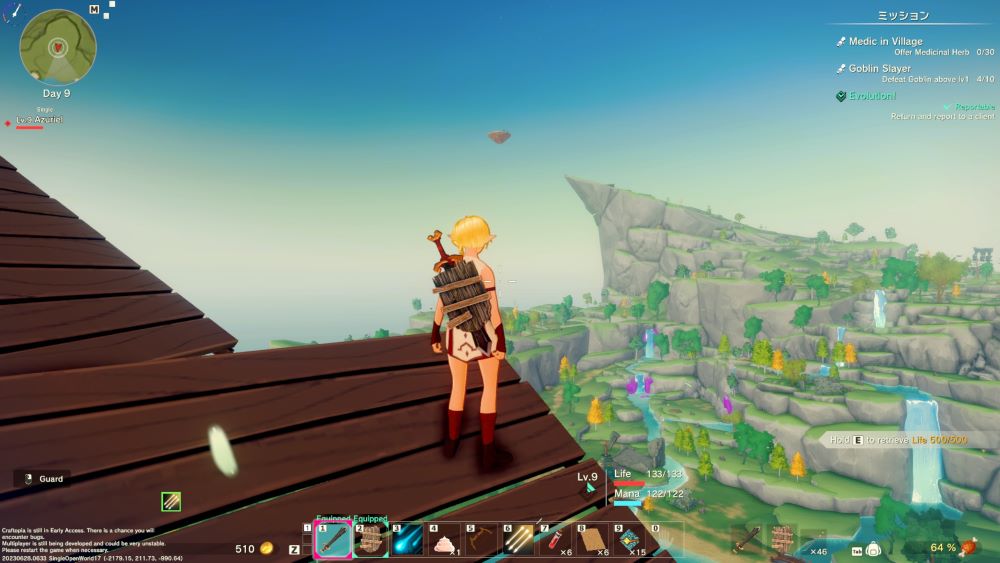
Aside from the crafting aspect, there is a lot of experimentation in the Skill trees as well. You can choose to use Magic of various flavors, enhance your normal weapon attacks, unlock basic movement skills like double-jump, and more. When I played, a large portion was simply unselectable placeholders, but what exists is plenty inventive and makes me feel excited for the possibilities. One Skill lets you throw a knife and then teleport to that location. I was a tad disappointed that its range is limited, but it reminded me how much fun I had with Rogues in WoW with Grappling Hook and Shadowstep.
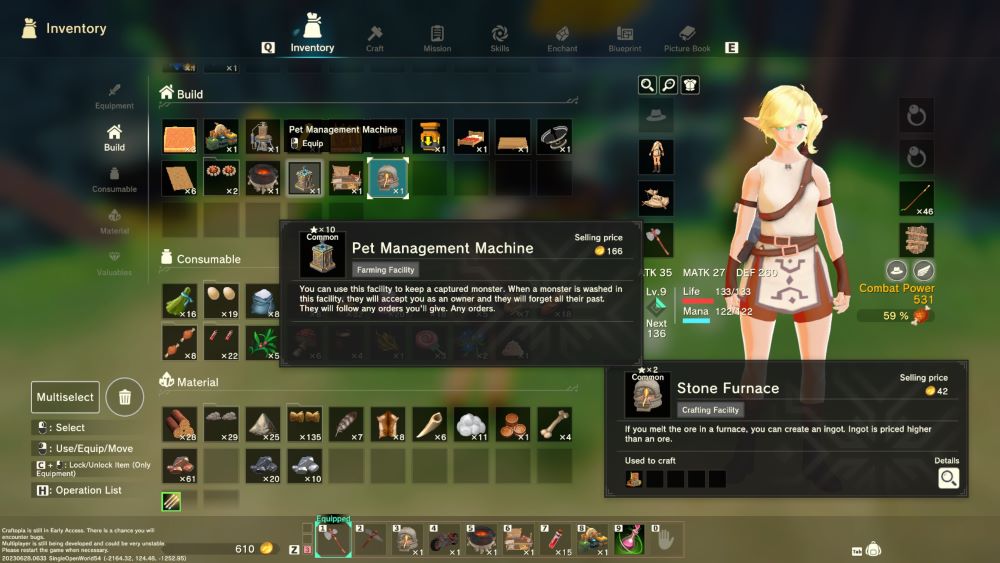
Also, apparently there is an entire Pokemon element in the game wherein you can capture and breed anything in the game, including NPCs (!!), and ride them into battle (!?!). Actually, I haven’t tried to see if you can ride the NPCs, but I have ridden a cow and what looked like a Shy Guy from Mario 2, so I wouldn’t be surprised.
Also also, there are dungeons with traps and boss fights. Building is more limited inside, but there was a sequence where you had to come up with something to avoid fireball turrets and infinitely falling giant iron balls that roll down the main ramp. I hesitate to call the boss combat Soulslike, but you do need to dodge and counter-attack at precise moments to avoid damage. Or summon a bunch of pets/NPCs and spam attacks? Didn’t try that, personally, but maybe it would work.
What I will say though, is that currently Craftopia has a lot of jank. Like, a lot a alot. When I played, damn near half of the NPC dialog was in untranslated Japanese, and what was in English was very clearly machine-translated. According to one patch note the untranslated dialog was due to a bug, but let’s just say that this isn’t exactly an AA game experience at the moment. It certainly is A game experience, and definitely a BBB game if I ever saw one.
And that’s fine. What I love about Craftopia already is that it can improve in so many different ways and directions from here. That sounds like a backhanded compliment, perhaps, but my point is that these guys threw the entire box of spaghetti at the wall, instead of just a normal amount. With what they got going on so far, I am not worried about them necessarily cutting features and/or nerfing certain builds into the ground. Which means we could just have fun for once in completely unique ways. How many times does that happen?
The one negative I’ll say is that it’s difficult to justify playing exactly right now. For one thing, there is apparently some kind of critical Save Game bug, which is about the worst thing that can happen with a survival-crafting game. But more than that, I worry about playing through things, getting my fill with the novelty, and then them releasing a whole bunch of new elements that I don’t get to experience because I’ve moved on. That’s a Me problem, 100%, but it’s there. The roadmap suggests that an official release may come in or after September, which isn’t too far away, and may be just as well considering that’s when Starfield comes out.
But overall, if you want to experience a game where it feels like almost anything can happen, Craftopia is where it’s at.
Impressions: Farworld Pioneers
Steam indicates that I first added Farworld Pioneers to my wishlist back in August 2022. It was described as Terraria/Starbound meets RimWorld/Oxygen Not Included, and since I very much enjoyed all those games, it seemed like this one would be up my alley. Well, it had a surprise (to me) release a few days ago and was on Game Pass to boot, so I was super excited to start playing.
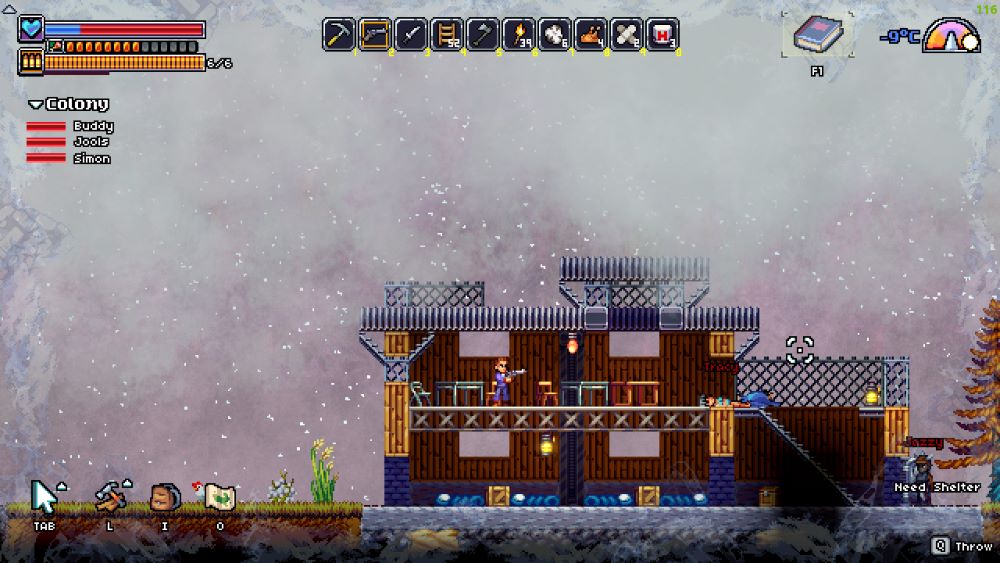
Unfortunately, the game is pretty much trash right now.
First off, the game is labeled “v1.0” but it is very much in the “minimum viable product” category. Like, barely Early Access. There are periods of inexplicable slowdown; all electricity generators delete their fuel whenever you Save & Quit; Colony AI is abysmal to the point where colonists will readily starve/freeze to death while getting stuck on the very resources they were collecting; several research products literally say “Coming Soon!”; the ultimate goal for exploring the rest of the game, the Dropship, simply… doesn’t work. That last one was the final kick in the balls for me, as I ended up exiting the game several times to try and get unstuck from the inside of the cabin, only to finally teleport out back to the original planet… sans Dropship. And its contents. According to others, I was lucky: they didn’t have a teleporter so they were truly trapped and had to abandon 10-hour saves.
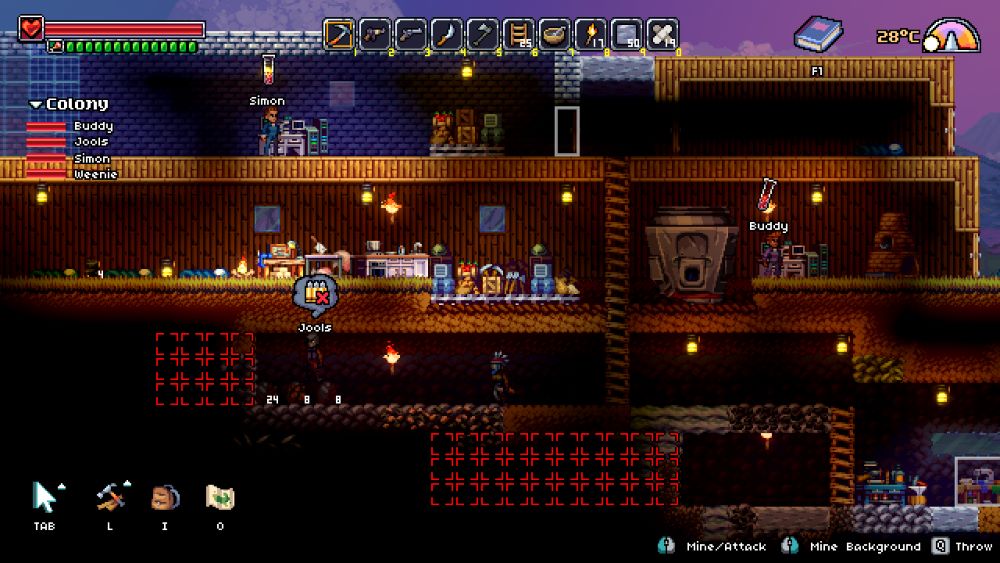
As bugs and sloppy code, those things can hopefully be fixed. What is a bit more concerning is the overall design of the game.
Terraria and Starbound both have NPCs that you can “recruit” to basically progress the game. They are not active members, but more like glorified workbenches or vendors. In colony sims like RimWorld and Oxygen Not Included, giving detailed orders and blueprinting out a base is important because you can’t control people directly. In exchange, you can see most of the map for planning purposes. Farworld Pioneers is a bastardization of the two – main character and colonists – and it just doesn’t work.
You can certainly give orders like “cut down these trees in particular” or “build a concrete room that looks like this.” And if you happen to have the resources in your stockpiles to accommodate the request (and the AI doesn’t wig out), they will even build it for you! The problem is that your colonists will not move the Iron Ore into the Smelter to make Steel Ingots and then move those to make the Steel door. Colonists will use existing resources, and they will work “bills” at crafting stations, but you have to set those up manually yourself. In which case, you may as well do it yourself.
Now, perhaps that is a deficiency of the existing AI. Certainly possible. But even if that piece is fixed, the fundamental problem is that you can only manage things that your character can see – no setting things up remotely while you are mining or exploring underground caves – which kind of renders the entire exercise moot. About the only functional things colonists can do while you are gone is perform Research and farm food.
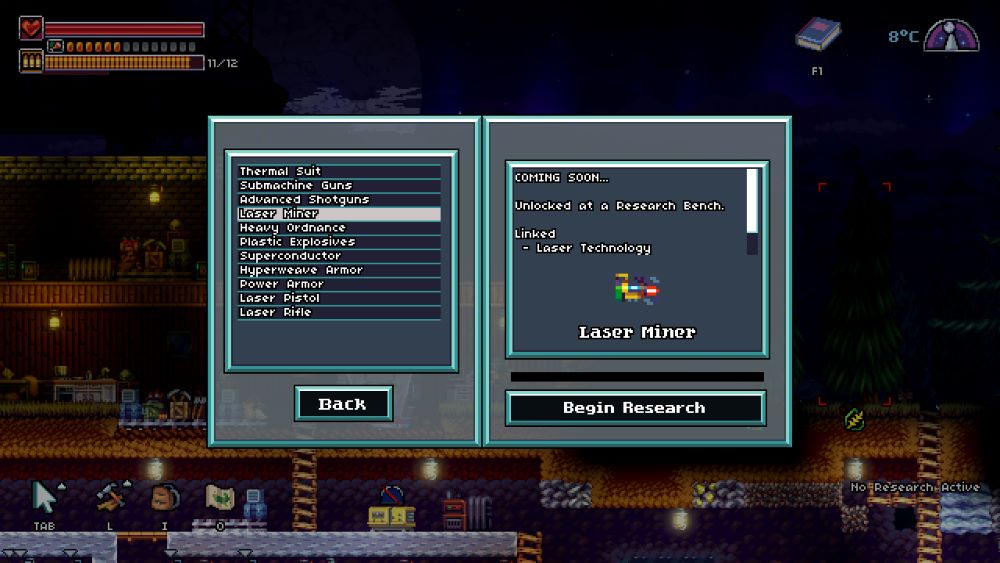
I also have grave concerns about the scope of the game. Obviously building a Dropship and heading to another planet to get more advanced resources is one of the top goals. But what comes after that? Are they truly going the Starbound route wherein you then head to new star systems and discover even more exotic minerals and so on? Based on the current tech tree, it seems unlikely. And based on the gameplay on the starter planet, where you might get notified raiders are attacking your base while you are deep underground, I have my suspicions that this is a more “defend your colony” and/or “play on multiplayer and PvP strangers” endgame.
Overall, the game is a hot mess and should not have been released in this state. As someone starved of exactly the genre Farworld Pioneers professed to belong to, this has been extremely disappointing.
Impressions: Against the Storm
Against the Storm (AtS) is a roguelike city-builder, and may very well be the first of its kind. Each game feels like the early to midgame turns of a Civilization match as you explore the foggy forest in pursuit of randomized resources that will force you to adapt your builds in new ways every time. And right as the combination of production synergies and passive abilities make your base amazing… the match is over, and you prepare to do it all over again somewhere else.

Random really is the name of the game. The win condition is raising your Reputation bar to maximum before the Queen’s Ire bar fills up. To raise your Reputation, you complete randomized Orders (quests), solve randomized Events/Caches strewn in glades on the map, leverage randomized Cornerstone abilities (passives), or raise the Resolve (happiness) meter of one or more of your races past a certain point to earn a steady trickle. You’ll do all of these things by collecting resources randomly distributed on the map, with buildings that were chosen from, you guessed it, a random assortment.
If all that randomness sounds a bit off-putting, well, it is. At first.
The genius of the game’s design is how it leans into adaptability. For example, if you wanted to make Beer, it’s very possible for there to be no Wheat on your map and no Farm building offered to grow Wheat. That sucks. But Beer can be made from Wheat or Roots. Or maybe you get offered a series of choices that leads you towards Wine or something else instead, which you trade for Wheat. Damn near every production building in the game has 3+ alternative inputs available, and since some buildings are more efficient than others, you are passively steered in certain directions that might be out of your comfort zone. I’ve had maps where I was just never offered something fundamental, like Planks or complex foods, and had to radically alter my gameplan to survive.
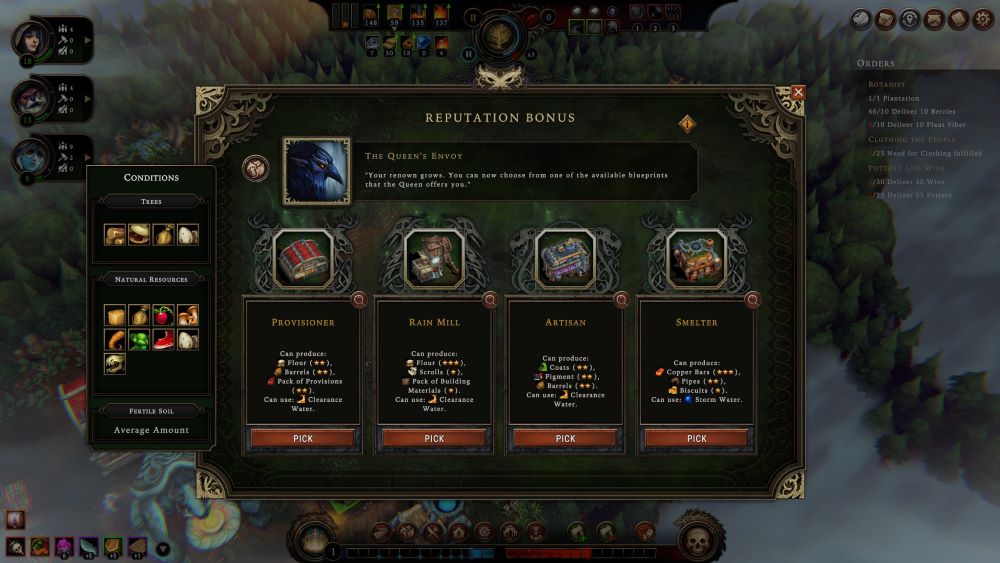
Remember Sid Meier saying games are a series of interesting decisions? That’s Against the Storm.
Successfully completing a map gains you progression currency you spend unlocking passive bonuses and other goodies back at the Smoldering City. After that, it is back to the world map and selecting the next hex to tackle. Each possible biome has a general theme and resources that appear more frequently. Select your randomized starting party, add some specific resources of your choosing, and then spend the next 5 minutes with the game paused to study the randomized buffs/debuffs you have received, and choose your randomized starting three building blueprints. You will repeat this cycle 5-6 times until the entire world gets reset (except for meta-progression) and you start everything again.
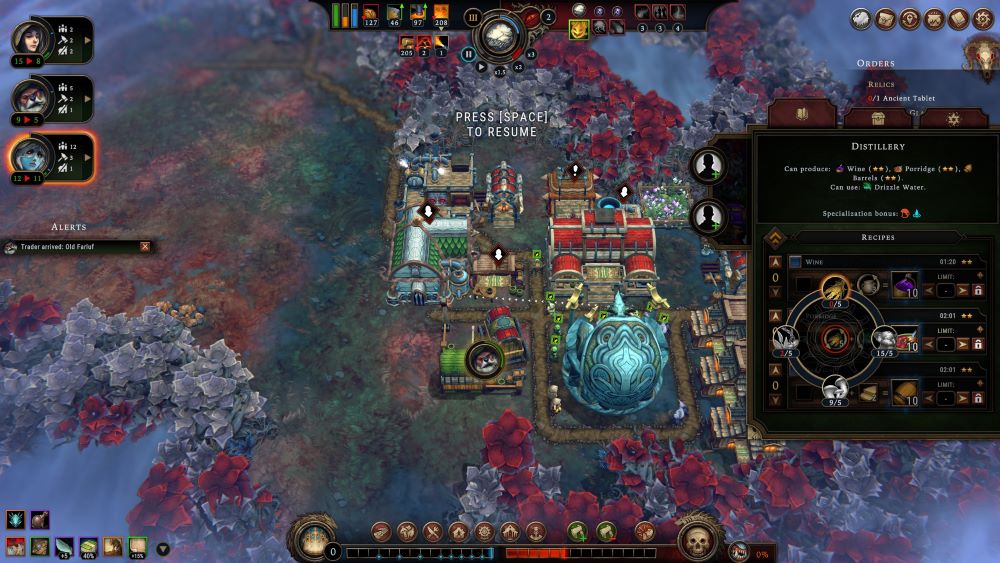
It is worth noting here that I don’t actually like city-builders all that much. I played SimCity 2000 for hundreds of hours ages ago and Frostpunk was okay, but I’m not especially a fan of games where you alternate between Pause and 3x speed. AtS is especially egregious in this regard because of all the interlocking parts with production buildings and various, randomized resources. That very randomness though, is precisely what has kept be playing for the last 25 hours – specifically the desire to optimize the madness. Each map will take you 1.5-2 hours to beat and then you are given a clean slate, so don’t come in thinking you will be making a self-sustaining colony or anything.
Overall, I am very impressed.
The game is starting to wind down for me though, as I have noticed my desire to win just for the upgrade currency to unlock new passives… that will make wining again easier. The offset for that are higher difficulties, including “Prestige” (aka Ascension) ranks that have ever-increasing maluses, but that’s not exactly what I’m looking for. And if I was, I would just play Slay the Spire.
 In An Age