Crafting Paradigm Follow-up
The following is a portion of the comments replying to the New Crafting Paradigm article.
[…] The constituent parts of a combo sell at a higher a la carte price than the combined cost of the combo. This is done to move more product than they otherwise would.
And your loss leader explanation is exactly my point. For example, let’s say embersilk bags sell for 300g per unit. Let’s say that the current AH price of embersilk cloth is 3g per cloth, but there is so much cloth on the market, and I know my competitors have so much stockpiled, that to move any amount of cloth in quantity, I’ll have to keep on undercutting and so will only average about 2.5g per cloth. Let’s also say that hypnotic dust is 6g per dust. A naive person might say “The raw mat cost of the bag is 75*3 + 15*6 = 225 + 90 = 315g, therefore I shouldn’t craft it”. A more wily person might say “In order to extract 3g per cloth, I will sell some of it raw on the AH, and I will package some of it in groups of 75 with 15 hypnotic dust @5g per dust (acting as my loss leader) by crafting embersilk bags and selling it for 300g”.
This was a good example… had the topic been solely focused on why people make/sell flasks (etc) below the market price of mats. As I noted in the article though, there could be any number of reasons why people do that, and it is not entirely relevant anyway since we can never really know what price our competition is getting mats at. But that is not really the point of the article – the point is that depending on the volatility of the raw materials, it may never make sense to make any finished goods compared to simply warehousing them.
Let’s look at the given Embersilk Bag example, since that is more tangible.
First, it was established that Embersilk Cloth is 3g/each, but will probably need to sell at 2.5g/each to push our supply; Hypnotic Dust at 6g/each, but 5g/each to push. The market price of the final product, Embersilk Bags, is 300g.
Market Price (Buying Mats) = 75*3 + 15*6 = 225 + 90 = 315g
Market Price (Selling Mats) = 75*2.5 + 15*5 = 187.5 + 75 = 262.5g
Market Price (Selling Bag) = 75*3 + 15*5 = 225 + 75 = 300g
So… is this a 37.5g profit or a 15g loss?*
It was never specified what it cost to get the Embersilk Cloth/Dust to begin with, so calculating profit is impossible. It is also debatable how much sense it makes to call something a “market price” when you cannot realistically sell items at that price, but nevermind that for now. My point to you is that if Embersilk is 3g today but 5g tomorrow, that Embersilk Bag better be getting crafted at a 150g profit margin or you were better off holding onto the cloth. Or even if it goes from 3g –> Xg such that you can push your supply at 3g.
Meanwhile, the Embersilk Bag market isn’t likely to move from 300g even if it suddenly costs 1000g to make one. We cannot even say “no one would make any new bags at that price” because we don’t know how much mats someone may have squirrelled away (and not chosen to sell at the higher prices), or if perhaps the bags have already been created months ago, etc etc.
The Anonymous commenter is absolutely correct that “locking in” Embersilk at 3g each via making bags > selling Embersilk at 2.5g. He is also correct in that selling mats in a package (e.g. any crafted item) allows you to conceivably move more product than individual listings – it is difficult to move Hypnotic Dust at any price on Auchindoun some days, so having the opportunity to “sneak” some into Embersilk is better than not selling any. The issue I wanted to highlight yesterday is this: “locking in” cheap mats into a finished product does not save you gold, it saves you bank space. If crafting something makes economic sense, craft and sell it. Do not craft more than you (believe you) can sell today though, unless you know that the price of your mats will not increase (beyond X% of the profit margin of the crafted good) tomorrow.
There is exactly one scenario in which it might make sense to turn all your mats into crafted items today, rather than crafting only when necessary: Alchemy specializations. It costs 150g to change between Potions, Elixirs/Flasks, and Transmute specs, and it typically is not profitable to, say, make flasks without being Elixir-spec’d – competiters having a 15% competitive advantage over you is massive, and the market itself is generally priced in such a way that the 15% proc bonus is assumed. So, if I wanted to crank out some Mythical Mana potions, it makes the most sense to go ahead and make as many potions as possible after switching specs if I plan on going back to Elixirs afterwards. Transmuting via daily cooldowns is generally profitable enough in of itself that you do not need to be specialized, but… transmuting a bunch of rare gems and/or metagems? You definitely will want to switch.
Incidentally, transmuting rare gems is an example of where locking in prices actually works out most of the time. Uncommon gems typically have extremely low margins compared to their rather massive listing fees such that being able to lock-in a price that works out to be higher than 9g/each has no real downside… provided the rare gem itself doesn’t plummet to 15g or something ridiculous.
Hopefully the topic makes a bit more sense now.
*Exploring the concept of paper profit vs paper loss and the realization of both will be the subject of a seperate post.

New Crafting Paradigm
I have been thinking a lot on various comments made both here and over at Cold’s blog (specifically his Opportunity Cost Part 2 posting), all related to the variance between the market price of mats and of the market price of finished products. It seems like a no-brainer to say the market price of finished products moves independently of the price of mats – even beginning auctioneers can pick up on the fact that, say, cut gems generally go for more than uncut gems, or that profit can be made on making flasks at certain herb prices, and so on. It makes intuitive sense that by adding work to an object, i.e. turning apples into applesause or herbs into flasks, you increase the value of the object.
But… how do we thus explain when the finished product ends up being valued below the cost of materials? We already answered that question: the market price of finished products moves independently of the price of mats. The only real connection we could have is that when, say, flasks go “underwater” (e.g. become worth less than the mats needed to craft them), it becomes less likely that more flasks would be created. I say “less likely” because there is no real way of knowing what price points other Alchemists bought their herbs at, or if they are the type of people who overestimate the 15% Elixir Master bonus, or perhaps the people that sell whatever they have at whatever the current going rate is regardless of “paper profit.”
What this is leading me to do is codify a new crafting paradigm for myself, putting numbers and words to a concept I was subconsciously doing anyway.
Twilight Jasmine = 4.32 – 10.5 | (x8) 34.56 – 84 (avg 59.28)
Azshara’s Veil = 4.4 – 10.65 | (x8) 35.2 – 85.2 (avg 60.2)
Volatile Life = 8.07 – 12.5 | (x8) 64.56 – 100 (avg 82.28)Draconic Mind = 132.54 – 241.55 (avg 187.04)
Highest End Mats = 269.2
Lowest End Mats = 134.32
Avg Mats = 201.7660 flasks = 12,905.76 flasks (60 + 15%) – 12,105.6 mats (60) = 800.16 = 11.6 per flask
To put it into words, on average, you only ever make ~11.6g in profit making a Flask of Draconic Mind as an Elixir Master alchemist based on the last two weeks of TUJ numbers. Profit is increased when you buy mats below average and sell flasks above average, obviously. However, in comparison, the profit you would make buying 60 flasks’ worth of Azhara’s Veil at it’s lowest price of 4.4g/each (2112g) and selling at it’s average price of 7.5g/each (3600g) is immense: 1488g profit before the AH cut. Buying Azshara’s Veil at 88g/stack and selling it at 150g/stack is on average more profitable than making flasks, without even considering the price of the other herbs.
Almost a “duh” moment, right? Flipping a 88g item into 150g is a 62g return that no one would miss, let alone the opportunity to do that with a bunch of stacks of herbs. As I mentioned though, this is a new crafting paradigm for me, or way of looking at things. Alchemy is one of my go-to professions, and thus I have an unconscious bias towards making things even when it appears to make no economic sense. Why even bother having professions if you are not going to use them, right?
In other words, in this paradigm it is not enough that a profit could be had by purchasing mats at X price and crafting something to sell at Y. The price at which I can sell Y has to be higher than the highest price of X, or I was probably better off just warehousing the mats until their market value swung higher.
I say I have been doing is subconsciously, and the reason is basically my Foundation article on Finding the Margin. By keeping my personal margin relatively high, I was inadvertently keeping myself from jumping into “profitable” albeit volatile markets which were prone to going underwater. With a personal margin of 30g, I would avoid making flasks at 11.6g average profit and thus expose myself to less risk. When mats are really cheap and flasks are really expensive, that margin increases up to 100g per flask – an obvious market signal that I should move in and set up shop… for a while at least.
One thing I wish I could do is be able to present this data in a graph or picture form, but I have no idea how to do so.

Cleaning the Bank
One of my first posts in PVSAH dealt largely with throwing a wet blanket over the long-term investment craze in Wrath commodities like Saronite Ore and Abyss Crystals and such. As I went to collect my proceeds from selling stacks of Cobalt Bars for 300g today, it occurred to me that I should perhaps revisit the advice.


(Nearly) The Last Post You’d Ever Need
I have been slow to get on the The Undermine Journal “bandwagon” for several reasons.
First, I’m just edgy like that. You know, fighting the system, railing against the establishment by shopping at Hot Topic, and so on. Totally a counter-culture warrior.
The second, more serious reason? I had no idea, no idea, that it is as absurdly useful as it is. Other bloggers have done posts about notifications and such, but that sort of thing does not appeal to me. What appeals to me is basically a single website giving targeted, pin-point data on what is profitable and what is not based on practically real-time price captures of my specific faction’s AH. I would not believe this without pictures, so here are a few:

So what you are looking at is the Auchindoun-Alliance page on TUJ. Before you go further, I highly recommend you find your own Realm on TUJ’s main page, clicking the correct faction, and then bookmarking the website, preferably in your Firefox Bookmark Toolbar (assuming you use Firefox). Now, what you should look at next is Enhancements and Consumables dynamic “tabs” which break down like follows when you mouse-over:


As you can see, it breaks all of the professions down. When you click on, say, Alchemy, you get a page that theoretically puts all of us gold bloggers out of business.

The screen that appears has a lot more information on it than what I have shown above, but I want to specifically show you the Flask section. Namely… look at it. The Undermine Journal automatically tabulates the current market price of mats AND shows you the current market price of the resulting product, all tailored to your realm’s faction AH. Are you still sitting down? Haven’t fallen out of your chair? I highlighted the Flask of Steelskin as an example of a market in which I can probably net a profit rather easily by purchasing AH mats and turning around and selling the flasks at a mark-up. We can see that there are only 2 Steelskin flasks up currently, but that actually works in my favor for the most part. Meanwhile, I could probably make more profit selling Draconic Mind mats than the actual flasks at the moment.
Outside of some philosophical posts or patch speculation, what could any gold blogger actually tell you that TUJ could not? That is an open question.

OT: Firelands, Difficulty, and Cataclysmic Malaise
As you have no doubt heard by now, Firelands has been delayed until patch 4.2. A lot of people are looking at the delay as a good sign, or perhaps dismissing it as irrelevant considering 4.2 is scheduled to hit (the PTR) “soon after 4.1 goes live,” thus looking at it as though we are getting ZA/ZG early rather than the next tier of raiding late.
From my perspective, this announcement is the unequivocal admission that Blizzard has screwed up the difficulty of this expansion.
Stay a While, And Listen…
Let me start at the beginning. In the beginning, Blizzard created Cataclysm. Blizzard saw that it was hard, and judged it as good. Here is Zarhym on 1/7/11:
We don’t think it was a mistake to start with the difficulty we did. We’re happy overall with the progression path we have in Cataclysm. I think we’ve set an appropriate standard for this expansion, but we’ll continue fine-tuning things (nerfs and buffs) to make sure the end game feels right as time passes. (source)
The forums were filling up with complaints about the LFDisaster tool though, so Ghostcrawler released a rather lengthy blog post called WoW, Dungeons Are Hard on 1/24/11, which can be summed up as “L2P.” In it, he panned the design direction of Wrath with its “zerg-fest” dungeons and breezy Naxx difficulty. It is also the first time we hear about how they lamented the killing of Ulduar by releasing ToC too soon.
Then the numbers must have came in. At least that is the only thing I can imagine prompted this almost complete 180° in less than two weeks:
On the other hand, maybe things have come too far in the other direction. While we’re seeing that player assembled groups have very good success, Dungeon Finder groups are having significant issues. That’s something we’re planning to address. […]
Are you basing this conclusion off of forum posts or in game data? I hope it’s the latter so you get a truly accurate picture.
That’s an analysis pulled from hard data. We always try to base improvements an accurate overall picture.
(2/3/11, source)
The intent of Luck of the Draw is to help make up for the lack of coordination, communication, and familiarity that pick up groups suffer relative to organized groups of guild members and friends. Cataclysm dungeons, especially on Heroic mode, are quite challenging and ask for more group organization than the Wrath of the Lich King dungeons did. Therefore, Luck of the Draw became relatively weaker in Cataclysm. I’m painting the picture with unfairly large brush strokes here, but in general, Heroic dungeons are of appropriate difficulty for organized groups, but just brutal on Dungeon Finder groups. Players wonder, and rightly so, why Dungeon Finder supports Cataclysm Heroic dungeons at all when the chance of success is so low.
(2/4/11, Ghostcrawler’s hilarious follow-up blog post)
The Luck of the Draw buff, however, is being made in response to the feedback we’re seeing on the forums, as well as the statistics we’ve been reviewing which reflect all types of dungeon party trends. We feel it’s a good way of closing the disparity between the success of pick up groups and the success of preformed groups, without trivializing the content for some players to appease others.
(2/5/11, source)
Direct from Blizzard’s mouth, we see an admission that the success rate for LFD groups is abysmal. Players actually in the system need no such prompt; we already know the 50+ minute DPS queues and the constant wipefests of Stonecore, Deadmines, etc etc. There are a bevy of precision nerfs to heroic content, followed by a blanket ICC-esque 15% buff to players.
Always Darkest Before It Goes Pitch Black
Things are a bit more dire than that though. The 2200 PvP weapons, equivalent to hardmode raid drops, are delayed twice. In the announcement, Blizzard says:
The decision to further delay availability of weapons requiring 2200 rating was not made lightly. Currently very few guilds are clearing PvE content that drops weapons of this caliber, which would make rated Battlegrounds and Arenas the primary source for top-tier weapons. We of course don’t want players who are pursuing PvE content to feel as though they must engage in heavy PvP to obtain these weapons in order to be competitive or successful.
(1/25/11, source)
Read it again. The only reason why Blizzard would need to delay these weapons is if they anticipated one thing, and then something unexpected happened. In other words, Blizzard expected (more) guilds to have been downing heroic raiding content by the end of January. The 2200 weapons are released mid-February, and here we are at the beginning of March when we are informed that things have not improved:
In an interview at the Game Developers Conference in San Francisco, lead producer J. Allen Brack said that players were not sufficiently advanced through the raid content that shipped with third expansion Cataclysm in December to handle the challenge of Firelands. He also suggested that Blizzard was thinking of creating “smaller” content patches for World of Warcraft.
“We feel like the player base isn’t really ready for the next raid yet,” he said. “And that led to some changes where Firelands is now actually going to be in 4.2.”
(3/4/11, source)
The above came from an interview with Eurogamer, not the PR-whitewashed version on the forums. In other words, a month later, there stillare not “enough” players progressing through endgame raiding content. The objective statistics available to players also bears this out. Take a look at these numbers from WoWProgress:
- Beasts (10): 86187 (98.74%)
- Magmaw: 45140 (93.69%)
- Nefarian: 8943 (18.56%)
I picked 10m Northrend Beasts because, as far as I am aware, it is the most defeated raid encounter ever. Thus, that will give us the baseline number of guilds out there remotely interested in raid content, at least circa Wrath. Now look at the most defeated encounter in Cataclysm: Magmaw. Where are the 41,000 missing guilds? Difficulty of content does not necessarily account for 100% of those 41k, of course. There could be attrition, there could be churn, there could be guild consolidation, indeed, it could merely be the death of PuG raiding (which may have registered non-raiding guilds simply because X number of individual members got the achievement via Trade pugs). I do not find the argument that the bottom half of the raiding population is still leveling/gearing up three months later particularly compelling (e.g. “Beasts was out for years!”), but it probably accounts for some.
Or perhaps we should just look at what we have now. Magmaw is the most defeated raid boss this tier with 45,140 guilds claiming victory. It drops down to less than 9,000 guilds for Nefarion. Looks fine, right? I would even agree that such a difficulty curve looks good… if it were not for the fact that 13 heroic bosses exist. Were the hardmodes designed exclusively for the top 15-20% of successful raiders? Does it make any sense for them to be?
Blizzard obviously expected a more robust completion rate months ago. Why has that expectation not been realized? Based on the above, I think it is beyond any doubt that Cataclysm was overtuned, from heroics to raids. You may not have needed any convincing on this, but I find it necessary to lay this groundwork so that I may offer a prediction. I predict Firelands in 4.2 will be easier than this tier of raiding.
It has to be.
Miasmic Malaise
This heightened level of difficulty and barriers against PuGing is what I feel is behind the general feeling of Cataclysmic malaise. It feels like we have jumped from one immediate grind (endgame ICC) to another (heroics/T11). Wrath heroics were easy because that is the point when it comes to 5m daily quests, which heroics have been since Patch 2.3. Meanwhile, Cataclysm heroics were 5m raids, taking upwards of 1.5 hours after 40 minute queues, and you were expected to do them daily. On the raiding front, Naxx trash was AoE-friendly from the very start and people were able to breeze through Naxx itself, yeah… but that was because the concept of hardmodes as we know them was not introduced yet. Naxx hardmodes would have solved the “problem” of challenging content while still fostering an environment that gets people excited about raiding.
Look, this is the first tier of (raiding) content for the expansion. The bar cannot be set here, for the exact reason other bloggers have noticed: burnout and malaise.
Anecdotally, my guild is in this position right now. We are 5/12 only by taking 2-3 raiders from a “sister” guild, and I look at our first few Atramedies attempts and think of Defile all over again. We have two months before ZG/ZA come out, and I cannot imagine mustering the strength to zone back into Bastion or Descent in May, let alone however long it takes Firelands to come out after that. I have not done a heroic on my main in more than a month because 70 VP an hour is not worth my time even with a tank queue. My guild has lost 14 members of a 10m guild between May of last year and Cataclysm’s release, purely from burnout and boredom. I don’t even bother looking at the raid loot tables because what is the point? We aren’t clearing half the raid, gear upgrades are so infrequent as to not be exciting, and the gear itself is not particularly enticing anymore or have that big of a perceptable impact.
Looking at the bigger picture, I think it ultimately comes down to fallout from the 10m/25m gear merge. Blizzard would have to err on the side of caution lest the “25m gear” be given too easily in 10m raids, so 10m was tuned higher. Certain 10m hardmodes, like Magmaw for example, are reportedly miles harder than the corresponding 25m heroic encounter. So, we may in fact have a reversal of Wrath insofar as the 25m raiding tract is easier than 10m, leading to disjointed progression. Meanwhile, if you will remember, the gear back in Wrath contained more meaningful upgrades from 10m tier to 10m tier since it had to leap-frog the 25m gear to get there – getting 251 upgrades after 232 is a 19 ilevel jump as compared to 359 after 346, which is 13. Six ilevels may not seem like a lot, but just look how the reported 353 gear from ZG/ZA placated the “epix are too easy” crowd.
In Conclusion, [restate thesis]
Contrary to how I may come across with the massive wall of text that sits above this, I have no particular issue with difficult content per se. My philosophy has always been that players want content tailored to their skill level. Period. There is nothing selfish about that, or any reason to feel embarrassed by it. One thing Wrath proved rather well is that relatively easy content could in fact exist next to extremely brutal content (Sarth 3D when it was current, 25m H Lich King, etc). The pendulum has simply swung too far the other direction, and it is rather a shame that it has occurred in the first tier of an expansion that should have came out 6-8 months ago.
If you agree, disagree, and/or think I should have directed this 1900-word payload at the AH instead, feel free to let me know in the comments below.
The Case Against Bot Farmers
Remember when I was talking about how bot farmers can be a healthy part of the marketplace? Yeah…

That is over 110 stacks of Elementium Ore below 40g/stack, and 143 stacks at 64g. Heartblossom is below 60g, Heartblossom, and you get a complementary stack of Whiptail whenever leave the Mage Tower in Stormwind (even the Horde!). The Auchindoun AH is simply getting tanked and spanked hardcore by botting, with no real sense that it will be addressed anytime soon.
So why am I not all excited and buying all that cheap ore up to vendor the gems at a minimum? I simply do not have the mental bandwidth. Addons and AFK-time aside, I actually want to spend maybe an hour doing my AH thing and be done with it. Going down the road of prospecting 200+ stacks of ore will only lead to burnout for me – knowing your own limits is crucial to staying in the gold game, especially considering once you start hating your playtime, the relative value of your gold goes to zero.
To give you a better idea of how warped the botting has become, look at this:

Let me do the math for you.

Sunk Costs & Investment
Take a moment to muse on the following thought experiment:
Yesterday there was 10 stacks of Whiptail for 60g/stack and 5 stacks of Cinderbloom for 55g/stack. You bought them all for 875g and made 100 Mythical Mana Potions using all of the herbs, with the intention of selling them for 25g apiece. Today, the price of Whiptail is 110g/stack and Cinderbloom is 90g/stack.
Question: Is there a difference in profit between a sold Mana Potion yesterday and a sold Mana Potion today?
I find this thought experiment fascinating because A) it’s based on true events, and B) my answer oscillates wildly even when I bring in no new information. To save you the time of mathing it out, Mana Potions made at yesterday’s herb prices cost 8.75g each to create while potions at today’s prices cost 15.5g. So if I sold 10 yesterday and 10 today at 25g apiece, how much profit did I make? 308g (16.25 * 20 – 5%) or 247g (16.25 * 10 + 9.5 * 10 – 5%)? What would be your answer?
The answer you choose largely has to do with how you view investing and opportunity cost. I think a lot of people would choose 308g because it “makes sense” in a static investment scenario, especially if you made all the potions yesterday. What does it matter the price of herbs today if you used them all up the day before? Well… it matters quite a lot, actually. If I had resold the herbs the next day instead of making potions, I would have gained 6.75g worth of profit per “potion” compared with the 9.5g profit of today. In other words, 70% of the profit for 0% of the effort (since you don’t even need Alchemy to warehouse herbs for a day), and probably 0% of the risk (the market for herbs > market for mana potions).
Passing on the cost to the customer frequently does not work because, rightfully so, the customer doesn’t care about your costs. I sold 20 potions at 25g apiece over two days; what possible expectation do I have that even 20 more will sell at 31.75g? Well, I could be optimistic and perhaps post during server raid days, relying on cyclical desperation.
One of the most fascinating Wikipedia pages I have come across is the one on Sunk Costs. It is fascinating precisely because it does not make any sense… until it does… and then the sense that it makes slips your mind even as you are thinking about it. No, seriously, go read it.
Buying cheap herbs are not considered “sunk costs” because the herbs can be resold. Once the potions are made however, the herbs can be considered sunk as you cannot un-potion them. I bring it up at all because, conceptually, I largely consider my own investments as sunk costs as soon as I make them. In terms of the thought experiment, then, my answer is (usually) the surprise third one: 500g.
This is not to say that opportunity cost is zero or that I do not make strategic purchases with an eye on profit margins; obviously I care about these things. Rather, I endeavor to not let past investments (unduly) influence future investment and/or the prices I set today*. This mindset is made easier by default as I have no real way of tracking the returns of each individual gold piece (there are addons which will do this though) invested. All I have is Auditor, which keeps the bottom line in plain view – as long as the number keeps going up, I am content with letting experiments like making Mythical Mana Potions potentially run at a loss. It would be miles easier (and more profitable) to have simply milled and inked those 15 stacks of herbs, for example.
It would have been easier, but way less fun.
*Incidentally, that is precisely the reason I stopped using Auctioneer and it’s GetAll and historical pricing features: they are largely useless trivia. Obsidium Ore went for 75g/stack two weeks ago? Who cares? It is either a good price today or it isn’t. What is a “good price?” Can you buy it now and turn it into something that will sell for more now? Good price! Things get fuzzier once the time horizon shifts further back, like buying the Bracer Enchant patterns in anticipation for cheaper Maelstrom Crystals in 4.1 (and subsequent demand spikes). Then again, how is the historical price supposed to help you there?

Specialize in Diversity
If there is ever a question between whether you should specialize or diversify in a particular market or just in general, the correct answer is to specialize in diversity. A lot of AH advice is sort of wishy-washy “do what feels right for you” but this is one of the big, unequivocal no-brainers. Diversify, branch out, get your thumbs in as many pies as you can.
Only have two thumbs? Not a problem! Nobody wants to eat a piece of pie that has had a stranger’s thumb in it*, especially if that thumb is already dirty from being stuck in other pies.
Think for a moment about markets that really require specialization. Like… uhh… yeah, exactly. Glyphs would be an actual example of “requiring” specialization, and a perfect example why you shouldn’t be doing that. If you set up three bots alts and a cascade of addons and automate milling/crafting/posting/mail-collecting, you can make a lot of gold every day. Unless there is someone else doing it, out-botting-addon-ing you, while a couple of bozos are randomly tossing up high-priced glyphs at 80% or less of their current going rate. Will you still make a lot of money overall? Yeah, maybe. But I can probably make 50% of your profits with only 10% of the effort, while actually deriving enjoyment from the pie-thumbing in addition to the successful auction thrill.
When I talk about “specialization,” I am not talking about “leveling that profession.” Some people may consider Jewelcrafting to require specialization, for example, as if you have not hit 475 JC and been doing the JC dailies everyday for the last three months then you would be way behind the JCs who have “specialized.” You will have less cuts, sure. But your Bold Inferno Ruby will be just as valuable as anyone else’s Bold Inferno Ruby. Expanding your selection is not what I would term specialization, and it seems a bit silly even typing that out. To me, specialization is focusing on 1-2 markets to the exclusion of all others.
My question: if there is low-hanging fruit two steps to your left, why climb the coconut tree?
All that said, there is a finite level of mental bandwidth a person can devote to pie-thumbing, not to mix metaphors. You can over-extend yourself and it will lead to burnout. Diversifying is not about being everywhere, but rather about being ABLE to be anywhere. Imagine waging a guerilla war against the AH and you can kinda get the idea – get into a market, get paid, and get out when the heat turns up. Sure, it is not as glamorus as being a Captain of Industry or cornering a market. But if that is what you are after, you may need to come to the realization that getting paid is no longer your primary goal anymore.
Here is my routine:
- Log onto Alch/JC, do JC daily, collect mail, browse AH prices of herbs and ore. If herbs are cheap, make flasks. If ore is cheap, prospect and cut.
- Log onto Enchanter/JC, do JC daily. Check recipe, dust, essence, shard prices. If enchanting mats are high, sell enchanting mats. If enchant mats are low, check scroll prices. If scroll prices are low, log out.
- Log onto Scribe. Check Inferno Ink and Darkmoon card prices. If herbs and Life are cheap, make cards. If Ink is high, sell Ink. If cards are low, buy cards. Log out.
- If prices have been all wrong, log onto Tailor/Leatherworker, check prices of leg enchants, make/post, log out.
The fundamental argument against specialization is that it is entirely possible your market could simply tank and you would be left with a basket full of broken eggs. Meanwhile, my market spread generally cushions me from bad news unless everyone is having bad news. In which case, it’s not really bad news anymore, is it?
So, basically, diversify. It is safer, (generally) easier, and probably just as lucrative as specializing.
*Unless it’s Thumb Pie, in which case that is the point.
OT: Four Point What
Patch 4.1 is hitting the PTR Soon™ and in the midst of flurry of blog posts about it, let me be the first to say: ZA & ZG what?
We had gotten hints at the beginning of Cataclysm that ZG/ZA might have merely been a setback with all the chatter about the Tome of Polymorph: Turtle and the vague gesticulations concerning the ZG mounts. The literal revelation that these are coming back though leaves me a bit floored. To a certian extent you expect a bit of redundancy within MMOs, for several reasons. For example, can you imagine 120 different Fire Elemental models? It would be absurd, a huge drain not only on development time but also taxing on players’ mental bandwidth. The other reason why you should expect redundancy within an MMO is simply because of player churn. For however X number of players remember going through ZG and ZA back in the day, there are Y players who never did… making the content new to them. If recycling content gives the designers space to make all-new content, that is an acceptable trade-off.
That said, it remains to be seen whether we will be, in fact, getting gameplay returns for developer recycling or if Blizzard is simply repackaging our shampoo into a “new and improved” 9 oz bottle (down from 12 oz) while charging the same $15. Revamped Onyxia was better than no Onyxia in Tier 9 content, unless we could have had Completely New Boss X instead. Blizzard promised Throne of Tides – Abyssal Maw in 4.1 though, so unless that makes it Live in addition to the other two, it is conceviable Blizzard is peddling some Adjustable Rate Mortgages our way.
Ultimately, the above kind of gut reactions miss the PVSAH mark. The only relevant aspect is: are these heroics/boss fights fun? If Blizzard makes them fun, what does it matter if in patch 4.2 we see 5-man Karazhan (hopefully with Chess Event and the legions Malchezaar commands intact) or even the ultimate slap-in-the-face Magister’s Terrace revamp? Fun is fun. And while that may seem like a tautological cop-out, at the end of the day it is the only thing that really matters.
Edit: I wrote the above a few days ago when the changes had just been revealed. Since then, my feelings have shifted more towards Acceptance. The Deadmines revamp was essentially an entirely new, innovative instance wrapped in nostalgia packaging. The same could sortabe said about Shadowfang Keep, but I hate the place honestly. I don’t like running Deadmines either – both still take even a guild group close to an hour to finish – but if the ZA & ZG heroics turn out like Deadmines from an innovation standpoint, it’s win-win for everyone.
That Which Has No Life
The other day I noticed I was undercut on cut gems within approximately 30 seconds of posting. Could be a coincidence, right? At the time I was talking within guild about The Undermine Journal and the voyeuristic possibilities (“Hey, your sister posts auctions only between 7pm and 11pm Wed/Thur/Fri/Sat”), so I decided to go ahead and eyeball my competition:
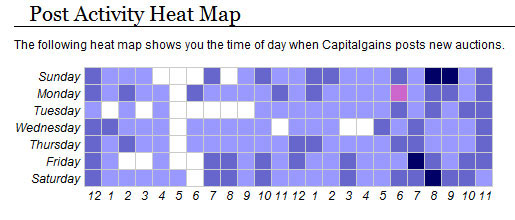
Err… WTF?
I actually knew about this guy for a while, as he is “that guy” on my server who has 3+ different toons with slightly different spellings who runs a Glyph racket. This particular specimen is in the blood diamond gem market and appears to be ran by a bot – even if he was unemployed, there simply is no way that he would be posting ~40 auctions every hour on the hour, seven days a week.
The question becomes: short of acquiring the Sword of A Thousand Truths, how does one compete with this?
Answer: the only winning move is not to play.
More specifically, what you do not do is play the game on someone else’s terms, especially if they are bad terms. Is it possible to combat this seller? Sure. There is a lot of different things you can do to try and counteract addon automation and/or botting behavior. For example, most of these programs/addons have threshold limits you can probe with trial and error – other gold blogs have detailed this specific gambit, in divining a competitor’s threshold and then “tricking” him into posting a bunch of stock at that price, then buying him out and relisting.
My issue is that fighting someone with a competitive advantage is almost never worth it in the long-term. This does not mean you have to give up making any gold in a particular market, it just means you have to start thinking in shorter terms. This guy undercut my five auctions of 275g Timeless Demonseyes with his own three auctions at 274g 99s 90c within one minute of my posting them. I don’t believe this market is deep enough to sell four of them in a given day* so I am left with the dilemma of whether to just leave them up or cancel and repost. What I ended up doing was canceling and reposting them for 225g each. As I talked about in my Foundation article on undercutting, one of the (emotional) advantages of the savage undercut is the fact that even if your competition continues undercutting you, in very real terms you have taken gold out of their bags. In this case, if the bot cancels and reposts, he loses his own deposit fee (which matches mine) + 50g per gem. That 50g doesn’t go into my pocket of course, but by driving down the profit margin I potentially discourage the bot while also reducing my own desire to even be in this particular market.
There is a tendency to look at the Auction House game as being Player Vs Player. In some respects, it certainly can be. As the title of the blog suggests though, I consider it simply to be Player Vs Auction House. Part of that philosophy is to not shoot for Pyrrhic Victories when I am just here to make some gold. If someone wants to be an AH hero, the floor is all yours – I will quietly exit an overextended market and find the lower-hanging fruit elsewhere or start exploring un(der)developed ones.
I am curious as to what other peoples’ gut reactions are though. If you noticed someone like Harry Botter** muscling into a market like this, what would be your response, if any? Would you try to undermine him? Fight fire with fire? Mosey out of town? Go to the mattresses? Let me know in the comments below.
*The first question that should pop into your head after you read that is “Hey, if you don’t think the market is deep enough for 4 Timeless gem sales, why would you post 5 of them?” I wish I could respond with “It was a test to see if you were paying attention” but it was honestly more a combination of oversight and laziness. Or possibly optimism.
**It occurs to me that I might be reading TUJ’s “heat map” wrong and/or having an overly broad definition of botting. My guildie and I figured out that canceling auctions registers as “sold auctions” on TUJ, for example.

 In An Age