Blog Archives
Un-Necesse-ary
Necesse recently graduated from Early Access to full 1.0 release. I had played it previously for almost 10 hours, so I wanted to give it another go to see what had improved. As it turns out… not much.

I’ve heard the game described as “top-down Terraria meets RimWorld,” but that is criminally misleading. Yes, it is a top-down, open-world survival crafting game with RimWorld-esque colony management functions. But what it’s actually more like is a lower-budget Keplerth. Now, in my Impressions of that game I called it a knockoff Necesse, so there’s some circular referencing going on.
The point is to not go into Necesse thinking you are going to get the same tight, engaging gameplay loops of Terraria or… like anything at all related to RimWorld’s subtle genius. The NPCs you recruit to your village can be assigned tasks like chopping wood or shearing sheep, but they have zero personality, relevant moods, or any necessary functionality at all. Hell, most of the crafting you can do is itself pointless in comparison to random drops.
OK, let’s back up. What’s Necesse and its gameplay loop?

In Necesse, there is a large overworld with various creatures and hazards and biomes to explore. Additionally, there is an underground “layer” full of much more dangerous monsters and random loot. The loose goal is for you to summon bosses using specific item drops, defeat them, and use the resulting drops to unlock the next tier of progression. As you might expect with the top-down perspective, most of the bosses are bullet-hell style affairs with multiple phases.
There is crafting in Necesse, but it feels largely perfunctory and unsatisfactory. Yes, you can collect wood to make a Wood Sword, smelt copper into copper ingots to make a Copper Sword, and so on. You can also just buy weapons from NPCs too, skipping multiple tiers in the process. Indeed, the underground portions of the game feature loads of enemies that have a chance of dropping gear that vastly outstrips anything you could reasonably craft. So, rather than feeling like you are earning your way through escalating challenges, most of the time you are better off just running around under-geared until you very suddenly are not.

There is technically hunger in Necesse, but it is the sort of half-baked nonsense that is unfortunately typical in this space. Are there dozens of food recipes? Yes. Are any of them necessary at all? No. More complicated dishes can grant you larger bonuses to damage (etc) and you can even automate some of the cooking via the NPCs you recruit to your base. But… why? Just eat a bunch of coconuts or berries or whatever else is nearby. Perhaps this sort of thing becomes more required on higher difficulties. It all just feels rote, like designers going through the same motions just because “everyone” builds games this way. It’s 2025, guys: if food isn’t going to be super-scarce resource, then it needs to have a more integrated game function (increasing HP, etc) ala Valheim or similar. Otherwise, just leave it out.
To an extent, it’s a bit unfair to be too harsh on Necesse considering it was largely developed by one dude. Counter-point: Stardew Valley. Also: maybe it’s worth bringing on more people to make the game more engaging? There was a graphics overhaul at one point, which certainly improved things, but the UI itself is still hot garbage. Could they make the icons even tinier? [Fake Edit:] Just found the option for UI scale, but it still looks bad even when scaled up.
Anyway, that’s Necesse.
Impressions: Keplerth
Not going to lie, the name “Keplerth” was both intriguing and ultimately accurate.
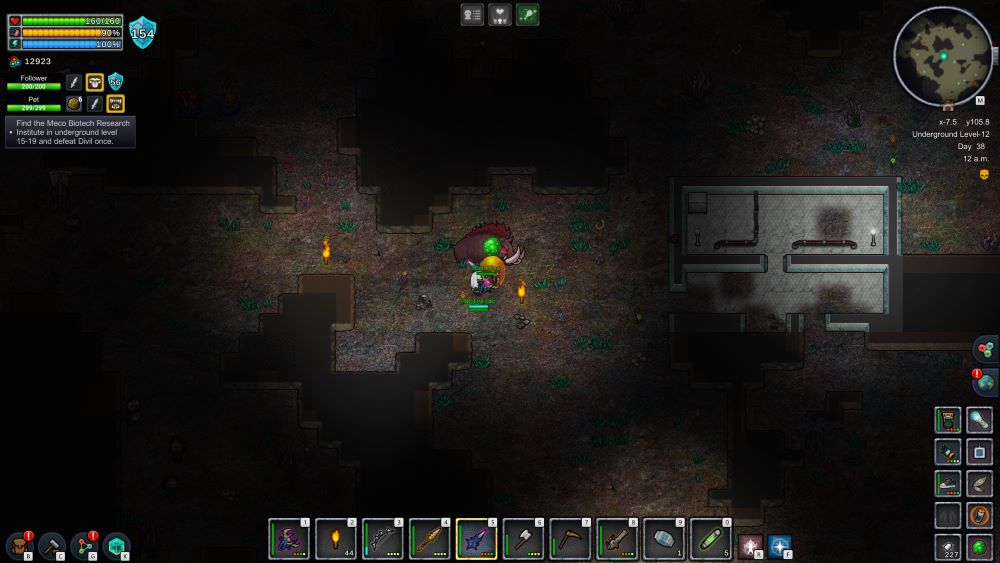
Keplerth is a top-down survival crafting game reminiscent of Terraria, with art assets straight stolen from RimWorld. Other reviews mention this as being a post-apocalypse knock-off of Necesse, if you know of that one. You will punch trees, create crafting benches, craft gear, and then tackle bosses to unlock the next tier of equipment, resources, and mobs. Rinse and repeat.
There are some interesting innovations to the formula though. For example, there is no XP here. Instead, you unlock new genes based on special resources that drop from basically everything in the game, e.g. plants, mobs, minerals, etc. The genes start simple, with stuff like +5% Evasion or +10% Attack Speed. Towards the beginning of the game, you have plenty of room to “equip” every gene you unlock; later on, you have to choose amongst them and their potential synergies.
I also appreciated how equipment bonuses work. Essentially, each piece of gear has a random set bonus and a random set bonus score (+0 through +3). So, the leg armor you craft might have bonuses to +Defense or +Pet Attack instead of the +Melee you were looking for. And even if it does have +Melee, the final set bonus may only trigger when you have 7/7 equipped and the piece you rolled grants +0. While random can be frustrating sometimes, many survival games are kind of rote in that Iron armor is Iron armor, and thus you only need 22 Iron ingots total to kit yourself out on that tier. This at least means you need to collect a buffer amount of resources. Later on, you get the ability to spend other resources to “reroll” the tier bonuses, so it is not too frustrating for long.
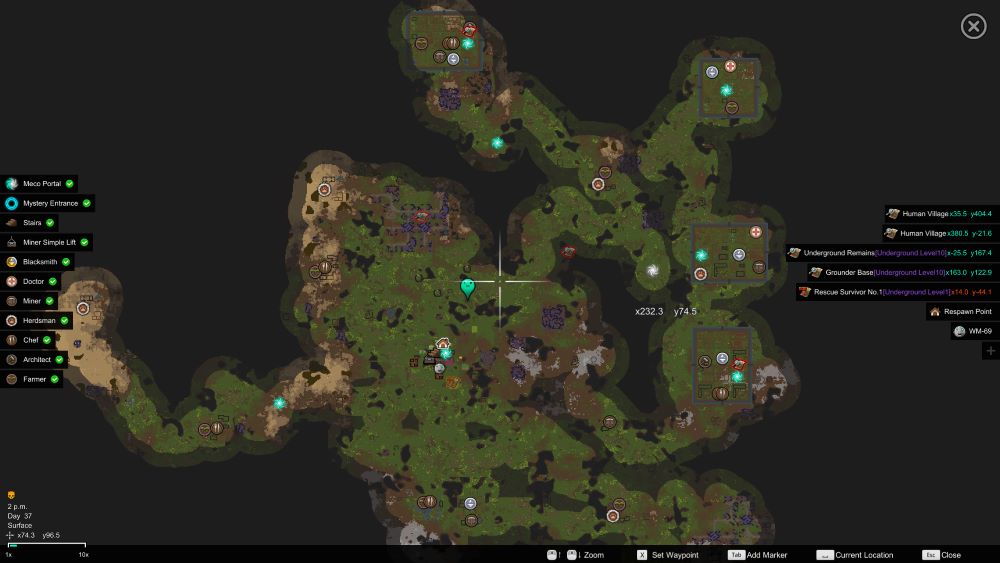
Where Keplerth struggles is… kinda everywhere else.
A lot of the mechanics feel half-baked. One of the early tutorial quests involves you attracting other survivors to your base with a communications tower. What the game doesn’t tell you is that the survivors… don’t really do anything. There is an entire elaborate construction station to create fancy furniture, but ultimately the survivors need 1 (one) recreation item (hot tub) and their heart meter will eventually fill and you click on them for money. That’s it. They do not defend your base, work the fields, or anything. You can also have farm animals like cows, chicken, horses, etc, and they will reproduce asexually as soon as their food meter hits 100%. Cooked food does require a variety of meat and plants for pretty useful buffs, so there is a point to all this, but it doesn’t always make that much sense. Like why have Horse Meat in the game when eggs are really the limiting factor for advanced food?
The special material mechanic I praised earlier is also a bit uneven. A lot of it felt natural at the time, as you just pick up all the things and new stuff seemed to unlock every 5 minutes or so. Eventually though, once your gene grid fills up and you start needing to examine what’s left, you start to realize that 5-6 of the missing genes require Thorns or Apples or some early-game stuff. Luckily the grind isn’t too bad since you can chop most everything down and replant it near your base to more quickly get additional chances when harvesting it – as opposed to having to wander around for more natural-occurring spawns – but the amount of things tagged to Thorns specifically is a bit odd.

What kind of broke the game for me though was one of the mid-tier boss drop weapons. Up to that point, you may have some melee weapons, bow and arrows, some early guns, and so on. Even with guns, there were some trade-offs with damage versus shooting speed. Then you get a 100% drop of an energy beam gun that deals constant damage with zero ammo. While it technically is out-classed in DPS later on, the utility of being able to trigger knockback, certain genes (“each hit adds X effect”), and the lack of ammo makes everything else feel dumb to use in comparison.
Later bosses also get into SHMUP/bullet-hell territory, which forces you to turtle up with your genes and equipment, which makes the fight last ages because you are no longer specced for damage.
Having said all that, I did end up playing the game for ~25 hours or so, somewhat obsessively. Keplerth definitely hit a stride for me after about the 2nd boss, once you unlocked the ability to tame battle pets, get some better weapons, better genes, and start finding other human settlements to spend money at. It is unfortunate how that petered out in the endgame, but what else can you do?
Play something else, I guess.
 In An Age