Blog Archives
Cyberpunk 2077, Completed
Finally finished Cyberpunk 2077 over the weekend. Total playtime was a combined 148 hours.
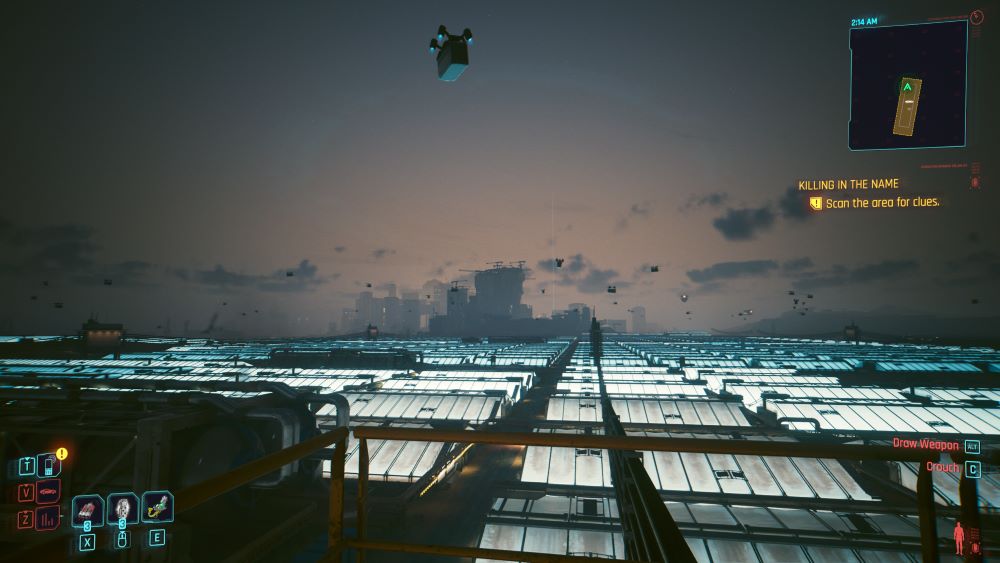
Years ago, my initial playthrough was as a female V, romancing Judy. Progressed up to the Parade mission, realized that things were probably going to go down, so I took an off-ramp into… literally everything else. Completed every single side-quest, and sucked the very marrow from the progression system. After that, I lost interest in going the final mile, never completing the game.
The second playthrough came as a result of the Phantom Liberty DLC release. Actually, a second playthrough would never have happened without the corresponding 2.0 overhaul of the Talent/Perk system. That overhaul really did turn everything around, making it a more cohesive, interesting experience. It didn’t hurt that Phantom Liberty was actually an extremely well-built DLC. In any case, I decided to start a fresh character using the “skip to Act 2” option to check out things as a male V, romancing Panam. And yeah, it was a “I studied the blade” playthrough (until I realized that sucked).
Ironically, I almost bailed at the exact same place as last time. Technically, in fact, I did: stopped playing in November after about 68 hours, right in front of the parade quest, having completely consumed all of Dogtown and thinking of what I had to do to unlock the various ending options. Already surpassed the old level cap, maximized gear, no progression of any kind to look forward to. Why bother slogging through to the end of this Civilization Conquest victory? I put the game away for a few months.
The main impetus of getting me over the finish line? My 2TB gaming SSD was getting too full. Yep.
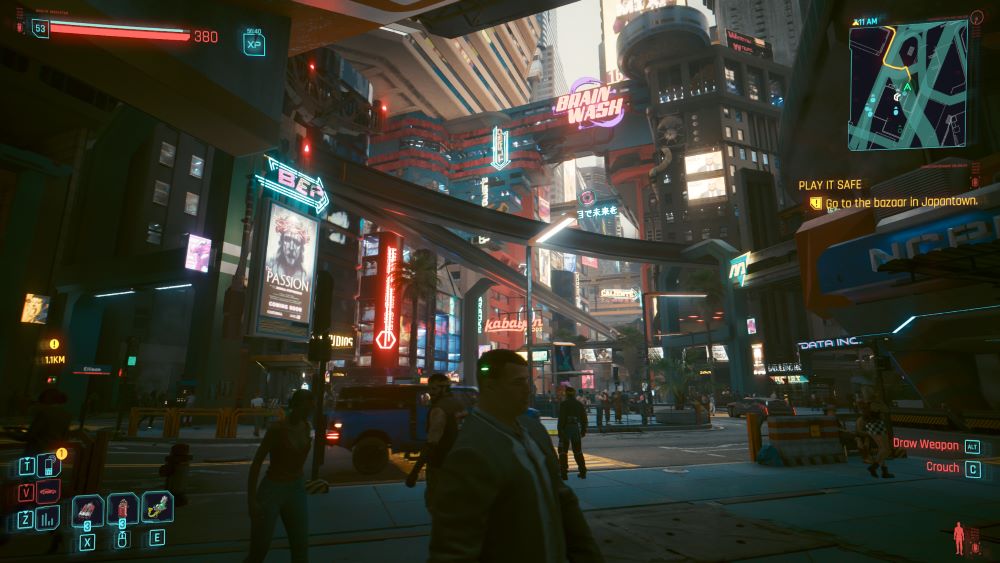
Now, my reticence over finishing may sound as an indictment of the game overall, but that is not the case. Cyberpunk 2077 is an amazing achievement, featuring one of the most cohesive, believable gaming cities ever designed. The streets feel lived-in, puked on, bled over, and cyberpunked.
The commitment to immersive first-person perspective is bone-deep, but what sells it the most is the level of humanity present in the movement of NPCs. A decade ago, characters winking in Mass Effect elevated the entire medium for me. And while I am fortunate enough to have experienced the vicarious joy of the devs when it came to Final Fantasy 7 Remake, Cyberpunk 2077’s contributions are on the next tier higher. Being able to walk around characters as they are talking, seeing them casually step over chairs, or light a cigarette, or any of the general actions that, while scripted, never feel overally scripted sets a bar unlikely to be topped for years. Granted, most of this comes from extensive (and expensive) mo-capping, putting it firmly out of reach for the majority of developers out there. But once you leave Cyberpunk and try any other supposedly AAA game (cough Starfield), you feel the difference.
Having said all that, I’m still not entirely sure how I feel about finishing the game.
Actually, hold up. Let me find that… here it is.

I’m not going to go into the nitty-gritty details of the ending(s), but you’ll be able to infer some things.
…buffering…
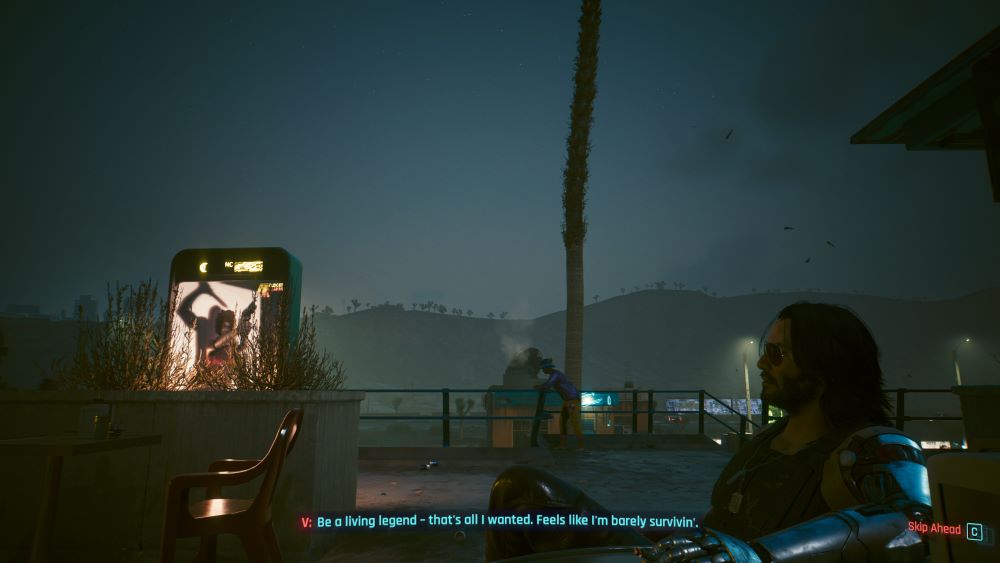
I found the overall narrative unsatisfying. To a degree, this is likely by design. Night City is a corpo-dystopia, poverty is rampant, gang violence is routine, and attempts to do the right thing usually end in worse outcomes for everyone involved. The primary motivation of the main character, established early on, is to become a famous mercenary and get rich. And while you do have the option to be a bit more, ahem, mercenary in a few quests, the language of action throughout is always centered on killing and/or stealing and/or sabotaging for cash, regardless of whether your heart is gold or lead.
From a gameplay perspective, that is perfectly fine – I relished every opportunity to cyber-ninja around Night City. But at some point there came a severe narrative dissonance in how much time I was spending killing random gang members as opposed to the corporations that were responsible for the dystopia itself. Maybe that is “too big” of a goal to accomplish, assuming I could even work towards that end with a ticking time bomb in my head. Maybe the point of the story is to demonstrate the corporations always win and the best you can do is disconnect and drive away into the desert.
You know, the ole’ Wargames “the only winning move is not to play” end. Which is second only to “it was all a dream” in terms of dissatisfying plot.
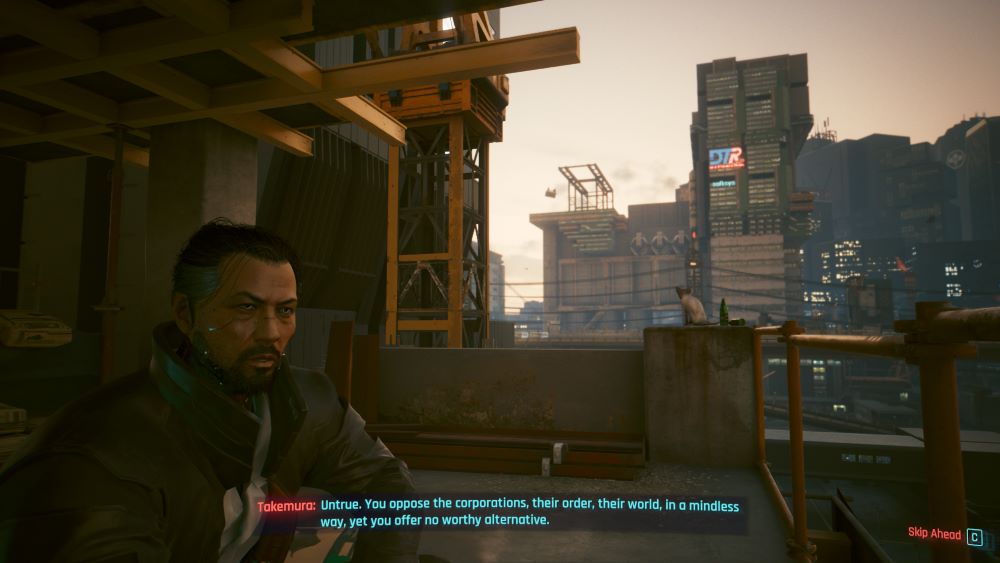
For most of the game, I also actively hated the Johnny Silverhand character. While there were some later quests that softened the rougher edges, for the most part, Silverhand just reminded me of one of those overly-dramatic friends whom the world is always out to get – defensively cantankerous, never realizing that if everything smells like shit, maybe you should check the bottom of your shoe. However, that thought led me to imagine a Cyberpunk where Silverhand wasn’t in your head. And… I don’t think it works. Not so much because Silverhand’s relentless cynicism enhances the narrative, but rather that it is structural crutch to an otherwise unsupported plot.
Like, imagine that you still have the Relic malfunctions and blackouts, and thus still have motivation to seek a cure. What else changes? Well, a shit-ton of dialog goes missing. And that was when I realized: Silverhand is the embodiment of a failure to “Show, Don’t Tell.” He’s the player’s digital conscience, ever critical of actions that contribute towards the preservation of the Corpo status quo… which is all of them. But the insufferable needling is necessary because the game otherwise doesn’t Show any of it. Arasaka and the other corps are right bastards in the lore, but aside from a few assassination attempts, they may as well not exist. The game should have been called The Gangs of Night City for how much gameplay ultimately revolves around Maelstrom and Tyger Claws.
Again, I get it, having players just fight corps is probably a hard game to make. Plus, part of the “point” of the setting is that these corps are all but unassailable outside of a few acts of targeted sabotage. Even ultimately bringing down Arasaka doesn’t do shit within Night City – Militec immediately fills in the vacuum and the status is quo’d once more. This is the cyberpunk genre 101.
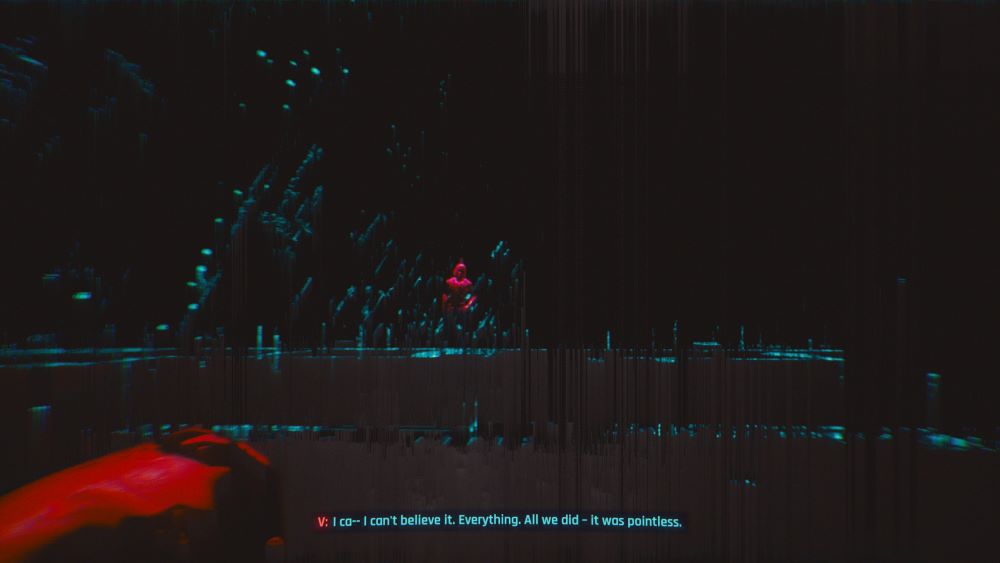
But… I dunno. I’ve played grimdark games before, I’ve played Far Cry 2 where by the end I as a player wanted my character to sacrifice themselves. I actually have a high regard to games that embody the Starfish Parable in the face of inevitability elsewhere. And yet, Cyberpunk 2077 somehow feels bleaker than even that. If that is the vibe the devs were going for, well… congratulations. You won, I lost.
Perhaps it is thus in a moment of supreme irony that I still recommend you play the game.
Not because of the “friends you made along the way,” or any sort of deep philosophical insight, or because of a game-inducing sensation of nihilism. Rather, you should play Cyberpunk 2077 because it’s a technological marvel. You can mod it into virtual photorealism rather easily, but even without mods the fidelity is on a level beyond all peer. Crysis was a gaming benchmark for decades, and I can see Cyberpunk 2077 occupying a similar niche for years to come.
But what really ties it together is the Immersion impact. Some Call of Duty sequel or whatever may end up being prettier, but what can you actually do in the game? Skyrim might technically be more immersive in terms of interacting with the environment, and Grand Theft Auto 5 also has a lot of activity. But I cannot stress enough: Night City feels real. You are in an environment. From now on, if I cannot jostle NPCs out of the way while moving through a crowd, that game is crap.
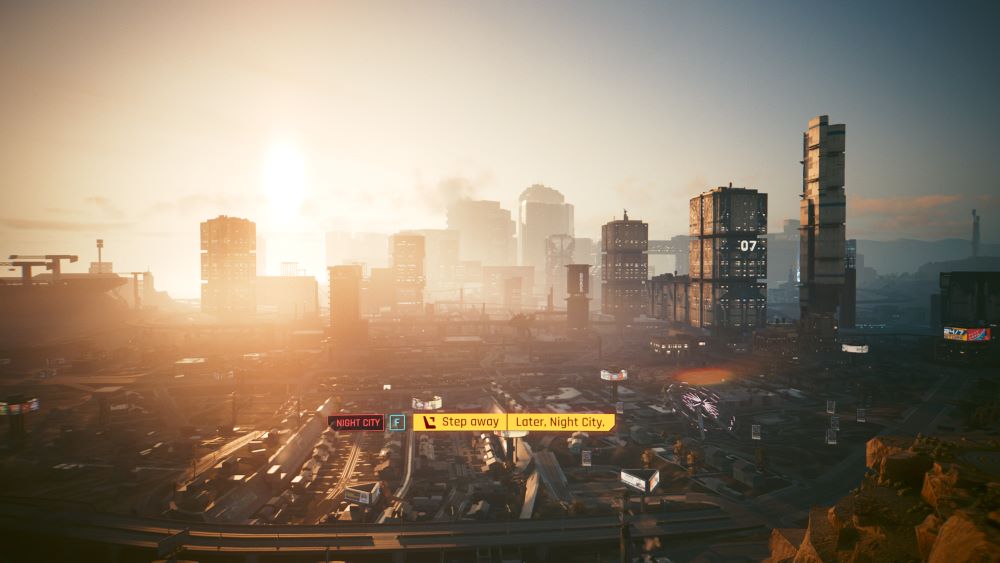
So, yeah. Cyberpunk 2077.
Buy it, play it, live it, and then end the game on your terms. Preferably before the parade mission.
 In An Age