Blog Archives
Impressions: Baldur’s Gate 3
Basically Divinity: Original Sin 2.5. But (more) balanced this time!

First, let’s acknowledge the obvious: Baldur’s Gate 3 (BG3) is already a smash hit. As of this post, Steam indicates a peak of 814,466 concurrent players, which makes it the 8th out of the top 10 of all time. Concurrent players doesn’t really mean much in a vacuum, but it is an impressive feat given its peers on that list. It makes me wonder if, like Elden Ring before it, BG3 will generate a renewed interest in an otherwise niche genre that no longer feels like such.
But what about the game itself? Is it as good as they say? Yes. And… sorta.
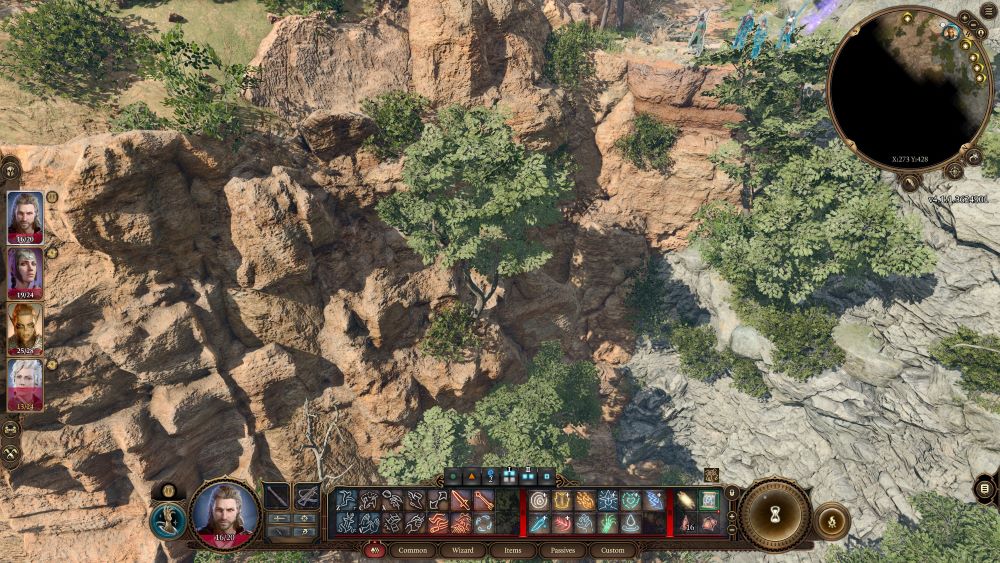
The game is gorgeous and highly, highly detailed. You have near-infinite freedom in designing your character(s), including the Cyberpunk-esque ability to mix-and-match genitals. There are Origin characters you recruit that have their own personal stories and special powers, or you can skip all that and just recruit mercs you make yourself. There are environmental dangers such as webs and oil slicks which you can combo with your spells. You can pick up damn near everything, including forks, knives, incense, exploding barrels, skulls, and most everything else your heart desires. Quests are detailed, dialog has multiple branching paths to take depending on skills, and there are many different ways to complete tasks.
Aside from the genitals though, all of that just describes Original Sin 2.
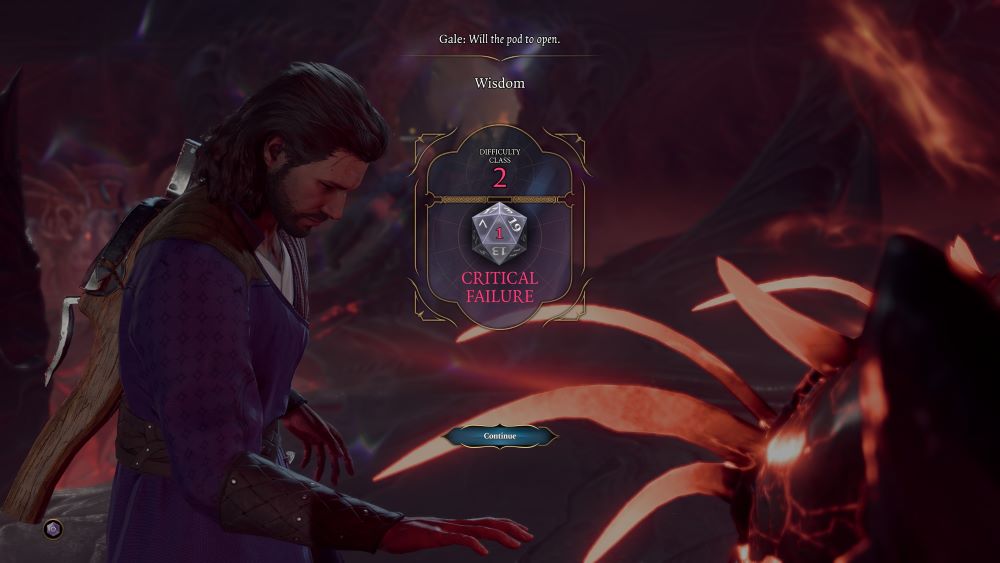
This is not necessarily a bad thing. My biggest issue with Original Sin 2 was the game balance, or lack thereof. A lot of those issues neatly evaporate in the near-RAW (Rules As Written) embrace of 5E D&D. There is no Physical Armor vs Magic Armor to worry about. Spells and abilities are much more limited, and (sometimes frustratingly) balanced thereby. You can still perform some crazy combos depending on the environment, but there is not an expectation that you will be electrifying pools of blood/water every battle without fail.
An embrace of “traditional” D&D rules can sometimes be annoying however. Spellcasters are limited to a finite amount of spell slots per Long Rest. This is perhaps more balanced than the alternative of being able to alpha-strike enemies all the time. The issue though is how the majority of attacks – at least at level 3 where I’m at – have, at best, a 65% chance of hitting. This naturally leads one to more highly consider the spells less reliant on attack rolls, which heads back into traditional Larian surface-prepping. And once you start heading (back) down that path, you start having your rogue collect explosive barrels and planting them next to foes while in stealth so you can blow up three enemies in the first surprise round of combat. While very fun to do, we’re right back into “Original Sin 2.5” territory.
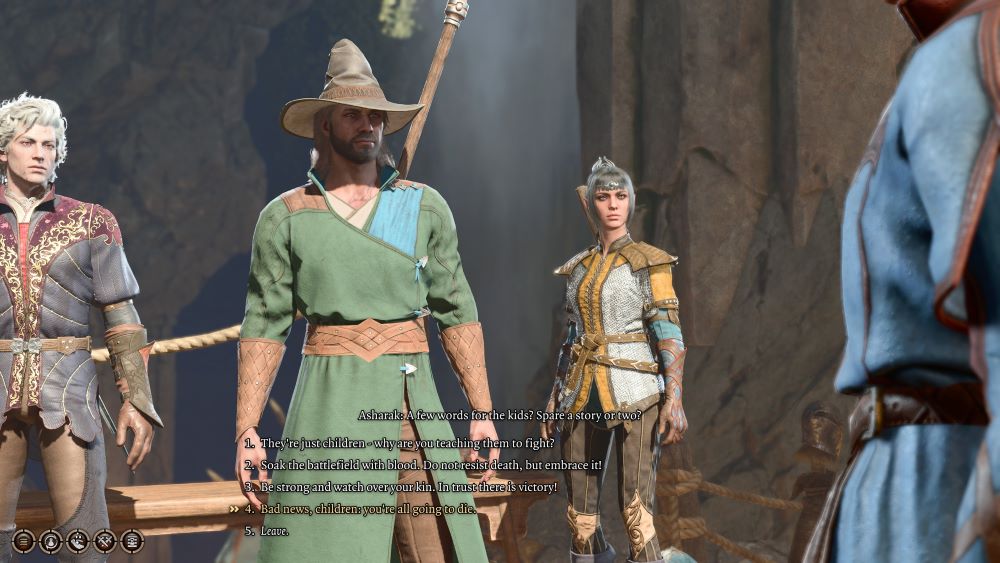
Also, can I just say that I am immensely annoyed that the devs have surpassed even Witcher 3 in the ludonarrative dissonance department? The game opens up with you getting a mind flayer parasite planted into your eye, and everyone repeatedly talking about how you will turn into an mind flayer yourself after 7 days. I am not very far into Act 1 as I understand it, but I have Long Rested twice thus far, and so I should only have five days left before I turn. But I presently see no indication that a time limit actually exists, and would probably have heard about it on the internet by now if it did. While I understand that perhaps the greater narrative will eventually expound on why we don’t turn after 7 days, this false sense of time-sensitivity – combined with the game mechanics of Long Resting for spellcasters – really rubs me the wrong way. It was absurd in Witcher 3 when you “just missed” Ciri despite spending 40 hours dithering around, and is even more absurd here in BG3.
If it seems like I’m just shitting on Baldur’s Gate 3, well… sorry. I have played for 19 hours thus far and the game came out like four days ago. It’s a fun game! But I do recognize that it is benefitting from an unusual sort of marketing zeitgeist way out of proportion to what it is currently (at least in the early stages) bringing to the table(top). It isn’t even the first game to faithfully recreate 5E rules either – Solasta came out three years ago. I have played both Solasta and Divinity: Original Sin 2, so none of what I’m seeing is particularly groundbreaking.
That said, if someone hasn’t played either of those two games or perhaps never seemed interested in CRPGs before, Baldur’s Gate 3 is probably the best place to start. It’s popular, it’s shiny, and it is certainly the most approachable the genre has ever been.
Time will tell whether Larian can stick the landing past Act 2 or if it’s all downhill after the bear sex.
 In An Age
Pillars of Eternity is Exhausting
Aug 13
Posted by Azuriel
[Blaugust Day 13]
As you might have noticed in the sidebar, I am finally getting around to playing Pillars of Eternity. The problem I am encountering though, is finding the motivation to play it for any particular length of time.
This is not an indictment of the gameplay or overall quality of the game necessarily. I loved the Baldur’s Gate series back in the day, and a return to isometric graphics is just fine by me. I’d say the most annoying thing I’ve encountered so far are all the useless Kickstarter NPCs which you can “talk” to but have nothing to do with anything. I have been trained by generations of RPGs to put a high importance on named NPCs, which makes these particular NPCs worse than useless. Luckily, I’ve finally recognized that these NPCs have a special colored nameplate and thus I can safely avoid being disappointed.
No, the primary problem is how… efficient I play games these days. If you present me with an isometric RPG map with a fog of war and a Tab key that highlights all the clickable objects, I am going to start at the edges and clear out the map 100%. I honestly don’t even feel like it’s a choice to do so – it’s a compulsion. What if there is a party member in that little patch of darkness? Or something to loot? Or some mobs I can kill? I’m not a completionist by any means, nor do I particularly care for achievements, but I just can’t seem to help myself here.
The end result is that I clear an entire map, face every possible encounter therein, and then head to a new one. And upon seeing that big square piece of darkness laying before me… I balk. “This is about as good a stopping point as any.” So I stop. Even if I’ve only been playing for 20 minutes.
As I mentioned, this compulsion seems unique to this type of game.
In my estimation there are a few likely causes that feed on one another. The first is basic min-maxing: there doesn’t appear to be respawns, so every missed encounter necessarily leads to a weaker party. No doubt there is more than enough mobs available to hit the level cap eventually, but I want to be more powerful now. The second is the fog of war mechanic itself, which is a pretty self-explanatory OCD itch to scratch. The third is actually related to the first, in that gold (or copper in this case) is a limited resource in a world without respawns, thus the majority of your gear will be found. Or missed, if one does not scour every inch of every map.
Breaking this habit will be tough, especially considering I did not even realize it was a habit until I starting playing Pillars of Eternity. Well, I knew beforehand that I dislike certain pattern-based puzzles simply because I can’t bring myself not to complete them in a ruthlessly logical (e.g. brute-force) way. If you show me something like the Minecraft crafting grid, I will start with one stick in the upper-left square, and continue moving that stick through every possible combination before adding two sticks, and so on. It’s like guessing luggage combinations by starting with 001 and working my way up.
Anyone else play games this way? And if so… how did you get yourself to stop?
Posted in Commentary
15 Comments
Tags: Baldur's Gate, Blaugust, CRPG, Fog of War, OCD, Pillars of Eternity