Blog Archives
The Unknown
It’s a cliche, but I was thinking about “there’s nothing scarier than the unknown.” I find this to be literally true, although I haven’t asked whether its the case for people with, e.g. arachnophobia or similar.
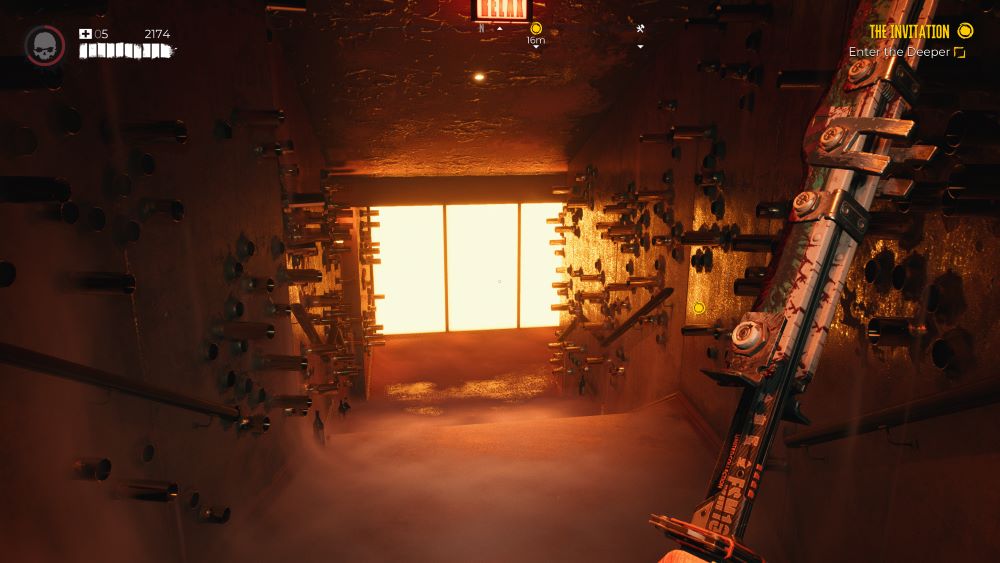
In thinking about it though, “the unknown” isn’t exactly what I’m afraid of. Rather, the unknown is simply a placeholder for existing or imaginary fears. And since its a placeholder, it becomes dynamic and mutable based on whomever is experiencing it. This is handy in games, movies, etc.
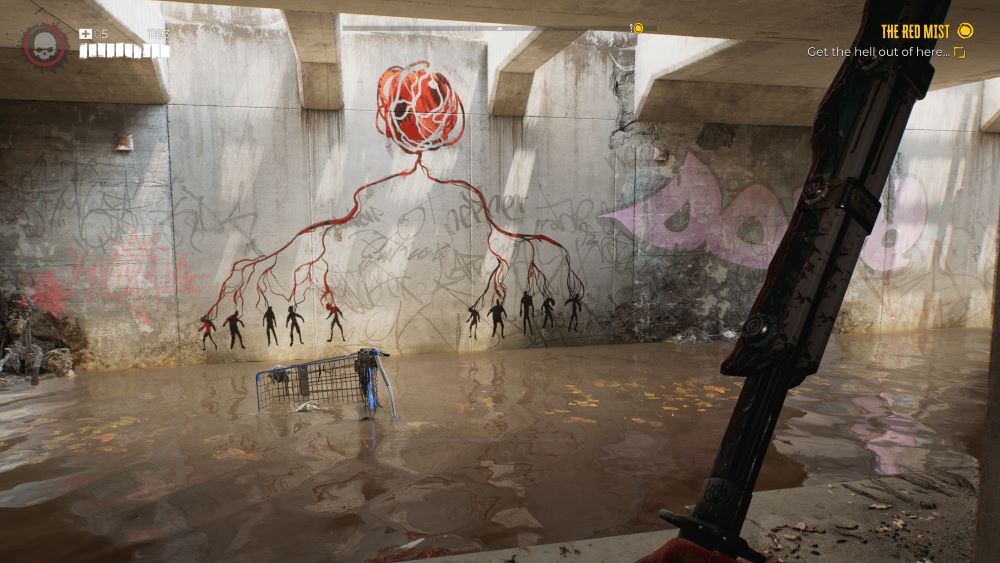
What brought this up initially was my playing through Dead Island 2’s DLC content, Haus. The base game has plenty of jump scares – sometimes frustratingly unintentional, when zombies materialize from thin air – but Haus leaned into the whole creepy psychological nightmare house schtick. Which is fine, whatever. But I had a moment, in a particularly creepy room, where I thought “Oh, I bet they’re going to do X!” In this case, X is an overly-elaborate amalgamation of scenes from Silent Hill, Dead Space, and similar, that I won’t be getting into; solve for your own damn X.
Thing is, the devs couldn’t do it. The language of action necessary to do X wasn’t in the game. This isn’t Dead Space where an air duct could burst open and a giant tentacle kill you instantly if you fail the Quick Time Event. There are just… zombies, who attack you in predictable ways. Do the zombies crawl out of small sewer grates and other unexpected places? Sure. But zombies are zombies in Dead Island 2. I can panic when a Burster appears in close proximity, but that is a known hazard.
When you don’t know what the game can do, that’s when it’s scariest.
I’m reminded of when I first played Valheim, so long ago. The game was Early Access (still is), made by a small group of people (still is), and they were trying different things. For example, I don’t know of any other survival game in which chopping down trees requires my complete attention, lest I be crushed.
So, there I was, setting sail for the first time in search of… whatever. Vaguely, I knew about the existence of Serpents from Reddit posts, but not necessarily what they looked like, what their attack patterns were, or whether you could see them coming, outrun them, etc. And after a while of sailing, I started to think maybe they weren’t in the game at all.
Somehow, that actually made the situation worse. I started feeling uneasy any time I came across darker water, or other anomalous phenomenon (real or imagined). Wouldn’t it be just the worst if you were sailing along, oblivious, and then a dark shadow beneath your boat yawned, teeth the size of spears sprouting from the waves, while you and your boat disappear in an agonizing instant? Just me?
Anyway, as you can imagine, it was fun times when I encountered my first Leviathan and it sunk beneath the waves after my incessant barnacle trimming. This is it, I’m going to be eaten! It wasn’t. But for that first moment, it could have been, and Valheim got me.
Then lost me when I searched seven mountain ranges for a single goddamn silver node. Not bitter.
Language of Action
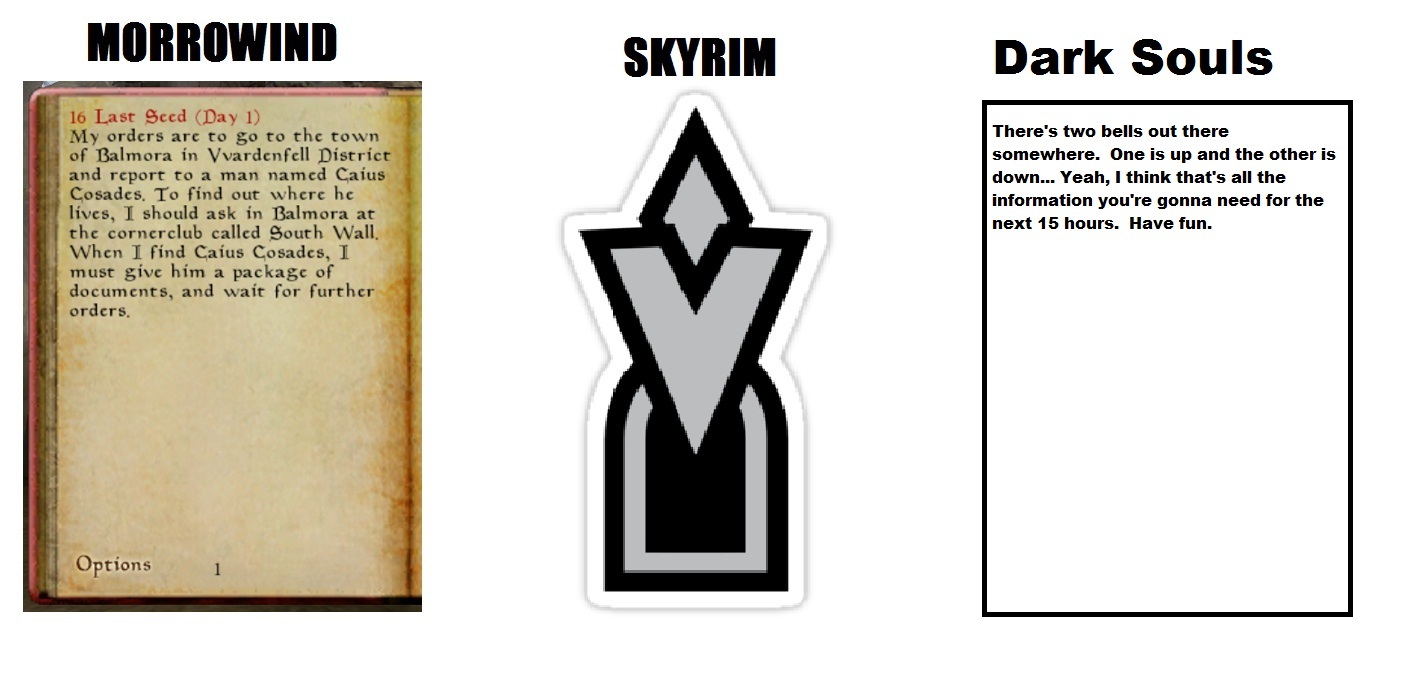
This amusing comparison was posted on Reddit the other day under “Morrowind vs Skyrim vs Dark Souls”:
/slowclap
The implication here is (presumably) that games these days are being dumbed down, or at least are not being made as challenging as their predecessors (Dark Souls aside). This sort of “hand holding” is pretty much the de facto standard in MMOs as well, in the form of highlighting of the questing areas and the like. ¹
To which I say: “Good.”
If there is one particular scenario I despise more than anything else in videogames, it is when I sit down to play one and then can’t. I do not mean that I try and fail and am unable to progress – that part is good! It’s gameplay, it’s doing things, it’s actively engaging my faculties. Rather, I mean when the game is not even allowing me to try anything because I am missing something and don’t even know it. Or maybe I am not missing anything and the game is at fault. Indeed, whenever I get stuck in a game, these are the usual possibilities:
- I cannot solve the puzzle.
- I missed an invisible quest trigger.
- I cannot locate the quest objective.
- I do not know where to go next.
In all those scenarios aside from #1, we can entertain the possibility that it is the game designer’s fault. And that’s the problem! Sure, occasionally it is my own damn fault for not reading the quest text correctly or I didn’t pan the camera 110° to the right or whatever. But after 20+ years of playing videogames, I can assure you that my default assumption is not that these designers do everything on purpose. Games are art, but if you set out to evoke a particular emotion with a piece and it generates the exact opposite, we can say that that piece of art failed in its goal. Sometimes mistakes can make a game better (like… Gandhi in Civilization), but an equal or greater amount of time they are simply mistakes.
Things can go too far the other way, of course. In the opening scenes of The Witcher 2, as you approach the ominously empty bridge, you get a prompt telling you which buttons to press to avoid dragon fire. “What dragon? Oh.” Quests in Skyrim which ask you to find the artifact that has been hidden for centuries… and there’s a very visible quest marker that appears directly over it. I can concede that something like this other Reddit picture is too much:
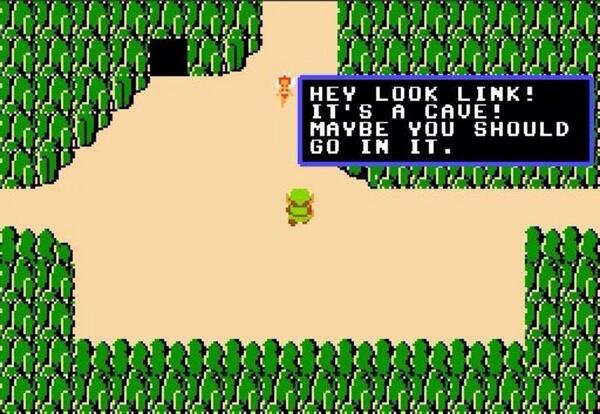
I hated Navi anyway.
At the end of the day, though? I am playing videogames to do things. I do not consider walking around a room pressing the Interact button every few steps as doing something. There is a place for games in which the “doing” is figuring out where to go or what to do next. And that place is “Pile of Games I’m (Literally) Not Playing.”
¹ I still remember the river of tears that resulted from WoW adding quest givers to the minimap back in Patch 2.3. Yes, seriously, tears.
Massive Effect
Having completed Torchlight, I decided to move onward to Mass Effect. Why not Skyrim, which is literally burning a hole through my Steam library? As Liam O’Brian might say, the status of my preparations is in doubt. I prefer one meaty title with a helping of indie garnish along the side – with something like Skyrim, I’m getting the impression that I’ll still be eating turkey sandwiches for months later.
About 5 hours into Mass Effect, all I can say is holy shit.
One of the most groundbreaking things occurred in the city after the first “dungeon.” In talking with a receptionist to the Consort, she winked at me.
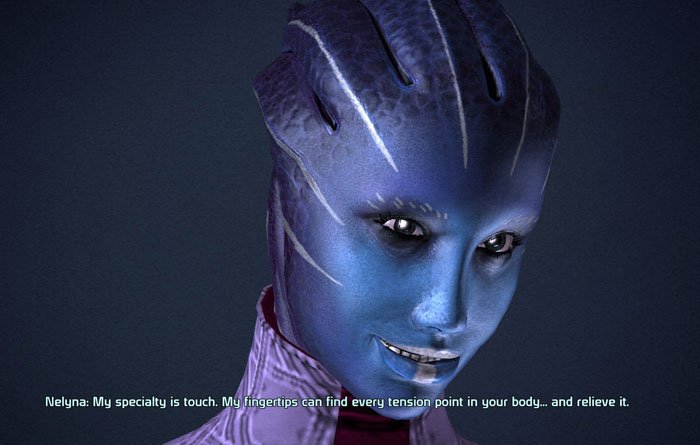
She also said that, but nevermind.
My incredulity may sound facetious, but I am actually very, very impressed.
See, I have been thinking about the problems with storytelling in videogames for quite some time. How is one supposed to convey subtle nuance in a game? In purely written works, it is somewhat easy to evoke the emotion you want to get across, provided you massage the language a bit. For example, consider the following:
‘Look, I can explain,’ he said.
Lord Vetinari lifted an eyebrow with the care of one who, having found a piece of caterpillar in his salad, raises the rest of the lettuce.
How could someone ever translate that in game form? Nevermind Vetinari’s specific sentiment here, think generally: there is an entire genus of expression that the format is preventing designers from expressing.
Games have some pretty unique qualities that cannot be replicated by other mediums too – Far Cry 2’s plot wouldn’t work without player interaction – but many times it feels as though designers simply give up. Game narratives are written in the language of action because of these restrictions on expression. Why are we always killing 10 [%local_wildlife]? Or killing everything, period? Well, how else are you supposed to convey conflict when reduced to crude avatars with clubs? Even though all games have access to written dialog, at some level we do expect everything to be translated into the language of action. And until the last few years, it was functionally impossible to express more than a rudimentary emotional gesture anyway.
There are pitfalls too, of course. Blink during the wink, and you’ll have missed it. Or, hell, focus on the subtitles and miss it too. It is also arguable about whether games should try and be more like the other mediums, instead of focusing on its own unique strengths.
To that last charge, I say “Watch that scene in FF7 again.” Pay close attention at 1:19. More than the murder itself, it was Sephiroth’s smirk that drove home how irredeemably evil the man was. Without the CG movie we would never have saw it; calling attention to smirk in-game via text would have ruined its subtle gravity. While story can certainly be a crutch to prop up forgettable gameplay, story can also be a pole that vaults a game into the classics.
So, Mass Effect, you have my full attention. I just hope you do a little more winking a little less of this:
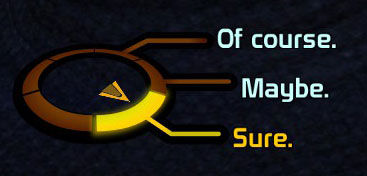
Decisions, decisions.
 In An Age
Bad Romance
Jun 26
Posted by Azuriel
Avowed is an upcoming Obsidian game that is, perhaps unfortunately, being more defined for what it’s not. As in, not Skyrim, not Baldur’s Gate 3, and so on. Instead, it’s… basically The Outer Worlds set in the Pillars of Eternity universe. Which is a thing they can do, I guess.
But one of the things the developers intentionally left out is causing some discussion: romance options.
For the record, this is generally how Obsidian rolls anyway. Fallout: New Vegas didn’t have romanceable companions, the original Pillars of Eternity didn’t have any, and The Outer Worlds teased a bit but didn’t have any either. At some point though, you have to wonder if it’s more a philosophical viewpoint, personal preference, or… a lack of experience.
On Reddit however, the thread turned into a deeper commentary on romance options in games more generally. The topic did give me some pause, as the two “camps” were not necessarily in direct opposition. On the one hand, you had people who said:
And then you have people who respond elsewhere:
I would say both things can be true at the same time. Crafting a believable game romance is difficult, and yet a paper-thin attempt is often better than nothing. Now, obviously, no one really wants it to be paper-thin, and a lot of this is predicated on the devs being able to craft companions that you care about to begin with. We’re also kind of hand-waving away what counts as a “believable romance.”
Anyway, there are some baseline improvements all devs can make who do include romance in their games. For one: how about not having the relationship start at the last Save Point before the final boss? It’s a fairly common trope in basically all media, and I understand the function, e.g. it allows players to head-cannon their own happily ever after. And, sure, sometimes whether two characters get together is the entire plot; basic relationship maintenance is much less exciting. But I would really like to see more attempts like Cyberpunk 2077 wherein you have more interaction with your bae over time. With some RPGs that might end up too complex – imagine having to script hundreds of branching combat dialog depending on when and with whom you are smooching – but even the little gestures would make things feel more grounded in-game. Again, like with Cyberpunk’s little chat messages and such.
The one argument against romance options I do not respect though is the whole “it’s usually just a checklist of dialogue choices, a quest then fucking,” therefore why even bother including it. There might be a broader conversation to be had about how media depictions of romance may lead some to incorrectly believe real-life relationships are a matter of putting in enough gift tokens until sex pops out or whatever. But also… no. As someone else more elegantly countered:
Games are gamified with game mechanics, news at 11. Love bombing an NPC with gifts until they marry you is indeed not realistic (although…). But it’s not as though the player often has any choice in the language of action available in the game. You cannot wink, joke with, twirl your hair, casually touch the shoulder of, or any of the myriad of ways we clumsily indicate and/or reciprocate romantic interest IRL. If the only way you can interact with the game world is pressing E and picking a dialog, then yeah, those are the parameters on how romance happens.
Can devs do romance better within the confines of the medium? Absolutely. I really appreciated in My Time at Sandrock how there was a clear dialog option which indicated your romantic interest with an NPC, which opened up more flirty dialog later; that would prevent the sort of (now infamous) misunderstandings with Gale in Baldur’s Gate 3. Going further, my idealized “solution” would be for the player to be able to select in a menu somewhere that you are romantically interested in character X, and then subtly enhance all your interactions (body language, etc) towards that character. That may alleviate some of gift-spamming and perfect dialog choice concerns and help the relationship progress feel more natural. Or as natural as you can do via a controller and game menus.
And, yeah, writing deeper characters with more interesting personalities works too. Obviously.
Obsidian is, of course, free to sit things out if their writers aren’t feeling it. I haven’t played Pillars of Eternity 2, but I’ve heard the romances there were especially bad, and thus the devs may be feeling it’s not worth trying again. It’s also true that not every narrative needs or is appropriate for having romance options. But I do think it’s okay to be asked about romance in any game focused on developing “meaningful bonds” between characters with dialog choices because that is a thing that happens. And many players, myself included, enjoy it even if it’s at or below trashy romance novel levels. Sometimes especially if it’s at that level.
As to whether Avowed works without it, we shall see.
Posted in Commentary
2 Comments
Tags: Game Design, Language of Action, Obsidian, Romance, Romance All the Things