Yearly Archives: 2022
Can a Fallout TV Series Even Work?
While technically old news, Amazon is bankrolling a Fallout TV series. The newer news is that it starts filming this year. The guy behind Westworld is doing the first episode, and… well, if say much more, this paragraph will be longer than the original article.
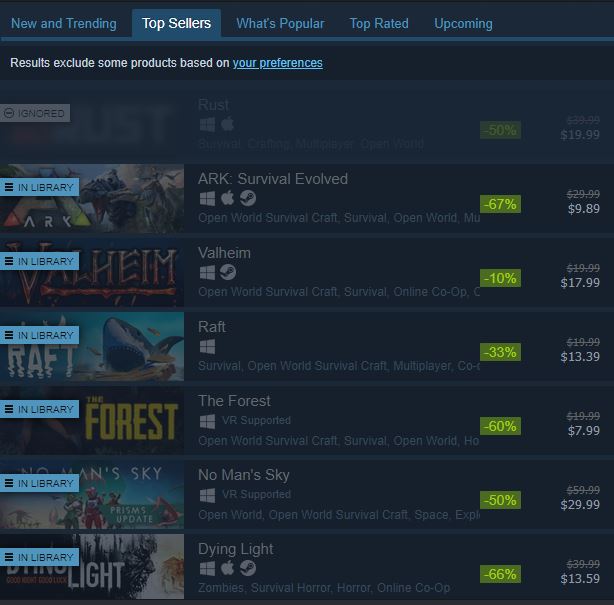
Fallout is one of my favorite gaming franchises of all time. I have played all the major releases, including less popular ones like Brotherhood of Steel and, ahem, Fallout 76. It really wasn’t until the release of Fallout 3 before I realized that that was the sort of experience I had been waiting my entire life for: post-apocalyptic hoarding simulator. I didn’t need to have a quest to be motivated to explore a cave – the possibility of extra duct tape and aluminum cans was enough. And chasing that similar sense of satisfaction fueled my drive into and through practically every survival game that has been released.
I have zero clue how in the world they will translate Fallout to the TV screen.
Some people have mentioned that Fallout might be well-positioned to capitalize on the cultural zeitgeist of the day, e.g. the dangers of unrestrained jingoism. But that actually seems more like a problem: it’s going to seem too on-the-nose despite the source material always having those elements of dark irony. Vault-Tec running unethical experiments on their customers doesn’t quite cut the same way when we have Facebook and other social media doing similar things in the real world.
This is to say nothing on what sort of tone they will go for. I could easily see a Fallout TV ending up more of a slapstick apocalypse romp, with Bottlecap mines, Fat Man launchers, and Stimpaks magically healing broken limbs. Or I could see them trying to leverage more of the darker side of the series, Father in the Cave and similar tragic pathos. But in the latter case… where does the Nuka-Cola, caps as currency, Pip-Boys and the like come in? Super Mutants and Mr. Handy? If you aren’t including that sort of thing, I’m not sure what the point of it is being branded Fallout.
I just don’t see it. The world of Fallout could support little mini-arcs World War Z-style (the book), but an overarching narrative? Or even following the events of one of the games? New Vegas probably has the most coherent plot and story beats, especially if they include some of the DLCs. Well, maybe not the one where your brains are scooped out and you end up getting a teleportation device. Fallout 4 is a more modern tale, especially with the notion of synths and the philosophical questions surrounding them… but also prominently features teleportation by the end. It works in game form, but I don’t see it getting a pass on the screen.
God, I just imagined the first time they bring up a VATS-like effect and aim a Railway Rifle round at someone’s eyeball. There’s no way this doesn’t end up being goofy nonsense. Which I guess will be on brand, but nevertheless feels like the worst of all possible worlds. Which… is also on brand.
Inflation
Amidst all the gaming sales this holiday season was a surprise. A most unwelcome one.
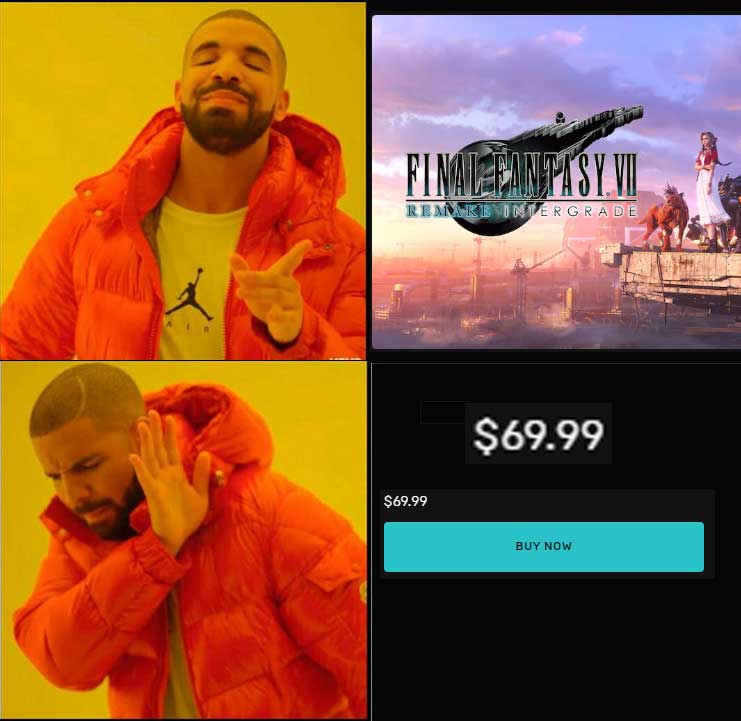
First was the surprise that the PC version of the Final Fantasy 7 Remake (FF7R) even came out. I was so giddy when the original news came out in 2015, but that giddiness has been tempered by years of self-restraint from not purchasing a PS4 to play just that game, and the constant endeavor to avoid spoilers. Somehow that avoidance must have led me to disregard news articles that the PC version was coming out. The fact that FF7R is an Epic exclusive also didn’t even register. But that’s because…
Secondly, seventy what-the-fuck dollars?!
I understand that FF7R is by no means the first to try to raise the hitherto $60 price ceiling of games. Many games of this new console generation are trying the same, including major franchises. It does seem a little weird that the PC port of a game that came out 1.5 years ago is trying to sell at a premium price though. Especially since one could purchase the PS5 version of the same PC bundle (main game + DLC) for $39.19 straight from the Playstation Store. That’s the winter sale price, of course, but there are cheaper options at GameStop and presumably other retailers.
I also understand that gaming companies have technically been raising prices this whole time via DLC and microtransactions and battle passes and deluxe editions and so on and so forth. Some have made the argument that it is because of the $60 price ceiling that game companies have employed black hat econ-psychologists to invent ever more pernicious means of eroding consumer surplus. That argument is, of course, ridiculous: they would simply do both, as they do today.
What I do not understand is gaming apologists suggesting inflation is the reason for $70 games.
Sometimes the apologists make the argument that games have not kept pace with inflation for years. One apt example is how Final Fantasy 6 (or 3 at the time) on the SNES retailed for $79.99 back in 1994. That is literally $150 in 2021 money. Thing is… gaming was NOT mainstream back in 1994; the market was tiny, and dominated by Japan. When you are comparable in size to model train enthusiasts, you pay model train enthusiast prices.
Gaming has been mainstream for decades now. Despite ever-increasing budgets and marketing costs, games remain a high-margin product. FF6 may have sold for $150 in today’s dollars, but FF7 sold three times as many copies for the equivalent of $100 by 2003*. So how does an “inflation” argument make sense there?
“The costs for making games have increased!” I mean… yes, but also no? Developers like to pretend that they need bleeding-edge graphics in order to sell games, but that is clearly not the case everywhere. For one thing, indie developers have been killing it with some of the best titles this decade with pixel graphics and small-group passion projects. Stardew Valley sold how many copies? Remember when Minecraft sold for $2 billion? Not everyone is a big winner, but the costs of game making has only increased in specific genres with specific designs. Do we really need individually articulated and dynamically moving ass-hair on our protagonists?
And that’s where the “iT’s iNfLaTiOn” folks really lose me: who gives a shit about these corporations? I wrote about this 8 years ago:
As a consumer, you are not responsible for a company’s business model. It is perfectly fine to want the developers to be paid for their work, or to wish the company continued success. But presuming some sort of moral imperative on the part of the consumer is not only impossible, it’s also intellectually dishonest. You and I have no control over how a game company is run, how much they pay their staff, what business terms they ink, or how they run their company. Nobody asked EA to spend $300+ million on SWTOR. Nobody told Curt Schilling to run 38 Studios into the ground. Literally nobody wanted THQ to make the tablet that bankrupted the studio.
Why should we take it as a given that PlayStation 5 games cost more to develop? A lot of things in the economy actually get cheaper over time, regardless of inflation. Things like… computers and software. Personnel costs may usually only trend upwards, but again, someone else made the decision to assign 300 people to a specific game instead of 250. Or to scrap everything and start over halfway through the project. And somehow these companies continue making money hand over fist without $70 default pricing. So I find it far more likely that the price increase is a literal cash grab in the same way the airline industry added billions in miscellaneous fees after their bailouts and “forgot” to remove them after they recovered. Basically, because they could. Some informal industry collusion helps.
In summation: fuck the move towards legitimizing $70 MSRP. That 14% price hike is not going to result in 14% better games with 14% deeper stories and 14% more fun. In fact, it’s probably the opposite in that you will just afford 14% fewer games. And unless you got a 6% raise in 2021, you are already eating a pay cut on top of that.
Oh well. Waited this long for FF7R, so I may as well wait some more.
 In An Age
Old Game Appreciation
Jan 12
Posted by Azuriel
There was a Reddit post recently titled “I just sold my childhood for $600.” Bunch of photos of multiple old consoles, stacks of games, and so on. Nice vicarious nostalgia trip. Open up the comments section and the most upvoted replies are roasting the OP saying he got swindled, and that his collection was easily worth $3500 or more. Really?
For giggles, I went to Price Charting and looked up… Chrono Trigger:
Oh.
Now, some of those top numbers are clearly ridiculous collectors items that rich people buy and sell for
money launderingdick-measuring reasons – the rarity of sealed copy of a 27-year old game becoming a thing in of itself. But… uh… guys. I sold my own childhood collection back in 2012 for $375. One of the items? Chrono Trigger with the box and instructions intact. Probably wouldn’t count as “Complete” since I taped the poster to my wall back in 1996, but still. Worth about $300 by itself today.I’m not going to go through my full list, but for comedy purposes:
That’s $673 just on the SNES side. Granted, everything else not listed was less expensive. Nothing was worth much on the Genesis or regular Nintendo side. Did see that Super Smash Bros Melee (Gamecube) was $54, which is about what I paid for it back in college.
I’m not even saying that I regret selling those games when I did. That was almost 10 years ago, after all. If you look at the price graph, Chrono Trigger was selling for $42.50 at the time. Plus, I was starting a new phase of my life:
Bit prescient there, eh? I wrote that in 2012. My son will turn 3 this year, so it will be closer to 2025 before he’s playing videogames, I reckon. But sorry, kiddo, you’ll have to play Chrono Trigger on an emulator and not a then-$900 cartridge.
Anyway, if you still have a box full of old games in your own closet, now might be a good time to take stock. Some of them have apparently appreciated very nicely. For some reason.
Posted in Commentary
1 Comment
Tags: Chrono Trigger, Nostalgerbation, Price Charting, Retro, Sell All the Things, SNES