Yearly Archives: 2011
Review: LIMBO
Game: LIMBO
Recommended price: $5-$10
Metacritic Score: 89
Completion Time: 3 hours
Buy If You Like: Giving charity to promising indie game designers.
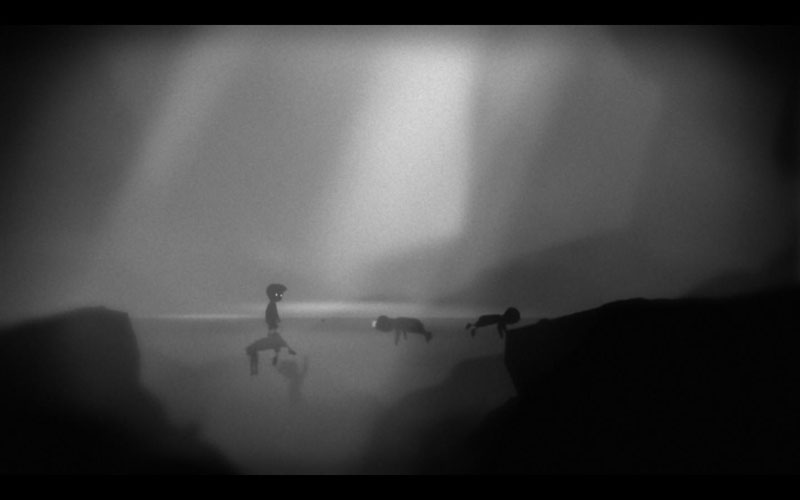
Most atmospheric game since ICO.
Diablo Learns from WoW
All the cool stuff is happening on the Diablo 3 forums, as far as roundabout WoW internal design philosophy goes. For example, this is Bashiok:
You’re overestimating what stat points actually provided, customization-wise in Diablo II, and really overestimating what skill points did.
Diablo (1) did not have skill trees, it was a feature added to Diablo II, and then more or less copied by World of Warcraft. Some could say to World of Warcraft’s detriment as it’s been struggling with how to cope with a skill tree system, which has huge inherent issues with very little benefit, for years. Diablo III, like Diablo II, is an evolution of the series and game systems.
Saying that Diablo III shouldn’t learn from the successes and mistakes in World of Warcraft, let alone Diablo II or any other game, is just nonsensical.
Bashiok went on to post some Youtube links of Jay Wilson being interviewed about a host of Diablo 3 design questions. One off-shoot of that was about Diablo 3 PvP, in which he very strongly expressed disgust about how “PvP wags the tail” when it comes to WoW design, and that it would be “over his dead body” for the same to happen in Diablo 3. In fact, this is what he literally said vis-a-vis WoW:
Even the amount that PvP can alter the PvE game in WoW is unacceptable to us. Whenever we run into a case of “this would be really cool for us in PvE,” the PvP guy goes [raises hand] “That kind of screws PvP,” the answer is always “Shut up, PvP guy. It’s awesome in PvE and so that’s what we’re doing.”
This is not particularly groundbreaking news (the tension between PvE and PvP has been officially recognized for years), but it is fascinating to me hearing a more candid take on these subjects from designers. And, of course, what it could mean in design moving forward. Given that PvP is essentially free, infinitely recurring content while patches take 6-7 months to phone in lovingly craft, such hostility is… instructive.
Questing and Interactivity
I was all prepared to talk about questing and how I think MMO designers are doing it wrong… and then I discovered Jeff Kaplan pretty much said everything back in 2009.
“Basically, and I’m speaking to the Blizzard guys in the back: we need to stop writing a fucking book in our game, because nobody wants to read it.”
That line is a part of a larger commentary on what Kaplan calls Medium Envy – the tendency for game designers to turn their game into a book or movie at the expense of the one quality that sets games apart: their interactivity. The industry has wild oscillations on this subject, with brilliant examples of the Right Way (Half Life series with zero cutscenes) and the Wrong Way (Metal Gear Solid series). Of course, I say “Right Way” but obviously feel that cutscenes and cinematics have a place in expanding the narrative in ways that perhaps interactivity could not (at least without gimmicks).
I definitely recommend checking out the presentation through the summary at the above link, the Wow Insider writeup, or even listen to the whole hour-long presentation via Vimeo (audio only, but it does have photos of the slides). Assuming, of course, you did not already read this two years ago.
Review: Singularity
Game: Singularity
Recommended price: $5-$10
Metacritic Score: 76
Completion Time: 8-10 hours
Buy If You Like: Shameless Half Life 2 / Bioshock knockoffs
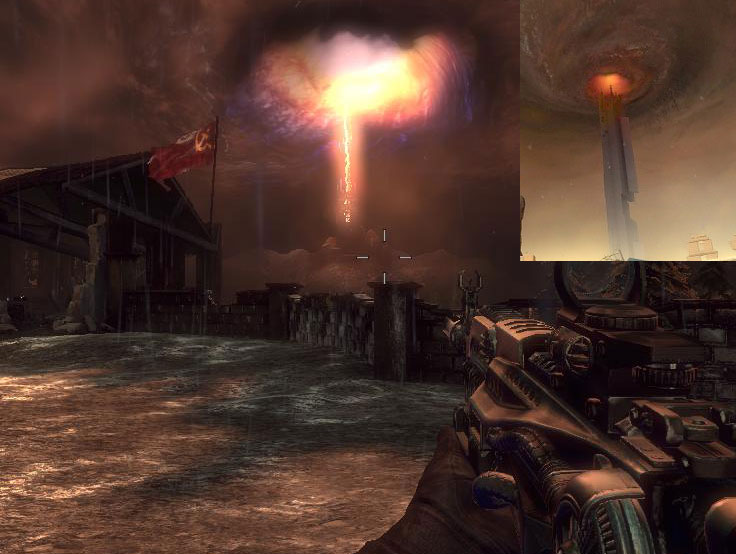
The lines between imitation, parody, homage, and plagiarism are as tangled as the plot.
Choosing to Miss the Point
The unofficial blogging theme of the week is Choice, and while I was not going to comment on it, the sheer force of a thousand bloggers missing the point simultaneously slowed the rotation of the Earth enough to make it necessary. So allow me to clear up a few things.
1) You cannot have “meaningful” narrative choice in MMOs. Nor would you want them.
In case you need a reminder, we are talking about Massively Multiplayer Online games here. Assuming “meaningful” choices existed, who is going to be making them? You? Or the ten thousand other players on your server? You cannot all be making meaningful choices pretty much by definition. Remember the Siege of Undercity? No you don’t. The Siege was completed by Arthasdklol hours before you logged on. If you solve the Arthasdklol situation by instancing everything out, at what point does A) the choices cease to remain meaningful, and B) the game ceases to be an MMO?
The lack of “meaningful” (narrative) choices in MMOs is not a bug, it’s an essential feature.
“What about MMOs like EVE?” I hear you cry. Obviously Sandbox content is a bit different than designer-created narrative content. But it is important to not get too pedantic with pitting player-generated stories against a coherent narrative, the latter of which is what everyone is talking about when they speak about choices anyway. If the headlined EVE scams and interstellar drama is put on a pedestal, why is WoW intra-guild drama not similarly enshrined? Heard that Dragonwrath legendary story yet? If EVE has “meaningful” choices due to nullsec shenanigans, then so does every social game. Which begs the question of whether these “meaningful” choices only exist in the context of social interaction. In other words, the game proper has nothing to do with it. Maybe Game A creates better incentives than Game B for social interaction, but just because you build it, does not mean the horses will drink. Or something.
2) You cannot have “true” failure in MMOs. Nor would you want them.
Raise your hand if you have ever failed an escort quest in an MMO. Now keep your hand raised if you think escort quests get any more interesting or fun if the person you are escorting permanently dies and you can never retake the quest again. If you still have your hand raised, lower it if the reason is because you hate escort quests with a passion and wish you could kill the dumbass you are escorting yourself, for running headlong into unnecessary mobs or how they move with the speed of a narcoleptic 3-toed Sloth that missed it’s insulin injection.
The people with their hands still raised should use it to slap themselves in the face for being a liar. Didn’t your mother raise you better?
The type of “failure” frequently enshrined by these bloggers is the sort of failure that results in a Game Over screen in single-player games. And the difference between reloading your last save after a Game Over and abandoning a failed quest and retaking it is… what? That’s right, there is not a damn single difference. Too Damn Epic asserts:
What happens, though, when your games are rigged so that you can’t lose? That’s the underlying problem in most MMOs. You can’t lose. They’re jury-rigged for success, and as Gandhi said, “Freedom is not worth having if it does not include the freedom to make mistakes.” Tweak that a bit for our purposes, and you get:
“Choices are not worth having if they do not include the option to make mistakes.”
[…] After all, in WOW, you can’t really make mistakes. You can undo talent trees. You can wipe on braindead PvE content to your heart’s content until you “win”. You don’t lose anything in PvP. In an effort to make games more accessible and retain subscribers, we’ve lost the capacity to fail – and in the process – lost the capacity to produce meaningful choices.
“You can wipe on braindead PvE content to your heart’s content until you ‘win.'” Err… so you are saying that you can fail until you succeed? Just like in any game ever made? Maybe there is a serious psychological difference between re-taking a quest and hitting F9 that I am not picking up on. Or perhaps the failure scale these individuals use have only two pegs: Faceroll and Battletoads. And as someone who actually played Battletoads on the NES back in the day, the game did not get more fun when you spent four hours memorizing all the walls in the racing level and the pitfalls in the tube level only to die in the snake level and have to redo everything all over again. That sort of designer bullshit has exactly one function: to turn a five-hour game into a 40 hour nightmare.
The bottom line here is that MMOs having a permanent failure state is actually a worse penalty than any single-player game, with the exception of Russian Roulette. Once you accept that a permanent failure is off the table, we are really quibbling over the length of player time to hold hostage. And honestly, I want to meet the Carebears who look at PvP and say nothing is lost when you get thoroughly owned by a Frost mage that is now teabagging your corpse. Somehow -1 Dignity and +1 Blood Pressure never evened out, in my experience.
3) What is “meaningful” choice anyway?
I have put “meaningful” in scare quotes every since I read SynCaine’s post on choices, and based on the example he used, I think everyone should as well:
A game like Dragon Age is full of ‘fake choice’, where every quest seems to have multiple solutions, but the end result is just different loot or some placeholder NPC switching up one line with another. Not that it really mattered in DA, the game was still fun and its story was good-enough to see it to the end. I’d just never put it anywhere near The Witcher in terms of moral choices and tough decisions.
Err… did we play the same Dragon Age? Assuming you beat DA and/or don’t mind 100% spoilers, just casually glance at the Epilogue Wiki page. Perhaps his point was that epilogue slides are just “switching up one line with another?” I have not played The Witcher myself although I own both 1 & 2 on Steam (SynCaine must have just missed the deal a few months ago), so I cannot compare the two. What I will do is make a wild assumption that what choices The Witcher does offer the player does not come in the form of mutually exclusive content, which appears to be the gold standard of “choice.” If the Witcher does have mutually exclusive content, it will be in the radical minority of games.
I am making a point of this not just because what is “meaningful” is subjective, but also because I think this usage of choice is dumb. Flavor choices are inexplicably dismissed as shallow or meaningless by bloggers, when they are absolutely critical in developing an identity, or affinity to your character or the narrative as a whole. Planescape: Torment is brought up a lot as the pinnacle of storytelling, for example, but how much “real choice” does Planescape actually have in comparison to, say, Dragon Age? Very little. The brilliance of Planescape came from the depth of the “meaningless flavor choices” (all 800,000 words of them) which otherwise pulls you into the narrative in the wholly unique way that only video games can.
Besides, if you believe flavor choices are meaningless or have no consequences and therefore are not choices, how do you explain the apparent success of the F2P cash shop model? Or the likely fact you have things hanging up on your wall right now that you paid for and yet have nothing to do with the structural integrity of your domicile?
Individual expression is, indeed, the most interesting choice you can make despite – or perhaps in spite of – the likely fact that no one else cares.
Skeptical of Storybricks
You have probably read about Storybricks from any number of other bloggers. If you have not, well, take your pick. Far be it from me to denigrate free thinking and innovative design (god knows we need some these days), but none of these full-page ads for Storybricks ever seem to answer what is to me the fundamental question:
As a player, why would I WANT this?
Keep that question in mind as you read this excerpt from Too Damn Epic’s Storybrick article:
By focusing on expressive AI, a different experience than currently experienced in MMOs (one that is closer to a tabletop system) becomes available. NPCs will be given drives, emotions and desires. More importantly, relationships between characters will be developed and interactions between the player and characters will affect how characters relate to the player.
For example, imagine a farmer that you as a player have never encountered, an NPC that feels neutrally toward you. This farmer owns a flock of sheep. As a player, you come upon a merchant wanting wool and kill the sheep for the merchant. If you then encounter the farmer his reaction towards you will no longer come from a neutral disposition but one of anger or unfriendliness. And what you experience may be completely different from your friend who did not kill the sheep. Storybricks is the tool that allows players to build these complex relationships into their stories giving the depth to their experiences.”
Put aside for the moment what kind of game architecture would be necessary to compute all these dynamically changing quests and attributes. Would you, as a player, WANT to quest in a potentially labyrinthine “unforeseen consequences” environment? Killing a farmer’s sheep is pretty straightforward of course, but this sort of system could engender a Machiavellian plot wherein finding the Blacksmith’s hammer pisses off the Innkeeper whose daughter is in love with the prince who gives your execution order to the assassin who buys the temper-steel poisoned dagger from the newly upgraded Blacksmith. If someone (non-ironically) wrote a plot that involved every quest you completed as having the opposite effect you intended, you would call that writer a hack. As WOPR would say, “The only winning move is not to play.”
Of course, the Storybrick guys aren’t making a game like that, or any game for that matter; they are simply making the tools. More precisely, tools for a game that does not exist yet, and one in which would require user-generated content submission, such as Neverwinter Nights or Fallout 3/NV. I say “require” because I cannot ever imagine that a game designer would leave the fate of the narrative solely in the hand of player actions. And I certainly could never see it in an MMO. Why? Here is what epic.Ben asserts from the TDE article:
In other words, Storybricks is going to shift the focus in your MMOs. Instead of mindlessly clicking quest text and proceeding through a Pavlovian loop of grinding, achievements, and raiding, you’ll actually pay attention to what’s happening in the world around you. NPCs will display emotional depth, and dynamically react to your experiences in the game world.
One of the hallmarks of the MMO genre is a notion of a persistent world, but that persistence is always in tension with the fact that other players exist. Players say they want a world where consequences matter, that if a town gets burned down it stays burned down. But do they really want a world in which the choice of saving the town is never given to them because some noob 4 years ago logged off in the middle of the quest to put the fire out and the town burned down? “Phasing” was a much-touted Blizzard innovation which amounted to open-world instancing, with exactly zero of the MMO elements intact – the designer reaction to the infinitely frustrating disappearing party member issue of Icecrown was to… phase the background and NPCs in Firelands instead.
Going back to Storybricks, what happens when Bob and Tim want to quest together, but Bob killed the sheep while Tim bought wool instead? Under traditional MMO design, nothing happens because it doesn’t matter how the quest is accomplished (assuming you can even complete a quest different ways). And under Storybricks? I have no idea. Does the farmer have a Schrödinger-sheep that is both alive and dead? Assuming the farmer hates Bob and likes Tim, does he still give out a quest to both, or just Tim? Can Bob get credit if he helps Tim complete it? If the farmer has the same quests regardless of feelings towards Bob, does the farmer having “emotions” matter at all?
This is my fundamental problem with the epic.Ben’s assertion above, and Storybrick’s unspoken premise that “if we build it, they will come.” Or more precisely: “if we build emotive NPCs, the player will care.” Emotional depth and multifaceted character development are the pinnacle of what a storyteller can achieve when crafting a tale, but it always hinges on the listener/player caring about said character first. Why do I care that the farmer is mad at me for killing his sheep? Is he an interesting character? Or am I supposed to care because he holds potentially fun (or required!) quests hostage behind a fancied-up logic gate of prior actions? Much like what happens in real life all the damn time, just because a person interacts with other emotive beings does not mean they care about how other people feel.
I can see and appreciate the work the Storybrick people are doing in building a cart, and hoping that a horse comes along to carry it. Finding a fictional character you have some interest in and realizing that there is emotive, narrative depth to their actions is a truly magical experience. That being said, it still requires someone to have crafted an interesting character to begin with. And if they already went through that much effort to make one, I just do not see the appeal of using Storybricks to fill in the blanks Mad-Lib style. Nor do I see the appeal to the player of being in an environment where potentially random actions have lasting, permanent consequences. If accidentally killing a sheep with a stray Arcane Explosion can be rectified by reputation grinding with the Farmer, that is almost worse.
Inevitability of Decline
Nils and I have been debating here lately over whether the decline of WoW’s growth had something to do with Wrath and Cataclysm’s design. One of my biggest pet peeves when it comes to WoW discussion is the notion that subscription numbers are somehow correlated with endgame design. They are not. As I mentioned in that article, only ~20% of subscribers killed the easiest (non-Naxx) boss in the entirety of Wrath and the stats for Cataclysm thus far¹ are not any better: 17.9% have killed Magmaw, even after the nerf. But my actual argument goes further than that:
The decline of WoW was/is inevitable. That is to say, WoW’s subscription growth would have slowed and eventually declined no matter what Blizzard did. This is in contrast to the implied argument from Nils and others that had Blizzard simply copy & pasted TBC, they would have gained 2 million subs per year into perpetuity. My argument about the inevitability of decline has further consequences when it comes to MMO game design, because I believe that good design decisions can still lead to net loss in subscribers. Bad design decisions can certainly increase the magnitude of the hemorrhaging, but the best you can hope for with good design is to stave off the inevitable as long as necessary. This argument rests on a few premises.
Premise 1: Fun has diminishing returns.
I explored this premise a bit in The Diminishing Returns of Fun post. The basic idea is that Novelty is the ineffable quality of “newness” of a game that is consumed as the game is experienced. It can also be expressed by the quotes “You can’t go home again” and “You can’t step into the same river twice.” Novelty can be about learning new systems (i.e. rules) within a game, but it can also be about seeing new areas². Part of the “ineffable” problem is that novelty is not just about new things in of themselves. A jigsaw puzzle you previously solved does not become novel simply because new rules are introduced, like forcing yourself to not start with edge pieces or playing Tic-Tac-Toe before being able to place a piece. Once you feel confident of the contours of an experience, the remaining novelty quickly evaporates.
Nils described this once as: “The longer you play a game, the lower its potential to keep your mind busy, because you get ever better at it. If you so want, the game is in the cache now and you don’t have to think as much to play it.”
How this relates to WoW can be expressed in this investor call quote from Blizzard president Michale Morhaime:
“As our players have become more experienced playing World of Warcraft over many years, they have become much better and much faster at consuming content,” he said at the time. “And so I think with Cataclysm they were able to consume the content faster than with previous expansions, but that’s why we’re working on developing more content.”
Players become much better and faster at consuming content because the novelty of said content has already been experienced. A quest that might once have been novel (despite being built from un-novel components like Kill X Foozles, etc), becomes much less so the Nth time around. With the novelty gone, there is no compunction against finishing the content as quickly as possible – the quest becomes a task to be completed, instead of an experience to be sensed. Anyone can open a book to its final chapter and read how it ends, find a plot summary or otherwise “spoil” it. That we do not do this is a function of our desire to experience the story, which (typically) only occurs by limiting ourselves to reading it in order from beginning to end.
Unfortunately for Morhaime, developing more content will not stop the decline, no matter how good it is.
Premise 2: Market Saturation exists.
As I talked about in Saturation, Tom Chilton made the intriguing comment in an interview that:
” […] if you look at the way the population breaks down, we’re at a point in our history where there are more people that played World of Warcraft but no longer play World of Warcraft than currently play World of Warcraft.”
If measured at the peak of WoW’s reported subscription rate of 12 million, that means roughly 24 million people have played WoW at some point in time. How many more people would play WoW that have not done so already? That is somewhat of an open question. However, if we look at the Wikipedia list of best-selling games of all time we see that more people have bought World of Warcraft than Halo 1-2-3 combined (5m, 8m, 8.1m), more than Super Mario World (20m), more than Super Mario 64 and Mario Kart 64 combined (11.62m, 9m), more than The Sims (16m), and damn near two-thirds of the way of overcoming the original Super Mario Bros that came with every single NES (40m).
I doubt that Chilton was including Free Trial downloads in his statement, but either way, it is difficult to believe that the market has been anything other than tapped. If we assume that Blizzard is staffed with rational bussinessmen (if not designers), then we can infer from Chilton’s statements that the market for WoW has peaked according to Blizzard’s own data, and further sub growth is more likely to come from additional localizations than, say, capturing/retaining more US/EU subs.
Premise 3: Players consume content faster than designers create it.
The difference between this and Premise 1, is that Premise 1 is about how it becomes increasingly difficult to create subsequent content as novel as the original. This particular premise is simply how long it takes to create content versus how long it takes to consume it, novel experience or no.
Factoid: There were 8.75 million subscribers in vanilla.
Back in my Subscription and Correlation post, I augmented a graph from MMOData.net to show the release date information of the WoW expansions for illustration purposes. This is what it looked like:
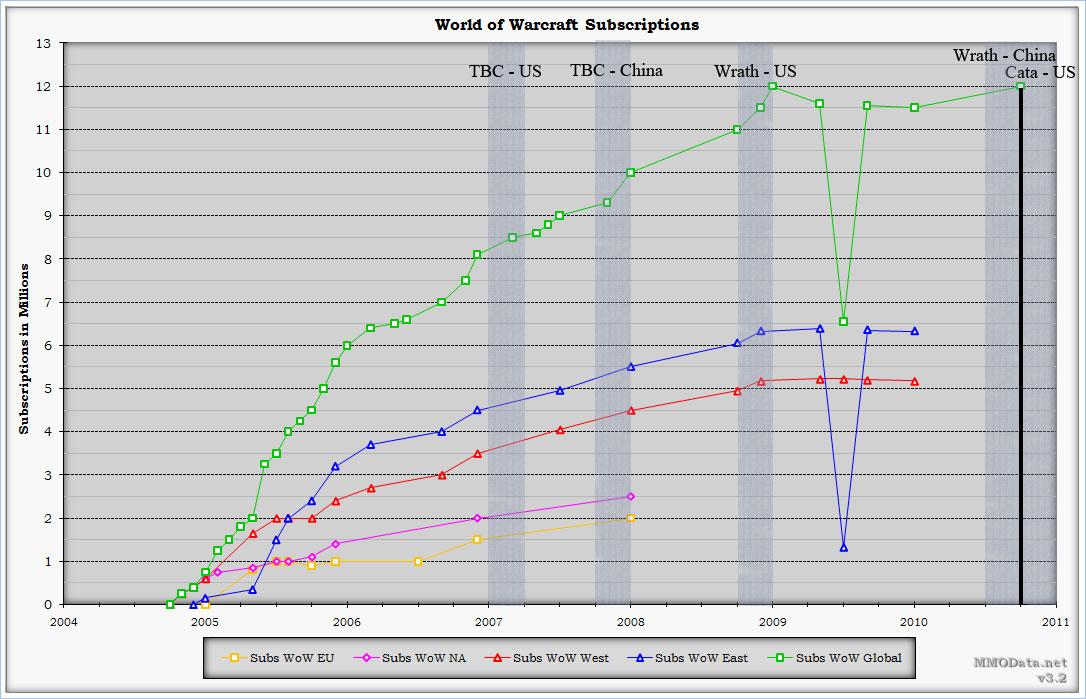
The interesting thing to note is that the total subscription numbers (the green line) is actually above 8 million before the release of TBC. China did not get TBC until the end of 2007, so if you add that interim period (the blue line) to the whole, we get WoW’s vanilla population at 8.75 million.
I believe this factoid is important because that 8.75 million segment can be considered the Baby Boomers of WoW. Indeed, between 2006 and 2007 the sub population grew from 6 million to 8 million – churn notwithstanding, it is possible that 6 million subs aged for an entire year. Compare that with 2005 to 2006, where less than a million subs could be said to be one year old by the end. In other words, starting in 2006 the volume of veteran players more than likely outpaced new players.
Premise 1 + 2 + 3 + Factoid = The decline of WoW was/is inevitable.
Ultimately, I wanted to stake out this argument because A) I do not see many people that do despite implicitly acknowledging it (e.g. growth is always finite), and B) good MMO design decisions tend to be indistinguishable from the bad when viewed through the one-dimensional prism of subscription numbers.
For example, the general (blogging) zeitgeist surrounding Wrath of the Lich King was that it killed the goose that laid the golden eggs. What does not get separated was, say, how the questing experience was orders of magnitude better than questing in TBC (does anyone seriously disagree?), and how I feel that the episodic raiding model is a lot more honest, and better designed than a strict linear progression model. Yes, raid difficulty was poorly handled. Yes, turning heroic dungeons into 5-man daily quests burns people out (starting with TBC, mind you). None of those raiding missteps can realistically can be responsible for more than a fraction of sub losses, but that is neither here nor there.
The mechanics of what I am asserting can be visualized in the crude image below:
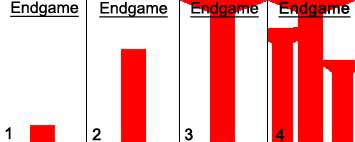
In frame 1, a player has just begun playing. In frame 2, they have carved a path through the majority of the game on their way to the level cap. In frame 3, they have reached the endgame, where most of their activities involve repeated content such as dungeon runs, raiding, dailies, and so on. In frame 4, the player either rolls alts or otherwise backtracks in search of novel experience in the content they missed (different leveling zones, class-specific quests, the opposing faction, etc). As expansions are added, the frames get taller… but not by much. Whereas the original leveling experience might have taken 300 hours, leveling in an expansion takes a fraction of that. If an expansion is released when you are in frame 2 or 3, that is fine. But if you are in frame 4… the end is (already) near.
So, in summation, WoW would have inevitably declined no matter what Blizzard did. That the decline “began” during Wrath is largely an irrelevant coincidence compared to the Baby Boomer population wave reaching the natural end of their novel experiences. The Baby Boomer hypothesis can be falsified should we ever get average age of account statistics or character maps of activity, but it would not affect the soundness of the underlying argument either way. Raid design decisions are unlikely to have anything but marginal effects on subscriptions compared with what the bulk of players are doing – which we know to be not raiding. And I believe that a lot of better game design could be achieved if we spent less time fixating on a drawn-out, endgame experience.
The deserved popularity of WoW proper came from the strength of its IP narrative, its pacing, its humor, the vastness of its game world, the underlying character of each of its zones, the uniqueness of its classes and how each demonstratively created their own novel experience. We should not take its declining subscription rates as anything more than the natural decline of an otherwise well-lived life. Here is to hoping that Blizzard opts for hospice care instead of the intensive life support that is currently in vogue.
If not… well, here is a raised glass to Diablo 3 and Titan.
¹ WoWProgress says 64,642 guilds have killed Magmaw as of the time of this writing. Assuming 18 raiders per guild (charitable considering 10-man raiding is vastly more popular), that means 1,163,556 players. WoWProgress only tracks NA/EU/KR/TW guilds, which number ~6.5 million. Ergo, 17.9%.
² You can probably argue that exploration equates to “learning the rules.”
Review: And Yet It Moves
Game: And Yet It Moves
Recommended price: $1 / Steam deal
Metacritic Score: 75
Completion Time: ~2 hours
Buy If You Like: Proof of concept physics-based indie puzzle platformers
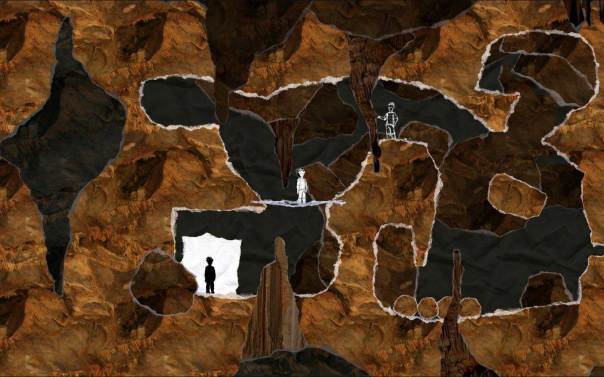
- Get those balls from A to B without hurting yourself. Always harder than it looks.
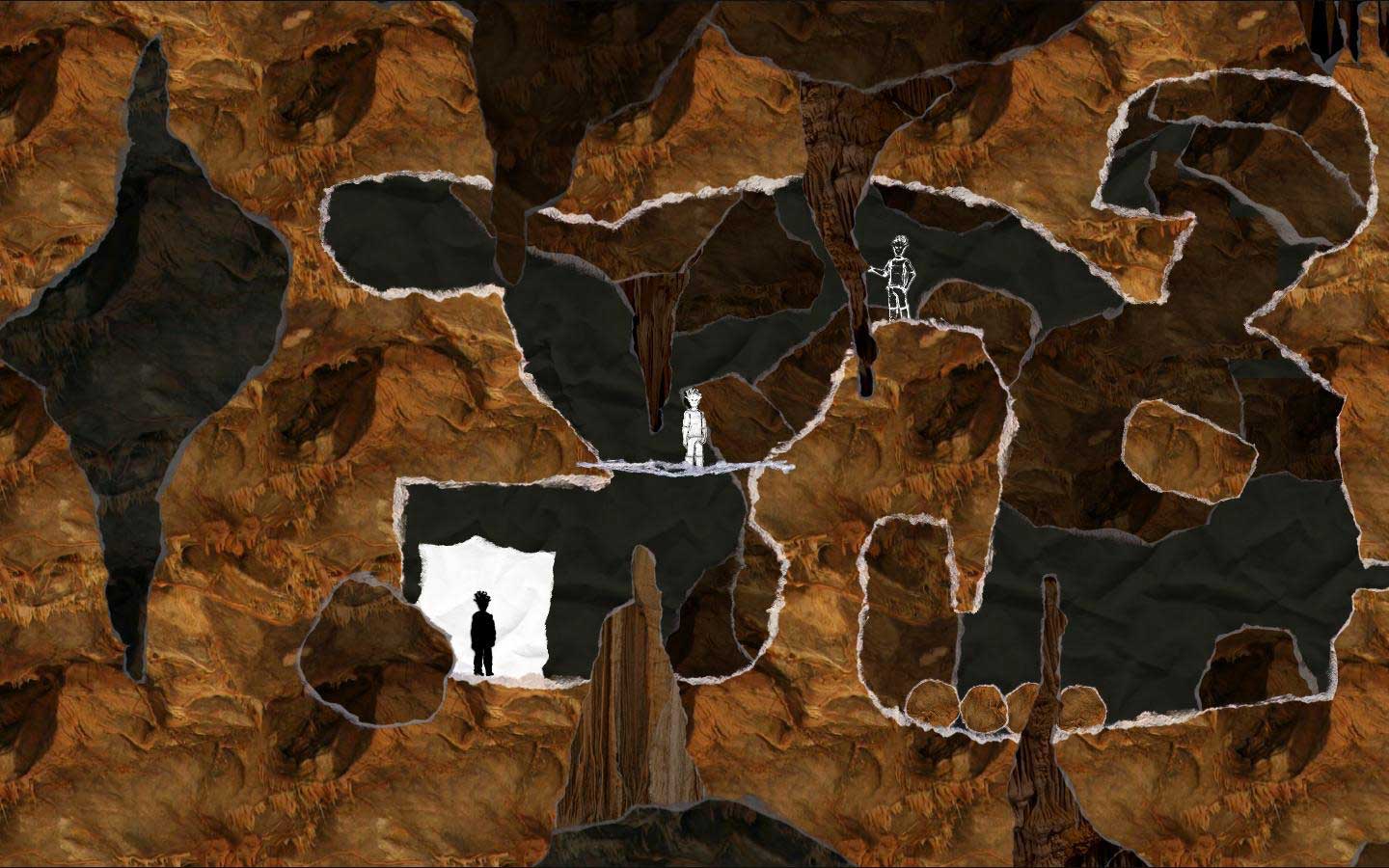
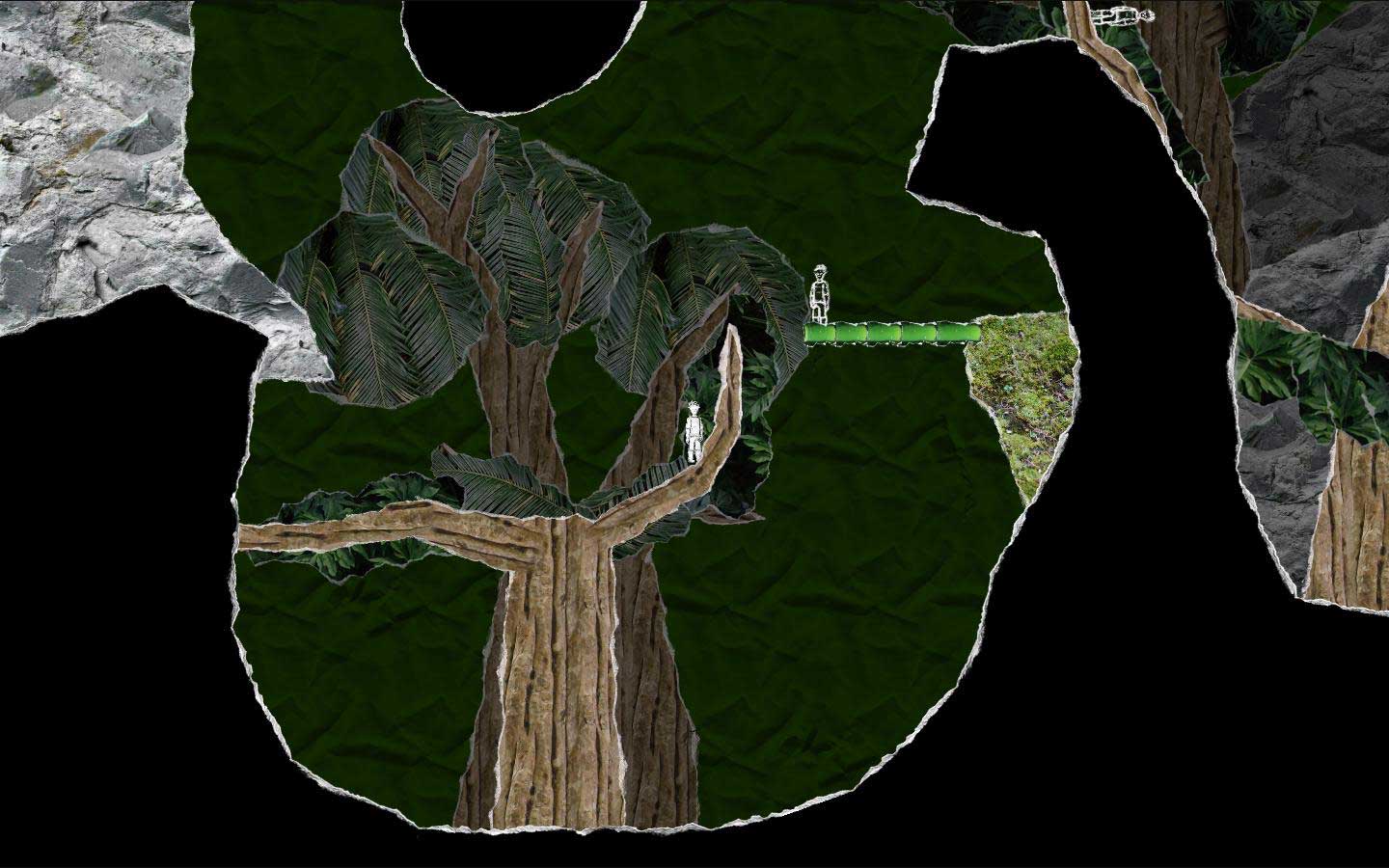
The great thing about the indie game phenomenon is how moving beyond the necessity of fully-realized 3D graphics not only allows smaller companies to compete with commercialized behemoths, but also exposes us to visual styles that are equal parts game and art. Quite apart from anything else, one of the best points about And Yet It Moves is how well the paper mache slash magazine cutout slash last minutes of Rejected Cartoons comes across. The visuals along with the “death” animation along with the ambient soundtrack and sound effects all mesh into an unified narrative, so to speak, that simply works.
The game itself works too… as a proof of concept goes. You move the avatar left and right and can jump, but the lion’s share of gameplay takes place by the ability to rotate the entire game-world in 90 degrees increments (with a quick 180 option as well). The physics puzzles primarily have to do with the short distances your avatar can fall before he explodes into paper confetti – momentum is conserved during the rotations, which can quickly result in terminal (for you) velocity. These physics also apply to various paper boulders and other debris that may be nearby, so care has to be maintained lest you blithely turn a floor into a wall and get crushed by the scenery.
Overall, the game is fairly addictive between its charming indie qualities and excellent pacing, but there is simply not enough of it to go around. Frequent checkpoints thankfully save you from having to redo each major puzzle element of the level should you die afterwards (you will), though this does scoot the player to the credits in less time than most movies. At a default price of $9.99, that is fairly ridiculous. If you see And Yet It Moves as part of some Steam or indie game pack deal, you can rest easy in the knowledge that this game’s inclusion does add value to the purchase. Just not enough to justify the full MSRP.
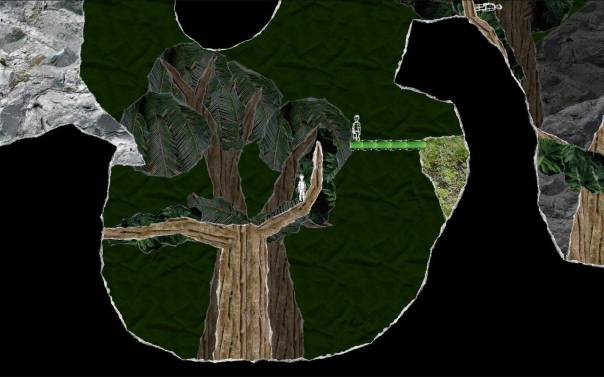
- You quickly lose all sense for up and down, without the pesky disorientation.
Saturation
There is a fascinating quote from WoW’s Tom Chilton in this IGN interview that, I believe, conclusively discredits the notion that Wrath of the Lich King (or really any expansion) was somehow responsible for the stagnation and peaking of subscriptions:
Moving forward beyond 4.3, Chilton explained the focus of the development team. “I would say that the majority of our mindshare as a team goes toward our existing player base. How do we keep them entertained and how do we keep them enjoying World of Warcraft? I don’t know if that’s necessarily the right approach as time keeps going on. If you look at, if you look at the way the population breaks down, we’re at a point in our history where there are more people that played World of Warcraft but no longer play World of Warcraft than currently play World of Warcraft. That was totally not true four or five years ago, and so in a way the demographic of the potential returning player becomes more and more important over time.”
On the one hand, some might argue that this phenomenon is not particularly noteworthy at all. If a MMO sells 100 copies and two months later only 49 are still subscribed, then more players have played that MMO and stopped than continue to play it – that does not means that there could not be another 100 potential customers who might not have known about the MMO.
The difference with WoW, of course, is one of magnitude. Depending on when Chilton looked at the population breakdown, that means WoW could have had in the neighborhood of ~24 million players overall. How much bigger can we imagine the market for a fantasy-based Warcraft IP MMO be? While we can only speculate, I think it is reasonable to assume based on Chilton’s response that the market is saturated to the point that Blizzard’s time is better spent recapturing lapsed players than it is marketing new ones. Surely they have done the market research, and if we accept them as rational businessmen, then this interview (and their actions) confirm the hypothesis of market saturation. In which case, as I argued several months ago, raid/reward philosophy shifts in Wrath of the Lich King (and Cataclysm) likely had little to nothing to do with slower subscription growth.
Beyond that, what is similarly fascinating about that interview is the very next paragraph:
“I don’t think we’ll ever be able to stop feeding the beast,” said Chilton. “It’s kind of what we call trying to keep the players entertained, you know the guys bored right now and you know what are they going to do next month? But I think that for us to continue to be successful we have to think more and more about the new players that are coming into the game now and the potential returning players. What are we doing to the game that lowers those barriers to entry?”
I suppose it could be read multiple ways, but I got the impression that going forward Blizzard’s design will be less centered on keeping existing players happy and more on enticing back former players. Obviously, things like tier sets on vendors and more accessible raids make hardcore players unhappy, but this seems a confirmation that – in true triage form – the designers would rather make you (an existing customer) unhappy if they could potentially lure back two former customers. The ideal would be that they could both make you happy and former players happy simultaneously, of course. That said, this is the first time I have come across so candid a game designer.
As a former player myself, it will be interesting to see how this shakes out.
 In An Age
Legendaried
Sep 14
Posted by Azuriel
As you may or may not have seen on MMO-Champ, there was an interview with J. Allen Brack, Lead Producer of World of Warcraft, in which he dropped a Legendary bomb:
what is this I don’t even
Where do I start?
I get that it was forewarned (in the tank Q&A of all places) that the 4.3 legendary “will have much more narrow appeal.” But… really? Remember the blue post back in June that speculated about why rogues are the least-played class? I am almost wondering if this legendary dagger is a cynical attempt at rectifying that discrepancy.
¹ Meaning more than one class could use it, not that all of them had 3 popular classes or whatever.
Posted in Commentary, WoW
4 Comments
Tags: Blue Post, Facepalm, Interview, Legendary