Diablo 3… Soon?
There was a bit of excitement over the weekend following a Kotaku article that showed a Diablo 3 game display in a Best Buy whose countdown clock showed the release date being February 1st. Disappointingly, Bashiok replied a few hours later on Twitter with:
Diablo III does not have a release date. Any store or person claiming otherwise is guessing.
While the February 1st date no longer seems likely, I nevertheless was somewhat shocked into realizing “hey, it’s probably coming Sooner™ than Soon™” – that would have been ~3 weeks away, after all. I have mentioned before that D3 is going to be one of those rare Day 1 game purchases for me, and that puts me in a bit of a bind, decision-wise. I was close to breaking down and buying SWTOR before a price drop after reading four weeks of blogroll posts, but decided that perhaps playing through Mass Effect 1 & 2 first would be a good idea. You know, so I could make informed comparisons. A day later the D3 news broke, and I thought “oh shit, I probably should play Torchlight before it gets ruined, yeah?”
As a 3-year late aside, I am amazed at either the charity of Blizzard’s legal department or the extent to which iconic items are not protected by copyright. Scrolls of Town Portal, with blue ribbons, making blue portals, with their identical stated function? I know Torchlight was made by ex-Blizzard guys, but wow. There are obviously a lot more similarities, but that seemed the most egregious for some reason.
The decision bind is that the WoW Annual Pass “promotion” is still active, and I almost expect it to be indefinitely (in some form or another). Since I am already committing to D3 on launch, and will be interested in MoP once released, at what point does it not seem foolish to sign up? Especially given my predilection towards AH shenanigans, it is entirely possible that I may be able to finance the entire $155.88 Annual Pass damn near exclusively through D3.
…Hell, why not? Let’s call it the Diablo Annual Pass Challenge: pay for the Annual Pass entirely through D3’s real-money AH. Good idea, or brilliant idea? Time will tell!
Reviews: EYE: Divine Cybermancy, Gratuitous Space Battles, Hard Reset
Game: E.Y.E: Divine Cybermancy
Recommended price: $5
Metacritic Score: 60
Completion Time: ~14 hours
Buy If You Like: Half-Life 2 meets Deus Ex meets Warhammer 40k meets mostly hollow FPS frame
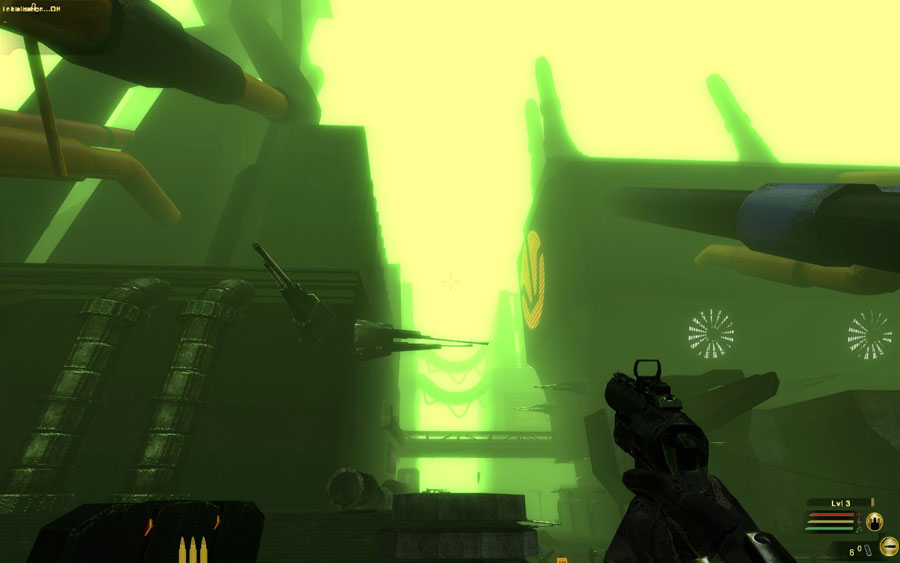
Welcome to the future.
Everything you need to know about E.Y.E.: Divine Cybermancy (hereafter EYE) are the first two lines from its Wikipedia page:
E.Y.E: Divine Cybermancy is an indie action/role-playing first-person shooter video game created by the 12-person French development team Streum On Studio, and built using Valve Corporation’s Source engine. It is a cyberpunk themed game based on the role-playing board game “A.V.A.” developed by Streum On Studio in 1998.
In other words, yes, this is a FPS built in the Half-Life 2 engine based on a board game and designed by 12 French guys.
The funny thing is that EYE plays exactly how the Steam gameplay videos look, e.g. cool. After character generation, you start out in a weird dreamscape area before jumping through a Martian gate and waking up in a cave. From here, the game takes you through impossibly large Blade Runner-esque settings, and has you kill (usually) never-ending waves of AI bots on your way to completing various objectives in – have I mentioned impossibly large? – locations. Despite the AI bots behaving very obviously like AI bots, the combat in EYE nevertheless remains deeply satisfying for reasons I cannot express.
The problem is that you can never really shake off the vague sense of hollowness that pervades the entire game. You gain XP for kills and damage, and as you level you spend skill points raising stats that allow access to either better weapons, better tech, or better PSI powers. You can upgrade your various implants by spending Brouzouf, the games currency, or you can spend it researching various technologies that may grant you additional stat points or unlock other items (or be a total waste).
And yet… none of it really matters. The game’s plot is the most convoluted, strangely localized mess I have ever seen. And despite “branching paths” the story very clearly was never meant to drive the game in any particular direction. I mentioned earlier that all the enemies behave like AI bots and I meant that – there is never any sense of scripting in the encounters you face, it very much feels like a Counter-Strike match against bots. Each map you complete can be played again as a “secondary mission,” where you are given three random objectives and placed in the middle of a never-ending firefight on said map; ironically, these secondary missions usually end up being more coherent and fun than the plot itself.
All that being said, I actually stuck through EYE to the end and found myself replaying the secondary missions quite a few times. I realize now that my experience is probably colored by my love of the sort of Deus Ex/Warhammer 40k/Half-Life 2/Blade Runner zeitgeist of the game, but I certainly did find the game more amusing than a 60 Metacritic score would seem to suggest.
If you find yourself gravitating towards cyberpunk games regardless of quality, you cannot go wrong with EYE… provided you find it on sale.
Game: Gratuitous Space Battles
Recommended price: bundle
Metacritic Score: 72
Completion Time: ~7 hours
Buy If You Like: The modular unit-designing of space games, without all the pesky gameplay
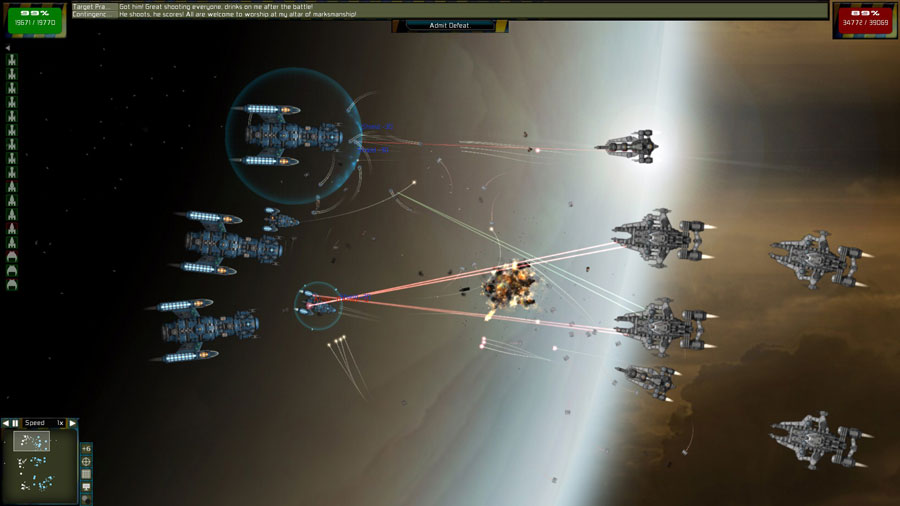
You have no chance to survive make your time.
Gratuitous Space Battles (hereafter GSB) is one of those indie games that is so ballsy that I am almost inclined to overlook the fact that there is no real game to speak of. Straight from the Steam description:
Who needs backstory? Who needs resource-gathering? Diplomacy is so last year. Gratuitous Space Battles cuts right to the chase of sci-fi strategy games, and deals with large, completely unjustified space battles between huge opposing space fleets.
Do you know in space-sim games when you are designing new hulls? You know, fitting components in the empty slots, trying to balance power/crew limitations while keeping costs under control? That is basically all you do in GSB: design space ships, place them on the left-hand side of the screen until you reach the resource cap, edit their orders a bit (ignore fighters, keep in formation, escort the cruiser, etc), and then press Fight.
Now, I will admit there is something deeply satisfying about watching epic space battles and see shit blow up. The very fact that it is impossible for you to influence the battle once it has begun is oddly comforting in ways that is typically impossible in RTS games.
But… that is the entire game. Design ship, place, watch result. There are 14 “levels” counting the tutorial and two endless modes, but the only difference in levels is the resource cap and occasionally the “anomalies” that might prevent fighters from being placed, reduce max engine speed, forbid shields, and so on in an effort to shake up otherwise unassailable strategies. And believe me, by the 2nd map I had a fleet composition that was basically impossible to defeat.
The ballsy part is how the base game costs $19.99 and there is currently $36.94 worth of DLC. A casual look reveals most of it consists of different races with their own unique hull components, and then a $6.99 DLC that turns the title into a full strategy game. If you are as disinterested in that as I am, the base game will take you about 7 hours to beat with the default race. There are two other races you can unlock to stretch that further, and you can always download player-generated scenarios to pit your fleet against theirs. Since there is zero rewards in doing so though, it is debatable as to why you would bother outside the novelty of the thing.
Game: Hard Reset
Recommended price: $10
Metacritic Score: 73
Completion Time: ~5 hours
Buy If You Like: Cyberpunk FPS meets Devil May Cry
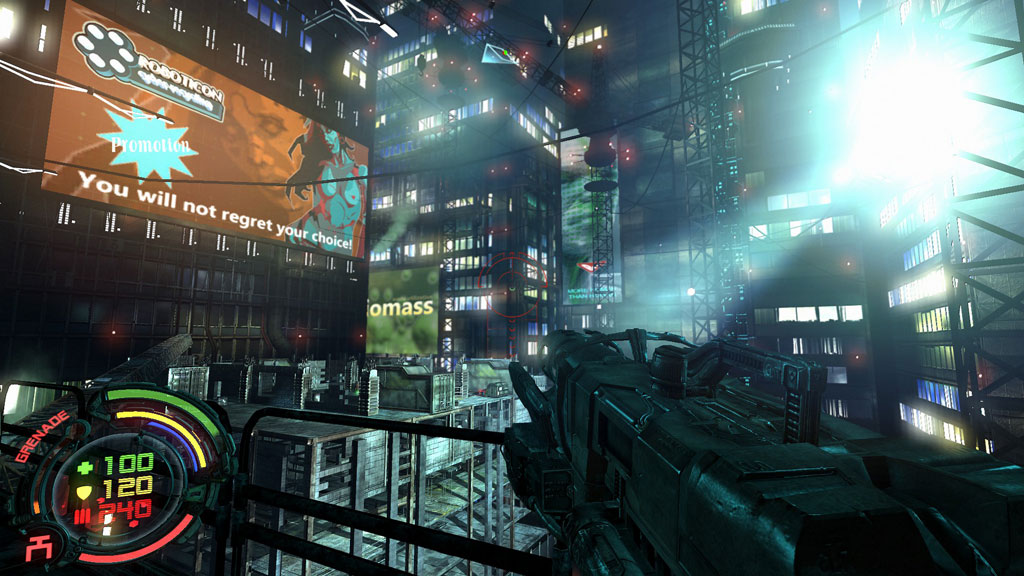
Cyberpunk hard-on: engage.
Hard Reset is one of the best-looking, most frantic, disappointingly short, unforgiving FPS games I have ever played. Set in a dystopian Blade Runner meets Matrix future, you control Fletcher as he mows down huge waves of robotic enemies using two highly moddable gun types and a cornucopia of destructible environment set pieces.
Starting out with a machine gun and a plasma rifle bound to the Q and E buttons respectively, you can upgrade them by collecting currency hidden around the levels or as drops from enemies. The machine gun can turn into a shotgun, a grenade launcher, a mine-layer and so on; the plasma rifle gets an AoE electricity mode, a rail gun, a Smart Gun mode that can track enemies through walls, and so on. The key to surviving robot attacks usually comes down to a combination of moves, such as launching a Gravity Grenade (unlockable secondary fire for grenade launcher) to trap a bunch of small bots next to an exploding barrel or what have you, and then launching a normal grenade at the pile.
Er… so yeah, that particular “combo” is fairly straight-forward. And I suppose that leads me to the disappointing aspects of the game: namely the wildly oscillating difficulty.
When you can use the One-Two grenade launcher combo, the game is actually depressingly easy; although bigger bots won’t die instantly, the gravity grenade works on everything but bosses. If one or two little bots escapes the gravity well, or spawn only after the first group blows up in spectacular fashion, watch out. The sheer density of exploding set pieces means you will frequently backpedal into a deathtrap a mere buzz-saw attack away from taking your life. That is when you experience the bizarrely out of place Checkpoint save system (no Quicksaves here), which probably sends you four waves and an upgrade into the past.
The game is also, as previously mentioned, disappointingly short. The story is not nearly as bad as other reviewers have stated, but right as it appears that the game is ready to head in a new direction while tying up some loose ends, the game… well, ends. The brevity of the game is such a hot-button issue that the developer has a passive-aggresive thread on the Steam forums called “Official announcement about GAME LENGTH” that starts out with:
Ok let me make some things clear.
You can finish Quake in 11 minutes.
You can finish Super Mario in less than 10 minutes.
You can finish Doom in less than 30 minutes.They are still good games.
You can’t finish Call Of Duty in less time than the developers wanted because it’s heavily scripted, with all the cutscenes, NPC preventing you from going somewhere etc.
Hard Reset was designed to be an oldschool game.
In spite of the truncated narrative, in spite of how it’s sometimes difficult to tell that you are actually dealing damage to robots with some weapons, in spite of how I would have preferred a cyberpunk FPSRPG over a Devil May Cry Arena-style FPS, I still find myself having enjoyed the (few) hours of Hard Reset immensely. There is reportedly a sequel or expansion in the works, and if the forum poll results are any indication, the team is well aware of how their nascent fan base feels about the necessity of Quicksaves, new story arcs, standalone single-player levels, level editing tools and mod support, and all sorts of other fantastic goodies.
If even half of the list makes it in, I personally can’t wait for Hard Reset 2.0.
Game of Dethrones
Rohan’s recent post The Guild as a Nexus of Contracts is an excellent read on the subject of Blizzard’s automatic “GM Dethrone” ability that was added in patch 4.3, and the concept of guild ownership overall. And it reminded me of the hidden depths of my rage towards this policy.

I joined the guild Invictus back when Azuriel was a level 30 draenei paladin tanking Scarlet Monastery for the first time, around a month before the release of Patch 2.2. The original GMs were a husband-wife couple who, a few months after I joined, inexplicably left total ownership of Invictus to the suave, smarmy smartass that was is myself. There was a period of time in that initial confusion when I contemplated, quite literally, /gkicking everyone and running away with the entire contents of the guild bank.
Listening to the better angels of my nature, as The Abe would say, I relinquished my power to the rightful heir to the throne, Soleste, whom shepherded us through most of the remaining bits of Burning Crusade content. In the months leading up to Wrath though, when the leveling guild-turned-10m progression guild was grinding down due to cliquish drama and apathy, I found myself once again bearing the weight of the crown.
And I am here to say: Invictus is mine.
Or at least was, until Blizzard felt good money should be thrown after bad in terms of Guild Leveling, which has probably killed more guilds than it saved in the aggregate.
I get it. Guild perks and reputation and auto-sustaining levels of guild-funded repairs gives the average member more of a stake in the guild as a whole. But it’s also bullshit. The guild will “belong to everyone” when people can vote for GM, vote for guild bank permissions, vote for bans from g-chat, veto /gkicks, decide on how loot distribution will work, spend three hours on Vent trying to prevent a drama-fueled implosions, purchase guild bank tabs, decide on guild names, tabards, and transfers.
Blizzard is not rolling out the goddamn Magna Carta here – you still can and will be /gkicked by a GM for no reason, with no appeal, at his or her complete mercy. Ownership is, to me, the ability to destroy something. And while guilds can no longer be disbanded, the membership can still be destroyed via kicking, prohibiting g-chat, removing privileges, and so on.
So what the hell is this half-measure? For every guild that is “saved” by First-Come, First-Serve succession, how many random alts of alts suddenly come into possession of a guild bank full of goods? How much residual goodwill is lost from the knowledge that everything you have worked so hard towards for years is not there waiting for you, should you return? Invictus was the sum of its members, yes. But it was also my blood, my tears, my gold, my time that formed the mortar of that structure. If I am to lose it, I want to be the one to watch it burn.
It makes no logical sense, of course. Bear the burden of leadership long enough though, bear the responsibility, and tell me it doesn’t make emotional sense.
Reviews: Metro 2033, Blocks That Matter, Far Cry, Atom Zombie Smasher, VVVVVV
Game: Metro 2033
Recommended price: $15
Metacritic Score: 81
Completion Time: ~12 hours
Buy If You Like: Half-Life meets STALKER meets FEAR
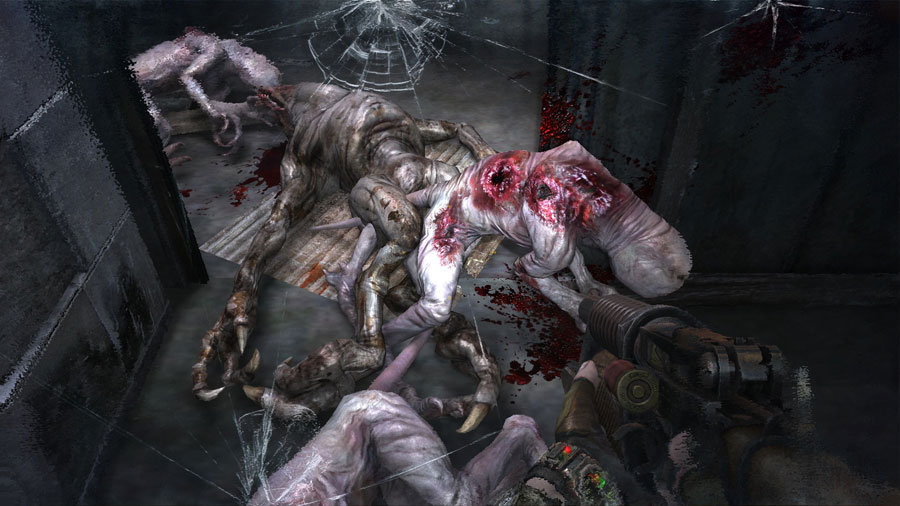
Notice the lack of an interface. You don't need one.
Metro 2033 is one of the most surprisingly authentic post-apocalyptic FPS games I have ever played. A game’s “realistic simulation” aspect is never something I particular care about, as all too often it is used as an excuse for bad gameplay mechanics. In the case of Metro 2033 however, all of the simulation bits impact the game in nothing but positive ways. For example, you start off with a flashlight with a fairly weak default luminosity that can be juiced with a handheld Universal Charger. To do so, you put your gun away, bring out this scrappy-looking device, and then pump the mechanism by clicking the mouse over and over while watching the smudged dial slowly increase with each pump. Although you will be performing this ritual hundreds of times over the course of the game, there was something so… correct about the activity that I actually looked forward to those moments. There are several weapons that require similar attention – an air-pump speargun, an electric railgun-esque weapon that shoots ball bearings – and the fidelity they engender as you huddle against a wall in the darkness or behind your increasingly fogged/damaged gas mask is wholly unique experience in videogaming.
Beyond those brilliant touches, the rest of the game itself is similarly well-designed. Although most of the game occurs in subway tunnels, the environments are surprisingly varied; you frequently are required to head to the toxic surface, which ironically feels more oppressive than the tunnels by its hostile nature, or exploring abandoned military complexes. There is a good mix of fighting mutants and humans, exploration is rewarded with pre-war ammunition (which brilliantly doubles as the game’s currency), stealth mechanics are actually supported, and the difficulty curve is relatively smooth while still escalating throughout the game. At one point there is a section where you carry a child on your back through this mutant-infested area, and the child’s weight impacts your ability to turn and aim at the monsters he is warning you about.
This is the kind of game Metro 2033 is, and I would not have it any other way.
Game: Blocks That Matter
Recommended price: $3
Metacritic Score: 79
Completion Time: ~5 hours
Buy If You Like: Indie puzzle games with robust player-generated map support
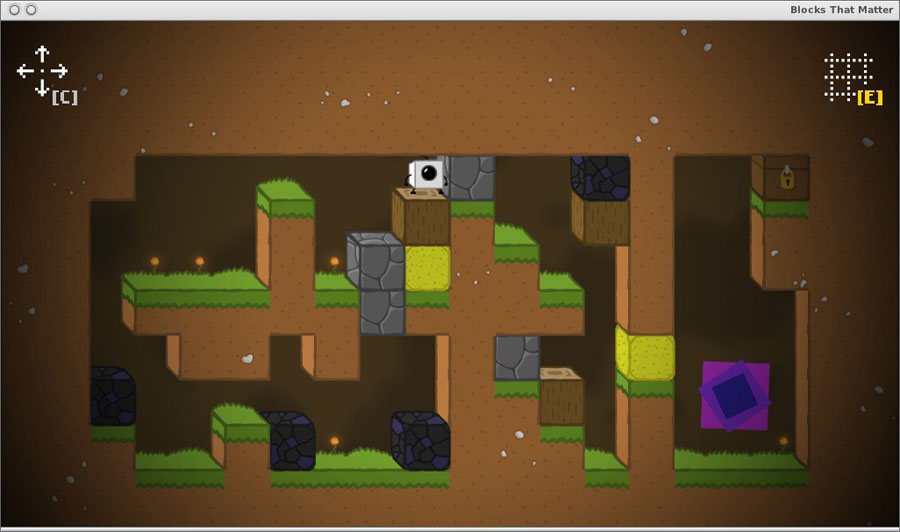
Not as easy as it looks.
Blocks That Matter is one of those “pure” puzzle games that starts with an unique, arbitrary premise and goes on to demonstrate how deep the gameplay can go. With the, ahem, building blocks of a 2D platformer, the “schtick” is that you collect blocks either by breaking them Mario-style or drilling them horizontally, but you can only place them in connected groups of four (at least one block has to be attached to a surface as well). Getting to the exit portal is usually straight-forward, but the real mind-melting begins when you decide to go after the treasure chests on the various levels. Later on, the characteristics of each block begins to matter (sand falls down if not supported, wood burns, etc) and when layered upon the sometimes extreme platforming aspects of later levels, it can definitely lead to frustration if you aren’t prepared for it.
One of the best aspects of Blocks That Matter though, are the hundreds of player-generated maps available for free download via the interface. While I only tried a handful, each one was rather brilliant in its own way and definitely complementary to the ~40 in the normal game. These maps can be sorted by highest-ranked as well, so you are sure to come across additional hours of entertainment if you enjoyed what came before.
Game: Far Cry
Recommended price: $5
Metacritic Score: 89
Completion Time: ~13 hours
Buy If You Like: Being kicked in the balls by a FPS
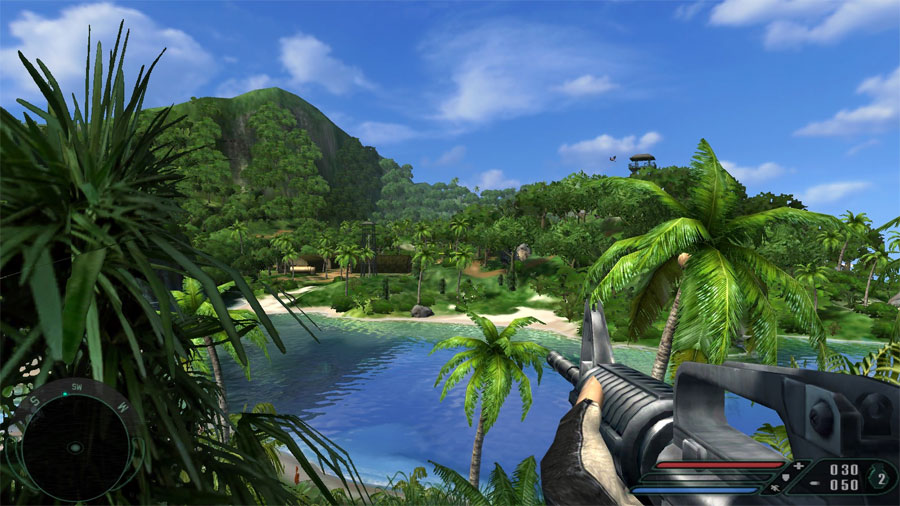
There are about 20 ways to die on the other side, and you will experience all of them.
Far Cry is hands-down the hardest, most frustrating FPS I have ever played. Setting Metro 2033 to Ranger Hardcore mode might take the cake, but you would actually have to make it through the chef cock-slapping you through the kitchen normal-mode that Far Cry offers before you could even think of baking said cake. I seriously uninstalled Far Cry twice, before achieving that head-smashing zen state necessary for slogging through the game to the bitter, bloody end.
Typically, frustrating difficulty is due to bad game design and isn’t something I suffer gladly. In Far Cry’s case, the insane difficulty actually stems from a coherent nod towards realism that says getting shot in the face or eaten by a Grue kills you. Which is fine, whatever. The frustration that settles in is how Far Cry operates entirely on a Checkpoint Save system wherein you can systematically kill 40 enemies without taking any damage, achieve 2/3 of the objectives, and then die to a rocket that was launched from a mile away, slip off the side of a mountain, stand too close to an exploding barrel, or any manner of “oops!” deaths and be forced to start all over again. There are checkpoints within levels, but you never know where they are or when they will kick in, sometimes leaving you stranded with 30 health a door away from a massive firefight you have zero chance of exiting alive. At one point in the game, I was making my way across the deck of a ship and had to learn via trial-and-error, e.g. dying, the location of the nine guys who killed me in their opening salvos. On the 10th checkpoint reload, I killed them all losing only 80% of my HP, only to be shot by a tenth guy at the end of the stern.
Aside from masochism, one of the things that kept bringing me back though was the compelling nature of the enemy AI and open-endedness of the game itself. You are being pitted against a mercenary force that reacts to noises, fans out in search of intruders, engages in pincer maneuvers, investigates dead bodies, and otherwise works together in a completely non-scripted way. Sure, a lot of the time they can magically spot you in the bushes from 100 yards away. Sure, sometimes their incidental gunfire leads you certain doom while you desperately search for a medkit. But this was the first FPS I have played in which I actually felt hunted, or at least surrounded by an intelligent enemy that fostered a sort of manic paranoia.
Like a particularly difficult bowel movement though, I am glad Far Cry is finally over and I am not looking forward to similar experiences again. At least, not ones lacking quicksaves.
Game: Atom Zombie Smasher
Recommended price: $5
Metacritic Score: 75
Completion Time: ~8 hours
Buy If You Like: Compelling indie strategy games
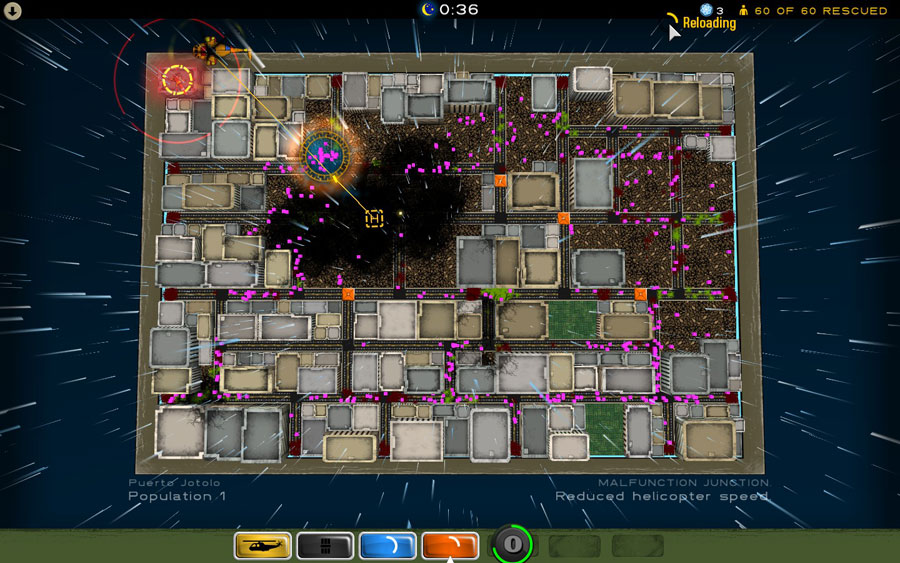
Evacuation complete.
I basically already reviewed Atom Zombie Smasher in a post entitled Population: 1. This is one of those indie games which justify the existence of indie games, and the continued need to ensure that more such works of brilliance are supported and nurtured.
What I will add though, is that I hope the game continues to go through some additional iterations. The city gameplay is excellent, and between the random selection of troops each month (“What? Only barricades, landmines, and TNT?!”) and the random buff/debuffs, even the same city layouts can feel like entirely new games each time you load it up. The map gameplay that nests the city gameplay, however, needs some work. It is ridiculously easy to fall behind and essentially make winning impossible. Similarly, a few early wins can make the rest of the game largely a joke. So while I am glad that developer chose to focus on the city gameplay as opposed to the map gameplay, the unfortunate side-effect is that the replay value suffers for it, at least to me. If they can tighten up the map, it may actually give me reason to keep playing.
Game: VVVVVV
Recommended price: bundle
Metacritic Score: 81
Completion Time: ~2 hours
Buy If You Like: Innovative retro 2D platformers
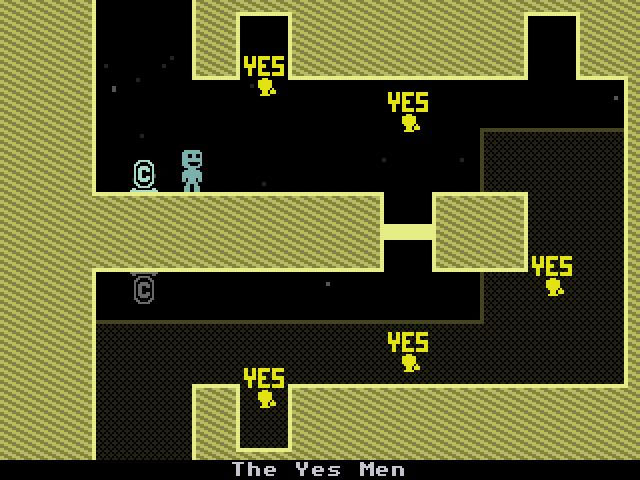
Err... what else is there to say, really?
VVVVVV is a retro indie game that takes the traditional elements of platforming and stands them on their head.
…that pun was lame, even for me.
Essentially, instead of a jump button, VVVVVV simply flips the gravity of your character around such that you end up walking on the ceiling. Since you cannot change direction in mid-air, this leads to some pretty fiendishly novel puzzle-platforming situations in which you have to make full use of ceiling and floor. Gameplay is pretty brisk, and the frequent use of checkpoints and a focus on single-room platforming (with some exceptions) means it is all action, all the time. Which, of course, means you end up beating the game pretty quickly as well. The game gets pretty difficult towards the end, and I ended up dying in a single room 50+ times, but overall the experience was pleasant.
For the length of gameplay though, the retail price of $5 is a bit much; it makes for a perfect indie bundle though, if you find one with VVVVVV in it.
Preview of Coming Events
So I may or may not have spent an inordinate amount of money on Steam sales this holiday season. The games include the following (in no particular order):
- Hitman series
- Dead Island
- L.A. Noir: Complete Edition
- DX:HR DLC
- Tomb Raider series
- Indie games such as Space Pirates and Zombies, Jamestown, From Dust, etc
- Dungeon Defenders + DLC
- Bulletstorm
- Red Faction: Armageddon + DLC
- RAGE
- Skyrim
- Warhammer 40k: Space Marine
- Torchlight
- Fable 3 + DLC
- Total War: Shogun 2
As you are probably aware, I have no MMO on my plate at the moment, nor would one probably fit on my plate, let alone dinner table at this point. However, I have been following SWTOR discussions very closely and of course keep abreast of WoW news 5+ months after having quit. If there is a price drop on SWTOR or Blizzard gets their head out of their asses and discounts server transfers, I could very well find myself back in the saddle. Ironically, the longer that Blizzard keeps the Annual Pass promotion open, the more likely I am to buy-in. Diablo 3 is one of those rare Day 1 purchases for me, and the closer the release date Soon™ gets the more valuable the Annual Pass becomes – the fewer months wasted on Cataclysm, the better.
In any case, I want to thank everyone for your patronage in 2011, and will endeavor to maintain whatever redeeming qualities you found in this slightly cocked corner of the internet throughout 2012.
Unfortunate Obsolescence
It occurs to me that we – or more specifically, I – have well and truly crossed the barrier beyond which old, amazing games go to die, unplayed and forgotten.
For example, today you can buy Star Wars: Jedi Knight: Dark Forces II on Steam for $1.24. I have heard many, many great things about this game over the years (and it indeed has a 91 Metacritic score), but I never got around to experiencing it. And so when I saw it up for 75% off, I decided to take a look at the game’s page. What I saw was this:

This probably looked amazing to my 14-year old self.
I just couldn’t do it. Whatever it was that this game could have added to my life experience is gone forever.
Of course, this is not just Dark Force II’s problem. Have you tried booting up Planescape: Torment lately? I wrote an awful, awful review of the game back during the height of my JRPG fandom phase a decade ago, and have always wanted to return to give the game its proper dues. But that is unlikely to ever happen. I tried, I seriously tried. Planescape always had a super zoomed-in camera compared to the Baldur’s Gate titles, and combined with the 640×480 max resolution was simply too much. I could not bring myself to get out of the morgue, the technical/compatibility issues notwithstanding.
To bastardize a phrase: the flesh is willing, but the spirit is weak.
Who though, in all honesty, is going to go back and play Fallout 1 & 2 after being introduced to the franchise via 3 or New Vegas? There are hundreds of classic games like this. Certain ones, like Chrono Trigger and the like, can survive rerelease after rerelease without changes. But these others? Not going to happen. I talked about the haunting legacy of Deus Ex in regards to its modern-day prequel, but who is going to play the original if they have not already? I understand there are mods that do amazing things to the visuals, but that presupposes a desire to go through the trouble to begin with.
Indeed, I feel the entire gaming industry is entering a bizarre new landscape with the advent of the App/Indie/F2P Age. I wrote over 60 RPG reviews back in the day, and every single one of them had a Replayability score. Now? Who cares about replayability? Story choice is fantastic, but the typical likelihood of my actually going back through New Game+ or its equivalent is somewhere between zero and no way in hell. I’m not looking for something to kill my time anymore – time is the one precious thing I ain’t got anymore. Any game that wants another roll in the hay is competing against an entire library of unplayed Steam titles, indie or no.
And that, sadly, also goes for older titles regardless of their presumed timelessness. So when I see people complain about, say, Syndicate looking like this instead of this, well… that latter game is dead and gone. I just went through an Eeyore routine with Deus Ex: Human Revolution, sure, but I would rather some remnant exist in a modern form than nothing at all.
Review: Deus Ex: Human Revolution
Game: Deus Ex: Human Revolution + DLC
Recommended price: $25
Metacritic Score: 89
Completion Time: ~38 hours
Buy If You Like: A (more) cyberpunk Metal Gear Solid
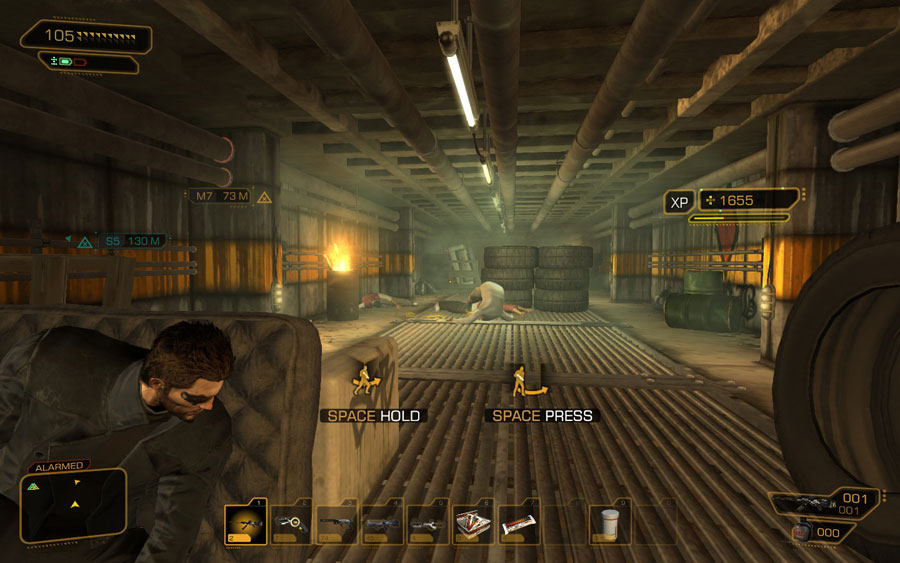
I would be “Alarmed” too.
The thing to understand right from the start is that Deus Ex: Human Revolution (hereafter DX:HR) is three separate things. The first is a prequel to the original groundbreaking Deus Ex released in 2000. The second is a genre showcase of cyberpunk sensibilities. And the last? The actual game.
The distinction between the three is extremely important because it is easy for someone to write off the entire game because it does not live up to the Deus Ex heritage. Or for someone else to watch trailers like these and fall so deep in love of the cyberpunk spirit of the game that the actual mechanics becomes irrelevant. Or in my specific case, struggle within the dichotomy of loving the setting so much that it (almost) washes away all the sins of not being Deus Ex: New and Improved, while the game bits themselves simply show up to work and get the job done.
One of the defining characteristics of the original Deus Ex was the multiple ways in which the player could progress through the game. Want to treat the game like a normal FPS? You could do that. Want to sneak through the air vents, hack into the computer systems, and bypass all security measures without firing a shot? You could do that too. DX:HR does its best to live up to that open-choice legacy, without really understanding how the original maintained a level of coherency: limited, metered choices. In DX:HR, 100% of the augmentations are available to the player right at the beginning of the game; the choice simply comes down to which ones you want to unlock in which order. What this means in gameplay terms is that since all of the choices are available, the designers included ways in which all of the choices are useful.
For example, about a third of the way through the game you will be tasked to get past a locked lab door. Your options include:
- Kill the guards (personally or via hacked security bots), loot the key.
- Hack the lab door.
- Grab an extra pass in the security room, present to guard.
- Sneak through ventilation.
- Use the Strength augment to move a vending machine, climb on top and jump to 2nd floor balcony.
While it felt liberating to know there were so many different ways to progress at first, it also meant that none of the ways you did progress felt particularly clever. The natural inclination to explore all the rooms to make sure you didn’t leave behind valuable items (despite none ever really existing), quickly reveals how many paths lead to the same outcome. Considering all 5 of the different paths occur within 30 feet of each other, you begin to question whether the choices actually matter. And that answer is, unfortunately, “No.”
But that is the rub. Had this been any other other FPS title, I would have been praising it for its Deus Ex-qualities instead of damning it for the same. Compared to the generic FPS flair of games like Singularity, DX:HR blows them out of the water. Indeed, DX:HR feels more coherent than even open-world titles like the STALKER and Far Cry series, insofar as the latter games mostly present “options” in the form of exploiting AI than necessarily discreet choices.
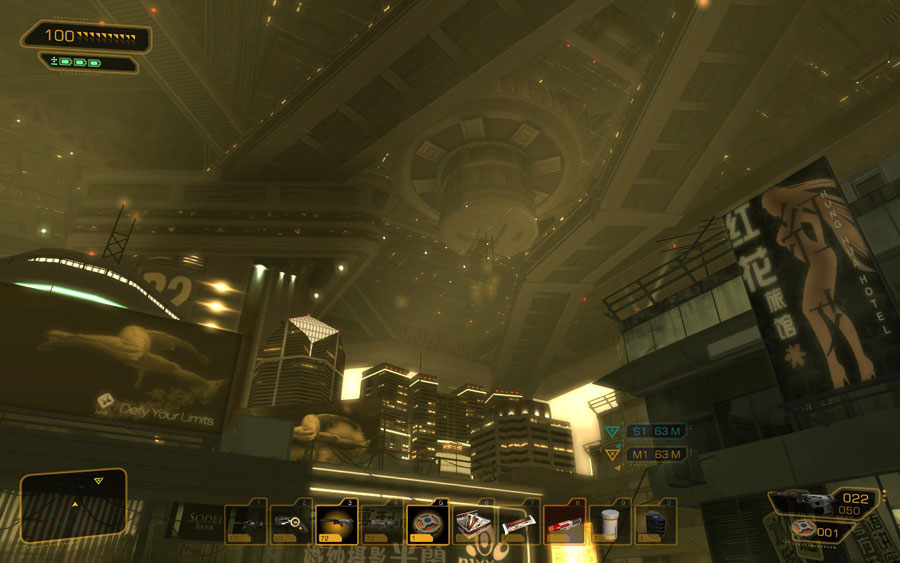
This Midgar-looking city makes me want a FF7 remake soooooo bad.
Legacy issues aside, DX:HR as a game within itself is a rather brilliant experience. Someone looking for a challenging run-n-gun cover-based shooter will find DX-HR an acceptable challenge. The stealth mechanics do not feel tacked on like so many other FPS titles (Far Cry, etc). While the augmentation choices might not matter in a metagame sense, they are useful in making you better at whatever playstyle you are accustomed. The oft-maligned boss battles do indeed feel a bit out of place, although I would be more disappointed if they were handled entirely in cut scenes or if I, say, was able to one-shot them in a takedown move or whatever. The visuals and vistas are top-notch, and the soundtrack is one of the best I have ever heard.
As a final note, I would be remiss if I did not mention the horrible, horrible technical issues I had with the game. With a four-month old game being played on a $1300 gaming rig bought a month ago, I experienced complete Crashes-To-Desktop (C2D) roughly every ~20 minutes for the entire 38 hours I played. Sometimes it would C2D within 3 minutes, sometimes I would actually go a full, uninterrupted hour. Two of the big plot-twisting cinematics were completely unwatchable in that it would C2D at a certain point 100% of the time, and I was never able to watch any of the various ending cinematics in their entirety; in all such cases, I skipped them in-game and Alt-Tabbed to watch them on Youtube in order to proceed. While it could be entirely Nvidia’s fault, or user-error for that matter, it is something to keep in mind.
And honestly, the fact that I endured hundreds of C2Ds over the span of 38 hours to reach the game’s conclusion is perhaps the highest endorsement I can give. Whether it was because of the zeitgeist of the cyberpunk setting, or the ghosts of Deus Ex past, or if it came down to the gameplay itself, all I know for sure is how I felt at the very end:
“Please, sir, I want some more.”
Human Revolution DLC Review:
Missing Link ($14.99) – To be honest, the Missing Link DLC to Deus Ex: Human Revolution was one of the first DLCs I have ever played which felt like a legitimate “deleted scene” from the main game. This is both a good and bad thing. Good in that it feels like a relatively seamless addition despite being on its own 2gb installer and featuring the vastly overused (gaming) trope of the hero losing all of his/her powers. Bad in that, well, most deleted scenes are deleted for a reason.
Taking place in the middle of a fade-to-black scene change in the middle of the original game, Missing Link does not add anything of plot value to the game proper aside from, well, around four more hours of gameplay. While you end up getting access to most of the weapons/augments from the main game, I definitely experienced a mental disconnect between the choices I was making, knowing that none of it mattered since no data was going to be transferred. Want to explore every nook and cranny? Okay… but why? No data, no XP, no weapons, no credits, nothing will endure past the final encounter. Which, incidentally, takes the form of how all the boss battles in Human Revolution should have played out.
Aside from that, and a frustrating amount of pointless backtracking past a 20-30 second in-game “loading screen,” Missing Link is a good enough dessert to the main course that was the original game. Provided, of course, you can snag it for less than the outrageous $15 retail price. Less than $5 or included in a Game of the Year edition would be ideal.
 In An Age
Truer Words
Jan 10
Posted by Azuriel
In the middle of an epicly-long Kotaku article expressing the virtue of Dark Souls’ difficulty, the following lines jumped out and strangled me (emphasis added):
When it comes to discussing difficulty in MMOs, I firmly fall on the “make it easy” side of the fence. I enjoy difficulty, I enjoy taxing my abilities to their maximum, but I also believe difficulty has its place; specifically, not in waiting for someone else to finally stop failing so I (we) can succeed. Games like Dark Souls work precisely because they are single-player.
That being said… the bold sentence in the quote above is perhaps the most succinct, inspired description of the mechanics of fun I have ever read.
Posted in Commentary
5 Comments
Tags: Dark Souls, Difficulty, Fun, Kotaku