Blog Archives
Review: Satisfactory
I have finally completed Satisfactory after 123 hours.
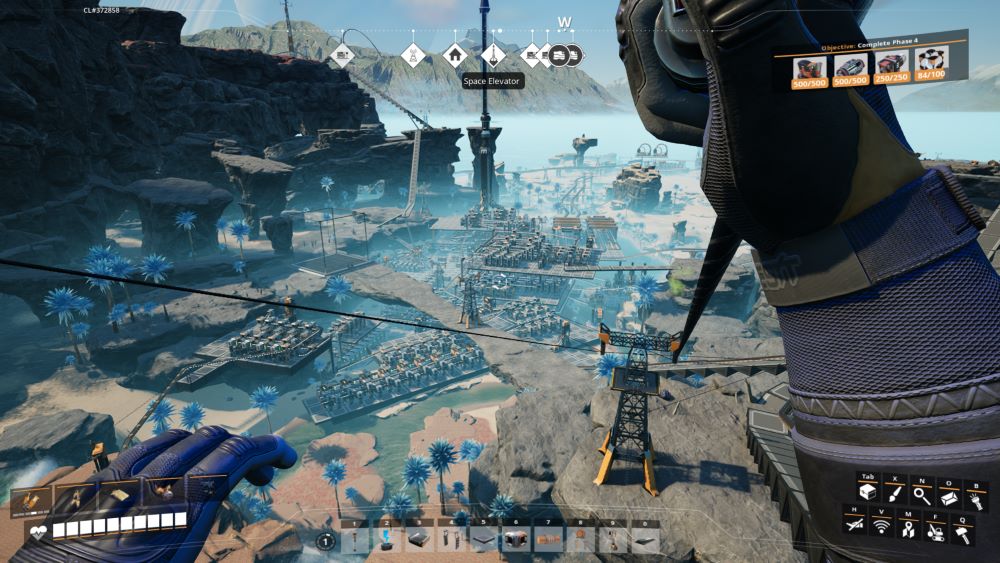
Satisfactory is an automation game in the same vein as Factorio, aside from taking place in a first-person perspective of a very detailed 3D world. Like all of the other games in the genre, the goal is to craft a series of production buildings to harvest, smelt, and otherwise produce an ever-more complicated string of widgets to achieve certain milestones that unlock fancier widgets that require other widgets to produce, et cetra. The joy and satisfaction comes from planning and then executing these complicated production lines and witnessing the factory coming to perfectly efficient life.
Well, mostly efficient. 80/20 Rule applies.
I’m not an expert on the automation genre. Previously, I played Factorio for a few hours and bounced off; Dyson Sphere Program was starting to get good, but then it left Game Pass. So, coming into Satisfactory, I was a bit skeptical. It is difficult at this point to tell whether it was the genre itself that finally clicked for me, or whether Satisfactory itself had enough tweaks to the formula to break through, but… it did. In a big way. I played nothing else for almost four weeks straight. The genre jury is still out for me, but thus far the evidence points to the latter.
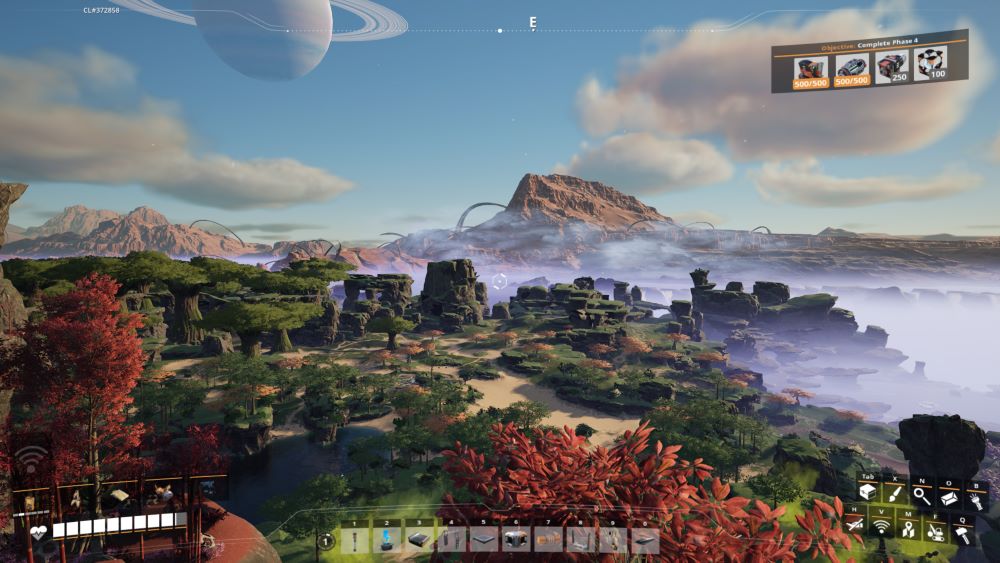
The first thing to understand about Satisfactory is that resources are infinite. When you find an Iron Vein and plop a Miner Mk1 on it, you will receive 120/minute of Iron Ore. Forever. Believe it or not, this is not actually common in the genre. What this certainty allows for is the construction of permanent supply chains. That 120/minute Iron Ore can be fed into enough Smelters to output 120/minute Iron Ingots, which then get split into different conveyer paths leading to Constructers outputting X/minute Iron Plates and Y/minute Iron Rods. The only time things would slow down/stop is if your power grid goes down or if there is nowhere for your end products to go.
That sort of subtlety of design ended up being the secret sauce for me. Is perfect efficiency required? Nope! It may just take longer, and maybe you’re okay with that. Progression in the game comes from taking ever-increasing volume (and complexity) of goods and blasting them into space. If they want 1000 of something and you’re making 5/minute, well… it’s your choice whether to do something else for 200 minutes or try to pump up the other number(s). Maybe you need to tap another Iron Vein somewhere to increase supply. Do you know of an untapped node somewhere close, or will you need to explore? Do you transport the raw ore back to your home base, or just the finished products? Have you unlocked alternate recipes via Hard Drives found in the world that could change entire production chains? I swear to god, Civilization’s “One More Turn” got nothing on this game.
It is hard to identify downsides, as this genre is new to me and I obviously had a lot of fun in this one. Something I will say though, is that there was somewhat of an insurmountable dissonance between the need to automate and the need to explore in Satisfactory. Hitting Milestones and unlocking new resources like Coal? Absolutely, let’s prioritize setting some Coal Generators up. Inbetween that though, there is an entire alien world you can (and should) explore. Not just for its own sake, but because there are Hard Drives that unlock (unfortunately) random alternate recipes, and alien artifacts that will similarly change the way you play the game later. But when can you explore? Those “wait 200 minutes” Milestones I mentioned before don’t arrive till later, so it’s more of a dilemma between “wasting” potential factory output time or just turtling up at your base and exploring only after 80+ hours.
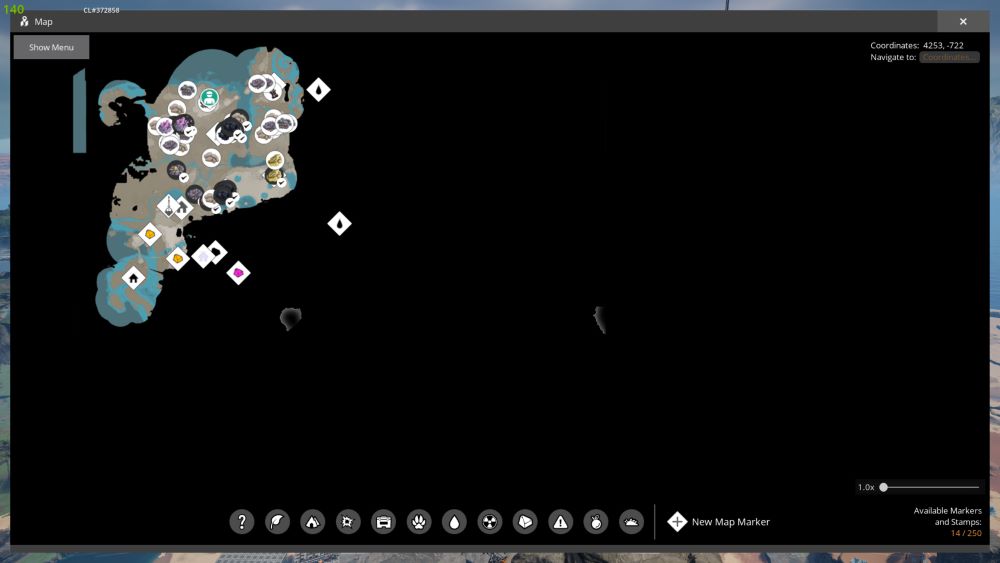
The latter of which, ironically, is very possible because the devs actually over-engineered the world.
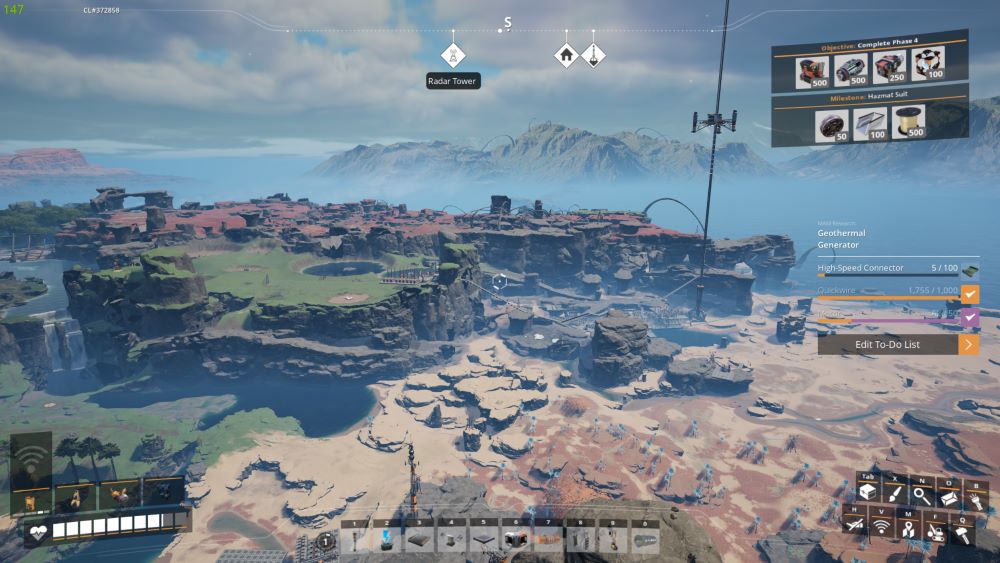
Seeing YouTube videos of other peoples’ massive factories and dozens of train track lines made me originally believe that sort of thing was going to be required. Surprise! Not at all. Part of the reason the world is large is because the devs give you the option of several different starting locations. But also… just because, apparently. The sheer size of the world naturally encourages you to invest in the more advanced transportation options, although you can certainly just run conveyer belts everywhere. Or be like me and spend 80 hours along a little tiny slice of the coast until more esoteric recipes required me to branch out. I guess my point is that you have options in exploring early if you want. Or not.
What more can be said? Satisfactory is great. I’ve spent more hours playing it than Skyrim, Fallout 4, Dragon Age: Origins, and actually most other games. Is it better than all those? Nah. I would personally rate a good survival title over Satisfactory any day, let alone a meaningful RPG experience. Buuuuuut… if you want possibly 120+ hours of almost-pure wirehead experience, this game has you covered.
And sometimes that is exactly what you need.
Frostpunk 2
I have played and completed Frostpunk 2 via Game Pass in about 15 hours.
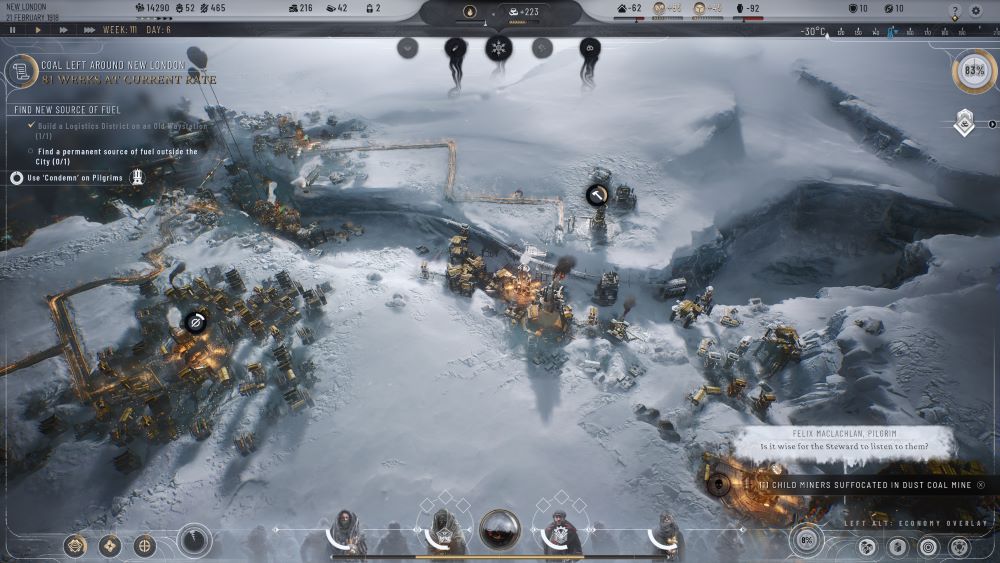
Frostpunk 2 is a sequel to the original both narratively and from a gameplay perspective. New London survived under the Captain’s rule in this alternative history 1899 ice age, but with his death, the fate of the city now rests in the Steward’s (aka your) hands. With a much more zoomed-out perspective, you must carve out space for various districts, explore and set up outposts, and placate diametrically-opposed factions whilst also ensuring the city never falls to the cold.
In the original game, the “plot” was broken into various Scenarios. With Frostpunk 2, there is a single narrative thread composed of five Chapters, throughout which your city progress is maintained. This continuity resolves a lot of the issues I had with the original game, wherein tech tree unlocks seemed pointless considering you barely had time to research any of them before the Scenario was over. Continuity also makes your early decisions much more important, as you continue to receive the benefits of it for a dozen hours. For example, your scouts might discover wreckage and give you a choice: gain important materials, or get +800 Workforce permanently. Choosing the resources might get you out of an immediate crisis, but there actually is a “long-term” to consider here.

Of course, that also becomes a problem. Although I beat Frostpunk 2 in ~15 hours, realistically the game was over after about 8 hours. By the time Chapter 3 rolled around, I had maximized the citizens’ Trust, all Factions supported me, and I was running a surplus of every material with an immense stockpile behind it. I played on the equivalent of Veteran difficulty, and so it’s possible that this is an indication I should have challenged myself further. However, I doubt harsher RNG events and a poorer start will make some of the “binary” choices/tech less obviously OP. If anything, I am now much more savvy to which Laws are critical to unlock early and which can wait.
On the other hand, the likelihood of my playing again is kind of low. Having a strict narrative thread means experiencing the same events in the same order, exploring the same map, and maybe making different choices for roleplaying purposes. The game is extremely engaging in the moment – way “worse” than the Civilization “just one more turn” hour evaporation – but a lot of that depended on the consumption of novelty. There is an Endless Mode option available, although how interesting that may be is dubious; as I mentioned previously, there are actually ways to end up effectively infinite even within the base game. Best I can do is hope there are updates in the future that add new Scenarios in.
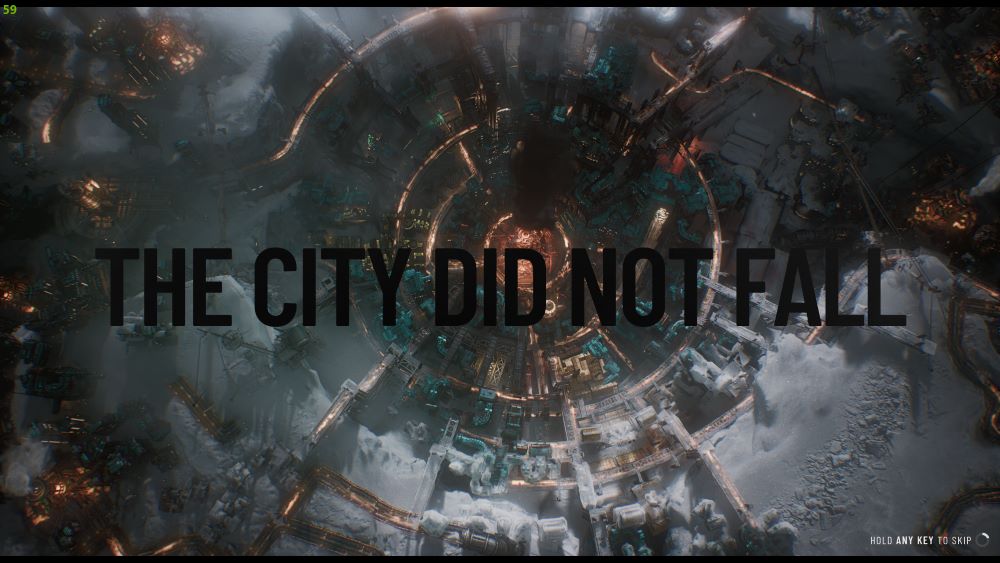
Overall though, Frostpunk 2 is an extremely slick and fun city-builder for the time I spent with it. Given how much was changed, it’s hard to say whether someone who loved/hated the original would find the sequel any better. It’s on Game Pass though, so it’s relatively easy to give it a whirl.
Review: Fate Hunters
Fate Hunters is a deckbuilding roguelike in the same… well, not vein, but same circulatory system as Slay the Spire.

In truth, the game plays more like Dominion meets Darkest Dungeon – there is no energy, so you can play all of the cards in your hand every turn, but unplayable treasure cards can gum up your deck if you get too greedy. Monster attacks are straight-forward: they do the thing as what their card says, from left to right, every turn. After each boss fight, you are given the opportunity to leave with all your treasure cards or continue the climb, with each successive boss adding a multiplier to your treasure. If you die, that’s it, you get nothing.
And that’s the entire review. The end.
…I’m being kinda serious.
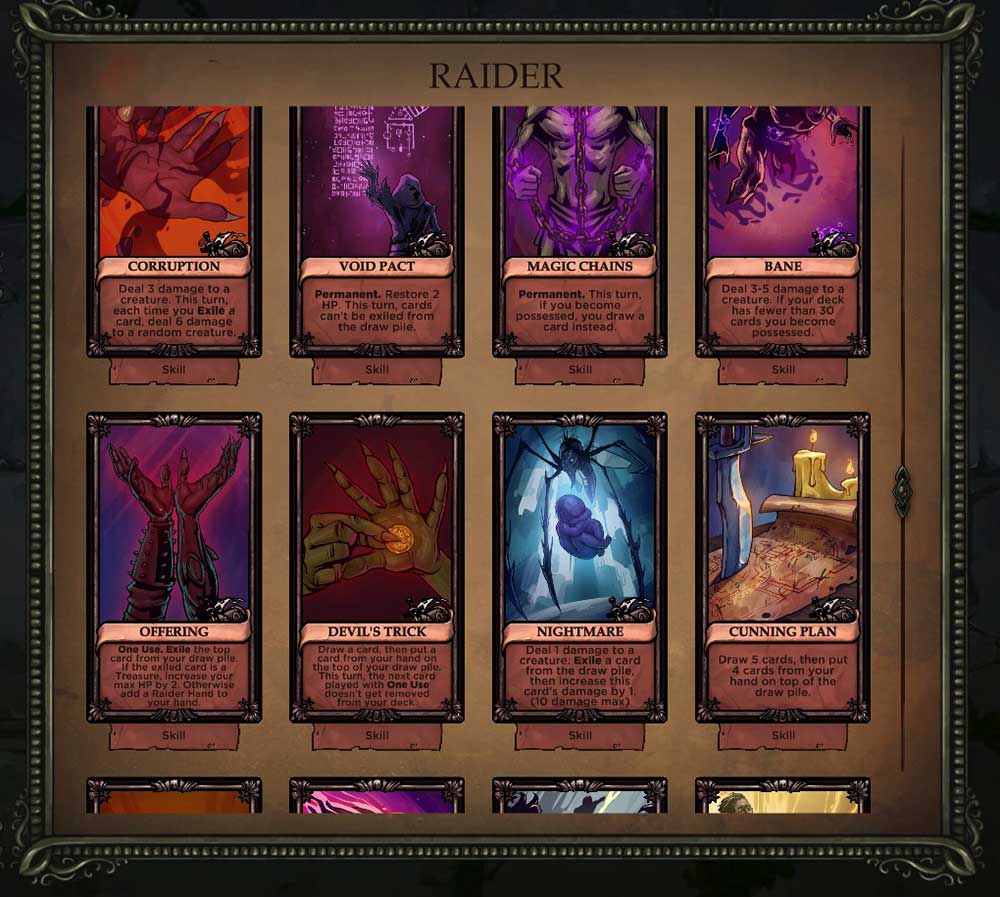
What I can say is that the game is very addictive in the just-one-more-fight way and feels amazing even though it seems low-budget. The card art is very Darkest Dungeon and consistent throughout the game. There is a fairly decent amount of cards available, including a half-dozen classes which have their own specific cards. There are also meaningful choices as you level and when you defeat bosses. For example, do you want to pick one of three random Fates (passive abilities) out of 20+? Or choose one of three Legendary weapons? Or choose one of three Heroic spells?
There is a fairly high variance in card effect quality which can lead to some swingy runs, but overall you are not likely to be shut out of possibly winning. And besides, as long as you get make it past at least one boss, you can just exit the dungeon with whatever spoils you happened to collect and try again.
As for the downsides? Well, the game is done and will no longer get any updates. Which is a real shame because there are a number of tweaks that could have been made to buff the weaker cards/abilities into usefulness. The nature of the game also lends itself to very specific strategies too – you pretty much have to always build a discard-themed deck given how treasures work. There is also zero story or lore of any kind, if that is important to you. The default price of $15 is extremely ridiculous.
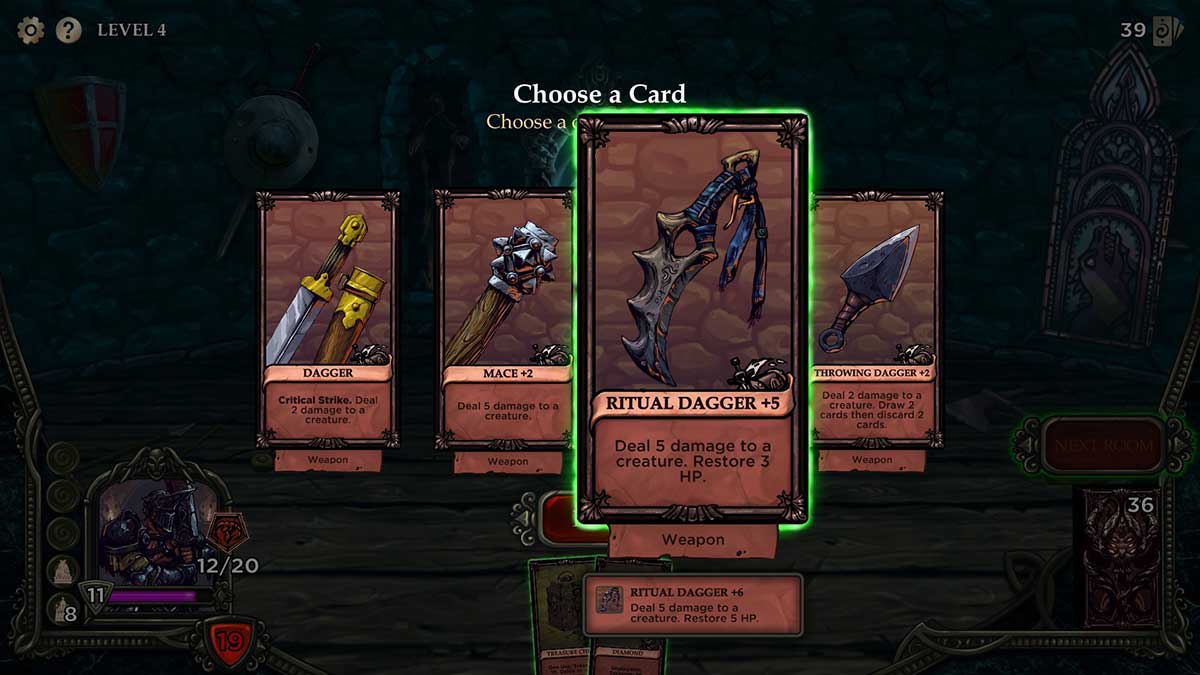
But, honestly? It’s on sale for $3.74 right now and I have put in 18 hours already. If you are someone who enjoys deckbuilding roguelikes, it’s a no-brainer. Just be wary of using it as “filler” or a palate cleanser in-between other games, because every time I try and do that, it’s suddenly 2AM and I never get to the other game. Which is a pretty glowing review, now that I think about it.
Civ 6: Just Kidding
I have already uninstalled Civilization 6.
I have gone over this before, but my history with the Civ series is deeply rooted in the past. My first experience was with Civ 2, which I played for hundreds of hours on the Super Nintendo, of all places. The very next Civ game I played was Alpha Centauri, which blew my teenage mind and honestly affected my intellectual trajectory almost by itself. Remember the real-world quotes that pop up once you complete a Wonder or research a specific Technology? They were so cool that I started writing them down, which led to collecting cool quotes wherever I found them, which led to reading the books in which they were quoted, all in service of finding more cool quotes.
After Alpha Centauri though? Nothing. Well… nothing until Civ: Beyond Earth, but we don’t talk about that one. FPS games satisfied my itch for immediate stimulation, and MMOs gave me long-term goals to work towards. Spelled out that way, my prior criticism of Civ 5 makes sense:
I did a sort of beginner’s match in Civ 5 and just started a second game on normal difficulty/Civ spread. With things approaching 1000 AD, I am sort of wondering when the fun starts. The problem from my perspective is that I don’t seem to actually be making any decisions very often. I’m perfectly fine playing the “long game” in strategy titles, but I’m not particularly fine with spam-clicking Next Turn for 200 years. Moving a War Chariot around looking for Barbarians isn’t exactly cutting it.
There are a lot of subtle changes in Civ 6 that I enjoyed. The city districting system, for example, really grew on me. For one thing, it really made you think about where to place your cities strategically – you really cared about the terrain and what you’d be giving up for a district. For another, the fact that Wonders take up a tile all on their own means you can’t have just one uber-city with 37 Wonders piling up. There had never been a scenario in prior Civs where I unlocked access to a Wonder via Research and then was literally unable to build them. “Can’t build the Pyramids without access to a desert? I guess that makes sense. Wonder if there are any desert tiles around…”
Another feature I enjoyed was how Civics was on its own sort of research path, and the whole “policy card” thing. If you were gearing up for a war with your neighbors, you can make unit production faster, or focus on Trade Route bonuses, and so on. There was granularity there, with the design bonus of, again, preventing uber-cities that were good at everything.
Fundamentally though, a Civ game is a Civ game, and that’s where it lost me.
The whole “Just one more turn” byline exists because nothing ever happens in a turn. Or even over a couple. The most fun I have playing Civ games occurs immediately after world creation. You have reasons to move your scouts around, and the possibilities for city expansion are wide open. Things can still surprise you. There are barbarians at the gates, and hunting down their camps is a big deal.
Then, at some point, you hit the ADs and the game becomes clicking End Turn 10 times in a row. If you are shooting for a Science or Culture win condition, you literally have no reason to engage with other civilizations at all. Just sit around, wait for your cities to gain another population, wait for the Workshop to be completed so it can add X more Production to finish your Y project Z turns faster in the future.
Domination and Religious victories give you more things to do, of course. But that’s just the thing: the only way Civ becomes fun for me is with more moment-to-moment choices. In which case, why am I not playing a moment-to-moment game? Civ 6 is a terrible war game, compared with say, the Total War series. When you look at the Science and Culture victories though, again, it’s a whole lot of pressing End Turn and inevitably winning 300 turns later.
It’s entirely possible (and likely) that I’m missing the whole point with the Civ games. I mean, I did pound out something north of 33 hours in Civ 6 within a week, which is more than a part-time job. Obviously there are some components of the base game that I enjoy.
But that’s all there is for me: components. If you love the whole Civ package, that’s fantastic, I can see what all the fuss is about. I just… don’t. There is a gradient between instant gratification and the Zen-like abandonment of all earthly pleasures, and I find the spaces between payoffs in Civ games about 20 turns too far apart. There are options for shorter games, I think, but that’s not necessarily what I want either. Strategic density is more what I’m looking for.
And that’s something I’m going to have to find somewhere else.
Thought Process
“I need to delete some games to free up space on my SSD. Let’s look at Steam.”
“Oh, here’s Civ 6. I tried it for about 10 minutes a few weeks ago, and it didn’t grip me. Why would I want to have to relearn everything from Civ 5? Besides, there are a lot of other, similar games I could be playing instead. This can go.”
“Whoops, I double-clicked on it instead.”
“Whoops, it’s 2am.”
“Whoops, it’s 2am every day this week.”
“I can’t wait for the weekend, so I catch up on my sleep.”
“Sweet, now I can play for 10 hours straight instead of just 5…”
[Fade to Black]
 In An Age