Category Archives: Review
Review: Borderlands 2
Game: Borderlands 2
Recommended price: $20 + $10 season pass
Metacritic Score: 89
Completion Time: 30+ hours
Buy If You Like: Funny and nonsensical cel-shaded FPS games
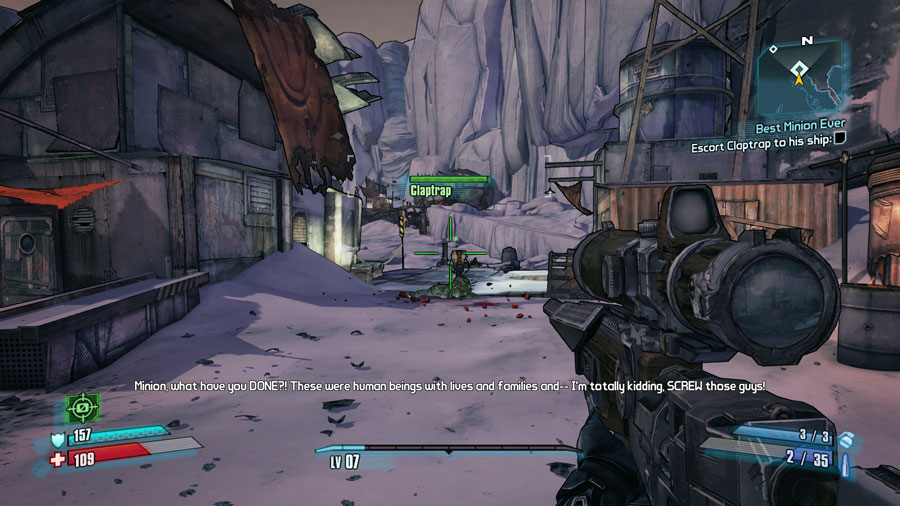
Some (most?) of the humor is a little juvenile, but some jokes had me rollin’ all the same.
Borderlands 2 is the cel-shaded, “why so serious?” smash-hit FPS pseudo-Diablo-clone follow-up to the original breakout Borderlands. Taking control of one of the four classes (or five with DLC), you set off on an adventure of mayhem and random looting across the now-much-more-varied landscape of Pandora, helping the heroes of the original game try and stop Handsome Jack from taking over the world.
To be honest, I am having a difficult time reviewing Borderlands 2 after having spent 130+ hours playing it. If you played the original, BL2 is better, longer, and more… Borderlandy than before. If you haven’t played Borderlands before, well, prepare to experience one of the frighteningly-few games out there with a distinct style. Said style might be nonsensical ultraviolence, but at least it is consistent and generally amusing.
The basic flow of the game will be familiar to anyone who has played a Diablo derivative: get quest, kill mobs, get random loot, repeat. There is a decent range and variance of mobs, but the AI controlling them is not especially robust; every encounter either involves mobs rushing to melee or shooting from range. In fact, since all the visible mobs aggro after the first shot and many mobs simply don’t exist until you get within range, an entire swath of the strategic playbook (Stealth, sniping) consists of blank pages. This is no different than what occurred in the original Borderlands, so if it was fine for you then, it will continue being fine now.
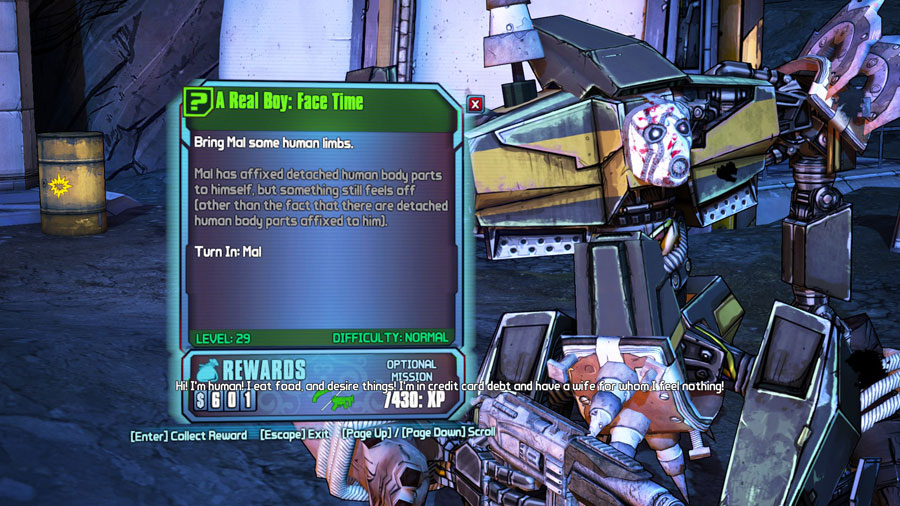
Not your standard quests. Well, they ARE, but still…
What saves BL2 can be summed up in three words: guns, guns, and guns. The trick that the Borderlands series pulls off is not merely emulating the loot-centric gameplay of Diablo, but how the loot itself can change how you approach the encounters. If a really kickass shotgun drops, for example, you might find yourself suddenly getting more up in psychos’ faces than you were just five minutes ago. While the character talent trees stamp down on this more freeform behavior by virtue of weapon-specific bonuses, respecing is only a trip to town away. And sometimes that minigun that shoots missiles is just too much fun to fire to care about trivialities like your +15% critical hits with sniper rifles.
Once you complete the game proper, you unlock “True Vault Hunter Mode” which allows you to redo the game from the beginning while keeping your level, cash, and gear. The enemies in this mode get new abilities, more health, and hit significantly harder as you plow your way to the level cap of 50. While this difficulty extends the life of the game quite a bit, it also leads into some counter-intuitive behavior. You see, sidequests typically reward you with unique items that are scaled to the level you were when you started them. Ergo, the “correct” way to play TVHM difficulty is to skip ALL of the sidequests until you reach level 50, and then go and complete them for the highest-level version of the unique items. Otherwise, the unique items may as well not exist, as they will inevitably be replaced by even the most generic level 50 drops.
As I mentioned before, I have clocked in over 130 hours into Borderlands 2, with around ~20 of those hours being from two of the DLCs. Although I chose to play solo the whole way through, I’m positive that the experience would have been even more entertaining with a group of friends. Hell, the DLCs even include the equivalent of 4-man raid bosses, if you are into that sort of thing. By the time you start to question why, exactly, you are chain-farming the last boss for legendary drops, Borderlands 2 will likely have generated twice as many hours of entertainment as your last non-Skyrim single-player games combined.
So get in there and start shooting some faces.
Review: XCOM: Enemy Unknown
Game: XCOM: Enemy Unknown
Recommended price: $15
Metacritic Score: 89
Completion Time: 22 hours
Buy If You Like: Relatively simple but slick Tactical Sci-Fi games

It’s the only way to be sure.
XCOM: Enemy Unknown is a reboot of the 1990s cult-classic tactical title of the same name. In this game, you take charge of the XCOM project, which is a worldwide military response to what appears to be an alien invasion of Earth. You engage in a series of turn-based tactical battles, which is then broken up by periods of base building and resource management inbetween alien incursions.
Combat is “team turn-based,” which means that you can move all of your own units before giving the floor over to the aliens to do the same. Individual unit turns boil down to “Move + Shoot/Ability,” while trying to make an effort to end your turn next to some cover. As units earn experience, they gain levels and can unlock new abilities/bonuses in their class’s (limited) talent tree. There are a number of different weapons and armor types available (including special items like Grenades and Medkits), but for the most part they are limited to the class they are designed for.
If this all sounds pretty simple, that is because it is. While XCOM won a number of accolades and serious blogging goodwill for its tactical combat, its primary accomplishment is simply existing as a tactical offering at all in a desert of similar titles. At no particular point did I find myself especially challenged tactically, at least in terms of historical titles like Fallout Tactics, Final Fantasy Tactics, Tactics Ogre, Suikoden Tactics, and so on. While I did “only” play on Normal Ironman mode (Ironman meaning you cannot reload a saved game to avoid a team member death), I simply do not see enough moving parts to justify some claim to XCOM’s tactical brilliance. In particular, I have a problem with team turn-based gameplay leading to “dogpile tactics” (maneuvering units so as to unload a full turn’s worth of damage without recourse), combined with an enemy that almost always waits patiently for you to discover them before taking any initiative at all. And then there are a few of XCOM’s uniquely questionable design decisions, such as not showing the range on, say, Sniper Rifles.
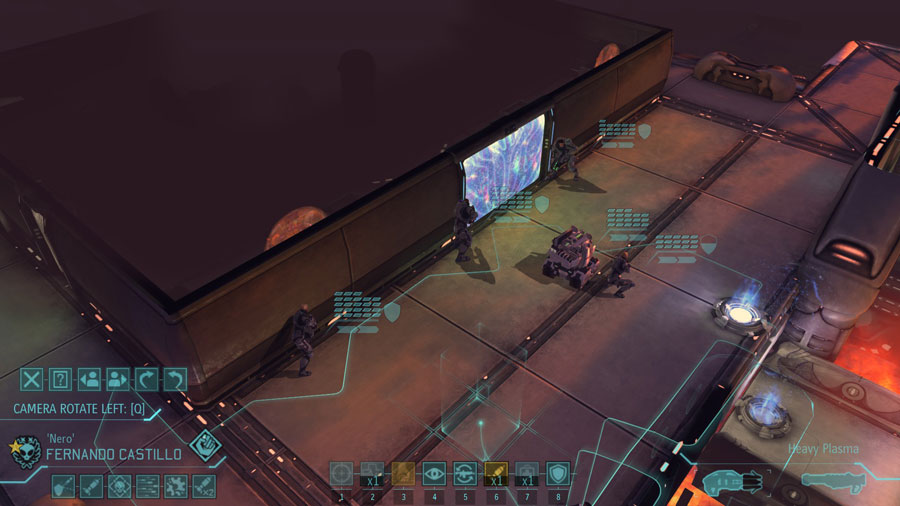
Luckily the aliens give you all the time you need to get into position.
Some of the lack of complexity in the tactical segments is made up in the planning stages. Character growth and equipping is straightforward, but trying to juggle base expansion, e.g. building more research centers vs power plants vs ect, with the other demands like satellites for XCOM member states or research into better weapons can get a little dicey. While I got a handle on things by the end of my first playthrough, I was not particularly sure whether the complexity was via the underlying systems or if it were just random chance that, say, China kept getting bombarded by UFOs.
All of this is not to suggest that XCOM is a bad game. It is, in fact, a fun game that I think is an auto-buy at $15 or below. I just want to distance myself from the blogging narrative that XCOM is some kind of superstar in the tactical gameplay arena. It certainly wins the “best tactical game in years” award, but it does so due to an utter lack of competition. If you enjoy this subgenre you will enjoy XCOM, but you will likely find most of your planning taking place outside of the tactical battles rather than in them.
Review: Warhammer 40k: Space Marine
Game: Warhammer 40k: Space Marine
Recommended price: bundle/$0
Metacritic Score: 74
Completion Time: ~5 hours
Buy If You Like: Warhammer 40k, mindless 3rd-person action
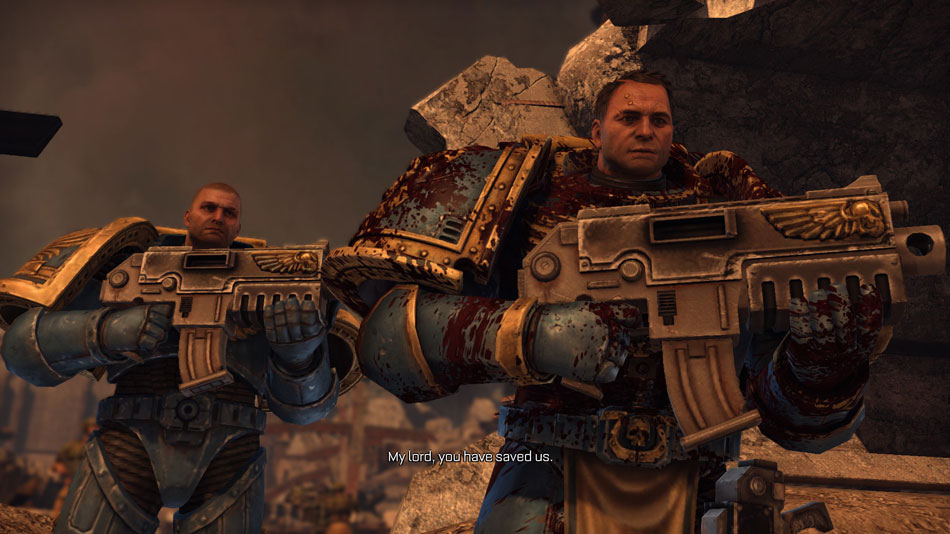
Something about the juxtaposition of religious iconography and high technology gets the juices flowing.
Let me start out by saying that I am a huge fan of the Warhammer 40k universe. The setting gets a lot of flak for being grimdark and violent and possibly even juvenile, but whenever I start hearing phrases like “Adeptus Mechanicus” and the “God-Emperor of Man” I put on my game-face and settle down for some fun. Up to this point, I have almost religiously played the Dawn of War games and all the expansions up to Space Marine and generally loved them all (Dark Crusade being my 200+ hour ultimate favorite).
After the ending credits to Space Marine, I came away… well, curiously disappointed.
You take on the role of Captain Titus, one of three Ultramarines sent as vanguard to the fleet coming to the rescue of a besieged Forge World. The basic game structure is 3rd-person mayhem in the styling of Devil May Cry/God of War without the fighting depth, or Darksiders without the exploration/puzzles. Part of the promotional campaign involved making fun of other 3rd-person cover-based shooters (“Cover is for the weak”), but around the 30% mark it becomes quite clear that the health regeneration from executing stunned enemies won’t, ahem, cover the increasing volume and severity of ranged fire. In fact, in the late stages of the game, you will be reduced to peaking your head around crates to take pot-shots at uber-laser troops while actively running away from anyone trying to melee you.
There are a few cool moments for 40k fans, and the levels where you get access to Jetpacks really cements the feeling that I’d love an MMO or more free-ranging game in this universe. In between these moments of fun, however, are about 60+ thinly-veiled elevator loading screens, repetitive battles, large empty spaces devoid of any reason to explore, and a vague sense of hollowness. Darksiders gets away with long stretches of nothing happening because you’re solving a puzzle, but here you’re frequently just stomping around for 5+ minutes inbetween the small pockets of button-mashing. Watching my hero units in Dawn of War felt more exciting than playing as one in Space Marine.
Bottom line, if you were primarily interested in Space Marine because you like the Warhammer 40k setting, you can safely skip this entry into the franchise and have missed nothing of note. If you don’t care about the 40k setting, well, you aren’t missing anything either.
Book Micro-Reviews: Dresden Files, Codex Alera
The Dresden Files (series)
Author: Jim Butcher
Genre: Modern Fantasy
Books: 1-14
The Dresden Files series follows Harry Dresden, a private investigator in Chicago who also happens to be a wizard. Each of the books follows along the prototypical mystery/whodunit framework, presenting 2-3 seemingly unrelated events that each carry the possibility of death/cataclysm before a resolution at the end. Despite each books’ fairly standard formulaic structure, where the Dresden Files series really shines is with its down-to-earth characters, the witty/hilarious dialog, and straight-forward style. I was at first put off with the “kitchen sink” approach used when presenting the supernatural (demons, fairies, vampires, oh my!) but again, the writing definitely saves what might otherwise come across as convoluted.
Overall, I feel pretty good in recommending this series. Compared to a lot of other fantasy series out there, the Dresden Files are considerably less dense but no less satisfying. I am definitely hoping that book 15 (and beyond) comes out sooner rather than later.
_____________________________________________
Codex Alera (series)
Author: Jim Butcher
Genre: Fantasy
Books: 1-6
When a friend recommended this series to me, the only thing I knew going in was the following paragraph from the Wikipedia entry:
The inspiration for the series came from a bet Jim was challenged to by a member of the Delray Online Writer’s Workshop. The challenger bet that Jim could not write a good story based on a lame idea, and Jim countered that he could do it using two lame ideas of the challenger’s choosing. The “lame” ideas given were “Lost Roman Legion”, and “Pokémon”.[1]
Reading that will either intrigue you or turn you off immediately, but let me just mention that the Codex Alera series won Jim Butcher that bet, in my opinion.
The series itself follows the life of Tavi, a particularly clever boy who nevertheless was born without the ability to use magic in a world where everyone has an elemental familiar. As with Jim Butcher’s other series, the Dresden Files, the Alera books lean towards a sort of detective model that is very much Butcher’s style; you can definitely expect a lot of long trains of logic and counter-logic. It is not all cerebral however, as there will frequently be 10+ page fight scenes that may or may not leave you at the edge of your seat.
Overall, I enjoyed these books. Like many fantasy series, I felt it started somewhat slow and required a bit of acclimation to the world being presented. I was hooked by the second book though, enjoyed the natural progression, and quickly finished the rest thereafter.
Reviews: Darksiders, Greed Corp, Nimbus
Game: Darksiders
Recommended price: $5
Metacritic Score: 83
Completion Time: ~19 hours
Buy If You Like: Devil May Cry/God of War meets Zelda meets comic book

There are zero complaints in the visual department.
Darksiders is a 3rd-person action game with puzzle elements that tries to straddle the line between Devil May Cry/God of War demon-killing and the sort of casual world exploration and puzzles of Zelda games. You control War, one of the four horsemen, who gets framed for starting the apocalypse party early, which results in the death of the entire human race. As you struggle to clear your name and/or figure out who was responsible, you kill a lot of demons and four-story bosses while uncovering new items and re-unlocking your prior abilities.
While it seems the most popular comparison is with Zelda games instead of Devil May Cry, I just felt the puzzle elements in Darksiders were curiously out of place. The visually stunning post-apocalyptic landscape is rife with ready-made puzzle elements, but I never got over the fact that War couldn’t just scale that wall with his big-ass metal hand. Are you telling me I can wield a car like a baseball bat, but I can’t just stack some debris in the corner and use that to reach the 2nd floor? Why aren’t I just punching down every door I encounter, especially when I unlock the Power Glove Gauntlet that lets me punch icebergs? While the puzzles do keep combat from growing too stale, after a while you realize that more than half of your game time is spent in empty rooms moving boxes around (etc). That might be fine thematically for a 14-year old elf-boy, but it never felt right for a horseman of the goddamn apocalypse.
That said, I did end up enjoying my time in Darksiders. The game is incredibly stylistic, the visuals are fantastic, and the action is pretty serviceable in a button-mashing way. Although I just pooh-poohed the puzzles, that is mainly because of the tone of the game, rather than the puzzles themselves being annoying. Indeed, while demon locks do appear on some doors arbitrarily, the majority of the puzzles are based on more “realistic” scenarios. You know, assuming that it’s realistic to punch subway cars into place but not use that same power to knock some tree limbs out of the way.
On a final note, if you play on the PC as I did, the port job is not especially keyboard-friendly; in terms of lazy port, it ranks up there with the original Borderlands for PC. I still WASD’d my way through the game anyway, but it was seriously annoying how anyone thought “Tab + number” was a good button combo to select abilities while running around.
_____________
Game: Greed Corp
Recommended price: Bundle
Metacritic Score: 76
Completion Time: ~8 hours
Buy If You Like: Symmetrical puzzle/strategy games

Definitely more Checkers than Chess.
Greed Corp is a strategy game that is a lesson in efficient and frugal design. Whereas in an RTS-style game you can have three factions with totally unique units and hundreds of different forms of interaction, Greed Corp is pretty simple; there is one walker unit, one factory that builds walkers, one cannon, one consumable unit that flies walkers to a different hex, one harvesting building, and the resources being harvested is the terrain itself. The goal is to use all of those things to remove your opposition from the map, sometimes quite literally.
Regardless, there is can be a surprising bit of depth to the shenanigans. For example, the harvesters knock its own hex and all surrounding hexes down one level at the beginning of your turn (hexes brought below level 1 crumble apart). There is no way to remove a harvesters other than self-destructing it, which knocks another level off each surrounding hex, along with sinking the main hex down into the abyss. What this can lead to is sending a single unit flying into your enemy’s island territory, plopping down a harvester, and laughing maniacally (or sobbing in frustration, depending) as that whole island eventually breaks apart.
Eventually though, my enjoyment evaporated once the late-game Expert-level AI opponents started demonstrating the weaknesses of perfectly symmetrical maps. Namely that it didn’t matter how clever your own strategy was when all it takes is one of the three random opponents to opportunistically ruin your day. When the outcome of your best-laid plans devolve into “whoever moves last wins,” it is time to move on.
_____________
Game: Nimbus
Recommended price: Bundle
Metacritic Score: 80
Completion Time: ~6 hours
Buy If You Like: Twitch-based puzzle “platformers”

Kinda like a flying Super Meat Boy.
In essence, Nimbus is a pretty simple twitch-based puzzle-platformer… sorta. You control a ship that has no means of self-propulsion, and thus must rely entirely on environmental objects and inertia to ensure you do not become stranded on the ground (which kills you). Some of those objects are bumpers that always gives you a set amount of boost when collided with, some are speed squares that can accelerate you to dizzying velocity if you loop into them multiple times, and still others are little cannons which give you some respite along with directional control over your exit. The end goal is to touch the exit checkerboard squares as fast as possible, while also grabbing the secret coins hidden (sometimes diabolically) around the level if you are so inclined – doing so can sometimes unlock bonus levels.
It did not take me long to confirm that the old adage of “quick to learn, difficult to master” is fully applicable to Nimbus. While successful execution is the most important aspect of the game, Nimbus does a phenomenal job at keeping each level feeling fresh and unique like a brand new puzzle. Just when you start feeling comfortable with all the deadly spikes on the walls, you encounter a map that requires you to ram into spheres to trigger gate openings like a physics-based platformer. And just as you are getting used to some of the spheres having spikes on them, you are faced with a level where all the walls are made of deadly lasers. And then there are the ridiculous reverse-gravity levels. In short, Nimbus deftly avoids new puzzle elements feeling like gimmicks and more like natural progression.
I did not end up completing Nimbus though, as the later levels quickly outstripped my twitch abilities, even after ditching the keyboard for an Xbox controller. If you are not a fan of twitch platformers like Super Meat Boy, unfortunately you aren’t likely to enjoy Nimbus at all; there are few things more frustrating than knowing what you have to do, but running into that same goddamn spike wall for the 13th time in a row and redoing the entire level from scratch (there are checkpoint cannons, but sometimes only past certain points).
If you do happen to enjoy those sort of games though, Nimbus will certainly give you a run for your money. Not only are there secret coins to collect, but each level has a Steam leaderboard to compare best times as well.
Review: Syndicate
Game: Syndicate
Recommended price: $5
Metacritic Score: 69
Completion Time: ~6 hours
Buy If You Like: Amoral cyberpunk FPS bastardizations
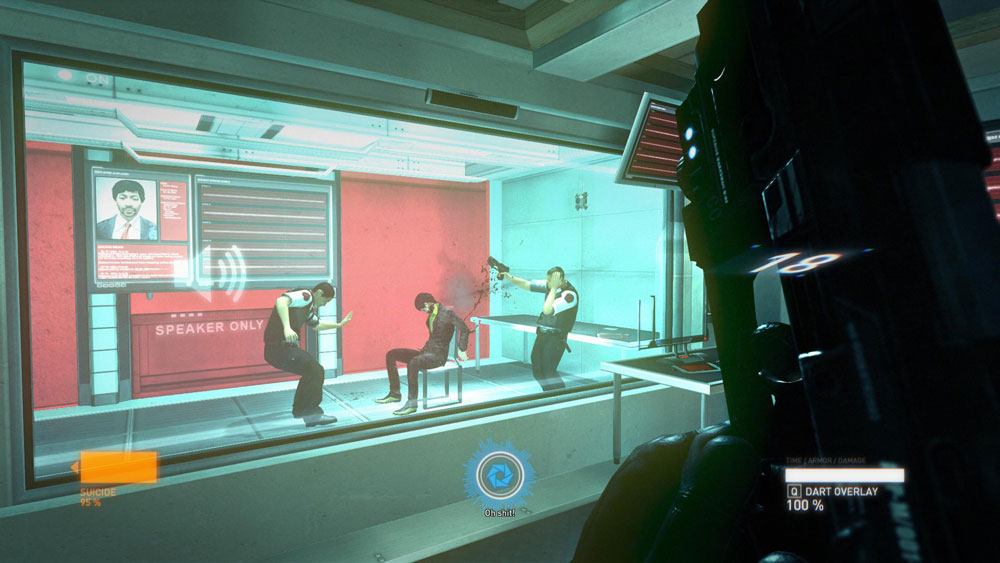
Style over substance ^ 100
Syndicate is a FPS reboot of the 90’s series of the same name. As someone who never played the original series, I became interested after watching the trailer and was drawn towards the dystopian cyberpunk setting as a means of getting through my Deus Ex withdraw. Indeed, at first glance Syndicate has a lot in common with Deus Ex on a thematic level, although Syndicate never really goes any farther than reestablishing the rather brilliant lore of prior games. There are no deeper ramifications to your actions, or introspection on the nature of humanity, or much beyond entertaining gunplay, so… not really like Deus Ex at all.
The premise of the game is that you are Kilo, an Agent of a syndicate named Eurocorp, who just developed a highly-advanced neural implant that grants access to various powers. In this future, industrial sabotage takes on an incredibly literal meaning, with Agents of rival syndicates tasked with infiltrating R&D departments and basically killing/stealing ALL the things. During a mission to do exactly that, a conspiracy is uncovered, reinforcements arrive, boom boom, explosions, lens flare, boss fights, the end.
That sounds facetious, but plot is not at all Syndicate’s strong point.
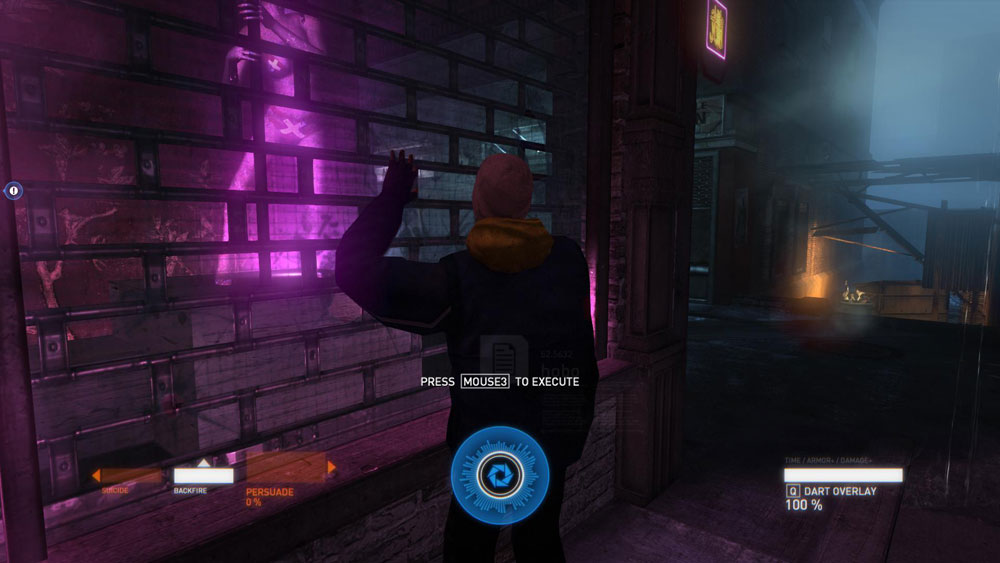
Not much room for deep thinking when you get an Execute prompt for hobos watching bad VR porn.
What is particular strong however, is the gunplay. Syndicate does a great job of making you feel like you are running and gunning in a Matrix-esque movie, including having access to overpowered abilities without making you feel immortal. As the plot develops, you eventually gain access to three main “Breaches”: Suicide, Backfire, and Persuade. Suicide makes the targeted enemy shoot themselves in the head or pop a grenade if they are near others. Backfire causes enemies to fall down (possibly out of cover) and take additional damage for X seconds. Persuade makes an enemy fight on your side for X seconds, before shooting themselves at the end of the timer. Each of these abilities recharge only when you kill enemies, ensuring that you don’t just hide in cover until your cooldown comes back up.
What does recharge is the sort of bullet-time mode that you can use in a more traditional Max Payne/FEAR sense to dispatch foes. In fact, this bullet-time is incredibly important because you frequently face massive waves of enemies who are more than capable of mowing you down in seconds. As you progress, the enemies get smarter, tougher, and many start becoming immune to your Breaches altogether. Along the way, you will face rival Agents as proper boss fights, including extra-long HP bar and various gimmicks. While such boss fights were really out of place in a game like Deus Ex, for some reason they felt alright in Syndicate.
In any case, if you are like me and care more about whether it’s worth $9.99 or whatever than about how much the reboot ruins the spirit of the original games, I would say it entirely depends on how much enjoy cyberpunk settings. Syndicate looks great, it has a solid five hours of mindless fun, and you can almost pretend that there is an in-depth existential plot you are just Spacebaring through the whole time. Indeed, Syndicate has a lot more in common with Hard Reset than Deus Ex in that regard. Times aren’t what they used to be though, and whereas I would recommend Hard Reset at $10, I have a tough time recommending Syndicate at any anything higher than $5… and even then, only if you really dig cyberpunk games.
Review: Dishonored
Game: Dishonored
Recommended price: $20
Metacritic Score: 91
Completion Time: 18-20 hours
Buy If You Like: First-person Tenchu or Assassin’s Creed, sneaky Bioshock
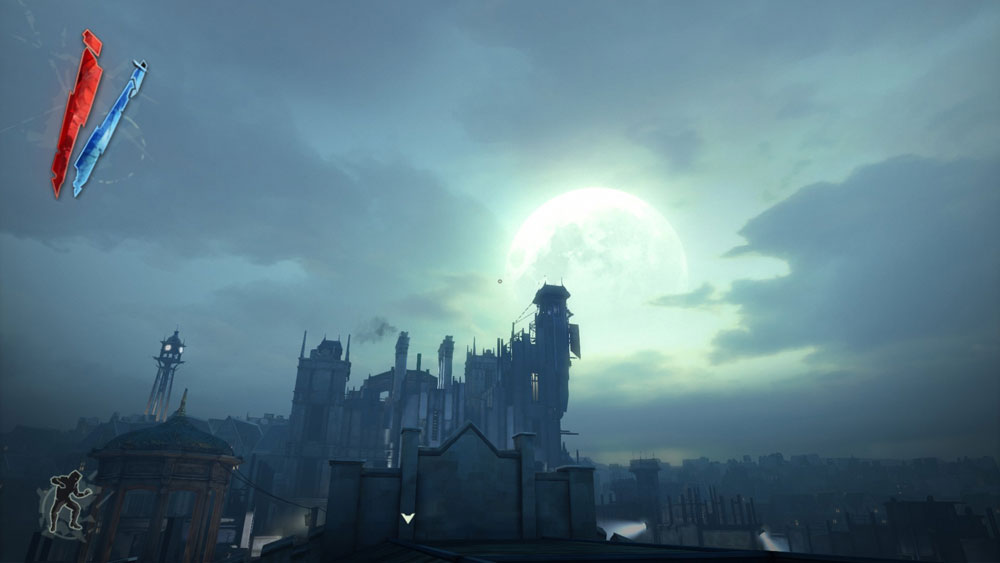
Style over substance.
I have been hearing Metacritic, er, criticism for years now without really understanding what all the fuss was about. It is a useful tool, and I include it in my game reviews as a sort of “by they way, this is what other people are saying” disclaimer. But now? I understand why people complain. I have no idea how Dishonored got a 91 Metacritic score. It is a good game and probably worth your time depending on purchase price. But is it better than (or even comparable to) Fallout: New Vegas (84), F.E.A.R. (88), Deus Ex (90), or Fallout 3 (90)? Lord no.
Before getting into what Dishonored is not, let us begin with what it is.
Dishonored is a first-person stealth action game set in the highly stylized, steampunk (or whale-oil-punk) city of Dunwall. You play as Corvo, a counter-assassin of sorts, as he struggles with being framed for the murder of the Empress he swore to protect. Through the course of gameplay, Corvo is granted supernatural powers like the ability to teleport short distances, stop time, or possess animals/people. The game is roughly divided into “missions,” which can consist of multiple areas and be completed/traversed in several ways. Within each area, there is usually a side-quest or two that can be completed for additional rewards, along with a smattering of extra upgrade components hidden around the map.
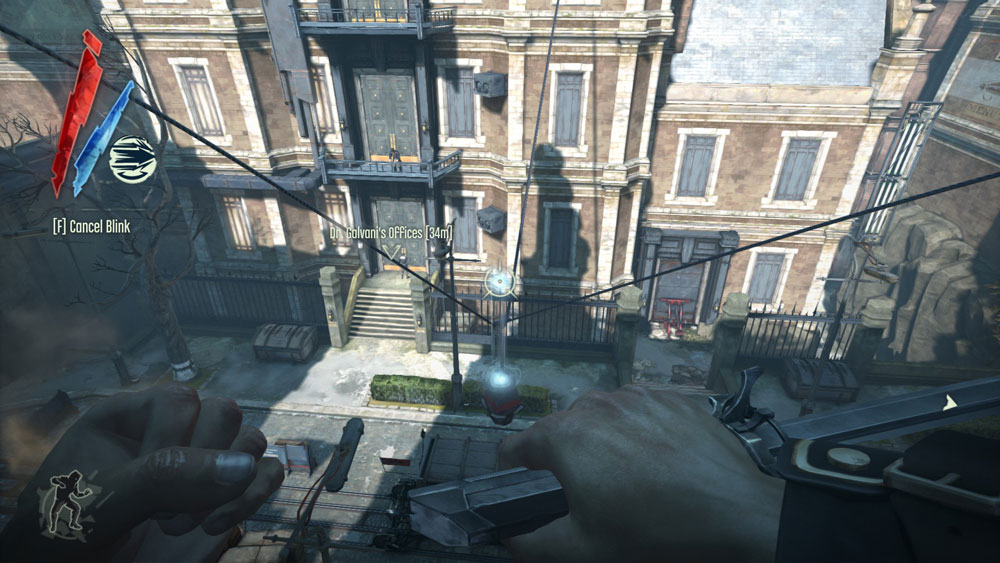
Blink onto hanging speaker, Sleep Dart guard on balcony, Blink over and enter via 2nd floor.
One of the most vaunted and critically acclaimed features of Dishonored is the ability to overcome challenges multiple ways. This is, for the most part, accurate. The mission goal may be to assassinate a certain individual, and the game will overlay the location of said individual on your UI, and… that’s it. If you want to stroll in the front door with a blood trail, tripping every alarm along the way, you can do that. If you want to Blink your way from rooftop to rooftop, hop in through a window, and switch the target’s wine glass with one that he poisoned (or mix them to poison both), you can do that. If you want to body-hop your way inside by possessing rats, fish, and guards, all so that you can render the target unconscious and remove them from power in a nonlethal manner, you can do that too. Or whatever combination you choose.
The problem I have with the extraordinary hyping of this gameplay feature is twofold. First, the game is incredibly easy. Almost trivially so. After the first 2-3 hours, I decided that I needed to restart on the highest difficulty setting. So I did… and further decided on a 100% nonlethal route for my first playthrough. Less than twenty hours later, Mission Accomplished.
People have different skill levels, of course, but most of the supernatural powers you get (all six of them) are pretty ridiculous. The default power is Blink, a short-range teleport that effectively has unlimited uses provided you wait 4-5 seconds between them. Blink is definitely a lot of fun to use, but once you upgrade it to level 2 (increasing it’s range) the game is basically over – there are no “puzzles” that cannot be solved by simply finding higher ground, going through windows, etc. Indeed, on more than one occasion I accidentally bypassed damn near the entire level and all of the security inbetween by Blinking between buildings.
The very next power that the game strongly suggests you unlock is Dark Vision, which allows you to not only see enemies through walls, but also their cone of vision; like Blink, Dark Vision is a super-cheap spell that you can effectively chain infinitely. Other stealth games, if they offer this sort power at all, make it expensive or difficult to use precisely because of how difficulty-destroying it is. Dishonored lets you peek through keyholes or lean around corners while remaining hidden… but it’s moot considering you can see everyone all the time with a touch of a button. Perhaps the worst part of Dark Vision though, is how it destroys the visuals and ambiance of a very stylish game with its sepia-tone washout effect and dark whispers; once upgraded, it even highlights cash and other items, meaning you can go through an entire level with it on and miss nothing… except all of the artwork and nuance. Dishonored without Dark Vision is a 100% better game, but you shouldn’t feel like you need to handicap yourself by not taking it to have fun.
Between Blink, Dark Vision, and how absurdly easy it is to kill/incapacitate guards, I only used Bend Time or Possession out of a sense of guilt for having “skipped” the rest of the game.
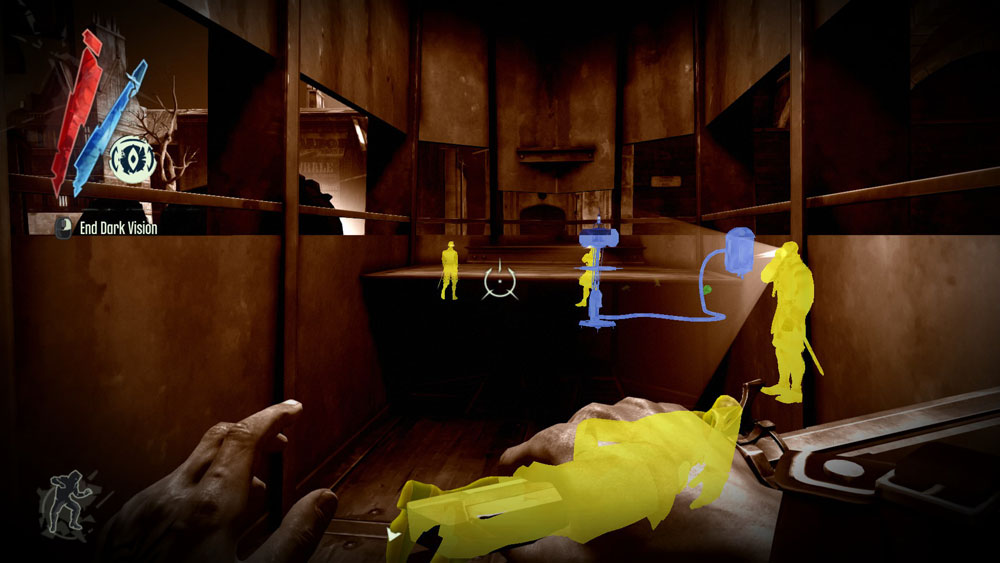
Around 90% of the time, your screen will look like this.
The second reason I do not understand the hype is how most games do this sort of thing anyway. If I am playing Metal Gear Solid, the game asks me to get to a certain location and then sets me loose. Whether I get there by avoiding all the guards, or shooting all the guards via sniper rifle, or going through the vents, or using a cardboard box, or whatever, is irrelevant. Dishonored is really no different. It doesn’t matter whether you got into the building through the window or by possessing a rat, just like it doesn’t matter in MGS, or Deus Ex, or Tenchu, or any of the other hundred games released since 1998 that feature more than one path. This sort of thing is par of the course. If the critics are referring to your ability to take out “bosses” in a nonlethal manner as being groundbreaking… um, again, 1998 called and just filed an injunction.
All of this is not to say that I did not have a good time in Dishonored. The story is fairly predictable, the setting is bit all over the place, but the game is good at pulling you in two different directions when it comes to whether you should simply murder your target or show “mercy” (where mercy sometimes ends up as fates worse than death). And again, I had a fun time in the game sneaking around and feeling like the biggest badass in the place. I just do not have any notion that Dishonored, mechanically, was the one delivering that fun experience versus me reliving the joys of MGS, Tenchu, and Deus Ex.
Maybe that distinction is immaterial to you. Maybe it is enough that an off-brand experience is so similar to one you enjoyed in the past. In which case, by all means, have fun. I just do not see how Dishonored deserves a 91 for emulating actually groundbreaking games wholesale, minus their difficulty and nuance. I’m thinking it is an 81 at most. Which is still great!
Review: FTL: Faster Than Light
Game: FTL: Faster Than Light
Recommended price: $9.99 (full) / Bundle
Metacritic Score: 83
Completion Time: ~2.5 (or 25) hours
Buy If You Like: Harsh roguelikes, micromanaging space ships, indie games
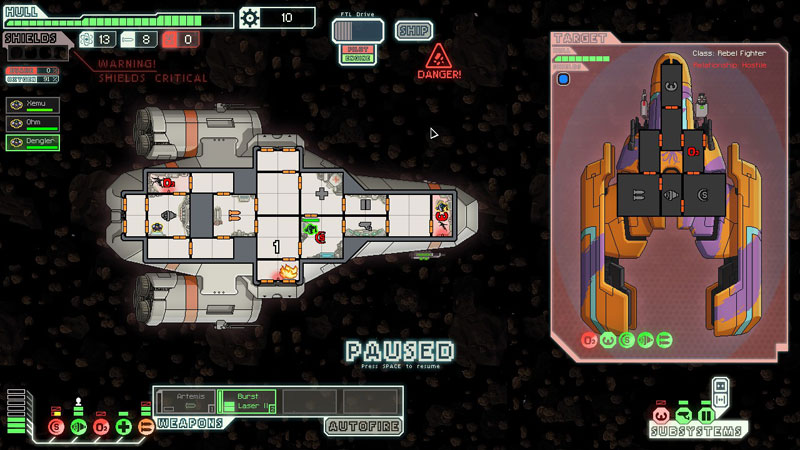
This happened during the FIRST BATTLE in one of my playthroughs.
FTL is absolutely one of those games which, had I not forced myself to dig beneath the brutal, unforgiving crust, I would have written off as awful after the first four hours of playing. While this may have been par for the course for roguelikes, I had hitherto been spoiled by The Binding of Isaac, which not only had a more generous feeling of incremental progression, but a more direct correlation between skill and outcome. With Isaac, awesome twitch-skills is nearly enough by itself to propel you to success. With FTL, success is largely determined by how many coin-flips you win early on.
At least, it seemed that way at first.
…actually, no, coin-flips are still pretty important.
The basic premise is that you are a Federation ship with secret knowledge trying to outrun the advancing Rebel army. Each “turn” you move to an unknown point on the star map and either encounter an enemy ship, a text scenario of some sort, a Store, or possibly nothing at all. Combat takes place in real-time, although you can pause as much as you like. When attacking, you can choose specific ship systems like Weapons or Shields to disable them, or perhaps continually attack their O2 rooms to suffocate the enemy crew. Meanwhile, the enemy is doing their best to repair your damage and blow you up in turn. Some encounters can take place with environment hazards like asteroid fields, solar flares, or ion storms. Defeating enemies randomly gains you Fuel, Missiles, Drones, Scrap, or even ship components. While combat is pretty nuanced and skill-heavy, the text scenarios are the coin-flips where you either win needed materials, or lose big, without much room inbetween.
Once I realized that the game is meant to be played on Easy instead of Normal though, FTL blossomed like an origami flower. Getting more Scrap (upgrade currency) and less ridiculously-armed enemy ships granted the breathing room necessary to learn about juggling power supply, the importance of simultaneous weapon fire to pierce shields, which weapons can snatch victory from the jaws of defeat, and so on.
I also was able to get a handle on which events were riskier than others, and how many of them can be mitigated with certain ship upgrades or items. Since failing (i.e. losing the coin flip) events typically results in losing a crew member, I began to understand that outside the beginning few levels (where restarting is less painful), it just wasn’t worth the risk. But it was that precise lesson in risk management that eventually started turning every Easy run into a full clear, and then doing the same in Normal.
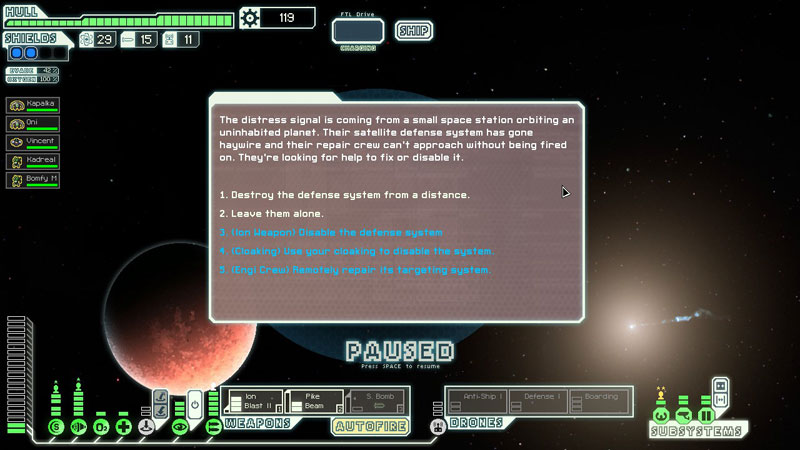
Blue options are always better.
At the time of this writing, I have 45 hours logged in FTL. Part of what keeps me coming back is the cohesion of the overall package, from the 16-bit graphics to 16-bit sound. A bigger part is the very randomness I despised originally. When you start the game, you have access to just a single ship. Getting 2 out of 3 ship-specific achievements will unlock a different configuration of that ship type; these alternate ships not only have different room layouts, but also different starting crew races and weapon loadouts. Entirely new ship types, each with their own alternate layouts, are further unlocked via gameplay. There are a total of 9 different ships, which means 18 different configurations.
What all of this combines into is an extremely slick, subconscious form of progression. Your games with the Engi’s drone-focused ship are going to be much different than your Rockmen’s missile-focused ship. While most ships are going to look basically the same upgrade-wise by the time you get to the final encounter – the ridiculousness of the flagship sees to that – the getting there becomes a game unto itself.
That is sort of the whole point of roguelikes, of course.
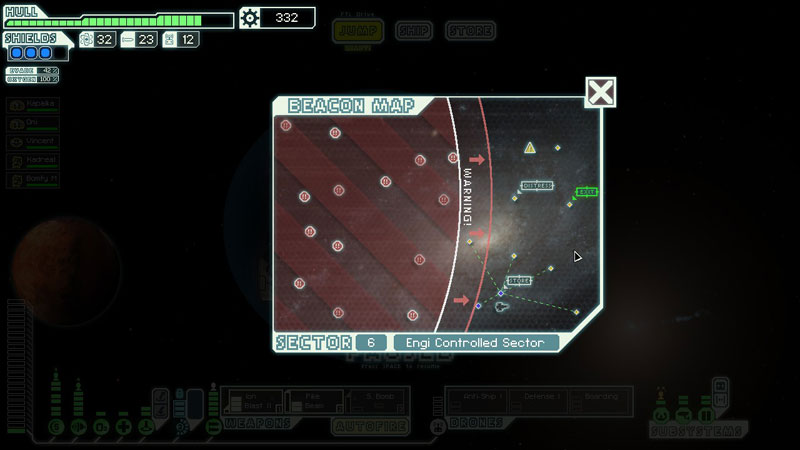
Will I make it? Spoiler Alert: Yes, because I’m awesome like that.
Ultimately, I am recommending this game at full price or Bundle price because it comes down to how much early frustration you are able to handle before giving up. You have no idea how close I was to uninstalling after I died in the screenshot at the top of the review, for example. If scenarios like that make you leery, I suggest waiting for FTL to hit Humble Bundle or Indie Royale as it inevitably will.
If, however, you are the type of person willing and able to muscle through rough first impressions to get at the delicious marrow in the bones of your enemies, buy FTL right now. Not only will you be getting a pretty ridiculous hour-per-dollar gameplay ratio (get 240 hours from a $60 game lately?), but you will be supporting one of the first indie game Kickstarter successes.
Review: Dead Island
Game: Dead Island
Recommended price: $10
Metacritic Score: 80
Completion Time: ~35 hours
Buy If You Like: A melee-focused Borderlands, killing zombies
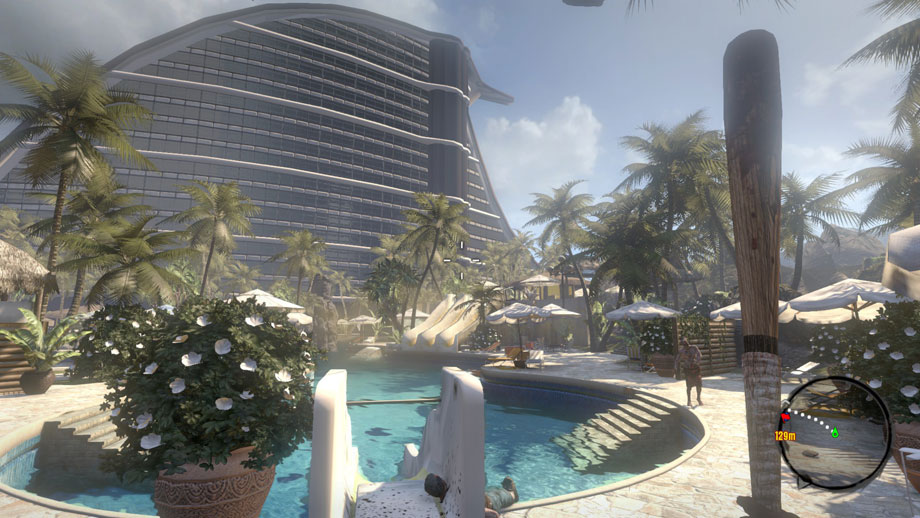
Wha… who… wow. Why didn’t anyone tell me how good this was?
My initial expectations for Dead Island were low. All that I knew beforehand was that it had one of the best videogame trailers of all time, and that the game itself had nothing at all to do with said trailer. Somehow, hearing that the trailer was misleading was enough for me to imagine the game itself would be bad, since “misleading = bad.” Plus, I heard someone somewhere mention the 4-player co-op had traditional RPG roles like tank, rogues, ranged, and thought “Eh?”
What I was not expecting was for Dead Island to be one of the most interesting games I have played this year.
A “melee Borderlands” really is the best way to describe how Dead Island plays. You start out as one of four character classes whom all have three-branch talent trees, you pick up random weapons with random stat spreads, and you smash zombie face in an almost entirely open-world environment. While it is all done in first-person, all the traditional trappings of action RPGs are there: life bars, damage stats, gaining XP, picking up and completing side-quests from other survivors, and gaining levels. Much like Borderlands (again), the experience feels incongruent at first (“Headshots aren’t instant kills?!”), especially when the default weapon in most every other zombie game is a gun, not a police baton you modified with nails or a machete heated to 200° with laptop batteries, wires, and duct tape.

Dammit, Sister Mary. I just upgraded this metal beatstick!
But after a while? I was hooked. Want to explore the beach? Explore the beach. Want to drive back and forth in a truck, running down zombies and trying to navigate the the debris-strewn roads? Do that. Loading screens are few and far between, zombies are everywhere, and randomized loot ensures that even if there isn’t some kind of specific secret hidden in that forgotten corner of landscape, your time wasn’t exactly wasted. All enemies level with you, with the end result being that you can (and will) die to 2-3 standard zombies as easy at level 1 as at the level cap, if you aren’t careful.
There are really only two major negatives to Dead Island, or just one depending on how much of a curve you grade zombie games. If you are looking for a zombie game that really shakes up the narrative conventions for the genre, A) you will be disappointed here, and B) really? Stop me if you have heard this before: zombie outbreak occurs, you are inexplicably immune, your travels take you to a hidden bio-corporation working on unethical research (may or may not have involved creating zombie plague), race against time to stop/avoid entire site being nuked from orbit. Cliches aside, and excusing the sort of unresolved micro-stories various quests represent (bitten guy wants you to bring insulin to trapped brother, who you never see again anyway), it was unquestionably refreshing to have gone from that special form of insipid RPG questing to doing things that actually make sense. Collecting three crates of food might be superficially similar to collecting 10 bear asses, but at least the former makes sense.
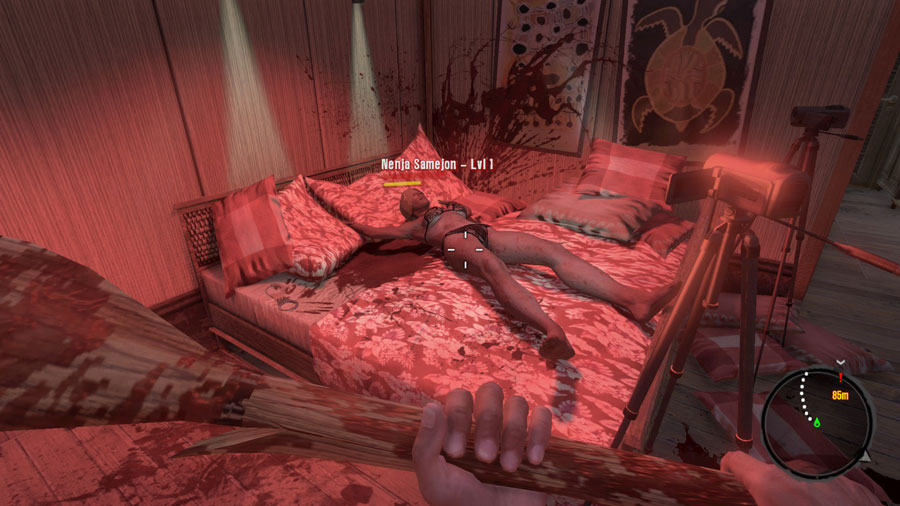
Is it, ah, still necrophilia if she’s a zombie?
The second negative is not as easy to handwave away. You see, the entire first half of the game consists of exploring the beautiful, open-world resort and city areas doing things that make sense to do in a zombie apocalypse. Inexplicably, the developers decided to switch gears and start feeding you through the cramped, repetitive hallways of sewers, a City Hall built by M.C. Escher, prisons, and abandoned hospital wings. Could we please, like, stay outside? You know, leverage the one feature that sets Dead Island apart from nearly every FPS zombie game ever made? The indoor zones are not bad – aside from the piss-poor decision to not include maps for these areas – but it definitely starts feeling like “more of the same” and “Resident Evil did this better in 1996” after a while.
I would be remiss if I did not briefly talk about the co-op. While I only actually ever played with one specific friend for 2-3 hours, I can definitely see the appeal. It simply feels good to be surrounded by zombies, knowing that you are severing limbs and curb-stomping back-to-back. And for what it is worth, the developers definitely want this to be the way you play Dead Island. You will frequently get little notices that “ThugLife4Life is Nearby” which means that jumping into his/her game is a single button-press (J) away; dropping out is just as easy and non-disruptive, and you keep all the goodies you might have gotten. Plus, as I alluded to at the beginning, a lot of the various talents Skills you can pick benefit your fellow players too – from buff auras, to higher Medpac healing, to straight-up MMOish Threat mechanics (Sam B has +30% Threat via Decoy, Xian Mei has -15% Threat via Spectre and can get bonus damage from backstabs).

I love the smell of 150 damage/second Molotovs in the morning.
Ultimately, I found Dead Island to be a perfectly good and oddly refreshing FPS zombie experience, with friends or by oneself as I did for the last 32 hours of gameplay. The visuals are drop-dead (ouch) gorgeous, the loot system way more satisfying than Diablo 3, the melee-focused combat surprisingly satisfying (1-2 seconds of slow-mo when a zombie head is liberated from its zombie neck never gets old), the constant threat of death kept me on my toes, and I had a good time overall. While there is not much in the way of replayability beyond a New Game+ mode, the four characters do end up playing quite differently if one is looking for an excuse to run around Banoi again.
And, hey, it looks like Techland is working on a sequel titled Dead Island: Riptide. So maybe sometime soon we won’t even need an excuse.
Reviews: AaAaAA!!! – A Reckless Disregard for Gravity, Frozen Synapse, From Dust
Game: AaAaAA!!! – A Reckless Disregard for Gravity
Recommended price: $0.99/Bundle
Metacritic Score: 81
Completion Time: ~3-4 hours
Buy If You Like: Falling simulators, super-twitchy Pilot Wings
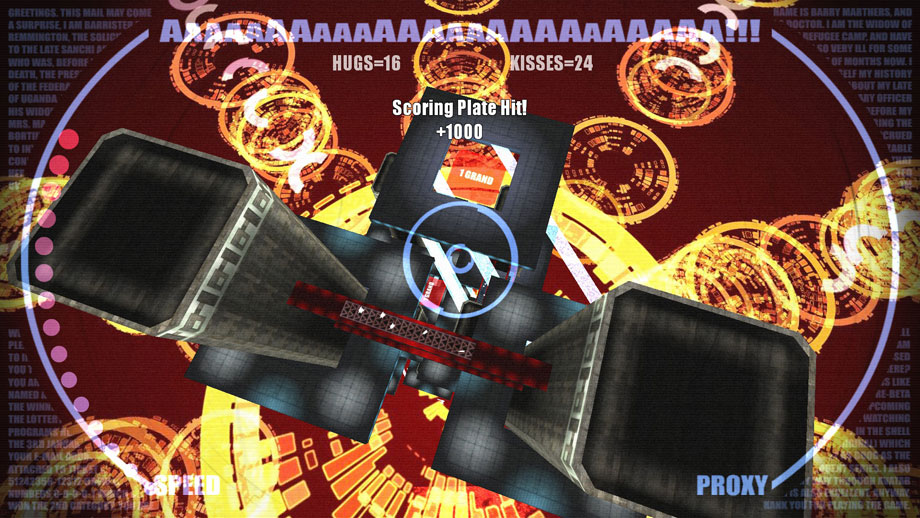
Not for those with vertigo.
It is both easy and difficult to describe AaAaAA!!! as a videogame.
It is an indie game with personality, in which you use the WASD keys (and sometimes mouse) to control your descent as close as possible to floating buildings, through Score Plates, and hopefully landing at the bottom area at a speed somewhat less than 54 m/s. Points are awarded for Hugs (every second spent within a few feet of an object), Kisses (one-time bonus for getting close to individual buildings), giving a thumbs up/flipping off your fans/protestors on nearby walkways (i.e. Left or Right clicking while in range), spray-painting government buildings (pressing Middle mouse button near green-striped buildings), and some other miscellaneous actions. If you land safely, your points are tallied and you are given up to a 5-star rating, which rewards Teeth (the game’s currency) so that you may pay to unlock new levels.
Obviously the above does not begin to capture the adrenaline that comes from a combination of induced vertigo, rocking soundtrack, visual overload, and split-second twitch action. There are 80 levels which can be completed in a relatively non-linear manner, plenty of dark humor, Steam leaderboards, and… well, yeah. AaAaAA!!! does not pretend to be anything it is not, and what it happens to be is a decently entertaining distraction.
_____________
Game: Frozen Synapse
Recommended price: $5
Metacritic Score: 85
Completion Time: ~18 hours
Buy If You Like: Squad-based, ultra-tactical games
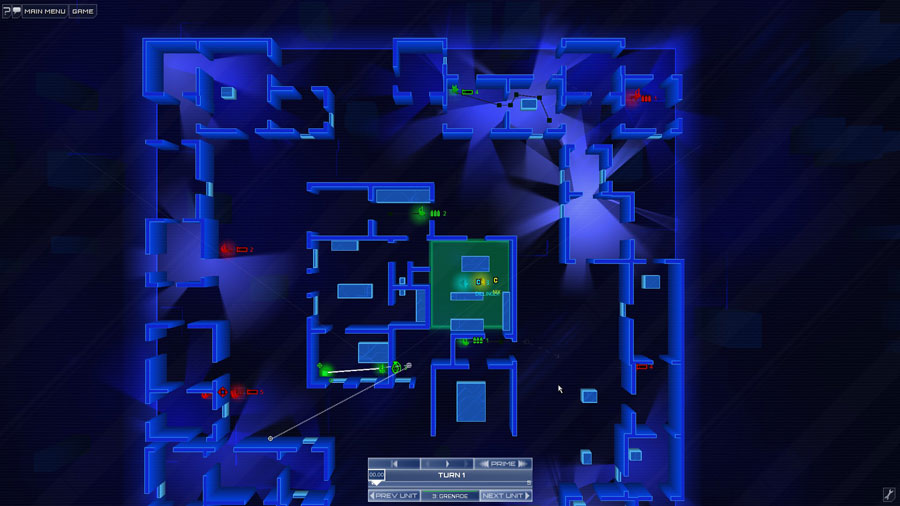
Would. You. Like. To. Play. A. Game?
My initial impression of Frozen Synapse was that it was a terrible, terrible game. I am not at all a fan of the sort of Rainbow 6-esque “spend 10 minutes planning a room breach, then instant Game Over within the first 5 seconds” gameplay, and that is almost exactly what Frozen Synapse consists of. Additionally, when you “submit” your moves, the game actually features a 5-10 second loading screen as if my $1200 computer that runs Skyrim on Ultra-max settings cannot handle the AI calculations.
After stubbornly slogging through the game out of spite, I would come to discover that Frozen Synapse is actually a decently good game. And potentially one that would temper my distaste of this sort of ultra-tactical gameplay.
The key to enjoying this game is to understand the underlying rules. There are three basic units that follow Rock-Paper-Scissors rules: Shotguners kill first at close range, Machine gunners at middle range, Snipers at long range. The prior rules are overruled depending on which unit sees the other first (there are vision arcs), obstructions do count for something, and standing units beat moving units in “ties.” Rocket launcher units do not auto-fire, their rockets continue in straight lines, and kills only come from splash damage. Grenade launcher units can bounce grenades off walls, can only shoot over waist-high obstructions if they are nearby.
The real turning point though, came when I understood that the sense that the “computer cheats” stemmed from my not simulating how the computer can screw me. You see, you can spend a lot of time planning out your own moves within the intuitive interface, getting the timing down perfectly to kill the red units… when they are statically standing around. But as soon as the Submit button is pressed, the computer is going to engage in its own plans, and typically it does not include standing around looking at the corner.
So the solution is to plan out what the computer could possibly do to ruin your own plans. If the hostile machine gunner goes to the window instead of the door, will your shotgunner still get the kill? Instead of leaving it to fate and possibly losing a match 10-turns deep, make the computer do that, press Play, and see what would happen. The computer can still surprise you from time to time, but it almost became a game unto itself to see how many loose ends and blind spots my various tactical gambits contained.
It is worth mentioning that 99% of the maps are procedurally generated, and the same with troop placement, even in single-player. The campaign itself is fairly amusing and quite varied, with later missions really turning on the heat with super-units and occasionally not letting you see enemy units unless one of your own has a visual (e.g. typically getting shot at). If you thought planning enemy moves was fun, try doing it to the “ghosts” of units you lost track of for the last six turns. In addition to the single-player campaign, there is also multiplayer and instant skirmishes, although I had got my own 18-hour fill with just the campaign.
Ultimately, Frozen Synapse is not for everyone – it wasn’t even for me initially – and certainly not for anyone at the default price of $24.99. Catch it for $5 and/or as part of a bundle though, and it could definitely be worth your time.
_____________
Game: From Dust
Recommended price: $0.99/Bundle
Metacritic Score: 76
Completion Time: ~5 hours
Buy If You Like: Literal sandboxes, water simulators
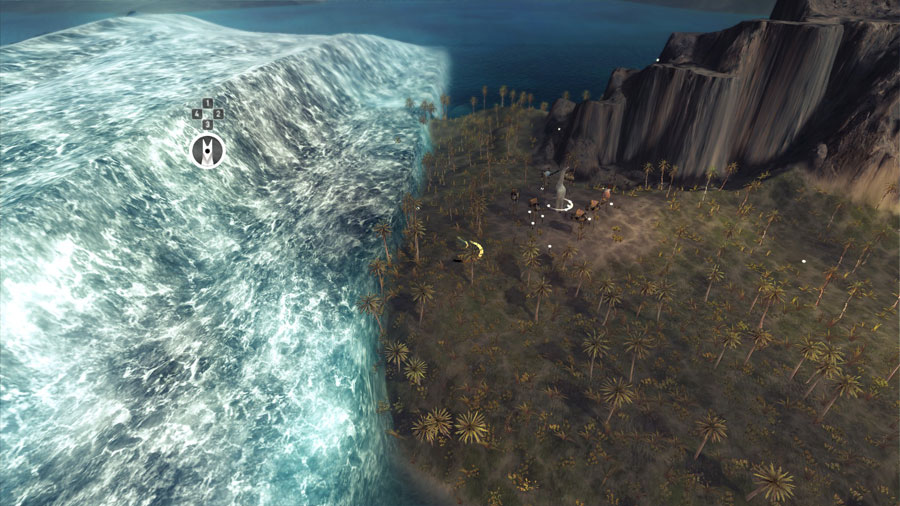
Uh oh.
As a tech demo or proof of concept, From Dust is stunning. Whatever water/physics engine they have running this thing is ready for the mainstream. Water has currents, erodes earthen embankments, and wipes out landmasses in the form of tsunamis quite beautifully; volcanic eruptions spew lava that gradually builds up and up until suddenly it is overflowing into the stream nearby, creating a impromptu dam, and starting a bushfire in the process.
As a game though, From Dust skates the very edge between too simple and frustratingly complex.
The basic gameplay consists of shepherding a handful of tribesmen to the white totems around the map, so they can erect villages. You control a glowing worm-like cursor thing that can pick up sand, water, or lava, placing them in strategic locations to get said villagers across obstacles. Each village gives you more powers, such as the ability to Jellify Water (it turns into almost a solid, letting you part the sea Moses-style), Evaporate Water (lower the water table), Amplify Breath (lets you suck up/dump more matter), and four other abilities. Smaller totems dot the landscape, and getting a shaman safely to them will give each village a “kite” that can Repel Water or Repel Fire, depending on the map.
The learning curve for From Dust is quite gradual, but the difficulty complexity ramps up significantly towards the end. Special plants start appearing that either soak up water (bursting when too full, or releasing when fire gets nearby), evaporate water (and set fire to nearby plants), or simply explode when near flame (being the only method of destroying rock). Meanwhile, that river of lava you had been ignoring for the last three minutes has “suddenly” changed course and now your third village is aflame. Truly, nothing just suddenly happens – everything follows well-defined logical rules – but you can easily find yourself running back and forth putting out literal fires only to realize that something else you had been neglecting rendered your prior efforts moot.
Ultimately, I found the challenge invigorating, the mechanics sound, and the visuals gorgeous. My problem was just that the game… felt somewhat hollow. It is difficult to describe; perhaps it was almost too much of an emphasis on the mechanics? All that I know, is that From Dust came across to me as a tech demo or proof of concept, albeit one that is quite worth a second glance provided the price is right.
 In An Age