Rimworlder
As feared, I succumbed to Rimworld yet again.
The experience of playing Rimworld 1.4 with all the paid DLC has been interesting. And yet, simultaneously, an outrageous slog. Principally, my problem with Rimworld is the opening act. The “game” doesn’t really start until you have a working refrigerator and a relatively stable colony of 5-6 people. Before that point, you do not have the resources or manpower to engage much with the Research tree, rituals, caravans to other settlements, or any of the fun war crime shenanigans that just sort of happen on the way down the slippery slope.
To back up a bit, let me talk about my first scenario this time around: Rich Explorer. Instead of crash landing with three pawns, you land with just one but with a pile of money and a tech tree unlocked enough to built turrets right away. For some reason, this particular scenario has been speaking to me for months now – possibly because it speaks to the sort of survival games I enjoy. What I discovered was… pain, and not just because I run the Randy storyteller with the 2nd highest difficulty. Basically you have to have Construction 5 skill on your pawn in order to craft turrets, so I was defending solo for the first year. Not that it would matter much, because turrets require power, which was difficult to set up when you are also trying to sow crops to survive the winter. And that’s another deviation from my historical Rimworld attempts, e.g. not selecting a temperate zone that has year-round crops.
I persisted with that playthrough all the way to the next summer, until the moment that the four pawn colony I had scraped together all managed to get food poisoning at the same time. I wasn’t under attack or anything, I was just frustrated beyond reason that all four of my pawns were vomiting constantly, weak with fatigue, and I was zoomed in, watching pixels to see if they managed to actually finish eating the meal or would get interrupted and then collapse on the floor from starvation or not. It’s very possible that the colony would be fine, but I didn’t want to waste my time even on the highest game speed to see if they would.
Honestly, I don’t remember much about the 2nd attempt. I just abandoned it for similar reasons.
The third and current attempt is somewhat of a “cheese” run. Using the Biotech DLC, I decided to create my own xenotype that includes the Iron Stomach trait that makes them immune to Food Poisoning. I also used the Ideology DLC to create a belief that organ harvesting is OK, seeing corpses don’t provide a negative debuff, and research speed is increased. My pawns are genetically addicted to Psychite though and the area I settled in only has two growing seasons. Plus, any recruits beyond those initial three won’t have the xenotypes or Ideology bonuses without extra work.
That said… it’s still a slog. I’m currently surviving (thus far) the winter and barely have had time to research any new techs, let alone anything that utilizes the rest of the DLC material. Which is not necessarily the “point” of the game, but come on. All the fun stuff (to me) occurs when you have a somewhat stable base and can start meaningfully interacting with the rest of the game world. I’m still very far from being able to do anything with gene editing, Psycasts, or anything other than try and survive the winter without multiple psychological breaks.
Welcome to the rim, I guess.
Horizon: Zero Dawn
I was stuck in a gaming funk for a while. An embarrassment of riches at my fingertips and I couldn’t muster the energy to choose anything. On a whim, I remembered that I had specifically bought four games to go along with my new PC. With two of them down, why not see if a third could break me out of the funk?
Horizon: Zero Dawn certainly did.
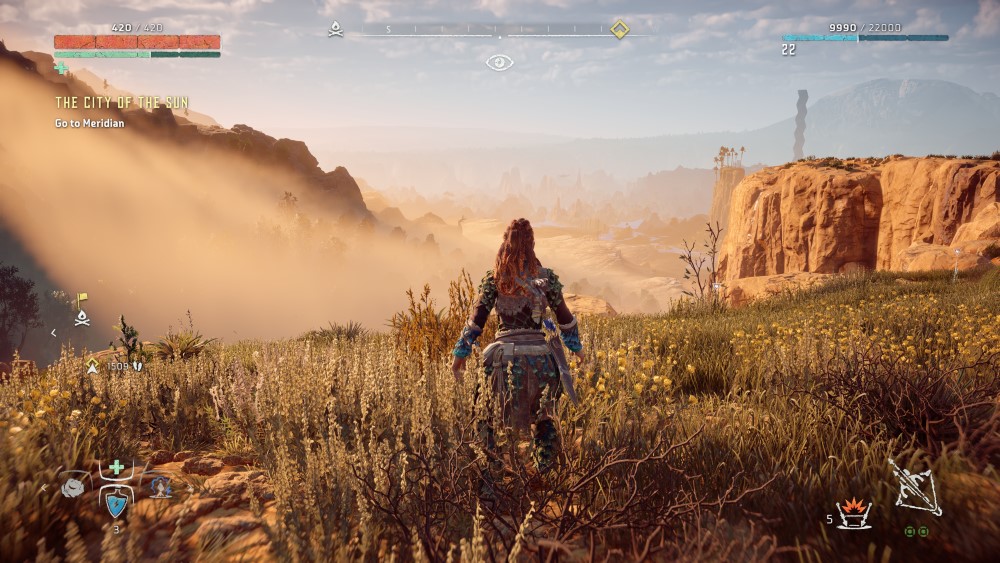
It was a fun experience going into this game effectively blind. Like, I knew the general premise of the game, as will anyone who has ever seen any screenshots: you are a tribesman hunting robot dinosaurs. Basically.
What I was not particularly expecting was the general level of fidelity to the premise. You really are walking around with a bow, arrows, and a spear. After dying a few times on Normal difficulty (!!) in frustrating ways, I took a mental step back. Although things certainly look like a sort of Action Adventure game, this was not Grounded wherein you Perfect Block the attacks of a house-sized spider. You are hunting machines made of metal – you cannot hope to parry with a spear. Of course, you do have a dodge roll with infinite i-frames, but nevermind.
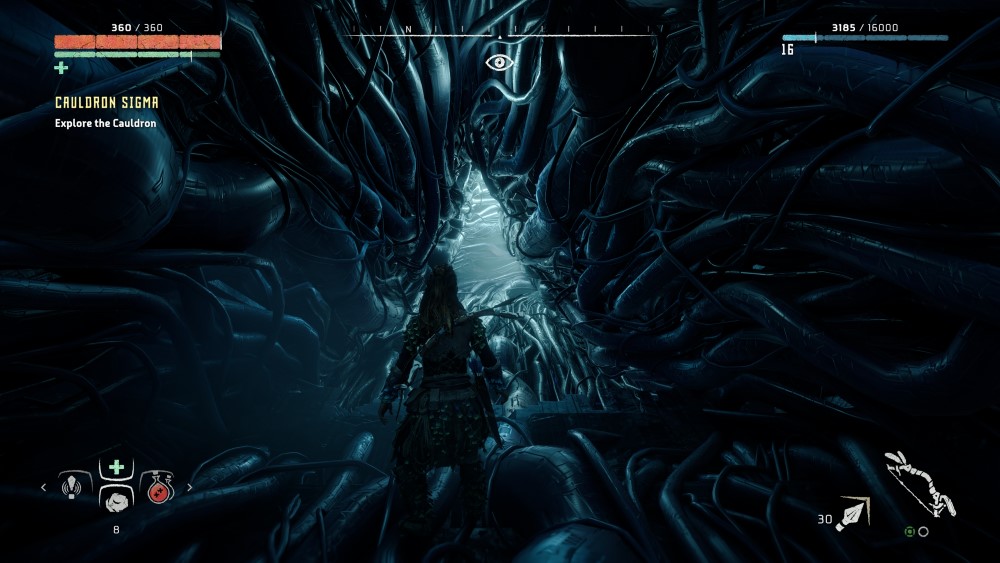
Instead, I started approaching the game as the hunter I was supposed to be. And the game got worlds better. Unlocking the ability to set down elemental tripwires and such certainly helped, but even before that I started approaching from cliffs, and using other terrain to my advantage when possible. Did I still occasionally get one-shotted and lose 20 minutes of progress due to the annoying checkpoint system? Yeah. But I also realized that I was one-shot because I got cocky and wanted to finish off one robot instead of retreating once I aggroed the second. It all sort of reminded me of PvP games and the adage that if you died with cooldowns available, it was your own fault.
Also amazing? The visuals. Yeah, I have a beefy PC so I’m playing a max settings and everything, but the visual direction itself is spectacular. Running around in the machine bases in particular has been a treat. Some of the larger robots are extremely intimidating, even after you are experienced enough (and have the proper tools) to take them out with ease. Plus, as before, even “routine” encounters with robots you have killed dozens of times can quickly turn against you if you aren’t careful. Any time I see a few Snapjaws (robot crocodiles) swimming around, I say “Nope” and go a different way.
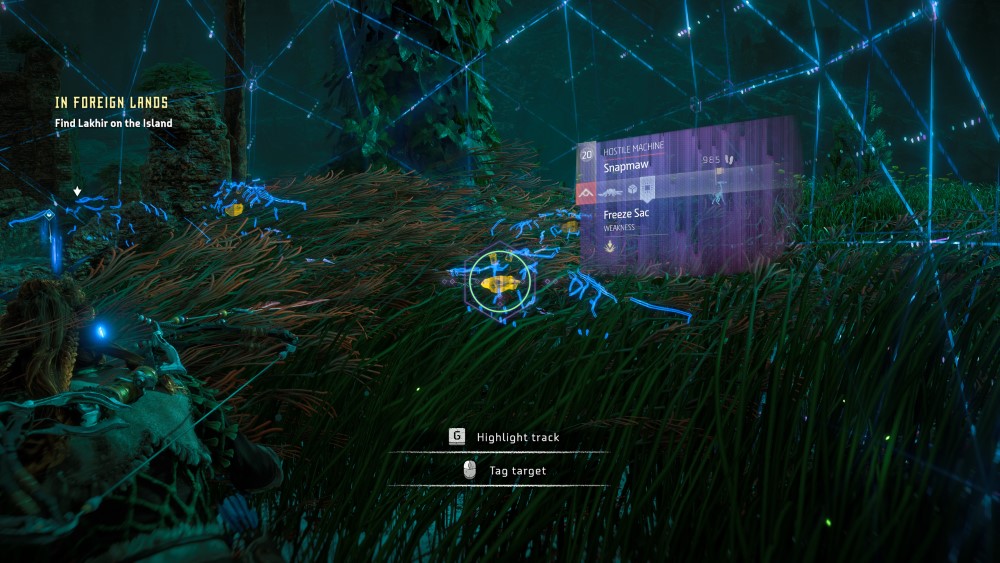
Near as I can tell, I’m about halfway through the game. And unfortunately, I fell into the Open World trap of exploring the Open World instead of plowing through with the main story. I say “unfortunately” because at this point I have unlocked all the Skills I was looking forward to, and unlocked all the best weapons. The game is still fun for now, but I’m worried about whether or not I’ll stick around long enough for the ending. I had 80ish hours in Cyberpunk and never actually beat that game, for example. So we’ll have to see what happens with Horizon: Zero Dawn.
Battlefield 2042
Battlefield may just not be for me anymore.
I wasn’t there at the very beginning of the franchise, but I caught Battlefield 2 at just the perfect moment in college such that I abandoned console gaming and spent all my limited monies purchasing a gaming PC to play it at higher fidelity. Battlefield 2 consumed me. And even after all these years, there are experiences with that game that are not replicable – grabbing the Commander reins during a losing battle and RTS’ing my teammates to uncertain victory is a top 10 gaming memory. Shit, just having a Commander role at all was something else. Sneaking deep behind enemy lines and getting an unrequested radar sweep was a gentle reminder that someone out there recognized what you were doing and wanted you to succeed.
I understand why the Commander role was removed in Battlefield 3 though. The difference between a team with a Commander and one with an empty seat was enormous. Nothing in the game proper prepared you for that critical role either, so the only practice you got was typically when your team was losing and the previous Commander abandoned ship. And even if you were an expert? Better hope someone else didn’t grab the slot or that other players went along with your vote kick.
In any case, Battlefield 3 was fantastic, Battlefield 4 was good with some annoying bits with unlocks/Battlelog, Battlefield 1 was a bit too oppressive, and Battlefield 5 was hot garbage. Between the series trendline and the poor news articles, I didn’t have high hopes for Battlefield 2042. And yet I am still disappointed.
But… why?
I played Battlefield 2042 for about 7 hours via EA Play, which I get for “free” from Game Pass. One of the first options you are presented with is whether you want to allow Cross Play, e.g. get matched up with console players. I chose No, as console players typically get a generous Aim Assist to “level the field” with mouse & keyboard players. Then I had to quickly reverse that decision because it was literally impossible to find a match. Actually, it was still difficult to find a match considering you don’t really “look” for matches, you just get auto-sorted into one (or an empty lobby). I think there was maybe one game mode that allowed you to manually look for a lobby? But those were primarily custom XP farms, like the one where everyone just gave each other ammo, and you get kicked for shooting at each other.
When I actually got to play the game, it was… basically Battlefield. Sorta. There was a lot of criticism about the pivot to Specialists at release, and I agree conceptually. What do they bring to the table that simply having a “specialist tool slot” would not? It’s also kinda weird having these named, unique-looking Specialists when fights are supposed to be 32v32+. It is precisely due to the larger battles that I felt like the Specialists weren’t all that special. Can one of the Sniper guys fly a drone around? Who cares? The enemy is back-capping Point A 1000m away with two tanks. Meanwhile you have a thumb up your ass pressing Q. I guess technically the Sniper can equip whatever other gear they want, even tossing a bunch of C5 packets on the drone like the San Francisco PD. It’s clever, but again, the scope is a bit too small for how games play out.
After a few sessions, it occurred to me that nothing really felt like it mattered. Yes, in the broad view, nothing matters. The nihilism felt particularly acute in Battlefield 2042 though. It’s already one thing that you cannot select specific servers to play on, and always get thrown into a mostly-empty map any time you accidentally press Escape too many times. But you’re also getting thrown together with console players, with whom you fundamentally experience the game differently. Then there is the BattlePass deal, whereby you are no longer really working towards gun unlocks in a satisfying way. Maybe it ends up being all the same in the end, but it feels worse when you “unlock” several items that you cannot actually touch because you haven’t spent however many dollars buying the BattlePass.
All I know is that I did not feel particularly satisfied playing Battlefield 2042, even when I won. I could psychoanalyze it further – as if there is anything left to say on the topic – but if a game is not sparking joy, what is the point? Play something else. So I am.
Citizen Sleeper
I appreciate a game that hits from an unexpected angle, and that’s why I appreciate Citizen Sleeper.
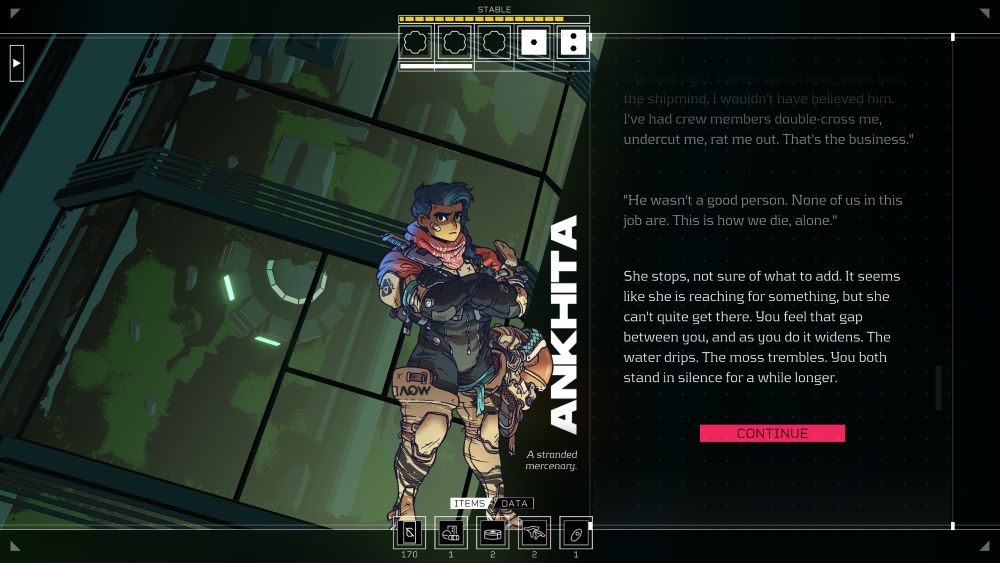
In Citizen Sleeper, you play as a “Sleeper”: an emulated mind in a biomechanical body, desperately fleeing the corporation that owns your total being. You awake in a shipping container, near broken, starving, and alone. Well… not quite alone. The scrapper who found you is hesitant, but allows you to work with him for some meager pay and sleep in the shipping container. From there, you attempt to build what little life you can from whatever you can cobble together.
For the most part, the game is essentially a visual novel with some “diceplay” bolted on. Each morning, you roll up to five dice depending on the condition of your body, and then choose what actions to spend those die on. The numbers on the dice you spend correspond to RNG outcomes associated with the actions – a 6 is always a 100% positive outcome, whereas lower numbers can be as poor as 50% neutral/50% negative. In this way, you have some measure of control over actions, even though things are random. However, since your condition dictates how many dice you have in the first place, this is definitely a “rich get richer” slash failure cascade mechanic. Especially considering how you must earn money to purchase food (starving results in condition damage), earn money to purchase the drugs that repairs condition damage (you decay each day), and negative results can sometimes lead directly to condition damage.
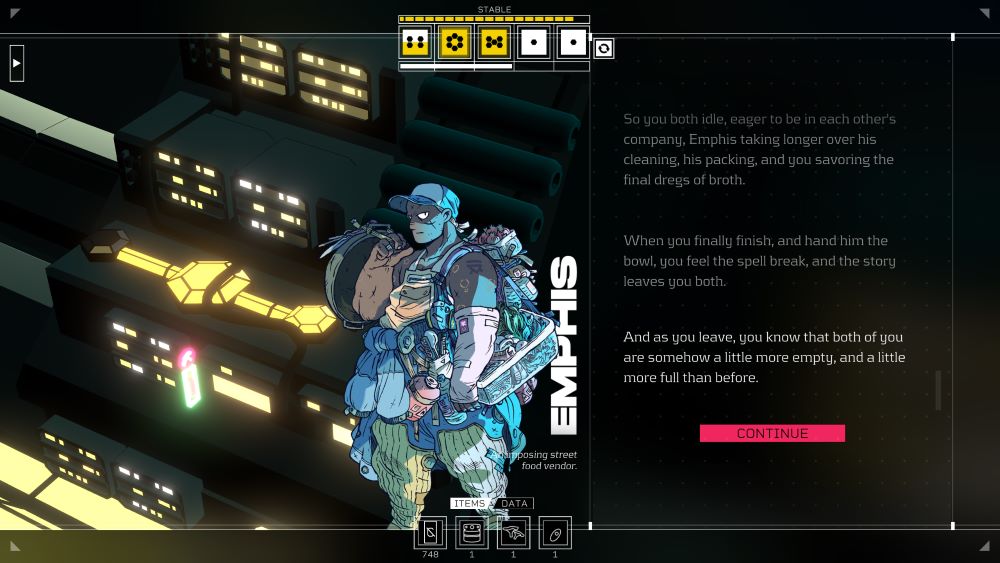
If that sounds stressful… that is kind of the point. Probably.
Once you manage to get a toehold somewhere though, the ramshackle space station begins to open up. You can start spending dice on things other than immediate needs. Start socializing at the neighborhood bar. Chat up the noodle vendor. Start helping the mercenary stuck in the docks. Maybe utilize your quasi-AI mind to dive into the abandoned corners of station. Each encounter adds a splash of color to the otherwise bleak setting, both emphasizing how alone everyone is and yet how much a helping hand can change one’s trajectory.
The unexpected hit I got from Citizen Sleeper was the understated poignancy of the many offramp endings. There are quite a few different endings you can focus towards, but the nature of the game sometimes passively (dice rolls) and actively (wait periods) prevents you from just mainlining them. Which leads you to perhaps explore some of the other stories and meet other kindred spirits. And so there I ended up at the precipice of one such ending, a simple Yes away from escaping my fate on the station… and realizing that in so doing I would be abandoning everyone I met. That particular ending was not Good or Bad – you are not a Chosen One, you have no preexisting connection or responsibility to anyone, and the station and its inhabitants would have just grinded on without you.
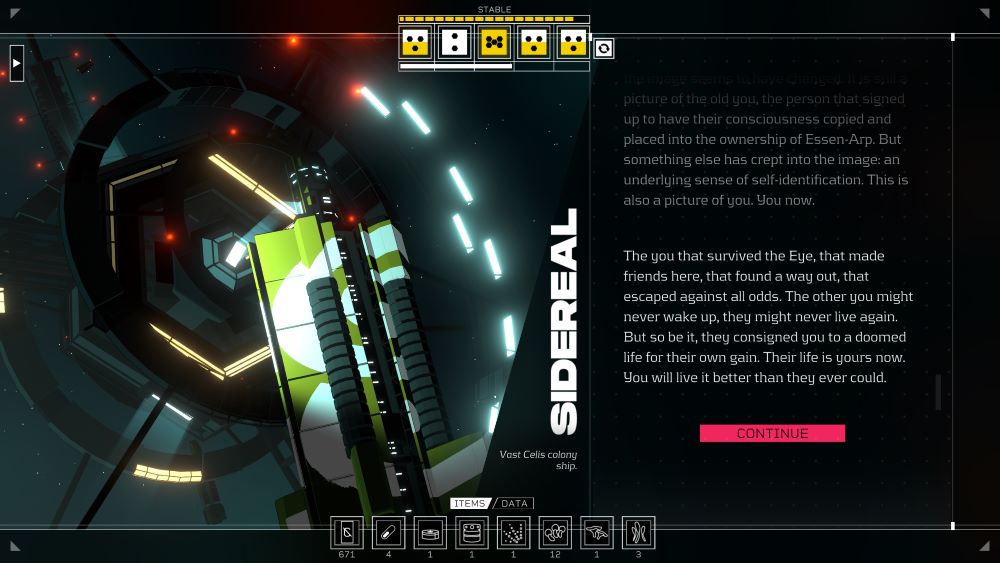
But I was there. I was making a difference for people I could touch. And so I chose to continue doing so.
Now, granted, I also was interested in getting all the various storylines fully maxed out before choosing a preferred ending. Yeah, I optimize even visual novels. HOWEVER! I did actually get a pang of melancholy there, despite the fact that I had copied the save file to a separate location so that I could choose other endings without having the play the game all over again. I never did though. I completed all the storylines and chose to stay behind, until it was time to go with the family I made over the course of the game.
Overall, I recommend giving Citizen Sleeper a try on GamePass.
Patch Waiting Game
Waiting for game patches is a dangerous… game.
For a minute there, I was hot and heavy for Grounded. Then the 1.0.2 patch hit, featuring some nice Quality of Life updates, but also a substantial nerf to an item I was actively using (Toxicology Badge). Barely more than a week later, they rolled out 1.0.4 which rebalanced a lot of the weapons in the game more generally, retooling some of the Mutations. Around this time, I started seeing reports that there was still a bug with the final battle, and not the Arthropod kind. So, even if I wanted to plow forward with the game with my inventory wildly fluctuating, I wouldn’t be able to see the end screen.
So… I waited. Then started playing something else. And here I am, nearly a month later, not having touched the game at all. At a certain point, I start having to get a gut check for how likely it is that I would ever actually come back and finish things.
Obsidian is now teasing Patch 1.1, set to hit the testing servers on November 28th. Certainly no sense in getting back into the game just to miss out on being able to travel up ziplines, right? Right.
I am waiting around for RimWorld too. A few months ago now I actually bought both the Royalty and Ideology expansions on sale. Haven’t played a game with them yet though, as I had other games I wanted to get to first, lest RimWorld consume all the oxygen in the room. Then the Biotech DLC was released, which sounded right up my alley. But of course you have to wait for all your mods to be updated to support Biotech first, though. Then Tynan mentioned that they are working on a patch that will feature cross-DLC integration for the first time. Can’t start a new game without that, right? Right.
Patches, man.
It feels good knowing developers are (usually) improving the game. On the other hand, that means you have to choose between continuing to play a good-enough version, or waiting for the better one.
Dead Internet
There are two ways to destroy something: make it unusable, or reduce its utility to zero. The latter may be happening with the internet.
Let’s back up. I was browsing a Reddit Ask Me Anything (AMA) thread by a researcher who worked on creating “AI invisibility cloak” sweaters. The goal was to design “adversarial patterns” that essentially tricked AI-based cameras from no longer recognizing that a person was, in fact, a person. During the AMA though, they were asked what they thought about language-model AI like GPT-3. The reply was:
I have a few major concerns about large language models.
– Language models could be used to flood the web with social media content to promote fake news. For example, they could be used to generate millions of unique twitter or reddit responses from sockpuppet accounts to promote a conspiracy theory or manipulate an election. In this respect, I think language models are far more dangerous than image-based deep fakes.
This struck me as interesting, as I would have assumed deep-faked celebrity endorsements – or even straight-up criminal framing – would have been a bigger issue for society. But… I think they are right.
There is a conspiracy theory floating around for a number of years called “The Dead Internet Theory.” This Atlantic article explains in more detail, but the premise is that the internet “died” in 2016-2017 and almost all content since then has been generated by AI and propagated by bots. That is clearly absurd… mostly. First, I feel like articles written by AI today are pretty recognizable as being “off,” let alone what the quality would have been five years ago.
Second, in a moment of supreme irony, we’re already pretty inundated with vacuous articles written by human beings trying to trick algorithms, to the detriment of human readers. It’s called “Search Engine Optimization” and it’s everywhere. Ever wonder why cooking recipes on the internet have paragraphs of banal family history before giving you the steps? SEO. Are you annoyed when a piece of video game news that could have been summed up with two sentences takes three paragraphs to get to the point? SEO. Things have gotten so bad though that you pretty much have to engage in SEO defensively these days, lest you get buried on Page 27 of the search results.
And all of this is (presumably) before AI has gotten involved belting out 10,000 articles a second.
A lot has already been said about polarization in US politics and misinformation in general, but I do feel like the dilution of utility of the internet has played a part in that. People have their own confirmation biases, yes, but it also true that when there is so much nonsense everywhere, that you retreat to the familiar. Can you trust this news outlet? Can you trust this expert citing that study? After a while, it simply becomes too much to research and you end up choosing 1-2 sources that you thereafter defer to. Bam. Polarization. Well, that and certain topics – such as whether you should force a 10-year old girl to give birth – afford no ready compromises.
In any case, I do see there being a potential nightmare scenario of a Cyberpunk-esque warring AI duel between ones engaging in auto-SEO and others desperately trying to filter out the millions of posts/articles/tweets crafted to capture the attention of whatever human observers are left braving the madness between the pockets of “trusted” information. I would like to imagine saner heads would prevail before unleashing such AI, but… well… *gestures at everything in general.*
Impressions: Sigil of the Magi
Sigil of the Magi is a deck-building roguelike ala Slay the Spire with some Into the Breach vibes. It is currently in Early Access, and I was given an early peak by way of a review copy.
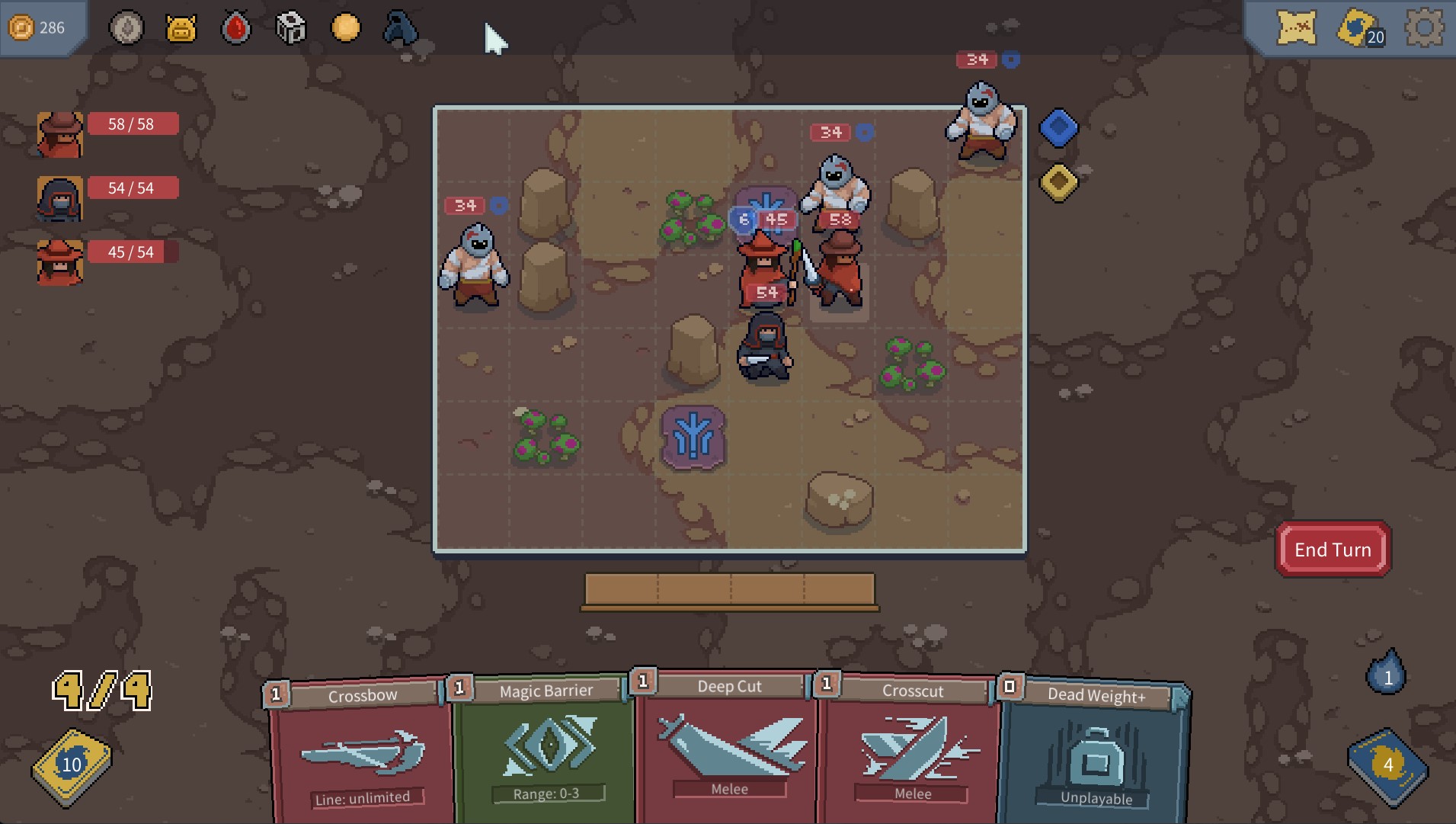
The Slay the Spire influences are front and center with the types of cards available, the pathways, and especially the shops. Basically, if you are at all familiar with Slay the Spire, chances are good that you will immediately recognize which cards are going to be good, which ones are noob traps, and what “relics” are going to pull their weight through a run.
That said, Sigil of the Magi does have a number of other interesting things going on.
First, you actually control a party of three separate characters, each with their own cards and card pools. Second, you literally control them in that you can move them around a very small map. While the UI needs some iteration to make things more clear, you can currently see what actions enemy units will take, and their attack preferences. That is where the Into the Breach vibes come in: if an enemy is set on attacking someone but you move all your characters out of range, the enemy will close the distance but then do nothing. Unfortunately, this sort of turn manipulation only goes so far, as enemies will settle for their 2nd or 3rd choice targets if they are within reach instead. Additionally, many of the enemies in the game have some sort of scaling mechanism that makes delay tactics unwise.
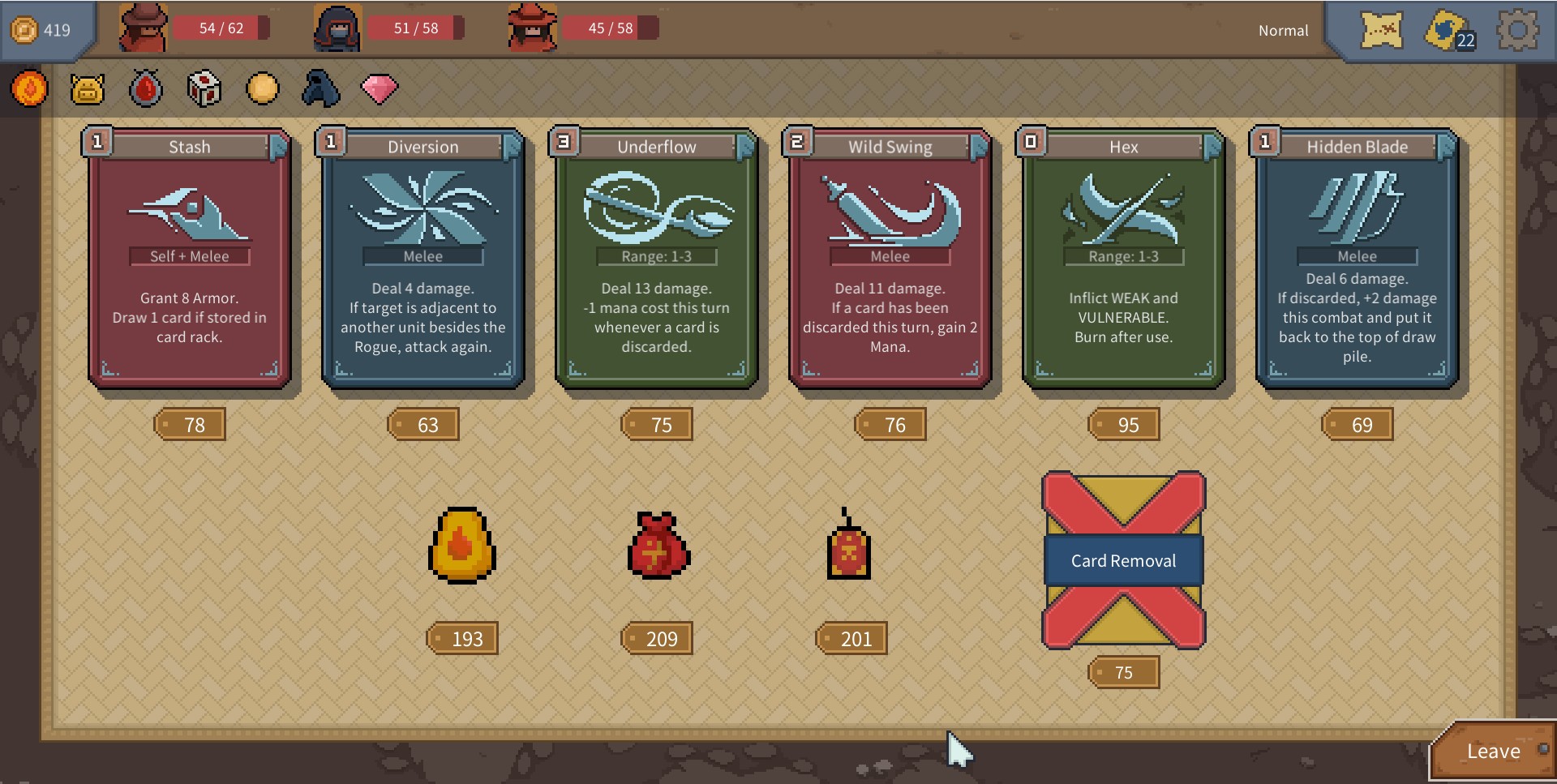
The third feature is what really sets Sigil of the Magi apart though: the Tray. This is a four-slot area under the map where you can pre-cast any card in hand for use in future turns. At first, this really just feels like a consolation prize for not being able to do much in the first turn of battle, before many of the enemies are within range. And since you only get 3 energy to play cards (at first), you typically don’t have anything left over to store for future turns once the melee is joined.
That said, the Tray becomes very interesting once you hit 4 energy and start getting cards that interact with it. For example, there is a card that give +4 Armor twice, but gets +1 Armor each time it is stored. Or maybe you get some discard synergies going, but don’t have a payoff card in hand, so you just bank the enabler. The cards in the Tray also are no longer in your deck when it is shuffled, so sometimes it might be worth keeping the generic damage cards in there to keep them out of your hand.
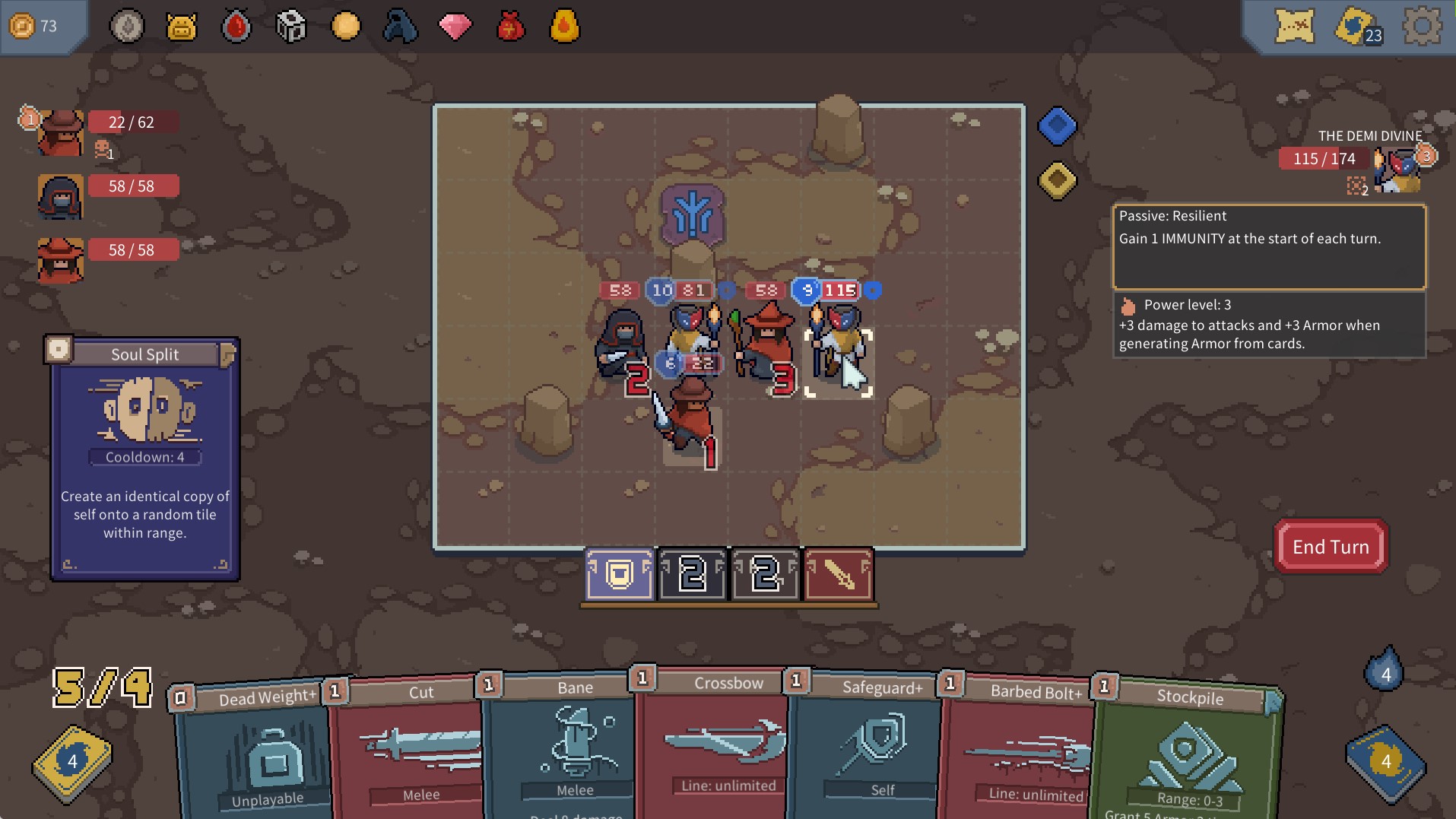
Is Sigil of the Magi good? Right now… kinda, sorta. The tough thing about Early Access for deck-building games is how so much hinges on card/enemy/relic balance, which can change at any time all the way past post-release. For example, right now, you have to choose a card after each combat encounter. This is literally the first deck-builder I have played that didn’t allow you to skip a card choice, and having to slot in whatever the least-bad, anti-synergy card you get offered feels like a punishment for winning battles. Is this an intentional design, like a sort of auto-difficulty balancing mechanism? I hope not. Conversely, abusing Taunt cards to force the end boss to skip all his mechanics and uselessly attack a very armored Knight was a lot of fun. Probably a bit imbalanced, but fun.
Overall, this is one game that I will keep an eye on as it makes its way through Early Access. The bones are good, and they definitely have things set up to allow for a lot of balancing methods. There are only two parties available at the moment, for example, but I can easily imagine varied combinations or even a sort of random mixing to add flavor to future runs. Plus, I really like the Tray conceptually.
We shall see how the balance goes though.
Commercialization of Evil
I have to admit, when I first read the article title “Dreamlight Valley is a waking nightmare and Disney must be stopped,” I thought both that clickbait is getting out of control and… yeah, that’s some quality clickbait that deserves a click. What I discovered is a pretty legit, punchy article that brings up an increasingly odious problem when it comes to Disney and their commercialization of evil.
The TL;DR is that Disney is populating Dreamlight Valley – aka Stardew Valley meets Animal Crossing – with whitewashed villains. For reasons. Probably commercial ones. As the article states:
You can’t sell a backpack with a genuine monster on it, so the various appalling crimes and deeds of the Disney Villains have been meticulously sanded away – these figures reduced to queer-coded girlbosses so gentrified hipsters who love Hamilton can get tattoos of them guilt-free. Earlier this year, Disney released an advert for their doomed Star Wars hotel depicting a mother and her daughter enjoying their expensive vacation by dressing up as space nazis and narcing on beloved revolutionary icon Chewbacca. The pair of them smirk as stormtroopers lead Han Solo’s fluffy best friend away in handcuffs, presumably to either an execution or to be shipped off to a kyber mine as slave labour.
Is this really a problem endemic of the moral failings of society? Probably not. But I was a bit surprised to learn that Disney also has a mobile gacha game called Disney Twisted Wonderland that turns all their villains into anime-inspired versions of themselves. The latest addition is one based on Claude Frollo, whose cartoon bigotry in The Hunchback of Notre Dame has only become more relevant over time, and would probably precipitate a “woke backlash” if it had not already been released 25 years ago.
In principle, I do not have anything against people dressing up as Stormtroopers or whatever. People do that not because they were space Nazis, but because the designs are iconic and, yes, cool-looking. That’s just a win for the Art department. And so I can see the draw for Disney to tap into these hitherto untapped wells of marketing material in the form of villains – demeanor/war crimes aside, they are just as iconic if not more so than the heroes of the films they serve to foil.
So… what’s the big deal? I dunno. Maybe nothing.
Nevertheless, I do feel like something gets lost over time. We probably should not be relying on Disney movies to teach morality to children in the first place, but whatever cautionary tale might have existed in these characters’ stories becomes muddled and unrecognizable through the commercialization process. And what was gained? This is not a Wicked-style introspective on possibly misunderstood villains. It’s just… business cashing in on cachet. Which is what they do, I guess.
Impressions: Grounded, pt 2
While the first Impressions post for Grounded was a week ago, the reality is that I have been mainlining the game daily for the past three weeks. That first post was written based on my first dozen hours or so, but I ended up playing so much that I never got around to actually posting it. So here are my impressions about the game after some 50+ hours.
Grounded is good. Sometimes annoying. Definitely still Soulslike.
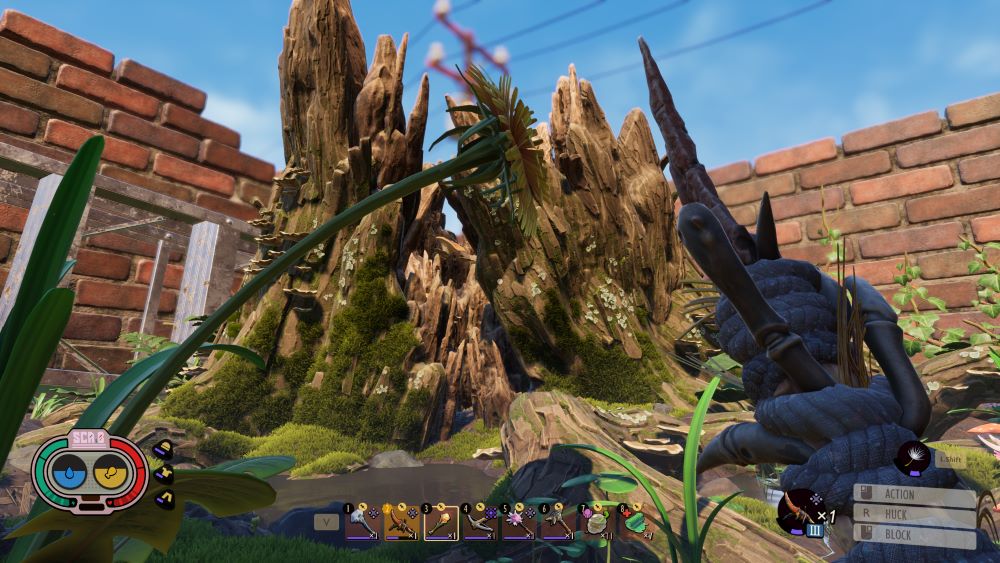
The game world continues to be a huge star of the show. Survival games sometimes have to make huge contortions to accommodate varied biomes – lava must coexist with snow and deep oceans and deserts all in the same map – but the way Grounded interweaves its own biomes is a masterclass in design. The backyard is a believable backyard. And yet going from the Grasslands to the canopy of the Hedge is a big transition. Or to the pond. Or in the sandbox, with it’s deadly Sizzle effect when you traverse the dunes without shade. These are different places, with different resources, and different challenges to overcome. And it all feels… coherent. Believable. Or at least, as believable as teenagers crafting crossbows out of grass vines and crow feathers can be.
Some aspects of the game have begun to provide friction. As you become stronger and explore further afield (ayard?), you… well, have further to go each time. Ziplines become a means of faster-ish travel, but they require a LOT of setup – constructing a vertical tower in the yard, carrying supplies to build destination anchors, and slaughtering dozens and dozens of spiders to turn their webs into silk to craft the zipline itself. Meanwhile, the only way to repair your Antlion Armor is to kill Antlions in the Sandbox, the best healing component must be farmed in the Pond, and you feel in your weary bones how much more time will get wasted with each unblocked attack you take while exploring the Upper Yard for the first time. It gets pretty exhausting, especially when you have to leave an area, inventory laden with loot, and know how much busywork is ahead of you before you can go back again.
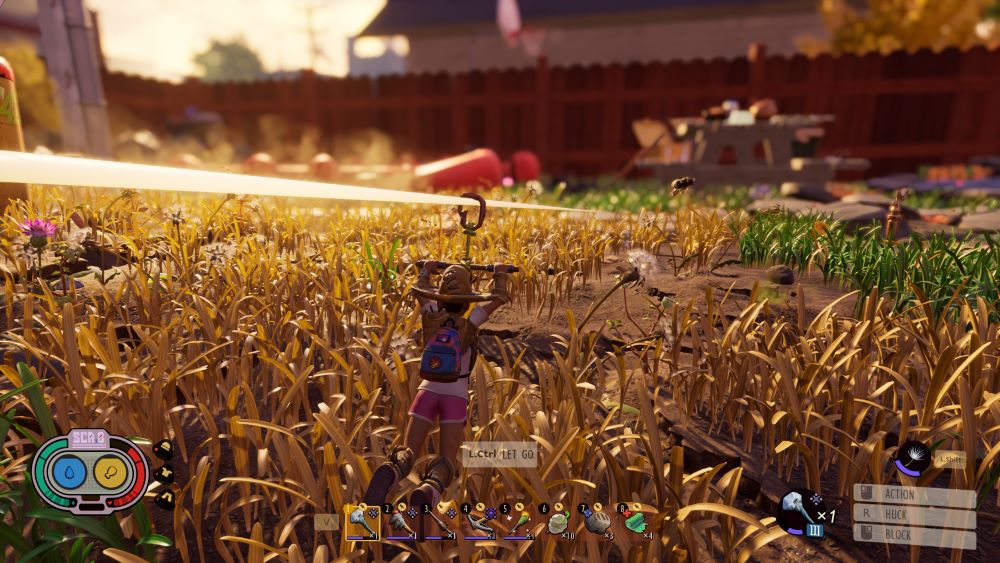
Perhaps the better recourse would be to build multiple bases instead of one major hub. Problem with that is some of the more advanced crafting stations can’t really be moved easily. Plus, it’s arguable as to how much time you would really be saving building several bases.
In any case, I am decidedly approaching the endgame. Having achieved upgraded Tier 3 Armor and Weapons, I can say that most fights with bugs are less Soulslike than they were in the beginning. As in, I don’t have to Perfect Block every single attack in order to not die. The tradeoff, as explained earlier, is that you end up needing to farm up considerably more healing potions and items to repair your gear. Some of the bugs I am facing do indeed still pose an incredible threat even with all my gear, so don’t believe you can necessarily gear your way past everything. Plus, there are required boss fights in this game, including different Phases and novel attacks.
And this is kinda what gets me about Grounded. The setting, premise, and story do not match the gameplay. Teenagers from the 90s shrunken down and running around their backyard for flimsy story reasons leads you to believe this is a game that might appeal to younger players. On Normal difficulty, it most decidedly is not a game for younger players. Or older players that may be reflex-impaired. Every time I think I’m hot shit crushing bugs left and right, I take two unblocked hits and I’m sprinting away chugging healing potions. And this is in a game where I can hit Save after every encounter!
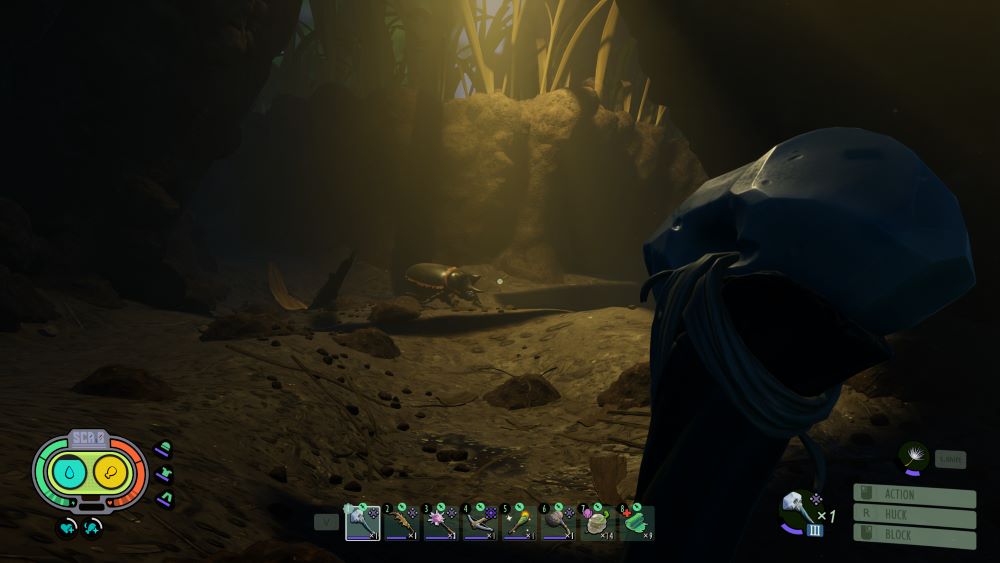
I have my frustrations with Grounded, but I’m still here mainlining this game for like 3+ hours every night. There isn’t anything special about the story, and yet I find myself eagerly traversing the yard to clear out the labs to get the next morsel of plot. Or, if I’m more honest, to unlock the next piece of gear and craft the latest weapons from the bones exoskeletons of my enemies. And all this feels fine to me, as there is a definitive conclusion on the other side. No “keep playing until you get bitter and jaded” purgatory here as with ARK or other survival games.
So, yeah. Grounded. Not the worst way to spend 50+ hours.
 In An Age
Rimworlder, part 2
Dec 28
Posted by Azuriel
Instead of doing minor edits and publishing the last post, I continued playing Rimworld for about 25 hours over a week. Yeah, all other games in progress (aside from GW2 dailies) have been blown away. However, in that time, I have come to a number of conclusions. Or maybe just a primary one from which all others follow.
The Rimworld DLCs make no sense.
Royalty was the first DLC to be released. The big addition was the sort of Fallen Empire faction that you interact with almost immediately in every playthrough. If you ally with the Empire, you can select one or more pawns to start accruing Honor via quests and such, which is used to ascend royal ranks, which in turn unlocks the ability to have Psycasts. Higher ranked pawns will need increasingly spurious luxuries befitting their titles, requiring the creation of a throne room, better quality clothes, and so on.
If you don’t ally with the Empire, you basically don’t get to play with Psycasts. There are a few opportunities to waylay Imperial caravans and steal the items that grant Psycast levels, but they are few and far between from what I have heard. That said, each map also has an Anima Tree somewhere that allows Tribal-based (and only Tribal-based) pawns to meditate/worship at its trunk to eventually unlock all Psycasts and assorted goodies, no Empire needed.
In practice, the entire Royalty DLC feels at odds with its premise. Roleplaying as a royal colony and eventually using the Empire as a win condition (joining the Imperial flotilla) is perfectly fine. Tying Psycasts to royal titles is not. The earliest Psycast that has any particular use (Vertigo Pulse) requires the Knight rank. The next one is Praetor, which unlocks Skip (tactical teleport) and Wallraise (cover on demand). These are very useful abilities, but each individual pawn would need their own separate throne room and gain the appropriate amount of individual Honor to gain them. It also gets a bit goofy having a Count, whom “might have a personal fleet of capital ships,” be slumming around with the rest of the fighters to take out a Mechanoid Cluster.
Tribalists being able to short-circuit the entire Psycast system by spending time at an Anima Tree kinda drives everything home. I haven’t done so myself, but there is plenty of chatter about how you can get your entire Tribal colony to be level 6 Psycasters very easily, which would otherwise require a half-dozen throne rooms and other goofiness the “normal” way. There are probably mods out there to fix things, but why not have rituals or research or whatever to allow non-Tribals access to Anima Tree benefits? Royal ranks would still have a purpose – Permits are enough of a thing IMO to justify the title system – plus perhaps you could make it easier for royals to find/buy/hand out the Psycast-level items.
For the Ideology DLC… there isn’t much to say, actually. It opens up some directed roleplaying and/or absurd min-maxing opportunities. In my current playthrough, it doesn’t really add much to the gameplay aside from some annoyances. For example, at least two of the main factions on the planet are Supremacists, which means they are effectively permanently hostile (on top of the always-hostile pirates, raiders, etc). Beyond that, my colony can… uh… perform one dance party a year. Two of my pawns can give a few speeches, but even if you max out the chance of success, there’s still a minimum chance of failure. There are also a series of quests to find a relic, but near as I can tell, that ultimately gives a mood buff equivalent to eating at a table during the once-per-year dance party.
For the Biotech DLC, we come around again to absurdity.
Using Biotech to create custom starting scenarios is perfectly fine. Cannibal mole men? Beautiful furkin? Straight-up vampires? Go for it. However, there’s a big chunk of the mid-game revolving around Genebanks and such that allow you to acquire genes (purchased or extracted) and augment your pawns. But… why? The system is extremely random and requires a colony with excess resources to the point that you may as well just be installing bionic limbs and such. Moreover, if you are creating a custom xenotype at the outset, things would be much faster just having your existing pawns have children of said xenotype versus some convoluted system of extracting genes from your pawns and mashing them together into a former prisoner you converted. There may be some point to the system once you start looking at the more OP Archite genes, but that requires purchasing Archite capsules, then the Archite genes, and then implanting them. All to do what? Make one pawn superhuman in a way fully bionic organs in Cataphract Armor does not?
On the other hand, children are amazing in Biotech. It allows your colony to grow in an organic way, it ups the stakes during raids, and I appreciate watching them become more useful additions to the family. The stories that get generated in this way are also novel. For example, I took in a small refugee family of a father, mother, and small child. Things were going well… until I got the notification that a Fennec fox was hunting the child, who for some reason was trying to haul boulders from across the map. Unable to reach the fox in time, the child was downed and then eaten. This caused the mother to fly into a murderous rage… in the middle of a classroom where she was teaching my colony’s first child. She beat him to death with a club, which I had not removed from her inventory.
And that’s how I learned to always restrict the zones where children can roam. And disarm refugees.
After I reloaded an earlier save game, of course. Iron man, I am not.
Posted in Commentary
4 Comments
Tags: Biotech, DLC, Ideology, RimWorld, Royalty