Blog Archives
E33: How It’s Done
I am not particularly far in Claire Obscur: Expedition 33 (E33) – about 12 hours or so in – but I did want to briefly highlight one fantastic customization system that it has in comparison to, say, Avowed, The Outer Worlds 2, or frankly any game that professes to have player agency/customization at all. That system is of Pictos.
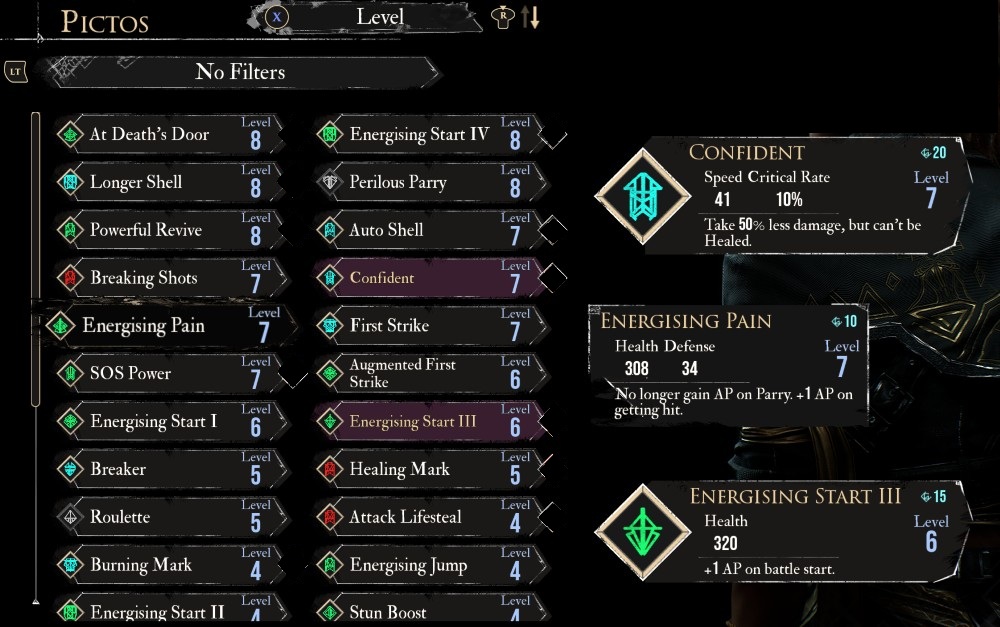
In many ways, Pictos feel like OG Final Fantasy 7 Materia: they are an item you equip that grants both stat bonuses plus a passive ability. Once you complete four combats with a given Pico equipped, the passive ability is permanently learned by everybody. Each character then has a pool of “Luma” they can use in a point-buy way to equip the passives. Some effects are cheap, like being able to gain +1 AP on a Perfect Dodge for 1 Luma; more powerful passives can cost 10, 15, or more. Oh, and of course you can freely move Pictos and Luma around at no penalty (there are respec items for base stats though)!
What gets the juices really flowing are the synergies and tradeoffs. Each character can equip three Pictos apiece, and while so equipped, the passive is granted without spending Luma. Thing is, there is usually an inverse relationship between how much Luma it would otherwise take to get the passive, and the raw bonus stats on the Picto itself. A given Picto might have +50 Speed and +15% Crit Chance, for example, but contains a passive that only saves you 3 Luma. Meanwhile, that 20 Luma passive is attached to like a +300 HP brick.
…which can be still be helpful if one of your characters is wielding a weapon that doubles as damage taken in exchange for another bonus. The downside of which you are mitigating with a passive that reduces damage taken by 50% but you cannot be healed by spells. No worries, just stack a bunch of +HP Picos and practice your sweet, sweet dance (dodge) moves.
Now, think about The Outer Worlds 2 in comparison. There is none!
Yeah, these are not the same type of games, so of course they are not set up in the same way. But there will be people who argue that you choosing Engineering and Medical on the character select screen in TOW2 is some deep gesture of customization when it is, in fact, an a priori straightjacket that railroads your entire playthrough. “I’m roleplaying though!” Roleplaying… what? Arbitrary Man?
Anyway. All I’m saying is that I am wherever I am in the game, and already have more than 40 Pictos to choose from. And unlike in TOW2, I am actually choosing builds and testing them out, because I am not expressly penalized for doing so. That’s some good, engaging game design.
Maybe Obsidian should take notes.
First Impressions: Clair Obscur: Expedition 33
My first play session with Clair Obscur: Expedition 33 lasted about two hours, and I got through the tutorial and far enough to see the first few real battles. And then I didn’t boot the game back up for almost three weeks.
By the end of the second session… yeah, I can start to see why this is winning all of the awards.
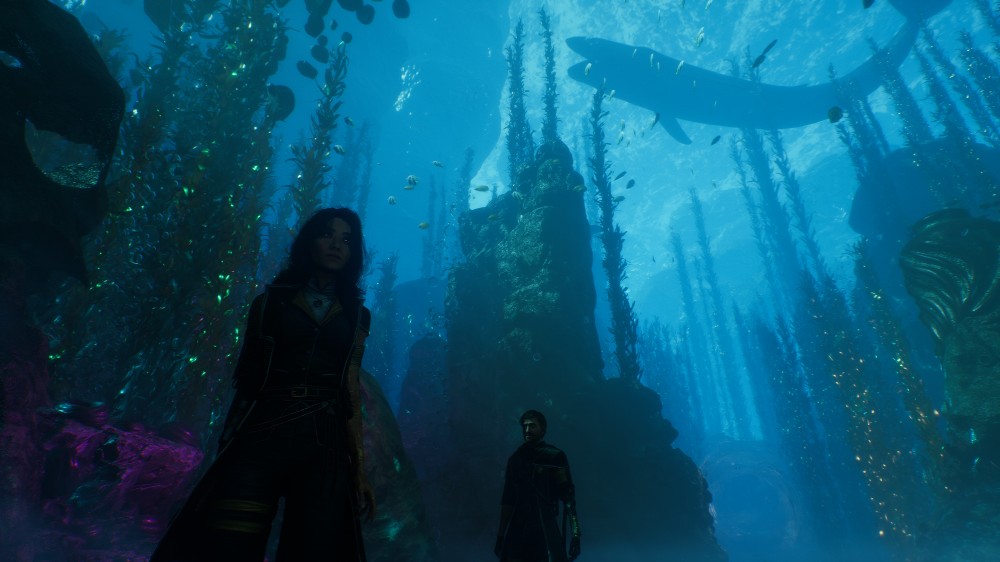
First, the game is trippy and evocative as fuck. The principle bad guy is a goliath-esque woman named The Paintress, which is apt as every environment looks like it sprung directly from some artwork in the Louvre and/or a fever dream. The protagonists live on some kind of island protected by shields or something – with the world itself seeming to have been shattered by some older cataclysm – but the Paintress controls a countdown timer that nevertheless kills everyone older than a specific number. At game start it was 34, and now it’s the eponymous 33. It seems to increment on a yearly basis, but I’m not sure if that was specified (or matters). In any case, every year a small number of adventurers next in line to be erased gets together and attempts to bring the fight to the Paintress. Enter you.
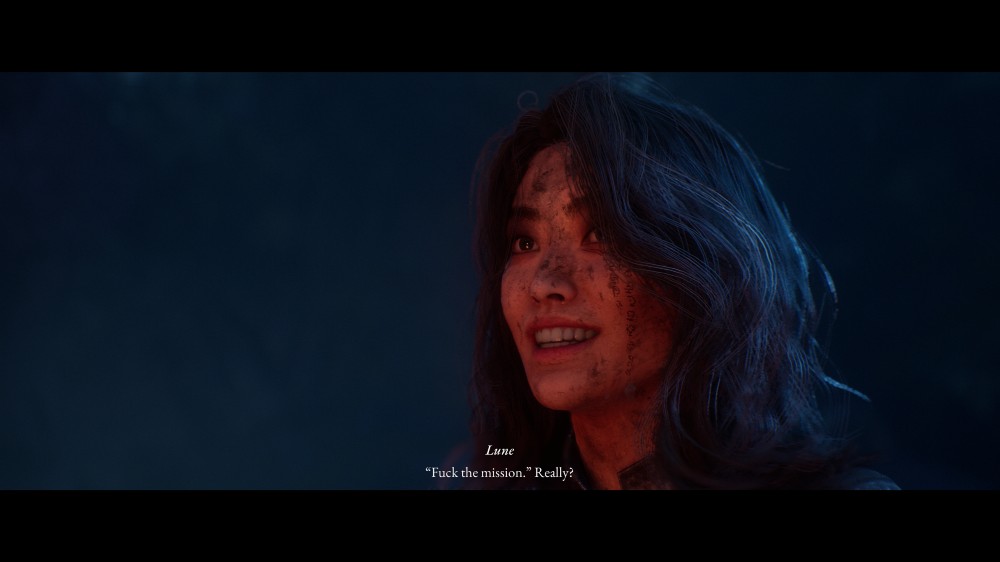
Second, I do want to highly praise the motion-capture and general dialog thus far. It’s passionate, awkward, and deeply human in ways very few other games have been able to reproduce. Nearly 14 years ago, I was blown away by Mass Effect’s wink, and here in Expedition 33 I just witnessed a character search another’s eyes to see if they truly meant what they said. You know, her face close, the silence, her eyes going back and forth with purpose, debriding the layers of your soul. I don’t know how, but they captured it. The bar has been raised again.
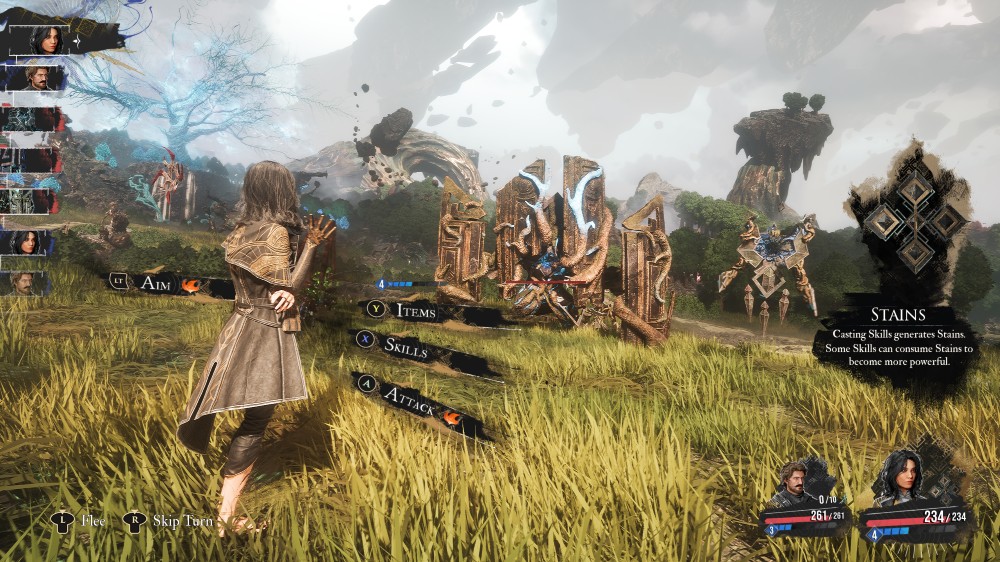
We will have to see how it works out for me over the long haul, but my first impression of Expedition 33’s combat system… is that it’s not fun. Basically, it feels like a turn-based Soulslike. Everything more complex than a basic attack will have a Quick-Time Event sequence in order to juice the skill further. On the enemy’s turn, you are essentially required to either Dodge or Parry their attacks; Dodging has a more forgiving window than Parry, but successfully Parrying every attack will allow the party member to unleash a devastating counter-attack. I say Dodging/Parrying is “required” because the amount of damage you end up taking is significant, and your ability to heal is limited and only refreshed when you arrive at checkpoint flags, e.g. campfires. And yeah, enemies respawn when you rest.
What results is a truly conflicting game thus far. I encountered some enemies in the opening areas that were clearly higher-level than my ability to meaningfully tackle. “The designers just wanted to teach me that not every enemy needs fought, and/or that I may want to revisit places once I gained more levels.” OK, great, very Soulslike of you. Buuuuut, technically, if you just Parry all their attacks, you will defeat them eventually. Which then gets you thinking about why bother putting points in Defense or Vitality, when both are irrelevant if you don’t get hit in the first place. Is that the intentional design? Stack Defense if you aren’t good at the timing, and everyone else go glass cannon?
Again, this is all very early on, so perhaps things will improve. Somehow. Or perhaps the combat system is just something you put up with for the environments, dialog, and plot. That is a very old-school RPG sentiment for 2026, but I’m going to roll with it for now.
 In An Age
Level of Enthusiasm: Wiki
Mar 3
Posted by Azuriel
You ever felt so engaged in a game that you are updating the Wiki? That’s where I’m at in Mewgenics.
Granted, the Wiki was basically all blank pages since the game came out just a few weeks ago; hard to demonstrate “Wiki-updating enthusiasm” if it is already filled out for you.
But, guys, whew. I play a lot of games, and it is vanishingly rare when I play something that completely consumes the entirety of my play experience. Or should I say: allows itself to consume my play experience. Expedition 33 has a lot going for it and won all kinds of awards for reasons… but I find it difficult to play the game for more than one “session” at a time. Combat is stressful, not fun. Each new area is a hard stopping point wherein you encounter new mobs with new attack patterns you have to memorize so you can Parry them (or die). Two hours is basically my limit for the day.
Mewgenics also technically has stopping points. Maybe all your cats die in a series of unfortunate bouts of RNG. Going into brand new zones can be stressful in its own way too. “This enemy’s ranged attacks delete my equipment? And there are six of them?!” Nevertheless, I persist. And it’s fun. I don’t even bother with GW2 dailies anymore, as that’s 10-20 extra minutes of Mewgenics I could be playing. The last time I experienced this was with Abiotic Factor, and Wartales before that. No doubt I will burn myself out before too much longer, but Christ I almost have 100 hours already.
Not bad for a $30 MSRP game.
Posted in Commentary
7 Comments
Tags: Abiotic Factor, Clair Obscur: Expedition 33, Level of Enthusiasm, Mewgenics, Wartales