Author Archives: Azuriel
How to Sell and Ship PS1/PS2 Games
If you were wondering how my sell old games business was going, the answer is Very Good, thank you.
In fact, I am down to just two games left out of the original picture: Persona 2 and Castlevania: SotN. Everything else sold surprisingly quickly. And so I wanted to take a moment to share both how I sold the games and how I shipped them.
First, I sold on PriceCharting.com. Since that is one of the main sites to gauge how much a game is worth in the first place, it seemed easy enough to just sell it there. And just like with Wikipedia, you can always check the sources yourself (sold eBay and/or Amazon listings) to make sure the price is legit.
There are two interesting things about PriceCharting as well. One, they don’t charge listing fees or really fees of any kind. You do have to set up a Paypal account (which gets a cut) and then turn that into a business-level account and give them some rights to that in order for them to accept payment on your behalf, but it’s not that complicated. Two, PriceCharting tell you how many people have wishlisted a specific game and will then email them all if you list your game for less than the average price. Compare that with… what, listing on eBay and hoping people happen to search for it the week your auction is up?
Prior to selling anything though, you have to prepare for shipping.
After a lot of research, I went for a simple solution: USPS. If you live in the US, you can go to USPS.com and order packing material delivered to your house, for free! Specifically, I ordered Priority Mail DVD Boxes and Priority Mail Padded Envelopes. You can also order bubble wrap from USPS too, but it’s cheaper on Amazon. After a week or so, all your packaging will arrive and you will be in business.
Then just… use all of the things.

For PS1 games in jewel cases, I wrapped them up in one square (12″) of bubble wrap, then placed them inside the cardboard DVD box. I then cut strips of additional bubble wrap to stuff the DVD box some more to prevent the jewel case from sliding around too much. Once the DVD box is sealed shut, I put that inside the bubble mailer, which I then folded over and sealed. The end product looks like this:

Overkill? Maybe. The DVD box by itself seems too open to the elements for my liking, and I’m not even the one spending literal hundreds of dollars for a PS1 game. The bubble mailer would otherwise be the ideal method, but what else are you going to do to prevent it from sloshing around in there and possibly cracking the case? My shipping method combines the benefits of both for literally the same price. Specifically, a flat rate of $9.65 for 2-day shipping and a tracking number.
The Post Office probably wouldn’t be happy using their packaging this way, but ¯\_(ツ)_/¯
PS2 games in comparison are a breeze. I shipped them the same way, but the DVD boxes are built to hold them better than jewel cases, so bubble wrap is hardly necessary. Sometimes I cut a small square to place inside the game case though, to help lessen damage in case the disk comes loose.
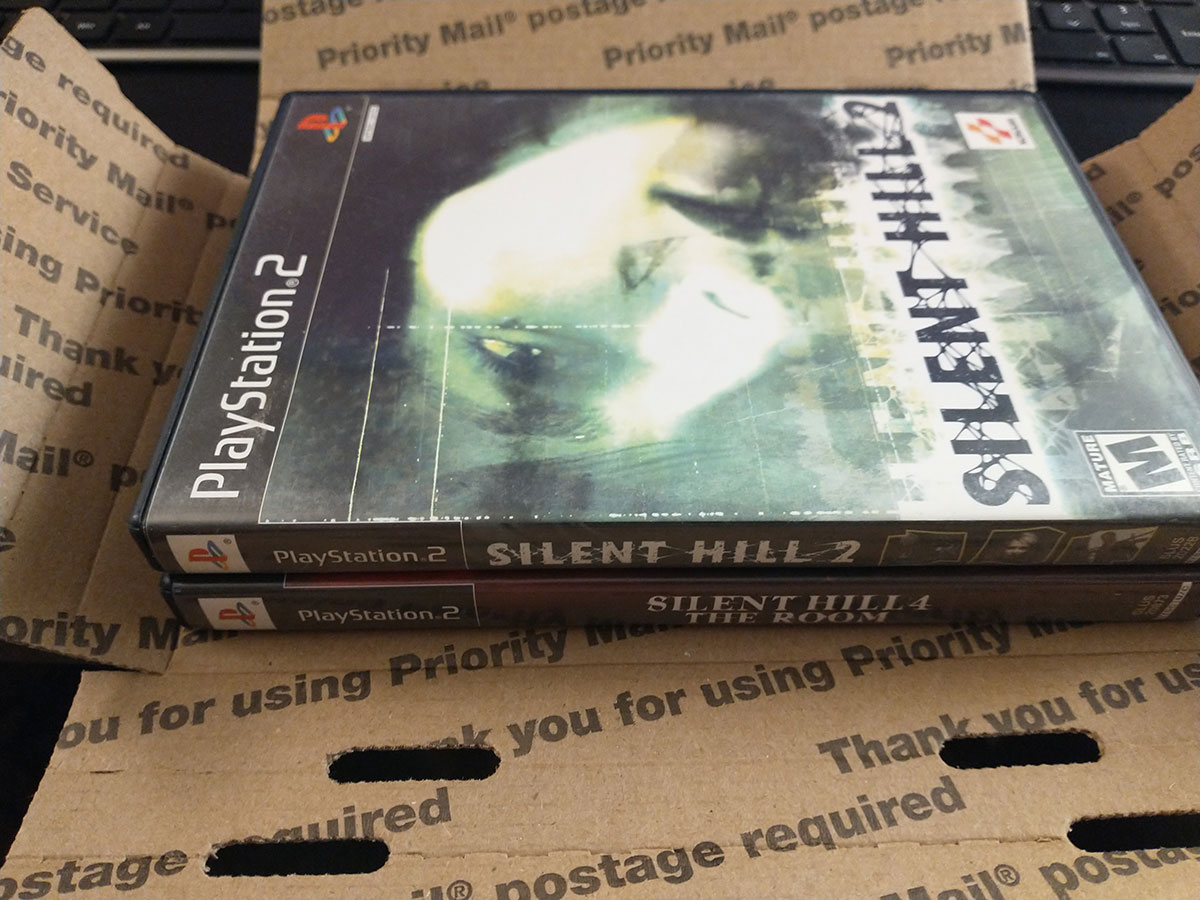
The most advanced maneuver I had to do was the “double-double” wherein the same guy bought two double-jewel case PS1 games. Unlike the photo above with PS2 games, you can’t fit two jewel cases in a single DVD box. I did discover though that if you box up the two games separately and then cut off the cardboard “wings” of both DVD cases, you can just barely fit two of the cardboard cases inside one bubble mailer.

I ended up springing for extra insurance for that particular package, so I didn’t save much shipping-wise.
And shipping costs are kind of the rub for this hustle. Yeah, it’s absolutely worth it to sell the games if you still have them. But once you get down to the $40 range, paying 25% of that to ship it out starts to seem a bit silly. Then again, 75% of something is worth more than 0% sitting in a box, so maybe I keep things moving until it starts getting not worth the time spent driving to the Post Office.
Anyway. Might seem like a weird post, but this was precisely the sort of thing I was looking for before I started this endeavor, so… you’re welcome, internet. This is me paying it forward.
Impressions: Chimeraland
After reading a half-dozen posts over at Inventory Full, I decided to see what the hell Chimeraland was all about.
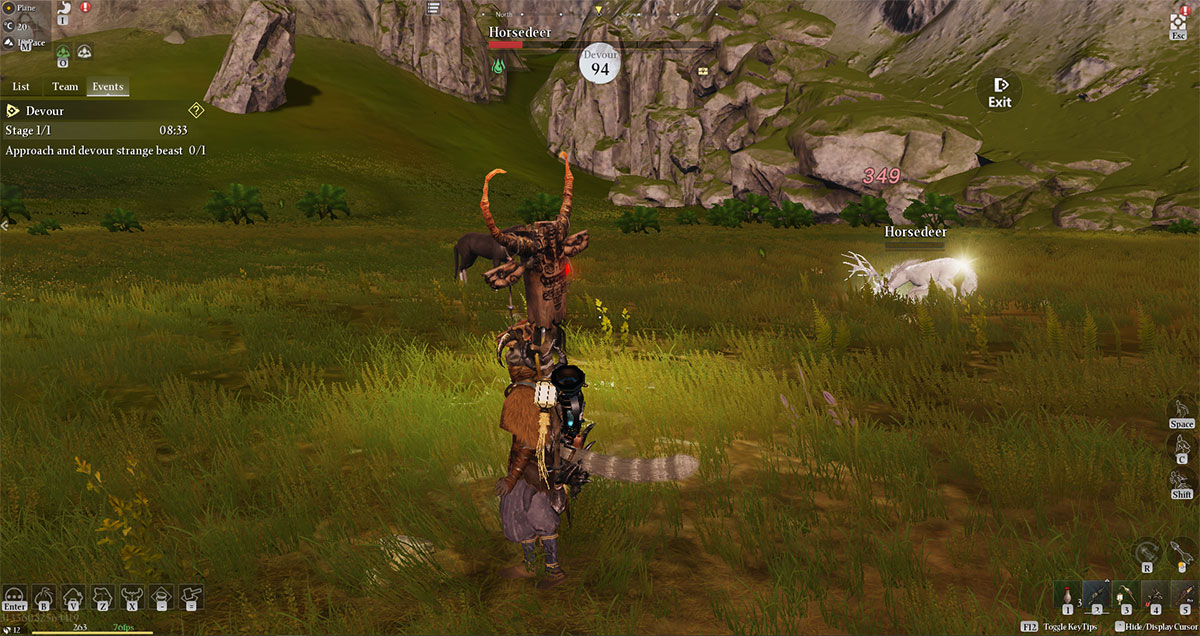
After a few hours of playing… yeah, maybe I’m missing something, but this feels like some poor mobile port Asian jank.
The character creation process is pretty outrageous, if you’re into that. I think someone mentioned that there are 18 different species you can choose from, but on top of that you can use the age slider to play as literal children. Not just human children, but cow and sheep children. And that’s just the start! There are ridiculous sliders that let you change your ears and cheekbones into non-Euclidean shapes. Some serious Mario 64 title screen vibes.
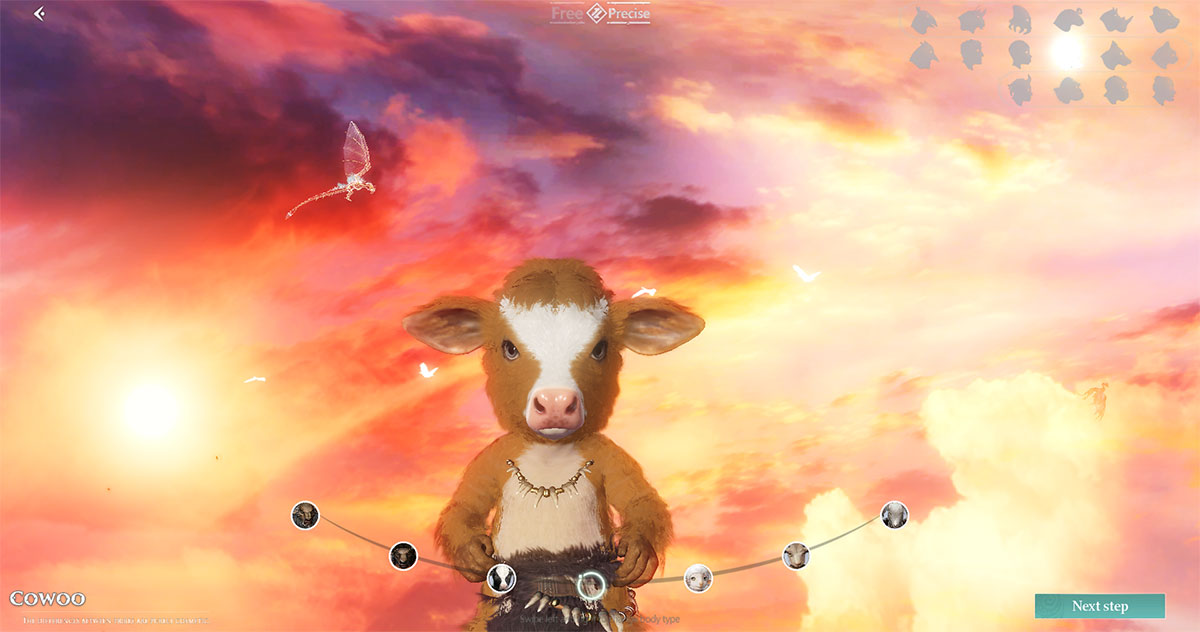
All you need to know about the PC version of this game is that Full Screen is not yet implemented. I was today years old when I found out that “Full Screen” was a game setting that had to be built and not, you know, something that is a default state of being. The game is filled to the brim with UX jank like this. For example, not having any apparent way to increase turning speed. Or having the camera default to action-cam style, but having dozens of buttons that need clicked with the mouse. Finally realized that you need to press the [`] button to get a mouse cursor active, which is fine, but any attempt to unselect something puts you right back into action-cam mode.
The translation runs the gamut from poor to nonexistent. Hard to fault them on this front, considering that there are zero US/EU servers – the game prominently displays “SEA” on the launcher.
In principle, Chimeraland is doing some interesting things in the MMO space. The ability to build a house anywhere you please. Being able to capture and either ride or bring into battle any creature in the game world. Light survival elements. Seeing all your weapons on your back at once is cool.

Chimeraland is also objectively worse than any game that already does any one of these things. Hell, the whole time I was playing I kept asking myself why I wasn’t just playing ARK. Or Fallout 76. Or Guild Wars 2. While I was pondering, some players decided to fight a “grand” enemy outside my house. I joined in a bit, then kept eating ranged AoEs because the dash-move wouldn’t activate, and finally died. I respawned and got back in the mix, then the creature died, and… nothing. No idea whether I gained XP for that, or should have had a chance at loot, or whether my dying removed that chance. Felt like a big waste of time.
Which, incidentally, describes the rest of my game experience with Chimeraland.
Slay the Spire: Ascension 20
I have finally “beat” Slay the Spire: meeting my end goal of reaching Ascension 20 (A20) on all four characters. There is technically a higher plane of difficulty whereby you face the secret final boss while also on A20, but I am satisfied with where I am. Specifically because games at the A20 level are already incredibly frustrating and unfun already – no need to delve further into self-flagellation.
For giggles, I’m going to post my thoughts on each of the classes, in the order that I reached A20:
The Watcher
The base mechanics of the Watcher (e.g. double/triple damage) are so powerful that I often found myself progressing despite not having any specific deck or relic combos. It does lend itself to being annoying in how much mental math you have to do lest you miscalculate and end up taking double damage in return. Or in the case of Blasphemy, outright losing the game.
Every Watcher run starts by upgrading Eruption ASAP. After that, my successful decks basically had a hodgepodge of loose synergies with Flurry of Blows (stance dancing), cards with Scrying, and Talk to the Hand. I was always happy to see Tantrum and Fear No Evil. Upgraded Blasphemy is fantastic. Omniscience is an auto-include any time it’s offered, even if I didn’t have Power cards at that point; Omniscience into Wish feels like cheating (it is).
The Defect
The only successful Defect runs I have had revolved around Orbs and Focus-stacking. The Inserter relic is always a welcome boost, and lets you save gold/deck space by ignoring Capacitor and Runic Capacitor. Inserter also allows you to take Consume with no downsides, and possibly ignore Defragment and Biased Cognition altogether. In the absence of Inserter, I focused (har har) on Biased Cognition and trying to get artifact to avoid the downsides.
Beyond that, it really came down to getting Glacier and Creative AI, even against the Awakened One. Upgraded Seek is amazing. My success with All for One decks is probably 20%; it feels more like a trap.
The Silent
The only consistently successful strategy for A15+ runs for me has been Shiv decks. Two Accuracy cards (upgraded or not) plus as many Cloak and Dagger and Blade Dances as I can draft. Always draft a Corpse Explosion if offered. Things get infinitely easier if you can snag one of the scaling attack relics (Kunai or Shuriken), or Oriental Fan or After Image. A Thousand Cuts and Envenom are generally overkill. Poison isn’t bad, but hallway fights are worse.
The Ironclad
Yuck. In pretty much every run, you are entirely dependent on which relics you pick up. Corruption + Dead Branch runs make everything worth it, but they are frustratingly rare. Upgraded True Grit is almost always good. Immolate is an amazing hallway card that is still good in boss fights. Fiend Fire can also end many hallway fights by itself with no setup (vulnerability helps).
Again though, your ultimate strategy will vary based on what relics you pick up.
Final Tips
Artifact is insanely powerful. While negating a random enemy debuff is whatever, Artifact also removes the downside of some self-buffs. For example, Biased Cognition and Wrath Form are powerful cards that have scaling downsides… unless you have Artifact. Additionally, it can also be used to make the lowly Flex Potion just straight-up give you +5 Strength for the rest of the fight. For this reason, the shop relic Clockwork Souvenir is crazy powerful.
When in doubt, upgrade your cards. In a recent Defect run, I got a Sunder and Shovel early in Act 1. Instead of upgrading the Sunder, I chose to fish at Rest sites all the way to the boss. I died. Relics can be amazing, but remember you will be playing cards in every fight inbetween, and saving a few extra HP times however many fights will generally make more of a difference than you think.
Hallway fights matter. When you look at cards like Hyperbeam or Blasphemy, you might think “These are useless against bosses.” Maybe. But if you die before making it to the boss, or end up needing to Rest instead of upgrading cards, none of it matters anyway. So if you have the chance to snag a card or two that helps in hallway fights, grab them.
Play-to-Earn
Amongst the crypto/NFT/metaverse topics cycling around online, there is a quote from Reddit co-founder, Alexis Ohanian, that makes a bold prediction:
“90% of people will not play a game unless they are being properly valued for that time,” Ohanian, who runs venture capital firm Seven Seven Six, said in a recent episode of the “Where It Happens” podcast.
“In five years, you will actually value your time properly,” he said. “And instead of being harvested for advertisements, or being fleeced for dollars to buy stupid hammers you don’t actually own, you will be playing some on-chain equivalent game that will be just as fun, but you’ll actually earn value and you will be the harvester.”
On its face, the prediction is ridiculous. This Forbes article rips it apart. There’s a huge sense of revulsion from many corners of gamedom over this a priori push into NFTs and metaverse to begin with, let alone the notion that “Play-to-Earn” is going to catch on in some kind of major way.
The problem is that we have actually been Playing-to-Earn for years already.
For example, the WoW Token (NFT?!) already exists, and I spent considerable in-game time doing Auction House shenanigans in an attempt to pay for my subscription and purchase expansions. Same with Guild Wars 2, where everyone farms gold that they turn into gems into cash shop purchases, paid for by people spending real dollars to buy gems for said gold. EVE has had similar things in place for years and years. Almost every single mobile game has a way for you to “earn” a cash shop currency that you could otherwise purchase outright. All that is missing is a way to cash out of the ecosystem, which simply means no longer hiding values behind “gems” and “diamonds” and such.
And Diablo 3 did all this in front of the world in 2012.
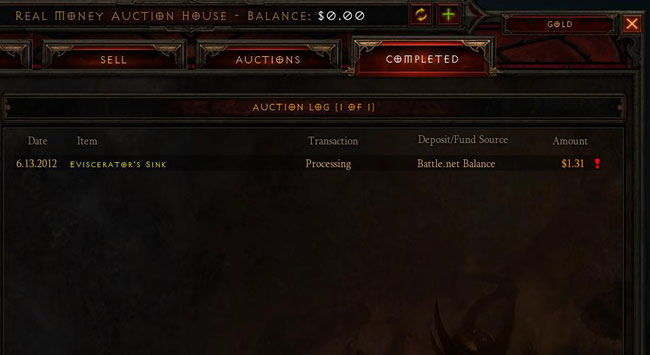
I’m not saying all of this is a good idea. These companies are throwing around terms when they clearly have no idea what it even means. Game companies spend millions of dollars building custom game engines instead of leveraging existing products all the time, and yet they talk about NFTs and metaverses as if interpolation between games is a solved issue.
But do you know what IS nicely interpolated between radically different games and platforms? Cash. It doesn’t make sense to try and bring a Candy Hammer from Candy Crush into Clash Royale via blockchain or whatever. But if I can sell that same hammer to someone else in Candy Crush, I can bring those dollars over to Clash Royale and purchase something else. METAVERSE!
The elephant in the room, of course, is why any game company would actually want to do this. There is a proven track record that turning cash into funny money (tickets, gems, diamonds, etc) is a technique to obfuscate how much money someone is actually spending. Or playing to earn, for that matter. Earning 30g/hour in GW2? Amazing. Alternate Youtube title: Earn $1.88/hour in GW2. Less impressive. These companies also frequently give out free hits of crack game currency in almost-useful amounts to entice people to purchase more. Can’t quite do that with literal cash equivalents.
On the other hand, Diablo 3 is kind of an example of why companies would want to. Selling a powerful sword in the cash shop for $100 is clearly Pay-to-Win. Letting your customers sell the same sword for $100 to another customer and taking a cut? Totally OK! Nobody blamed Blizzard for introducing a sword worth $100, as that was just the benevolent invisible hand at work, as our lord Adam Smith intended. Nevermind that Blizzard has full control over all the levers that makes a given sword rare and useful enough to be sought-after in the first place. Capitalism, ho!
The Play-to-Earn economy being threatened in the headlines has been a call coming from inside the house this whole time. The “only” difference is that many of the most popular games that have the equivalent mechanisms already in place don’t let you cash out. They could, but they won’t, because why would they? Getting a cut of NFT sales into perpetuity sounds nice and all, but that will only work if your game is popular/successful, in which case you may as well keep all the money in-house. All the other apps will be engaging in a race to the bottom, gumming up the blockchain with NFT trash loot, collapsing whatever ecosystem may exist. Nevermind how all of it perverts the incentive structure for progression-based game mechanics anyway (see: Diablo 3).
Having a terrible idea that won’t work never stopped Blizzard before, so I don’t see why it should stop anyone else. And hey, if I’m wrong, hit me up in the crypto salt mines where we monetize every moment of our free time to afford luxuries like clean air while the planet boils around us.
MFST and ATVI Sitting in a Tree
… M E R G I N G.
Sorta. More like Activision Blizzard being bought by Microsoft for about $70 billion. You already knew that though, because your news feed was probably about as filled as mine was yesterday. And now I’m adding this one to the pile. At least I went with a different title, eh?
There are really just two thoughts I wanted to examine, and leave everyone else with the more mundane (IMO) details.
First, this does interesting things for Game Pass. From the Microsoft article:
Upon close, we will offer as many Activision Blizzard games as we can within Xbox Game Pass and PC Game Pass, both new titles and games from Activision Blizzard’s incredible catalog. We also announced today that Game Pass now has more than 25 million subscribers. As always, we look forward to continuing to add more value and more great games to Game Pass.
Will we really see the next Call of Duty come out as a Day 1 Game Pass release? The franchise has been a cash cow forever, and almost never sees a discount of any appreciable amount. It’s a given that Overwatch will be on there. Probably Diablo 2 Resurrected, along with all the StarCrafts.
But… what about WoW?
My guess is that WoW will remain off of the Game Pass, assuming the merger occurs. It’s cute to imagine the possibilities of a Game Pass subscription taking the place of a WoW subscription, but The Elder Scrolls Online is not currently on the PC version of the Game Pass, and maintains its separate subscription option even for consoles (according to this). Then you would have issues with what happens with WoW Tokens and game time. EA Play is currently included as a free bonus in Game Pass, but that is more of a general subscription service and not something for a specific game.
The second thought came from Tobold’s take on the news:
My take on it: They overpaid. Whatever made Blizzard great back then is gone, and they pay big money for a rather empty shell.
As pointed out by others, Blizzard is really the third wheel to the cash motorcycle that is Activision and King. Blizzard ain’t nothing, but they clearly weren’t the draw here.
It does raise an interesting point about studios and rockstar talent though. Is the current state of Blizzard, and WoW specifically, due to the immense brain drain of talent over the past few years? Greg Street in 2013, Chris Metzen in 2016, Mike Morhaime in 2019, Michael Chu in 2020, Jeff Kaplan in 2021, and Alex Afrasiabi. The last one was a bit of a joke… but do we actually know what he contributed (beyond sexual harassment)? We would hope nothing, but there are certainly plenty of examples of famous artists with fantastic output that we then pretend is meaningless after finding out how awful they are IRL. Mel Gibson, Keven Spacey, Arnold Schwarzenegger, Louis CK, and so on.
Don’t be too smug – Joss Whedon is next, by the way.
Comment bait aside, it’s an open question as to whether WoW can, literally, ever be as good as it was (to us) again. Was it only ever good because of these specific frat boys in this specific Cosby room? Shadowlands represent a new low from a narrative standpoint, and Blizzard’s “reinvent the wheel every patch” systems floundering looks especially amateurish as the flagship burns. Many games are a product of their time, groundbreaking because they broke ground first. So there’s a time, a place, and then there’s specific people too. Can it actually ever be recreated with competent, nameless devs?
I suppose the existence of WoW Classic is a testament to the bones remaining solid, for at least X amount of people. And the present state of FF14 proves that MMOs can still thrive and grow its playerbase years later. But can the latter’s success be attributed to the committee of devs that surely exists, or to specific rockstars like Yoshi-P, aka Naoki Yoshida? Would a hypothetical acquisition of FF14 be moot if it did not include him?
I don’t know. A lot of this may be Survivorship Bias – these individual devs are famous because their games were successful and they made themselves the face of it. Who is the face of Hades? Or Doom? Or GTA5? But perhaps in the final tally, having the right person in the right place at the right time does make all the difference.
And then you get bought by Microsoft for $70 billion.
No, Seriously, Check Your Boxes
Last week I talked about how old videogames have undergone a rather surprising amount of price appreciation. I ended with: “Anyway, if you still have a box full of old games in your own closet, now might be a good time to take stock.” I ended up taking my own advice… and guys…

To save you some math, that adds up to $1871. That’s basically a current-gen gaming PC with a RTX 3080 (on sale). Are these “real” prices? Well, Price Charting has links to sold eBay listings with specific prices listed, so… yeah. I ended up Googling why something like Valkyrie Profile is worth so much, and apparently there were only ever 100,000 (English) disks sold, of which it is assumed 70,000 remain functional. In that scenario, I would have assumed something like PaRappa the Rapper would have been worth more, especially the trouble I went through tracking it down 15 years ago.
Slightly out of frame on the PaRappa case? The $9.99 sticker from whatever family-owned game reseller I found it in. I should probably research how to remove that before listing.
Time will tell if I actually achieve any of these prices. I went ahead and ordered some packing supplies and am committed to actually listing at least the pictured games. There are actually 17 more not shown, but next eight combined are $362, and then it starts getting into the ~$20 range where I’m not sure it’s worth my time. Real shame that something like ICO or Tenchu is only worth $12.
Seeing the physical Xenogears disks did give me a slight twinge, but I am very much in a post-ownership mindset. In the case of Xenogears specifically, I actually own it legitimately on PS+ (should I ever re-subscribe) and have it illegitimately digitally backed up in other locations. It’s not worth “buying” for $112 just to keep it in a box another decade, especially given the high likelihood that my son and/or uncontrolled climate change will accidentally ruin it.
Old Game Appreciation
There was a Reddit post recently titled “I just sold my childhood for $600.” Bunch of photos of multiple old consoles, stacks of games, and so on. Nice vicarious nostalgia trip. Open up the comments section and the most upvoted replies are roasting the OP saying he got swindled, and that his collection was easily worth $3500 or more. Really?
For giggles, I went to Price Charting and looked up… Chrono Trigger:
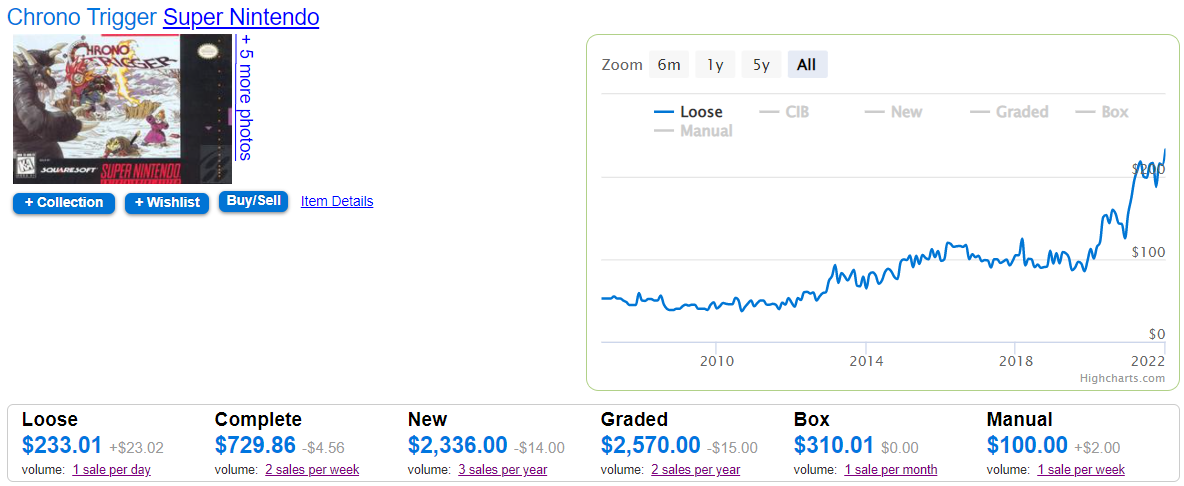
Oh.
Now, some of those top numbers are clearly ridiculous collectors items that rich people buy and sell for money laundering dick-measuring reasons – the rarity of sealed copy of a 27-year old game becoming a thing in of itself. But… uh… guys. I sold my own childhood collection back in 2012 for $375. One of the items? Chrono Trigger with the box and instructions intact. Probably wouldn’t count as “Complete” since I taped the poster to my wall back in 1996, but still. Worth about $300 by itself today.
I’m not going to go through my full list, but for comedy purposes:
- Chrono Trigger + box + instructions = $300
- Secret of Mana = $54
- Super Metroid + box + instructions = $120
- Legend of Zelda: A Link to the Past + instructions = $45
- Final Fantasy 3 = $78
- Super Nintendo console = $76
That’s $673 just on the SNES side. Granted, everything else not listed was less expensive. Nothing was worth much on the Genesis or regular Nintendo side. Did see that Super Smash Bros Melee (Gamecube) was $54, which is about what I paid for it back in college.
I’m not even saying that I regret selling those games when I did. That was almost 10 years ago, after all. If you look at the price graph, Chrono Trigger was selling for $42.50 at the time. Plus, I was starting a new phase of my life:
What brought all this up to me again is that I am moving to a new apartment this week. While rummaging around in long-forgotten closets, I came across my NES and SNES collections; the wave of nostalgia nearly rendered me unconscious. While I did act on the daydream of plugging the consoles back up in college one time, these pieces of electronics haven’t otherwise seen the light of day for almost a decade. Was I really going to pack them up and move them to a closet in the new place? Would my theoretical future child have the slightest bit of interest in daddy’s ancient consoles in 2020’s era of (mobile) games? Hell, would these things still even work?
Bit prescient there, eh? I wrote that in 2012. My son will turn 3 this year, so it will be closer to 2025 before he’s playing videogames, I reckon. But sorry, kiddo, you’ll have to play Chrono Trigger on an emulator and not a then-$900 cartridge.
Anyway, if you still have a box full of old games in your own closet, now might be a good time to take stock. Some of them have apparently appreciated very nicely. For some reason.
Can a Fallout TV Series Even Work?
While technically old news, Amazon is bankrolling a Fallout TV series. The newer news is that it starts filming this year. The guy behind Westworld is doing the first episode, and… well, if say much more, this paragraph will be longer than the original article.
Fallout is one of my favorite gaming franchises of all time. I have played all the major releases, including less popular ones like Brotherhood of Steel and, ahem, Fallout 76. It really wasn’t until the release of Fallout 3 before I realized that that was the sort of experience I had been waiting my entire life for: post-apocalyptic hoarding simulator. I didn’t need to have a quest to be motivated to explore a cave – the possibility of extra duct tape and aluminum cans was enough. And chasing that similar sense of satisfaction fueled my drive into and through practically every survival game that has been released.
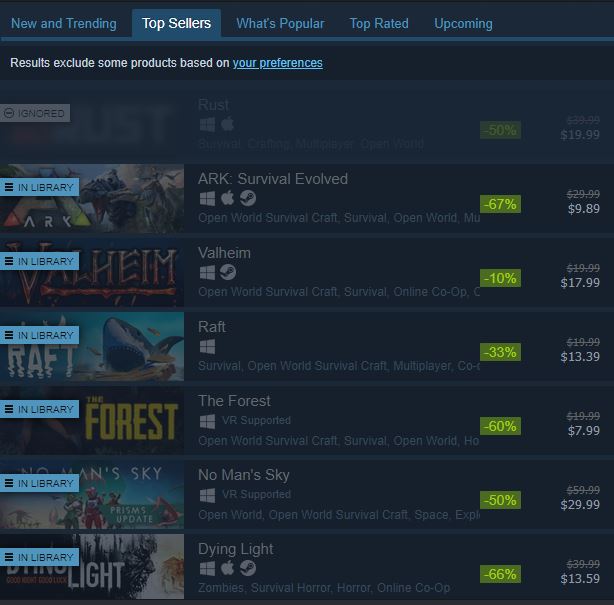
I have zero clue how in the world they will translate Fallout to the TV screen.
Some people have mentioned that Fallout might be well-positioned to capitalize on the cultural zeitgeist of the day, e.g. the dangers of unrestrained jingoism. But that actually seems more like a problem: it’s going to seem too on-the-nose despite the source material always having those elements of dark irony. Vault-Tec running unethical experiments on their customers doesn’t quite cut the same way when we have Facebook and other social media doing similar things in the real world.
This is to say nothing on what sort of tone they will go for. I could easily see a Fallout TV ending up more of a slapstick apocalypse romp, with Bottlecap mines, Fat Man launchers, and Stimpaks magically healing broken limbs. Or I could see them trying to leverage more of the darker side of the series, Father in the Cave and similar tragic pathos. But in the latter case… where does the Nuka-Cola, caps as currency, Pip-Boys and the like come in? Super Mutants and Mr. Handy? If you aren’t including that sort of thing, I’m not sure what the point of it is being branded Fallout.
I just don’t see it. The world of Fallout could support little mini-arcs World War Z-style (the book), but an overarching narrative? Or even following the events of one of the games? New Vegas probably has the most coherent plot and story beats, especially if they include some of the DLCs. Well, maybe not the one where your brains are scooped out and you end up getting a teleportation device. Fallout 4 is a more modern tale, especially with the notion of synths and the philosophical questions surrounding them… but also prominently features teleportation by the end. It works in game form, but I don’t see it getting a pass on the screen.
God, I just imagined the first time they bring up a VATS-like effect and aim a Railway Rifle round at someone’s eyeball. There’s no way this doesn’t end up being goofy nonsense. Which I guess will be on brand, but nevertheless feels like the worst of all possible worlds. Which… is also on brand.
Inflation
Amidst all the gaming sales this holiday season was a surprise. A most unwelcome one.
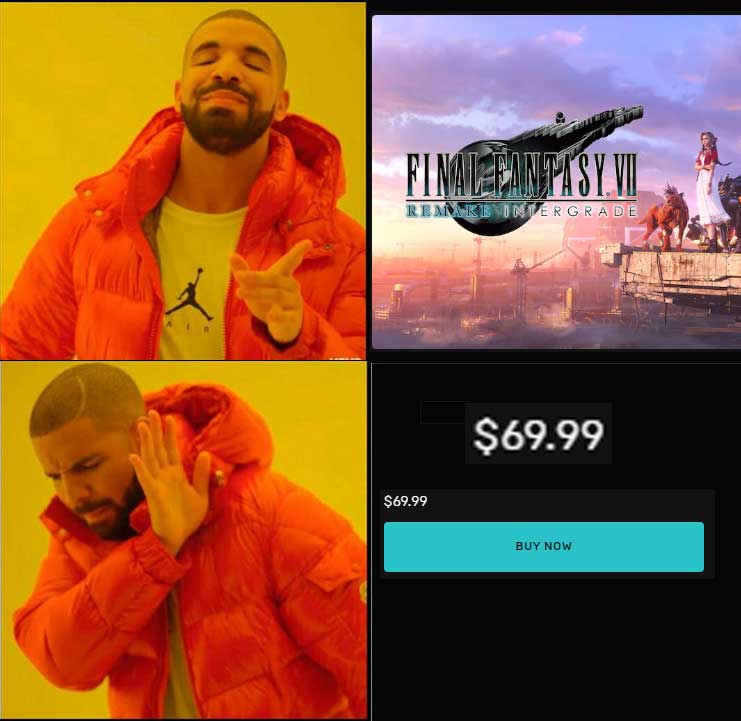
First was the surprise that the PC version of the Final Fantasy 7 Remake (FF7R) even came out. I was so giddy when the original news came out in 2015, but that giddiness has been tempered by years of self-restraint from not purchasing a PS4 to play just that game, and the constant endeavor to avoid spoilers. Somehow that avoidance must have led me to disregard news articles that the PC version was coming out. The fact that FF7R is an Epic exclusive also didn’t even register. But that’s because…
Secondly, seventy what-the-fuck dollars?!
I understand that FF7R is by no means the first to try to raise the hitherto $60 price ceiling of games. Many games of this new console generation are trying the same, including major franchises. It does seem a little weird that the PC port of a game that came out 1.5 years ago is trying to sell at a premium price though. Especially since one could purchase the PS5 version of the same PC bundle (main game + DLC) for $39.19 straight from the Playstation Store. That’s the winter sale price, of course, but there are cheaper options at GameStop and presumably other retailers.
I also understand that gaming companies have technically been raising prices this whole time via DLC and microtransactions and battle passes and deluxe editions and so on and so forth. Some have made the argument that it is because of the $60 price ceiling that game companies have employed black hat econ-psychologists to invent ever more pernicious means of eroding consumer surplus. That argument is, of course, ridiculous: they would simply do both, as they do today.
What I do not understand is gaming apologists suggesting inflation is the reason for $70 games.
Sometimes the apologists make the argument that games have not kept pace with inflation for years. One apt example is how Final Fantasy 6 (or 3 at the time) on the SNES retailed for $79.99 back in 1994. That is literally $150 in 2021 money. Thing is… gaming was NOT mainstream back in 1994; the market was tiny, and dominated by Japan. When you are comparable in size to model train enthusiasts, you pay model train enthusiast prices.
Gaming has been mainstream for decades now. Despite ever-increasing budgets and marketing costs, games remain a high-margin product. FF6 may have sold for $150 in today’s dollars, but FF7 sold three times as many copies for the equivalent of $100 by 2003*. So how does an “inflation” argument make sense there?
“The costs for making games have increased!” I mean… yes, but also no? Developers like to pretend that they need bleeding-edge graphics in order to sell games, but that is clearly not the case everywhere. For one thing, indie developers have been killing it with some of the best titles this decade with pixel graphics and small-group passion projects. Stardew Valley sold how many copies? Remember when Minecraft sold for $2 billion? Not everyone is a big winner, but the costs of game making has only increased in specific genres with specific designs. Do we really need individually articulated and dynamically moving ass-hair on our protagonists?
And that’s where the “iT’s iNfLaTiOn” folks really lose me: who gives a shit about these corporations? I wrote about this 8 years ago:
As a consumer, you are not responsible for a company’s business model. It is perfectly fine to want the developers to be paid for their work, or to wish the company continued success. But presuming some sort of moral imperative on the part of the consumer is not only impossible, it’s also intellectually dishonest. You and I have no control over how a game company is run, how much they pay their staff, what business terms they ink, or how they run their company. Nobody asked EA to spend $300+ million on SWTOR. Nobody told Curt Schilling to run 38 Studios into the ground. Literally nobody wanted THQ to make the tablet that bankrupted the studio.
Why should we take it as a given that PlayStation 5 games cost more to develop? A lot of things in the economy actually get cheaper over time, regardless of inflation. Things like… computers and software. Personnel costs may usually only trend upwards, but again, someone else made the decision to assign 300 people to a specific game instead of 250. Or to scrap everything and start over halfway through the project. And somehow these companies continue making money hand over fist without $70 default pricing. So I find it far more likely that the price increase is a literal cash grab in the same way the airline industry added billions in miscellaneous fees after their bailouts and “forgot” to remove them after they recovered. Basically, because they could. Some informal industry collusion helps.
In summation: fuck the move towards legitimizing $70 MSRP. That 14% price hike is not going to result in 14% better games with 14% deeper stories and 14% more fun. In fact, it’s probably the opposite in that you will just afford 14% fewer games. And unless you got a 6% raise in 2021, you are already eating a pay cut on top of that.
Oh well. Waited this long for FF7R, so I may as well wait some more.
 In An Age
Do the Ends Justify Never Starting?
Feb 1
Posted by Azuriel
Rohan posed the question of “Would You Recommend a Work With a Disappointing Ending?”
My answer is: it depends.
First, how bad is the ending? Some endings are disappointing compared to the brilliance that came before. Some end with a whimper, possibly due to budget cuts or outside reasons. Other endings are so awful that it poisons the memories and joy you experienced up to that point. Obviously the latter is not something you want to be recommending.
Second, how good is the rest of game/book/etc? Is it possible to be worth experiencing for that alone?
With the Mass Effect series, I would agree that the originally-designed ending was poor. But between the enhancements and just perspective in general (10?! years later), I am now inclined to believe that the game “ended” well before the last fight. For what is an ending, if not a desire for closure and/or emotional payoff? Even with the wounds of the original endings still fresh, I said this back in 2012:
In that same post, I talked about the Wheel of Time series which, at the time, had not been completed. But it also didn’t matter, because I experienced a moment in the 9th book that was so perfect, so cathartic that it justified my time spent. Compared to that build-up and release, the actual ending was merely perfunctory. Which was fine, because the author died and someone else had to write it. But even if he was still around (or they followed his notes exactly) it would not have mattered that much to me because I got the payoff for reading the books already. Anything else was just gravy.
For something like Game of Thrones… that shit is hard. Again, show me another low-magic medieval fantasy I can even compare it to (the Witcher these days, I guess). There were also a lot of satisfying character development throughout the series. Between those and the amazing battle sequences, I would recommend Game of Thrones to just about anyone remotely interested. And yet, I also believe the ending was so bad that it basically poisoned my memories of the show. That same character progression was thrown in the garbage for arbitrary reasons, by studio executives who were hungering to direct Star Wars. Which they didn’t end up doing, by the way, so triple-whammy right there. Or perhaps, bullet dodged?
The more I muse on this, the less it seems like the ending should be the deciding factor.
Consider something like Firefly, which just sort of gets canceled. Or Evangelion, which ends bizarrely due to budget reasons. And I’m assuming that we’re not counting melancholy endings like with the His Dark Materials series. Or the ones that will never actually be completed, like the Kingkiller Chronicles or A Song of Ice and Fire. Do we just not recommend any of these things? Would you consider yourself better off for having not experienced the disappointment? Are there really so many more good games/shows/movies with superb endings out there that afford you the luxury of avoiding the bad ones entirely?
Maybe there is. If so, I would like to know where the list is so I can start working my way through them. But if we’re honest, I think most endings – assuming we even reach them – are just… sorta there. Which is probably the ideal, considering the baseline experience was obviously good enough to shepherd the audience to said ending. I would say the grid of possibilities looks something like this:
So I would argue, again, that the baseline experience is really the determining factor as to whether something should be recommended or not. That is, unless you think there are actually enough great experiences out there in the world that we can exclusively stay in the upper-left side of the grid. In which case, damn dude, stop hiding that shit under a bushel and let us know what they are.
Posted in Commentary
12 Comments
Tags: Ending, Game of Thrones, Mass Effect, Mass Effect 3, Worth It?