Author Archives: Azuriel
What Do You Get with GW2 Expansions?
The question that Google failed to (succinctly) answer for me is this: what do I actually get with the three latest Guild Wars 2 mini-expansions? You know, aside from the story and everything. What unlocks? Are there new Legendaries? If I had to pick which to get first, or maybe only one at all, what would the biggest bang for my buck be?
Since I had to look this stuff up for myself, I figure I may as well write it down. Note: all expansions retail at $25 and come with a Shared Inventory Slot plus level 80 boost. And, you know, story content.
Secrets of the Obscure
- Mastery to unlock weapons for use regardless of spec (Scourge can use pistol from Harbinger, etc)
- New open-world focused Legendary Armor set
- Faster Skyscale mount unlock, plus additional abilities
- Exclusive Relics that are often Best-in-slot (Relic of the Fractal)
Janthir Wilds
- Introduces land-based Spear as a new option for all classes (Best-in-slot for some meta builds)
- New Legendary Spear and Backpack
- Homestead is your own private customizable house
- Warclaw mount gets a lot more functionality (double-jumps and such)
- Exclusive Relics that can be Best-in-slot (Relic of the Claw)
Visions of Eternity
- One new Elite spec for each class (nine total)
- Skimmer mount gets a lot more functionality
- New homestead map (if you own Janthir Wilds)
- “New system updates will make raids easier to access” (Quickplay?)
- Note: not yet out at the time of this post
Hopefully helpful to Googlers down the road.
GW2 Too
It has been about 2.5 years since I last touched Guild Wars 2 (GW2). At that time, I had been puttering around, completing daily quests to net the equivalent of $0.20/day, and basically stewing in my own cognitive dissonance. What broke me out of the cycle was the then-pending release of Secrets of the Obscure expansion. Even though GW2 is one of the few MMOs out there that doesn’t obsolete content once expansions come out, just knowing that everyone else would be doing all the cool stuff while you’re stuck gathering Flax or whatever sucks. On the other hand, I didn’t necessary want to pay $30 for more GW2, so I took that as a sign to uninstall and do something else.
And so I did. Another expansion came out called Janthir Wilds, and I let that one pass me by too. It even featured the ability to have a decorative house, introduced a spear weapon for every class, and so on. Neat. Have fun with that.
There is even yet another expansion coming out in October called Visions of Eternity. I think there are even new Elite specs this time around. Haven’t really looked into too far.
So why am I writing about GW2, and in fact have reinstalled the game? They finally introduced LFD.
It’s technically a beta feature, but it’s called Quickplay, and it’s the same automated group finder feature from WoW circa 16 years ago. Press button, get an instant 5-man squad and teleport right next to them. Right now, it is pointing towards even-easier versions of T1 Fractals, but presumably it will be expanded in the future to actual dungeons, perhaps Strikes, maybe raids? Moreover, ArenaNet has erected an extremely generous set of Achievements surrounding spam-queueing T1 Fractals for the next several weeks, resulting in extra bag slots, a Legendary glove (!!), and other such goodies.
As dumb as it sounds, yeah, reading about Quickplay (and the rewards, obviously) is what pushed me over the edge into downloading GW2 again.
…sorta. Honestly, I had also reached a point where I realized that I was logging into No Man’s Sky just because I couldn’t think of a better game to play for those “don’t want to commit to 1+ hour game sessions” moments. If I’m not committing to something, why not not commit to something that could possibly be relevant in the future? Then again, Guild Wars 3 is going to be a thing at some point, rendering everything moot. Also, heat death of the universe.
Anyway, bottom line, I’ve been playing GW2 a lot the past few days.
Impressions: all the Switch Stuff
We have successfully returned from vacation near a beach. One element of which included the introduction of the Switch (and games) to my kiddo. Impressions:
Nintendo Switch itself
I think there was technically a way to hook up a Switch to a TV and not need the dock, but I decided to bring the dock as well. I was extremely wary of the dock snapping in half somewhere – given its U shape – but it’s either stronger than it looks or I’m luckier than I look. Packing it in my carry-on instead of a checked bag probably helped. Everything else was in a travel case that held up beautifully.
And not to belabor the point much, but the Switch was very portable; I doubt anyone is packing a PS5 into a carry-on or whatever for a one-week trip. The last time I felt comfortable traveling with a “regular” game console somewhere was in the GameCube era, when I’d bring that to-and-fro over college breaks. If there was an appropriate use case, this was it.
For all the games we played, we exclusively used the… half controller (?) configuration. Pretty awkward controller for me, but it was OK for the types of games we were playing.
Mario Kart 8
Started out with Mario Kart to try and leave a good impression with a game that had a lot of replay value. Kid was ready to give it up after a couple circuits.
Near as I can tell, there are two degrees of Assist Mode when it comes to Mario Kart 8. The first appears to be a generalized “automatically stay on the track.” You can still fly off if struck by something while airborne, but I believe the game otherwise keeps you from getting turned around or going out of bounds. The second level of assist is acceleration. For sure, I had this turned off for myself, even though I’m not certain how. My son, meanwhile, was otherwise able to leisurely putter around with only minor course (mis)corrections when the mood struck him. I had heard from a friend that Assist Mode is sometimes able to win races all by itself, but I did not at all see that in the 50cc difficulty.
My own impressions of the game “for real” will have to wait for a later opportunity.
Super Mario Bros Wonder
This was the first real hit with the child.
The way two-player works is its own sort of Assist Mode. One player has the “crown” and the camera follows them, pushing the other(s) along if they go off-screen. If someone falls down a pit or hits an enemy, they return as a floating ghost with a 5-second timer. Connect with an alive player in time and they will respawn with no loss of lives. Additionally, if someone is controlling Yoshi or a rabbit-looking dude, they become immune to dying by enemies… but cannot transform with power-ups.
Overall, what I have come to realize is that platformers are, you know, kinda hard for kids. Somehow we all made it through back in the day, sure, but god damn. Hate to even think about what our parents had to go through listening to us die in the original Mario Bros. Maybe that’s why they beat us with belts and/or shut us outside until after dark?
Super Mario Bros Odyssey
Odyssey is what we played after Wonder, and is the clear favorite currently.
The Assist Mode for Odyssey is that there are blue arrows showing where the player should go next, and I think that the penalty for falling into a pit is more relaxed (just 1 less heart vs… something else). Additionally, the second player gets to control the hat, which can be pretty cool.
Unfortunately, the platforming is not especially designed for a 6-year old here either, so there are some sequences when he wanted me to take over. Even being the hat was tricky, as you have to contend with having your perspective change if Mario moves around. Plus, sometimes you have to use the hat right now to prevent damage or make the boss vulnerable, or whatever. It’s a big responsibility.
We’re getting pretty close to “Bowser Wowser” as he’s been christened though, and my guy is having more fun watching than playing sometimes. We’ll see how things shake out in a couple weeks/months.
Super Smash Bros Ultimate
Didn’t actually get around to this one, despite my asking him several times if he wanted to try a different game. My guess is that he could still have fun on a team with daddy against whatever the equivalent of a bunch of Level 1 CPU Jigglypuffs there are in this one. Probably still Jigglypuffs.
Vacation
I’ve been on one. Posts to resume next week.
That said, I’ve also been (re?)reading the Expanse series while I’ve been here. Hard to tell if I’ve already read a few before, or if the TV series was just so accurate that it may as well have been a transcript. In which case… doesn’t the TV version just win by default?
Abiotic Factor is Incredible
Whatever plans I had for Blaugust (read: none) these past weeks evaporated in the furnace of fun that is Abiotic Factor. I played about 18 hours worth a year ago and stopped because I was having too much fun, and wanted to wait until the complete experience was available. Well, it’s here, and I currently have… 130 hours logged. Not even counting the original 18. Jesus Christ.
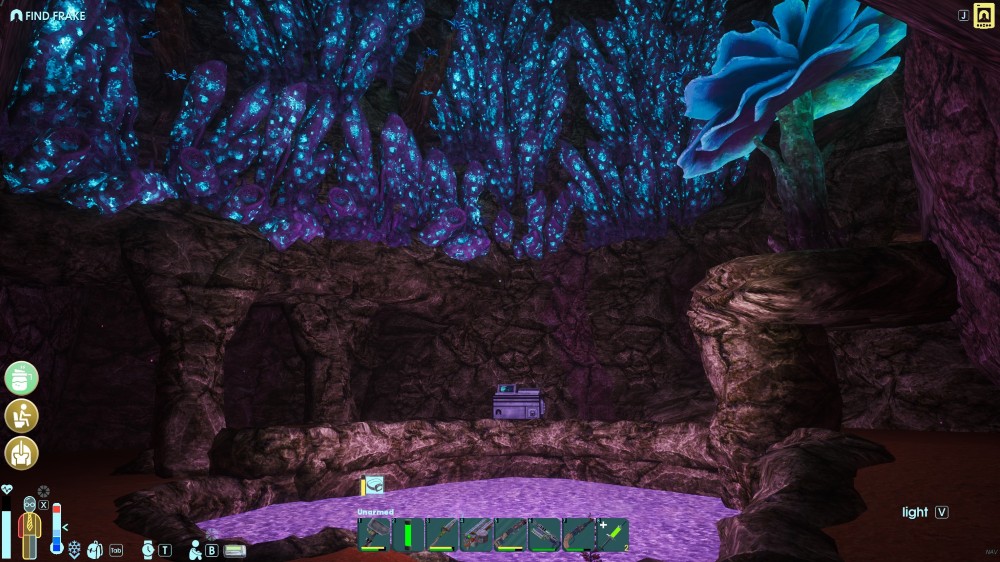
If you are link-averse, Abiotic Factor is essentially a closed-world survival-crafting game set in a SCP meets Half-Life-like setting with a similar plot. I mentioned “closed-world” instead of “linear” earlier because while the game does have an generally predefined path – as opposed to something like ARK – you get to unlock doors and open up shortcuts that will make backtracking more convenient. And there is indeed some backtracking required to collect additional resources to fuel your science machine.
I have found that the way resources are handled is… mostly acceptable. Just about everything in the facility can be stripped down for parts, but once they are gone, they are gone. In the meantime, you will find portals to various “anteverses” that you need to explore and complete. These portals are similar to the general facility in that they are more linear but you can unlock shortcuts for subsequent visits. Emphasis on subsequent visits. Twice every in-game week all portals reset themselves, including any items therein. To an extent, this does lend itself towards a sort of resource speed-run that gets tiresome after a while, especially when you’re looking for just one particular thing (Staplers, Glue, etc).
On the other hand: what other survival-crafting game doesn’t require farming some resources?
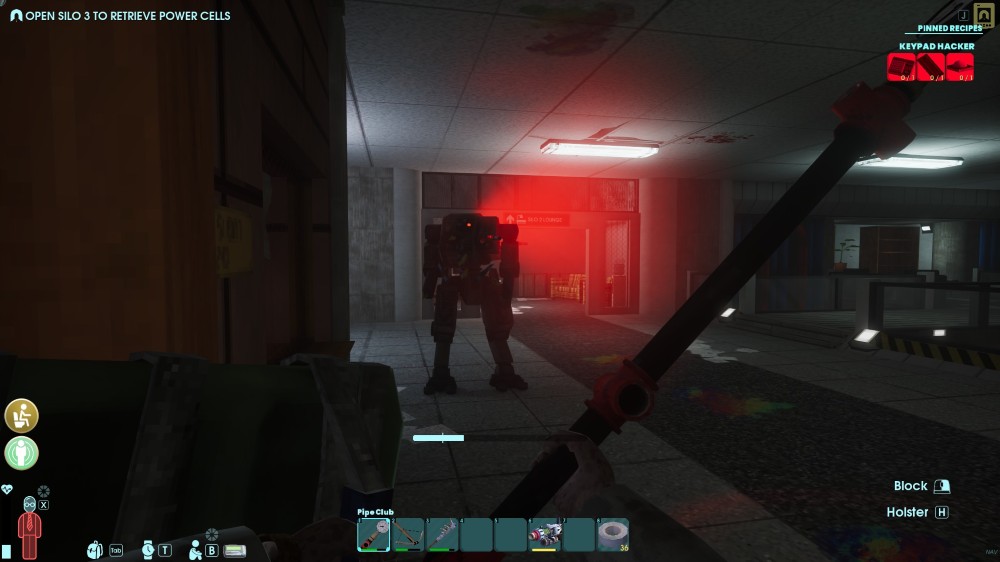
One element I have been surprised about is how well the devs maintained a sense of positive progression. In the beginning, the night is indeed dark and full of terrors – electricity is shut off, hostile security bots patrol, and you’re mostly sitting in the corner somewhere praying the noises of unknown source will just stop. After a while, you learn how to craft batteries and traps and makeshift barriers, creating a safe(r) space for yourself. Exploring further afield leads to longer return trips, which sucks. Then you make a cart, where you can stack your loot and push it back to base. Or you unlock a particularly helpful shortcut cutting down on the commute. You start creating forward bases instead of bringing everything with you. Finally, slightly past the mid-game… absolute bliss. Let’s just say you still need to explore new areas, but returning somewhere is no longer a problem.
At the same time, the general lethality of the game remains high even on Normal difficulty. You can be well armed and provisioned, but some enemies will still be able to take you out in short order. In the endgame where I am, some of the enemies have become a bit bullet-spongy too, but I’m not too mad about it because the difficulty of each encounter is largely in your hands. Having trouble clearing a room? How about setting up a bunch of turrets in the doorway and let them duke it out instead of you? There are power sockets in a bunch of places in the facility, and even if there aren’t, you can always bring your own fully-charged batteries. While not quite on the level of Prey, Abiotic Factor does give you a similar level of freedom.
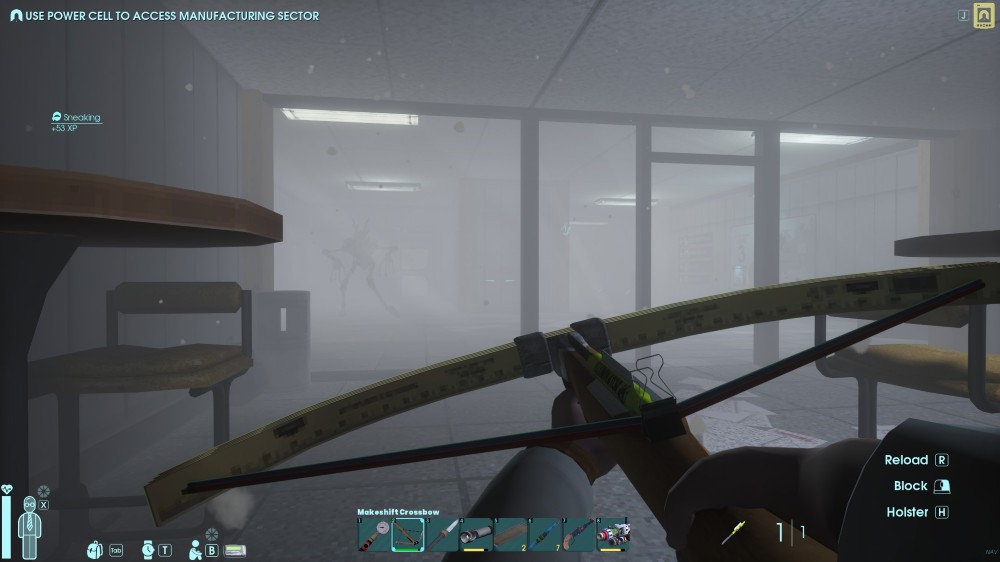
On the negative side, the game is not afraid of sometimes setting you up against (mostly) invulnerable enemies. Usually these act more as mobile traps/hazards, but a not insignificant portion of the game is spent being stalked by the equivalent of a Boo from Mario. It’s spooky and provides plenty of dynamic jump scare opportunities at first… and then the game keeps going for another 20 hours before you get something that can grant you peace. But surprise! There’s another at the endgame. Sigh.
Another downside comes from some lingering rough edges from Early Access. The devs have been very quick with hotfixes to patch various bugs, which is great. But there are some things that need some more love, or semblance of purpose. For example, there are several dozen cooking recipes with complex/rare ingredients that barely provide more sustenance than basic ones. Some weapons serve no discernable purpose, being weaker than what you had access to before. There are several endgame Sharp weapons, but no Blunt ones. Speaking of which, the late game annoyingly introduces you to new weapons and then immediately enemies that are resistant to their damage. Like… why?

These are all fixable problems though, and the devs seem like reasonable people thus far. I’m excited to hear what they have in store for v1.1 and beyond. Mostly. Because at the end of the day, I am very clearly nearing the end of the game. Clocking more than 130 hours is certainly sufficient for my money’s worth, but I’m nevertheless sad that starting over is unlikely to generate the same novel experience. This is where a more traditional, rogue-like survival game (e.g. 7 Days to Die, Minecraft, etc) might pull ahead in the long-term.
Having said all that, well… one hundred and thirty goddamn hours. Abiotic Factor is legit. It’s one of the most novel survival-crafting experiences I have had since Subnautica, and reminded me why I love the genre so much. Play now or play later, but I recommend playing it. Also, it’s on Game Pass.
Following the Money
Found a news article (via Reddit) with a refreshingly straight-forward headline: Newzoo: North American gamers spend an average of $325 annually The Reddit conversation focused mostly on how inexpensive gaming is as a hobby in dollars-per-hour terms, compared to going to a bar/movie ($20-$80) or even a concert/sporting event ($150-$800+). You know, traditional talking points.
After actually reading the article itself though, that wasn’t what this report is about:
The motivations behind player spending in these regions also differ. 34% of North American players spend money to unlock exclusive content, while 29% do so on personalisation/character customization. […]
The report also found that there’s diversity in player spending patterns between regions. In North America, 27% of players invest in content packs, power-ups, and in-game currencies, 24% buy subscriptions, and 23% purchase battle passes.
What’s conspicuously missing is “percentage spent buying the game.” At least, I assume unlocking exclusive content does not count. And actually, all those percentages are kind of weird. Is character customization not also exclusive content? Are content packs not battle passes? Who knows.
Regardless, the through line is clear:
According to the findings, the West games market is seeing slowing “payer growth,” with a 1.1% compound annual growth rate (CAGR) in North America and 3.1% CAGR in Europe between 2023 and 2027. As such, Newzoo and Tebex recommend studios “shift from acquiring new players to maximizing value from existing ones.”
There’s a tangled web of chicken vs egg speculation about why player growth has slowed. Market saturation? Higher prices and too much “maximizing value” squeezing people out? Shaky economic future? The rise of lifestyle/live-service/forever games like Fortnite, Roblox, etc? (Time) Competition from short-form video content?
Funnily enough, most of these points were covered back in January in the Hopes of the Game Industry. And the answer is… Yes. All of those things, simultaneously. There have been tremendous layoffs in the games industry this year, including high-profile sequels and nearly-complete games thrown in the trash. We mourn the loss of what could have been, but the suits see how only ~12% of gaming hours are spent playing new games. Why risk $100m+ and eight years building a game when you can “maximize value” out of established ones? And if you don’t have any of those games, just buy’em up.
Again, it could be an interesting debate about which happened first. Did escalating prices for new games send players back into the arms of familiar classics? Or did the introduction of microtransactions start making games stickier, as a means of assuaging sunk costs?
True answers, if any exist, are academic at this point. Developers are following the money and it’s hard to blame them. Well, aside from being increasingly incapable of making fun games even after 4-8 years and tens millions of dollars and are now choosing to erode your consumer surplus instead.
You can certainly blame them for that.
Continue Reading
In the spirit of Blaugust, allow me to give an unsolicited opinion: excerpts suck. If I see a post in my Feedly roll that is just a paragraph that ends with Continue Reading… I don’t. That blog gets dropped.
There’s really only two reasons to have excerpts on: you don’t know better, or you do. In the latter case, congrats on being a cog in the giant SEO/clickbait bullshit machine. Be better, if you can.
In case you’re a member of the former category though, for WordPress check Settings > Reading:
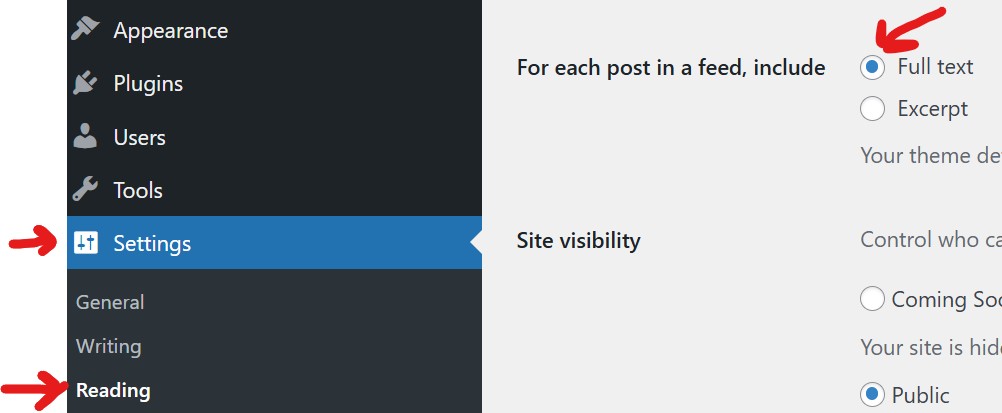
Are there legitimate concerns about having your blog content displayed in an RSS aggregator versus readers coming directly to your blog? Maybe. I have no idea if someone reading this post on Feedly will have their View register on my WordPress stats or whatever. I could also see concerns about post formatting if you care about that sort of thing. For example, I spend an inordinate amount of time trying to avoid orphan words in the blog proper. Seriously, check my posts sometimes (engagement!). None of which matters for Feedly readers though, because those line lengths are all over the place.

You might think me arrogant for suggesting that losing my subscription to your blog is a reason to turn off excerpts. I would instead suggest that forcing readers to open a new tab just for you is itself the height of arrogance. Do you yourself open tabs for every blog you follow every day, like it’s 2005? No.
Turn off your excerpts. Thanks for reading.
AI Won’t Save Us from Ourselves
I came across a survey/experiment article the other day entitled The Hidden Penalty of Using AI at Work. The “penalty” in this case being engineers more harshly judging a peer’s code if they were told the peer used AI to help write it. The overall effect is one’s competence being judged 9% worse than when the reviewer is told no AI was used. At least the penalty was applied equally…
The competence penalty was more than twice as severe for female engineers, who faced a 13% reduction compared to 6% for male engineers. When reviewers thought a woman had used AI to write code, they questioned her fundamental abilities far more than when reviewing the same AI-assisted code from a man.
Most revealing was who imposed these penalties. Engineers who hadn’t adopted AI themselves were the harshest critics. Male non-adopters were particularly severe when evaluating female engineers who used AI, penalizing them 26% more harshly than they penalized male engineers for identical AI usage.
Welp, that’s pretty bad. Indeed one of the conclusions is:
The competence penalty also exacerbates existing workplace inequalities. It’s reasonable and perhaps tempting to assume that AI tools should level the playing field by augmenting everyone’s capabilities. Our results suggest that this is not guaranteed and in fact the opposite could be true. In our context, which is dominated by young males, making AI equally available increased bias against female engineers.
This is the sort of thing I will never understand about AI Optimists: why would you presuppose anything other than an entrenchment of the existing capitalist dystopian hellscape and cultural morass?
I don’t know if you have taken a moment to look around lately, but we are clearly in the Bad Place. If I had once held a hope that AI tools would accelerate breakthroughs in fusion technology and thus perhaps help us out of the climate apocalypse we are sleepwalking into, articles like the above serve to ground me in the muck where we are. Assuming AI doesn’t outright end humanity, it certainly isn’t going to save us from ourselves. Do you imagine the same administration that is trying to cancel solar/wind energy and destroy NASA satellites monitoring CO2 is going to shepherd in a new age of equitable prosperity?
Or is it infinitely more likely the gains will be privatized and consolidated into the techno-feudal city-states these tech bros are already dreaming up? Sorta like Ready Player One, minus the escapism VR.
I could be wrong. I hope I’m wrong. We are absolutely in a transition period with AI, and as the survey pointed out, the non-adopters were more harsh than those familiar with AI. But… the undercurrent remains. I do not see what AI is going to do to solve income inequality, racism, sexism, or the literal death cult currently wielding all levers of government. I’m finding it a bit more likely that AI will be used to, you know, oppress people in horrible new ways. Or just the old ways, much more efficiently.
Wherever technology goes, there we are.
 In An Age
Old Man’s Sky
Sep 11
Posted by Azuriel
They just keep bringing me back, don’t they?
If you haven’t heard the news, No Man’s Sky (NMS) recently released yet another massive free update to the game. This time around, you can build a corvette-class ship that will allow you to… get up and walk around in your ship. That might not sound like much, but it is actually kind of rare even in space games, especially considering you do so with no loading screens. In any case, I decided I need to give things another go after 5 (five!) years.
What I encountered was still one of the worst opening sequences for almost any game.
I apparently have never commented on it before, but NMS starts with you awakening on an alien planet, your suit powering up, and then a number of warnings about your environmental protection waning. Conceptually, this is fine; other survival games start you out in imminent danger too. For example, ARK has you awakening on a beach and sometimes being eaten by a raptor right away. In NMS’s case though, it just feels… bad. Your visor scanner doesn’t work, sometimes you don’t spawn near required resources to refill your environmental protection, and you don’t have the terrain modification gun yet which otherwise trivializes most hostile weather (e.g. dig a tunnel and get underground).
Worse, I actually tried starting things back up by immediately choosing an Expedition. Big mistake. Expeditions were added to the game several patches ago, and they are basically more focused experiences where you start out on predefined planets and need to accomplish specific goals. The problem is that these are absolutely tuned more for advanced players with a good grasp of the underlying mechanics. Well, and the other problem is that everyone is thrown into the same subsets of planets, so you might spawn in an area where everyone has mined most of the nearby ore. More annoyingly to me though, is that when you are looking around for resources, you’re bombarded with dozens of (useless) player base icons, making finding things difficult.
So, yeah, don’t do what I did. Instead, get a foothold in the game and then go into an Expedition – including bringing some good loot in with you! – via a vendor you unlock a few hours in the game.
In any case, since I hate myself, I chose to start a brand new save on Survival difficulty. C’mon, I had 130+ hours logged already, right? Beginning is brutal, as mentioned, and you have to contend with some extra nonsense like smaller stack sizes for material, etc. Within about 15 hours though, I’m back to having 22 million units, 6000 nanites, and unlocking all 10 freighter storage racks.
No Man’s Sky has indeed improved tremendously over the years, but fundamentally it does still have a problem with “but… why?” It’s the same place I landed on five years ago, and unfortunately it does not appear much has changed. Well, OK, there have been a lot of changes. Expeditions, there are now Dissonant planets with corrupted Sentinels, there is a Settlement system, Pirate Dreadnaughts to fight/own, the new bespoke Corvette-class ship building system, and so on.
Fundamentally, though? When you’re on foot, none of the randomly-generated creatures matter; only Sentinels pose any threat whatsoever, and there are only like a half-dozen types. Why even have so many different kinds of weapons for your multi-tool if only one is needed to take down every enemy? Meanwhile, if you spend more than 30 seconds in space, you’re likely to be accosted by fleets of hostile pirates that will absolutely murder you if given half a chance. The space gameplay “loop” is not particularly deep, but nevertheless feels miles more complete than what you are doing in the other 80% of the game, e.g. walking on planets.
Having said all that… yeah, 130+ hours plus however many I muster this time around. I’m harsh on the game because I’m mad. Hello Games have added so much and just inexplicably left such a gaping hole in the center and I don’t understand why. Maybe having Gek pirates running around on foot blasting you would feel too weird or whatever, but apparently it’s fine when they’re faceless ships? OK, just use some of the six trillion randomized alien creatures and make some of them require that fancy mech to fight! Or lean more into those bug aliens that are apparently as ubiquitous as the Sentinels for (presumably) some kind of lore reason.
Or, I guess, ignore all that and hurry up and give me Light No Fire.
Posted in Commentary
2 Comments
Tags: Crafting, No Man's Sky, Patch, Space Combat, Survival, Walking Simulator