Author Archives: Azuriel
Review: Zero Sievert
Imagine a top-down pixel STALKER roguelite with a dash of Escape from Tarkov and that’s Zero Sievert.
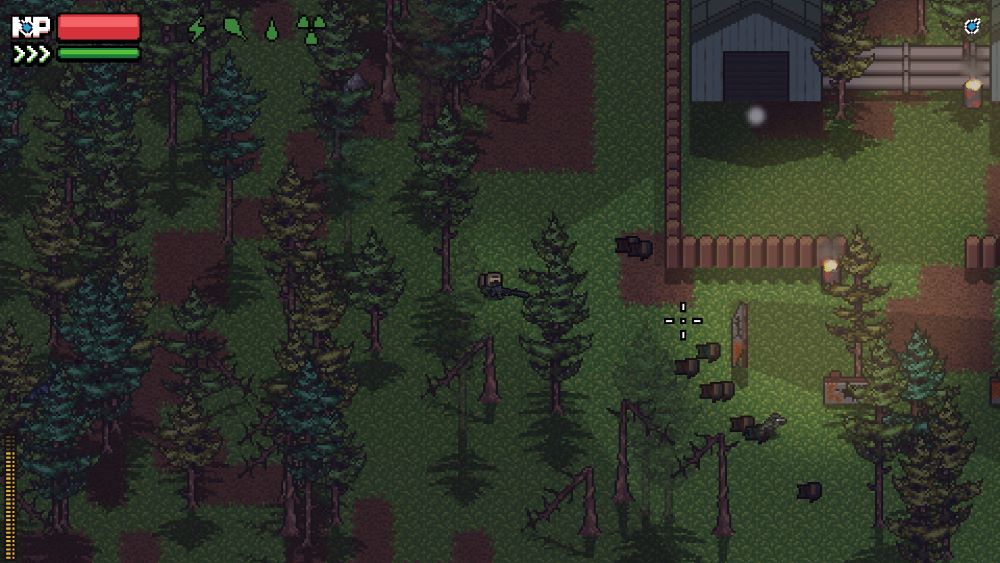
The general gameplay loop is:
- Take a train to one of six randomly rearranged zones
- Loot, kill, maybe complete some radiant-style quests
- Stay alive long enough to get to the extraction point
- Offload junk back in base, buy/craft things, prep for the next scavenging run
- Repeat
That may sound a bit reductive, but honestly, that’s the game. And I can say that out of the 40 hours that I played, I had fun for almost 30 of them. Which is good! Probably. I just wish that all of the hours were fun, rather than slowly succumbing to an aching grind and increasingly vague story progression.
In the beginning, everything is dangerous and exciting. Wildlife can kill you in seconds, you have no armor to speak of, your weapons are likely terrible in comparison to Bandits or others you encounter. The first time you kill a Bandit and realize you can just take their (damaged) gun and armor though? Exhilarating. You will end up needing to loot a whole bunch of related items to earn enough cash to make repairs, but the feedback loop goes hard. Death means you lose all progress since you arrived via train, with the harder difficulty options actually resulting in your losing everything you had equipped too. Don’t worry, just losing your time is punishment enough, as there is no guarantee that the enemies you face will even have the gun you are hoping to see the next time around.
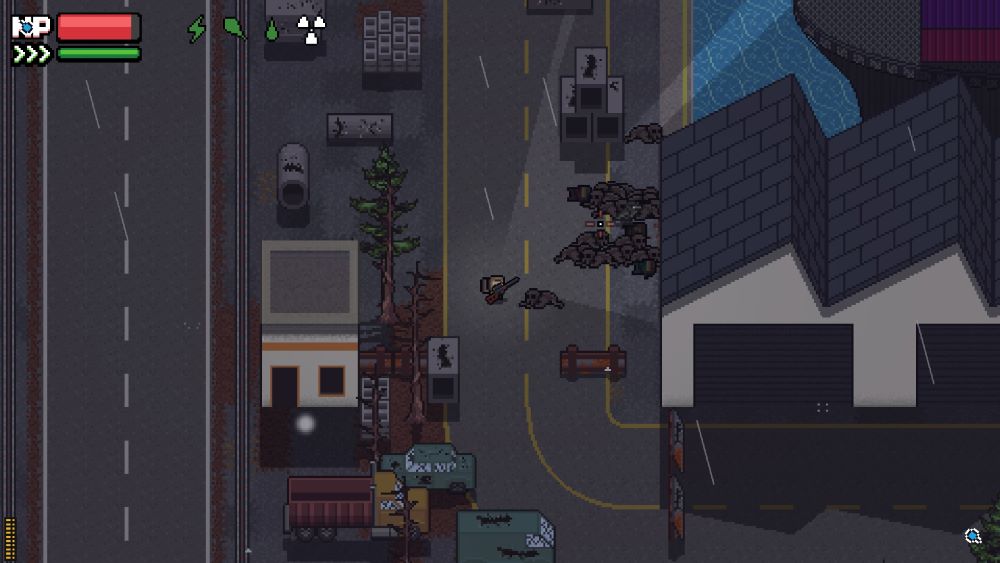
After a while though, the veneer rubs off. You cap out progression-wise, with the guns and armor you wanted, and you’re still slogging your way through story missions increasingly filled with hundreds of mutant foes. Then there are times when a late-game quest says to explore a lab, but what it meant was talk to a dude first then go to the lab, as otherwise you spent 40 minutes to accomplish nothing. And once that’s done, your next mission is to explore the last zone… but it’s not an option until it’s unlocked. Somehow. No, seriously, there was no active quest that indicated how to unlock that last zone. According to forums, you have to complete some random number of missions to finally get it to populate. Which… nah, I’m done.
Overall, I’m not mad with Zero Sievert. It was fun until it wasn’t. The v1.0 release happened just last month and it’s very clear that, like a depressingly large amount of Early Access titles, it was released more for dollar reasons than design reasons. For example, you can talk to friendly factions out in the world and you have the same Talk/Quest/etc options that you would back at base, but they never have anything to say. Although such NPCs have very short lifespans, I could see future updates fleshing out that mechanic a bit better.
In any case, that’s Zero Sievert.
Review: Satisfactory
I have finally completed Satisfactory after 123 hours.
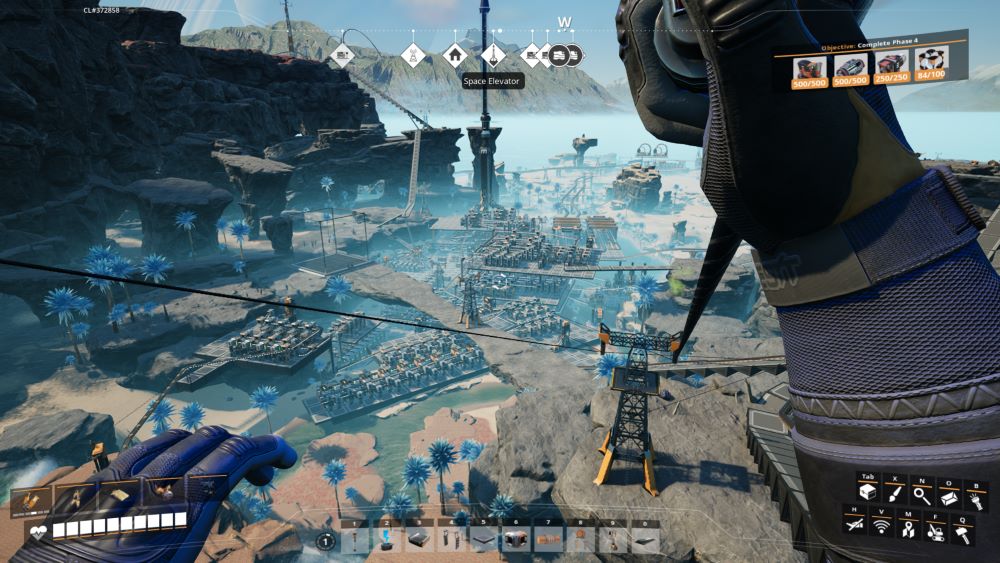
Satisfactory is an automation game in the same vein as Factorio, aside from taking place in a first-person perspective of a very detailed 3D world. Like all of the other games in the genre, the goal is to craft a series of production buildings to harvest, smelt, and otherwise produce an ever-more complicated string of widgets to achieve certain milestones that unlock fancier widgets that require other widgets to produce, et cetra. The joy and satisfaction comes from planning and then executing these complicated production lines and witnessing the factory coming to perfectly efficient life.
Well, mostly efficient. 80/20 Rule applies.
I’m not an expert on the automation genre. Previously, I played Factorio for a few hours and bounced off; Dyson Sphere Program was starting to get good, but then it left Game Pass. So, coming into Satisfactory, I was a bit skeptical. It is difficult at this point to tell whether it was the genre itself that finally clicked for me, or whether Satisfactory itself had enough tweaks to the formula to break through, but… it did. In a big way. I played nothing else for almost four weeks straight. The genre jury is still out for me, but thus far the evidence points to the latter.
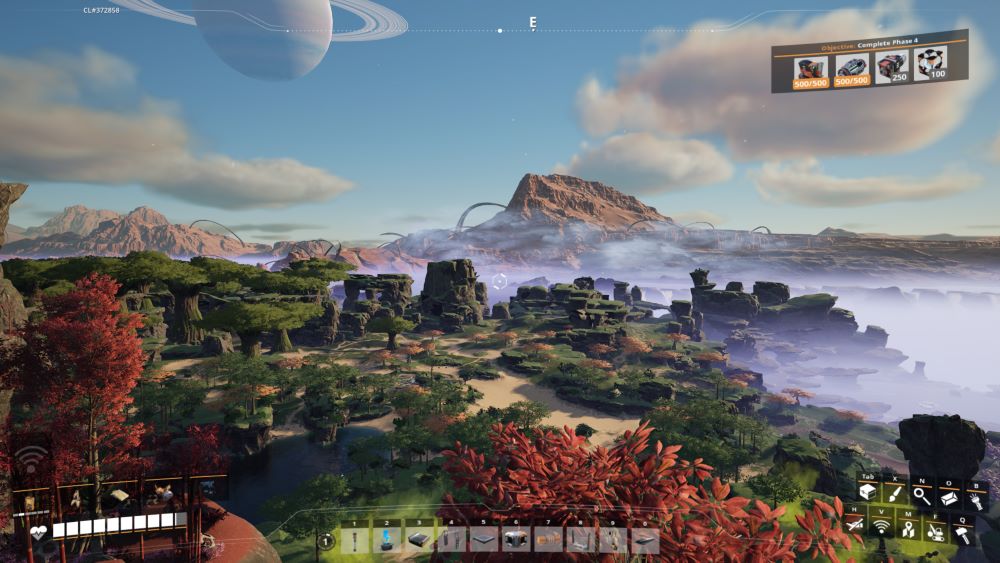
The first thing to understand about Satisfactory is that resources are infinite. When you find an Iron Vein and plop a Miner Mk1 on it, you will receive 120/minute of Iron Ore. Forever. Believe it or not, this is not actually common in the genre. What this certainty allows for is the construction of permanent supply chains. That 120/minute Iron Ore can be fed into enough Smelters to output 120/minute Iron Ingots, which then get split into different conveyer paths leading to Constructers outputting X/minute Iron Plates and Y/minute Iron Rods. The only time things would slow down/stop is if your power grid goes down or if there is nowhere for your end products to go.
That sort of subtlety of design ended up being the secret sauce for me. Is perfect efficiency required? Nope! It may just take longer, and maybe you’re okay with that. Progression in the game comes from taking ever-increasing volume (and complexity) of goods and blasting them into space. If they want 1000 of something and you’re making 5/minute, well… it’s your choice whether to do something else for 200 minutes or try to pump up the other number(s). Maybe you need to tap another Iron Vein somewhere to increase supply. Do you know of an untapped node somewhere close, or will you need to explore? Do you transport the raw ore back to your home base, or just the finished products? Have you unlocked alternate recipes via Hard Drives found in the world that could change entire production chains? I swear to god, Civilization’s “One More Turn” got nothing on this game.
It is hard to identify downsides, as this genre is new to me and I obviously had a lot of fun in this one. Something I will say though, is that there was somewhat of an insurmountable dissonance between the need to automate and the need to explore in Satisfactory. Hitting Milestones and unlocking new resources like Coal? Absolutely, let’s prioritize setting some Coal Generators up. Inbetween that though, there is an entire alien world you can (and should) explore. Not just for its own sake, but because there are Hard Drives that unlock (unfortunately) random alternate recipes, and alien artifacts that will similarly change the way you play the game later. But when can you explore? Those “wait 200 minutes” Milestones I mentioned before don’t arrive till later, so it’s more of a dilemma between “wasting” potential factory output time or just turtling up at your base and exploring only after 80+ hours.
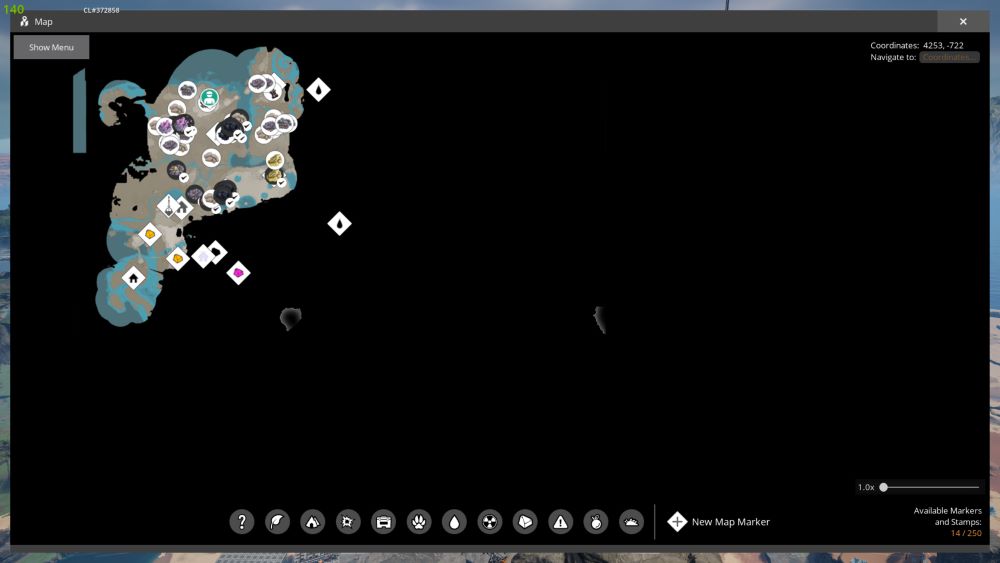
The latter of which, ironically, is very possible because the devs actually over-engineered the world.
Seeing YouTube videos of other peoples’ massive factories and dozens of train track lines made me originally believe that sort of thing was going to be required. Surprise! Not at all. Part of the reason the world is large is because the devs give you the option of several different starting locations. But also… just because, apparently. The sheer size of the world naturally encourages you to invest in the more advanced transportation options, although you can certainly just run conveyer belts everywhere. Or be like me and spend 80 hours along a little tiny slice of the coast until more esoteric recipes required me to branch out. I guess my point is that you have options in exploring early if you want. Or not.
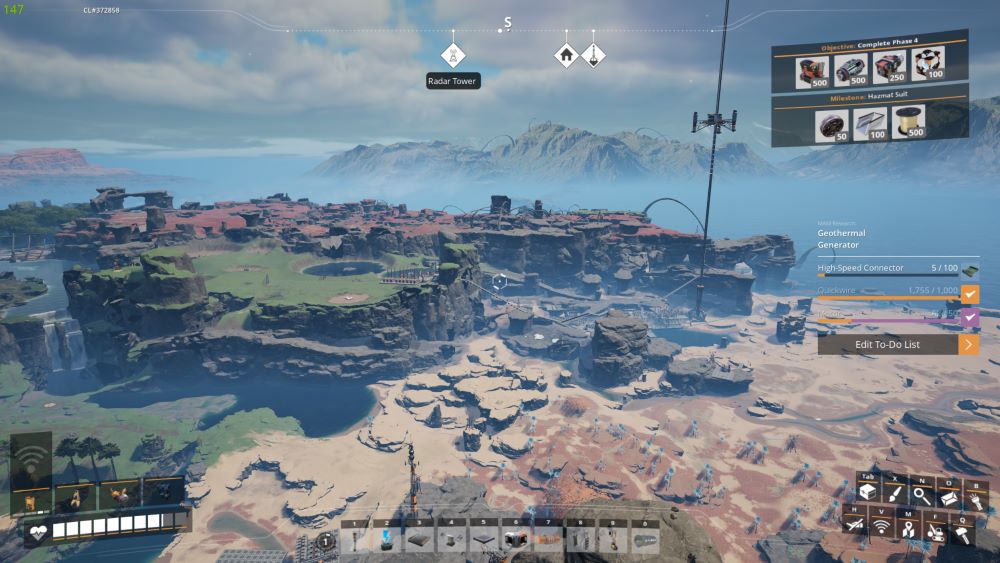
What more can be said? Satisfactory is great. I’ve spent more hours playing it than Skyrim, Fallout 4, Dragon Age: Origins, and actually most other games. Is it better than all those? Nah. I would personally rate a good survival title over Satisfactory any day, let alone a meaningful RPG experience. Buuuuuut… if you want possibly 120+ hours of almost-pure wirehead experience, this game has you covered.
And sometimes that is exactly what you need.
Welp – 2024 Election Edition
I suppose they do say you get the government you deserve. And apparently we deserve to be fucked.
For my own grief processing and prognostication, let’s speculate for a presumed posterity:
- Certainty – End of all US support for Ukraine, eventually leading to a “negotiated peace” whereby Russia annexes even more of the country. Ukraine will not be able to join NATO, of course.
- Certainty – Full-throttle support of Netanyahu’s Israeli government and the continued purge of Palestinians. This is arguably already happening, but it will be dialed up further.
- Certainty – Climate is fucked. Not only has the current Supreme Court already gutted Federal agencies’ ability to regulate environmental impacts, Trump has vowed to cut things further. We may already have hit some inevitable tipping points, but inaction – let alone acceleration – is not something we can afford.
- Certainty – Massive increase to federal debt. Despite tax cuts never paying for themselves, Republicans will approve Trump’s corporate/income tax cuts and the government will generate less revenue as a result. Weird how that works.
- Certainty – Trump will escape all legal accountability and revel in naked, in-your-face corruption. For example, elevating Judge Aileen Cannon to Attorney General or, you know, having an open bank account pipeline directly into Trump’s pocket via DJT stock.
- Likely – Economic recession and/or collapse. Trump has vowed to implement broad, across-the-board tariffs (e.g. regressive taxes), including potentially replacing Federal Income taxes altogether with tariffs. Additionally, Trump will appoint Elon Musk to a potential cabinet-level position with a broad mandate to cut government spending from… somewhere. The only real place to do so with any impact would be from Medicare and/or Social Security. Meanwhile, Trump is also promising mass deportation which, regardless of where you fall on the issue, will result in economic upheaval. See: Florida.
- Likely – Rollback of mandatory vaccines and general societal health initiatives, and increase in childhood polio (!!!) and measles. Trump has invited RFK Jr (aka brain worm guy, aka dead bear cub prankster, aka whale decapitator) to “go wild” on health in his administration. RFK Jr is deeper in the conspiracy tank than even Trump, and will use the platform to broadcast nonsense further. Only the best people.
- Likely – Continued attacks on the legal rights and general humanity of LGBTQ+ individuals. In particular, banning (directly or indirectly) gender-affirming care for all ages.
- Possible – Nationwide abortion ban via Comstock Act and/or removal of FDA approval of mifepristone.
- Possible – Elimination of the ACA and general upheaval in the health insurance market as a result. Reminder: the ACA was “saved” by John McCain back in 2017. Other reminder: “Preexisting condition” used to be a thing that denied you coverage and can absolutely be a thing again. Other other reminder: having COVID is absolutely a preexisting condition for dozens of things.
- Possible – All the absolutely batshit crazy Project 2025 ratfuckery.
There are some people – a majority, apparently – that may consider all this alarmist. After all, we had four years of Trump already, and he did not build a wall that Mexico paid for, among other things. I guess we will have to see. Because isn’t that fun? Chaos at the highest levels! What will the aggrieved mind of a 78-year man with a family history of dementia think of next? Stay tuned!
Hi-Jacked
Guys. Satisfactory has hijacked my brain. I’m not entirely sure what’s going on, but I have played basically nothing else in the last two weeks. I’m not into this genre, but I’m apparently into this game.

And I’m not even done. I mean, probably kinda sorta close? Still got two endgame items to factorized in this phase, neither of which I can build yet, and have spent the last three days working my way to harnessing Nitrogen gas. I think there is one more phase after this, but maybe not. Who knows.
Regardless, for now this shit has me wireheaded something fierce. Bounced off Factorio, didn’t get too sucked into Dyson Sphere Program in the days before it left Game Pass, but Satisfactory is apparently my jam. I doubt that I’m into it enough to like start another playthrough or whatever, but goddamn.
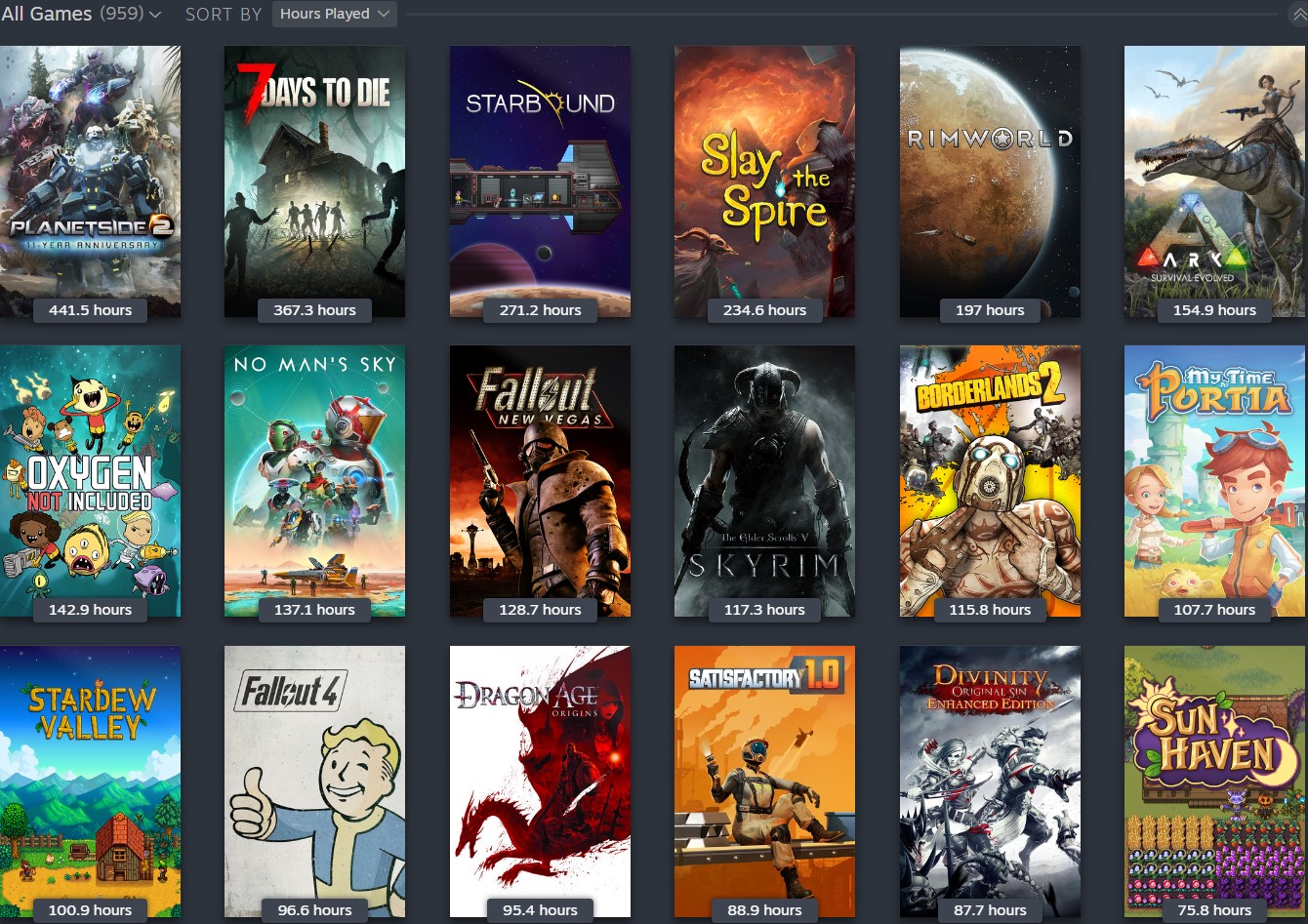
Looking at that list though, I don’t think it matters much. It has already joined an esteemed company.
In any case, that’s where I’ve been and/or will be for the foreseeable future.
Autobivalence
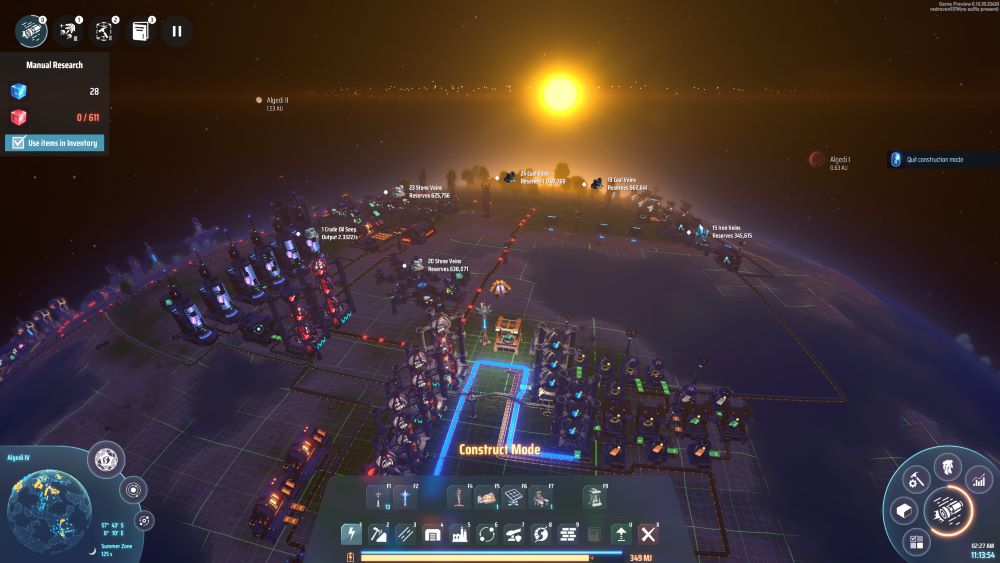
I have a love/hate relationship with automation games, like Factorio, Dyson Sphere Program, Satisfactory, and others.
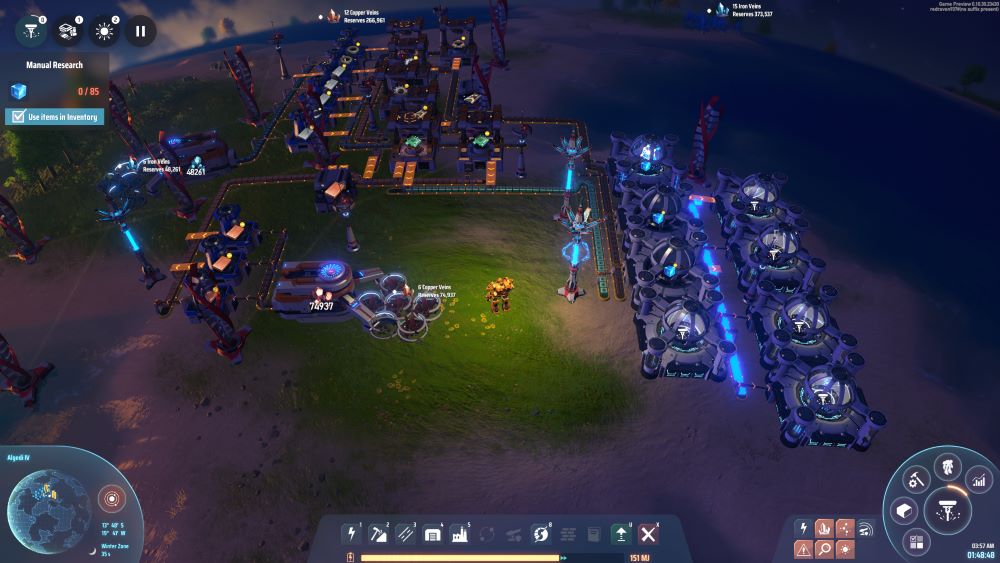
On the one hand, they mostly satisfy the survival-adjacent itch of accumulating resources, building a “base,” and otherwise growing stronger each play session. Any game where you can think about it offline and come back the next day and be better off for having pondered, is a huge win in my book. These games should be localized entirely within and up my alley.
I also hate them.
Long-term readers know that I very frequently engage in “optimizing the fun” out of the games I play. There are two corrections to make here. First, “optimizing the fun” is a strange way of rephrasing “leveraging my full mind towards achieving success.” By no means am I implying that I’m some genius or whatever, but I do enjoy not having to handicap myself in Perk/Skill/Talent/Strategy selection because the designers left in some obviously OP power. If a given move is powerful, I’m going to utilize it, even if the game is less fun as a result… because the game is already less fun if I have to ignore imbalanced shit. Looking at a list of available choices and finding the surprising synergies of given combinations is precisely the fun I’m looking for. Optimization is fun.
However, this is where the second correction comes in: I dislike trial-and-error, e.g. reinventing the wheel, e.g. the grunt work. This is where all the automation games lose me. While it is technically optimization, I do not find it at all fun or engaging to spend hours rearranging conveyer belts to increase production by 5% or whatever. That’s assuming I would even know how to make things better, which I honestly do not. Indeed, it irks me every time in these games’ tech trees when Blueprints are unlocked, as it confers the assumption any of my macaroni factory art is worth copy & pasting. But I also know that just copying the perfected blueprints of others would “rob” me of a lot of the gameplay of these titles. So… I usually just struggle, flail about, recognize I’m not having fun, and uninstall.
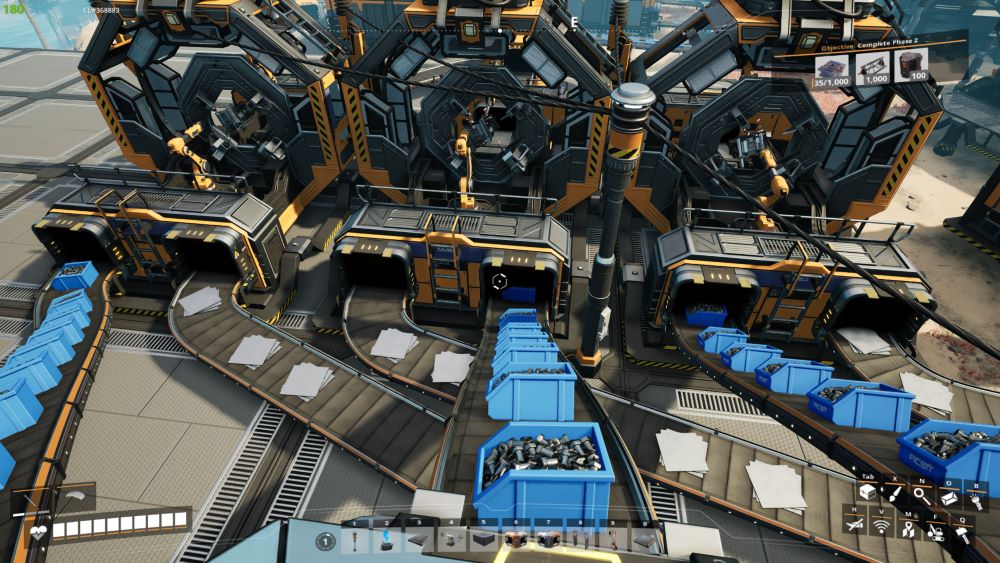
Having said that, I am playing Satisfactory in 4-hour increments every evening for the past few days.
I was playing Dyson Sphere Program (DSP) a few days before that, as I saw that it was leaving Game Pass and so I wanted to give it a whirl. While DSP was fun enough, it really reminded me a lot of Factorio which I had bounced off of. Conversely, Satisfactory improves (IMO) a lot on the general formula. For one thing, the “tech tree” unlocks by consuming regular items rather than abstracted science cubes. The actual tech unlocks are are immediately grokkable too, like a faster conveyer belt, new building, unlocked resource, or whatever. In DSP, I would research 5-6 things in a row without actually understanding what (if anything) they did or how it would impact my factory until later.
The main thing though is that I “cheated” in Satisfactory. More specifically, I watched a Youtube series on compact, scalable blueprints of various buildings. I’m assuming someone out there would consider that cheating. But here’s the thing: it actually unlocked the game for me. I have heard of things like “main bus” and “manifold” and similar jargon before, but all that did was make me feel as though there was a secret language that everyone was just supposed to know. After watching the series of Youtube videos and recreating them inside the game, I understood. Even better, the designs weren’t 100% efficient. Which meant I had a choice: sacrificing Efficiency for Quality of Life (i.e. simplicity).
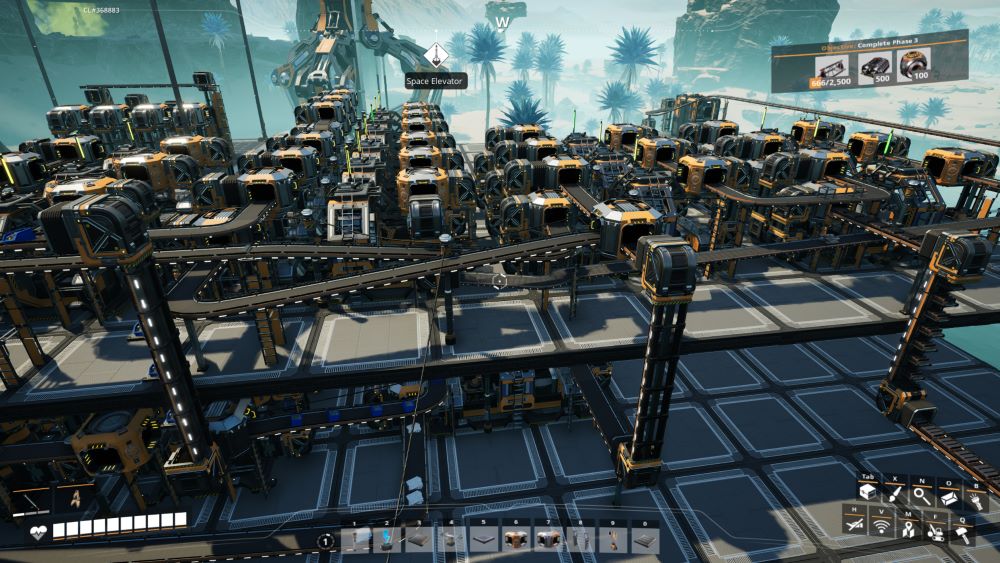
That’s the secret about optimization: it’s always in relation to something else. Maximum widgets/min? Sure, there’s one answer to that. The most widgets/min while also maintaining your sanity and/or having fun? Something something Sid Meier interesting decisions!
Anyway, I’m at 30 hours in Satisfactory and counting. There are some elements I’m not too fond of – it’s hard to justify exploring the map before you spend dozens of hours setting up a factory to output stuff in your absence – but overall it has been surprisingly… satisfactory.
Frostpunk 2
I have played and completed Frostpunk 2 via Game Pass in about 15 hours.
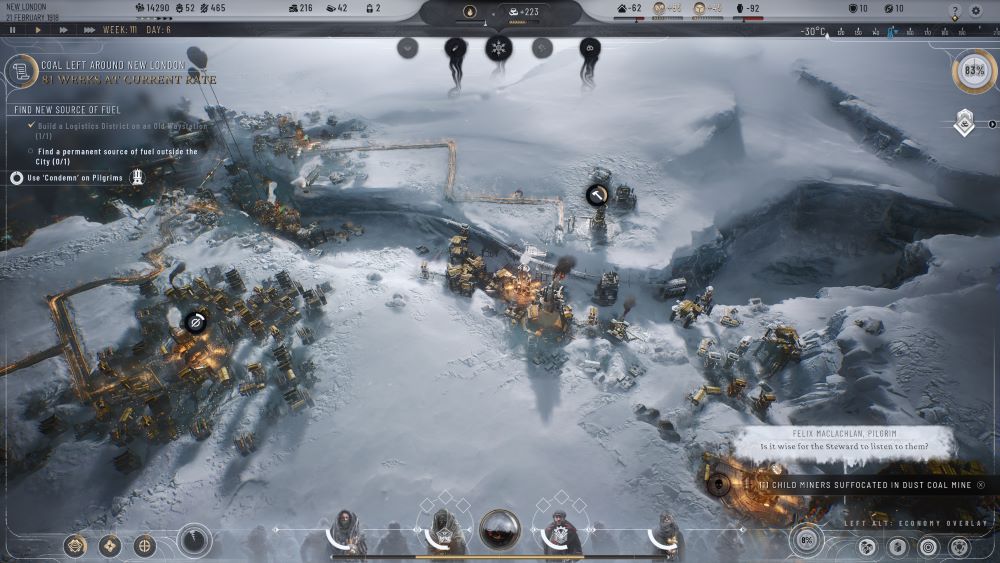
Frostpunk 2 is a sequel to the original both narratively and from a gameplay perspective. New London survived under the Captain’s rule in this alternative history 1899 ice age, but with his death, the fate of the city now rests in the Steward’s (aka your) hands. With a much more zoomed-out perspective, you must carve out space for various districts, explore and set up outposts, and placate diametrically-opposed factions whilst also ensuring the city never falls to the cold.
In the original game, the “plot” was broken into various Scenarios. With Frostpunk 2, there is a single narrative thread composed of five Chapters, throughout which your city progress is maintained. This continuity resolves a lot of the issues I had with the original game, wherein tech tree unlocks seemed pointless considering you barely had time to research any of them before the Scenario was over. Continuity also makes your early decisions much more important, as you continue to receive the benefits of it for a dozen hours. For example, your scouts might discover wreckage and give you a choice: gain important materials, or get +800 Workforce permanently. Choosing the resources might get you out of an immediate crisis, but there actually is a “long-term” to consider here.

Of course, that also becomes a problem. Although I beat Frostpunk 2 in ~15 hours, realistically the game was over after about 8 hours. By the time Chapter 3 rolled around, I had maximized the citizens’ Trust, all Factions supported me, and I was running a surplus of every material with an immense stockpile behind it. I played on the equivalent of Veteran difficulty, and so it’s possible that this is an indication I should have challenged myself further. However, I doubt harsher RNG events and a poorer start will make some of the “binary” choices/tech less obviously OP. If anything, I am now much more savvy to which Laws are critical to unlock early and which can wait.
On the other hand, the likelihood of my playing again is kind of low. Having a strict narrative thread means experiencing the same events in the same order, exploring the same map, and maybe making different choices for roleplaying purposes. The game is extremely engaging in the moment – way “worse” than the Civilization “just one more turn” hour evaporation – but a lot of that depended on the consumption of novelty. There is an Endless Mode option available, although how interesting that may be is dubious; as I mentioned previously, there are actually ways to end up effectively infinite even within the base game. Best I can do is hope there are updates in the future that add new Scenarios in.
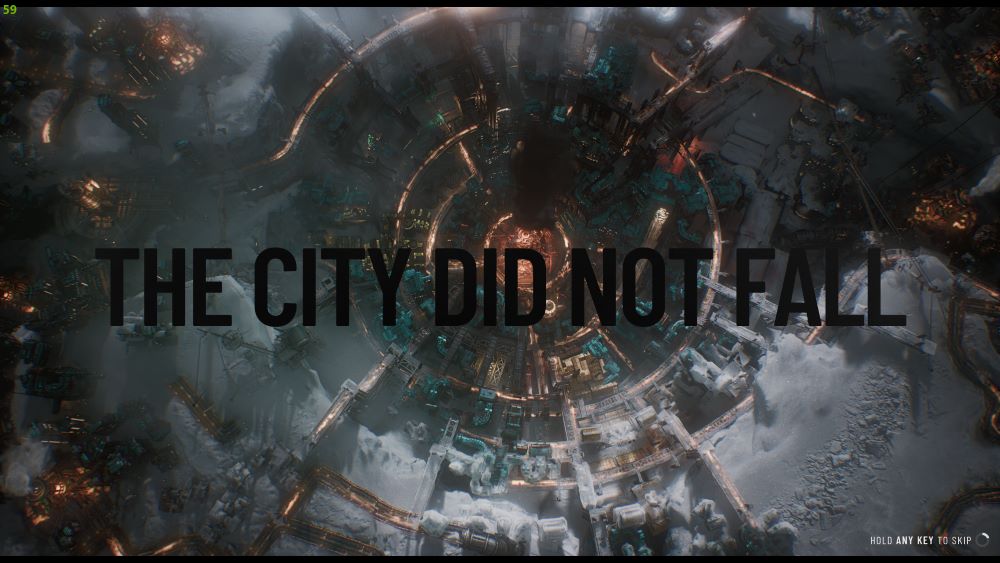
Overall though, Frostpunk 2 is an extremely slick and fun city-builder for the time I spent with it. Given how much was changed, it’s hard to say whether someone who loved/hated the original would find the sequel any better. It’s on Game Pass though, so it’s relatively easy to give it a whirl.
Impressions: Enshrouded
I actually purchased Enshrouded on a sale prior to Nightengale and a few other games, but had been waiting until I finished those, lest I be too enraptured by what was going to be the better game. You know, eating your peas and mashed potatoes before the pudding.
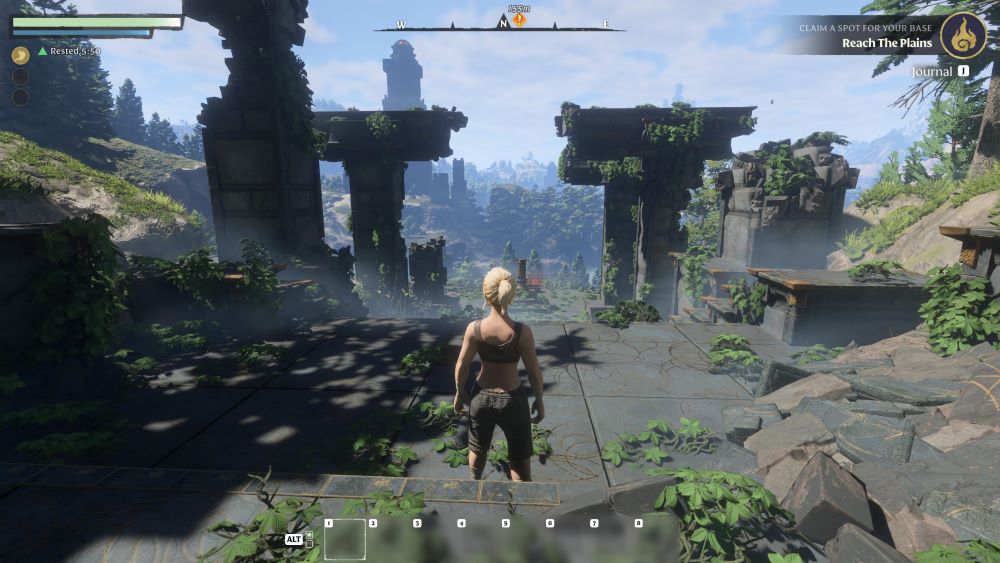
As it turns out, I needn’t have bothered: Enshrouded is not fun to play.
Believe me, I’m as surprised as anyone. Enshrouded has sold 3 million copies in Early Access, and is specifically called out by the Nightingale devs as one reason why they are reengineering their game.
Let’s get this big note out of the way: Enshrouded is not an open-world survival crafting game. I had to look at the Steam store page to double-check, but sure enough, it’s billed as a “co-op survival action RPG.” It’s an important distinction because the crafting, resource gathering, and survival elements are all perfunctory at best. Do you punch trees and collect fiber from bushes? Yes. Can you craft the cloth or metal scraps you need for practically everything? No. Those come from mob drops, or occasionally from destroying tents or other objects out in the world. After a while, you realize that you don’t really need much of anything from environment in comparison to mob drops, which is textbook Action RPG with “survival-lite” elements.
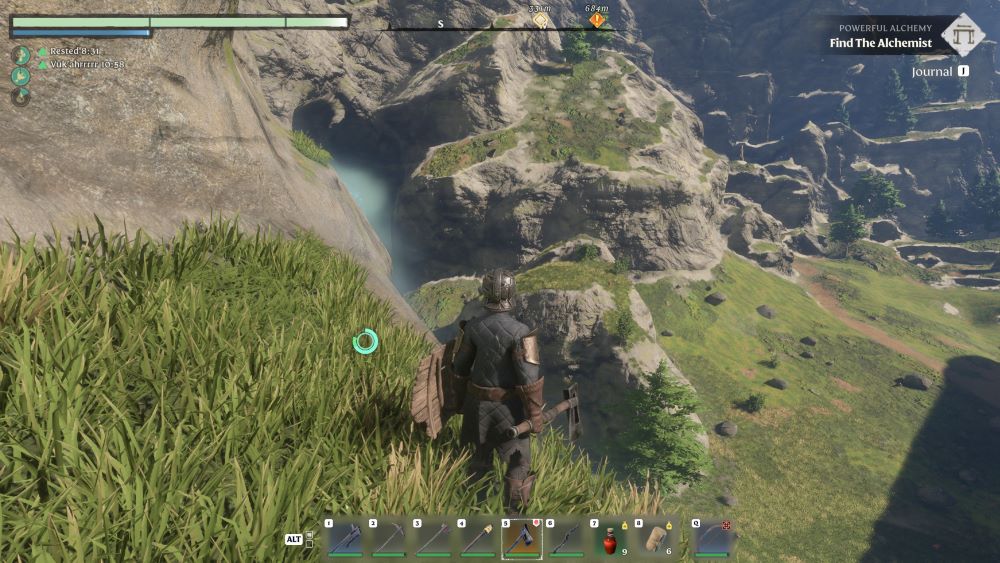
One thing Enshrouded is very good for is terrain deformation. Almost absurdly so. Nearly every inch of terrain can be dug into with a pick, and setting down base marker will allow rapid mining in almost any configuration. If you ever wanted a Hobbit-style house or Dwarven palace, this game is for you. Regular mansions are just fine as well. Build whatever you want! …provided it is within bounds of a Flame Altar.
This is important to know because general movement in Enshrouded is crap. Encounter a steep hill? Sometimes you can jump and land on individual pixels and sometimes not. If you aim your pick awkwardly upwards you can sometimes dig out a little ledge to help you climb. Double-Jump is a talent you can spec into as well. Things you can’t do? Build a box and stand on it. Or use the Grappling Hook – that’s exclusively designed to hook onto metal rings in specific places. Later on, you can unlock giant towers that you can fast travel to the top of and then jump off and use a “glider” to get around. But the glider handles more like a wingsuit weighed down with tungsten anchors than anything else.
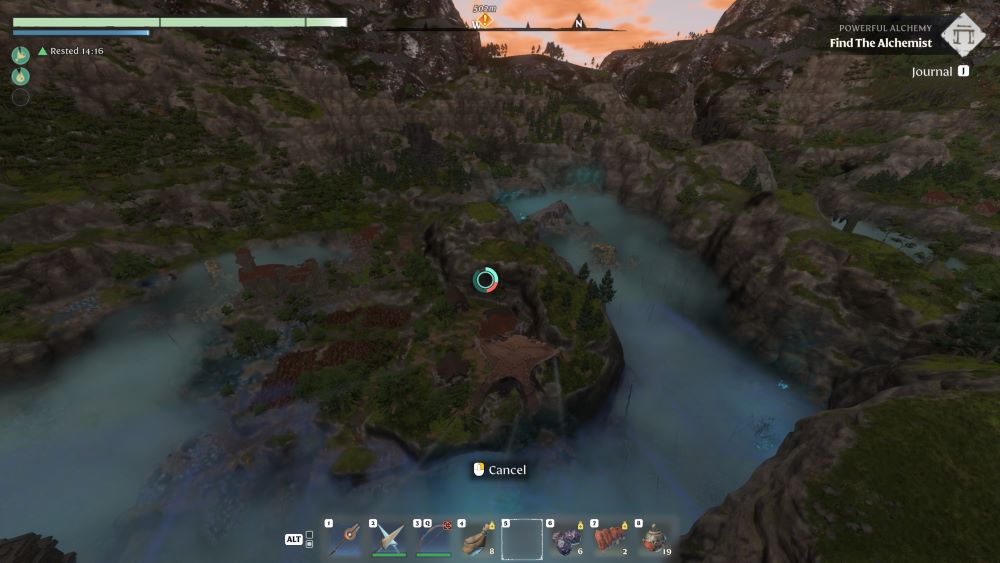
The sad part is that all of this poor mobility is likely bad by design. See, the central conceit of the game is that a Shroud has billowed out of the low places of the earth, killing those trapped inside. Venturing into these low-laying placed causes one to be “Enshrouded” and will result in death after a ~5 min timer expires. Meanwhile, poking your head outside of the Shroud will rapidly add time back onto the meter. Thus, if it were easy to grapple up hills and/or build structures anywhere one pleases, it would trivialize (to an extent) the threat posed by the Shroud. So… I get it. But I also get that Nightingale feels so immensely better being able to climb/grapple any surface and glide for ages via umbrella.
As for combat itself… meh. There are a few different types of melee weapons, but no real “moves” per se. There are block/parry and dodge-roll mechanics, along with bows and magic. I have heard the latter was nerfed recently, but I’m not sure if the abysmal magic system currently in the game is the result of that or if they made it that way on purpose. You can craft wands and staves early-on, with wands having infinite “uses” (that consume item durability) but extremely limited range. I’m talking practically melee range, for some reason. Staves, on the other hand, consume both MP and “ammo” scrolls or whatever, which can only be crafted once you rescue the Alchemist NPC. Why can you craft a staff before you have the resources to use it in any capacity?
So, yeah. Enshrouded. I have played for about ~7 hours thus far and every play experience goes the same way: sprint on a road for several minutes to some location, complete a micro-dungeon, fast-travel back to base. Repeat. Or in my case, Quit to Desktop because the play experience is exhausting. The world is gorgeous but devoid of anything interesting, combat is dull, magic is pointless, and going from place to place is skibidi Ohio no cap, as the kids say. Honestly, I should have expected something once I saw “Athleticism” as its own branch in the Path of Exile-style talent tree. Oh, and the devs are extremely miserly with the talent points and level-ups in the general.
Oh well. At least these are solvable problems that will hopefully be ironed out during Early Access.
Running Out of (Fae) Road
I am done with Nightingale, (presumably) for now.
I stand by all of my prior reporting, including the original Impressions post. There is a lot of potential with the game and its central realm-walking conceit, the ability for it to introduce fantastical creatures, an absurdly complex crafting system, and how great it feels to move around and exist in these magic(k)al worlds. Overall there is a lot to like here, and Steam tells me I spent 39 hours playing Nightingale. That’s pretty good for any game, let alone an Early Access title.
That said… there is still a long way for Nightingale to go.
The first problem is the consistently uneven difficulty spikes. Right after completing the tutorial island, you are shuttled off to Sylvan’s Cradle, a realm suffering from corruption. This corruption impacts you as well, with a realm-wide massive debuff to passive healing. You are then confronted almost immediately with a new type of Bound enemy that is insanely aggressive and hard-hitting, along with all mobs in general being at “level” 20. Your own gear progression is dependent on collecting higher-tier Essence and spending it to unlock new recipes and crafting tables. And therein lies the rub: you must suffer through being wildly underpowered until you grind enough T2 Essence to spend to craft gear to get back you on par.
And, spoilers, you will smash into the same wall again two realms later with T3 Essence.
By itself, uneven difficulty isn’t that big an issue, although the devs have gotten themselves in a bit of a pickle with the hard T1/T2/T3 Essence delineations. To me, the more relevant problem is a lack of consistent vision when it comes to crafting more generally. There are stats like Injury Resistance that sound important (damage reduction?!), but end up being worthless (prevent sprained ankle). Under Alchemy, they have things like a potion that fills your hunger meter. Literally, why? Food is everywhere and the importance of food buffs means you must be eating all the time. There are other potions to reduce being hot, which is also easily solved by equipping an umbrella, nevermind the fact that heatstroke or whatever simply limits your Stamina regeneration.
One aspect that is also utterly bizarre is the very thing Nightingale cannot afford to fuck up: realm-walking. Specifically, the absolutely nonsense direction they are heading with the Minor Realm cards. Shortly after completing Sylvan’s Cradle, you get the recipe to start building your own portals. Opening a portal means crafting and consuming a Major Realm card to one of the three available biomes (Forest, Swamp, Desert). Minor Realm cards can be used at a Realmic Transmuter within that realm to tweak “the rules” and usually the weather in the process. At first glance, there appears to be a lot of Minor Realm cards, but the more you look at them, the more questions you end up having.
The first group of Minor Realm cards are environmentally cosmetic, which is fine. Cleansing makes the realm turn back to default settings, Foresworn Skies makes it look like a black hole is overhead, Tempest makes it rain all the time, and so on. Then you have some pure upside cards like Feast/Tavern that boost food buffs, Angler makes fishing easier, Treasury lets you farm Essence. Then come the tradeoff ones like Dragon’s Hoard, that boost treasure chest contents but increases damage taken. Fine.
But then you see Blunderbuss that literally says:
Play this card to increase the damage you deal with shotguns, the yield when crafting shotgun ammunition as well as the damage you deal with magickal ammunition, while reducing the damage from other guns.
What? The devs included realm cards for pistols and rifles, by the way, so don’t feel left out. Additionally, there are realm cards that improve the yield of refined building materials, of wood, of ore, of crops, of meat/hide. All separate, of course, and occur only after the realm visibly shatters into a new form from the use of said card.
I’m honestly struggling to identify the design goal here. Is it intended for players to radically remake the realm in order to craft extra shotgun shells, and then revert it to another form to increase the yield on Wheat? Or should this encourage players to turn their primary residence into the City of Doors with portals to themed realms and otherwise endure the loading screens for marginal gains? Why are there output-related cards at all? Tempest makes it rain all the time, which means your crops will always be growing without needing to be manually watered. That sort of thing is what I consider good design – it’s subtle, intuitive (after a fashion), and atmospheric (literally). But then you have Greenhouse/Farm card which just straight-up increases plant growing speed and yield “for reasons.” Are these placeholders? Please tell me these are placeholders. Although placeholders for what I have no idea.
By the way, realms can only have one Minor Realm card at a time. Again, WTF mate? When I first heard about this portal system, I imagined being able to mix and match cards to craft bizarre realms like a very mountainous swamp or whatever. No Man’s Sky this ain’t. Instead, it’s just three procedurally-generated biomes with different skyboxes and min-max bonuses. Granted, there is a Trickster card that lowers gravity and shuffles up resources sources – chopping down trees give meat, skinning creatures gives ore, etc – but most everything else is rote. Safe. Sanitized. Much like with Starfield, you also end up seeing the same POIs and ruins over and over again.
Technically, there’s still time to right the ship before Nightingale runs out of road, to mix metaphors. Well, maybe. I doubt the realm generation code is flexible enough to accept blended biomes. Or maybe the original three will stay as-is and we’ll see others like Snow, Volcanic, and maybe some kind of Chaotic realm. Actually, I just found a quote:
“I think once we get a new biome out there, that will cement the last piece of the puzzle in terms of how we will create content going forward,” Flynn muses when asked about 0.6 and beyond. “There’s a volcano biome, there’s an Arctic and a jungle biome, all currently in discussion right now as to which one we’ll do first.”
Well, there you go. I do think that if they keep the bizarre Blunderbuss-esque Minor Realm cards around, they need to have it as an augmentation to an environmental-style Minor Realm card. That may lead to clearly-optimized combinations like Tempest + Farm, but they should either lean all the way into the nonsense or throw away half the cards immediately. When I think “Victorian gaslamp-fantasy adventure,” what does not come to mind is rewriting the rules of fae realms to make just my pistols better. Now, opening a realm to where all the Bound are wielding pistols and/or there are giant enchanted pistol enemies? That sort of thing is interesting.
Getting devs to gamble on “interesting” is not easy. Especially not when they’re already on their heels.
Complex Crafting
I dedicated a paragraph to Nightingale’s crafting system in my initial Impressions post, but after spending some more time with it and going up the Tiers, it deserves its own article. In short, I haven’t seen a more (optionally!) complex, min-maxing crafting system anywhere else.
At the base level, all the resources that you collect – wood, ore, meat – have attributes. If you craft something using a resource, that item inherits the attributes. That’s… actually it. That’s the system. The key is that as you unlock higher Tier recipes, they call for more complex ingredients, which have intermediate crafting components. In most games, these intermediate items are just a resource sink. The trick Nightingale pulls off is that every crafting steps allows for more opportunity to stuff the end product with extra attributes.
Let’s use a real example. I recently unlocked the first part of Tier 3 items, and I want to upgrade my old gloves to Calcularian Gloves. The recipe is:
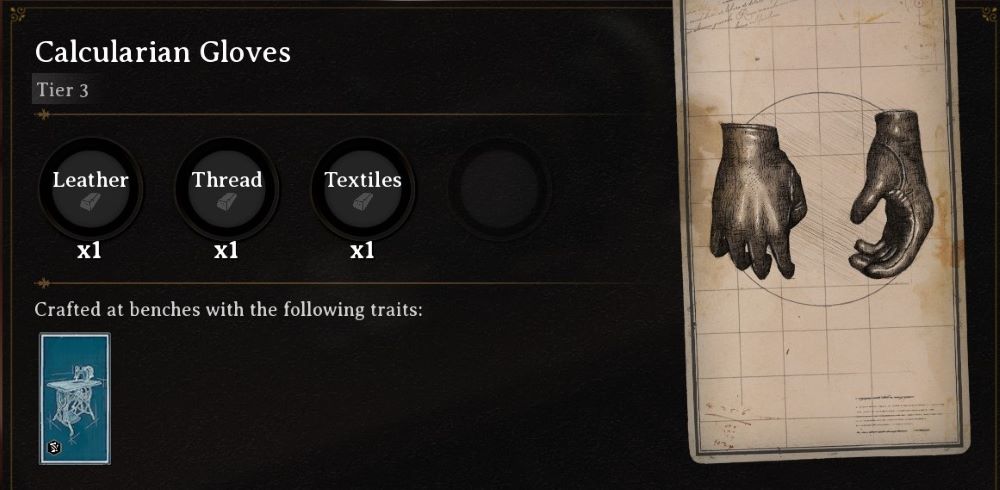
Fairly straight-forward, no? Let’s look at Leather. To make Leather, you need Hide, which comes from skinning creatures out in the world. Hide (Prey) grants +Stamina and Hide (Predator) grants +HP, which is fine, but there is also Fabled Hide that drops from bosses and special mobs that have an assortment of bonus stats. Pick one, craft the Leather, and move to the next ingredient.
…or maybe add a little more juice? As it turns out, Nightingale crafting has an additional unspoken feature in that higher-tier components can be substituted for their standard varieties. In this example, the recipe calls for Leather, but you can use Reinforced Leather for that slot. What’s that? It’s Leather x2 and a Fastener, the latter of which is crafted from Ingots. Now we can bring in some (m)ore stats. I’m a fan of Brass Ingots, as it has Melee Damage +4%, Ranged Damage +6%, and Durability +20. Craft the Fastener (Brass), combine with Leather, and we now have the first (!) ingredient ready for those gloves.
Next is Thread. What, you thought I was just going to “yada, yada, yada” this away? Thread requires Fiber x2. How complicated could that be? I’m glad you asked. There are a lot of sources of Fiber, starting with the grass you can punch in minute 1 of the game, to high-tier plant nodes, to drops from the Bound enemies. Something else that counts as Fiber is Animal Fibre (as spelled in-game). Animal Fibre comes from meat. Meat comes from skinning, but also from those Fabled beasts you slew for their Hide. So rather than cooking the meat for temporary buffs, you can instead craft it into Animal Fibre, and then into Thread for more permanent buffs. Neat.
Lastly, we have Textiles. Which is basically… most everything. I could use Reinforced Leather again for this component, but I wanted to look at other things. What I found on Tier 3 was Durable Cloth. This is made from Cloth + Lining. Cloth is Thread x2 and Lining is… Cloth + Thread x2. Talk about Threadception. Or maybe Fiberception is more accurate. To break this down, Durable Cloth is created using Cloth + Cloth + Thread, which are three opportunities to stuff in more stats. “Opportunity” is the key term here, because Lining by itself satisfies the Textile requirement, as does Cloth. The only reason to complicate it is precisely because it allows us to utilize more resources and multiply their attributes.
The best part is that, again, all of this is optional. If I wanted to fully min-max, I’d make sure that every Thread was crafted from Animal Fibre that came from Fabled Meat (e.g. bosses) that I farmed. Or I could walk outside my shack on tutorial island, skin the first deer I shot, punch some grass, and craft the Tier 3 gloves like that. The stat delta between the two would be incredibly vast, of course, but most reasonable players will probably just craft what they can using the best ingredients they happened to have squirrelled away at that moment. Or maybe they will be driven to go farming for more mats. Either way, that a win-win in the design department… provided you didn’t scare anyone away.
Anyway. Congratulations, you have just made a pair of gloves!
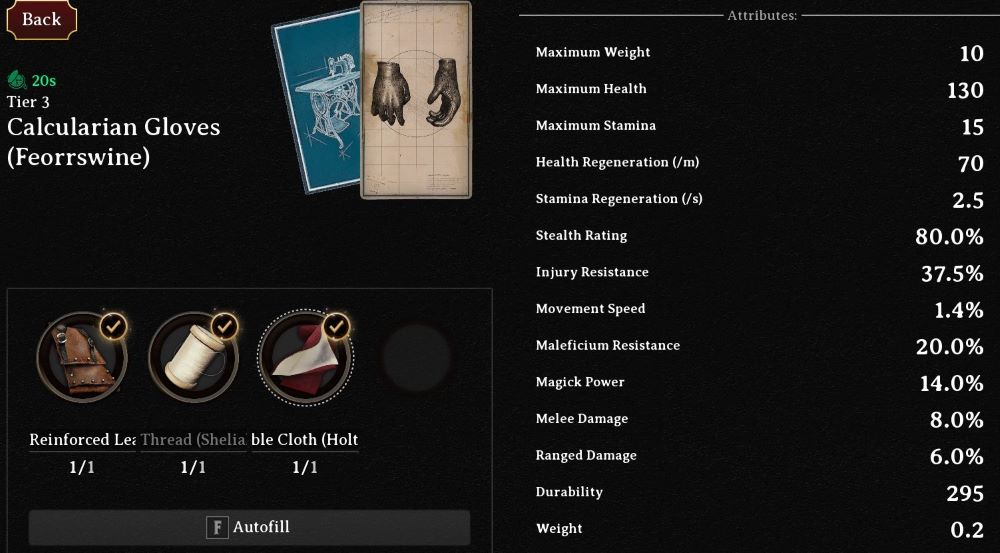
By the way… I hope you arranged the augmentation decorations to maximize your bonus attributes before crafting though. Oh, and be sure craft and apply an Infusion and appropriate Charm. Glad this was just an item of clothing and not a melee weapon, as you’d have all of that plus Enchantments.
 In An Age
Game Passed
Nov 25
Posted by Azuriel
As you know, Game Pass has been good to me over the years. I haven’t been playing as much, but it definitely still feels worth the subscription. Recently, I even started playing through the last portion of the Starcraft 2 campaign (Protoss) which I missed back in the day. Definitely looking forward to STALKER 2 as well… maybe a year from now when they work out all the bugs.
Then again, I recently logged in and saw this message:
Specifically, that message was regarding Coral Island. I enjoyed my time well enough, got decently far within the game’s narrative and just sort of trailed off. Which was strategic in a way, because the game wasn’t actually done – there was a very obviously cordoned-off Savannah biome, among other things. And here I am, a year later, and the game is leaving.
There does appear to be a convoluted method of finding and porting your save file over to the Steam version. Or, you know, just buying it from Microsoft. Either way, the value proposition in that is a bit dubious. I’ve already played for 46 hours… am I really going to pay $25+ to reach whatever “endgame” is available? On the other hand, it also feels bad losing access. Which, of course, happens all the time with Game Pass. It’s just that I haven’t actually been burned in quite this way before.
Oh well.
Posted in Commentary
1 Comment
Tags: Ain't Nobody Got Time, Coral Island, Leaving Soon, Xbox Game Pass