Category Archives: Impressions
Impressions: Slay the Spire 2
For something that only happened due to a coin flip, I’d say the folks at Mega Crit have scored another, ahem, mega crit with Slay the Spire 2. And this is with it being Early Access!
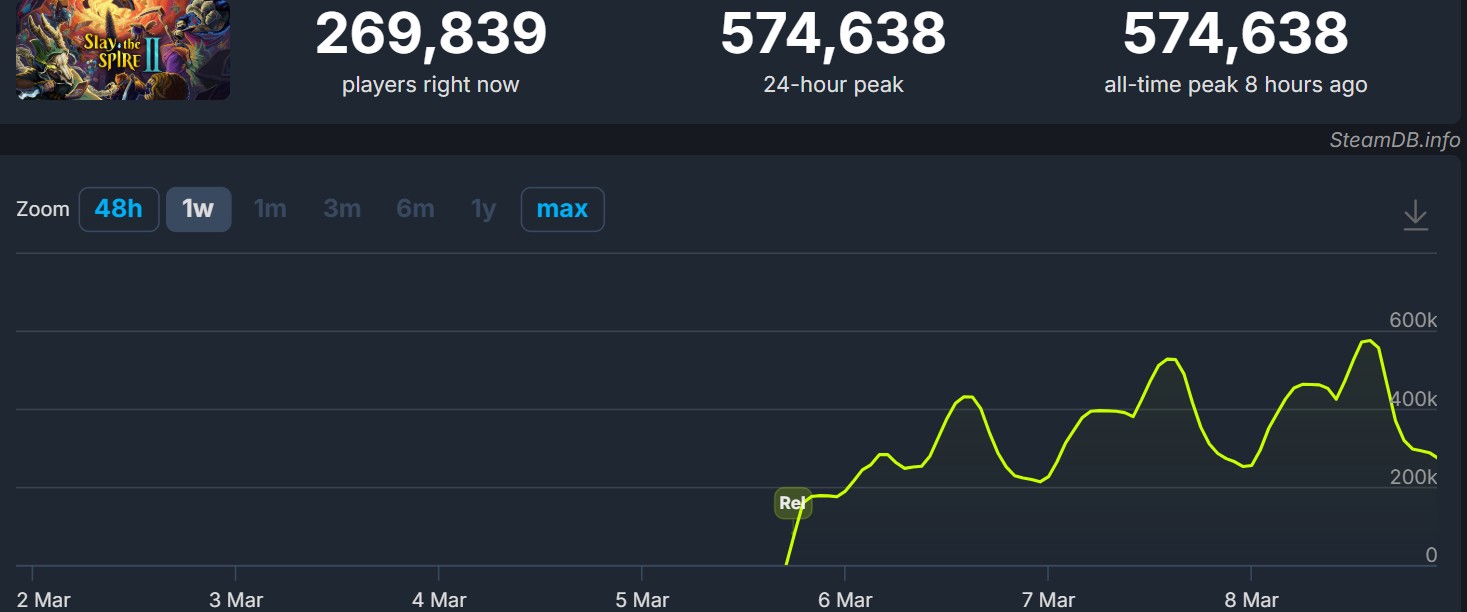
As a veteran of slain spires myself though – 235 hours in Steam, likely 4x on mobile, A20 clears on all characters – my first impressions over eight hours in the sequel has been… weird. Strange, even.
Perhaps I should say: whelmed. I am very, very whelmed.
For starters, three of the original classes have made a return, along with the majority of their original cards. On the one hand, this is good. Why mess with success, especially when the theming and power fantasies were such a hit the first time around? On the other hand, as an OG fan, a lot of the novelty is already pre-digested. There are certainly new cards, and some of the original cards have been tweaked in different ways. But things don’t quite hit the same walking into your first Silent run knowing that you’re going to see Shivs, Poison, and Discard as primary synergies.
The other off-putting things at the moment is balance. Now, this is literally the first few days of an Early Access launch, and there will likely be (bi)weekly balance passes for the next year or longer before StS2 hits 1.0. My concern at this stage though, is that things certainly feel tuned to the level of infinite and/or bomb combos. It was always fun to stumbled into good combos in the original game, but it never felt completely necessary outside of an A20 Heart run; you could still feel reasonably confident heading into most encounters with merely a pile of mostly-good cards. Here in the sequel though, the average (non-Ascension!) encounter will be ready to deal like 35 damage to you right off the bat.
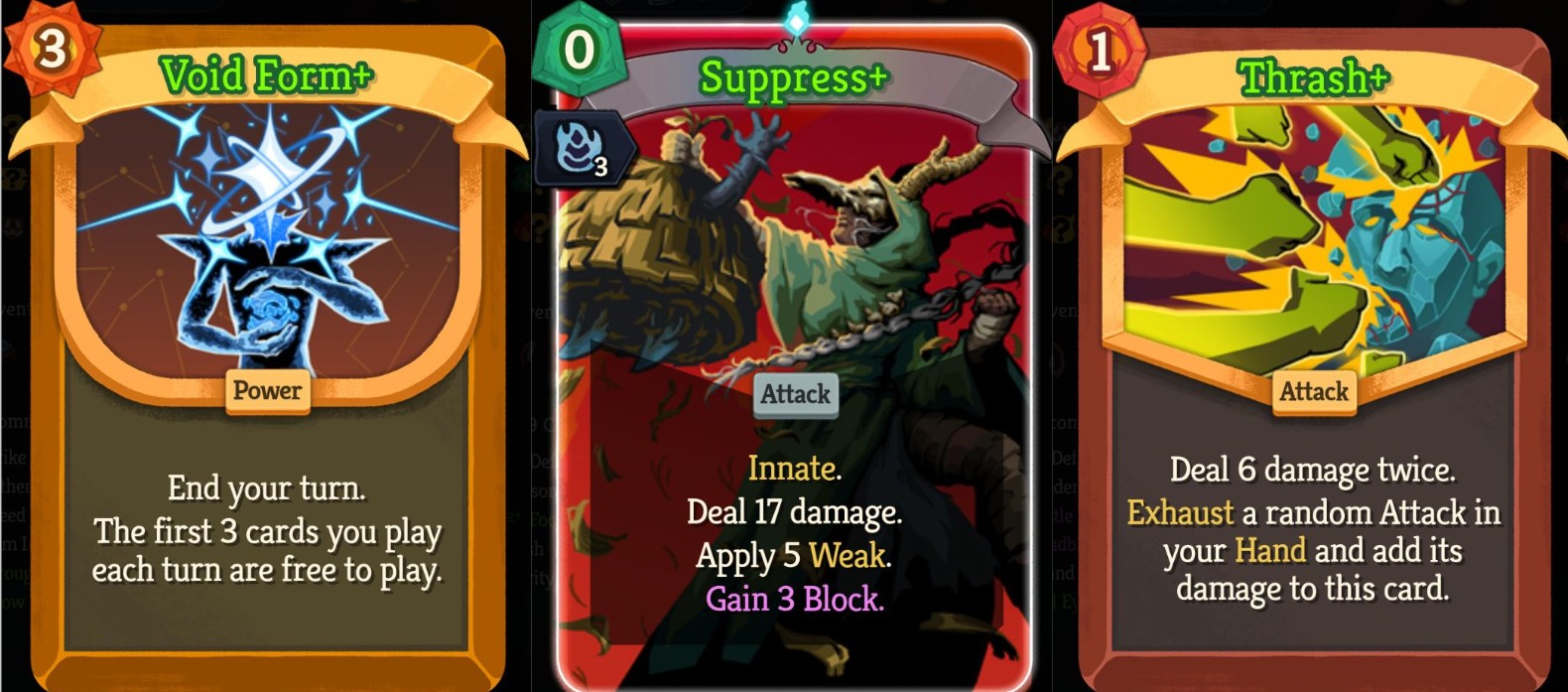
Again, we can imagine a world in which the devs tone down the overall enemy damage and player damage in tandem. But are they going to leave in the bombs? Look at Thrash+ in the picture above. By default, it will deal 6 + 6 damage, and then exhausts an Attack in hand. If that Attack was a standard Strike, not only is it doing you a favor by (temporarily) removing a bad card from your deck, the next time you draw Thrash+ you will be dealing 12 + 12 damage. Imagine instead it removed one that normally dealt 32 damage. How do you tone that down? Make Thrash deal 1 + 1 damage by default? Only add half the attack’s damage? It’s still a run-defining card.
…and maybe that’s OK? Getting the ole Corruption + Dead Branch was a (hilariously fun) run-defining combo in the original as well. All I’m saying is that I’ve scrubbed out on the first boss – and sometimes before then! – on some characters at zero Ascension by virtue of not seeing any bombs/combos. I’m just hoping that once things are tuned appropriately, the game doesn’t still feel so swingy.
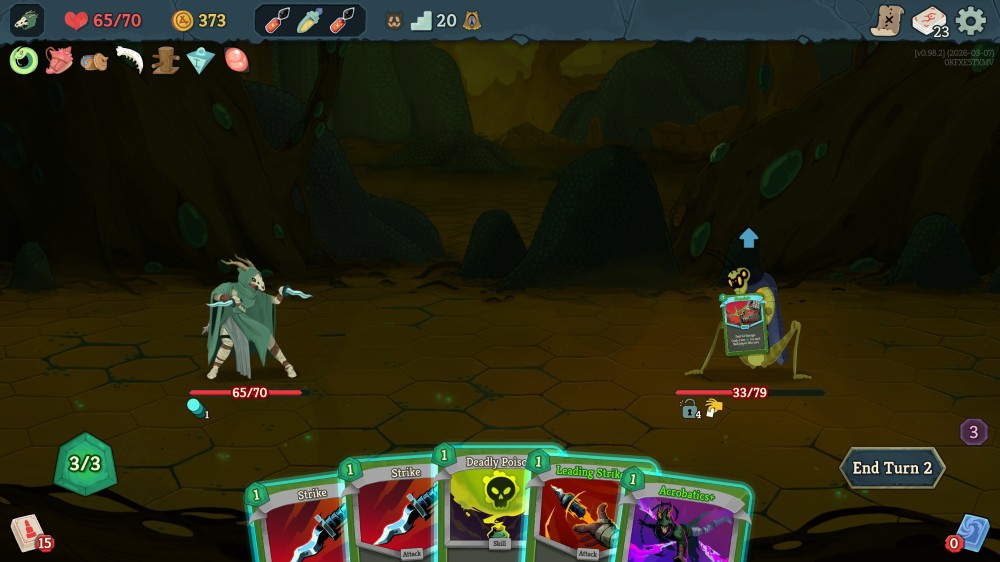
Aside from all that, the rest of the game looks very impressive. Some of the card art, in particular, is amazing. Unlocks are governed by an “Epoch” system which are basically achievements plus some worldbuilding elements. Speaking of worldbuilding… well… yeah. Less is more, and more is less. Some elements felt cool to read about (Silent taking back a piece of the Heart) and other bits kind of made the world feel less cool. I didn’t need to know the world is named Preon and is “that which tells stories,” for example. This could be placeholder text too, who knows.
Anyway, I suppose a lot has changed in the last eight years. Would Slay the Spire 2 have blown me away in 2018? Of course. Is it blowing me away right now? Ehh. I’ll do a few more runs with the characters that haven’t beaten Act 3 yet, and give the devs some more time to cook.
Impressions: Mewgenics
TL;DR: I bought Mewgenics on February 14th, and have 30 hours played after four days.
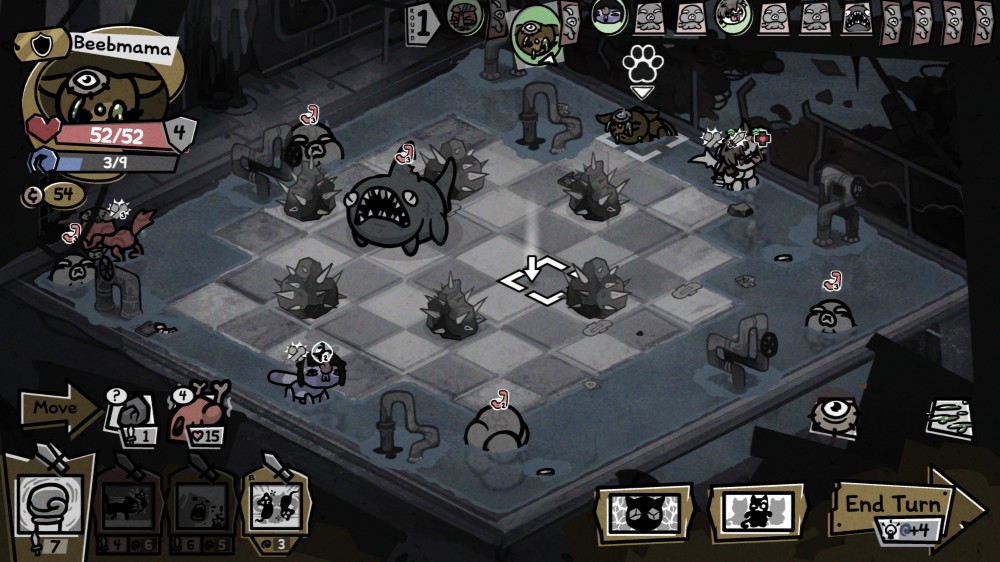
Mewgenics is a tactical roguelite and cat breeding sim from Edmund McMillen, of Binding of Isaac and Super Meat Boy fame. While it does not play like Binding of Isaac, it is absolutely the same kind of brand experience: crude humor, goofy visuals, banging soundtrack, absolutely broken skill/item combos, and a deeply compelling gameplay loop. Well… for the most part.
The game is divided in two parts: house and adventure. During the house parts, you are performing the “eugenics” part of the title. At the end of each game day, compatible cats will squirt out 1-2 kittens with some mix of the parents’ stats (and sometimes abilities/mutations), and the kittens themselves will grow into adults an additional day later. There is a lot of RNG involved in breeding into the best stats, but you can mix and match furniture to weigh the odds more in your favor. Or, honestly, you can mostly ignore it and just rely on the daily stray cats that wander onto your property.
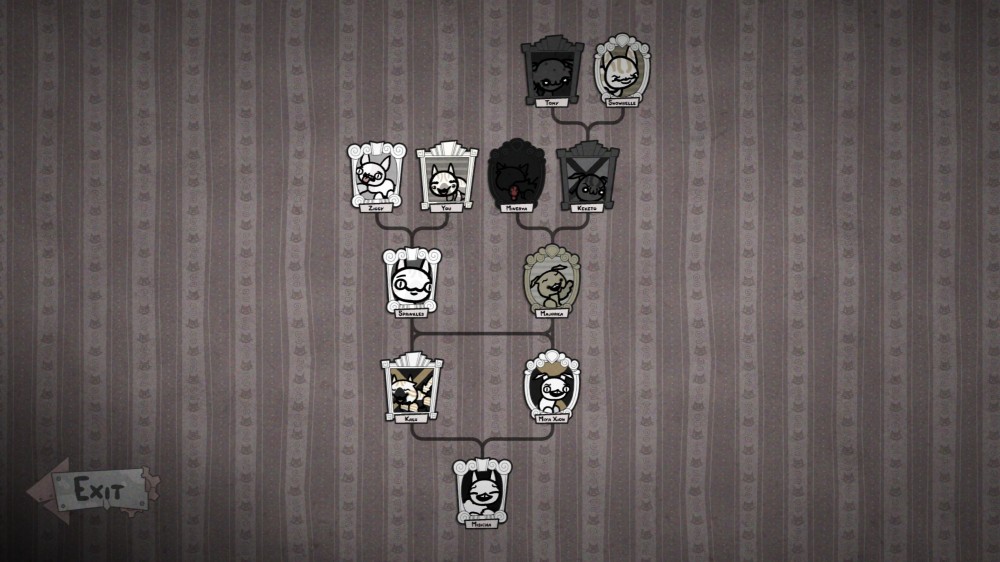
When you are ready to adventure, you place up to four cats in a box, give them a class “collar,” and then equip them with any spare items you got from prior runs. After that, you progress through a linear series of nodes that includes battles, events, treasures, mid-bosses, shops, and final bosses.
Hobbes would accurately describe Mewgenic’s combat as “nasty, brutish, and short.” Fights take place in an intimately-sized, randomized board with you generally being way outnumbered. I would classify combat as Fair* with the asterisk emphasized. There is a turn-order ribbon, right-clicking will show you have far a unit can move and subsequently attack, and abilities work as described.
However, no punches are pulled, no mistakes unpunished. There is no move rewind if you didn’t move 1 square far enough, you can absolutely waste attacks by mis-clicking on the ground, and there is built-in punishment for save-scumming battles. Additionally, there are some mechanics that work differently than you may be used to in other games. For example, Tall Grass is terrain that gives the unit a 50% evasion chance… but this also applies to friendly heals and buffs sent your way. Having a Tank character with Thorns or other “on attack” debuffs are great… until an enemy uses a knockback ability and sends your cat bumping into said Tank, dealing massive friendly fire.
It’s also worth noting that if a cat hits zero HP, it goes into a downed state and gets a permanent reduction to one of its stats. If a downed cat takes much more damage though – or gets targeted by a corpse-destroying ability – it dies permanently. While you can occasionally get a mid-run replacement, that new cat won’t have a class and starts at level 1, so it’s barely a warm body.
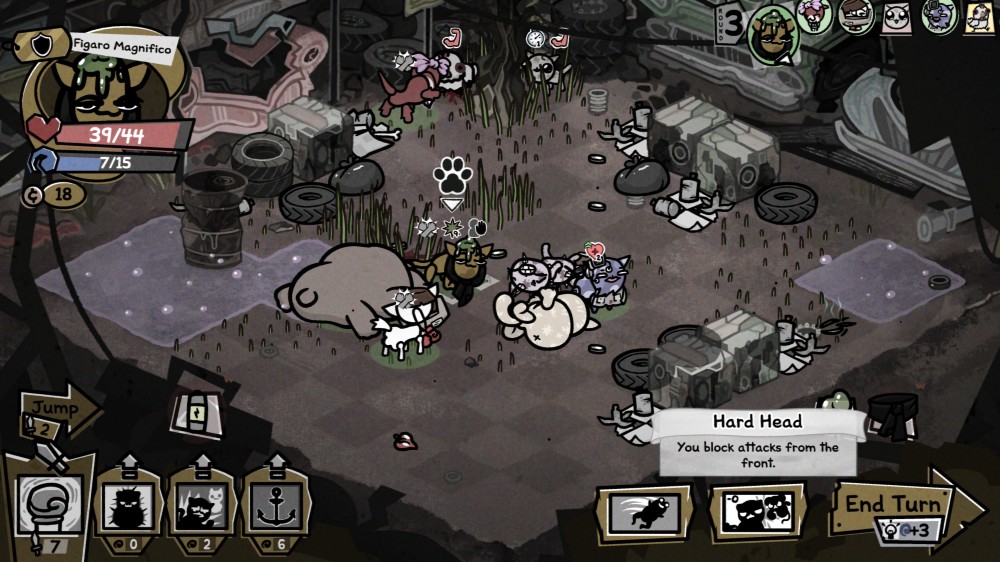
The upshot to this harsh, rules-as-written gameplay is allowing for truly broken shenanigans. Some things are RNG-dependent, such as which items drop and what starting class abilities each cat gets. That said, each level up grants a cat a choice between four options, which can sometimes lead you into interesting directions. In one run, my Tank had a cheap, stackable bodyguard-like ability that automatically caused him to swap places with any other team member that got targeted with anything (attack, spell, etc). He also had a starting ability to give himself Thorns at the cost of not moving during his turn. Not much of a problem since he could protect the team from anywhere. He later got an ability to automatically Block any attack coming from the front. Considering the Bodyguard ability always places the Tank facing the attack… yeah, suddenly my whole team was effectively immune to the first 5-6 attack of every turn.
The balance to all this comes from the fact that cats who survive adventures are “retired” when they come back to the house. They can still stick around a breed and such, but you are going to need an entirely new set of four cats to go on further adventures. Plus, you know, RNG is RNG and you may never receive that same set of skills/items again. Plus plus, the game escalates in difficulty pretty wildly by the end of Act 1, let alone the start of Act 2 where I am. Let’s just say that broken combos can go both ways, if you aren’t careful.
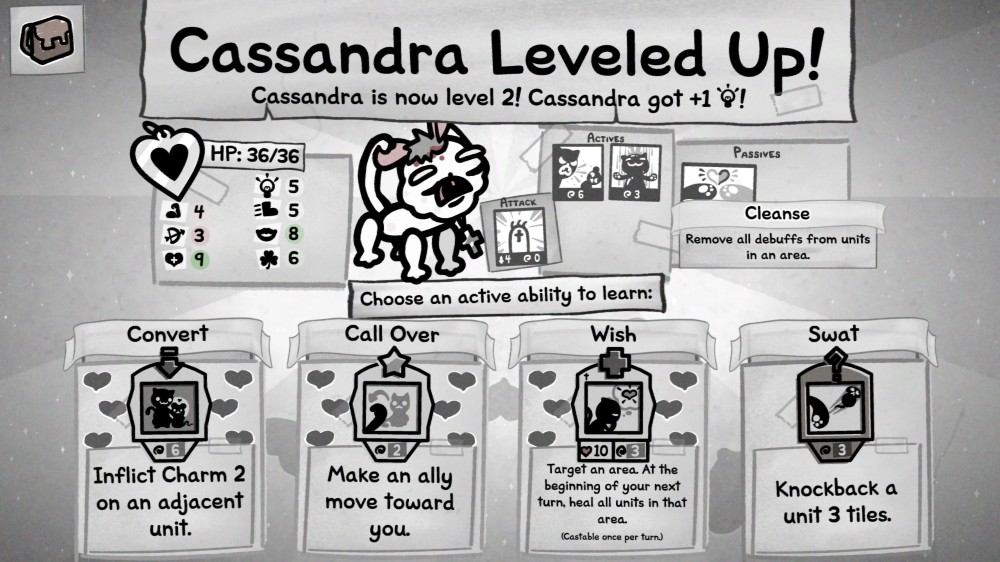
Having said all that, Mewgenics also feels kinda bad sometimes. The house portion of the game feels good, but it keeps getting interrupted by the need to go adventuring, which can often take more than an hour depending on how deep you go. Adventuring by itself usually feels good, but there’s a conflicting desire to play sub-optimally to farm more resources for the house phase rather than do what’s best to ensure success of the run itself. Then there are the house progression unlocks, which are done by “donating” cats to NPCs. One of them wants retired cats, for example, so it’s sometimes tempting to just go on a bunch of first-zone-only runs and try and brute-force the rewards. If you don’t, you’ll be making due with cramped quarters for dozens and dozens of hours.
Also, right now Events in the adventure phase feel half-baked. Random cat is selected, given a small selection of Skill checks, and it’s not entirely clear whether the outcome was due to failing or even succeeding the roll (or what the odds even were). What’s worse, sometimes the best reward is tied to a particular Skill check, not just succeeding on any of them. For example, when given a choice between Eat/Loot/Examine, you might have three different positive outcomes possible, where “positive” might be “just flavor text” or “game-breaking item.” Binding of Isaac was filled with randomness too, sure, but it somehow feels worse in Mewgenics.
So, yeah, that’s the game. If Isaac is any indication (or the 1 million already copies sold), Mewgenics will receive years of support, hopefully addressing things like the Events (etc). Plus, it’s $30 MSRP.
The era of the indie is now.
First Impressions: Clair Obscur: Expedition 33
My first play session with Clair Obscur: Expedition 33 lasted about two hours, and I got through the tutorial and far enough to see the first few real battles. And then I didn’t boot the game back up for almost three weeks.
By the end of the second session… yeah, I can start to see why this is winning all of the awards.
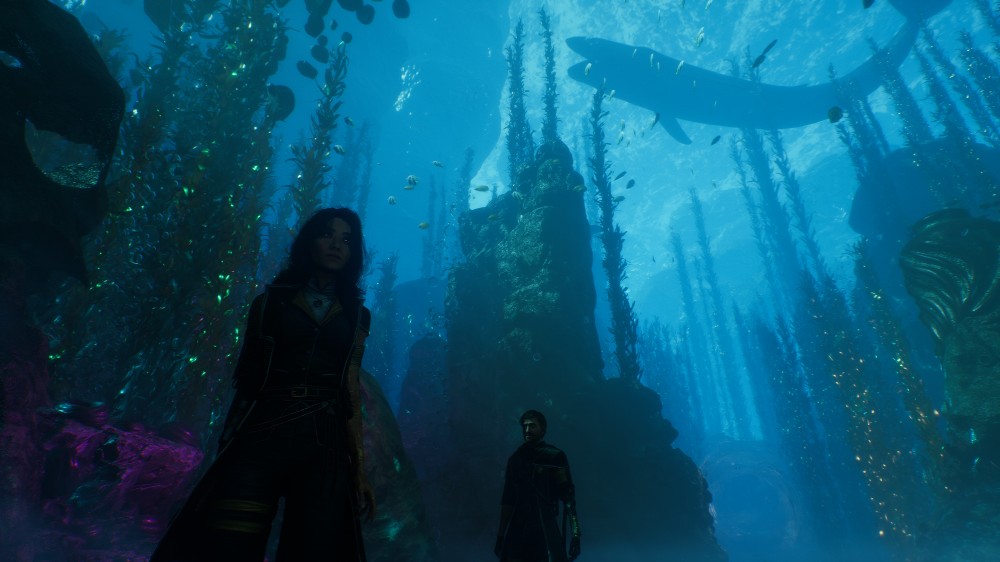
First, the game is trippy and evocative as fuck. The principle bad guy is a goliath-esque woman named The Paintress, which is apt as every environment looks like it sprung directly from some artwork in the Louvre and/or a fever dream. The protagonists live on some kind of island protected by shields or something – with the world itself seeming to have been shattered by some older cataclysm – but the Paintress controls a countdown timer that nevertheless kills everyone older than a specific number. At game start it was 34, and now it’s the eponymous 33. It seems to increment on a yearly basis, but I’m not sure if that was specified (or matters). In any case, every year a small number of adventurers next in line to be erased gets together and attempts to bring the fight to the Paintress. Enter you.
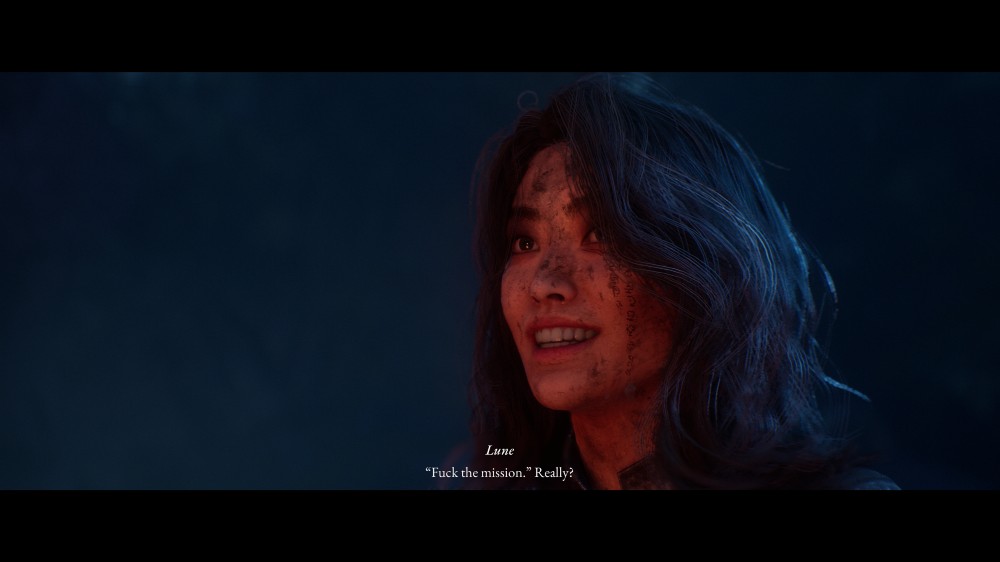
Second, I do want to highly praise the motion-capture and general dialog thus far. It’s passionate, awkward, and deeply human in ways very few other games have been able to reproduce. Nearly 14 years ago, I was blown away by Mass Effect’s wink, and here in Expedition 33 I just witnessed a character search another’s eyes to see if they truly meant what they said. You know, her face close, the silence, her eyes going back and forth with purpose, debriding the layers of your soul. I don’t know how, but they captured it. The bar has been raised again.
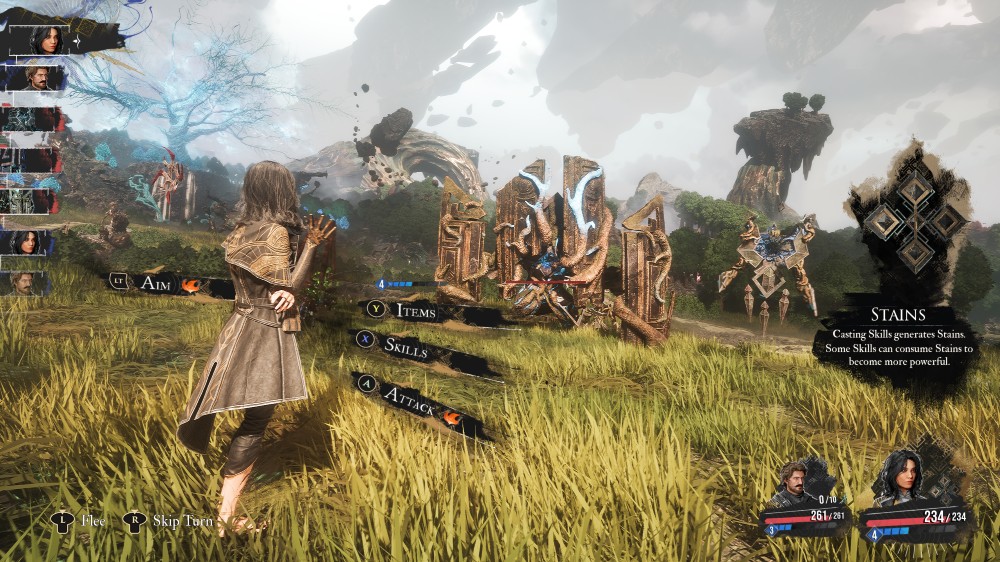
We will have to see how it works out for me over the long haul, but my first impression of Expedition 33’s combat system… is that it’s not fun. Basically, it feels like a turn-based Soulslike. Everything more complex than a basic attack will have a Quick-Time Event sequence in order to juice the skill further. On the enemy’s turn, you are essentially required to either Dodge or Parry their attacks; Dodging has a more forgiving window than Parry, but successfully Parrying every attack will allow the party member to unleash a devastating counter-attack. I say Dodging/Parrying is “required” because the amount of damage you end up taking is significant, and your ability to heal is limited and only refreshed when you arrive at checkpoint flags, e.g. campfires. And yeah, enemies respawn when you rest.
What results is a truly conflicting game thus far. I encountered some enemies in the opening areas that were clearly higher-level than my ability to meaningfully tackle. “The designers just wanted to teach me that not every enemy needs fought, and/or that I may want to revisit places once I gained more levels.” OK, great, very Soulslike of you. Buuuuut, technically, if you just Parry all their attacks, you will defeat them eventually. Which then gets you thinking about why bother putting points in Defense or Vitality, when both are irrelevant if you don’t get hit in the first place. Is that the intentional design? Stack Defense if you aren’t good at the timing, and everyone else go glass cannon?
Again, this is all very early on, so perhaps things will improve. Somehow. Or perhaps the combat system is just something you put up with for the environments, dialog, and plot. That is a very old-school RPG sentiment for 2026, but I’m going to roll with it for now.
Impressions: The Outer Worlds 2
When it comes to The Outer Worlds 2 (TOW2), when compared to the original game, there have been some marked improvements in some areas, and some continued nonsense in others. What follows are my initial impressions after about 12 hours of gameplay, still on the first planet.

One of my gripes from the first game came from what I considered stunted exploration:
Outside of combat, things are so formulaic that I don’t even know why Obsidian bothered with exploration elements at all. There are three ammo types for all guns (light, heavy, energy); there are multiple damage types (physical, corrosive, etc) but they map 1:1 in a cookie-cutter resistance way; 99% of everything you find is either currency, unnecessary food, and more copies of generic guns/armor to break down for generic parts to repair the guns you chosen to use; mods for guns/armor sound important but are again generic nonsense (your melee weapon deals plasma damage now!) that just ticks the customization 101 box. Even the Perks are boring.
I am pleased to report there are now 10 (!) ammunition types! But seriously, there is a much bigger emphasis picking up random pieces of junk to break down into useful materials and then crafting them into other items. I cannot exactly recall if the prior game already had a similar system or not beyond repairing/upgrading, but it certainly feels much better in TOW2. Additionally, there have been several unique “playing cards” sprinkled about that grant permanent buffs when picked up. Overall, it is not on the same level as Fallout whereby you shout in excitement at discovering an Aluminum can amongst a bunch of Tin ones, but it does make general exploration more worth it, with a knock-on effect of making navigating the game world more engaging. The Avowed-style vaulting certainly helps too.
Sadly, one of the things making the world considerably less engaging is the Skill/Perk system.
Not sure if this qualifies as a hot take, but I despise Skills checks in games. “It encourages roleplaying and specialization.” No, it does not. There is nothing more nakedly mechanical and abstract than a Skill check. What is the difference between Speech 3 and Speech 5, from a “roleplaying” perspective?

To me, roleplaying is all about choices you make. When you defeat the bandits, do you forgive them or do you execute them? Do you accept the quest from the shady merchant, or do you turn them in? Or do you complete the quest, keep the item, then kill the merchant yourself while pinning the death on an innocent bystander? Those are meaningful roleplaying choices. Imagine not even having the option to turn the merchant over to the authorities because you put one too many points into Lockpicking last time you leveled up.
To Obsidian’s credit, TOW2 is not entirely binary in the Skills checks thus far. A stuck door can be opened with Engineering 3 or the Brawny Trait. Special medicine can be synthesized via Medical 4 or just winging it via the Lucky Trait. Sometimes just finding incriminating evidence is enough to trigger additional dialog choices. But there are absolutely single Skill checks in quests or conversations and you either have the number, or you have the deficiency rubbed in your face. Which means if you want to roleplay “someone in an RPG who can talk to people,” you need to hyperfocus on maxing out Speech. That’s 20 points, accrued at two points per level. Since there is a level cap of 30, that means you can max out just 3 total skills (out of 12) with everything else being zero, or perhaps max two with some scattered levels in other things for flavor.
To state the obvious, this is not a fun way to play the game. “Yay, level up and… another 2 points into Speech.” Or, in actuality, just leveling up and not choosing any Skills at all because I don’t feel that I have enough information to even make a meaningful choice. Is Speech 4 good enough for this area of the game? Can I afford to raise Sneak to 2 in order to get past this skill check and break into the building in front of me? Or am I going to immediately regret it the next time an NPC starts talking to me?

This is a real scenario I encountered: exploring the map, find a befuddled man in front of a locked house. Don’t have Medical 2, so I fruitlessly exhaust the dialog choices with him. I can see items in the house through the window, but there is no way inside as none of the doors are powered. Up the road is a power sub-station that is malfunctioning, presumably the cause of the locked house. The sub-station repair kit is inside a locked building, and you need Sneak 2 or the Nimble trait to squeeze through the vent. On the roof of the building is the malfunctioning panel, which requires Engineering 3 or the Innovative trait or the repair kit mentioned earlier. If you don’t have any of those… fuck you, I guess.
So, anyway, I’m still running around with 2 loose skill points and about to level up again for a total of 4. Could I put two points in Sneak and solve the area? Sure. How many more Sneak checks will I encounter though? This was literally the first one. Conversely, Engineering has come up quite a lot, so I’m more inclined to put points there instead. But I also have to acknowledge that since I know there will be Speech 20 checks in the game, I only get one other max skill (because I put a point into Guns and Observation), and that was originally going to be Hacking and/or Lockpicking.
This is all very fun, I’m having so much fun, can you tell? So much fun I’m seriously considering deleting 10 hours of progress so I can pick different traits – why did I think Witty was going to be useful if I’m not trying to kill everyone I meet? – and bypass some of these dilemmas. Unless, of course, there will be some future dilemmas with different Skills rendering everything moot.

By the way, I understand that there are indeed real people out there who either don’t care about being locked out of content, or who appreciate the “enforced roleplaying” aspect. I want you to know that I see you… and I don’t understand you. In fact, I may actively hate you. For one thing, the “enforcement” mechanism of discrete Skill checks could have stayed inside your roleplaying mind; you can still commit to your Chaotic Neutral space pirate fantasy without Speech 10 checks sprinkled about. Just, you know, pick those dialog choices, shoot empire guards on sight, or whatever. Hell, I’m more fine with a morality bar governing choices, because at least that is based on prior actions made inside the game world rather than the UI. Where is the fun picking answers before you even get to the questions?
Ultimately, if you have designed your game such that players would rather run around with unspent Skill/Perk points lest they miss out, you have failed IMO. Either by not making them exciting enough to want to pick straight away, or by gating too much content behind them.
Other than, well, all that? The Outer Worlds 2 is pretty good thus far. Time will tell how annoying it will continue getting with Skill checks as we get further into the game. My guess is “loads more annoying.”
Impressions: Stalker 2
Stalker 2 is leaving Game Pass in a few days. Which means I should probably play a bit of it, eh?

As the picture above shows, I did not get very far. I believe there was originally a 15-day warning message about the game leaving Game Pass, and so it was technically possible for me to plow through the 50ish hours needed to complete the game. However… it just didn’t grip me. Plus, I was trying to play some other games (Outer Worlds 2) at the time, so being “forced” into playing something else didn’t exactly leave me in the best headspace.
I have not talked about them much directly, but I have played all of the original games 10+ years ago:
- Stalker: Shadow of Chernobyl (22 hours)
- Stalker: Clear Skies (5.2 hours)
- Stalker: Call of Pripyat (22.7 hours)

For those that have never played the series, Stalker is some quintessential eurojank. The premise (I think) is that after the Chernobyl nuclear disaster, the area is not just radiated, but a bunch of anomalies and mutants show up. The anomalies are extremely deadly environmental hazards that one must navigate carefully, but allow intrepid “stalkers” to claim nearby artifacts with varying powers. These are quite valuable scientific specimens, as you can imagine, leading many different factions fighting to control the best locations within the Exclusion Zone. There is also a loose plot that navigates you closer and closer towards the source of the anomalies.
One of the Stalker series’ biggest claims to fame is the “A-Life” mechanic. Essentially, A-Life was an attempt at making the Zone feel like a living, breathing world. We hear a lot about that sort of thing these days, usually with “innovations” like NPCs having a work schedule and going home at night, etc. Meanwhile, Stalker devs originally built NPCs capable of beating the game themselves back in like 2008. While things were reigned in a bit, the point is that a lot of very innovative stuff went on to make the original game world(s) feel like you were the least interesting thing in it… until you weren’t.
What does this all have to do with Stalker 2? Well, it originally launched without anything resembling A-Life. Instead, you got what every open-world game has: “dynamic” events that spawn randomly within rendering distance of you. Hearing gun shots in the distance while walking around can feel haunting; less so when it happens like clockwork. The more up-to-date articles I’m finding is saying that Stalker 2 eventually did get A-Life working, but some of the magic still feels gone.
Honestly though, that really just sort of sums it up: the magic is gone for me.

Graphics? Phenomenal. In the moment, things look a bit gritty and muddled. Then I realized that, hey, it kind of looks like I’m viewing this game through a body camera. That’s low-key crazy good.
The mutants are hit-or-miss. The dogs have insanely good AI, with all the juking and serpentine movement that causes immediate panic as you empty your magazine into the dirt and end up dying to what would otherwise be level 1 enemies in other games. Other mutants? Deadly… but rote. How nice of the invisible bloodsuckers to attack me, then run off long enough for me to use a healing injector and reload before attacking again.
My problem is that the series is just not that mechanically interesting to me anymore. Granted, maybe a whole lot of things change after hour 7, I dunno. Fundamentally though, there doesn’t seem to be a lot going on. For example, there are a lot of random abandoned houses dotting the landscape. You can go into just about every one of them. But… there’s nothing to interact with inside. While that “makes sense” from an immersion standpoint, it fails on a gameplay standpoint. Even when there are things to pick up, they’re just the same bullets, broken guns, canned meat, bandages, etc, as everywhere else. That leads you naturally to just going from map icon to map icon, collecting crap to sell to a vendor to hopefully afford something that the game is likely to just give you for free in another hour.

Seriously though, you start the game with a vest armor that provides about as much protection as, well, a regular-ass vest would. Then you talk with an NPC that can upgrade your vest with like chainmail for cash. Not two missions later though, you pick up a way better armor right at the start to an area, and then find an even better piece 30 minutes later. Gotta love these designer gotcha moments, right? Or hate them with an undying passion.
Meanwhile, the whole time I was playing, I was trying to remember what even happened in the first games. I thought I remembered there being a cool twist/choice at the end, then I realized I was thinking of Metro 2033’s ending instead. And by the way, Metro actually rewarded exploration because those extra bullets you found doubled as currency. To say nothing about Fallout 3, which came out at a similar time; even when not finding those little post-apoc vignettes, you were always looking for additional aluminum cans or duct tape.
Some of these criticism are, in a sense, unfair. Presuming that the A-Life situation is actually resolved, I would say that Stalker 2 is definitely a Stalker game. If you played the others, you’ll probably like it. There are some little things that add to the charm, like seeing a group of stalkers coming in an sitting around a campfire while someone plays the guitar. Or how after a firefight, the survivors actually loot the bodies of their comrades, just like you were about it. The first time that happened, I was like “Hey!” And then I was like, “fair play.”
So, if you’re in for a bleak, immersive mil-sim with some mutants and anomalies for flavor, then yeah. Stalker 2. (Un)Fortunately, I’ve been spoiled by Metro and Fallout in the intervening years, and it turns out I like what they bring more than what this series does. It’s a time and a place that’s passed for me.
Un-Necesse-ary
Necesse recently graduated from Early Access to full 1.0 release. I had played it previously for almost 10 hours, so I wanted to give it another go to see what had improved. As it turns out… not much.

I’ve heard the game described as “top-down Terraria meets RimWorld,” but that is criminally misleading. Yes, it is a top-down, open-world survival crafting game with RimWorld-esque colony management functions. But what it’s actually more like is a lower-budget Keplerth. Now, in my Impressions of that game I called it a knockoff Necesse, so there’s some circular referencing going on.
The point is to not go into Necesse thinking you are going to get the same tight, engaging gameplay loops of Terraria or… like anything at all related to RimWorld’s subtle genius. The NPCs you recruit to your village can be assigned tasks like chopping wood or shearing sheep, but they have zero personality, relevant moods, or any necessary functionality at all. Hell, most of the crafting you can do is itself pointless in comparison to random drops.
OK, let’s back up. What’s Necesse and its gameplay loop?

In Necesse, there is a large overworld with various creatures and hazards and biomes to explore. Additionally, there is an underground “layer” full of much more dangerous monsters and random loot. The loose goal is for you to summon bosses using specific item drops, defeat them, and use the resulting drops to unlock the next tier of progression. As you might expect with the top-down perspective, most of the bosses are bullet-hell style affairs with multiple phases.
There is crafting in Necesse, but it feels largely perfunctory and unsatisfactory. Yes, you can collect wood to make a Wood Sword, smelt copper into copper ingots to make a Copper Sword, and so on. You can also just buy weapons from NPCs too, skipping multiple tiers in the process. Indeed, the underground portions of the game feature loads of enemies that have a chance of dropping gear that vastly outstrips anything you could reasonably craft. So, rather than feeling like you are earning your way through escalating challenges, most of the time you are better off just running around under-geared until you very suddenly are not.

There is technically hunger in Necesse, but it is the sort of half-baked nonsense that is unfortunately typical in this space. Are there dozens of food recipes? Yes. Are any of them necessary at all? No. More complicated dishes can grant you larger bonuses to damage (etc) and you can even automate some of the cooking via the NPCs you recruit to your base. But… why? Just eat a bunch of coconuts or berries or whatever else is nearby. Perhaps this sort of thing becomes more required on higher difficulties. It all just feels rote, like designers going through the same motions just because “everyone” builds games this way. It’s 2025, guys: if food isn’t going to be super-scarce resource, then it needs to have a more integrated game function (increasing HP, etc) ala Valheim or similar. Otherwise, just leave it out.
To an extent, it’s a bit unfair to be too harsh on Necesse considering it was largely developed by one dude. Counter-point: Stardew Valley. Also: maybe it’s worth bringing on more people to make the game more engaging? There was a graphics overhaul at one point, which certainly improved things, but the UI itself is still hot garbage. Could they make the icons even tinier? [Fake Edit:] Just found the option for UI scale, but it still looks bad even when scaled up.
Anyway, that’s Necesse.
Impressions: all the Switch Stuff
We have successfully returned from vacation near a beach. One element of which included the introduction of the Switch (and games) to my kiddo. Impressions:
Nintendo Switch itself
I think there was technically a way to hook up a Switch to a TV and not need the dock, but I decided to bring the dock as well. I was extremely wary of the dock snapping in half somewhere – given its U shape – but it’s either stronger than it looks or I’m luckier than I look. Packing it in my carry-on instead of a checked bag probably helped. Everything else was in a travel case that held up beautifully.
And not to belabor the point much, but the Switch was very portable; I doubt anyone is packing a PS5 into a carry-on or whatever for a one-week trip. The last time I felt comfortable traveling with a “regular” game console somewhere was in the GameCube era, when I’d bring that to-and-fro over college breaks. If there was an appropriate use case, this was it.
For all the games we played, we exclusively used the… half controller (?) configuration. Pretty awkward controller for me, but it was OK for the types of games we were playing.
Mario Kart 8
Started out with Mario Kart to try and leave a good impression with a game that had a lot of replay value. Kid was ready to give it up after a couple circuits.
Near as I can tell, there are two degrees of Assist Mode when it comes to Mario Kart 8. The first appears to be a generalized “automatically stay on the track.” You can still fly off if struck by something while airborne, but I believe the game otherwise keeps you from getting turned around or going out of bounds. The second level of assist is acceleration. For sure, I had this turned off for myself, even though I’m not certain how. My son, meanwhile, was otherwise able to leisurely putter around with only minor course (mis)corrections when the mood struck him. I had heard from a friend that Assist Mode is sometimes able to win races all by itself, but I did not at all see that in the 50cc difficulty.
My own impressions of the game “for real” will have to wait for a later opportunity.
Super Mario Bros Wonder
This was the first real hit with the child.
The way two-player works is its own sort of Assist Mode. One player has the “crown” and the camera follows them, pushing the other(s) along if they go off-screen. If someone falls down a pit or hits an enemy, they return as a floating ghost with a 5-second timer. Connect with an alive player in time and they will respawn with no loss of lives. Additionally, if someone is controlling Yoshi or a rabbit-looking dude, they become immune to dying by enemies… but cannot transform with power-ups.
Overall, what I have come to realize is that platformers are, you know, kinda hard for kids. Somehow we all made it through back in the day, sure, but god damn. Hate to even think about what our parents had to go through listening to us die in the original Mario Bros. Maybe that’s why they beat us with belts and/or shut us outside until after dark?
Super Mario Bros Odyssey
Odyssey is what we played after Wonder, and is the clear favorite currently.
The Assist Mode for Odyssey is that there are blue arrows showing where the player should go next, and I think that the penalty for falling into a pit is more relaxed (just 1 less heart vs… something else). Additionally, the second player gets to control the hat, which can be pretty cool.
Unfortunately, the platforming is not especially designed for a 6-year old here either, so there are some sequences when he wanted me to take over. Even being the hat was tricky, as you have to contend with having your perspective change if Mario moves around. Plus, sometimes you have to use the hat right now to prevent damage or make the boss vulnerable, or whatever. It’s a big responsibility.
We’re getting pretty close to “Bowser Wowser” as he’s been christened though, and my guy is having more fun watching than playing sometimes. We’ll see how things shake out in a couple weeks/months.
Super Smash Bros Ultimate
Didn’t actually get around to this one, despite my asking him several times if he wanted to try a different game. My guess is that he could still have fun on a team with daddy against whatever the equivalent of a bunch of Level 1 CPU Jigglypuffs there are in this one. Probably still Jigglypuffs.
Game Passes: Blue Prince, Atomfall
These are games I played recently on Game Pass that are, well, passes for me.
Blue Prince
I had seen Blue Prince be praised a bunch recently, but I’m apparently not smart enough to enjoy it.

The premise of Blue Prince is that a young boy has to navigate a magic estate that moves rooms around every day, and discover the mysterious “46th” room. You start with 50 steps, which is how many rooms you can enter within a day, and when you reach a door, you get to pick one of three random blueprints for what kind of room is on the other side. The blueprints themselves come from a deck of sorts, so there is an element of strategy involved as the unchosen blueprints go back into the “deck.” You keep going until you run out of steps or, infinitely more likely, you end up getting dead-ended with your choices and/or the doors start getting randomly locked and you didn’t RNG your way into enough keys.
And that is kind of where things fell off the rails for me. I don’t like puzzle games generally, but I have played and enjoyed ones like Braid, The Talos Principal and… uh… does Portal 1/2 count? In the case of Blue Prince, the actual playing bits aren’t fun. Go to door, pick 1 of 3 options, possibly collect items, go to next door. I have encountered some “chests” that require other items to open, but near as I can tell, the required items are RNG-based as to whether they will show up in a given day. There was one run when I alllllllmost got to the Antechamber but then every door was locked/gated by a currency I ran out of and… it honestly felt like those bad roguelites where they make it impossible to win until you grind some progression. Although I guess there’s an achievement for winning on Day 1? ¯_(ツ)_/¯
Whatever. The bank can have the house.
Atomfall
British Fallout!
…except not at all.
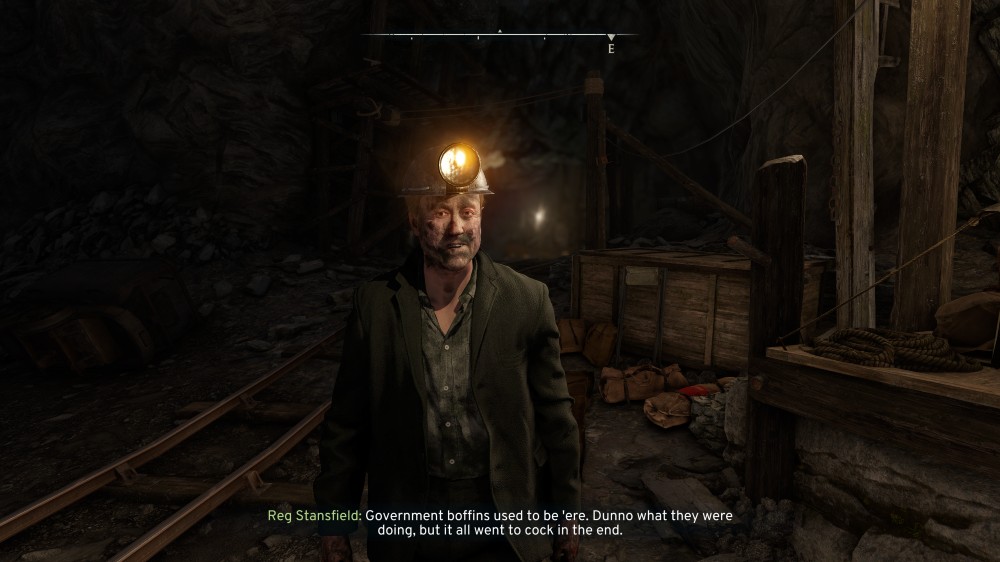
To be fair, they never said British Fallout, even though that is what everyone wanted. Instead, you have a first-person pseudo-mystery game in which you accidentally solve all the mysteries by just playing the game like a Fallout. Except the hoarding part, because you have an extremely limited inventory, no means of crafting anything until you purchase schematics, and no currency to purchase schematics, only what you can trade with what you’ve managed to stuff in your limited inventory.
Honestly, exploring every derelict house and having to continuously pass up on yet more Scraps or Cloth because I had the maximum amount already is what killed this game for me. Can’t stash the extra bits, can’t sell them for currency, can’t (yet) craft them into useful items, so… what? Should I just ignore all the exploration and make a beeline to the quest objective? I understand 2.5 hours might not be long enough for any plot to materialize, but if the gameplay or setting or characters can’t bridge the gap until it does, then you’ve got a pretty piss-poor design, IMO. And certainly not worth 71.6 GB of space.
Impressions: Len’s Island
I try to keep tabs on every survival game that comes out as, despite first appearances, there ain’t actually that many. So, when I got notice several weeks ago that not only has Len’s Island came out of Early Access but was also free to play over the weekend, I quickly jumped aboard.
Unfortunately, after playing about 6 hours or so, the game is a bust.
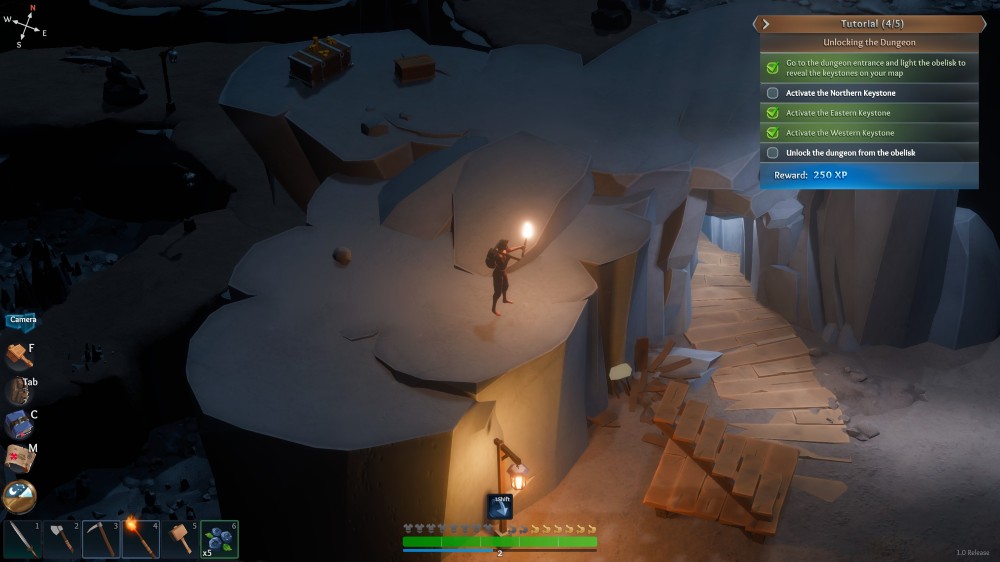
The problem with Len’s Island is that it feels like an A game. As in, one less A than AA. Maybe BB would work better? This is the game’s own description on Steam:
An open-world survival crafting game for 1–8 players, blending intense dungeon crawling and ARPG combat with peaceful farming and creative building. Take on quests and explore a vast, procedurally-generated world full of danger and discovery.
Yeah, no, almost all of that is misleading as fuck. Imagine my surprise when I figured out that in this “open-world survival crafting game” you… can’t actually craft armor. Armor drops from the end chest in dungeons, but not in an ARPG, Diablo-ish way either – it’s a singular, set piece. The only other way to get armor is to purchase some from vendors, who also tie into your general tech/decoration progression. There are like four weapons in the game and you just upgrade them with identical sets of resources for each tier. Quests do exist, but they are achievement/milestone style quests rather than any kind of coherent narrative. Perhaps things get spicy later on, I dunno, but I very much doubt it.
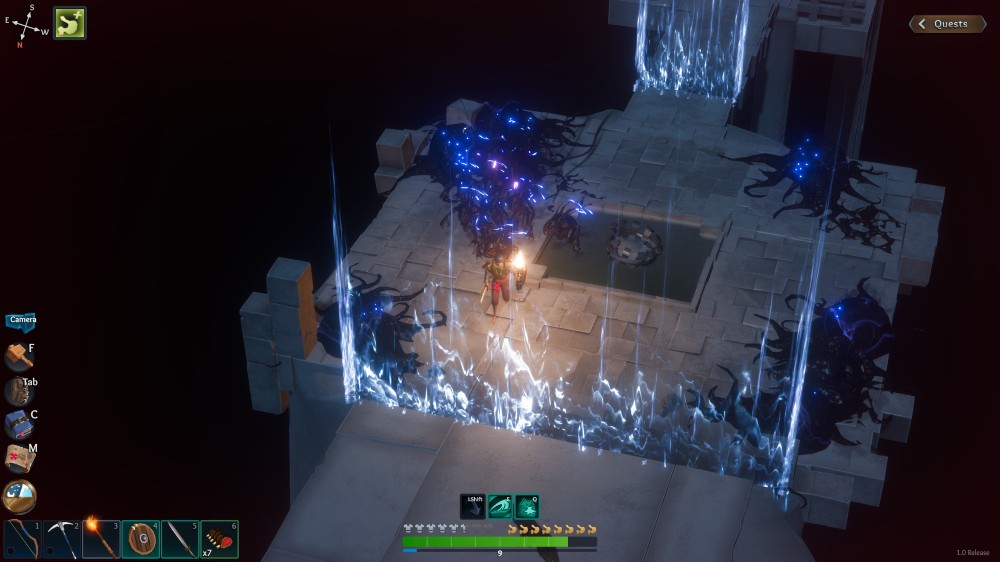
I’m not really sure there is much else to say. The general gameplay is not fun, the survival elements are nonexistent, and crafting itself is perfunctory. I haven’t been this disappointed since Farworld Pioneers.
More Impressions: FF7 Rebirth
I am still plugging away at Rebirth. Don’t worry, no story spoilers here.
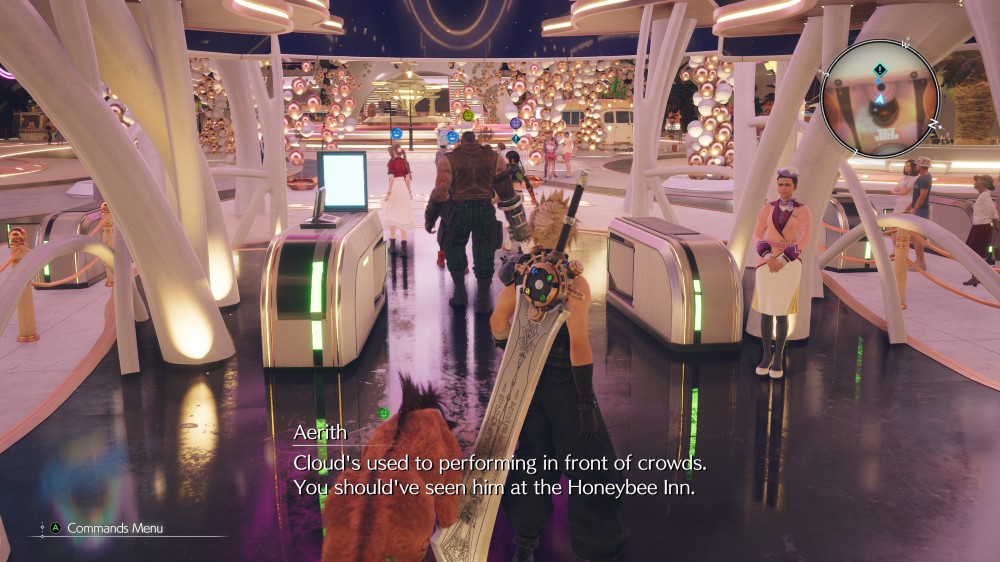
What I did want to talk about (again) is just how baffling the game systems are. There are some things that are just awkward and annoying, but true to the original, like having to meticulously move Materia around every time your party is forced to change. Mercifully, the devs do allow you to equip Materia into a slot from someone else, eliminating some of the tedium.
But then there is all the new stuff. Which exists for… some reason, to the detriment of the game.
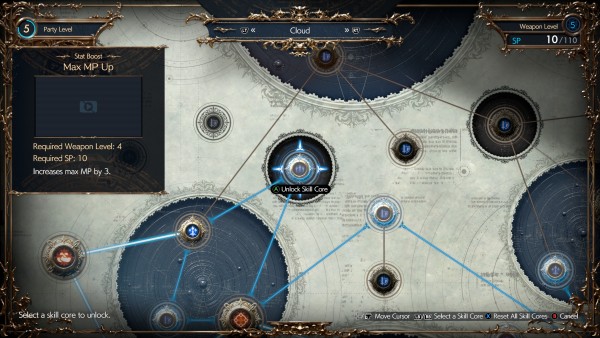
Weapons have Weapon Skill slots, which act like Materia (e.g. slot them), but I honestly have no clue where they come from. Maybe I missed the tutorial for that part and they automatically unlock? Anyway, they are pretty minor and largely inconsequential fiddly bits you have to mess with on occasion. Then you have the Folios, which reminds me of the Sphere Grid from Final Fantasy X. Or would if any choices there mattered either. Yes, the Folios are where you unlock Synergy Abilities and special magic attacks that don’t require MP. But along the way you have to spent points on things like “increase MP by 3” and “increase whatever by 5%.” Filler by itself is not always bad, but this is just one of a myriad of new systems introduced, again, for what reason?
And by the way, what Rebirth has done with spellcasting makes me wonder why they bothered with it at all. One of the issues of the first game (Remake) is wandering into a boss fight that hinges on you exploiting an elemental weakness that none of your team has equipped. With the Folios, all characters can unlock specific abilities that allow them to cast most elements without needing the Materia or even MP. That’s cool. However, the introduction of Synergy Abilities – which require two characters to perform ~3 ATB actions apiece – places a huge emphasis on executing actions that “count” towards them. What doesn’t count? Spells and those abilities that cast spells. Which… why not? Seriously. Combined with characters that have elemental-based ATB attacks like Cloud’s Firebrand, the whole spell system feels de-emphasized.
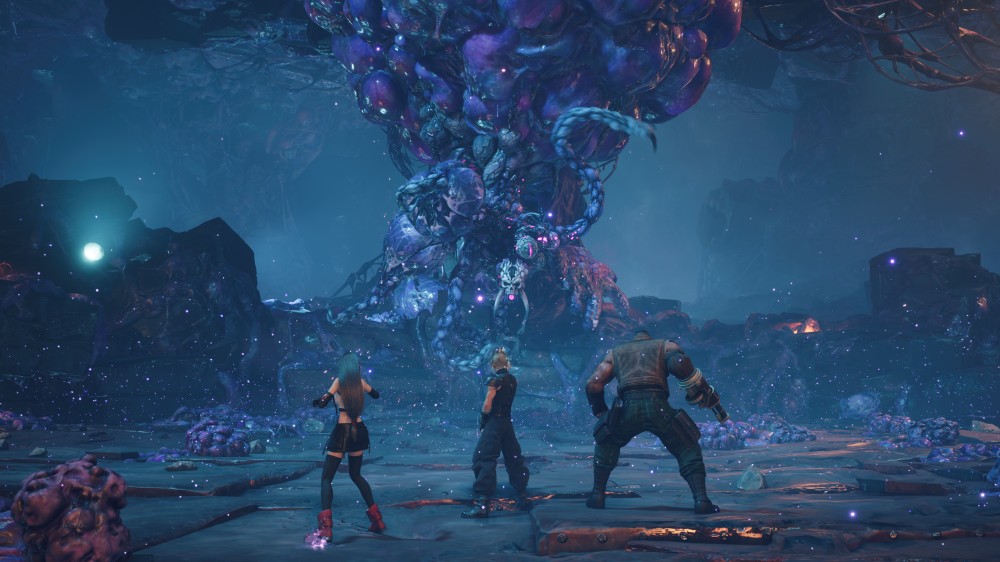
The other element (har har) that is becoming more annoying to me over time is the disparity between the characters themselves. Specifically, Tifa and Red XIII versus Yuffie. Both Tifa and Red XIII are melee-only characters that end up facing what feels like 80% flying enemies thus far. Not only can they not hit these flying mobs to gain ATB, many of their abilities won’t hit either. Enter Yuffie: primarily a melee character, that can also throw her Shuriken at distant/flying foes as a secondary attack. If it hits, a second tap of the button will teleport her to the Shuriken and allow her to start melee attacking the target, even in mid-air. Alternatively, if you start hitting the regular attack button, Yuffie will start attacking with her elemental ninjitsu, which is an instantaneous ranged attack. Did I mention she can change the element of the ninjitsu to target weaknesses?
I will concede that perhaps the devs feel a bit boxed in here. Tifa has the same attacks she did in the first game, as does Yuffie… who was released as a solo DLC character, and thus needed to have a broad spectrum of attacks to make up for it. At the same time, with all the craziness of Remake, I don’t think anyone would bat an eye at Tifa/Red having some way of engaging flying foes. Whatever the case, the end result is that while I want my party to be Cloud, Tifa, and Aerith, the classical trio is way outclassed by Cloud, Yuffie, and Barret. Sure, I could just do what I want and just take the OG crew, but that will make the enormously boring fights take even longer.
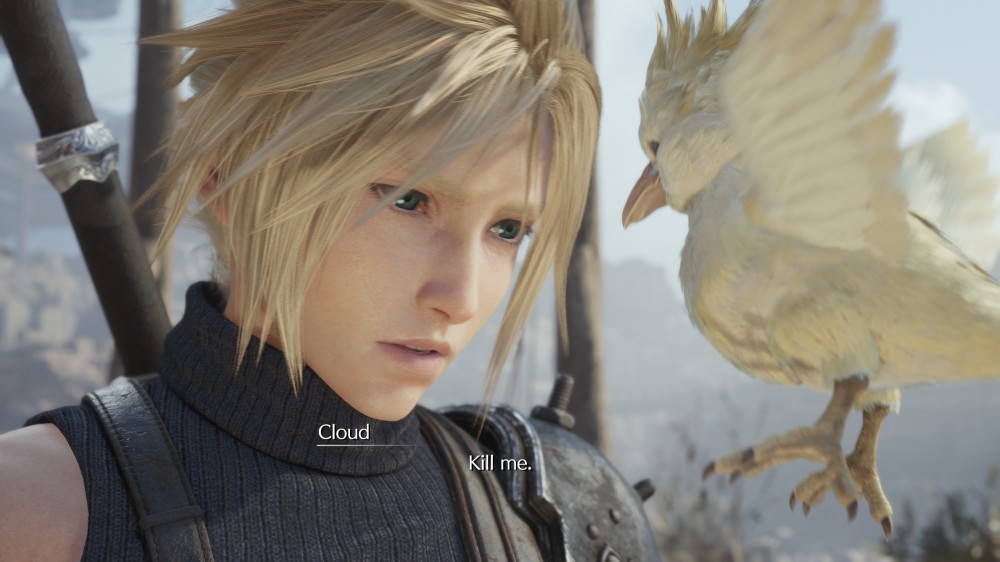
There are two final things I wanted to talk about, that are possibly only “me” problems. I’m very important, of course, so these are major issues. Those issues are Pacing and Tone.
From a Pacing perspective, Rebirth effectively has none. What typically happens is that you get to a new area, have a few Main Story Quests (MSQ), and then the next stage is far away into a blank map. Some of the time it is possible to make a direct approach and ignore the 20+ map icons and side quests and towers and collectibles and so on and so forth. There was even a time when the MSQ was almost directly in sight and you had to go out of your way to leave the area to hit up all the extraneous stuff. Other times you do have to unlock a certain amount of things and/or need to hit certain level milestones to not be stomped by the next boss. Regardless, I’m not a completionist or an achievement hunter, but I do actually care about extracting every drop of interaction I can from these characters that occupied so much of my youth, so I end up finishing everything I can stand.
Unfortunately, the end result is that I spend 2-3 play sessions doing busywork with this awful combat system and just can’t bring myself to push further into the story until I mentally recharge.
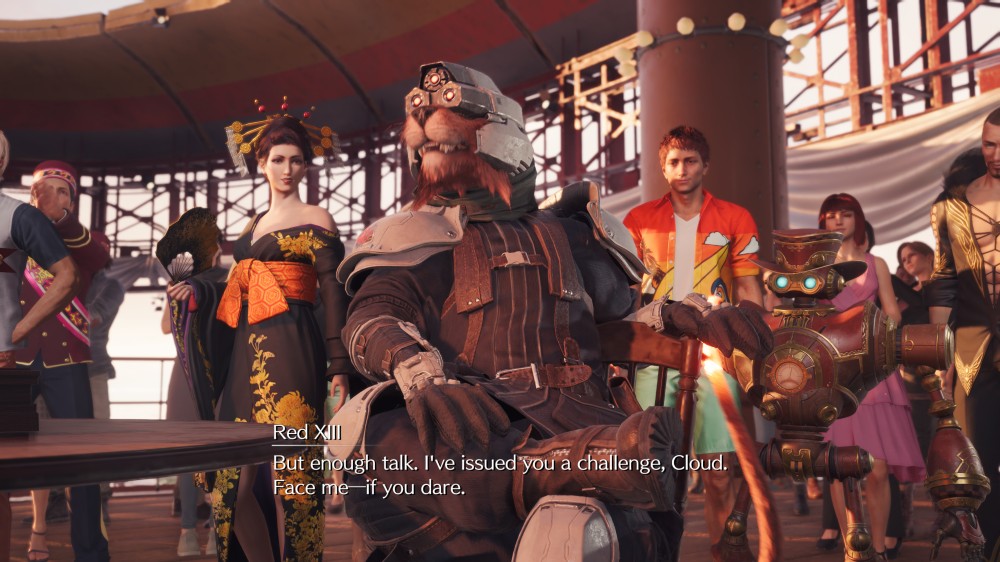
Double-unfortunately for me, the Tone for this game is all over the place. The original FF7 had extremely weird sections and comic relief at regular intervals, of course – the entire Wall Market sequence, for example. But I feel like the devs decided that every air pocket created from stretching the game into a trilogy needed to filled with nonsense. And not just a little nonsense, but ridiculous nonsense. Which again, fine, comic relief is a thing. However, the game isn’t that heavy to justify this amount of relief. Indeed, it’s hard to take much of anything seriously based on the in-game presentation. For example, there is a section in which Shrina soldiers are gunned down and everyone is somber and clutching pearls. Fast-forward past a bunch of filler quests (god, I wish I could have), you face off against a bunch of Shrina soldiers… that you gun down. What.
If it sounds like I’m not having a good time, you would be correct. I am currently sitting at 46 hours and sort of wish things had ended 30 hours ago. In the interest of plowing ahead, I have started to actually ignore the more Ubisoft-styled busywork, but it’s still tough.
This game is not the follow-up to Remake I was hoping for.
 In An Age