Evil Genius of F2P
Saw this last week:
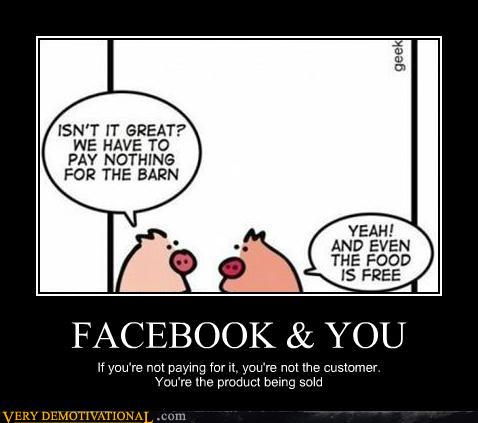
Unfortunately, Tobold actually already linked to this Demotivational poster before I could finish this post, thereby costing me street cred.
It is a fairly common statistic (if unofficial) that less than 10% of F2P gamers actually ever spend money in the cash shop. Most of the resulting commentary has focused on how this ~10% subsidizes the other 90%. This is not actually the case. The evil genius of F2P games is how the non-paying gamers subsidize the paying ones by simply being there. If you are playing LotRO “for free,” what you are actually doing is giving paying customers a reason to actually pay money.
Think about it. If 90% of F2P gamers don’t pay, then the game would presumably have only a tenth as many players if it were not F2P. Hell, the entire point of LotRO going F2P was how they would have shut down the servers otherwise. It did not matter that there were already paying customers; the problem was there was not enough paying customers. When the F2P switch is flipped, you suddenly get a huge influx of “freeloaders” who have a very compelling reason to buy items that make them stand out from each other. Meanwhile the already paying customers are happy because now they have the ability to keep paying for a game they enjoy, and a whole bunch of new people to do it with.
Facebook and Google aren’t doing you a favor by providing “free” social media services. As the Demotivational mentions, you are a product – in this case private demographic information, music tastes, favorite shows, etc, all freely updated by you on your own time – to be sold. You may “get” some bit of value out of these services (else you presumably would not use them) but Facebook/Google/F2P MMO developers are obviously getting a lot more from the bargain. F2P and social media is honestly the biggest marketing coup since fashion apparal designers realized that people would actually give them money for the privledge of wearing advertisements, e.g. shirts with the company logo on them.
Humble Bundle
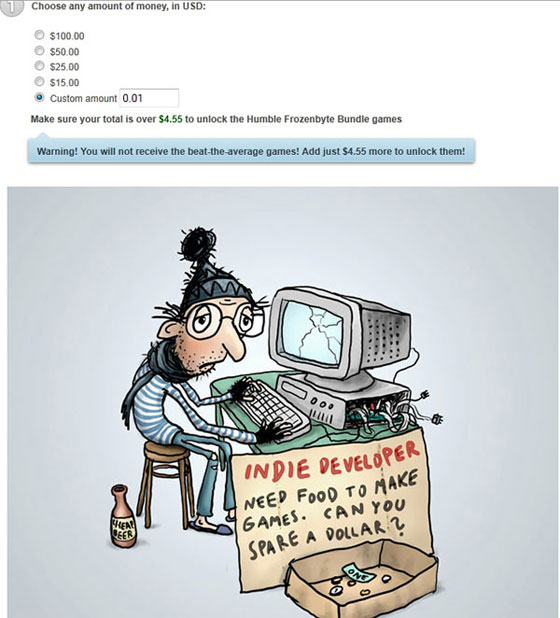
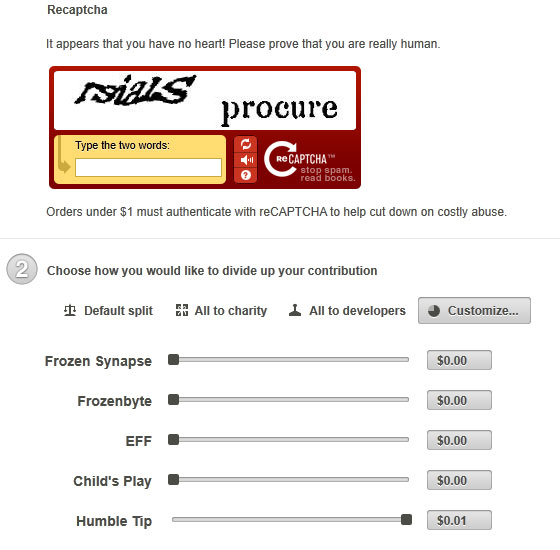
Somewhat inspired by this post over at Life is a Mind Bending Puzzle I decided to go ahead and check out the Humble Bundle for myself. These are real screenshots:

At this point, I feel a little guilty. So:
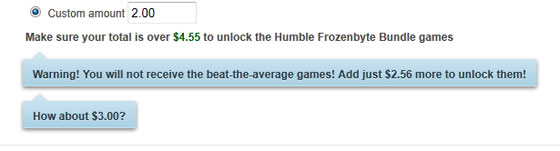
Fine.
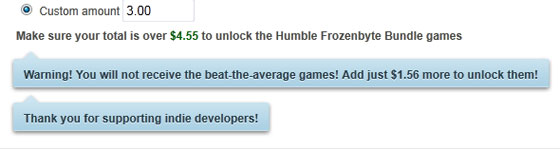

Some notes:
- As mpb mentioned, the entire interface is incredibly slick. These guys should be in the Internet Checkout Design business, because damn near everyone else is stuck in the goddamn Medieval Age when it comes to making it difficult to give them money.
- Also as mentioned, I felt incredibly guilty for entering $0.01 even though I was legitimately interested in testing out if they would allow it. The picture was amusing, but I was more affected by the throwaway “It appears you have no heart! Please prove you really are human” captcha line. Clever, Humble Bumble, clever indeed.
- The very fact that you had to enter at least $0.01 with your credit card information is intriguing to me, psychologically. These Humble Bundles would probably not work as well if they were legitimately free, as in not having to enter any information at all. Once you have mentally committed to purchasing something and entering in you credit card info, the actually dollar amount is a fairly trivial concern. This is the reason I believe not many MMO companies have bothered trying out $13/month or $8/month or “non-standard” monthly fee amounts – even though supply/demand economic theory dictates that going from $15/month –> $12/month should bring in X amount of new subscribers, you aren’t likely to capture a lot of new players in practice. Plus, if you charge less than $15/month, then you project the fact that your game isn’t worth a “normal” subscription amount to customers.
- The above makes me curious as what would happen to a FP2 game if it suddenly required a one-time $0.01 payment of their customers to continue playing. That obviously contradicts the “FP2” part, but it would also prove that perhaps the appeal of F2P isn’t the price-point, but rather the lack of a need to enter credit card information.
What Have They Done to Me?
I have a lot of positive feelings towards Blizzard’s 4.3 patch, primarily because of Transmogification. But… why? It has been 50 (!) days since I quit WoW. So why do I get excited about dressing up an avatar in a game I no longer play? Is it a function of my ~7700 hours of play time? Or perhaps unfulfilled dreams of legitimately using Ghoulslicer on every character that can equip 1H swords? I like cool armor as much as the next guy, but I behave this way in no other videogame, even ones that have item sets. Maybe it’s an MMO thing?
Anyway, imagine my consternation when the paladin PvP set was revealed:
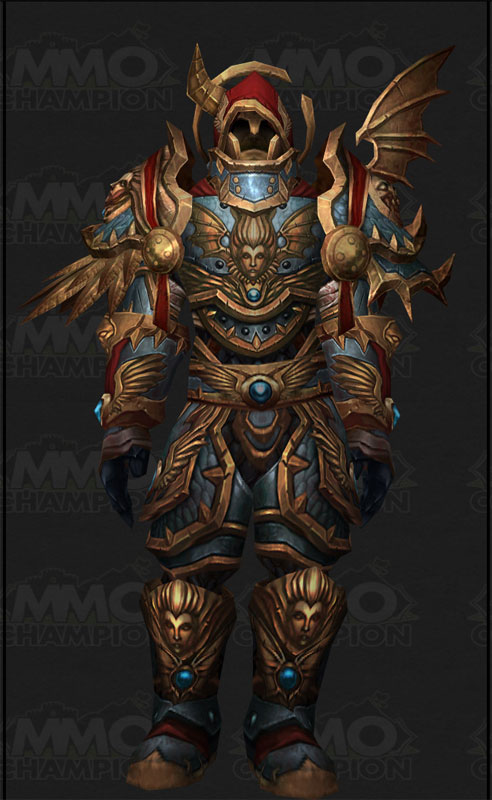
...holy shit...
Prior to today, I was a big believer that paladin T6 was the best paladin set in WoW, Judgement be damned. I never legitimately raided Black Temple or got any of the tier set, but I did do quite a bit PvP in TBC (since that was all there was to do) and Season 3’s Vengeful Gladiator’s Vindication set was just as good as the real thing (or arguably better, if you prefer the red recolor to the normal blue). So my sort of fantasy tank set would have been Vindication + Bulwark of Azzinoth + Ghoulslicer. According to Wowhead, the whole thing would have looked like this:
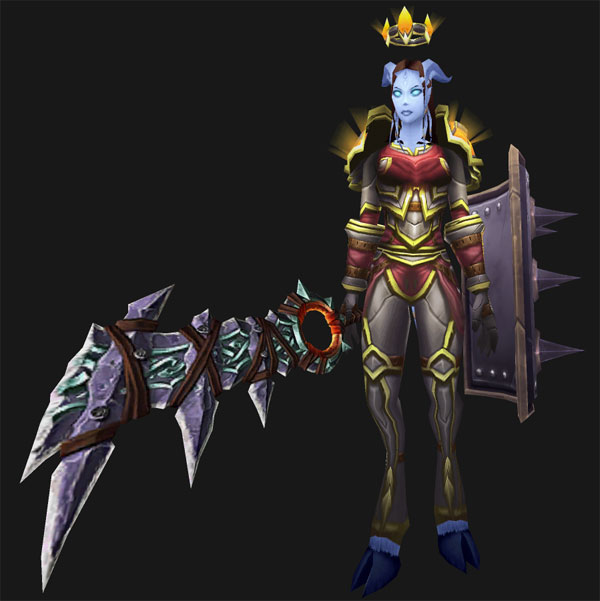
Shut up. It looks WAY cooler in my head.
But Blizzard, defying years and years paladin-degrading precedence, has come out with a PvP (!) armor set that not only makes the PvE one look like a total joke, but honestly steals the whole goddamn Deathwing show from every other class. The only sets that come as close as this one is the Priest T12 and Priest Season 3. Between this new PvP set and the fact that they are putting older Season PvP gear back on vendors – letting me complete the Vindication set and/or get the priest set on an alt without scraping together a BT raid group – you have no idea how goddamn tempting it is to spend $15 on a dress-up simulator.
The only thing stopping me? My nine alts, seven of whom are level 85, are trapped on low-pop Alliance Auchindoun with full heirlooms, max level professions with most non-ultra rare recipes, and approximately 450,000g in liquid wealth. I am not paying $55 per character to move them and a max of 50,000g, nor am I interested in straight-up rerolling without the benefits my ~7700 hours of seniority entitle me. So until Blizzard gets their head out of their ass and tweak the server/faction transfer service price-points (seriously, would a weekend deal kill them?), all this renewed interest and goodwill is going to waste.
Which, given the ridiculousness of my desires in the scheme of things, is perhaps win-win anyway.
More Glimpses into Blizzard Design
About two weeks ago, I pointed out how the Diablo 3 forums are really the place to be if you are interested in Blizzard’s evolving, internal design philosophies. It is not every day that you hear Bashiok come out and say that WoW has been “[…] struggling with how to cope with a skill tree system, which has huge inherent issues with very little benefit, for years.” Nor the disdain that Jay Wilson feels towards PvP affecting PvE game balance. Now there is another nugget of design insight from Bashiok which, while not as bombastic, is still rather interesting:
In some cases though we are purposefully avoiding affixes we just don’t think promote good gameplay, like +damage to X. We want people to play the game and have fun, not feel crappy because they’re in an area full of ‘beasts’ and are stacking +damage to demons. It also encourages a whole host of other divergent gameplay like holding sets for specific types of enemies, or building sets to run specific areas at end-game. Lastly it’s very difficult to make affixes like that compelling, and not necessary. Either it’s powerful enough where people do all those crazy things to leverage the bonuses in destructive ways, or the affix is just de-emphasized to the point of meaninglessness.
Feel free to read the actual thread for the full context, and the full quote for that matter.
I find it interesting because it perhaps speaks towards the larger question of specialization, and what role (if any) that it should play in games generally¹. Is having and collecting a demon-slaying set not fun? I remember back in the Quel’Danas dailies circa TBC how I would typically skip the non-demon quests on my paladin since having Holy Wrath made the impaling-demon-corpses quests that much quicker/more entertaining. Here was a time to flex an oft-neglected muscle in a thoroughly satisfying way!² Of course, the flip side of specialization also in TBC was how paladins were heroic 5m tanking demigods and largely unbalanced garbage raid tanks.
Honestly, Blizzard probably has the right idea here. Specialization with equipment sounds nice on paper, but it also devolves into the D&D-esque “golf bag” problem when you simply “specialize” in everything, and whip out the demon-slaying sword for one fight, and then the beast-slaying sword the next. Similarly, class specialization is usually long periods of underpoweredness punctuated by brief moments of awesomeness… assuming the class is balanced to begin with.
¹ Pun maybe intended.
² Err… no comment.
They Owe Us
There has been a rather interesting conversation going on in the comment section of my Class Warfare post. Essentially, the question is: do game companies owe their early fans anything? According to Doone, the answer is a clear yes.
Just think that each time any gamer says “this game isn’t made for you anymore” they’re making this very case; that game is no longer for the ones who got that developer where they were. […]
Do these companies owe their customers anything? In my opinion …you’re damn right they do. They owe them loyalty, nothing more and nothing less. That doesn’t mean they’ll cater to every whim and idea of their fan base, but that perhaps their games should never “not be for” the audience that brought them success.
I find this argument fascinating for a number of reasons.
1) It legitimizes the “It’s my $15/month” argument.
The only difference between the “It’s my $15/month” argument and the one being presented here, is one of seniority. In effect, you have been paying your $15/month longer than anyone else, therefore you are entitled to catering. No, it’s worse than catering, it’s shackling. Because:
2) Trading value for value enslaves the producer of value.
If you bought Rock n’ Roll Racing or Lost Vikings, Blizzard owes you. Your dollars bought more than a game, they bought a seat at the design table because Blizzard would not exist if it were not for your patronage. In the same way, Apple owes you for buying an iPod, Wal-Mart owes you for your groceries, and the company of your first job owns you to the point that you should never not be working towards their eternal success.
Facetiousness aside, I am more sympathetic to the situations in which a company like Blizzard says one thing and then eventually does another. I remember rather distinctly when they said you would never be able to change factions, and never be able to transfer from a PvE server to a PvP one, for example. If your WoW subscription was predicated on such “constants,” then you have a legitimate grievance of fraud, in my eyes.
That being said, I thoroughly reject the notion of some kind of implied contractual relationship between the producer of a good and the buyer thereof. Someone who bought Lost Vikings was not “investing” in (future) Blizzard, they were trading value for value. In other words, you paid cash for a piece of entertainment. Transaction complete. This is different from actual investors who pay cash now on the hope of a future return.
3) Entitlement vs Indebtedness.
When I pointed out that claiming game companies owe customers a debt of loyalty sounds an awful like entitlement, Doone said:
@Azuriel: There’s a pretty big difference between entitlement and indebtedness.
Is there? Is entitlement not a presumption of indebtedness that does not exist? I suppose that is what we are arguing, whether a debt exists in the first place.
But I have to ask: why would Blizzard (etc) be indebted to us and not the other way around? Doone talked about the (lucrative) communities that form around these games, the sort of bonus value that send accountants and CFOs into orgasmic comas – the Elitist Jerks, the Thottbots, the Wowheads, the Tankspots, etc. All of these things undoubtedly improve Blizzard’s bottom line. And yet, would these communities exist if not for Blizzard’s game(s)? Are we not indebted to Blizzard and other game companies for having created something worth, say, blogging about? How is an early payment a discharge of our debt, and the beginning of an eternal one for them… instead of the other way around?
For what it is worth, I understand the argument about it not (usually) making financial sense to alienate your “base.” Brand loyalty is worth several times is weight in gold, after all. But just like that old cliche, “If you love something, let it go.” Are we entitled to more than a game we used to love? Is the having of it not enough?
Who is really in whom’s debt?
Currently Playing
I am normally a gamer that dislikes playing more than one game at a time. For some reason, I have been all over the place lately.
Shining in the Darkness
It have been 15-20 years since I played this game, and I still have most of the first dungeon level memorized. Funny thing is that I made the exact same mistake I did when I played the game the first time as I did this time around: the king gives you 200g to buy some equipment, and I ended up buying a bronze dagger for 100g that I already had equipped. Considering you spend levels 1-4 running around within the first 20 feet of the dungeon entrance killing slimes for 2g apiece, it was a costly mistake. And “Holy eight max inventory slots that count your equipped gear, Batman!” I haven’t busted out the graph paper yet, but I know the 2nd dungeon level has trap doors that drop into lower level coming up.
The Witcher
Played through the prologue, and just spent some time in the first Inn hustling the fist-fighters out of almost 100 gold orens. It makes me wonder though, whether the game designers put those fist fights in there as a way of rewarding “expert” gamers, or if you are intended to quintuple your starting wealth in order to succeed. Game is alright so far, but I sort of hope the combat system gets a little deeper than the truncated Action RPG/DDR simulator is feels like at the moment. I mean, I was seriously expecting a Block or Dodge button to be necessary, but so far all I see is a “double-tap WASD to do practically nothing” prompt. Really digging the steam magic-punk setting though.
As an aside, my first glance at the sort of leveling up/skill tree system in Witcher made my eyes glaze over. People talk about Blizzard dumbing down WoW’s talent trees and combat ratings and such, but this is why. No doubt it will become second nature by the end, but my first impression of that unintuitive mess of an interface is not good.
Far Cry
Far Cry 2 was the first review I posted on this site, so I figured I may as well try out the first game when the Steam deal came around. I knew ahead of time that it was nothing like its sequel, but wow, it’s nothing like its sequel. If difficulty is based on the number of times I have been killed, Far Cry is thus far a really difficult game. That being said, this “difficulty” feels more like the sort of trial-and-error LIMBO/Out of this World style rather than challenging per se.
For example, there is a stealth meter, but I don’t actually get the impression that it is a stealth game – a serious design issue I have with a LOT of FPS titles that pretend stealth elements can just be plopped down into any game. When I think about stealth games, I think about Tenchu and Metal Gear Solid and Assassin’s Creed. You know, games that A) dissuade straight-up combat by making it difficult, B) have enemies with relatively predictable pathing, C) have ways of silently killing foes, and D) aren’t first-person / giving you some way of knowing how stealthed you are. Maybe this is a personal problem I have with FPS games, insofar as I expect to bring my mad Counter-Strike skillz to a game that wants you to sneak into that merc camp instead of killing them all (and getting killed through an opaque screen wall that the AI can magically see through).
Fallout: New Vegas – Lonesome Road DLC
I ended up caving and buying this DLC right away for the full $9.99 price because, much like LIMBO and Bastion, I could not get them out of my head despite having other games to play until they went on a Steam sale. So far, the environments are amazing in that “this is why I play Fallout” sort of ways. I do have two “gamey” issues that sort of break the immersion though. First, one of the gating mechanisms is how you have to detonate nuclear warheads to clear paths of debris. That’s fine… except when you detonate nuclear warheads next to buildings to just clear out some wooden pallets. It’s Fallout, so I’m not expecting destructible buildings in a game where looking at your Pip-Boy freezes time. But… they’re goddamn nuclear warheads.
The other gamey issue is the signature weapon, the Red Glare, which is a sort of rocket-launching minigun. The weapon is actually fine, it’s the rockets. I’m playing in Hardcore mode, so each rocket weighs 0.25 lbs. As you may know, you can break down a lot of the ammo in the game for parts to create better versions – breaking down 2 rockets for parts to create a High-Explosive rocket, for example. When you break down a rocket though, you get a Cherry Bomb, a 0.50 mm primer, and a Conductor. A Conductor in Fallout: New Vegas weighs 5 lbs. So, yes, each 0.25 lbs rocket breaks down into a 5 lbs Conductor. It’s gamey and should be trivial, but the little things are sometimes the worse offenders.
That aside…

I forgive you, Fallout. I forgive you *forever*.
I haven’t taken this many screenshots-that-will-be-desktop-backgrounds since the original Fallout 3 and Point Lookout DLC.
Old Skool
Until next Tuesday, Steam has a deal on Sega games going on. Remember when Sega made consoles? Feels like forever ago. Anyway, as I was browsing through the catalog, I came across the Sega Genesis Classics Collection, which is about 40 Genesis games for $7.49. Among those pickings, what do I find? Lo and behold, a game of my yesteryears: Shining in the Darkness.
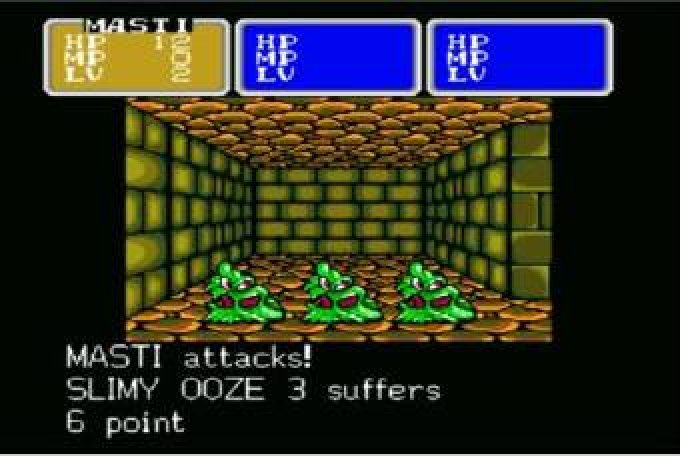
Like finding your old gimp suit in the back of the closet.
I played the hell out of this game for for about two years straight back in the early 90’s, and never did finish it. And right when the topic de jure is the good ole days of challenging content? It must be fate! So yes, Value, thank you for allowing me to make a $0.74 credit card payment for a game by all rights will probably not hold up at all but I’ll slog through anyway out of twenty years of spite.
Your weekend homework assignment is to blog/comment about what game(s) you actually find/found challenging and wish more games were like. This is about challenging games, not necessarily what were your favorite games (see what I did there?). And there is probably a line somewhere in there between challenging and Battletoads, but I’ll leave it up to you to find it.
In the meantime, I need to get some graph paper…
Class Warfare
Things are getting ugly out there in the MMO blogging realm. Very ugly. I am referring to Syncaine’s “Twit” series of posts. And while the implicit embrace of Gevlon’s M&S generalizations is one thing, this new pernicious brand of thinking is being focused on the one group of people that has nothing at all to do with the “twitification” of the hobby. In so demonizing them, one simultaneously give a free pass to the people actually responsible and reinforce all the stereotypes gamers have all endured for decades.
Syncaine actually started out being reasonable. He identified the problem with the (baited) Twit generation in my MMO post:
But what about those of us with more than a 5 minute attention span? What about those who found the older level of challenge just right? We spend money too, and tend to spend it for longer periods of time when given the chance. Are there countless millions of us like there are Farmville players? No. But we are out there, in the hundreds of thousands at least.
Specifically, there are less of you, ergo you are a vanishingly tiny niche not worth catering to, at least with AAA titles. That is capitalism working as intended. Syncaine does have a point insofar as the MMO mold can only be morphed so far while still retaining the things that make it an MMO, at least by any given definition of MMO. Where things go completely off the rails is when he stages a Tea Party-esque rally of entitled bourgeois to attack the players, instead of the game.
And sadly the twit-generation is not just young kids, but ADD (clinical or not) riddled ‘adults’ that have become so entitles, so expectant, that anything beyond instant gratification is not good enough. (source)
McDonalds makes its money not from starving people without options, but from twits who are too lazy or plan life too poorly to have time for a real meal. (source)
You want to know the difference between you and the entitled, unwashed masses you decry as killing your genre? Not a single goddamn thing. Whine, whine, whine. “I want challenge! I want games built just for meeeeeeee.” You and everyone else.
I have said for ages that there is nothing at all selfish about wanting content designed for your skill level. At the end of the day, that is what everyone wants. And it’s not just about skill level because that implies everyone looks for challenge. They don’t. There are people in WoW who log on, fish for an hour, and log out. That sort of thing is relaxing to them. Judging them based on that is indistinguishable from judging them based on what kind of music they listen to, how much money they make, or you know, the fact that they play videogames to begin with.
I get it. I understand you had this game/genre that seemed to be based entirely around your needs and desires, and now it seems to be slipping away. That’s life. More importantly, that’s business. Blizzard et tal are the ones who decided that they would rather chase casual dollars instead of your small wad of sweaty money. Stop blaming the players who have nothing to do with game design decisions, and blame those that do. Or, you know, don’t blame anyone because game companies exist to make money. And chances are good that the economics team of the billion-dollar game companies like Blizzard have already graphed out exactly how much your high regard is worth, and found it wanting.
Harder games are not some higher, purer form of magic. They are simply different tastes. And if none are being made, or the ones that exist are being “dumbed down,” you may want to start up your utopian commune because the Invisible Hand is flipping you off. That, or you could demonstrate some of that delayed gratification skills you accuse others of lacking and simply wait for some game company to come along and cater to your more refined palette.
Review: Bastion
Game: Bastion
Recommended price: $15 (Full Price)
Metacritic Score: 88
Completion Time: ~6 hours
Buy If You Like: Extremely well designed, short works of action-RPG art.
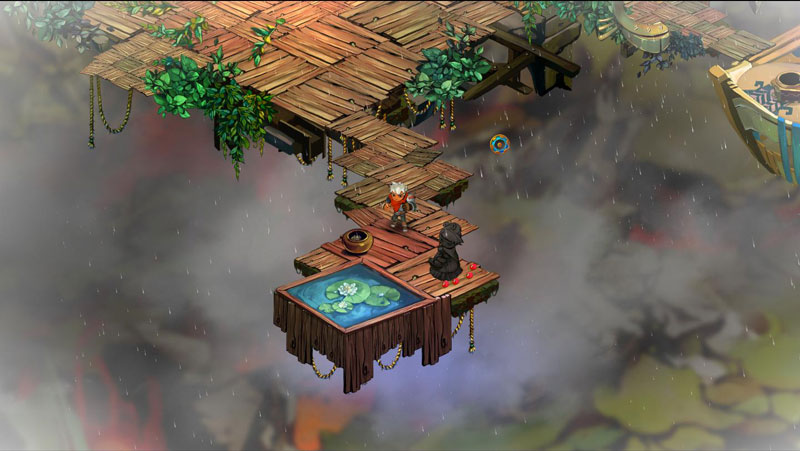
Like LIMBO, another entry in the "Games As Art" category.
Much like LIMBO before it, Bastion puts me in the unfortunate position of having to tell you about an amazing game that concludes much too soon. But let’s not get ahead of ourselves.
On a superficial level, Bastion is a so-so Action RPG in the vein of Diablo meets Kingdom Hearts. You move your character around with WASD on an isometric field, and repeatedly Left-Click or Right-Click depending on which of the two selected weapons you want to use. There is also a dodge (Spacebar) and Block (Shift) button, the latter of which can straight up counter attacks completely if you press it at the right time. There are a bit more than a dozen enemy types, only a few of which require tactics other than simply shooting them with a ranged weapon or repeatedly mashing the melee button. You pick up orbs from killing/breaking things to use as currency for upgrades, leveling doesn’t change much beyond max HP and opening new passive ability slots, and… that’s about it.
By the way, the Mona Lisa is just a chick sitting in front of a river, Starry Night is just some swirls, Seurat liked making a lot of dots, Moonlight Sonata is some piano noises, etc etc.
How things are presented is incredibly important, and it is in this way that the designers of Bastion demonstrate a level of mastery that is damn near sublime. Bastion is a game with its own zeitgeist.
One of the first things people mention about Bastion is the narration by Logan Cunningham, who incredibly has never done voice-acting before. Before I played the game, I thought the concept of background narration a cute “gimmick.” By the end of Bastion, I had no idea how I would cope in games without it. The narration is so much more than a workaround for a silent protagonist and a lack of formal written dialog. Yes, it reacts to things you are doing on-screen – “Kid just rages for a while” (when just smashing objects), “And then the Kid falls to his death… I’m just playin'” (when you fall off the edge of the maps). But it solves a crucial problem endemic in most RPGs: how do you succinctly express emotion? Written dialog only takes you so far, and emotive character models generally do not work outside of LA Noir-esque settings, nevermind how that shackles you into a certain artistic style. Obviously Bastion is not the first game to use voice acting to “solve” the problem, but I am coming up at a loss as to what other game nailed it as hard as this one.
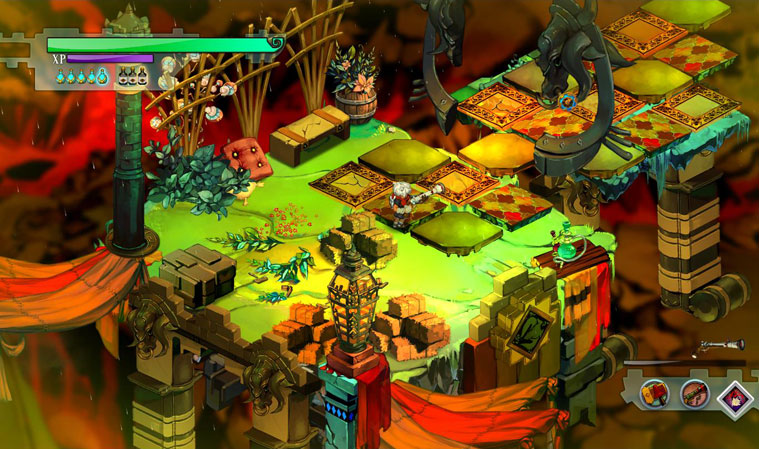
Seriously, Bastion has ruined other games for me, art-wise.
The other aspect that unfortunately does not seem to get as much press time are the visuals. It is somewhat difficult to truly appreciate it during gameplay, but this is the first time I have felt like I was playing a literal work of art since Saga Frontier 2. And it is just not that everything looks amazing; everything simply fits. For example, take a look at any of the screenshots. Do you ever really notice the background? In the entire time I was playing, I recognized that there were edges I could fall off of, and yet never once was I distracted by what that abyss consisted of. That doesn’t happen by accident. Also, the elegance that is the ground flying up to form your path is the sort of design epiphany that solves a more mundane problem (how to prevent the player from seeing their isometric path) in a way that makes the game as a whole better. In other words, it felt like an integral part of the experience rather than arbitrary.
Finally, I would be remiss to not mention the amazing soundtrack. It fades in and out at all the right moments, and is of a quality far beyond what one would expect in a $15 indie game. Part Western, part Eastern, part hip-hop, trip-hop, blues, techno and altogether perfect for what it is. I would not go so far as to buy the $10 soundtrack – typically, battle music isn’t what I look for when I want to relax/browse the web – but you might want to check out Build That Wall (Zia’s Theme) and Mother, I’m Here (Zulf’s Theme) and the hybridized Setting Sail, Coming Home (End Theme). Even if you never actually play the game, those three songs alone will likely make their way to the top of your playlist. Mother, I’m Here in particular so perfectly channels a moment in the game, that it creates a feedback loop with your memory of the experience (which includes the song) that results, at least for me, a reaction far beyond what I actually felt at the time. I literally have not experienced this feeling from a videogame song since Chrono Trigger, FF7, and Xenogears.
Honestly, the only thing stopping this game from rocketing its way towards my Top 5 game list is its six hour duration. That is not to say it felt rushed or incomplete; quite the opposite, in fact! Bastion puts its arm around your shoulder, spins you a fantastic tale, pats you on the back and then saunters off into the sunset. For the completists and sentimentalists, there is a New Game+ option that lets you keep your upgraded weapons and adds more gods to the Shrine, which buffs enemies in various ways to voluntarily increase the challenge.
All good things come to an end though, and god damn if I wished Bastion lasted two, three, hell, five times as long as it did. Lord knows worse games do.
 In An Age
Bean Counters
Oct 6
Posted by Azuriel
So once again, Gevlon accidentally makes a compelling argument in the midst of a pompous rant:
As someone who still has a Light of Elune in his paladin‘s bags, I really enjoy the bean counter metaphor. It is a concept I was musing on while playing hour 37 of The Witcher. Why was I looting every house and making several trips across town to the one vendor I know will buy damn near everything in my bags? The gold is undoubtedly superfluous at this point, especially as I now how enough ingredients and in-game knowledge to steam-roll whatever is coming my way. Then I peeled one more layer down, and wondered why gaining experience points was still fun, when The Witcher is likely my 75th+ RPG. If gaining XP is fun, then why am I not just playing Xenogears forever? It was with that thought in mind that I commented a rebuttal to Gevlon:
The “shameful stagnation and fall of WoW” has nothing to do with undermining the hardworking element, which is alive and well even now; it has everything to do with the natural reduction in the novelty of the experience.
The guy having fun “watching his pot filling up with beans” will NOT have fun filling up an infinitely large pot. There has to be an end-point – the reward of a survived winter – in order for the fun of collecting beans to be realized. Those beans also meant he could relax in his tent instead of scrounging around in the snow. The guy would have less fun filling up a pot with beans as a slave, even if the survival benefit of a full pot is the same. Why? For this guy knows that, as a slave, his task is never-ending.
As Morhaime has commented, the WoW market is saturated: there are more ex-WoW players than WoW players. The people who enjoy hardworking in games have picked up WoW, enjoyed it for many winters, and are now moving on to pick beans in new fields. It has nothing to do with anything WoW has or hasn’t done. Frequent gear resets, at most, act as more frequent winters. After so many winters in one place, it is time to move on regardless of whatever other claims of quality the game has. The novelty of gathering beans fade, and slave-like, rote gathering sets in.
In any case, a WoW that was simply building on vanilla for the last seven years would still experience a “shameful stagnation and fall.” Unlike sports/chess/etc, which have the benefits of tens of thousands of years of iteration, there will always be better, more novel iterations of videogames on the horizon.
Posted in Commentary
4 Comments
Tags: Bean Counter, Gevlon, Greedy Goblin, Novelty