AI Won’t Save Us from Ourselves
I came across a survey/experiment article the other day entitled The Hidden Penalty of Using AI at Work. The “penalty” in this case being engineers more harshly judging a peer’s code if they were told the peer used AI to help write it. The overall effect is one’s competence being judged 9% worse than when the reviewer is told no AI was used. At least the penalty was applied equally…
The competence penalty was more than twice as severe for female engineers, who faced a 13% reduction compared to 6% for male engineers. When reviewers thought a woman had used AI to write code, they questioned her fundamental abilities far more than when reviewing the same AI-assisted code from a man.
Most revealing was who imposed these penalties. Engineers who hadn’t adopted AI themselves were the harshest critics. Male non-adopters were particularly severe when evaluating female engineers who used AI, penalizing them 26% more harshly than they penalized male engineers for identical AI usage.
Welp, that’s pretty bad. Indeed one of the conclusions is:
The competence penalty also exacerbates existing workplace inequalities. It’s reasonable and perhaps tempting to assume that AI tools should level the playing field by augmenting everyone’s capabilities. Our results suggest that this is not guaranteed and in fact the opposite could be true. In our context, which is dominated by young males, making AI equally available increased bias against female engineers.
This is the sort of thing I will never understand about AI Optimists: why would you presuppose anything other than an entrenchment of the existing capitalist dystopian hellscape and cultural morass?
I don’t know if you have taken a moment to look around lately, but we are clearly in the Bad Place. If I had once held a hope that AI tools would accelerate breakthroughs in fusion technology and thus perhaps help us out of the climate apocalypse we are sleepwalking into, articles like the above serve to ground me in the muck where we are. Assuming AI doesn’t outright end humanity, it certainly isn’t going to save us from ourselves. Do you imagine the same administration that is trying to cancel solar/wind energy and destroy NASA satellites monitoring CO2 is going to shepherd in a new age of equitable prosperity?
Or is it infinitely more likely the gains will be privatized and consolidated into the techno-feudal city-states these tech bros are already dreaming up? Sorta like Ready Player One, minus the escapism VR.
I could be wrong. I hope I’m wrong. We are absolutely in a transition period with AI, and as the survey pointed out, the non-adopters were more harsh than those familiar with AI. But… the undercurrent remains. I do not see what AI is going to do to solve income inequality, racism, sexism, or the literal death cult currently wielding all levers of government. I’m finding it a bit more likely that AI will be used to, you know, oppress people in horrible new ways. Or just the old ways, much more efficiently.
Wherever technology goes, there we are.
Oh, yeah… Blaugust!
That’s certainly a thing I signed up for! Probably should have had a post ready to go or something.
As it turns out, I have been playing Abiotic Factor pretty much nonstop since the 1.0 release. It is not often that I manage to find a game that takes over my entire life, although the survival crafting genre is certainly good for that. I’ll have more to say about the game later, as I’m in that enviable state of not wanting to spend time talking about how much fun I’m having when I could be, well, having fun.
In any case, if you’re a Blaugust tourist, welcome! I’ve been blogging since 2010 with close to 1600 posts full of premium quality words. You can either take my word for it, click on The Goods drop-down over to the right there (I recommend Philosophy) to check for yourself, or, well, buckle up, buttercup.
…for tomorrow. Oh, wait, it’s the weekend. Monday, probably!
Game Passes: Blue Prince, Atomfall
These are games I played recently on Game Pass that are, well, passes for me.
Blue Prince
I had seen Blue Prince be praised a bunch recently, but I’m apparently not smart enough to enjoy it.

The premise of Blue Prince is that a young boy has to navigate a magic estate that moves rooms around every day, and discover the mysterious “46th” room. You start with 50 steps, which is how many rooms you can enter within a day, and when you reach a door, you get to pick one of three random blueprints for what kind of room is on the other side. The blueprints themselves come from a deck of sorts, so there is an element of strategy involved as the unchosen blueprints go back into the “deck.” You keep going until you run out of steps or, infinitely more likely, you end up getting dead-ended with your choices and/or the doors start getting randomly locked and you didn’t RNG your way into enough keys.
And that is kind of where things fell off the rails for me. I don’t like puzzle games generally, but I have played and enjoyed ones like Braid, The Talos Principal and… uh… does Portal 1/2 count? In the case of Blue Prince, the actual playing bits aren’t fun. Go to door, pick 1 of 3 options, possibly collect items, go to next door. I have encountered some “chests” that require other items to open, but near as I can tell, the required items are RNG-based as to whether they will show up in a given day. There was one run when I alllllllmost got to the Antechamber but then every door was locked/gated by a currency I ran out of and… it honestly felt like those bad roguelites where they make it impossible to win until you grind some progression. Although I guess there’s an achievement for winning on Day 1? ¯_(ツ)_/¯
Whatever. The bank can have the house.
Atomfall
British Fallout!
…except not at all.
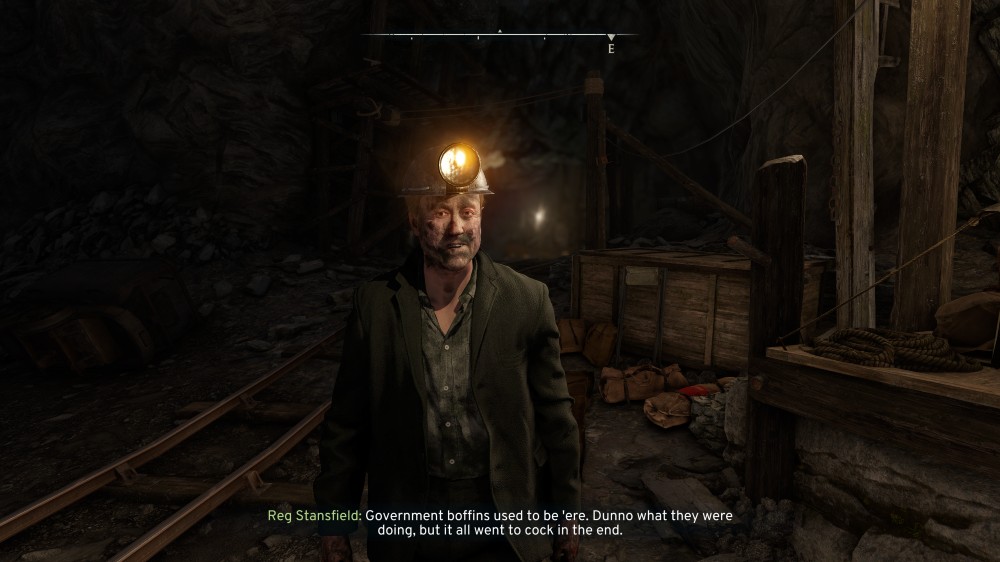
To be fair, they never said British Fallout, even though that is what everyone wanted. Instead, you have a first-person pseudo-mystery game in which you accidentally solve all the mysteries by just playing the game like a Fallout. Except the hoarding part, because you have an extremely limited inventory, no means of crafting anything until you purchase schematics, and no currency to purchase schematics, only what you can trade with what you’ve managed to stuff in your limited inventory.
Honestly, exploring every derelict house and having to continuously pass up on yet more Scraps or Cloth because I had the maximum amount already is what killed this game for me. Can’t stash the extra bits, can’t sell them for currency, can’t (yet) craft them into useful items, so… what? Should I just ignore all the exploration and make a beeline to the quest objective? I understand 2.5 hours might not be long enough for any plot to materialize, but if the gameplay or setting or characters can’t bridge the gap until it does, then you’ve got a pretty piss-poor design, IMO. And certainly not worth 71.6 GB of space.
Switch On
I have been waffling on whether to get the Switch 2 or a regular Switch or nothing at all for quite some time. To a certain extent, the question itself was silly – if you weren’t going to get a console after seven years of its life, you clearly weren’t all that interested, yeah? Just let it go. And I was doing just that.
Then, my son was meeting some new friends and they asked if he played Minecraft.
*cue MGS guard exclamation mark sound*
To be clear, my son hasn’t actually played Minecraft… or any formal videogames at all. There’s been some “educational” apps and the Nex Playground sort of things, but nothing what I would consider serious. Indeed, I had actually been waiting since his conception for a time when he would be ready to ascend to the P2 position (or technically P3). So, sensing some weakness in my somewhat-crunchy wife’s protective shell, I decided to turn up the heat.*
The funny thing is, I didn’t know how my son would play Minecraft. I bought it ages ago on PC but there’s no way he’s going to play it there. Of course, Minecraft has been ported to literally everything, so we’re technically spoiled for choice. But how could we play it together? Sure, there are probably some workarounds like cross-play from a tablet to the PC or phone to tablet. Or, you know, a game console.
So, yeah, this past Prime Day I bought an OLED Switch.
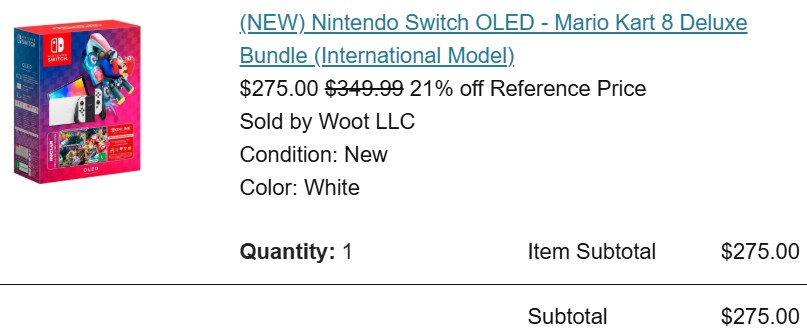
As pictured, it was a new OLED Switch with Mario Kart 8 Deluxe for $275 from Woot. I legitimately thought about trying to do some legwork and find a Switch 2 bundle someplace despite it costing double – you know, for future-proofing – but on the whole this “experiment” seemed safer anyway with a 6-year old. Besides, I had sorta regretted not getting a retro handheld with an analog stick and, well, here one is. Playing N64 games would require a subscription, but ehhhh it’s probably fine.
The funny/sad thing is that, at the same time as all the other frantic research being done before the end of the Woot sale, I actually got around to figuring out and executing on Switch emulation on my PC. So… maybe I didn’t need to be buying anything, really. Still, overall I feel like a legit Switch would be a good family-room style option to have. If it doesn’t work out in a couple of years, hey, Nintendo gear does appear to retain a lot of its value based on my eBay searching.
[Fake Edit] I’m going a little bit overboard, I think. Purchased the following:
- Legend of Zelda: Breath of the Wild [$45 via Costco voucher]
- Legend of Zelda: Tears of the Kingdom [$45 voucher trick above]
- Super Mario Bros Wonder [$38 eBay]
- Super Mario Party Jamboree [$45 Woot]
- Super Smash Bros Ultimate [$44 Woot]
- Super Mario Bros Odyssey [$40 Walmart]
That’s… a lot. Aside from the two Zelda games though, everything else are physical cartridges. I technically would have preferred digital games – who really cares for possibly losing cartridges around the house? – but the thought process is that physical games would retain some amount of resell value into the future. I’m positive that any of those Mario games would sell instantly on eBay for $30, for example. Will they continue to do so 5 years into the future or whatever? We shall see.
Something something, treat yo self.
…oh, and I’ll probably need Minecraft at some point too.
* I talked everything over with my wife beforehand, of course. Give me some credit.
AIrtists
There’s some fresh Blizzard drama over a Diablo Immortal + Hearthstone colab artwork:
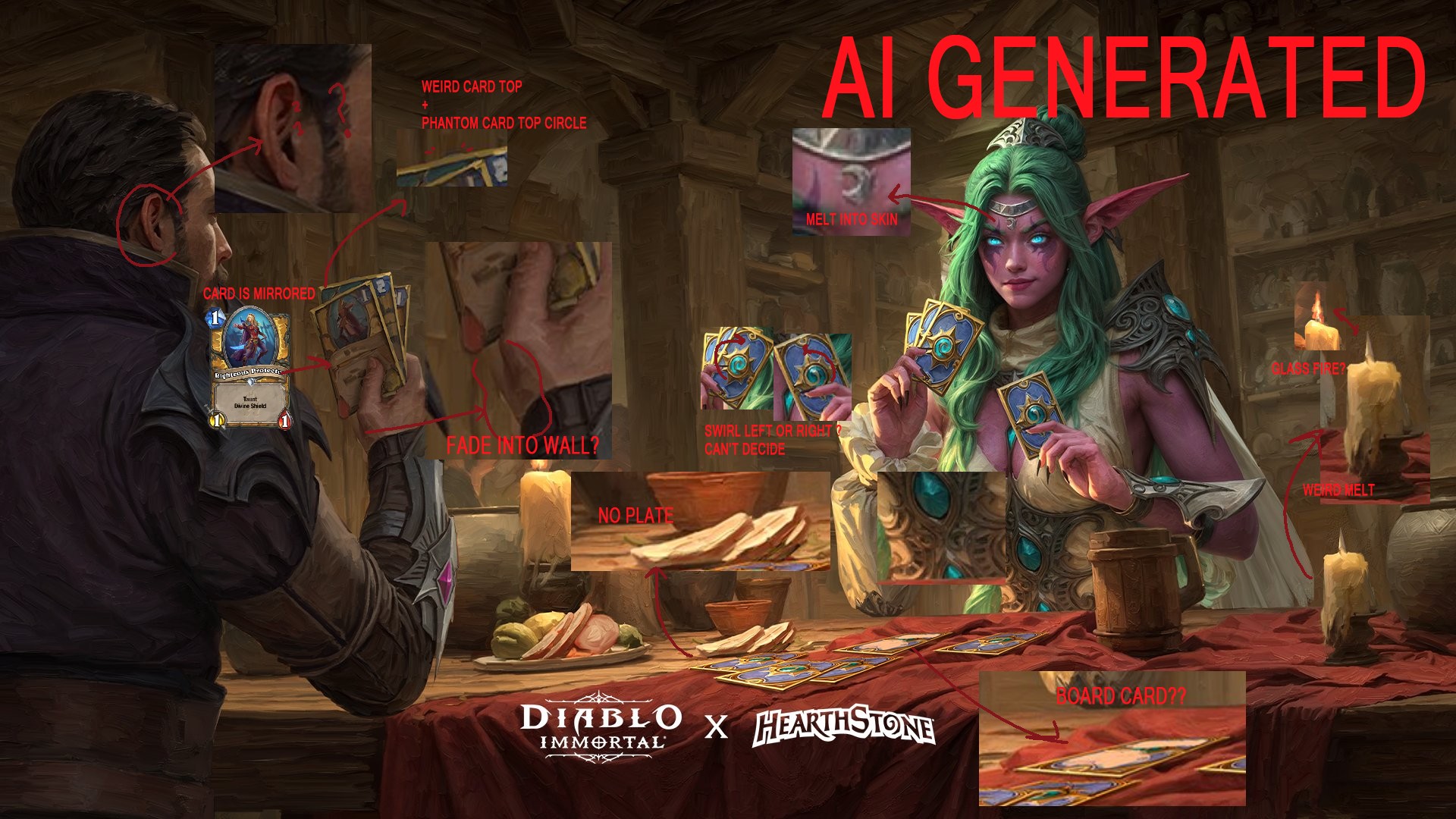
The top comment (1700+ upvotes) is currently:
Guess $158 pets aren’t enough to pay an artist to draw the image for their colab lmao.
I’m all for piling onto Blizzard at this moment, precisely because what they are currently doing in, for example, Hearthstone is especially egregious. It’s not just the pets, though. The dev team had been advocating for reducing the power level of sets for a while – ostensively to fight power creep – but after like the third flop set in a row, their efforts are beginning to become indistinguishable from incompetence. The Starcraft miniset has been nerfed like 2-3 times now, but people are still playing cards from there because they’re more powerful than the crap we got today. First week of the expansion, and the updated Quest decks all had winrates of less than 30%.
Having said that, it isn’t all that clear that the AI artwork is actually Blizzard’s fault.
Last year, there was another AI art controversy with Hearthstone regarding the pixel hero portraits. While there was no official announcement, all signs pointed towards the artist themselves being the one to submit the AI-generated product rather than Blizzard actively “commissioning” such a thing. And remember, even the small indie devs from Project Zomboid got burned when they hired the same person that made their original splash screen and said artist turned around to submit AI-smeared work.
This sort of thing used to sound insane to me. Why would an artist use a tool that specifically rips off artists and makes their very own future work less valuable? Is there no sense of self-preservation?
On the other hand, that Hearthstone hero portrait “artist” almost got paid if it weren’t for those pesky Reddit kids. Considering that Microsoft is now requiring its employees to use AI in their jobs, perhaps the artists were just ahead of the curve. In my own meatspace job, AI tools are being made available and training being required if only to styme certain employees from blindly pasting sensitive, personal data into ChatGPT or Grammarly. Because of course they do.
Regardless, I am interested in seeing how it goes down and what eventually wins. AI does, obviously. But do people stop caring about AI-generated product art because so many examples eventually flood the zone that it becomes impossible to keep up? Will it be a simple generational change, with Gen Alpha (etc) being OK with it? Or will AI advance enough that we can no longer spot the little mistakes?
All three are going to happen, but I wonder which will happen first.
Impressions: Len’s Island
I try to keep tabs on every survival game that comes out as, despite first appearances, there ain’t actually that many. So, when I got notice several weeks ago that not only has Len’s Island came out of Early Access but was also free to play over the weekend, I quickly jumped aboard.
Unfortunately, after playing about 6 hours or so, the game is a bust.
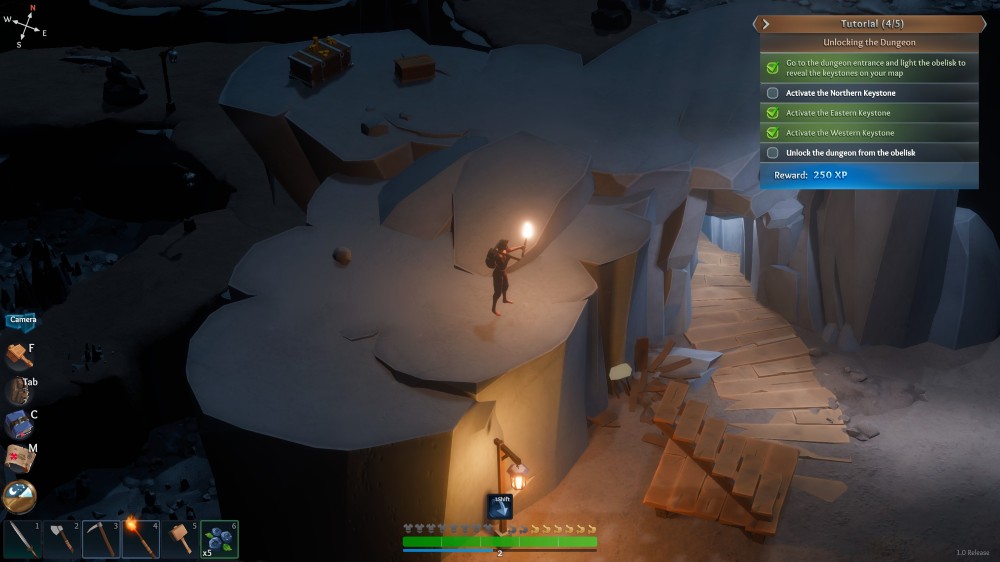
The problem with Len’s Island is that it feels like an A game. As in, one less A than AA. Maybe BB would work better? This is the game’s own description on Steam:
An open-world survival crafting game for 1–8 players, blending intense dungeon crawling and ARPG combat with peaceful farming and creative building. Take on quests and explore a vast, procedurally-generated world full of danger and discovery.
Yeah, no, almost all of that is misleading as fuck. Imagine my surprise when I figured out that in this “open-world survival crafting game” you… can’t actually craft armor. Armor drops from the end chest in dungeons, but not in an ARPG, Diablo-ish way either – it’s a singular, set piece. The only other way to get armor is to purchase some from vendors, who also tie into your general tech/decoration progression. There are like four weapons in the game and you just upgrade them with identical sets of resources for each tier. Quests do exist, but they are achievement/milestone style quests rather than any kind of coherent narrative. Perhaps things get spicy later on, I dunno, but I very much doubt it.
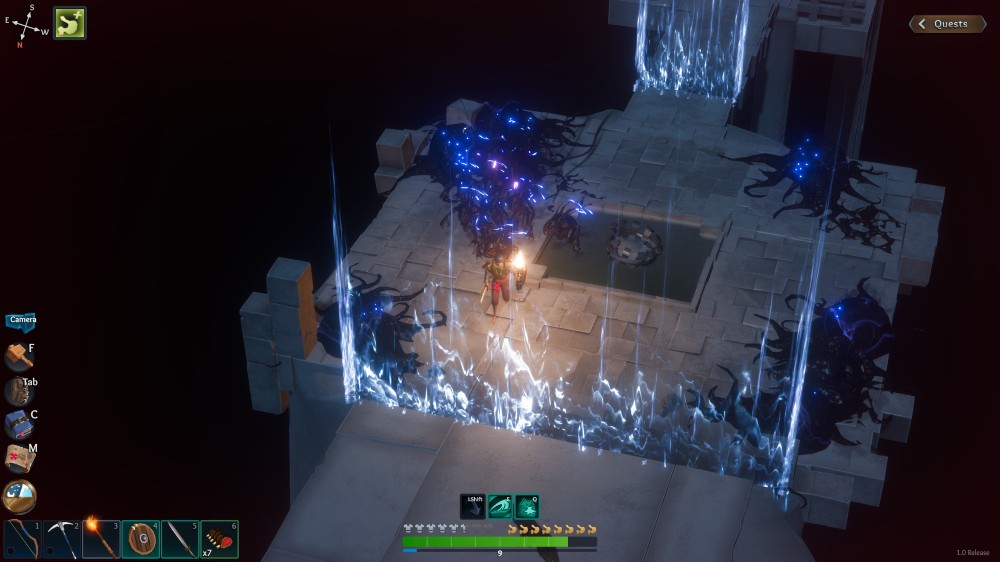
I’m not really sure there is much else to say. The general gameplay is not fun, the survival elements are nonexistent, and crafting itself is perfunctory. I haven’t been this disappointed since Farworld Pioneers.
The Alters
I recently completed The Alters after about 24 hours of gameplay via Xbox Game Pass. Overall, I found the experience to be unexpectedly poignant and also refreshing.

The general premise of the game is that you are Jan Dolski, sole survivor of a crash landing on a hostile planet. Getting your bearings, you discover that while the mobile expedition base is intact, there is no realistic way you can manage all of its components by yourself and still escape a scorching sun just over the horizon. In the midst of despair, you find Rapidium, the MacGuffin mineral that precipitated the expedition in the first place. With Rapidium’s special properties – plus a Quantum Computer and Mind Records – you are able to clone yourself and selectively modify the clone’s memories such that they made different choices at pivotal moments in your past, thereby specializing in different fields (such as Scientist, Refiner, Doctor, etc). You must then balance exploration for resources, base management, and keeping your surly other selves happy long enough to (all?) get rescued.
The first kind of obstacle I encountered with the game… was its very premise. I actually felt like the various Jans getting physically pulled from other dimensions would have been more believable. After all, you do actually encounter numerous “anomalies” as enemies to fight or flee from on the alien world you are stranded on. But the game does a good job of exploring multiple facets of its own seemingly-shaky premise, so if that is a potential hang-up, well, please dial again.
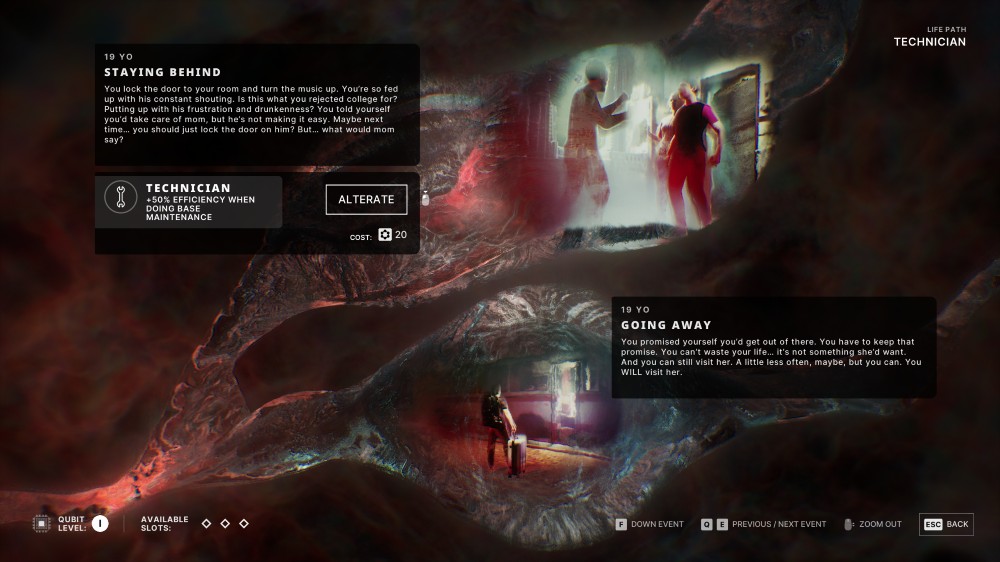
The only other sort of criticism I have with the game is the sort of stark shift in gameplay that happens within each Act. At the beginning of each section, you are typically left dangerously low on supplies in the midst of an unknown landscape, knowing that the game-ending sun with be coming up behind you after an unknown amount of days. This part feels exciting and strategic, as you attempt to balance securing resource locations with longer scouting trips. Once the map has been filled out though, you wind up ending yours days within 5 minutes by holding down a button at a mining drill (which fast-forwards time) before clocking out. At one point, I started to avoid leaving a specific Act so I could “farm” research unlocks and add the maximum number of sections to my mobile base. The difference between that and how I felt immediately after getting to the next Act was enormous. I just wish the ebbs and flows were more uniform, ya know?
Of course, I would be remiss to not mention the Alters themselves. While you are out and about (or even farming resources), the Alters will get into certain moods and come to you with requests that might require the diversion of resources. It is during these times that you learn more about your alternative paths and what could have been. This sort of thing could easily have devolved into some on-the-nose proselytizing, but… it doesn’t. None of your other selves really have fairy tale lives, and in spite of diverging several possibly ways, all end up choosing to participate in Project Dolly in the end. Was that narrative convenience? The constraints of the Quantum Computer in altering the Mind Records of the clones? Or is it a broader commentary on the choices you make in life and how you must seek meaning in them even if you end up in the same place?
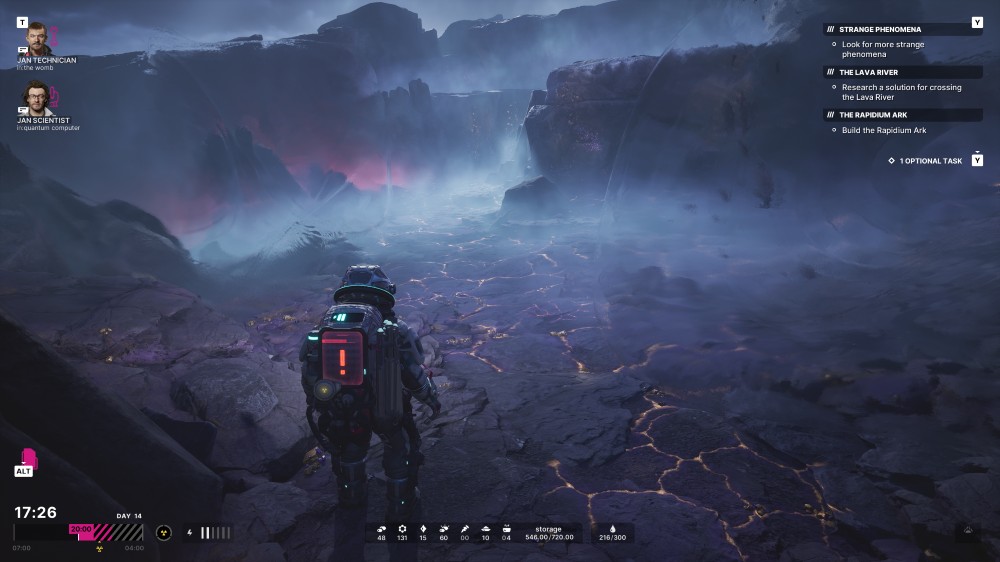
Overall, I would consider The Alters to be a top-tier Game Pass game. There is technically some replayability as you cannot choose all of the available Alters within a single play-through. Additionally, there are higher difficulties that probably make the second half of each Act more exciting from a resource juggling perspective. Regardless, hats off to the devs for making an engaging game, and also releasing it for $35 MSRP.
Human Slurry
Scrolling on my phone, I clicked into and read an article about Yaupon, which is apparently North America’s only native caffeinated plant. Since we’re speed-running the apocalypse over here in the US, the thought is that high tariffs on coffee and tea might revitalize an otherwise ultra-niche “Made in America” product. Huh, interesting.
I scroll down to the end and then see this:
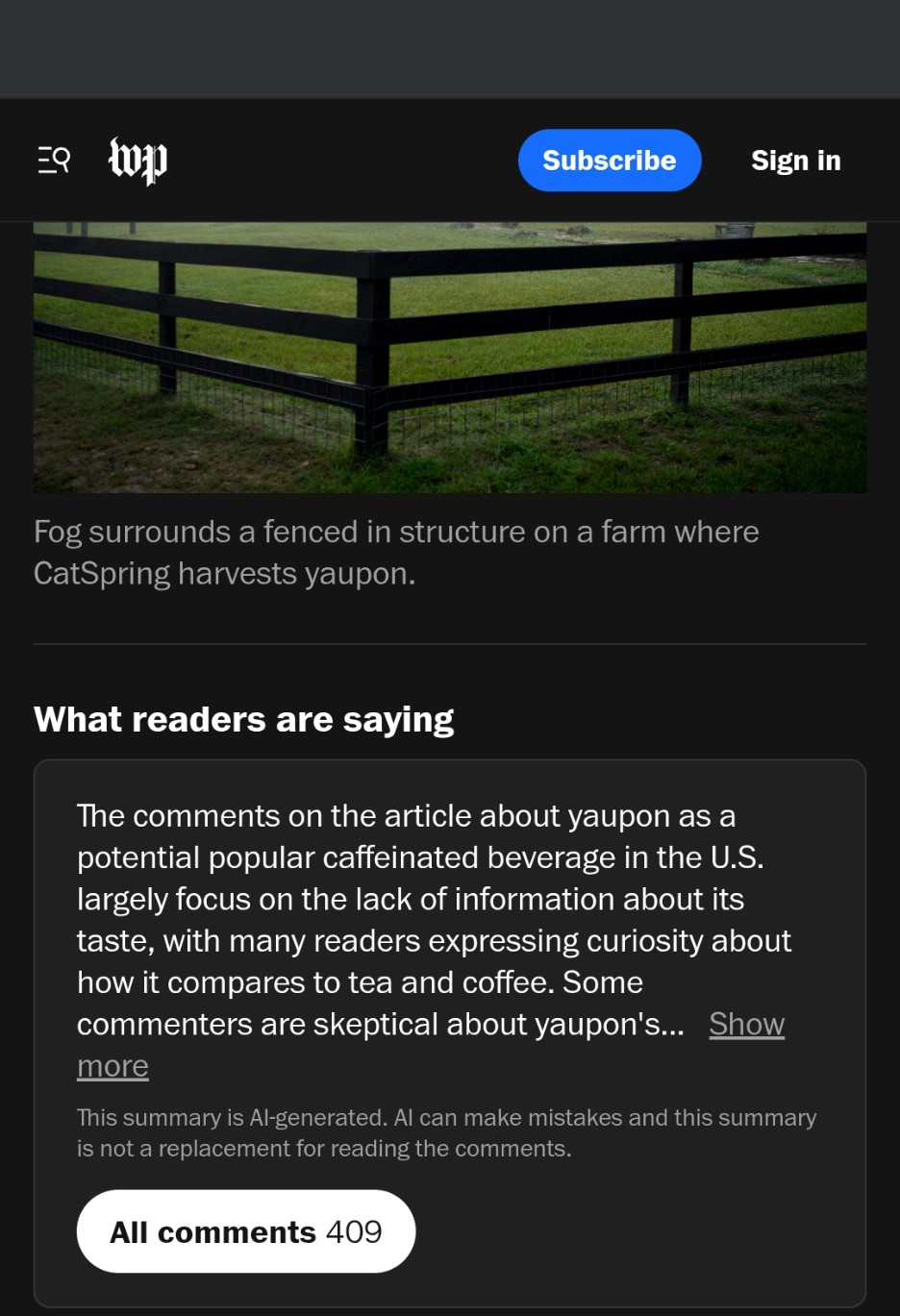
I’ve seen summarized reviews on Amazon, but never comments. Honestly, I just laughed.
It’s long been known that the comments on news articles are trash: filled with bots or humans indistinguishable from bots. But there is something deeply… I don’t know a strong enough word for it. Cynical? Nihilistic? Absurd? Maybe just fucking comedic about inviting your (presumably) human readers to comment on a story and then just blending them all up in a great human slurry summary so no one has to actually read any of them. At what point do you not just cut out the middle(hu)man?
If want a summary of the future, that’s it. Wirehead, but made out of people.
Teanautica
Do you enjoy some gaming drama? What am I asking, who doesn’t? Pull up a chair and let’s spill it.
First, set the stage. Subnautica was a much-beloved underwater indie breakout hit created by Unknown Worlds. The follow-up semi-sequel, Below Zero… not so much. Nevertheless, the actual sequel Subnautica 2 is the second-most wishlisted game on Steam, trailing Hollow Knight: Silksong. Krafton buys Unknown Worlds in 2021. Subnautica 2 was revealed to be in development since April 2022, had a cinematic video released October 2024, and reports it would have an Early Access release sometime in 2025. In April of this year, there was even a few gameplay trailers.
And then a shoe dropped: Krafton, the company that purchased Unknown Worlds for $500m had fired the entire executive leadership, and delayed the game until 2026. Why? “It wasn’t ready.”
Charlie Cleveland, now-former head of Unknown Worlds, said it was ready for Early Access. Which, okay, just a leadership spat, right? But then came the juice: a Bloomberg report that highlighted special “earn-in” terms of the Unknown Worlds buyout. Specifically, if Unknown Worlds was able to meet certain sales targets by the end of 2025, they would get a $250m bonus. All of a sudden, it became obvious that Krafton sacked the leadership team and delayed Subnautica 2 just to avoid the payout.
…or was it?
Krafton resurfaced to hang all the dirty laundry out to dry:
[…] Specifically, in addition to the initial $500 million purchase price, we allocated approximately 90% of the up to $250 million earn-out compensation to the three former executives, with the expectation that they would demonstrate leadership and active involvement in the development of Subnautica 2.
However, regrettably, the former leadership abandoned the responsibilities entrusted to them. Subnautica 2 was originally planned for an Early Access launch in early 2024, but the timeline has since been significantly delayed. KRAFTON made multiple requests to Charlie and Max to resume their roles as Game Director and Technical Director, respectively, but both declined to do so. In particular, following the failure of Moonbreaker, KRAFTON asked Charlie to devote himself to the development of Subnautica 2. However, instead of participating in the game development, he chose to focus on a personal film project.
KRAFTON believes that the absence of core leadership has resulted in repeated confusion in direction and significant delays in the overall project schedule. The current Early Access version also falls short in terms of content volume. We are deeply disappointed by the former leadership’s conduct, and above all, we feel a profound sense of betrayal by their failure to honor the trust placed in them by our fans.
Incidentally, there’s an additional paragraph down towards the end that says Krafton “reaffirm our commitment to provide the rewards [the remaining devs] were promised.” It remains to be seen whether that is indeed $25m, whether it is still dependent on the same targets, and so on. Now that everything is in the open, I think it will be harder for the working devs to be screwed, but we’ll see.
As you can imagine, Reddit and a lot of the internet is awash in hot takes. Most of which are bad.
“Krafton is clearly lying!” “Obvious corporate fuckery.” “They are just trying to get out from paying $250m.” “Krafton is using weasel words and won’t be paying the other devs money either.”
I sympathize with these notions. At least, I did until I found out that Charlie Cleveland really was taking the piss. Krafton’s statement of “chose to focus on a personal film project” comically undersells it:
That’s from Charlie’s website. Also from his website, in the About section:
I’m Charlie Cleveland and I’ve been designing video games for over 25 years. I founded Unknown Worlds and built games like Natural Selection, Natural Selection 2, Subnautica and Moonbreaker. I absolutely love making games but wanted to try something new.
At the end of 2023, I left San Francisco after almost 20 years and moved to Los Angeles to reset my life. Instead of taking it easy, I now find myself working on multiple film projects. It’s amazing how fast it’s all happening – being right in the thick of things makes it so much easier to meet like-minded people!
What else should have been taking place at the end of 2023? Maybe… working on your fucking game?
Don’t want to trust Krafton’s motives? Fine, don’t. But let’s not pretend ole Cleveland Steamer over here was doing anything other than quiet quitting and waiting for his cut of $225m off the backs of devs who were otherwise floundering.
The leaked presentation slides claim that between Q2 2023 and Q2 2025, Unknown Worlds removed two biomes, one Leviathan type, multiple creatures and tools, one vehicle (Trident), character customization features, the custom game mode, and six hours’ worth of story content. While many of those elements were merely delayed rather than completely cut, their omissions have scaled down the early access build significantly, “making it necessary to reassess the feasibility of the planned launch,” one of the leaked slides reads.
The three fired founders are suing, of course, so perhaps we’ll get more salacious details in discovery. Or maybe it will just be settled out of court. Whatever the case, what I do think is abundantly clear and not nearly communicated enough is this: the founders of Unknown Worlds very clearly fucked off and were waiting for a second paycheck they did not earn. Did Krafton suddenly fire them to prevent Subnautica 2 from entering (a premature) Early Access and thus likely getting enough revenue to trigger a $250m payout? Yeah. Clearly, yes. But was that wrong? No, clearly no.
Charlie elsewhere claims they always shared the profits and would have shared the $225m payout with the actual employees building Subnautica 2 and rah rah rah. That’s a cute sentiment, and I’d almost believe it if he hadn’t abandoned the team. “Subnautica has been my life’s work and I would never willingly abandon it or the amazing team that has poured their hearts into it.” So… were ya working on Subnautica 2 or were ya not, homeslice? Attended the meetings? Signed off on the ever-reducing Early Access scope? Got any receipts, my friend? Or just mad you’re in the Find Out phase?
I’m about as anti-corporate as it comes – feel free to read any of the 1500+ posts from over a decade to confirm. But what I have realized time and time again, is two things:
- M. Night Shymalan
- The corporate call is coming from inside the corporate house
Don’t take Charlie’s side just because you really liked Subnautica. It’s a beautiful flower in a sea of shit and should be celebrated. The same dev team went on to make Below Zero, and Charlie fucked off to make Moonbreaker. They are not gods, they are not heroes, and chances are none of them have any idea how or why the games they made were any good in the first place. Some games are simply products of their time and would have not have been as successful had they come earlier or later. If they really had the secret sauce, every game would be better than the last. And that is rare.
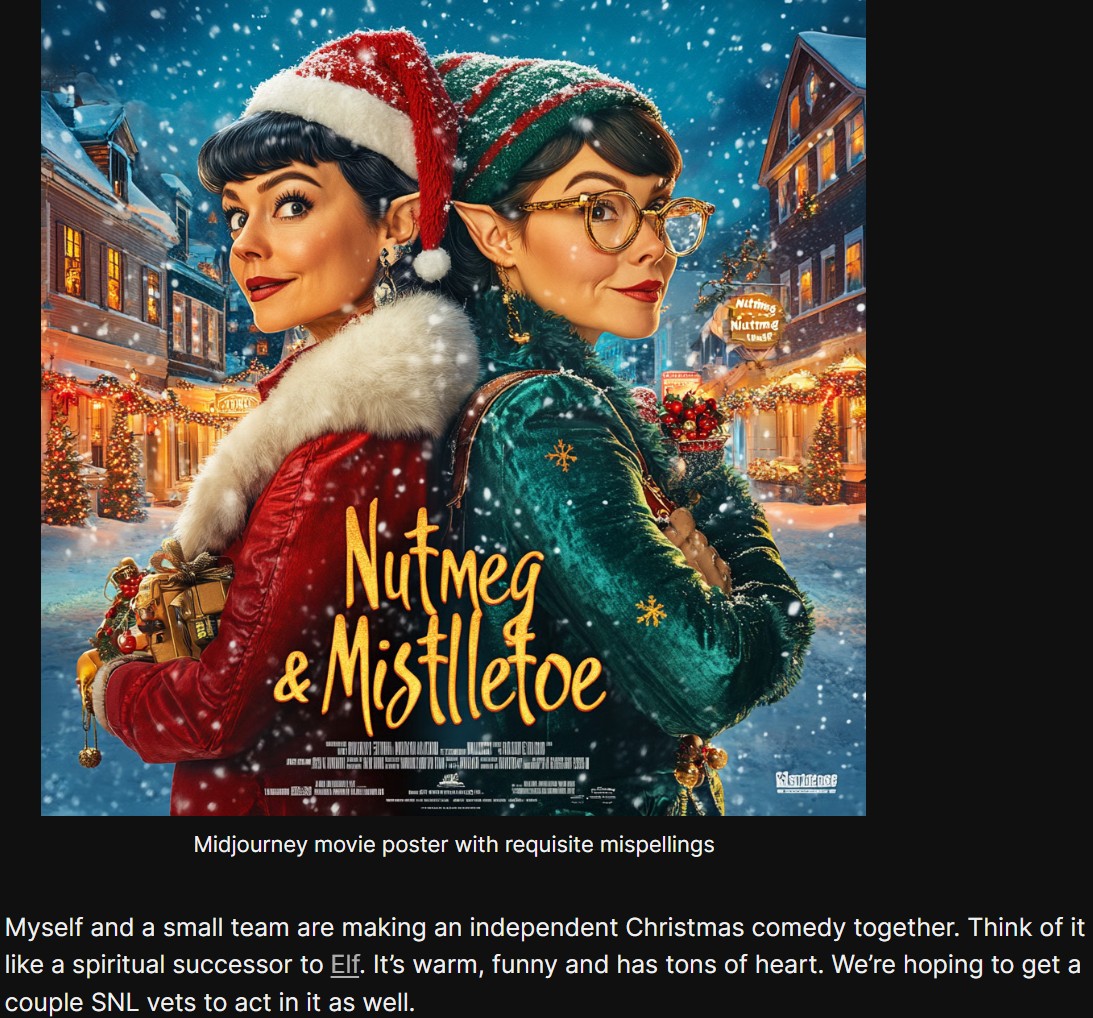
Also, after you get bought out for $500m with another $250m queued up in a couple of years, if you cared maybe you can sit your ass behind a desk for a minute to ensure your team gets the cut. Or, you know… don’t, and then quit out of principle and go make your AI-seeded Christmas movie. Pick a lane.
Anyway, little ranty at the end there, but it’s Drama with the capital D. You’re welcome.
 In An Age
Continue Reading
Aug 11
Posted by Azuriel
In the spirit of Blaugust, allow me to give an unsolicited opinion: excerpts suck. If I see a post in my Feedly roll that is just a paragraph that ends with Continue Reading… I don’t. That blog gets dropped.
There’s really only two reasons to have excerpts on: you don’t know better, or you do. In the latter case, congrats on being a cog in the giant SEO/clickbait bullshit machine. Be better, if you can.
In case you’re a member of the former category though, for WordPress check Settings > Reading:
Are there legitimate concerns about having your blog content displayed in an RSS aggregator versus readers coming directly to your blog? Maybe. I have no idea if someone reading this post on Feedly will have their View register on my WordPress stats or whatever. I could also see concerns about post formatting if you care about that sort of thing. For example, I spend an inordinate amount of time trying to avoid orphan words in the blog proper. Seriously, check my posts sometimes (engagement!). None of which matters for Feedly readers though, because those line lengths are all over the place.
You might think me arrogant for suggesting that losing my subscription to your blog is a reason to turn off excerpts. I would instead suggest that forcing readers to open a new tab just for you is itself the height of arrogance. Do you yourself open tabs for every blog you follow every day, like it’s 2005? No.
Turn off your excerpts. Thanks for reading.
Posted in Commentary
4 Comments
Tags: Arrogance, Blaugust, Continue Reading, Excerpts, Feedly, Unsolicited Advice