Blog Archives
Frostpunk 2
I have played and completed Frostpunk 2 via Game Pass in about 15 hours.
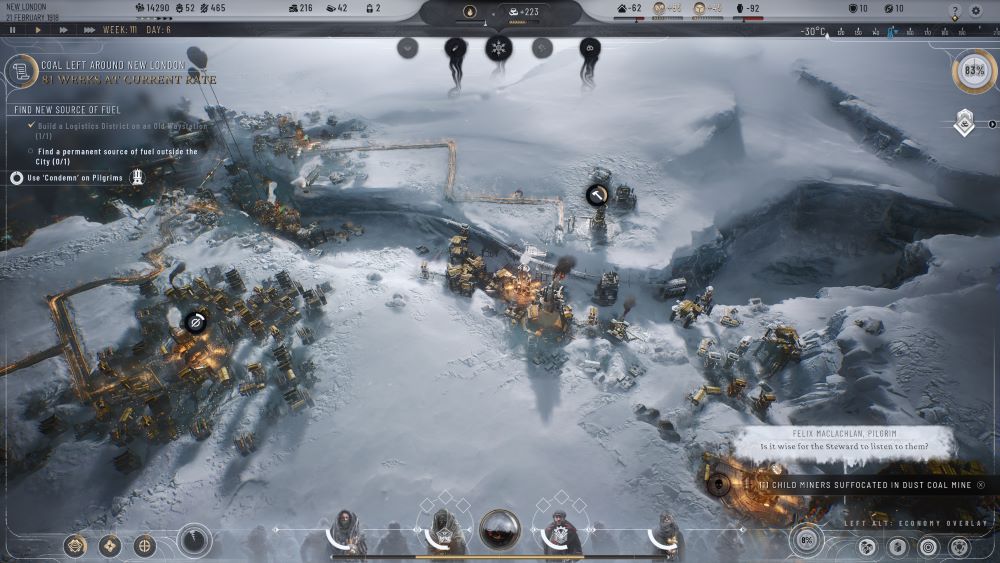
Frostpunk 2 is a sequel to the original both narratively and from a gameplay perspective. New London survived under the Captain’s rule in this alternative history 1899 ice age, but with his death, the fate of the city now rests in the Steward’s (aka your) hands. With a much more zoomed-out perspective, you must carve out space for various districts, explore and set up outposts, and placate diametrically-opposed factions whilst also ensuring the city never falls to the cold.
In the original game, the “plot” was broken into various Scenarios. With Frostpunk 2, there is a single narrative thread composed of five Chapters, throughout which your city progress is maintained. This continuity resolves a lot of the issues I had with the original game, wherein tech tree unlocks seemed pointless considering you barely had time to research any of them before the Scenario was over. Continuity also makes your early decisions much more important, as you continue to receive the benefits of it for a dozen hours. For example, your scouts might discover wreckage and give you a choice: gain important materials, or get +800 Workforce permanently. Choosing the resources might get you out of an immediate crisis, but there actually is a “long-term” to consider here.

Of course, that also becomes a problem. Although I beat Frostpunk 2 in ~15 hours, realistically the game was over after about 8 hours. By the time Chapter 3 rolled around, I had maximized the citizens’ Trust, all Factions supported me, and I was running a surplus of every material with an immense stockpile behind it. I played on the equivalent of Veteran difficulty, and so it’s possible that this is an indication I should have challenged myself further. However, I doubt harsher RNG events and a poorer start will make some of the “binary” choices/tech less obviously OP. If anything, I am now much more savvy to which Laws are critical to unlock early and which can wait.
On the other hand, the likelihood of my playing again is kind of low. Having a strict narrative thread means experiencing the same events in the same order, exploring the same map, and maybe making different choices for roleplaying purposes. The game is extremely engaging in the moment – way “worse” than the Civilization “just one more turn” hour evaporation – but a lot of that depended on the consumption of novelty. There is an Endless Mode option available, although how interesting that may be is dubious; as I mentioned previously, there are actually ways to end up effectively infinite even within the base game. Best I can do is hope there are updates in the future that add new Scenarios in.
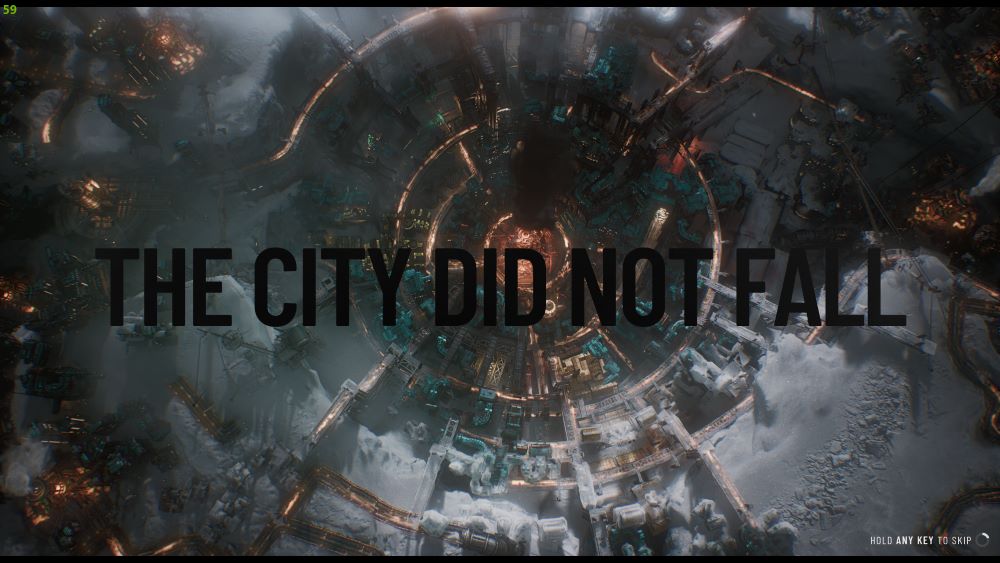
Overall though, Frostpunk 2 is an extremely slick and fun city-builder for the time I spent with it. Given how much was changed, it’s hard to say whether someone who loved/hated the original would find the sequel any better. It’s on Game Pass though, so it’s relatively easy to give it a whirl.
Impressions: Diablo 4
They brought back the grimdark.
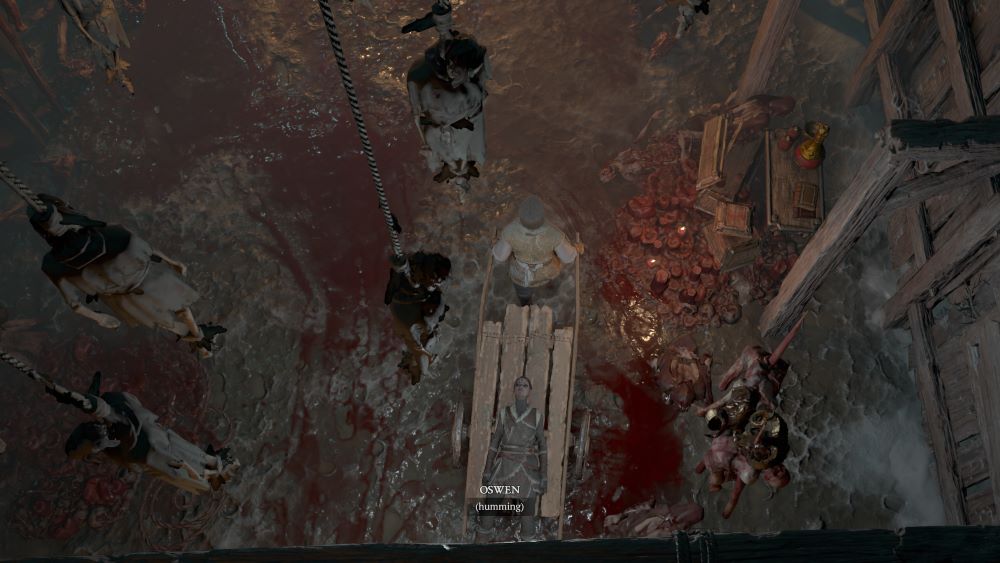
I have been generally enjoying my time with Diablo 4, all the way up to level 30 40 as a Necromancer. I tend to gravitate towards Necromancers in any game that offers it (including MMOs), and I definitely remember rolling one the first time I started playing Diablo 2 right as I moved to college. It’s kind of a difficult design to get right though. If your minions are too strong, you end up not pushing buttons and simply walking around the map melting bad guys. Conversely, if minions are too weak, they may as well not exist. Plus, you can generally get punished for having a minion-build during boss fights, as the boss will kill them quickly and there may not be any corpses around to bring them back.
I’m happy to report that Diablo 4 solves the issue is an interesting way: a draining basic attack that creates corpses every few seconds. Things can definitely go downhill quickly if you aren’t paying attention to your skeleton crew, but I appreciate the novel solution. It also enables the frequent use of Corpse Explosion, which has a very satisfying aural element to it. Killing the first enemy and then chain-popping dozens more feels good every time.
What kind of shocked me though is how you are limited to six buttons.
I legit had to look back to Diablo 3 and Diablo 2 screenshots to see that, yeah, it’s been that way for decades. Which is fine, I guess, but became real annoying once I realized that the Golem takes up one of those buttons. Was that always that way too? I suppose it’s as good a balancing mechanism as any, but it also reinforces the whole “walk around the map doing nothing” angle even more. It also makes me question why these other Skills exist with longer cooldowns. I’ll probably come across some meta build that farms the endgame in 20-30 second increments, but it’s baffling thus far.
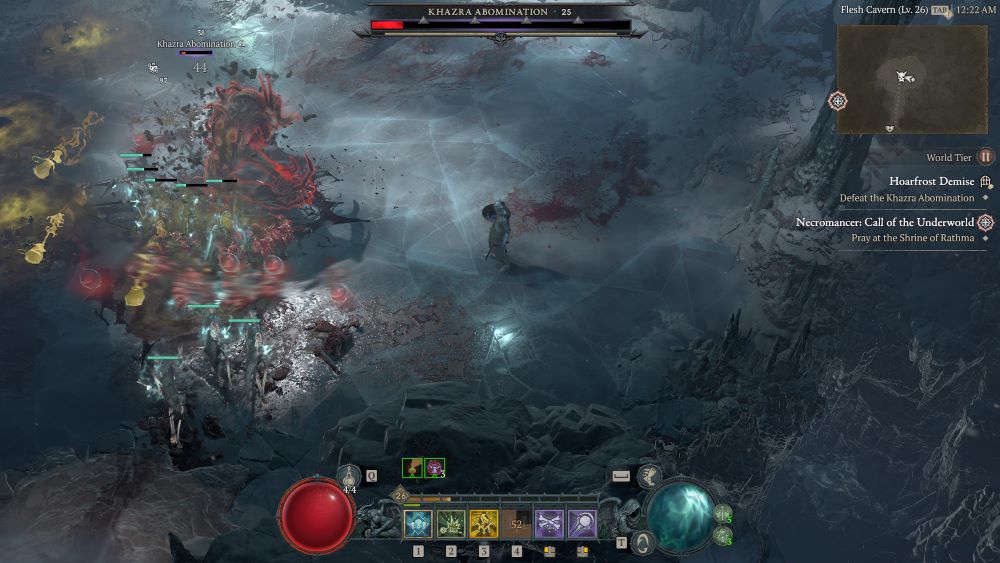
Of course, everyone knows the “real game” doesn’t happen until you start getting decked out in Legendary gear. I can already see how some Affixes can radically change basic abilities; perhaps that is the secret sauce for making 6 buttons still feel like enough agency. Diablo 4 does allow you to scrap Legendary items and then add their special ability to future item you want, which is fantastic. If Borderlands 4 doesn’t have something similar, it’s going to feel miles behind.
I will say though, playing Diablo 4 has given me a greater appreciation for V Rising. I said multiple times that V Rising’s ARPG angle fell short, and you should “just play Diablo 4” instead. While that is true from a loot perspective, I do have to say that V Rising feels way better from a gameplay perspective. Didn’t quite realize how much I missed WASD movement than when I was left-clicking around in Diablo 4 and either halted to shoot when I wanted to move, or moved when I wanted to shoot. Yeah, you can hold Shift to stay still, but that gets awkward when the game wants you to keep your fingers on 1234.
Anyway, so far so good. My focus is on the story, doing some random dungeons/side quests along the way, and raising the World Tier difficulty as it become available. There is likely a zero percent chance I’m spending hours farming endgame-endgame gear for the giggles, but it’s fun enough for now.
Cyberpunk 2077, Completed
Finally finished Cyberpunk 2077 over the weekend. Total playtime was a combined 148 hours.
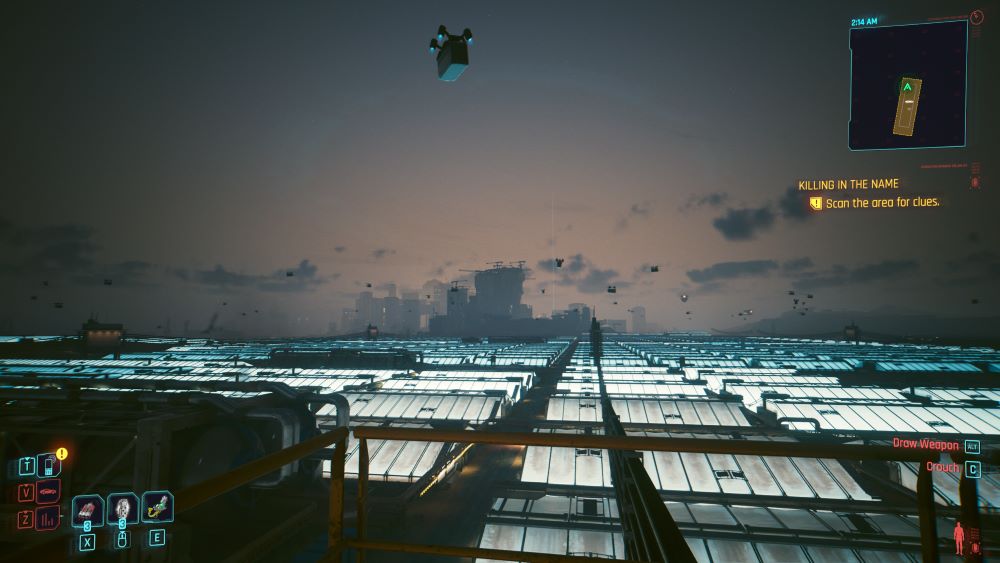
Years ago, my initial playthrough was as a female V, romancing Judy. Progressed up to the Parade mission, realized that things were probably going to go down, so I took an off-ramp into… literally everything else. Completed every single side-quest, and sucked the very marrow from the progression system. After that, I lost interest in going the final mile, never completing the game.
The second playthrough came as a result of the Phantom Liberty DLC release. Actually, a second playthrough would never have happened without the corresponding 2.0 overhaul of the Talent/Perk system. That overhaul really did turn everything around, making it a more cohesive, interesting experience. It didn’t hurt that Phantom Liberty was actually an extremely well-built DLC. In any case, I decided to start a fresh character using the “skip to Act 2” option to check out things as a male V, romancing Panam. And yeah, it was a “I studied the blade” playthrough (until I realized that sucked).
Ironically, I almost bailed at the exact same place as last time. Technically, in fact, I did: stopped playing in November after about 68 hours, right in front of the parade quest, having completely consumed all of Dogtown and thinking of what I had to do to unlock the various ending options. Already surpassed the old level cap, maximized gear, no progression of any kind to look forward to. Why bother slogging through to the end of this Civilization Conquest victory? I put the game away for a few months.
The main impetus of getting me over the finish line? My 2TB gaming SSD was getting too full. Yep.
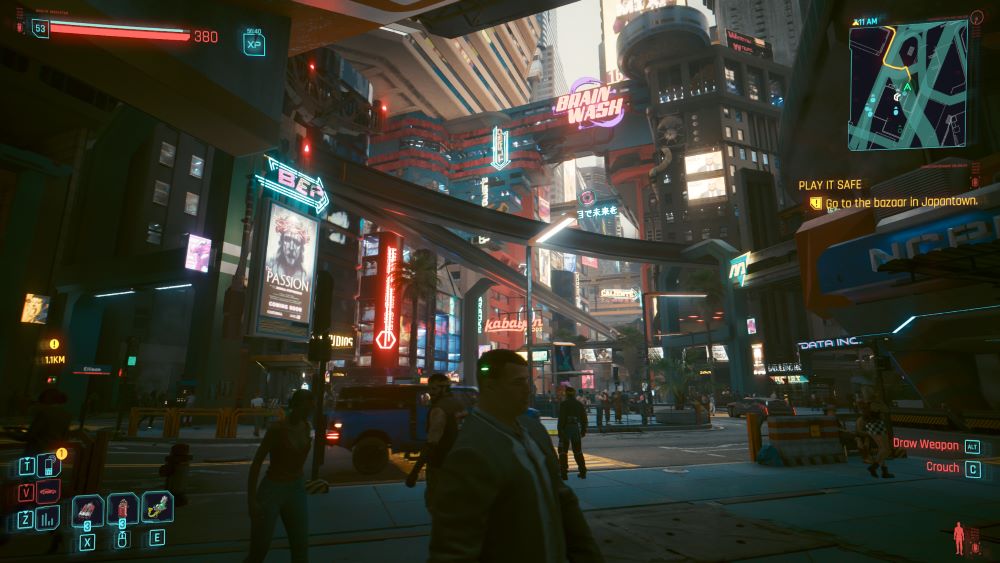
Now, my reticence over finishing may sound as an indictment of the game overall, but that is not the case. Cyberpunk 2077 is an amazing achievement, featuring one of the most cohesive, believable gaming cities ever designed. The streets feel lived-in, puked on, bled over, and cyberpunked.
The commitment to immersive first-person perspective is bone-deep, but what sells it the most is the level of humanity present in the movement of NPCs. A decade ago, characters winking in Mass Effect elevated the entire medium for me. And while I am fortunate enough to have experienced the vicarious joy of the devs when it came to Final Fantasy 7 Remake, Cyberpunk 2077’s contributions are on the next tier higher. Being able to walk around characters as they are talking, seeing them casually step over chairs, or light a cigarette, or any of the general actions that, while scripted, never feel overally scripted sets a bar unlikely to be topped for years. Granted, most of this comes from extensive (and expensive) mo-capping, putting it firmly out of reach for the majority of developers out there. But once you leave Cyberpunk and try any other supposedly AAA game (cough Starfield), you feel the difference.
Having said all that, I’m still not entirely sure how I feel about finishing the game.
Actually, hold up. Let me find that… here it is.

I’m not going to go into the nitty-gritty details of the ending(s), but you’ll be able to infer some things.
…buffering…
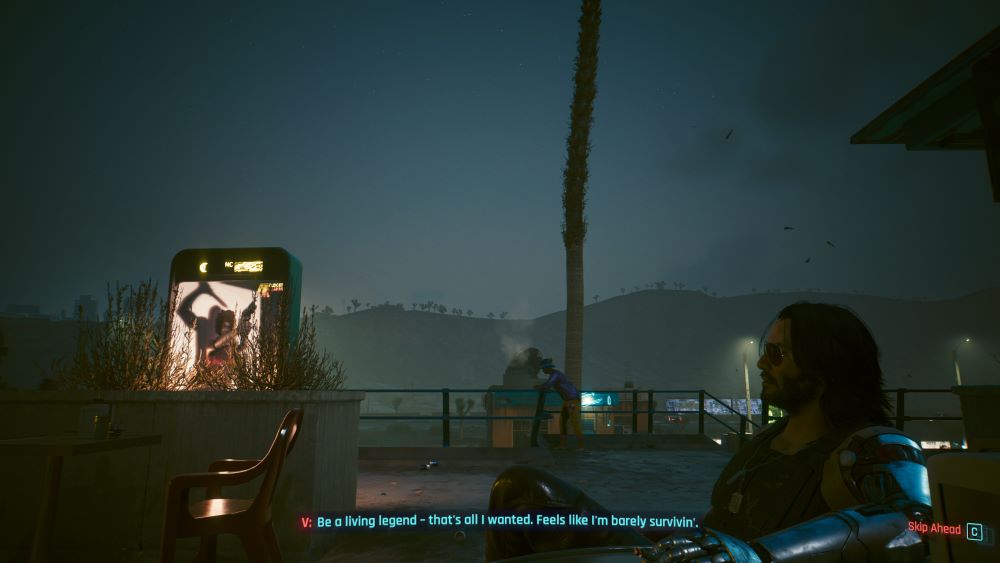
I found the overall narrative unsatisfying. To a degree, this is likely by design. Night City is a corpo-dystopia, poverty is rampant, gang violence is routine, and attempts to do the right thing usually end in worse outcomes for everyone involved. The primary motivation of the main character, established early on, is to become a famous mercenary and get rich. And while you do have the option to be a bit more, ahem, mercenary in a few quests, the language of action throughout is always centered on killing and/or stealing and/or sabotaging for cash, regardless of whether your heart is gold or lead.
From a gameplay perspective, that is perfectly fine – I relished every opportunity to cyber-ninja around Night City. But at some point there came a severe narrative dissonance in how much time I was spending killing random gang members as opposed to the corporations that were responsible for the dystopia itself. Maybe that is “too big” of a goal to accomplish, assuming I could even work towards that end with a ticking time bomb in my head. Maybe the point of the story is to demonstrate the corporations always win and the best you can do is disconnect and drive away into the desert.
You know, the ole’ Wargames “the only winning move is not to play” end. Which is second only to “it was all a dream” in terms of dissatisfying plot.
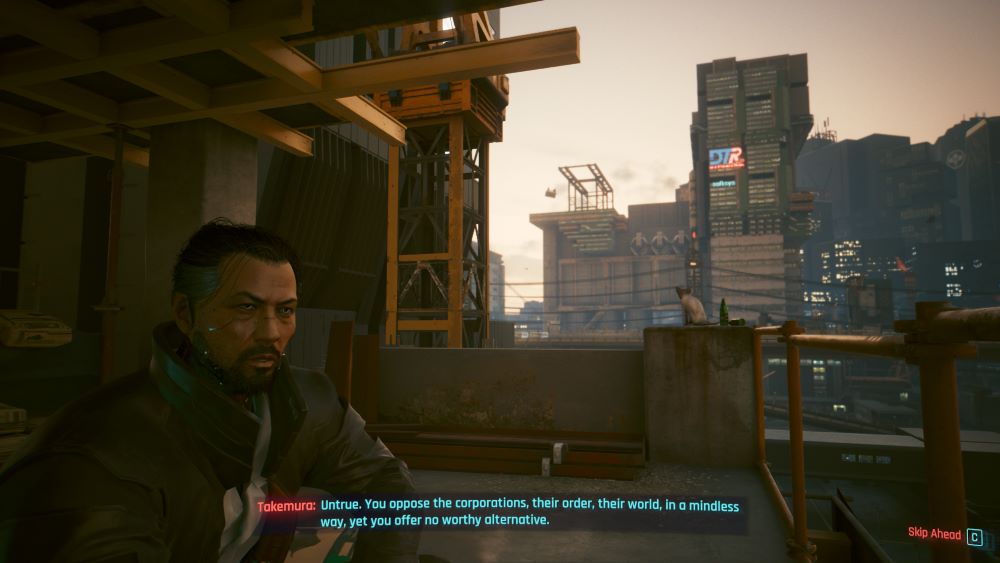
For most of the game, I also actively hated the Johnny Silverhand character. While there were some later quests that softened the rougher edges, for the most part, Silverhand just reminded me of one of those overly-dramatic friends whom the world is always out to get – defensively cantankerous, never realizing that if everything smells like shit, maybe you should check the bottom of your shoe. However, that thought led me to imagine a Cyberpunk where Silverhand wasn’t in your head. And… I don’t think it works. Not so much because Silverhand’s relentless cynicism enhances the narrative, but rather that it is structural crutch to an otherwise unsupported plot.
Like, imagine that you still have the Relic malfunctions and blackouts, and thus still have motivation to seek a cure. What else changes? Well, a shit-ton of dialog goes missing. And that was when I realized: Silverhand is the embodiment of a failure to “Show, Don’t Tell.” He’s the player’s digital conscience, ever critical of actions that contribute towards the preservation of the Corpo status quo… which is all of them. But the insufferable needling is necessary because the game otherwise doesn’t Show any of it. Arasaka and the other corps are right bastards in the lore, but aside from a few assassination attempts, they may as well not exist. The game should have been called The Gangs of Night City for how much gameplay ultimately revolves around Maelstrom and Tyger Claws.
Again, I get it, having players just fight corps is probably a hard game to make. Plus, part of the “point” of the setting is that these corps are all but unassailable outside of a few acts of targeted sabotage. Even ultimately bringing down Arasaka doesn’t do shit within Night City – Militec immediately fills in the vacuum and the status is quo’d once more. This is the cyberpunk genre 101.
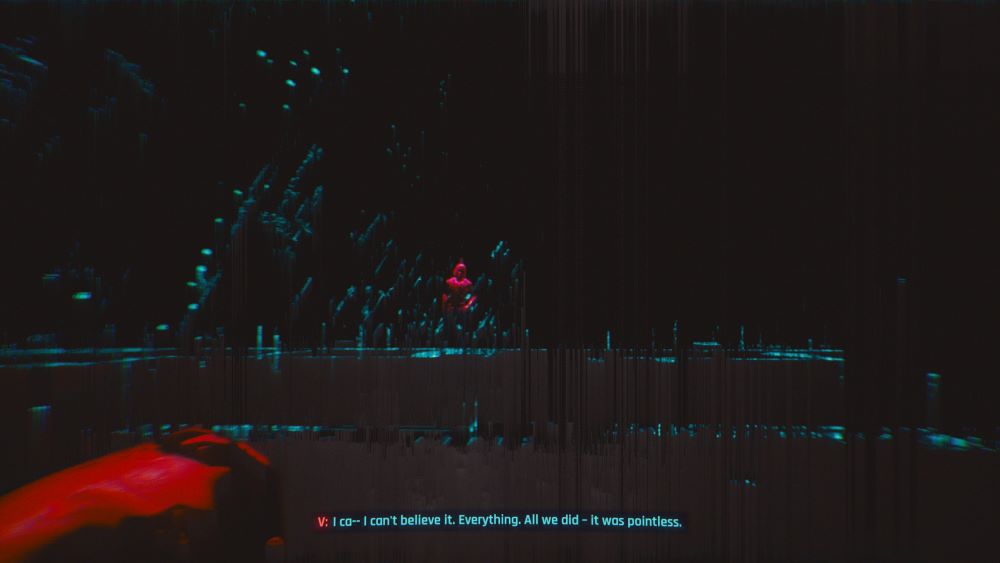
But… I dunno. I’ve played grimdark games before, I’ve played Far Cry 2 where by the end I as a player wanted my character to sacrifice themselves. I actually have a high regard to games that embody the Starfish Parable in the face of inevitability elsewhere. And yet, Cyberpunk 2077 somehow feels bleaker than even that. If that is the vibe the devs were going for, well… congratulations. You won, I lost.
Perhaps it is thus in a moment of supreme irony that I still recommend you play the game.
Not because of the “friends you made along the way,” or any sort of deep philosophical insight, or because of a game-inducing sensation of nihilism. Rather, you should play Cyberpunk 2077 because it’s a technological marvel. You can mod it into virtual photorealism rather easily, but even without mods the fidelity is on a level beyond all peer. Crysis was a gaming benchmark for decades, and I can see Cyberpunk 2077 occupying a similar niche for years to come.
But what really ties it together is the Immersion impact. Some Call of Duty sequel or whatever may end up being prettier, but what can you actually do in the game? Skyrim might technically be more immersive in terms of interacting with the environment, and Grand Theft Auto 5 also has a lot of activity. But I cannot stress enough: Night City feels real. You are in an environment. From now on, if I cannot jostle NPCs out of the way while moving through a crowd, that game is crap.
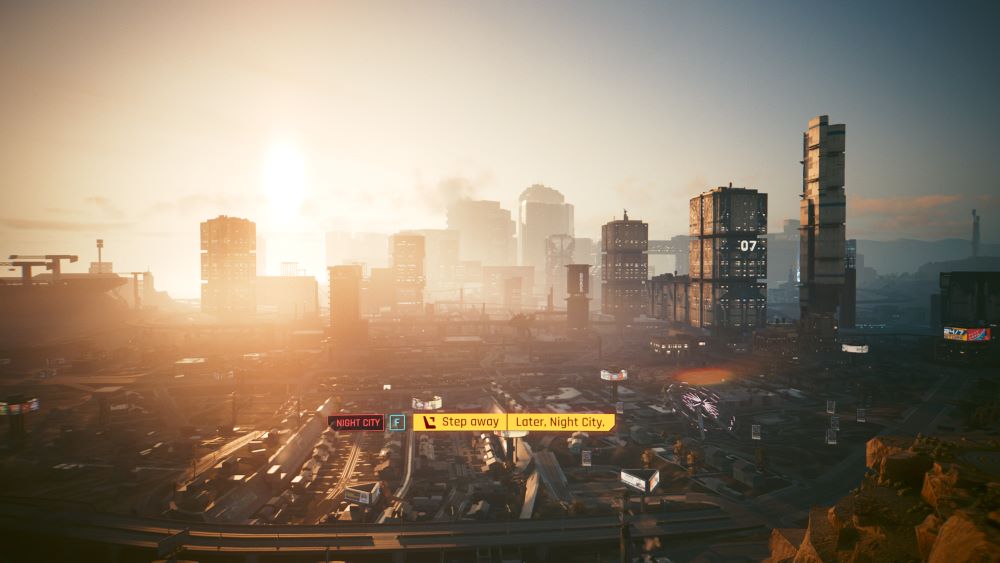
So, yeah. Cyberpunk 2077.
Buy it, play it, live it, and then end the game on your terms. Preferably before the parade mission.
Battlefield 1 Impressions
There is basically one word that sums up Battlefield 1: oppressive.
Which, considering the war DICE is simulating, is pretty impressive.
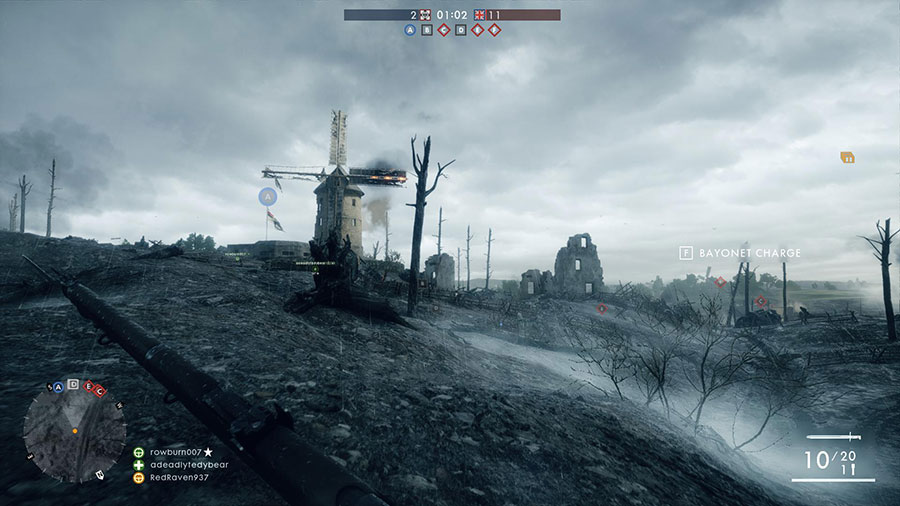
Nailed it.
“Impressive” might actually be selling BF1 short. There is a rather sublime confluence of game design and tone and setting going on. I mean, this is a Battlefield game and one that largely plays like BF4, BF3, and BF2 before it. I’ve played this series for over a decade, right? But let me tell you, when you’re playing the Operations game mode and hear that whistle and the yelling from a bayonet charge… well, you find yourself jumping out of the trenches and joining your brethren rushing the front line just the same.
Part of what makes this possible are the extremely limited and almost universally bad weapons. Which is a rather weird thing to say, I realize. The Assault and Support classes have automatic guns, but they are largely inaccurate without going prone or bracing against cover. The Medic class has a semi-auto rifle that hits like a truck, but is terrible at hip fire. The Scout class has all the sniper rifles, which are more infuriating than normal due to needing to spend most of your time in cover.
What this ends up doing is encouraging the exact tactics I described before: charging the front lines. There is no “slow and steady” here – there is melee range shooting or being sniped from 200 yards.
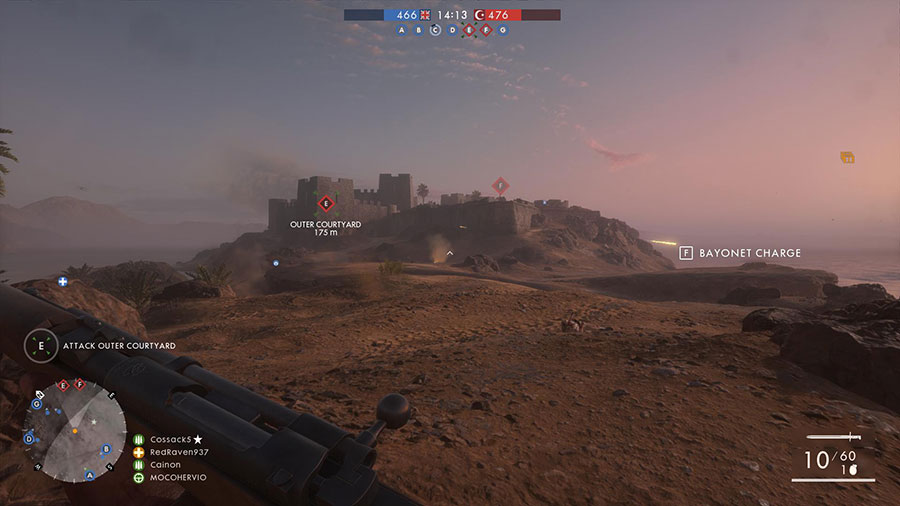
Charging that castle head-on? Sure, why not.
The map design absolutely influences things as well. Only the Scout has the ability to create temporary “radar” to find enemies, which means there could be enemies hiding out in every corner of every ruined structure. There are ruins everywhere though, and craters, and trenches, and bunkers. This leads to a rather manic, room-to-room searching every time you try to cap an area, or perhaps huddling down and hoping no one pops around the corner and stabs you in the throat.
Oh, and have I mentioned the grenades? The normal complement of grenades are back, plus the Incendiary and Gas variety. The former is pretty self-explanatory area denial, but the latter? Very interesting, conceptually. The Gas grenades release Mustard gas in the area, which causes blurred vision, your character to choke and cough, and rapid HP loss. Pressing T will have your character put on a Gas Mask, nullifying the damage completely. At the same time, the Gas Mask obscures your vision (also preventing aiming down sights) and hearing, and doesn’t do anything about the actual gas blocking your vision. Thus, tossing Gas grenades still affects the given area rather dramatically even if it deals no direct damage.
All of the game elements above mix into a dirty miasma of oppression while playing. You are surrounded by comrades, but you are also terribly, terribly alone in the smoke and death. You are constantly forced to make the decision to blindly rush towards the enemy or suffer constant sniper fire from every corner of the map. Biplanes and tanks are virtually indestructible killing machines. Even if you happen to pick the Assault class, your two options are rushing tanks with dynamite or plinking them with dumbfire AT rockets while prone, which makes you easy picking for snipers.
For a game to evoke such emotion so well regarding the subject matter via inherent gameplay is a triumph of game design. This is pure Show, and little Tell.
At the same time… well, I’m not sure how much WWI I can really stomach. A squad of soldiers could grab a helicopter in Battlefield 4 and go point-to-point capping areas and dodging missile fire and feel good about things. Or they could die in the gas-saturated muck in BF1, accomplishing nothing. I’d say 80% of my deaths show the killer dying himself seconds after I hit the ground. It’s hard to feel good about that, or watching a flag getting turned after you spent several lives just getting to the capture point in the first place.
I dunno. It is hard to put into words what is going on and how I end up feeling after a match is over. If Titanfall 2 is like cotton candy, then Battlefield 1 is a greasy Big Mac – there is more sustenance there, but that doesn’t particularly make you feel any better.
Grimwatch
Since I “saved” the $50 from not buying the 50-pack deal in Hearthstone, I turned around and pre-purchased Overwatch. In fact, I just got off a four-hour semi-open Beta session with some ex-WoW buddies as I write this. All the maps are open this time around, so things are pretty interesting.
Even more interesting though, was the trailer for Warhammer 40k: Dawn of War 3:
I can’t even really begin to elucidate why the 40k setting grips me so. All I know is that spent 200+ hours playing Dark Crusade, and I’ve been missing that feeling since… well, Dark Crusade. Dawn of War 2 took the series away from RTS and more into a tactical direction, which is not something that it really needed. Now? It’s going back. It’s going home.
Exciting times, my friends.
Plus, you know, there will be information about the next Battlefield game this Friday. Battlefield Hardline was such an epic failure, that only a proper BF5 (or even BF 2142 sequel) could wipe away. If we see something like that and all this grimdark 40k business? I won’t know what to do with myself. Other than actually look forward to game releases again.
Review: Warhammer 40k: Space Marine
Game: Warhammer 40k: Space Marine
Recommended price: bundle/$0
Metacritic Score: 74
Completion Time: ~5 hours
Buy If You Like: Warhammer 40k, mindless 3rd-person action
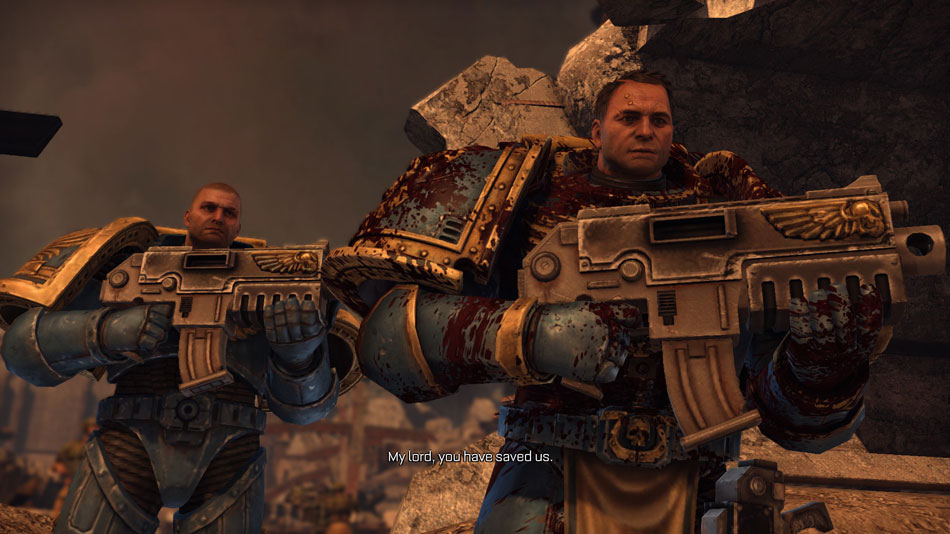
Something about the juxtaposition of religious iconography and high technology gets the juices flowing.
Let me start out by saying that I am a huge fan of the Warhammer 40k universe. The setting gets a lot of flak for being grimdark and violent and possibly even juvenile, but whenever I start hearing phrases like “Adeptus Mechanicus” and the “God-Emperor of Man” I put on my game-face and settle down for some fun. Up to this point, I have almost religiously played the Dawn of War games and all the expansions up to Space Marine and generally loved them all (Dark Crusade being my 200+ hour ultimate favorite).
After the ending credits to Space Marine, I came away… well, curiously disappointed.
You take on the role of Captain Titus, one of three Ultramarines sent as vanguard to the fleet coming to the rescue of a besieged Forge World. The basic game structure is 3rd-person mayhem in the styling of Devil May Cry/God of War without the fighting depth, or Darksiders without the exploration/puzzles. Part of the promotional campaign involved making fun of other 3rd-person cover-based shooters (“Cover is for the weak”), but around the 30% mark it becomes quite clear that the health regeneration from executing stunned enemies won’t, ahem, cover the increasing volume and severity of ranged fire. In fact, in the late stages of the game, you will be reduced to peaking your head around crates to take pot-shots at uber-laser troops while actively running away from anyone trying to melee you.
There are a few cool moments for 40k fans, and the levels where you get access to Jetpacks really cements the feeling that I’d love an MMO or more free-ranging game in this universe. In between these moments of fun, however, are about 60+ thinly-veiled elevator loading screens, repetitive battles, large empty spaces devoid of any reason to explore, and a vague sense of hollowness. Darksiders gets away with long stretches of nothing happening because you’re solving a puzzle, but here you’re frequently just stomping around for 5+ minutes inbetween the small pockets of button-mashing. Watching my hero units in Dawn of War felt more exciting than playing as one in Space Marine.
Bottom line, if you were primarily interested in Space Marine because you like the Warhammer 40k setting, you can safely skip this entry into the franchise and have missed nothing of note. If you don’t care about the 40k setting, well, you aren’t missing anything either.
 In An Age
Forever Winter
Jun 18
Posted by Azuriel
Going to be adding Forever Winter onto my list of games that look cool that I’m probably never going to actually play:
I say that because it’s being described as a “co-op tactical squad-based survival horror shooter.” I have zero interest in playing with randoms anymore, let alone in a scenario that allows for an entirely novel way of griefing, e.g. making too much noise and getting caught by AI horrors.
Conceptually though? Game is Badass with a capital B.
While the above trailer looks amazing, it was actually this video that hit hardest:
In short, it seems like most of the people that are working on the game are concept artists that finally get to implement their concept art. A battle tank draped in bound, naked corpses? Flamethrower troops in spacesuits with American flags draped over their face? Yes, please. Granted, I did not quite see any of those in the gameplay reveal trailer, so who knows if they actually follow-through.
It will be interesting to see how the game ultimately shakes out. I’m a big fan of grimdark, post-apocalypse looting. Having to be weary of getting into fights that are impossible to win is also compelling. But there will need to be a real trick on how that translates into long-term fun. Will there be a story mode or overall plot? The trailers seem to indicate you may end up fighting “bosses” eventually, which provides something of a “why” to grind out whatever resources. But if the whole of the game lends itself to not attacking things, and possibly punishes you for doing so, it will be tricky to land the transition without feeling like the game itself turned into something else. Sort of like when you have a stealth game that suddenly has a stealth-less boss fight (Deus Ex: Human Revolution), or a traditional FPS with an annoying stealth level (too many to mention).
Regardless, I will be following Forever Winter with interest.
Posted in Commentary
2 Comments
Tags: AI, Extraction, Forever Winter, Grimdark, Looter Shooter, Post-Apocalypse