Blog Archives
That JAB vs Trump Hearthstone Game
The Hearthstone Americas Champion tournament aired this past weekend, and one particular game stood out: JAB vs Trump, Game 5. Or more specifically, this game-deciding bit of RNG at the final moments:
Now, the first thing I’m going to say is this: listen to that crowd. They’re loving it. I was watching the stream live and even I was going “OoooOOOoooh!” For all the derogatory “coin-flipping” and RNG flak Hearthstone gets, I think it’s pretty clear that watching these games can still be pretty exciting. Certainly more exciting than watching a perfectly mechanical, zero RNG game in which the outcome is known by turn four.
But as someone who watched the entire match-up, what gets me is how everyone always boils the RNG down to the final sequence… but seemingly ignore everything that lead up to it. This the final match in its entirety:
There is a ton of RNG at the beginning of the match, including a lot of amazing top-decks that changed the tone of the game. If Trump didn’t draw that Big Game Hunter to answer Dr. Boom, if the Shredder outcomes were different, if some other combination of cards were drawn… and so on. It reminds me of sports like football or baseball when mistakes are made with the final field goal or bottom-of-the-ninth plays. Everyone always remembers that last failure, and not all the other equally critical failures that lead up to it.
That thought then brought me to the Reddit thread in which someone wrote this:
You missed the whole pont, people say Hearthstone can’t be an esport because RNG isn’t affected by skill (mostly), so it’s more like playing bingo than a real sport in which there is 0% luck like soccer, or an esport like StarCraft 2.
There is no question that there is a lot of RNG in Hearthstone. But it is also beyond absurd to not recognize how much random bullshit occurs in meatspace sports as well. It is like suggesting all these soccer goals were 100% intentional, including the one where the guy tries to headbutt the ball, misses, and it bounces off his hip into the goal. Is the fact that a literal random number generator is not involve somehow make those “1cm to the right and it’d have bounced off the pole” scores less random?
Point being: randomness is involved in every asymmetric game, up to and especially including real-life sports. Are soccer games determined by coin-flips? Not ones we can see, anyway. But how else would you describe a penalty kick-off in soccer? That goalie has to arbitrarily decide to jump left or right, pretty much instinctually and before they see where the ball is heading. Or going back to card games like Poker – which a lot of people take very seriously – the most skillful aspect of the game is… bluffing. But what is that? If you read someone perfectly, all that really tells you is “they like/don’t their hand.” It doesn’t tell you what cards they have, or if yours could beat theirs.
I dunno. I don’t play Hearthstone as much as I used to, but I still enjoy watching it quite a bit. To suggest it can’t be an esport due to it having RNG moments though, is just ridiculously wrong. The randomness in other games is just more well-hidden. Perhaps we can say Hearthstone has too much of some arbitrary amount of RNG to be successful in an esports sense, but… is that really the criteria? Or is it “this is fun and exciting to watch?”
Impression: the Witcher 3
The Witcher 3 is weird.
…
…what? You need more? Haven’t you played this game for 100+ hours already?
The weirdness comes from the juxtaposition of Witcher 3 (W3) getting some things outrageously, fantastically good, all while mired in mediocrity and out-right immersion-breaking shenanigans otherwise.
For example, the environment, the gritty, dirty, pustule side of medieval fantasy life is back with a vengeance and already a highlight of my Witcher experience yet again. When you walk around hearing peasants cough with genuine phlegm, it reminds you this isn’t Disneyland, this is real (fantasy) life. People lived in the muck, practically nobody has windows, of course they’d be walking around like diseased shit-bags. The entire Witcher series has always gotten this feeling down so well that every other medieval setting I have encountered since has felt like college freshmen at the Renaissance Festival in comparison.
Then you walk into an Inn and the barkeep is selling bottled water for 42g apiece:
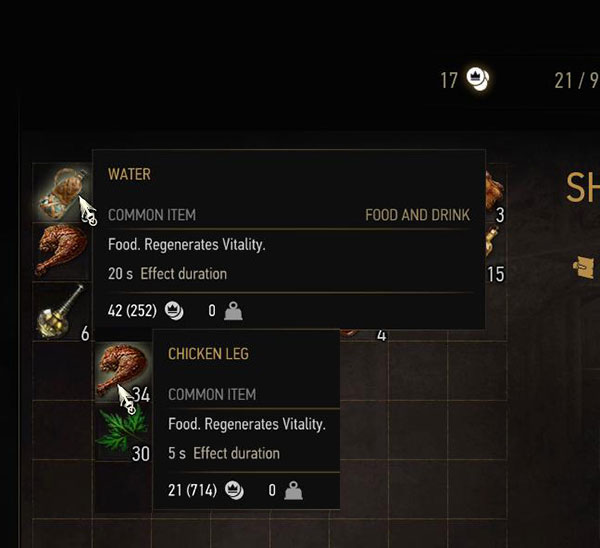
Brought to you by Nestle.
In the panoply of absurd gameisms out there – having access to world-ending magical powers but being unable to open locked doors, etc – it might seem disingenuous to pick on W3’s Nestle-style gouging as immersion-breaking. But it is precisely the confluence of W3’s fantasy realism and its absurd gamey bits that make little details like this so prominent.
Playing on the next step above Normal-mode difficulty means that Geralt no longer gets healed by Meditating. Whereas you might have just chain-chugged Swallow potions in prior titles to beef up your passive regeneration, W3 has opted for the Skyrim-esque “scarf fifteen pieces of raw meat in the middle of combat” HP management system. Different consumables heal X amounts in Y amounts of time, so you typically need the best to survive.
And one of the best? You guessed it: plain ole H2O.
I haven’t cared more about water in any game since Fallout: New Vegas hardcore mode. Every time I rummage through a peasant hovel, stealing everything not bolted down, I do a fist pump every time I see a bottle of water. “Silver candle stick. Old bear hide. Ruby dust. Water… score! Time to fuck up some demons!”
I’m only halfway kidding.
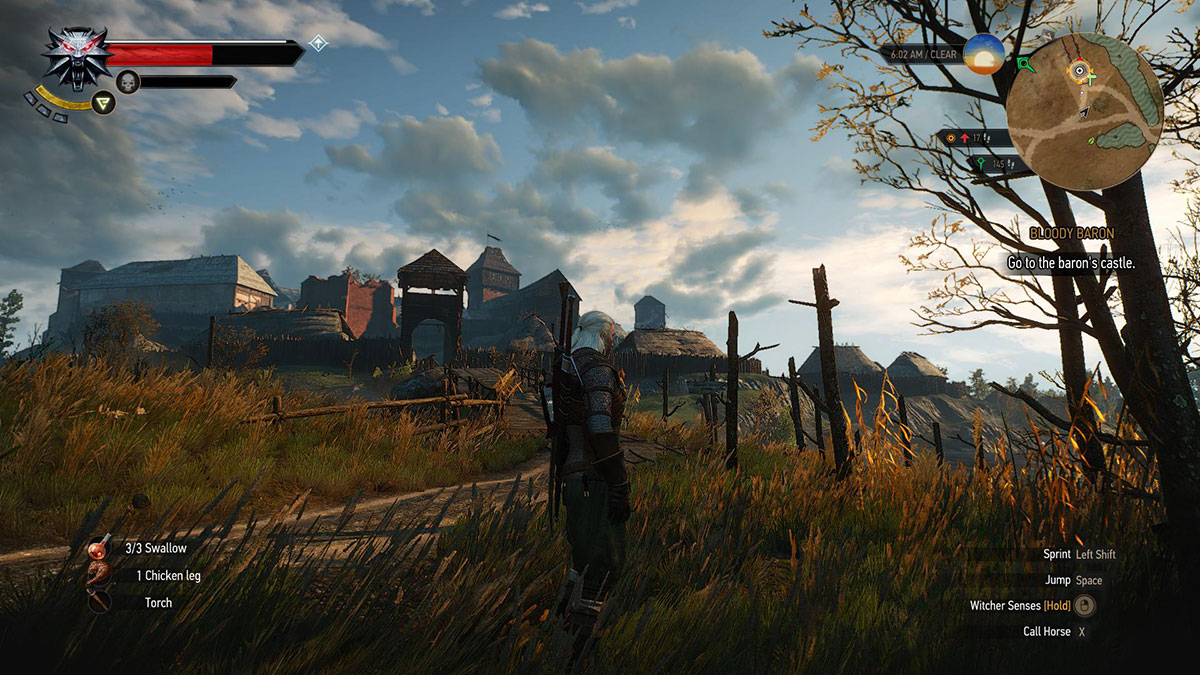
Please live up to this.
Truly though, W3’s combat system reminds me of Blizzard’s game design philosophy between expansions: instead of simply fixing what was broken, CD Projekt RED decided to veer completely in a different direction… again.
The combat itself is fine, for the most part. What is different (again) this time around is consumable use. Potions are no longer limited by toxicity (Witcher 1) or preparation (Witcher 2), but rather by what amounts to “per encounter charges.” Craft the Swallow potion one time and you get 3 charges of it, which are automatically replenished by strong alcohol whenever you meditate for at least 1 hour. Craft every potion once, use them all in five minutes, and they all come back after meditation. I’m not really even convinced that any alcohol is actually being consumed to replenish the stock of potions.
While toxicity still exists, it is largely window-dressing considering how a single Swallow potion’s toxicity drops to zero before the potion’s effects even have time to wear off. And while the toxicity meter limits your ability to stack potion effects I guess, the Quick Use menu is limited to two items anyway (presumably to not blow the minds of unwashed console peasants). Decoctions represent longer-term buffs that fully use up your toxicity meter, but I’m not entirely convinced this move towards the trivialization of preparation was worth it. Witcher 2 went way, way too far the other direction – forcing you to use potions before you even knew combat was coming – but why the crazy swing the other direction? Pretty sad how much better the original Witcher feels in comparison.
In fact, that’s precisely where I am mentally every time I boot up the game. It looks amazing, sounds amazing, and generally feels amazing when playing in the moment. If you slow down a bit at all however, and the high-speed blur turns into a mishmash slurry of disparate game mechanics. I’m hoarding herbs and potions out of Witcher 1 habit while throwing back Honeycombs and Wolf Livers by the pound. I’m looting every building and outhouse in sight for crafting materials so I can craft low-level items outclassed by bandit drops so I can kill skull-level monsters guarding swords five levels below me. Random loot is random, but there comes a time when the designers need to put in some goddamn sanity checks, yeah? Sitting on the recipe for Enhanced Beast Oil for 10 hours while Googling where the hell regular Beast Oil is supposed to spawn is not my idea of good game design. Especially when the answer is a shrug.
So. Like I said: weird. Good, but weird.
But hey, Gwent is pretty cool. It’d be cooler if they actually let me have enough cards to make more than one faction deck after 25 hours, but it’s still fun.
Non-Customization
I don’t know if you’ve been following the new ground the developers of Rust have been breaking, but it’s both interesting and hilarious. The short version is that instead of customizing your character, all of your character’s physical attributes are randomly assigned and permanently tied to your Steam ID. This includes race, penis size, and now gender.
As you might imagine, some corners of the internet are melting down.
There are multiple layers of this design which are fascinating to me. The first is the sheer amount of free PR this generates. I mean, when was the last time you actually heard news about Rust that wasn’t about the size, color, and/or existence of the male sexual organ? Last thing I remember reading was from what feels like years ago, when Rust removed zombies… and people were crafting C4 to break into peoples’ shacks? It’s still a crafting survival game, right? I wouldn’t know.
Philosophically, the intended inability to choose your avatar’s features is also interesting. The money quote from the devs is this one:
To clear up some confusion, when we it does go live you won’t get a choice of whether you’re female or male. We’re not “taking the choice away” from you. You never had a choice. A man’s voice coming out of a woman’s body is no more weird than an 8 year-old boy’s voice coming out of a man’s body.
Some of the criticism is coming from people who don’t want to feel restricted in their character creation, or people who want their avatar to look like them (for RP purposes or otherwise). But in a sense… is this any different from, say, Witcher 3 or any other game with fixed player assets? As the dev mentioned, you never actually had a choice at character creation, so nothing is being taken away. Is it about historical gametype precedent? Or about the fact that the devs could have added customization options but have clearly decided not to?
In any case, I like the cut of this dev team’s jib. They are doing bold things that could go horribly wrong, which is the heart of soul of R&D. Plus, listen to this bit:
“We wanted to lock people to an identity so they could be possibly recognized for their misdeeds, just from their avatar,” he explained. “The idea being that eventually we’d take away player names, and emergent stuff could happen like mistaking someone for a friend, impersonations, etc.”
That sort of “reputation” is asinine in a multi-server scenario IMO, but good for them for going for it. And removing character names altogether? That’s a pretty brilliant social experiment.
I’m not invested in the outcome of Rust, but damned if I don’t feel a tiny bit compelled to see what kind of character gets rolled for me. Not going to lie: if I end up getting stuck as generic white dude #476, I’ll be pretty disappointed.
Good RNG, Bad RNG
I feel kinda bad for having sung the praises for Hearthstone’s Tavern Brawl mode right as they released perhaps the worst iteration of it possible. This past week’s Brawl is “Encounter at the Crossroads,” and follows the (intentional?) pattern of every other week’s Brawl giving you a deck to play with. Instead of being filled with Webspinners, your deck is filled with completely random garbage cards, and up to three Legendaries. It ends up being 15 Neutral cards and 15 Class cards, for the record, and they are completely random – Mad Scientists in decks without Secrets, cards that trigger off of dragons without a single dragon in the deck, and so on.
My utter disgust with this week’s Brawl got me thinking: what’s the big deal? There is RNG everywhere, so why hate this kind? What’s so worse about this RNG as compared to the Webspinner Brawl or the spell one the week before?
I think my biggest problem is that this was Blind, Lingering RNG. Last week, you didn’t know what kind of creature you would summon… other than that it’d be an X mana cost one, it would come before the spell resolved, and you knew what was in the rest of your deck. You knew how much removal you were packing, you knew what synergies existed, you kinda knew what to expect from your opponent.
With a Crossroads deck, you know nothing Jon Snow. You didn’t even know whether to mulligan your shitty opening hand; if you threw anything back, chances are you’d get something even worse.
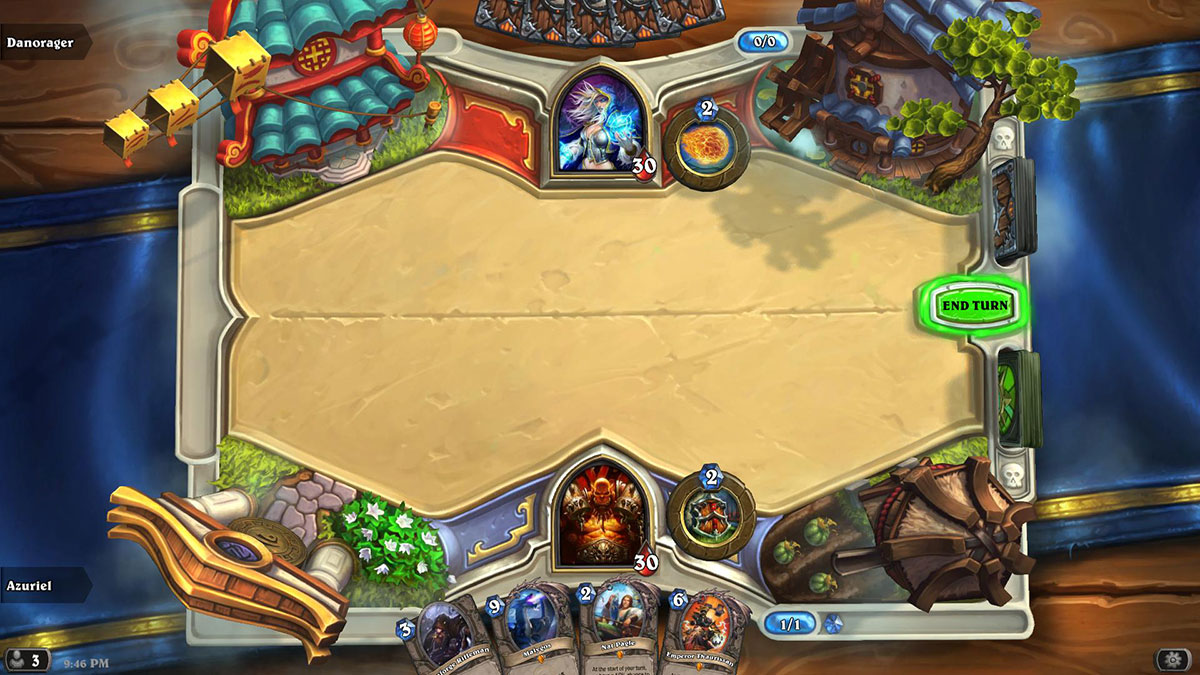
Spoiler alert: I lost this game.
One of the benefits to RNG is the very thing that people often complain about: RNG can determine games. Yes, there will be games that you lose to coin flips. Yes, it feels awful when you’re winning to suddenly fall behind through no fault of your own.
At the same time… randomness can make things interesting. Randomness can challenge you, present you with scenarios you’ve never encountered before, and allow you to overcome defeat through judicious use of probability. Do you play around that 10% chance that the Piloted Shredder pops out something that destroys your strategy, or do you play it safe? That sort of thing is (or can be) an interesting decision, and different people have different thresholds of comfort when it comes to percentages.
I mean, imagine the opposite case with no RNG. Losing from your opening hand. Or at least your only hope being that your opponent has as bad a hand as you do. It feels bad, man.
This is what this Brawl has felt like all weekend long – inevitable lingering losses. I played in the neighborhood of twenty games to complete my dailies, and I was never blessed with those same insane, on-curve openings that I would routinely experience the sharp end of. In most of the games, I would have been better off conceding in the first two turns. Could you imagine someone feeling the same in the Spell-Minion or Webspinner Brawl? Don’t get me wrong, you could get way screwed out of nowhere in those Brawls. But that’s the thing: it’s immediate. It’s more fun, even on the receiving end. At least in comparison to being behind, with nothing good to play this turn, and knowing you have a 99% chance of drawing into even more garbage the next turn.
There’s RNG and then there’s RNG. This is the latter, it sucks, and I hope Blizzard never does it again.
On Randomness, Again
A little over a year ago, I talked about randomness in Hearthstone. Since that time, the amount of RNG cards has only increased. In fact, the Goblin vs Gnomes expansion added a full 24 cards with the word “random” on it, some of which have gone on to be staple cards in many decks:

The one of the left is an auto-include in every deck.
At the time of the article, I mentioned that Blizzard’s stance on RNG was possibly at a turning point given how Hearthstone’s nascent e-Sports scene was starting to take off, much to the surprise of Blizzard itself. As we well know today however, Blizzard has stuck with their RNGuns and doubled-down on wild board swings.
And… I think I can appreciate what they’re doing.
The downsides to randomness are rather apparent to most people, insofar as you can go from winning to losing by virtue of a coin-flip. Watching Pro Players losing tournaments on the back of a 1% chance (or even less) of bad luck makes the game look like amateur hour sometimes.
On the flip side (har har), an element of randomness allows one to stage surprising comebacks. Top-decking just the right card to win a game has always been a staple of even the highest levels of the Magic: the Gathering professional scene. Since Hearthstone has less than half as many cards as Magic (and no land cards to gum up the works), Hearthstone arguably needs the extra randomness just to be less deterministic. Nobody likes playing unwinnable matches.
The real upside to Hearthstone’s randomness though? The stories.
If you were the other guy playing this match, you would probably be justifiably upset about how utterly screwed you got from that Piloted Shredder outcome. Or would you be justified? As I mentioned before, randomness is just another consideration that skilled players need to account for in their strategies. Getting Lorewalker Cho out of a Piloted Shredder as Oil Rogue is bad, but there was always a 1.5% chance of it happening in every game; if you don’t want to sometimes lose to the randomness of your own card, take it out of your deck. About 70% of the time, Piloted Shredder summons a better-than-expected minion, which is why so many people run it.
But as I was saying, that match went from “just another video demonstrating a deck” to “high-class entertainment” in my eyes. You can see the gears whirling in the streamer’s head as soon as Cho hit the board; it was unexpected, and the unexpected is much more fun for the viewers at home. Even if I were playing that game though, I think I’d be alright with it. Nobody really cares that you won yet another game as Oil Rogue or whatever is Flavor of the Week. Winning in spite of Cho? That would be epic. And even though the other rogue loss due to Cho, he/she now has the option to mentally blame bad luck instead of being outplayed. That attitude can prevent new players from improving of course, but it can also prevent new players from simply giving up in the face of veterans.
The next Hearthstone Adventure set, Blackrock Mountain, is due to be released sometimes in April. We haven’t seen nearly all the cards yet, but we already know about a reverse-Shredder card called Hungry Dragon, which summons a random 1-mana minion for your opponent. So at this point, I believe it safe to say that randomness is here to stay. Time will tell if Hearthstone in general does the same.
(I give it a 92% chance.)
Defiance
For the past few weeks or so I have been playing Defiance. As a refresher, Defiance was a subscription-based, TV show tie-in shooter that has since gone F2P. The game plays and handles a lot like an over-the-shoulder Borderlands, in the sense that waves of enemies appear and are dispatched with a large assortment of random weapons.
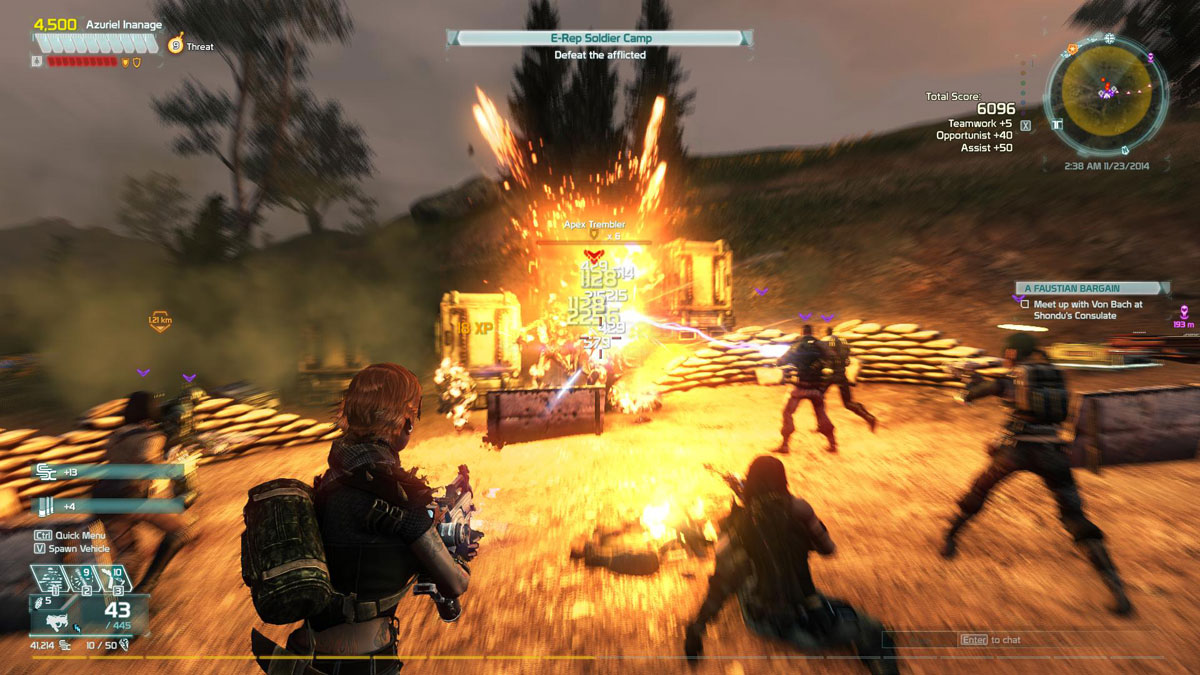
In crowds, enemies become armor-plated bullet sponges.
At this point, I think the show is more popular than the game, and that is too bad. Defiance has story quests that are voice-acted and pretty-well put together. You get a vehicle almost immediately after character creation. There are a number of “arkfalls” at any given time, which are dynamic random events which tend to congregate players around specific points on the map. There are a bunch of (repeatable) side-quests which involve racing, sniping, and other such things.
That said, the biggest problem with Defiance is a more fundamental one: the game is only fun with a fun weapon.
Loot in Defiance is random, just like in Borderlands. There are a number of rarities and status effects and such, but the actual number of gun types are pretty well defined. In the course of my ~20 hours of play, my favorite loadout involves a machine gun that pretty much empties a full 75-bullet clip in three seconds and a shotgun that shoots grenades. I was having a lot of fun running around with these weapons when I got them, but as I have scaled higher in “EGO Rating” (roundabout levels) enemy health has scaled such that my favorite weapons are no longer viable. You can upgrade old weapons to near your EGO Rating, but you can only do so once. And I have since outleveled them again.
In the meantime, I am at the mercy of RNG dropping a higher-level version of the guns I enjoy, or really any weapon that is serviceable. There is somewhat of a push to make all of the weapons viable, but there isn’t much you can do to, say, pistols to make them fun to use. Even with super-high damage and a fast fire rate, you would likely be better off with a LMG with 10x the magazine size. Rocket Launchers face the same sort of issue with faster, higher magazine grenade launchers outputting more DPS overall while giving you a buffer in case you miss your shot.
To say nothing about, you know, a shotgun that shoots grenades with 12-14 rounds in a clip and a 250 shell capacity vs the smaller explosive round.
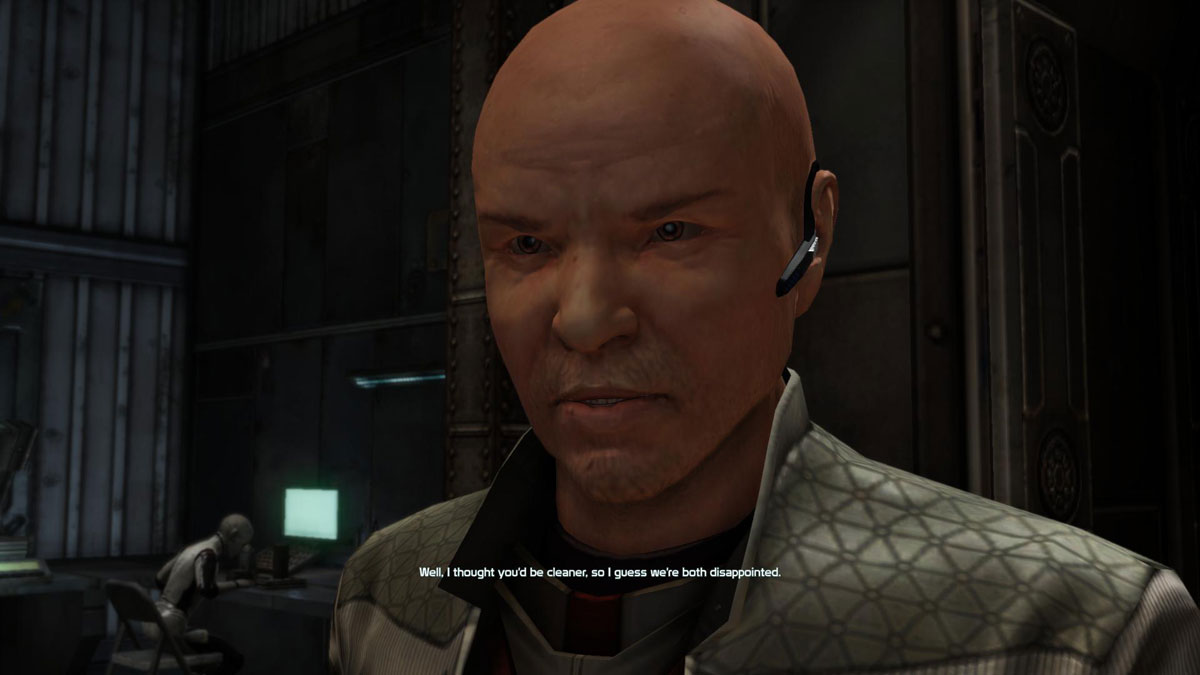
Oh, Von Bach, never change.
In any case, I’m not entirely sure how much longer I will be playing Defiance. As mentioned, the story scenes are actually quite amusing in the sarcastic banter sense, and I’m interested in seeing where it goes. The weapon issue though… it does make it difficult sometimes to slog through waves of enemies with crappy weapons to get there.
Dynamic vs Random
Keen has another post up lamenting the stagnant nature of modern MMO game design, while suggesting devs should instead be using ideas from games that came out 15+ years ago and nobody plays today. Uh… huh. This time the topic is mob AI and how things would be so much better if mobs behaved randomly dynamically!
Another idea for improving mob AI was more along the lines of unpredictable elements influencing monster behavior. “A long list of random hidden stats would affect how mobs interact. Using the orc example again, one lone orc that spots three players may attack if his strength and bravery stats are high while intelligence is low. A different orc may gather friends.” I love the idea of having visible cues for these traits such as bigger orcs probably having more bravery, and scrawny orcs having more magical abilities or intelligence — intelligence would likely mean getting friends before charging in alone.
The big problem with dynamic behavior in games is that it’s often indistinguishable from random behavior from the player’s perspective. One of the examples from Keen’s post is about having orcs with “hidden stats” like Bravery vs Intelligence that govern whether they fight against multiple players or call for backup. Why bother? Unless players have a Scan spell or something, there is no difference between carefully-structured AI behavior and rolling a d20 to determine whether an orc runs away. Nevermind how the triggers being visible (via Scan or visual cues) undermine all sense of dynamism. Big orc? Probably not running away. If the orc does run away, that’s just bad RNG.
There is no way past this paradox. If you know how they are going to react based on programming logic, the behavior is not unpredictable. If the behavior is unpredictable, even if it’s governed by hidden logic, it is indistinguishable from pure randomness. Besides, the two absolute worst mob behaviors in any game are A) when mobs run away at low health to chain into other mobs, and B) when there is no sense to their actions. Both of which are exactly what is being advocated for here.
I consider the topic of AI in games generally to be one of those subtle designer/player traps. It is trivially easy to create an opponent that a human player could never win against. Creating an opponent that taxes a player to their limit (and not beyond) is much more difficult, and the extent to which a player can be taxed varies by the player. From a defeated player’s perspective, there is no difference between an enemy they aren’t skilled enough to beat and an unbeatable enemy.
You have to ask yourself what you, as a hypothetical designer, are actually trying to accomplish. That answer should be “to have my intended audience have fun.” Unpredictable and tough mobs can be fun for someone somewhere, sure, but as Wildstar is demonstrating, perhaps that doesn’t actually include all that many people. Having to memorize 10+ minute raid dances is bad enough without tacking convoluted mob behavior outside of raids on top. Sometimes you just want to kill shit via a fun combat system.
Themepark MMO players enjoy simple, repetitive tasks – news at 11.
On Randomness
As you may or may not be aware, there was a bit of RNG controversy in a recent Hearthstone tournament. Heading into the tie-breaking Final match, the following occurred:
But as the match started, something immediately went quite awry. During the first turn of the first game, Doge House coined out a Nat Pagle. And so the scene was set for the most RNG-dependent series Hearthstone had ever seen. […] The final tabulation of RNG is shown below with perhaps the most staggering statistic being the Nat Pagle procs. Throughout the series, Doge House received eight out of a possible eleven cards from Nat Pagle while Liquid Value received only one card out of a possible seven.
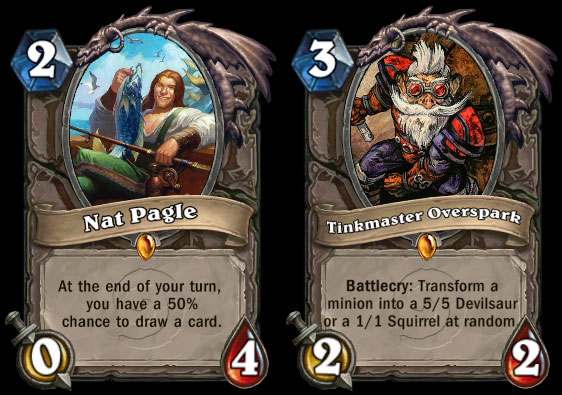
The suspects.
You can watch the offending match here. The RNG of Pagle was set in particularly harsh relief considering both players played one in the opening turns of the game, but only one side seemed to draw any cards off the ability. That prompted a rather lengthy, if compelling post by @TL_Monk detailing the negatives of RNG generally. Indeed, the case becomes even more reasonable when he compares Blizzard’s somewhat sophomoric (in comparison) responses thus far with those of Mark Rosewater, head developer of Magic: the Gathering.
So, RNG is bad right? Well… maybe. It’s worth noting that despite the final tournament game being a blowout in terms of coinflips, the Mage still could have won by a single top-decked Fireball. Had his own Pagle had a comparable draw-rate as his opponent, he would have won easily. And that’s sorta the thing.
This is the counter-point post on Reddit, talking about randomness and the overall RNG aspect of certain cards/situations in Hearthstone. The post itself essentially states that RNG is good for the game for precisely the reason why people think it’s bad: it allows a chance for weaker players to win. Without RNG, the outcome of every encounter is based on the skill of the players which, while fair, ultimately means you will never have a shot at beating someone better than you. The post goes on to assert that another card game tried the no-RNG approach and was never able to reach critical mass because it chased all the middle-tier (and lower) players away.
As an aside, Nat Pagle’s meteoric rise in use is perhaps the best possible demonstration of unintended consequences, as it was a card virtually unknown before the nerf of Novice Engineer (which used to be a 1/2 creature). Of course, Pagle was also previously bugged so that the card draw only occurred 25% of the time instead of 50%, so perhaps that had something to do with it as well.
How I feel about the subject is mixed. As someone who has some small measure of confidence in my gaming abilities, I dislike RNG. Then again, I also believe that a component of skill is being able to take RNG into account when making strategic decisions. The sensible line between good RNG and bad RNG people usually take is when the entire outcome of a match comes down to a single coin-flip. I agree that that is exceedingly lame, but… well, what is a card game if not already a series of coin flips?
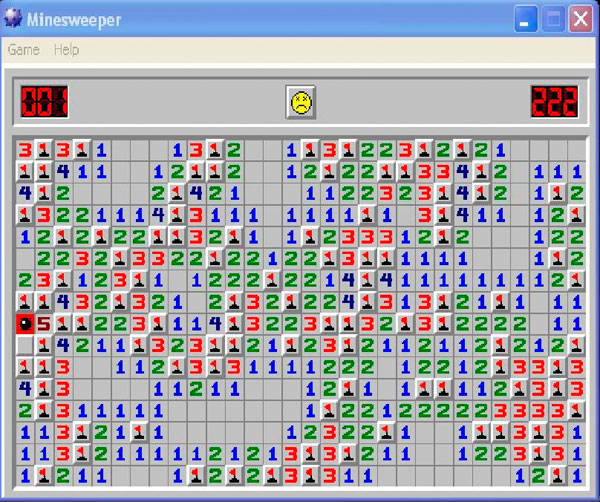
Example of bad RNG.
I was watching one of Trump’s streams where he had two creatures out against a Hunter who just played Ragnaros; if the Ragnaros hit Trump’s face next turn, it’s likely he would lose. Between a Fireball and creatures on the board, Trump could have outright killed Ragnaros, but he instead chose to dump his hand of creatures to reduce the odds of Ragnaros’ random 8 damage attack of hitting him in the face. Trump went on to win the next turn once Ragnaros hit a random minion, but would the game have been less strategic if it killed Trump instead? I might suggest that that particular game would have been less strategic without the RNG factor, because the correct moves would be more obvious. In this sense, the RNG is simply another manifestation of risk and dealing with imperfect information, just like when playing creatures when your opponent might have a board clear in hand.
If you want to see some of Trump’s RNG surfing, it’s tough to go wrong with this one.
When it comes to Nat Pagle specifically, I do sorta agree with the detractors: it’s a boring card. I have one, and it’s a no-brainer card that goes into just about every deck. Worst case scenario, Pagle draws nothing and is a 2-mana 0/4 taunt that trades with removal. Best case? It’s ridiculous. Indeed, it reminds me of the “good design on paper, bad design in practice” card Fact or Fiction in Magic: the Gathering. There was never any reason to not use it in every deck that could support the mana cost – so much so, that it was banned/restricted in the older formats for over nine years.
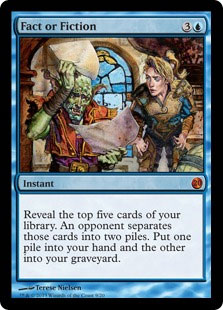
Seems almost quaint, more than a decade later.
For the time being, my opinion on RNG remains mixed. Randomness provides variance that would not otherwise exist, pretty much by definition. Random loot extends the life of a gearing game. Random layouts and outcomes are a fundamental principal of rougelikes. All (?) card games feature randomness in terms of what cards are drawn and in what order. And I’m still largely fine with people rolling the dice with a Ragnaros attack. At the same time, I do feel sheepishly guilty whenever I drop a Mad Bomber that manages to kill their 3/2 (or 2/3!), because damn that sucks for them.
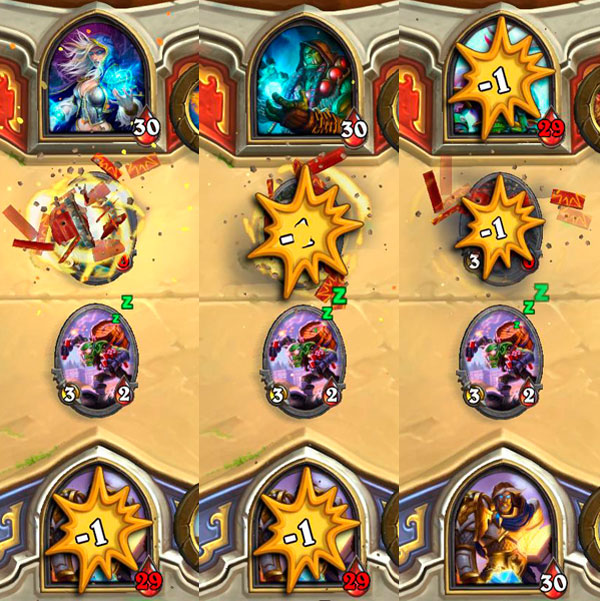
At this point, I play this card solely for the stories.
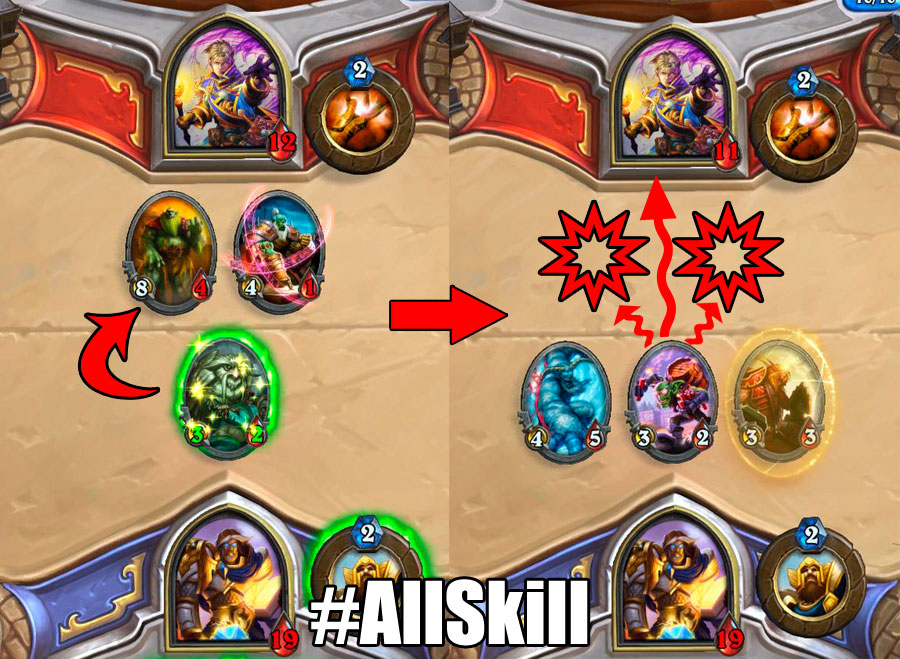
#AllSkill #Outplayed
I suppose in the final analysis, it really comes down to the sort of tone the designers are attempts to set. There were a number of coin flip cards in Magic’s history, some extremely important ones in fact, but they never really felt “right” for the game. As pointed out in the Reddit thread, that most likely was because Magic already had a randomness factor of whether you drew a good amount of lands when you needed to vs getting mana-screwed/flooded. In Hearthstone, there simply isn’t any RNG beyond what cards you draw, and what the cards do themselves. Having a lot of cards with random effects thus provides that sense of variance instead of inevitability in Hearthstone, even when it occasionally feels worse.
Do cards like Pagle make Hearthstone a worse e-sport? Possibly. But consider this interview with the senior e-sports manager at Blizzard, Kim Phan. Most sites focused in on the news about there being a Spectator Mode in Hearthstone’s future, but I was most struck by the fact that, prior to BlizzCon, the senior e-sports manager had zero understanding that Hearthstone would develop into a credible e-sport in its own right. In fact, she even downplayed it a bit in that interview, despite Hearthstone tournaments being played in the background. So, basically, it’s entirely possible that we’ll see less RNG cards going forward if Blizzard decides e-sports is a path it wants to go down with Hearthstone. Or, potentially, we could see a doubling-down on the “for fun!” casual mechanics that get so much ire in competitive play.
I’d say there’s a 50-50 chance of it going one way or the other.
 In An Age
Hearthstone Dilemmas
Aug 24
Posted by Azuriel
[Blaugust Day 24]
For all the the derision Hearthstone might get for being coin-flips and “dumbed down” and such, sometimes you end up facing a straight-up agonizing dilemma. For example, this game from the other day:
Embarrassment of choices.
My choices were the following:
So, which one would you do? If my deck matters, it’s Ramp (Ysera) Druid without combo.
…
…
…did you pick a course of action yet?
…
…okay. Like I mentioned, I went with Coin + Harrison Jones. On the opponent’s turn, he cast Blessing of Might on the 2/2, turning it into a 5/2, summoned another 1/1 dude with Hero Power, and went face with everything. On my turn, I committed such an egregiously bad misplay that I’m legitimately embarrassed to type it out. What should have occurred was my Swiping the opponent’s face, destroying all his 1/1 dudes plus popping the Divine Shield, followed by trading my Harrison into the 5/2. Instead, I did that backwards. So, really, it was so bad that it was two misplays, as I could have recovered by Swiping the 5/2 directly at least. But nope.
Needless to say, I lost that game.
And actually, I probably would have lost the game regardless. The remaining sequence of the game was him casting Charge creatures and going face every time – the extra 5 damage taken unnecessarily would not have made much of a difference when you’re sitting at 5 HP to his 30. The only healing in my deck are two Ancient of Lores, and drawing those before getting Arcane Golem’d or Consecrated and such would itself be a coin-toss.
The funny thing to me is how, even in Magic: the Gathering, the best play is the one that gives you a chance to win. If you just play based on the cards in your hand and the ones on the board, you can lose sight of the Window of Victory as it slowly slides shut. If your best chance to win is to commit to a costly attack and top-deck a burn spell the next turn… then do that. If you draw something else, oh well, you were going to lose at that point anyway.
My best play for the above game would have been MC Tech and hope I get the 25% chance to nab the 2/2. Perhaps my opponent would have played different cards the following turn, but I’d have two decent minions and Swipe for the next. Or Belcher. Or Harrison. Or, at that point, dropping a 5/10 Taunt creature on turn 7, sealing the game until and unless my opponent draws into an Equality (assuming Eboladin even runs that). In this scenario, I was not avoiding the risky play that could backfire, I was making the same risky play and choosing the 0% chance to win option.
There are
probablydeeper games out there than Hearthstone. Games in which you can encounter these scenarios without the coin-flips being so naked obvious. But just because there are coin-flips, doesn’t mean there is nothing one can do to maximize their chances at success.TL;DR: when in doubt, MC Tech.
Posted in Commentary, Hearthstone
3 Comments
Tags: Blaugust, Coin Flip, Magic, MC Tech, RNG, Window of Victory