Impressions: Grounded
Grounded is a Honey, I Shrunk the Kids survival game from Obsidian, which recently graduated from Early Access. I played it for about a dozen hours during Early Access, but decided to wait until full release before diving in for real on Game Pass.

What I have discovered is… well, a fun albeit highly incongruent survival Soulslike.
To start out, the world of Grounded is amazing. You wake up in a small cave that opens out into a forest of grass and weeds that towers above you. Although there are giant juice boxes and other items to hammer home just how tiny you are, they are really unnecessary – everything about how you move around the yard, the distances involved, and of course the creatures keeps everything front and center.
Your first experiences with the yard fauna is usually benign. Aphids, Weevils, and Gnats are basically mobile food and resources. Red Worker Ants are curious about you, but only go hostile when you hit them. Same with the lumbering Lady Bug, although they will quickly one-shot you in the beginning when attacked. Mites are typically your first hostile mob, and they are only really dangerous when you’re distracted or get surrounded. But it doesn’t take a lot of exploring before you encounter the apex predators of the backyard: spiders. Orb Weavers relentlessly patrol their territory and Wolf Spiders are the terror of the night, ranging far and wide through the yard from dusk till dawn. Daylight does not offer much comfort once you journey further afield though, as you encounter Larva, Stinkbugs, Mosquitos, and more.
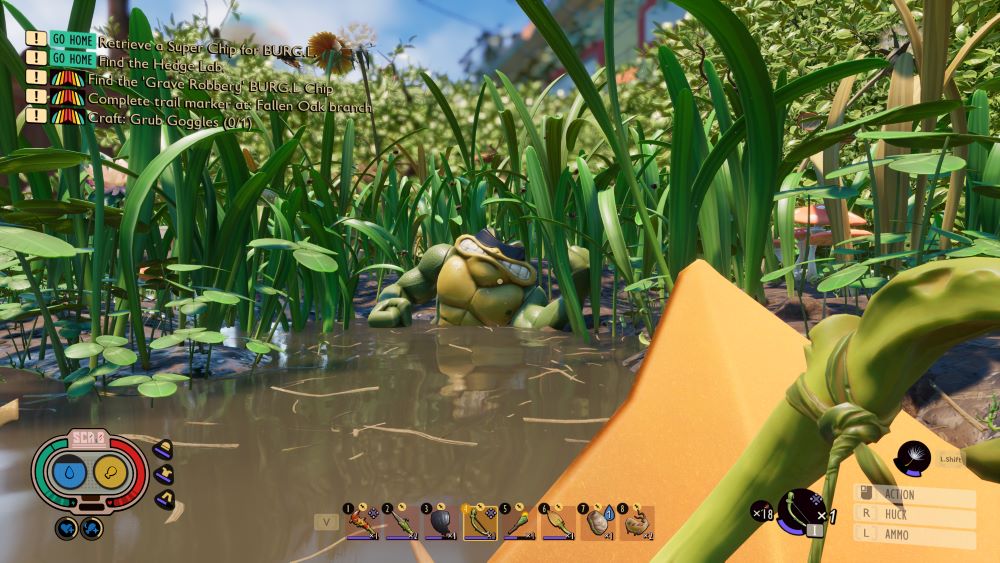
And this is where things go a little off the rails for me. Grounded has all the trappings of survival games, including a huge map where you can build bases just about anywhere, resources needing to be gathered, and so on. But what you are actually doing to progress at all is a series of escalating Souls-like melee encounters. I say “Souls-like” because everything revolves around performing Perfect Blocks against insect attacks, then counter-attacking. You can technically just regular block attacks (with a shield made out of Weevil meat), but you still take a significant amount of damage, can get debuffed, and eventually stunned depending on the frequency of attacks. Meanwhile, you completely block all damage even with a Pebble Axe from any enemy if you Right-Click your mouse at the correct time.
In games like ARK, there’s no Perfect Blocking a T-Rex bite. But, you can still take out a T-Rex through clever terrain and/or structure use. In Grounded, most enemies ignore most terrain that otherwise slow you down, e.g. grass stems. And even if you happen to engage from on top of something they cannot reach, your (early) ranged attacks with the bow don’t deal much damage. Indeed, since you cannot block while using the bow, the game seems to discourage any realistic use of it outside first-strike or fleeing bug scenarios. “What about flying bugs like Mosquitos?” Yeah, sure, try to get a few arrows in. But you will 100% die if you don’t perform Perfect Blocks with a regular melee weapon of some sort, even if you have the clunkiness of having to toggle between it and the bow.
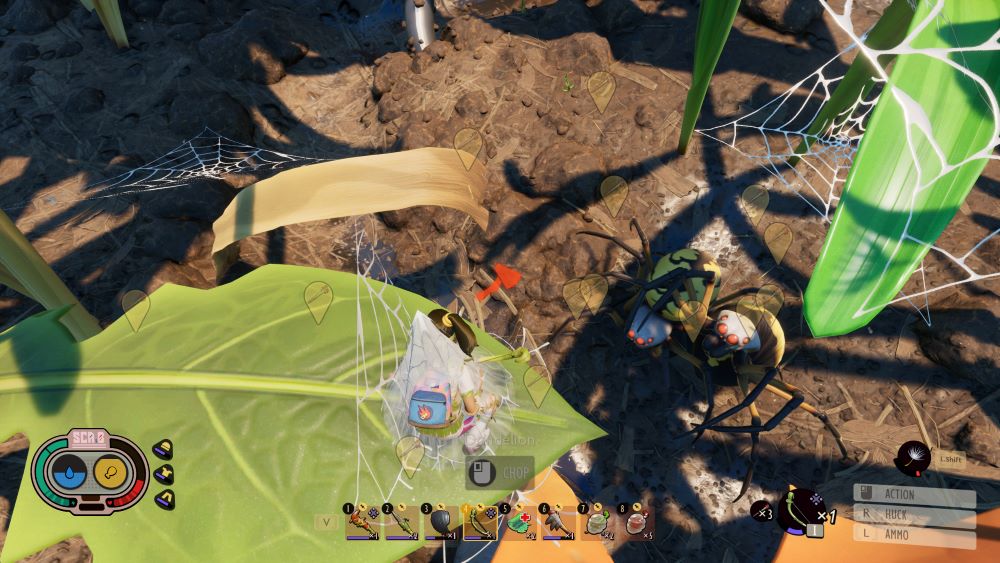
The worst part, IMO, is how there isn’t much of an escape from the bug-based progression. I guess I cannot claim that it is impossible to complete the game without learning each bug’s song and dance, but it is a fact that several crafting stations require bug parts to be constructed. Again, in ARK the dinos are “soft” required because nobody has time to collect 10,000 Stone and Iron to build the goodies you want. In Grounded, you simply aren’t building a Drying Rack without Bombardier Beetle parts. I haven’t made it into any of the later Lab story areas yet, but there are plenty of bugs between me and where I think the front door is, so… yeah. Prepare to “git gud” or die trying.
(Or play on a lower difficulty, I guess.)
Overall, though? I’m still having fun. The first dozen or so hours had me running from everything more powerful than a Solider Ant, but I’m basically approaching Tier 2 equipment and a general level of confidence to take on most things. Had it not been for an Orb Weaver Jr joining the fight in defense of its momma, I would have taken one of those down already. Luckily, the game features both the default survival “fuck you” of dropping all your gear on death AND the ability to Save your game at any time. Which… is weird. I’m assuming you don’t get saves while playing Multiplayer and that’s the difference. In any case, saves won’t, er, save you from getting owned by spiders or whatever, but it at least affords you the opportunity to practice Perfect Block timing as many times as necessary to get the last bug part to craft a new Hammer or whatever.
Beta Impressions: Forever Skies
Forever Skies is a survival sandbox – airbox? – currently in a beta playtest state. The central premise is that the Earth has been wrecked by several flavors of disasters such that the only safe means of exploration is in a customizable blimp above the roiling green fog below.
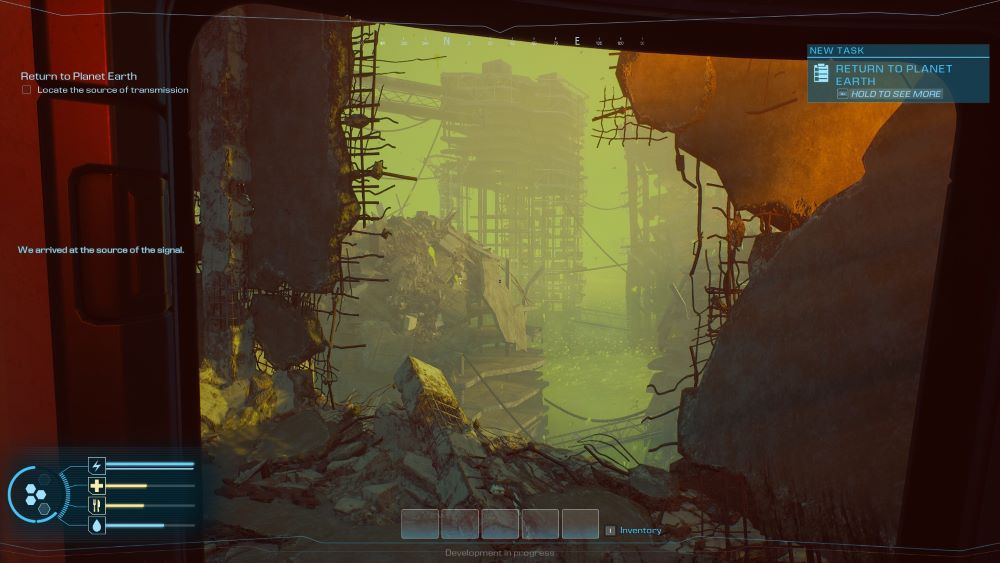
The beta is severely limited. As soon as you unlock the blimp, a 20-minute timer counts down and things just end no matter where you are. Nevertheless, I still got a feel for the basic gameplay loop.
Forever Skies is essentially a simpler, airborn Raft. One of the principle tools you have is a blimp-based extractor gun that allows you to deconstruct specific objects at a distance. The main two resources have been Metals and Synthetics, which you can extract in unlimited quantities from floating tumbleweed-esque things. These let you build insect fishing lines (which penetrate the green fog below), moisture extractors, water purifiers, and create fuel for your engines. Although I appreciate the fact that the tumbleweeds ensure one doesn’t get stranded in a failure state while exploring, it does sort of undercut any perceived need to explore anywhere – you essentially solve all food, water, and fuel concerns within 5 minutes of getting the blimp.
In any case, one of the limiting factors in the creation of additional higher tech goodies are Solid State Batteries, which are found in sort of light beacon structures on the tops of skyscrapers. I managed to have time to float towards one such structure, explore around, grab the battery, and then build the tool that allows me to add rooms (etc) onto the blimp. I then unlocked the ability to create a turbine, which would have allowed me to fly higher up, presumably granting increased access to other such “islands” above the clouds.
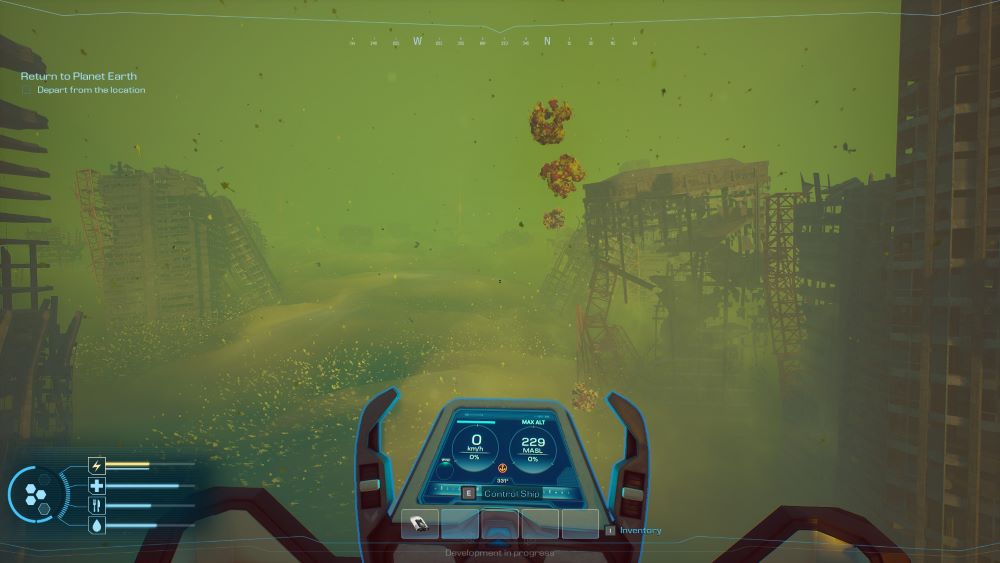
Having written this out, my impression is less and less that Forever Skies is a sandbox at all. Even if each beacon island (or probably their location) is procedurally generated, you are not really “exploring” anything on the way to one. And once you arrive, your goal is to A) grab the battery and B) check for blueprints. Hopefully there are more uncommon ingredients introduced later on, as the tumbleweeds essentially made anything else you could pick up redundant.
It is difficult to gauge where exactly along the Early Access progress Forever Skies happens to be. If this demo is early-early, then good. If what I saw was basically Beta… yikes. The trailer seems to indicate that this is not the case, what with the sample environment not looking exclusively green, there being a few additional tools, and a better-looking blimp.
Still, I have some concerns about the sort of fundamental “island to island” gameplay. In short: meh? The overall concept of the game is different than other survival ones – no trees to punch, for example – but the islands may as well be instanced puzzles inbetween loading screens. This isn’t Subnautica where there are interesting things going on around you, even if you are in transit to another spot on the map. Effectively nothing else exists outside of the blimp and islands, which is why it reminds me so much of Raft. The trailer indicated that maybe your blimp will take damage from storms or creatures or whatever, but again, that alone is not going to elevate (har har) the experience by much, if at all.
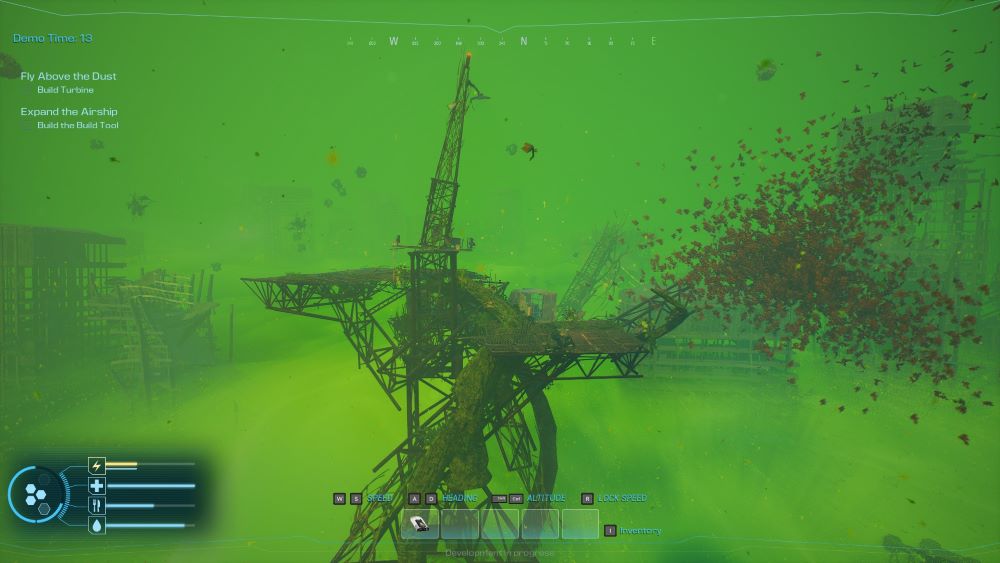
Also? The demo has you get a virus early on from eating a melon, which results in you taking damage any time you look towards the sun. Okay, fine, that’s unique. You end up curing the virus by eating a pepper in another area. Like, I know that the premise of the game centers around viral shenanigans, but I’m not exactly sure what this sort of “mechanic” is supposed to bring to the game. Maybe an enforcement of not being able to exclusively grow melons (which you can’t do in the demo anyway)? Are we going to routinely get infected with random shit and need to go to the next island for the cure? In some games, you do need to encourage players to expand their horizons instead of turtling in one particular area. This one ain’t it – there isn’t anything else to do but head to the next island.
In any case, that’s the Forever Skies demo. I’ll submit my feedback in the more proper channels as well.
Mobile Review: Slice & Dice
Slice & Dice is a F2Try dice-based roguelike. You can play the first 12 “levels” for free, but it costs $7 to unlock the rest of the game.
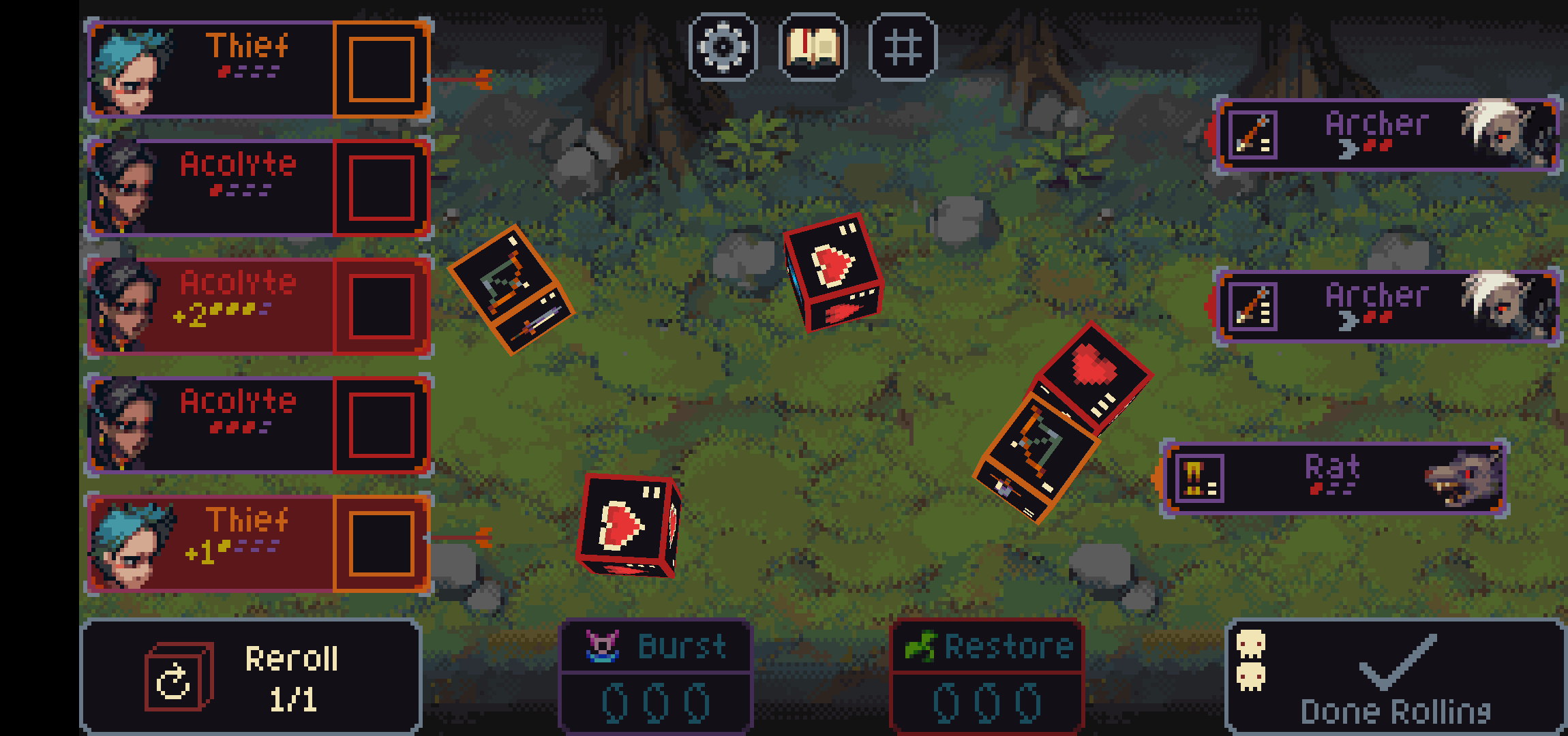
On the face of it (har har), the game appears relatively simple. By default, you control a party of five traditional archetypes – Rogue, Warrior, Defender, Healer, Mage – who face an assortment of enemies. Each round, enemies will roll their dice and indicate who they will be attacking, assuming they survive.
Then your team will roll one die per class. Each six-sided die has different abilities on it as determined by that die’s class and any modifications due to items. If you like a specific die roll, you can “save” it by tapping and then reroll any remaining dice up to two times. After all dice are locked in, you then can use the dice to attack enemies, shield your team, generate mana for Spells, or a number of other unique effects. Any surviving enemies will then attack back. Then everyone gets to do it again.
After each successful battle, surviving heroes are healed to full, any defeated heroes return to life at half-health, and there are alternating rewards of class promotion or random item selection. For class promotion, two heroes are randomly selected to get promoted to one randomly selected option, and you decide which one does. For example, you might be able to choose between your Rogue and Cleric getting promoted to a Tier 2 version of those classes, but not choose for the Warrior to be upgraded instead, or choose between the 5-6 Rogue options. Similarly, with item selection you can choose between two options or go for a mystery roll if neither one works well for your setup.

If that sounds like a lot of randomness, well… it is a dice-based game.
After I understood the general shtick of the game and saw what sort of boss battles were available, I started losing interest. The game seems a bit simple, right? Plus, winning didn’t really seem to offer much progression. But that was when I discovered the Achievements and other unlocks. Basically, the game has 40+ achievements that all unlock something when, uh, achieved. Most of the time these unlocks are additional items that get added to the pool for future runs, but other times there are additional difficulties and new game modes. For example, with Custom Party you can choose to bring 5 Mages or some other mix of heroes, and Shortcut lets you skip the first 8 levels (although you get random items and promotions). The unlocks themselves are not always worth it per se, but they provide something to work towards and potentially discover some fun along the way.
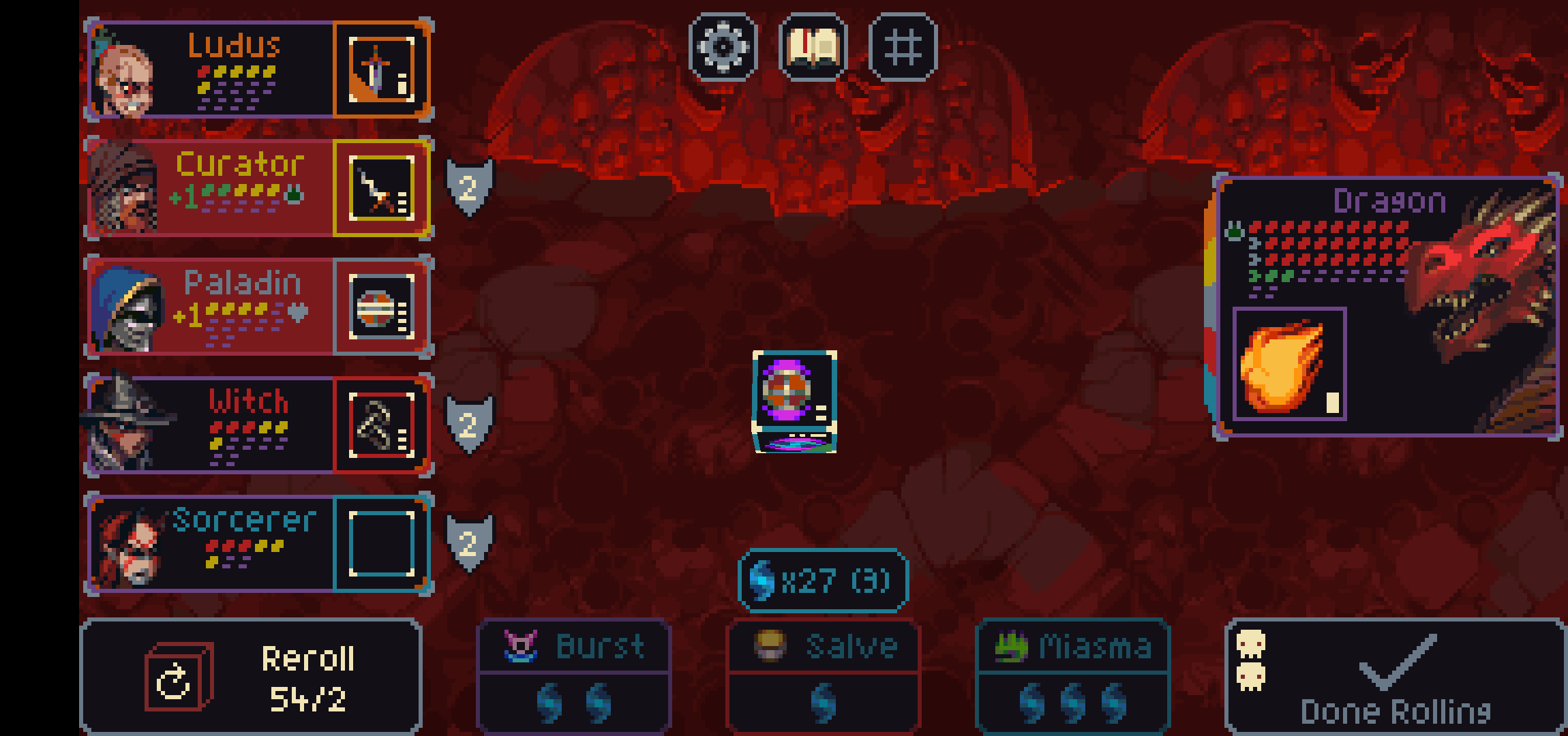
Notwithstanding the progression element, the game feels very satisfying to play in the moment. I often feel the pull of “just one more turn” given how many micro and macro decisions you end up needing to make. Is 2 damage good enough, or do you gamble on a 16.67% chance of getting a blank in order to hit something better? Should you focus-fire the big monster, or take out the small fry first? Do you blow all your mana on trying to save one hero this turn, or let them die to push more damage?
Overall, I am extremely pleased with my $7 purchase and probably have logged 30-40 hours thus far. One of the achievements to unlock Speed Run leaderboards is to win Standard mode in under 45 minutes, to give an idea of average successful run length. I also highly appreciate the fact that the game is short interval-friendly, e.g. there is no real-time component and you can minimize the app without messing anything up. It is no Slay the Spire, but it’s a game that has come closest to scratching the itch.
A Daily in the Life of: GW2
Log into Guild Wars 2. Alt-tab and open the TaCo addon, which provides invaluable overlay support to extra activities, should I choose to engage with them.
Load main character (Scourge). Collect daily login bonus. Today is Day 8 of the 28-Day cycle, which is four Mystic Coins. The prices of Mystic Coins have collapsed since the End of Dragons expansion, presumably because the new Legendary weapon options that came with it use less of them. I have also heard that some cheater may have been banned a while back, and tanked the market? In any case, they used to be worth 2g apiece and today they are 71s. I bank them with the rest, bringing my total stash to 415. That seems like a lot, but apparently you need like 230+ of them for one Legendary.
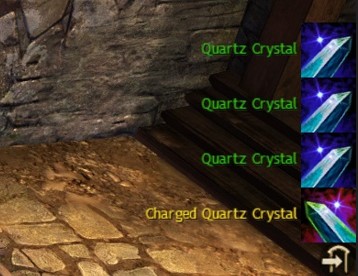
Waypoint to Divinity’s Reach, enter home instance. Not many personal nodes in there – the math says you’d need like 500+ days just to break even on the typical 50g purchase price – but the Quartz node in there supposedly sometimes drops Charged Quartz Crystals which are otherwise 1/day limited.
And… holy shit, it actually happened:
Waypoint to bank to deposit goods. Use the Ley-Energy Matter Converter for some “free” goodies, same with Princess (eating some of the thousands of Draconite Ore I stashed for some reason). Between the AH and the vendor, I made about 21s.
Waypoint to Lion’s Arch, near a Skritt vendor that gives me a Provisioner token in exchange for a Mystic Forge Stone. I have 108 of the latter somehow and this appears to be the best use for them. Waypoint to Durmand Priory with its easy Commune Hero Point to turn 25 Quartz Crystals into a Charged version once per day. Waypoint to Black Citadel near another Provisioner token NPC, this time trading one for an Obsidian Shard. Need 50 total Provisioner tokens to exchange for a Gift of Craftmanship, a component in Legendary Sigils and Runes. I could earn more than 2/day from these and other vendors, but the other exchanged goods cost money and I’m not in a particular hurry. Two per day will add up over time – I have 42 total, for example.
At this point, I check the actual Daily quest options. If you complete three “achievements” from a rotating list, you get 2g straight up plus some other bonuses. Some are more annoying than others. I generally hope for “Mine/Chop/Gather X nodes,” “Vista Point in Y area,” and “WvW Big Spender.” Of the WvW options, I will settle for things like killing a Sentry or capping a Shrine, but it’s highly dependent on what’s actually going on in WvW at the time. Today is… ugh. Veteran Creature Slayer or Kill 5 Guards. These aren’t hard but increases the risk of me encountering enemy players. Luckily, a Jumping Puzzle is one of the daily options and TaCo will provide an overlay of exactly where to go and how to jump.
Completed all three, collect the 2g. There’s more I can do, but I switch to alts now.
Load Daredevil. They are already at Flax farm in Draconis Mons. Collect all the nodes, sell the 14 Piles of Flax Seeds for 43s. I could just keep the alt here, but I use the Spearmarshal’s Plea item to teleport to a small corner of a map on the opposite side of the world. Just south of that destination is a guaranteed Rich Orichalcum Vein. Sell the 10 ore for 31.8s. I use a Watchwork Pickaxe bought with Karma, which adds an extra 6.75s worth of sellable goods to the haul.
Load Renegade. They are right by the Rich Orichalcum Vein mentioned above. They get a rare gem proc, which is an extra 7.5s, totaling basically 45s altogether. Use the Season 3 Portal Tome to port to Draconis Mons, in basically a reverse route as the Daredevil. Somehow get 16 Flax and a bonus item, selling for 50s even.
Load Mirage. Repeat above.
Load Mechanist. This alt is parked near a Grand Chest in Echovald Wilds, in the new expansion. Looting it gives a Jade Runestone worth 36s by itself, and I occasionally get two. The chest also has about 6ish Unusual Coins which… probably have some purpose. Not selling anything just yet, just in case.
Load Tempest. This alt is parked near the three chests in the Sanctum of Nabkha from Path of Fire. I honestly don’t really know why. Most of the items can’t actually be sold (below minimum price on the AH). I do get 25+ Trade Contracts, which is a sort of expansion currency. Hmm. After checking the Wiki, the Trade Contracts are necessary to use with other goods to trade for Funerary Incense, which is then used to help build Legendary weapons. So… probably that reason.
Load Firebrand. This alt is parked at Bjora Marches, near the frozen waterfall. There are three chests here that can each be opened once per day for a lot of Eternal Ice currency plus other (low-value) goodies. Eternal Ice can be converted to other map currency, to use in the creation of a Legendary without having to farm in more annoying ways.
Done.
Total haul appears to be 2.62g + 2g + miscellaneous currencies. I don’t typically do the Flax/Ore loop on my Scourge, Mechanist, or Firebrand, despite it being fairly easy to get them back into position, thereby losing out on another 2.62g daily cash. Resetting the Tempest would be more annoying than it is worth, assuming I value Trade Contracts at all. Which I do, for the hypothetical future.
At the time of this writing, 4.62g is worth exactly 15 gems. Buying 800 gems costs $10, which means… 8 gems equals ten cents. I earned about $0.20 with all that activity. Not difficult activity, but not nonzero either. Jesus Christ, I never bothered doing the math until just now, writing this post. What the fuck am I doing with my life?
Log off.
Skyscale, Go
A few days ago I finally unlocked the Skyscale mount in Guild Wars 2.
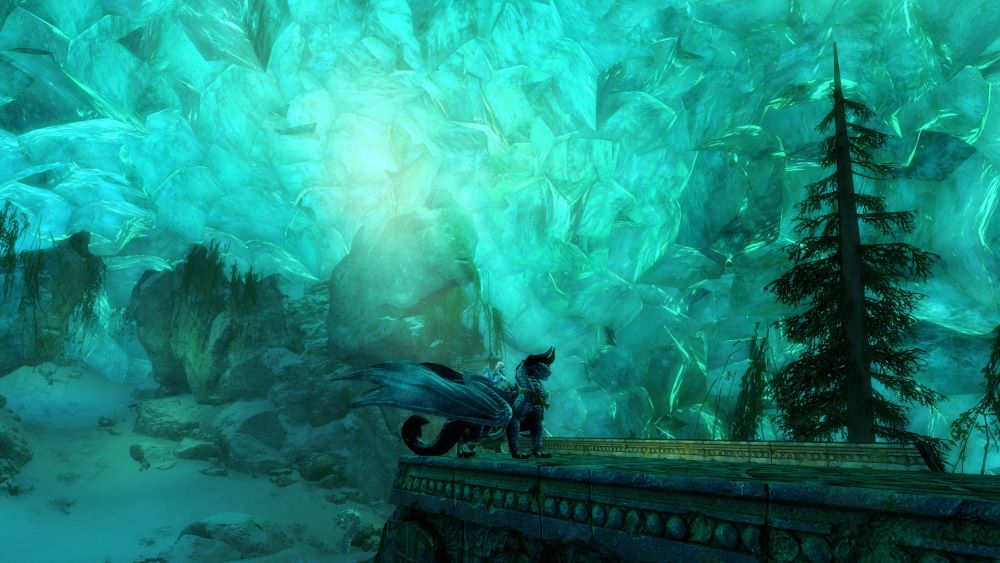
Unlocking it has been one of the most absurdly grindy things I have done in an MMO. I haven’t played every MMO out there and certainly not even more than a handful with any sort of seriousness, so I cannot speak towards where it may rank, objectively.
That said, the day that I quit WoW for the first time, I made this criticism about a similar grind:
The difference between creating enough content to occupy people for a month versus creating content it takes a person a month to complete is the difference between bankruptcy and a sweet raise. Think about those Tol Barad trinkets you spent 30+ days “earning.” That they required 125 marks and Exalted reputation was entirely arbitrary. It was not about creating content, it was about creating a time wall that needed to be dismantled brick by brick by repetitive activity which creates an illusory value to the end-product. Something you have worked towards accumulates value that simply getting it right away would lack.
The Skyscale unlock chain is not “repeat 30 daily quests” which, at first, is a mark in its favor. But in the final analysis… perhaps daily quests ain’t so bad.
I used this site and addons to work through everything over a period of about two weeks. Again, that’s better than 30 days of dailies, yeah? Ehh… maybe not. For posterity’s sake, here is the basic summary:
- Complete all the Living World Season 4 content
- Find Gorrik on the Dragonfall map
- Pick up 21 Skyscale Scales around Dragonfall
- Complete 5 achievements around Dragonfall to purchase medicine from vendors
- Give medicine to 14 Skyscales around Dragonfall
- Collect 21 Skyscale eggs around Dragonfall
So far, so good. Then comes Saving Skyscales. To complete this achievement, you must complete 12 achievements which themselves have 4-5 sub-achievements from around the game, ostensively to understand under what conditions are best to hatch these eggs.
- Complete 55 sub-achievements from all over the world
- Jumping puzzles, environmental damage, events, a whole gamut of nonsense
- Collect 14 treats from mobs around the game
- Feed your Skyscale 12 times (4/day timegate)
- Food can be bought for 3.8g but otherwise requires 1/day account-bound resource
- Collect 4 toys
- One is at end of event chain, another requires 30+ gold or max jeweler
- Find your hidden Skyscale 21 times
- 8 are in jumping puzzles, 3 at world bosses; can skip a step with 7g/each item
- Play with your Skyscale 18 times, twice
- Collect saddle components
- 250 map-specific currency across six maps total
- Return To X achievements makes this trivial; otherwise it would be weeks of grinding
- Complete 28 flying lessons across the world
At the end of all this toil, you receive the Skyscale, a mount that is essentially a combination of the Griffon and Springer. That is selling it a bit short, of course. The reality is that it is a sort of helicopter that allows for hovering and just enough useful maneuverability to supplant multi-mount swapping. At least, that is what I tell myself to keep the dissonance at bay.
It is probably good game design to have these sort of extreme quests (in the historical form of that word) available, especially in games like GW2. These sort of things give you something to work towards, especially in a game bereft of typical character progression. Although there is already Legendary gear.
I just… don’t like how they went about it. There are steps that were just very obviously busy work. Having to get 250 map currency across six maps is frankly absurd, especially before the Return of X achievements were released. To contextualize that, you would basically have to run around a map looking for special resource nodes, hit them up, and get between 0-3 currency. That’s right, they’re not even guaranteed! The nodes are Account-based, so you are probably looking at maybe 40-50 currency a day by hitting the entire map, doing multiple events, completing Hearts, and more.
All to… build a saddle. Wut?
My least favorite stage was Saving Skyscales with the 55 nested achievements, but at least that ostensively made sense: see if your dragon egg responds to the Spirit of Fire by exposing it to flames from important heat-based lore locations. It’s arbitrary, but makes “sense.” Meanwhile, finding your Skyscale in 21 random-ass places? Busy work. Map currency? Busy work. Might as well have tacked on 101 Heart completions from Tyria on the list for all the similar meaning it would evoke.
In any case, that’s one bullet-point down, five to go. I’m actually on the first chapter of the Icebrood Saga right now, so let’s see if this momentum continues!
10 Years of Guild Wars 2
Little late to the party, but two weeks ago marked 10 years since the release of Guild Wars 2.
Surprisingly, I’m still playing.
Okay, perhaps “still” needs some quotation marks or an asterisk or two. There have been multiple, years-long periods where nary a guild has been warred. But it is absolutely true that I have been low-key doing daily quests and farming for probably well over six months now. And it is even more true that I ended up purchasing the ultra-deluxe edition of the End of Dragons expansion, that came with a bunch of extra premium currency.
Even more true than that is the fact that… I continue to play the game all wrong.
As any long-term reader could readily diagnose, my problem is an unhealthy desire for efficiency. Why do X when you could do X + Y instead? Because Y requires Z, about 15 hours of research, and meanwhile you never get around to doing X in the first place.
Let’s start basic. What I want to do is set my Future Self up for success whenever I get back to playing GW2 “for real.” So, for example, these last six months I have parked all my alts around a certain resource node, mined it, switched characters, repeat, log off. That plus the log-in rewards plus the occasional daily set if it’s achievable within 5 minutes has resulted in a nice nest egg. Thanks, Past Self.
Now that I am “back” in the game, I have additional priorities:
- Play through Icebrood Saga content
- Play through End of Dragons content
- Try some of the new Elite specs
- Work towards completing “Return of” achievements for free Legendary
- Work towards unlocking Skyscale mount
- Work towards unlocking some Legendary gear
The rational thing to do would be to pick something and do that thing in particular. But we’re not rational, we’re efficient. Which means spending dozens of hours setting yourself up for future success rather than using those same dozen hours achieving it.
So, for example, instead of continuing to mine that random ore node all my alts are already parked at, wouldn’t it be more efficient to park them at a node that provides resources towards completing Legendary gear? Absolutely, let me just try and start plowing through the Living World mission that unlocks that resource. But wait, since I am already low-key working towards a future Legendary, I should go ahead and set things up to work on the other time gates I know are ahead. Okay… I can get two Provisioner tokens a day just teleporting around, and I have plenty of resources to craft the 1/day Lump of whatever cooldown. Druid Stones take… alright, they take completing 4 Hearts in a certain area everyday for like 16 days. Better work that into my daily routine. Man, I already got all the achievements done for the “Return of” meta in this map other than redoing the story mode. I really want to try another new Elite spec for that though, because my Scourge is getting a little stale. Damn, my Engineer already spent all their Hero Points so they can’t unlock Mechanist without doing End of Dragons areas though. I wonder if I can just pop into the new zone real quick and then ignore everything while going around the map? Damn, I’m pretty close to the Skyscale though…
And so on, and so forth.
I suppose it is remarkable enough that all of this is still compelling in 2022. I mean, yeah, some of that compulsion originates from my side of the screen. But there are some things still extremely unique to the GW2 experience. “Quest” chains like the Skyscale are both meme-worthily long and relatively achievable, provided you eat the elephant one spoonful at a time. Combat isn’t difficult, but it can be satisfying. The mounts in the game are both a joy to use and perfectly enhances the scale of the world rather than diminishing it. There is an Explicit Schedule of Villainy that ensures there is something going on practically all the time. And there are people that appear out of the woodwork eager to engage in these scheduled events for some reason. Seriously though, no one really know how the economy of the game even works, but somehow it continues to do so. Okay, sure, the Mystic Toilet requiring you to flush thousands of materials away to create Legendary gear is one reason demand for goods have not yet collapsed, but are there really that many people working towards them simultaneously?
I don’t have all the answers. I don’t even have the answer as to whether I will still be playing in a week. But of all the F2P/B2P MMOs out there that I have tried, GW2 is the only one that has felt “real” enough to “matter.” As in, time you spent playing and unlocking things would still provide utility years later. Granted, the marketing department is nearly nonexistent, the balance team doesn’t play their own game (although someone is recently cleaning house), and you can never really tell with NCSoft titles how long they are for the world. However! I am glad Guild Wars 2 has made it to the ten years mark, and here’s hoping it goes on for another ten. Or at least as long as my interest persists.
The Nature of Art
The following picture recently won 1st place at the Colorado State Fair:

Don’t know about you, but that looks extremely cool. I could totally see picking up a print of that on canvas and hanging it on my wall, if I were still in charge of decorating my house. Reminds me a bit of the splash screens for Guild Wars 2, which I have always enjoyed.
By the way, that picture was actually generated by an AI called Midjourney.
Obviously people are pissed. Part of that is based on the seeming subterfuge of someone submitting AI-generated artwork as their own. Part is based on the broader existential question that arises from computers beating humans at creative tasks (on top of Chess). Another part is probably because the dude who submitted the work sounds like a huge douchebag:
“How interesting is it to see how all these people on Twitter who are against AI generated art are the first ones to throw the human under the bus by discrediting the human element! Does this seem hypocritical to you guys?” […]
“I’m not stopping now” […] “This win has only emboldened my mission.”
It is true that there will probably just be an “AI-generated” category in the future and that will be that.
What fascinates me about the Reddit thread though, is how a lot of the comments are saying that the picture is “obviously” AI-generated, that it looks shitty, that it lacks meaning. For example:
It reminds me of an article I read about counterfeit art years ago. Most of the value of a piece of artwork is tied up into its history and continuity – a Monet is valuable because it came from Monet’s hand across the ages to your home. Which is understandable from a monetary perspective. But if you just like a Monet piece because of the way it makes you feel when looking at it, the authenticity does not matter. After all, most of us have probably only seen reproductions or JPEGs of his works anyway.
At a certain point though, I have to ask the deeper question… what is a “Monet” exactly?

Monet is rather famous, of course, and his style is distinctive. But aside from a few questions on my high school Art exam decades ago, I do not know anything about his life, his struggles, his aspirations. Did he die in poverty? Did he retire early in wealth? Obviously I can Google this shit at any time, but my point is this: I like The Water Lily Pond. The way it looks, the softness of the scene, the way it sort of pulls you into a season of growth you can practically smell. Who painted it and why couldn’t matter less to me, other than possibly wanting to know where I could find similar works of this quality.
This may just say more about me than it does art in general.
I have long held the position that I do not have favorite bands, I have favorite songs. I have favorite games, not studios or directors. I have favorite movies, not actors. Some of that is probably a defense mechanism – there are many an artist who turn out to be raging assholes, game companies that “betray” your “trust,” and so on. If part of the appeal of a given work is wrapped up in the creator(s), then a fall from grace and the resultant dissonance is a doubled injury. Kevin Spacey is not going to ruin my memories of American Beauty or The Usual Suspects, for example. I may have a jaundiced eye towards anything new, or perhaps towards House of Cards if I ever got around to watching that, as some things cannot be unlearned or fully compartmentalized (or should be).
So in a way, I for one welcome our new AI-art overlords.

Unlike the esteemed Snoo-4878, I do not presume that any given human artist actually adds emotion or intention into their art, or whether its presence enhances the experience at all. How would you even know they were “adding emotion?” I once won a poetry contest back in high school with something I whipped up in 30 minutes, submitted solely for extra credit in English class. Seriously, my main goal was that the first letter of each line spelled out “Humans, who are we?” Granted, I am an exceptionally gifted writer. Humble, too. But from that experience I kind of learned that the things that should matter… don’t. Second place was this brilliant emo chick who basically wrote poetry full-time. Her submission was clearly full of intention and personal emotion and it basically didn’t matter. Why would it? Art is largely about what the audience feels. And if those small-town librarians felt more emotions when hit by big words I chose because they sounded cool, that’s what matters.
Also, it’s low-key possible the emo chick annoyed the librarians on a daily basis, Vogon-style, and so they picked the first thing out of the pile that could conceivably have “won” instead of hers.
In any case, there are limits and reductionist absurdities to my pragmatism. I do not believe Candy Crush Saga is a better game than Xenogears, just because the former made billions of dollars and the latter did not. And if the value of something is solely based on how it makes you feel, then art should probably just be replaced by wires in our head (in the future) or microdoses of fentanyl (right now).
But I am also not going to pretend that typing “hubris of man monolith stars” and getting this:

…isn’t impressive as fuck. Not quite Monet, but it’s both disturbing and inspiring, simultaneously.
Which was precisely what I was going for when I made it.
[Cyberpunk 2077] The Other 40 Hours
I have a very dim view of the designers behind Cyberpunk, but as Nogamara pointed out, I do have 40 hours and counting in the game thus far. So, what gives?
As it turns out, Cyberpunk 2077 is a lot of fun in the moment-to-moment gameplay.
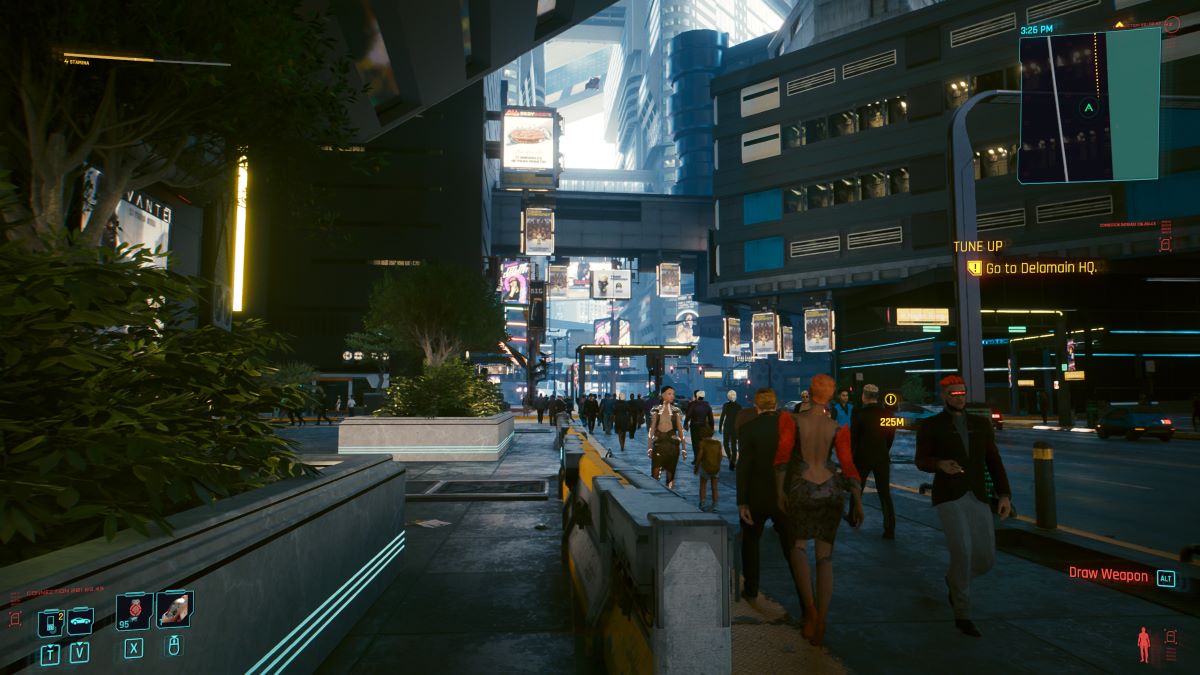
My prebuilt beast of a PC is running Cyberpunk pretty much on max settings (1440p) with 60-80 fps, and… damn. Night City looks incredible. Aside from the absurd number of loading screens when booting up the game, I notice nary a slowdown or hiccup as I speed around the streets looking for trouble to get into. In this regard, it is pretty much like GTA 5 mixed with Skyrim: a pleasure to just get around and get into trouble.
In the beginning, I was playing the game like I always default to with first-person games: sneaky archer. Cyberpunk does support this to a point, but only just so – Dishonored this is not. To clarify, you can indeed stealth through pretty much all the missions, taking special care to perform silent takedowns, pick up Quickhacks that will blind or distract enemies, hide bodies from patrols, add silencers to your weapons, and so on. There’s just… no particular reason to. Stealth is not extrinsically rewarded, locations are huge with dozens and dozens of mooks to plow through, and pretty much every other aspect of the game leads you towards more direct confrontations. Indeed, if you end up picking fights with higher-level “skull” enemies, you are no longer able to perform takedowns on them.
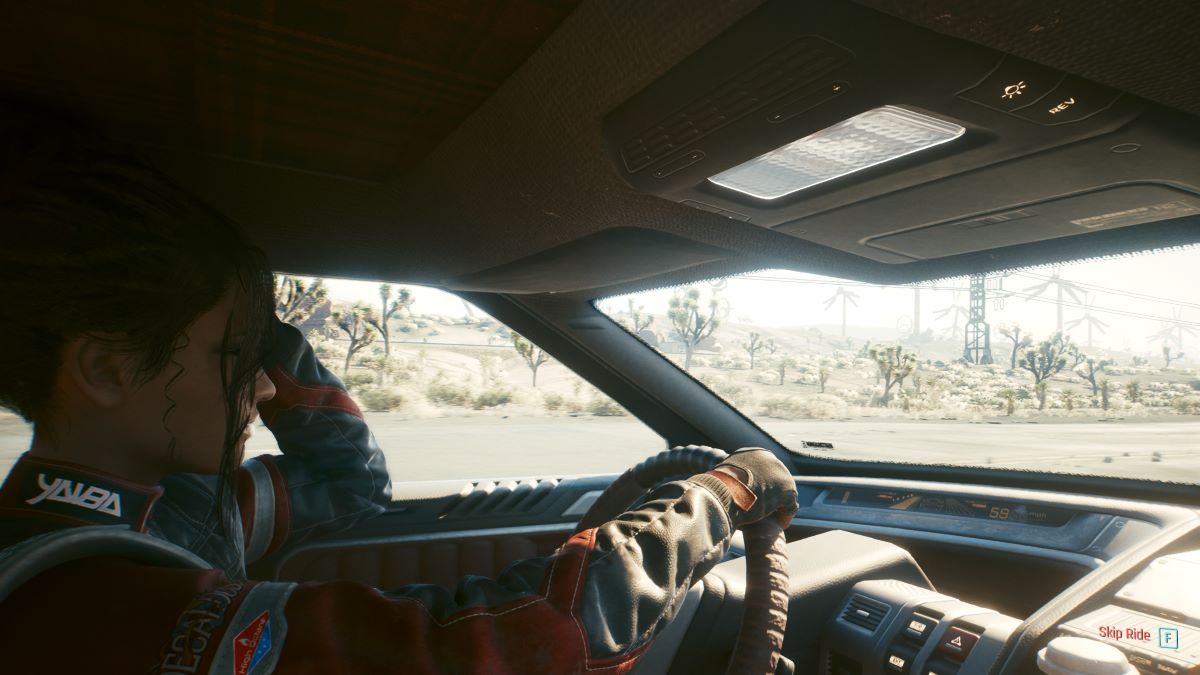
Having said that, the game gets a bit weird once you stop pulling punches and start pulling grenades. As it turns out, grenades are rather good at solving a lot of problems, like gang assaults in progress, enemies hiding behind cover, and basically anything you toss them at. While these have been my preferred method problem-solving, bullets work just as well. By the midgame, there aren’t a lot of things that are especially difficult. Granted, I am playing on Normal difficulty, but I’m not certain whether increasing the number of headshots necessary to defeat foes would do much to make things more engaging.
From a story perspective, Cyberpunk has been serviceable to good. There are a lot of weird side gigs and cross-references that sort of make the setting feel more Outer Worlds goofy than Deus Ex. For example, there are direct Office references, Portal cake jokes, and so on. The main story segments are more reserved and philosophical… ish. While I’m not done with the game yet, the whole Keanu Reeves rock star terrorist angle feels bizarre. Is he supposed to seem cool? Was he a rock star turned partisan, or was he always a commando and did concerts as a front? I’m not sure the answer even matters.
Indeed, I was presented with a few “choices” between unlikeable major factions and I just chose to destroy the one that insulted/betrayed me more recently. I’m fine with games introducing decision-points that have no bearing on anything other than roleplaying, but guys, would it kill you to offer a bit more context? What’s my motivation here? Hard to hate The Man if none of your interactions up to this point have dealt with The Man in a meaningful way. For all the implied Corpo oppression, it doesn’t affect the player in any way. Yeah, there’s poverty and gangs everywhere, but that’s window dressing and content, respectively. I would have liked to have seen a variation of the Wanted meter where instead of cops, you start getting hunted by Corpo mercs depending on the side jobs you take.
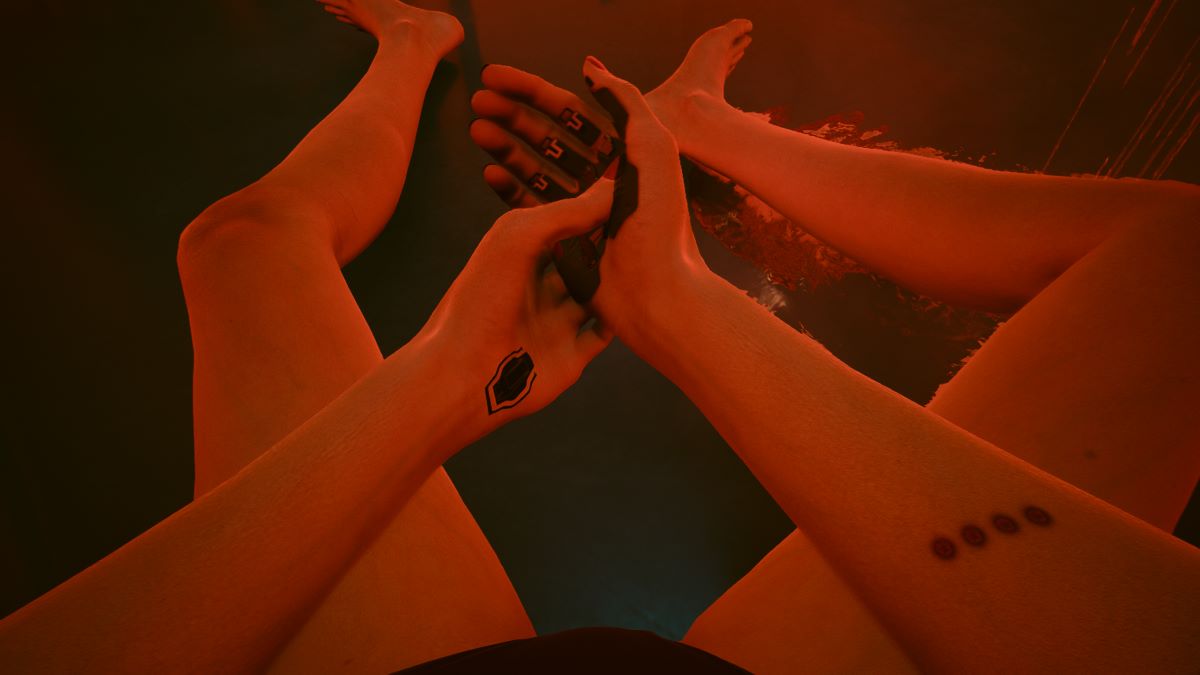
In any case, those are my positive impressions. It’s fun to run around and shoot people in the face. The commitment to first-person perspective – including little things like being able to see your feet, seeing when you get cyberware installed on your hands, etc. – is refreshing and welcome. I seek out opportunities to fight and infiltrate buildings and cause mayhem. I love cyberpunk as a genre.
However. I am currently sitting on 1 unspent Attribute and 7 unspent Skill points. Nothing in the talent trees get my juices flowing, and I have nothing to look forward to, nothing to build towards. Shit, I just found out one of the capstone Technical Ability Skills I had within reach – the one that makes Tech weapons ignore all enemy armor – doesn’t actually work. As in, enemies don’t have armor to ignore. What kind of literal fucking clown show is this? Apparently I was also supposed to be getting free Quickhacks for my hacking efforts (and spent Attribute points) but some bug that’s been around since 1.0 prevents it. Neat. This game would arguably be better off with zero Attributes or Skills systems at all. Not even “everyone has everything all the time,” but literally no one having any enhancements.
After all, there are always grenades.
Having said all that… there is a greater than zero chance I segue right into a second playthrough with a male V focused on “studying the blade” at max difficulty. Quickhacks have been cute, but I’ve been eyeing time dilation katana shenanigans ever since I saw the requisite cyberware on vendors. Viable? Probably not. But it is just crazy enough to possibly be fun.
[Cyberpunk 2077] Terrible Design
Cyberpunk 2077 has undergone a ton of changes since its disastrous launch. I was not keeping track of everything they fixed and tweaked, but suffice it to say, there was a lot. Some of which was immediately indicative of… well, idiot designers. That may sound harsh but let me give you an example: there is an early talent (Dagger Dealer) that allows you to throw your equipped knives. What was missing from the launch of the game until literally February of this year was any way to retrieve your thrown knives. Some designer thought this talent up and some programmer put it into a game where there are legendary knives, and no one thought that maybe losing them forever was a bad idea? Again, this was fixed in version 1.5 which I am currently playing. But the fact that it was even a thing outside of alpha is mind-boggling.
What I am coming to understand is that Dagger Dealer is a symptom of deeper issues.
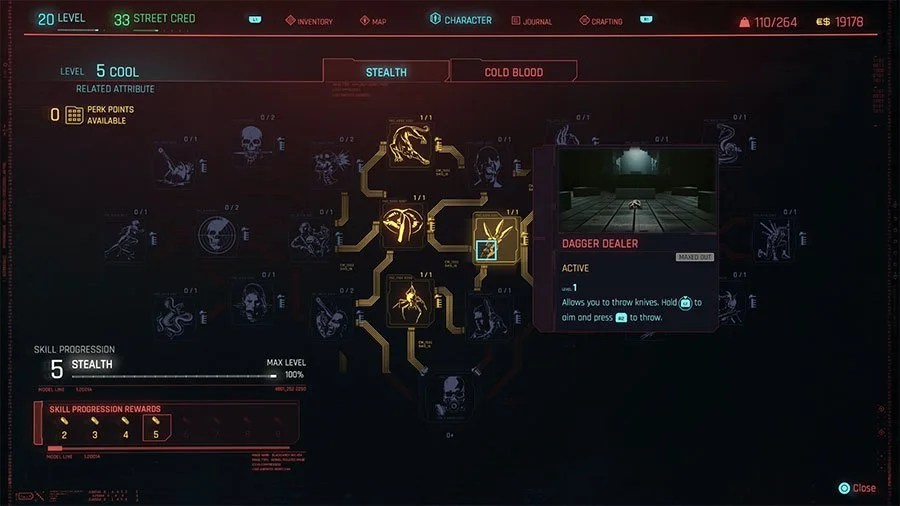
The overall leveling system is just a mess. You gain XP and gain character levels, which grant you Perk points and occasionally Attribute points. The latter are very important because they determine the maximum level of perk you can select within that Attribute. Additionally, each Attribute has multiple Skill Trees associated with it. So for example, the Reflexes Attribute contains the Assault, Blades, and Handguns trees, each of which contain 17-20 Perks that can have multiple tiers.
BUT WAIT, THERE’S MORE! Each Skill tree has its own XP meter that increases by utilizing that specific Skill in various ways. The more you use Handguns, the more Handgun XP you generate, and eventually you work your way down the reward track up to the limit of the Attribute. The rewards are usually little enhancements (Recoil reduction on Handguns, etc) but sometimes they are Perk points which you can actually assign anywhere. While that could lead to some interesting decisions wherein you start farming Blade XP to generate extra Perk points to put into Handguns or whatever, the emphasis should not deviate from the word “farm.” Because that is what it takes.
All of that may sound complicated, but none of it is particularly interesting.
I could live with all the overcomplicated shenanigans, but what I cannot stand is a Talent/Perk/Skill system with so few synergies. It is like the designers didn’t even try. I scoured the various trees and the closest thing to interesting that popped up was a Reflexes 8 Perk in the Blades tree called Stuck Pig that increases Bleed duration by 3/6/9 seconds. That is notable not because it’s actually any good, but because there is no “inflicted by a Blade” qualifier to it. Some things other than Blades inflict Bleed, so that would be an interesting choice and/or build to work towards if Bleeds were your thing. If instead you put any Perk points into Handguns, well, all of them turn off the moment you equip anything else.
And, Jesus Christ, don’t get me started on the crafting system. Because I’m going to anyway.
Crafting is governed by the Technical Ability Attribute and subsequent perks in the Crafting Skill tree. The most important ones are those Perks that unlock the crafting of Rare (5), Epic (12), and Legendary (18) items. In many games, there is always a tension between player crafting and found loot: A) if crafting is better, why search for loot, vs B) if loot is better, why engage with crafting at all. Cyberpunk kicks this up a notch with Iconic gear – these are weapons/armor with unique effects that you can continually upgrade… provided you dump a bunch of Attribute points into Technical Ability. If you don’t, those Iconic items might be good for a mission or two before trash drops start dealing more damage.

Aside from that, crafting largely sucks. You need to purchase weapon/armor “specs” from vendors to unlock the ability to craft that item in that specific tier. Just because you can craft a Rare sniper rifle does not mean you can craft the Epic version of the same sniper rifle, even if you unlocked Epic crafting via Perks. Also, the spec for that Sniper Rifle costs 75,000 credits which is just about what it costs to just purchase the Legendary version of that Sniper Rifle from the same vendor. At a certain point you can farm practically infinite amounts of credits via crafting anyway (purchase components, craft X gun, sell to vendor, cycle vendors), but the point is that the system as a whole makes no fucking sense. What was the harm with a more reasonable weapon spec cost? Woohoo, I get a “cheap” Epic Sniper Rifle by dumping Attribute and Perk Points into a tree that does not otherwise enhance my ability to deal damage with said Sniper Rifle. Christ, I bet that I would deal more damage with a trash-tier Sniper Rifle and those points spent in Reflexes instead.
By the way, Cyberpunk does feature a Respec button. The hilarious thing – in a comedy of errors sort of way – is that it only refunds Perk points, not Attribute points. Thus even though I am 40 hours deep into the game and realize how terrible Crafting has been for me, none of it matters because I can’t shuffle many of those points elsewhere because I’m limited based on Attributes, not Perks. I guess there is an argument that people would game the system by switching to a full Crafting build, upgrade all their shit, get infinite money, and then swap back to a weapon-specific build, but come on.
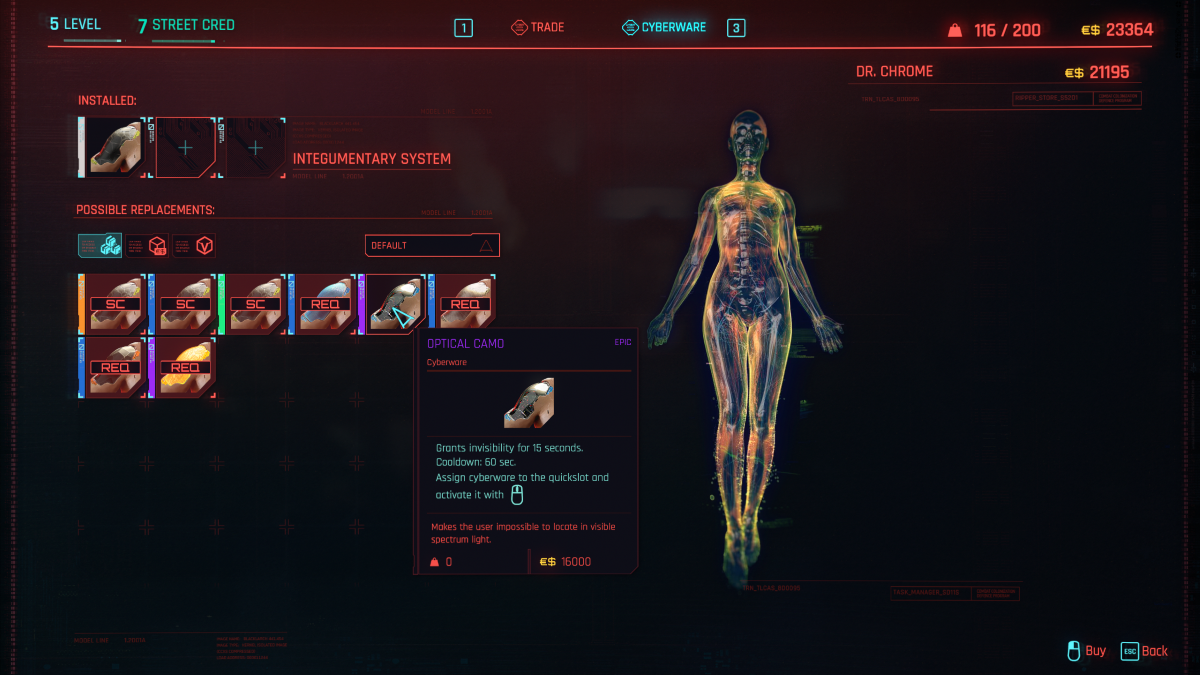
Know what else is disappointing? The cyberware parts of Cyberpunk. The game is predicated on body enhancements and everyone certainly looks the part. But the thing you find out after browsing a few Ripperdocs is that all the enhancements are… just random buffs locked behind Attribute gates. Sometimes you will find a common-tier upgrade not locked behind such a gate, but the vast majority are tied to your character’s Body or Reflexes Attribute, which means a Technical Ability/Intelligence character (cough) doesn’t have much to gain by cyberware. Which is really fucking bizarre, right? Compare that to how Deus Ex handles things – augments grant gameplay-changing abilities and are otherwise a big deal. In Cyberpunk, they are non-choices.
Ultimately, that is the biggest disappointment of all: everything in Cyberpunk (outside of dialog) feels like a non-choice. Can you “choose” to build your character around using Shotguns and Katanas for roleplaying purposes? Sure. Place your Attribute and Perk points in the corresponding slots. But none of that is interesting. And to me, there is no such thing as an uninteresting choice – there are choices and mere decisions. You decide to use Shotguns, and everything else follows. Notwithstanding the banality of having to decide on a specific weapon to use in the first place, there is no room for synergy choices within Skill trees or trying different strategies once Attribute points have been committed.
I am not certain this part of Cyberpunk 2077 is fixable. Being able to Respec Attribute points would help, or perhaps granting more Attribute points overall. Perks would have be radically reworked to introduce synergies though, and I’m not certain designers who had to wait a year and half to noodle on how to fix throwing knives is up to the task.
 In An Age
Hitting a Nerve
Aug 26
Posted by Azuriel
Tobold wants me off his lawn. He has a history of political posts that claim “centrism” despite being wrapped in the language of right-wing culture wars, and the recent Races are racist post is no exception. In it, he laments:
Gnome barbarians and orc wizards, oh no!
Let’s take a moment to talk about the game design topic though.
This change just reflects what modern multiplayer game design figured out a decade ago: prescriptive racial modifiers only encourage min-maxing and otherwise limit design space. Look at the state of endgame World of Warcraft. Does anyone still think it is a good idea that the race you chose on the character select screen should have such an impact on raiding or M+ or PvP 15 years later? Maybe you say “yes.” Well, the end result of that is a faction imbalance so massive Blizzard finally buckled, and is making most activities of the game cross-faction in the upcoming Dragonflight expansion to prevent the entire edifice from collapsing.
Which is good idea, by the way, because factions are dumb too. “Let’s divide our playerbase and foster different and hostile identities.” Oh, now people are quitting in droves because they are stranded on dead servers/factions and none of our world PvP systems are viable. *Surprised Pikachu face*
Compare all that with, say, Guild Wars 2. I think technically each race has a special ability, but they are irrelevant at all stages of play, which allows players to pick a race based on aesthetics or fantasy. Want to be an Asuran Warrior instead of Charr or Norn? Go for it. One of my first characters 10 years ago was a Sylvari Engineer, because the thought of a plant-person running around with a flamethrower was hilarious to me. Still is, actually. If GW2 was more “traditional” fantasy surely I would have negative modifiers for being around flames, if I were allowed to be an Engineer at all.
Was any of that what Tobold really wanted to talk about? Nope:
You would think that a centrist is all for “bad compromises that make nobody happy,” but the follow-up comments demonstrate that is not the case. When I pointed out that, historically, CRPGs gave female characters Strength penalties for similarly dubious reasons, he replied with:
Well, there it is. A Rogue can make a successful Reflex Save in a broom closet hit by a Fireball (which also sets nothing on fire) to avoid all damage, but it’s important for reasons that fantasy game rules reflect “reality.” But only certain “realities.” And those certain reflections of reality are more important to a game’s design than, I dunno, any consideration of what the design leads to, e.g. prescriptive race/class combos that force players to choose between their own fantasy and numerical success. Nevermind the extra social pressure to be helpful that inherently comes from being a part of a group.
While I had been trying to avoid the bait, the third time was not the charm. In an unnecessary paragraph, I threw in this at the end:
In retrospect, not my proudest moment. However, it certainly hit a nerve, with Tobold going off quoting “They came for the socialists…” and how evil triumphs when good men do nothing.
Here’s the thing though: if you use the word “woke” as a pejorative and talk about the “thought police” being “triggered” while also apparently defending gender-based modifiers as being a justified reflection of (fantasy!) reality… you may want to take a moment and ponder on what “left of center” even is. This is not neutral language. Unless it was being used ironically in a way I did not detect, it hits about the same as Ron DeSantis’ victory speech wherein he used the word “woke” 5 times in 19 seconds:
Perhaps even pointing that out is ipso facto thought policing, in which case… weewoo weewoo, I guess.
I understand the desire to keep politics separate from one’s hobby. Although, that sort of presupposes politics weren’t already deeply ingrained from inception – art is usually a product of its time. What I do not understand is how or why this particular hill is the one to die on. Not only does it make no practical difference to the experience of D&D – you literally can make up whatever rules you wish or use any edition to run your game – it is not particularly interesting game design in the first place.
Indeed, here is a quote from the Principle Rules Designer for D&D, Jeremy Crawford:
Here is another one:
If you want a traditional, archetype-driven high-fantasy campaign wherein Orc babies light up when the Paladin casts Detect Evil, go right ahead. I personally ran D&D campaigns for six years that featured nary a dungeon nor a dragon. Do what you want!
But if you are insistent on being outraged by this change, irrespective of your ability to articulate a game design counter-argument, cloaked in the language of far-right cultural wars, maybe some introspection is in order. And if the notion of introspection itself feels like self-censorship to be fought with the strength of Niemöller… well, you kind of got your answer right there, eh?
Posted in Commentary
11 Comments
Tags: "Reflects Reality", Culture Wars, D&D, Game Design, Racials, Tobold