Meaningful Choices
In the comments to my last post, I got some pushback from stating Covenants in WoW “were choices in the same way stacking Crit vs Versatility is a choice: namely, choosing to be objectively correct or gimp your character in X or Y (or all) content.” Indeed, I believe that the proposed 9.1.5 patch changes that remove the Covenant-switching restrictions is something that should have existed from the beginning. Which, since some people forgot, it kinda did since you could freely change Covenants without friction outside of going back to one you previously “betrayed.” In that one scenario, you were limited to a once-a-week quest.
But let me go a bit further: I do not believe that “meaningful choices” can or ought to exist in MMOs.
What someone means by “meaningful choice” is critically important, of course. There is no one answer. For example, is a mutually exclusive choice always meaningful? Does a choice have to be permanent to be meaningful? Does a choice have to have lasting consequences (which is different than just being permanent) to be meaningful? Does a choice have to feel difficult to make to be meaningful?
I bring up these different dimensions of “meaning” because I sometimes feel that people fetishize Permanence in terms of choices. That if you can change something later, it must mean that the original choice itself didn’t matter. To them I say: Every Moment is a One-Time Event. Specs in WoW have been imminently changeable at the drop of a hat for many years. If you choose to not tank for a raid, that choice lasts only for as long as you want it to. But here’s the thing: the choice you made to not tank yesterday is permanent. You can’t go back in time and make a different choice for the Tuesday raid time. So… was the original decision a meaningful choice? If you were good at tanking, it certain was for everyone there.
Let’s bring this back specifically to WoW Covenants in Shadowlands. For those not playing along at home this expansion, there are four Covenants (i.e. factions) the player could choose to ally with at max level. During the leveling process, you got to do quests for each one and also play around with the unique Covenant abilities that each one offers – some are general abilities, and others are class-specific. Eventually, you have to choose a specific Covenant to champion and otherwise experience the rest of the expansion with.
Is picking a Covenant a meaningful choice?
As I wrote before, I would say No. Was it mutually exclusive? Yes, you can’t have more than one Covenant at a time. Were there consequences? Yes. Sort of. Covenants were swappable even before 9.1.5 but let’s not pretend there isn’t a significant time cost to essentially starting over with rebuilding a Sanctum, grinding Anima, and all the sort of nonsense daily quests one has to do. Plus, you lost access to any Transmog from the original Covenant. Was it permanent? Obviously not, but that would not have been the secret sauce if it was – instead of meaning, such a decision would have brought in frustration and betrayal.
Why? The Covenant abilities themselves are an extremely mixed bag. Sometimes they don’t matter, and other times they matter a whole hell of a lot. For example, if you are a PvP Priest, you want to be Venthyr for the Mindgames ability. Mindgames is one of the most unique CCs ever introduced to WoW, and I guarantee you that it will be brought forward into the next expansion as a Talent or even baseline ability. If you don’t PvP on your Priest character, then sure, your Covenant choice is more wide open. But if you ever thought you would, not picking Venthyr would be playing with a handicap.
On the PvE side, Night Fae is an attractive choice for Death Knights given it increases their mobility, which is otherwise the classical weakness of the class. However, Night Fae is extremely terrible for both Unholy DPS and Blood tanking. So your “choice” is between the optimal DPS/Tanking or improved quality of life. Explain to me again why it’s a good thing that we have to pick between the two.
Notice how none of the above considerations touch on the Covenants themselves: their theme, their plot, their aesthetics, their characters, or anything that actually makes them meaningful from a narrative standpoint. There are certainly players out there for whom Covenant theme is the number one consideration. Helistar said in the comments yesterday: “When I started Shadowlands it was obvious that my druid would be Night Fae, optimal choice or not.” That’s totally fine! Although… I have to ask the follow-up question: if it was so obvious from the start you were picking Night Fae, was the choice really meaningful to begin with?
If it seems as though I’m playing both side of the argument… I kinda am.
The real crux of my argument is this: the designers should not be going out of their way to “enforce” meaningful choices. In Diablo 2, you could not respec your character; in Diablo 3, you could swap your abilities around at almost any time. Was picking talents in Diablo 2 more meaningful? No! All it did was make me feel bad every time I leveled up, knowing I was always going to be 2-3 levels late to the actual good talents due to the dumb, blind decisions I made hours ago. That doesn’t feel meaningful.
Imagine if Blizzard designed Covenants such that Covenant abilities were interchangeable (and probably Soulbinds), but the Covenants themselves were not. Priests could have Mindgames but fight with the Kyrians. That sort of thing. Would that detract from the meaningfulness of the Covenant decision? Or would it… enhance it? I would unequivocally say the latter. Because WoW is an MMO where you could be spending 40 hours a week playing your character and not spend a second progressing whatever story exists. So for me, gameplay decisions and projected viability and optimization are my top priorities. And those things are largely math problems with clear, non-ambiguous answers.
In a hypothetical Shadowlands where Covenants had no particular gameplay impacts, suddenly that decision becomes meaningful. The choice more reflects who I choose to identify with, who I am as a person, who best reflects my values, and that’s a hell of a lot more meaningful than 2% DPS. It would certainly be closer to what I feel were the meaningful choices in, say, the Mass Effect series:
What the exchange highlighted to me though, was how squishy the venerable Sid Meier quote actually is.¹ To me, the choice between curing the Krogan genophage or deciding not to was interesting. In fact, I spent ten minutes or so agonizing over it when the dialog wheel was presented. Was it fair of us to cripple an entire species because we feared their hardiness and breeding speed? At first, I was worried about that hypothetical. Once the Reapers were gone, who is to say that the Krogans don’t simply out-breed and out-muscle the rest of us out of the universe? Then I thought: wait a minute, is this not the same sort of argument used against inter-racial marriages in the past, and even concerns about Islam today?
The genophage choice is definitely one that I felt was meaningful. It can say a lot about you as a person. Maybe the fact that Covenants primarily boil down to a numbers game to me still says something about my values, but I don’t think you can read much more into it other than sometimes 2% DPS actually matters. Rather, I would say that the meaningfulness of a choice in an MMO is directly disproportional to its gameplay effect. If you care about the numbers, then it really isn’t a choice; if you don’t care about the numbers, what are they doing there in the first place? Just remove the numbers.
Finally, for those still stubbornly sticking to their guns regarding “permanent choices are meaningful choices,” I say to you one word: alts. Nothing is permanent if you can have alts. So really it’s just a question of how many hours of hazing you want to require someone to go through to experience the other choice. Or just to potentially be viable in another subset of content.
WoW Should Face Existential Crises More Often
(More Blizzard than WoW, specifically, but I’m doing a call-back to this post from 2012)
Blizzard’s next patch for WoW is 9.1.5 and it contains… well, the words speak for themselves:
Over the past few weeks since we shared an update, the WoW team has been focused on the immediate future—both for our people and workplace, and what’s next for players too. As a part of that, the entire team came together to ask: What are the biggest things we’re hearing are getting in the way of your fun, and what are the most impactful changes we could make to WoW today to fix that?
Shadowlands Update 9.1.5 will be going on the PTR next week, and a lot of what you’ll find in it is the direct result of your collective feedback. It includes long-asked-for changes to make it easier to swap covenants and conduits, updates to make it so you don’t need to repeat covenant campaigns on alts, new character customization options for some races that were lacking them, and many more changes to help you play the way you want.
https://www.wowhead.com/news/shadowlands-developer-update-9-1-5-ptr-next-week-323931
Just in case you’ve missed the context here, Blizzard is getting sued by California for rampant sexual discrimination, some egregious harassment, and general nefariousness. Oh, and more recently, allegedly shredding documents concerning all that. Some executives have been fired, some worker walk-outs have occurred, and all of this has come AFTER the mass-migration of WoW players that has been a result of poor game and story design leading into/throughout the Shadowlands expansion.
I cannot quite tell what it is exactly, but the whole thing feels nauseatingly patronizing.
Like it took throwing two decades of reputation in the garbage and an existential crisis for these designers to finally go “Huh, ain’t got shit to do today cuz the bosses are either sacked or hiding in the Cosby room… maybe I’ll give this whole ‘make fun games’ thing a try.” No, really, they basically said that:
While we hope many players will be pleased at the increased accessibility and freedom for experimentation these changes will permit, we know that you might be wondering why we didn’t make adjustments like these sooner. After all, a large portion of the community has been vocal about wanting to see changes along these lines since mid-2020, when Shadowlands was still in Beta.
When it comes to the limitations on Covenant-switching, millions of players experienced Shadowlands for the first time through the lens of their Covenant of choice, and that would have not been possible had the choice carried less weight from the outset. Nevertheless, after the conclusion of the Chains of Domination campaign, the Covenants are united against the Jailer, and revisiting player feedback in that context has led us to re-evaluate our approach.
“Covenant of choice.” Tell me how much choice a PvP Priest has in regards to Covenants again. Or Warlocks. Or basically any class/spec across the entire game? Covenants were choices in the same way stacking Crit vs Versatility is a choice: namely, choosing to be objectively correct or gimp your character in X or Y (or all) content. But now that Blizzard’s stated goal of forcing you to experience the game in a specific way has been achieved, the devs will now, in their extreme beneficence, sell you the solution to the problem they created.
This is not a new tactic for the WoW devs, of course. Each expansion launches with an obviously asinine timesink that the devs conveniently “fix” a year later after it successfully sunk millions of player dollars in subscriptions. In any other year, these Shadowlands changes would be par for the course. The fact that these changes are cloaked in this “we’re reexamining everything in the company” is just gross. It’s like, no you aren’t, and stop pretending you are doing anyone any favors here. Shit should have been changed a year ago, when everyone told you it was a terrible idea.
It’s gotten to the point where I just dread hearing anything about WoW. You know those shows out there which just sort of revel in awkwardness, scripted or not? I can’t stand them. There’s something about them that is physically painful to watch for me. And that’s what WoW news is to me now.
I watched that Sylvanas cinematic and I just couldn’t anymore. How many years have they been building to this moment, and some committee of writers thought “I will never serve” fit in with anything that was going on? What did she think she was doing up to this point? There is zero way to write themselves out of the hole they wrote themselves into. So now we’re all just sitting around and waiting to see how painfully awkward the conclusion is going to be.
To some extent, we expect Xanatos Gambits from evil masterminds. Heroes doing things that end up playing right into the villain’s hands. The key is that the heroes’ actions are usually, at worst, dumb in retrospect. Other times, they just had no way of knowing the extent of scheming that took place; can’t blame them in those scenarios. But there is no coming back from this for Sylvanas as a character. She wasn’t looking for an opportunity to snatch the One Ring at the right moment. She’s just dumb and got bamboozled by someone called the Jailer. Sylvanas never took a moment to look around the Maw? Maybe notice all the chains, all the dominated souls bent to serve? In her mind, the Jailer was just going to be like “everyone’s free now” and then put down the McGuffin of ultimate power?
It’s all so dumb.
Everyone has predicted for a decade or longer that the true WoW-killer was going to be WoW itself. But I couldn’t even imagine it playing out this way. Shit design, shit corporate culture, shit story. That’s the trifecta right there. They are working on it though! They sat down and brainstormed and talked about their feelings and remembered that all the problems were correctly identified in beta (again) so they could continue to put in minimum effort into what once was a billion dollar franchise.
The one hope that WoW has is that corporate spreadsheet dweebs like Ion Hazzikostas have an outsized effect on game design direction. So that, you know, when they are fired or quit, the ship can be turned around. If things really are built by committee though, WoW is straight fucked and the ship is going down. Or arguably already has, and the remaining population is clinging to dressers and doors while everyone else is paddling the life boats away. But hey, at least the knobs were fixed in a patch.
Happens Every Time
I have tried to have three vacations this year – honestly, just staycations with the kiddo still going to daycare – and yet we are 3 for fucking 3 on him getting sick/having a fever exactly on the week that I am off. Not the week beforehand, not the week after. The exact week I had taken off. Supposedly this is “good” because, hey, I don’t have to use sick time! But, you know… I could use sick time AND not have to entertain a sick two-year old for 12-14 hours when I had plans to do stuff.
If you’re wondering, yes, I accrue a lot of vacation and sick leave each year. Join a union, folks.
Anyway. What have I been up to lately?
Fallout 76
This has been my default, “I don’t know what I want to do… let me load this game until I figure it out” game for a long time now. The fact that I still play is actually beyond all objective reason. But… it’s a survival-esque game not in Early Access (even if it sometimes feels that way) and the moment-to-moment gameplay is spot-on. There is also a Season reward track that awards some special items and store currency for completing some daily/weekly quests. That said, my character can only really progress further with precise, legendary item god-rolls all to tackle content that in no way needs said god-rolls to run.
I suppose I did play WoW for a decade despite hitting similar progression walls. And yet I do not have the same confidence that Fallout 76 will continue having new content developed that necessitates new gear. Or new challenging content at all, really.
Hearthstone
While I have watched more matches than participated in them, I do still complete the accumulated dailies every 3 days or so. As someone who has played since the beta, I do have to say that this meta is perhaps the strangest it has ever been. Not just the Quest combo decks that finish on Turn 5, or how any game going past Turn 7 is surprising. There just isn’t a whole lot of AoE anymore. Swipe from Druid or Fan of Knives from Rogue have been gone (from Standard) since March, I think, so it has been a while. Still, I raise an eyebrow any time I see players committing a half-dozen 1/1 creatures to the board and/or going wide as a strategy for success. At least, until I remember how much AoE is lacking and that they can usually get away with it.
Slay the Spire (mobile)
I have officially surpassed my progression on PC with that of mobile, in the Ascension department. And I keep coming back, as the game is pretty perfect to play in 10-second chunks as you watch a 2-year old. I have played a LOT of deck-building roguelikes over the past few months, and none of them really come close. I sometimes wonder if that is because of the first-mover effect, or if the game is really that good. Every day I lean more to the latter.
Also, all those other deck-builder roguelikes aren’t on mobile.
…And That’s Basically It
I have a huge amount of games that I “should” be playing that I just… don’t. Ones that have been perfectly fun to play, for the few times that I have done so. The problem is: what do you do when you don’t have a consistent play schedule? For example, I was having fun with Solasta, Control, and trying to see if Death Stranding would ever be fun at some point. But once you lose gaming continuity, a lot of things fall apart. It gets harder and harder to to boot that game back up – you forget the controls, the strategy you were going with a character build, you literally lose the plot.
If I only have an hour to play games, I’d rather play ones that I know can generate fun in that hour.
Oh well. This crazy work project will be going on for several more weeks, and there is no guarantee that anything slows down after that (since we pushed back all normal projects to make room for this one). This could be the new normal. Not exactly what I envisioned or hoped for, but it is what it is.
This is My Life Now
Big project going on at work has sucked all the oxygen out of the room. Right before the project started, my son brought home some unexpectedly powerful daycare flu. It wasn’t COVID (we tested), but still knocked him out of daycare for nine days, and I’m still getting over it myself going on 14 days. I wasn’t out out for those whole two weeks, but masks + a runny nose does not mix well. Plus, it doesn’t look great to people when you step outside the room to take your mask off to blow your nose, even if you hand sanitize after. I don’t even blame them – I’d be leery too.
One amusing side-effect of this whole situation is what’s happening with my free time. I’ve been going to bed earlier due to wanting to beat the illness sooner, and also due to the project requiring a physical presence way early in the morning. So while I do still have 1-2 hours to game each night, I haven’t had the drive to do much other than veg out.
It started with watching some Twitch streams of Hearthstone. The new expansion is out, Blizzard fucked everything up by introducing multiple uninteractive OTK (one-turn kill) decks, but I still like to keep a pulse on things, so the streams were entertaining. Then I started watching Youtube videos of the Hearthstone streams, because A) I could see different decks more easily, and B) I can jack up the speed to 2x and thus watch twice as many. Finally, I started going to HSReplay where you can watch, well, simulated replays of Hearthstone games directly. There is a fast-scrolling feed on the main page which tells you the matchup, so you can isolate Paladin vs Warlock or whatever you want.
No joke, yesterday I watched random Hearthstone replays for two hours and then went to bed.
That has to be the nadir, right? I’m not playing the game, I’m not watching other people playing the game in an interactive setting, I’m not watching an edited video of the game playing… I’m literally just watching JPEGs of the game happening on the screen. And I found it entertaining and insightful! If I were just watching TV or something, at least there would be a plot or overarching story or something. I could say “I finished X series.” Still haven’t gotten around to watching the newest season of Handmaid’s Tale, for example. Then again, I’ve been watching that on CNN for the last four years already.
I feel like I should feel worse, but I kinda don’t. Between the two-year old and this work project clown show, I have learned to… let things go. Not in a “woosa” sort of way, but in that Fallout-esque “It’s been 200 years since nuclear Armageddon and I still can’t be bothered to sweep the inside of the house I’ve been living in for a decade.” Might be harder without a broom, I suppose. And we still have unopened, unsorted boxes from when we moved into this house three years ago so I probably I shouldn’t throw too many stones. Or I should start with the ones still laying on the floor.
Blizzard’s Reckoning
You have probably already seen 37 other blog posts or articles about Blizzard being sued by the State of California over sex discrimination. Technically, it’s Activision Blizzard being sued, but apparently the rot and “frat-boy culture” is squarely in the Blizzard corner. Then the company slammed its dick in the car door with a disastrously-bad PR “rebuttal” that included this:
The DFEH includes distorted, and in many cases false, descriptions of Blizzard’s past. We have been extremely cooperative with the DFEH throughout their investigation, including providing them with extensive data and ample documentation, but they refused to inform us what issues they perceived. They were required by law to adequately investigate and to have good faith discussions with us to better understand and to resolve any claims or concerns before going to litigation, but they failed to do so. Instead, they rushed to file an inaccurate complaint, as we will demonstrate in court. We are sickened by the reprehensible conduct of the DFEH to drag into the complaint the tragic suicide of an employee whose passing has no bearing whatsoever on this case and with no regard for her grieving family. While we find this behavior to be disgraceful and unprofessional, it is unfortunately an example of how they have conducted themselves throughout the course of their investigation. It is this type of irresponsible behavior from unaccountable State bureaucrats that are driving many of the State’s best businesses out of California.
Lawyers going to lawyer, but that doesn’t quite fit the Blizzard image that they were trying to maintain. Indeed, now over 2000 current (for the moment) Blizzard employees agree that perhaps vigorously denying discrimination/harassment is taking place feels a bit tone-deaf in the context of being sued for… ignoring/disregarding claims of discrimination/harassment taking place. “All voices matter.” “I was groped during a manager-sanctioned drunken cube-crawl.” “La-la-la-la-la.”
Out of the various takes I’ve read, there are two that resonated with me. First, was a deeper dive into the complaint itself over on Nosy Gamer. As they point out, there is a lot of press about the harassment that led to a woman’s suicide, but the bulk of the complaints were more focused on sex discrimination in pay, promotion, and management. The harassment is abhorrent and vile, but the meat and potatoes of the lawsuit seems to be the more mundane misogyny that seeps in and saturates many companies. This is still not what we want to be seeing from beloved studios, especially ones who occasionally appear to care about the cultural zeitgeists in which they inhabit.
The other take that resonated was from Shintar over at Priest with a Cause. In particular, the linked video gave voice to the dilemma one encounters upon hearing how shit one’s favorite company actually is under the surface. Do you take the principled stand and boycott the company and its products? If you don’t boycott, are you tacitly supporting the abuse? If you do boycott, is it a moral imperative to convince other holdouts to also unsub? If you aren’t boycotting, should you point out (Achtually…) all the other evil companies that those people are supporting?
In short, No. Do whatever. Follow your heart. Leave everyone else alone.
That is considerably less satisfying, of course. And it raises uncomfortable questions. But that’s also life. I continue to recycle even if they probably just dump it into the same garbage pile as normal, or shipped it China or wherever back when it was profitable to do so. But I also just throw away batteries, because if it’s that big a deal, you better make it fucking easy to know where I was supposed to drop that bag of batteries off at. Seriously, some places were going to charge me to give them dead batteries. Fuck that, I’ll put it in their dumpster. (I didn’t)
So, there it is. There is a Hearthstone expansion coming out next week and I’m excited to see the cards. But I’m not in favor of sexual discrimination. But… I’m still going to play the expansion and not feel particularly guilty about it. Maybe a little guilty. Then I remember I’m in favor of a strong, regulatory government – such as the one that brought this lawsuit in the first place – and get on playing this childish RNG fiesta of a card game with a mostly clean conscience.
You do you.
No Thanks, I’m Good
One of the events coming back in Guild Wars 2 is the Twisted Marionette encounter from early in the Living World days. You know, when the devs thought it would be super clever to spend tremendous resources on unique events and then literally delete them from the game after X weeks. That sort of nonsense has been a bad idea forever, so my interest was piqued when I heard ArenaNet is bringing back some of the Season 1 content.
Then I came across a helpful guide to the encounter on Reddit:
New drinking game: take a shot every time it mentions an ability will one-shot you. And prepare to be downed yourself.
I slid off Guild Wars 2 towards the beginning of Season 1, so I have no attachment to this “fan-favorite” event. And, granted, I led raids in WoW for many years which had the same sort of one-shot, “wipe the raid because one person didn’t dance correctly” mechanics. Perhaps that was the idea of the time, to craft an encounter similar to those of its peers, even though I don’t think anyone ever actually thought it would be a good idea in GW2. Sure, put on some zerg protection for X number of bosses to shake things up. But this sort of thing? Yikes.
So, anyway, Twisted Marionette is back for whomever still enjoys that sort of thing.
It was interesting feeling my physical revulsion bubble up just from reading that guide though; a sort of literal gut check of where I am in 2021 regarding group content. I do still log in very occasionally to GW2, sometimes seeking out the world events and killing dragons. The zerg is much maligned as mindless, and I suppose it is, but that has always felt more core to the GW2 experience than anything else. A big pile of people and particle effects, working separately together, without competition or ego, achieving great things. I never felt bad seeing another player beside me, or was concerned about their DPS performance or general competency. The more the merrier!
I have been out of the raiding game so long that it’s difficult to imagine ever enjoying the opposite experience. Highly regimented, strictly choreographed, tightly tuned… school group projects. Wherein your personal aptitude is diluted in a pool of randos who very much care less about the final grade than you do. Sometimes it’s even worse when you know everyone else, because now you have worry about letting them down, or worry about pretending you aren’t annoyed when they let you down.
Is there a sense of pride and accomplishment when you finally defeat the difficult encounter as a group? Sure. Although it’s more relief than anything, as I get to avoid the awkward, weekly debriefing in which I try to delicately tell our best DPS that her healing boyfriend needs to step up or he’s getting benched. And even though we succeeded, there are those who wanted both gone due to drama.
I used to do this sort of thing for fun? Christ almighty. No thanks, I’m good.
[Fake Edit:] For the complete opposite take, look no further than Bhagpuss.
The next two lanes also killed theirs but after that it was fail time for everyone, and we wiped. Second time around we did even worse and then I had to go to bed. It was a great introduction all the same.
He’s not being facetious. Dude is clearly an (inter)national treasure and we should all aspire to be this excited to still fail through no fault of our own, instead of considering that being literally the worst possible outcome.
Review: Fate Hunters
Fate Hunters is a deckbuilding roguelike in the same… well, not vein, but same circulatory system as Slay the Spire.

In truth, the game plays more like Dominion meets Darkest Dungeon – there is no energy, so you can play all of the cards in your hand every turn, but unplayable treasure cards can gum up your deck if you get too greedy. Monster attacks are straight-forward: they do the thing as what their card says, from left to right, every turn. After each boss fight, you are given the opportunity to leave with all your treasure cards or continue the climb, with each successive boss adding a multiplier to your treasure. If you die, that’s it, you get nothing.
And that’s the entire review. The end.
…I’m being kinda serious.
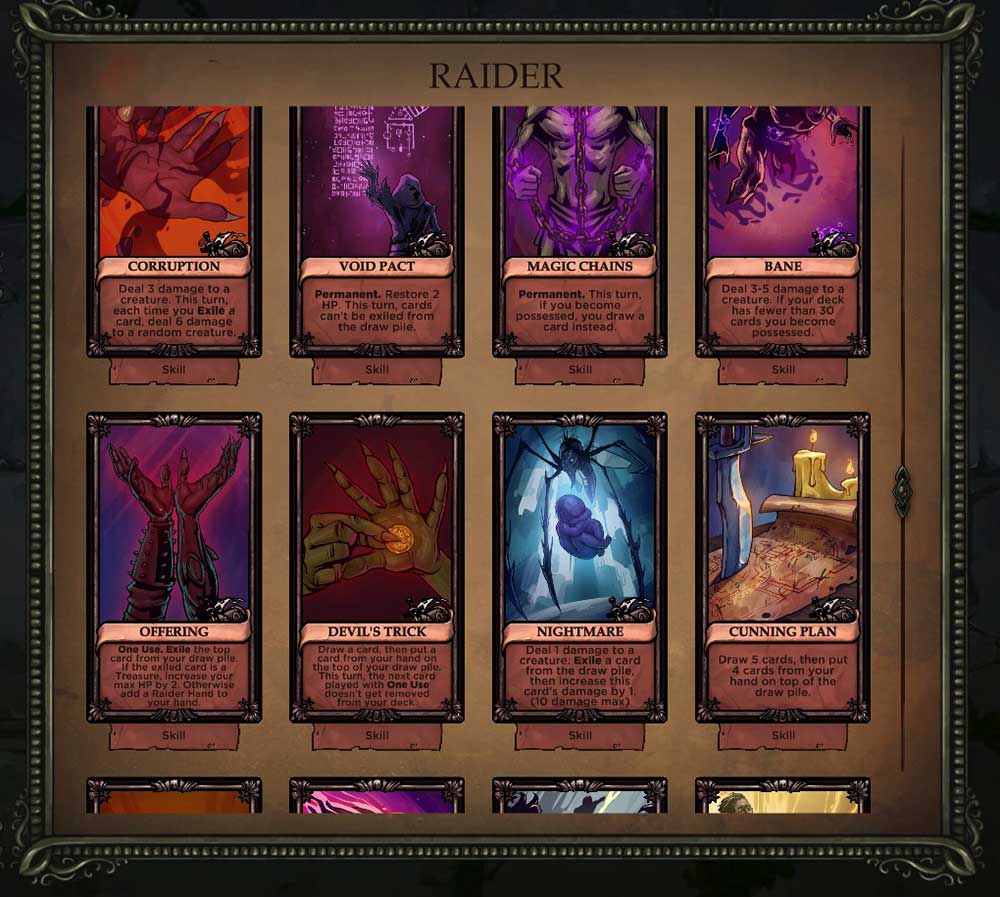
What I can say is that the game is very addictive in the just-one-more-fight way and feels amazing even though it seems low-budget. The card art is very Darkest Dungeon and consistent throughout the game. There is a fairly decent amount of cards available, including a half-dozen classes which have their own specific cards. There are also meaningful choices as you level and when you defeat bosses. For example, do you want to pick one of three random Fates (passive abilities) out of 20+? Or choose one of three Legendary weapons? Or choose one of three Heroic spells?
There is a fairly high variance in card effect quality which can lead to some swingy runs, but overall you are not likely to be shut out of possibly winning. And besides, as long as you get make it past at least one boss, you can just exit the dungeon with whatever spoils you happened to collect and try again.
As for the downsides? Well, the game is done and will no longer get any updates. Which is a real shame because there are a number of tweaks that could have been made to buff the weaker cards/abilities into usefulness. The nature of the game also lends itself to very specific strategies too – you pretty much have to always build a discard-themed deck given how treasures work. There is also zero story or lore of any kind, if that is important to you. The default price of $15 is extremely ridiculous.
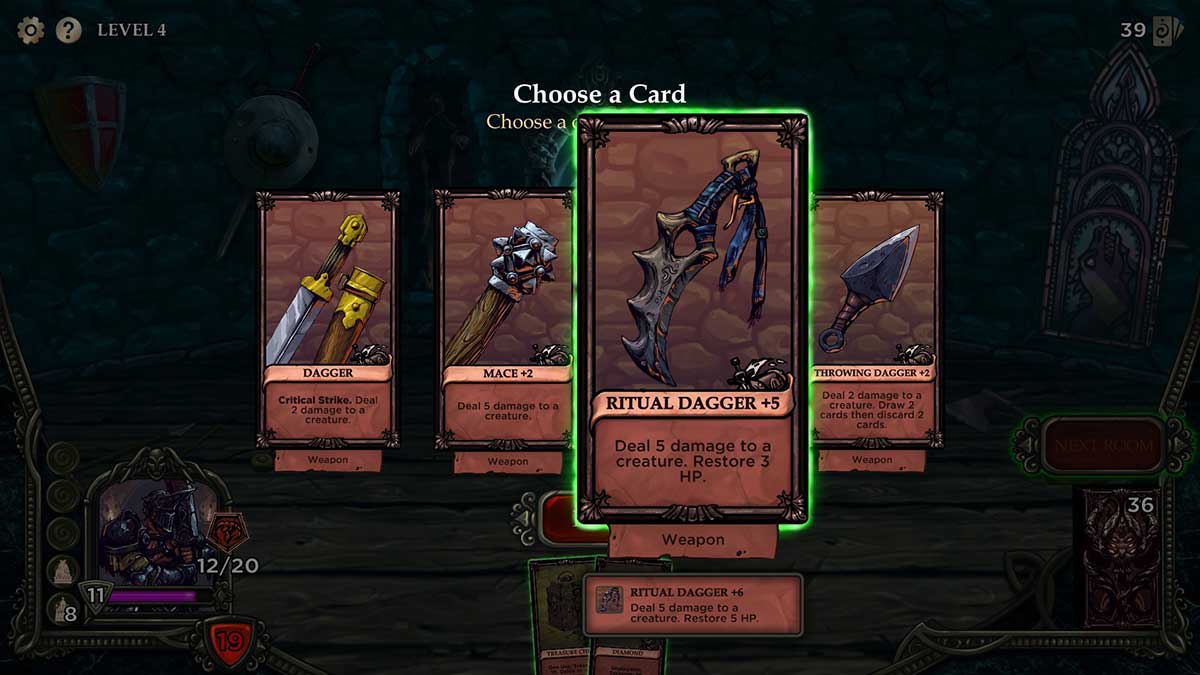
But, honestly? It’s on sale for $3.74 right now and I have put in 18 hours already. If you are someone who enjoys deckbuilding roguelikes, it’s a no-brainer. Just be wary of using it as “filler” or a palate cleanser in-between other games, because every time I try and do that, it’s suddenly 2AM and I never get to the other game. Which is a pretty glowing review, now that I think about it.
Wiki Void
Have you ever played a game without a robust Wiki available when you needed it?
If so, have you ever thought about doing something about it?
It is an interesting dilemma all around. As a developer, you cannot really be in the business of creating or maintaining your own Wiki. That would be kind of a full-time job, even if anonymous internet users weren’t able to change the information at any time. On the player side though, you often don’t have the necessary details to write accurate information. Sure, the text on the screen is there. But you are often not privy to the mechanics behind the scenes, and may not even be able to test anything depending on how everything is constructed.
For one reason or another, I have been playing a lot of games lately that have very limited Wikis. Some of that is because they are mods for games still in Alpha, e.g. Darkness Falls within 7 Days to Die, which incidentally is not the sort of thing you could really imagine happening like 10 years ago. A mod of a game in Alpha? Taking the time to write all of that sort of double-ephemeral data seems extra pointless. Then again, I certainly would have enjoyed having access to the information at the time, as I ended up spending 60+ hours with the mod.
Then you have the obscure games like Fate Hunter. Good fun. Zero information. Well, there is precisely one guide out there in the Steam community – and it’s a good one! – but that’s it. Is it worth trying to fill in a Wiki about it? Eh… probably not. Ring of Pain is another sort of low-information indie game that I did end up adding things to the Wiki because I was tired of going back to and forth with a text file of things I needed to remember (“what’s a Shrine of Neglect again?”).
So, it depends, I guess. Or maybe it’s simple: I will add to/improve an existing product, but not start from scratch. Which is probably reasonable considering that every minute I’m doing that is another minute I’m not playing the game I’m writing about. Which is a price I already pay for blogging.
Fighting the Game Mechanics
I just completed Orwell, a sort of Papers, Please-style game that demonstrates the dangers of mass surveillance. As an Investigator, your job is to comb through a few suspects’ Facebook pages, text threads, and anything else you can get your hands on (including medical records) to glean info and connect dots to stop further terrorist attacks.
The game is actually pretty slick in an AR sense, and reminded me of that one old (2012 is old, right?) Youtube video, Welcome to Life. There is no fourth wall – you the player agree to terms and conditions and your participation as an outside observer is intended.
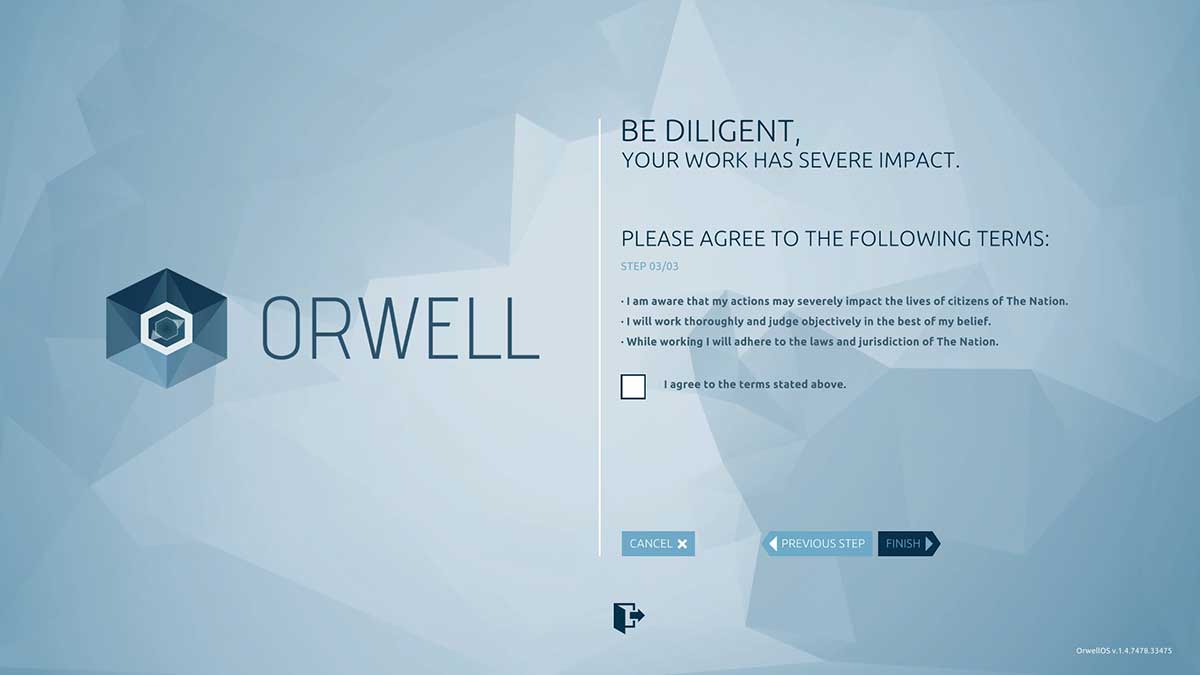
Overall, the game was decent entertainment across the six hours I spent playing. The frustrating part though was how often I ended up having to fight against the game mechanics.
One of the central conceits of the game is that you have to upload information to the Orwell system as “Datachunks.” Sometimes this is straight-forward factual information, like phone numbers or email addresses. Other times you have to exercise judgment and restraint based on context. If someone says they live in “Wonderland, on the other side of the rainbow” or whatever, uploading that will actually make that their address in the system. That example is benign, but as this is a game with multiple endings, you can actually screw things up depending on what you submit and what you don’t.
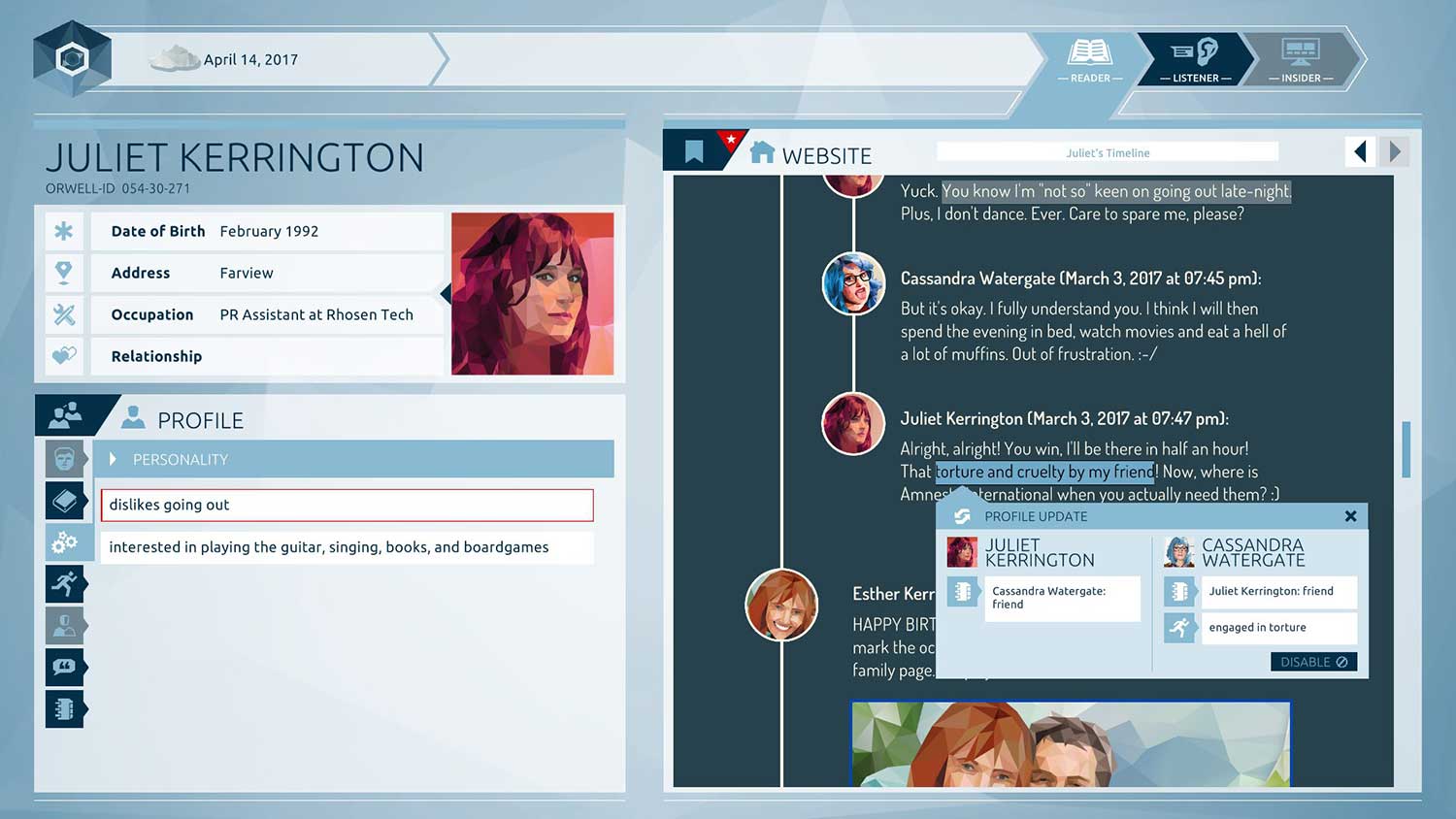
The problem I faced rather early on though is that Orwell is a videogame. And as a videogame, progression is based on “flags” which must be tripped before you can continue. There were at least four instances in which I could not progress until I uploaded a specific Datachunk that was not otherwise immediately obvious as being necessary. Once I did so, there would be a totally unrelated phone call or whatever I could listen in on to get more information and continue onwards. But as I mentioned, the game makes it clear that you shouldn’t just upload ALL of the Datachunks lest you pollute the profiles and/or possibly implicate an innocent person.
There is no option to just end the day, or move forward with the information you already have. I suppose it would be more frustrating to basically soft-lock you out of finishing the game at all if you end up missing a crucial bit of information. Nevertheless, Orwell felt like it existed between a visual novel and a Hidden Object game, the latter being a hypothetical one in which you could “lose” by clicking on the wrong thing.
I don’t have a solution to this problem; the Orwell devs don’t either. It’s a shame that an otherwise delightful experience could encounter so much friction in execution based on game mechanics.
 In An Age
Fallout Worlds
Sep 14
Posted by Azuriel
Bethesda recently removed the Nuclear Winter battle royale mode from Fallout 76, and replaced it with Fallout Worlds. This new feature is intended to satisfy the promise of modding within Fallout 76.
Essentially, it allows you to spin up your own Private World (a feature that already exists) but then tweak a large number of “developer” settings. For example, you can remove building restrictions, remove crafting restrictions (i.e. infinite materials), give yourself infinite ammo, crank up/down NPC damage and a number of other settings. Access to this feature does require a “Fallout 1st” subscription, same as normal Private Worlds, although there is a free “community” version that is intended to… something. Advertise the feature? Give bored people something else to do?
There is a catch though: while you can clone your character over to Worlds, they cannot come back.
A large number of people in the Fallout 76 community consider Worlds a waste of developer time. Originally, I did too. What’s the point? Why spend developer time on a feature that has no progression? All of the time you spend in Worlds doing whatever is isolated to Worlds alone, even if the only thing you tweak is goofy things like exaggerated ragdoll effects or more frequent rad storms. I suppose it might also be nice for those people who want to test out certain Legendary builds without needing to track down/grind out specific weapons.
The counter-argument that got me though was this: who says you have to come back?
Almost three years ago, I made the argument that Fallout 76 was a survival game. And, well, I sure as hell ain’t playing ARK on default settings. There isn’t anything approaching the ridiculousness of dino babysitting for literal real-world hours in Fallout 76, but there is an argument to be made that some elements of the experience diminish fun rather than facilitate. Things like grinding out multiple Daily Ops just for the free ammo to feed your minigun so you can use it in Public Events. Infinite ammo would cut out a significant possible gameplay loop, but again, some loops are better than others.
There is also the fact that a solo world is what many people have been asking for all along. Private Worlds already exist as a feature under the subscription, and has the bonus of allowing you to preserve your unified character progress in Adventure Mode. But what is that really? You also level up in custom Worlds, possibly at a faster rate. The two things you miss are the sort of Season rewards – most of which can be boiled down to resource gifts – and… other people. You can invite others to your own Custom Worlds, and they can even rejoin that specific Custom World without you having to be online, but there is otherwise no random people drifting in.
And that’s the real downside, not the forked progression. Other people have certainly been distracting during story progression, but Show & Tell is a strong motivator for emergent gameplay. I can’t tell you how many times I have strolled into a random person’s CAMP just looking to browse their vendor wares and then end up shamed how great their camp looks compared to my Oscar the Grouch roleplay (or at least that’s what I keep telling myself). I have built elaborate nonsense in ARK and Valheim and similar games before with full knowledge that none would witness its greatness. It’s easier in those games though, because other people never existed to me. Here, it’s different.
Having said all that, I have no particular desire to fork over subscription money to access Fallout Worlds. I now understand the appeal though, even if it’s not directly appealing to me. I happen to enjoy rummaging through literal post-apocalypse garbage and slowly accumulating all the things.
If you don’t, well, Bethesda has you covered now.
Posted in Commentary, Fallout
1 Comment
Tags: Ark, Fallout 76, Fallout Worlds, Game Design, Show & Tell, Subscription, Survival