Blog Archives
Un-Necesse-ary
Necesse recently graduated from Early Access to full 1.0 release. I had played it previously for almost 10 hours, so I wanted to give it another go to see what had improved. As it turns out… not much.

I’ve heard the game described as “top-down Terraria meets RimWorld,” but that is criminally misleading. Yes, it is a top-down, open-world survival crafting game with RimWorld-esque colony management functions. But what it’s actually more like is a lower-budget Keplerth. Now, in my Impressions of that game I called it a knockoff Necesse, so there’s some circular referencing going on.
The point is to not go into Necesse thinking you are going to get the same tight, engaging gameplay loops of Terraria or… like anything at all related to RimWorld’s subtle genius. The NPCs you recruit to your village can be assigned tasks like chopping wood or shearing sheep, but they have zero personality, relevant moods, or any necessary functionality at all. Hell, most of the crafting you can do is itself pointless in comparison to random drops.
OK, let’s back up. What’s Necesse and its gameplay loop?

In Necesse, there is a large overworld with various creatures and hazards and biomes to explore. Additionally, there is an underground “layer” full of much more dangerous monsters and random loot. The loose goal is for you to summon bosses using specific item drops, defeat them, and use the resulting drops to unlock the next tier of progression. As you might expect with the top-down perspective, most of the bosses are bullet-hell style affairs with multiple phases.
There is crafting in Necesse, but it feels largely perfunctory and unsatisfactory. Yes, you can collect wood to make a Wood Sword, smelt copper into copper ingots to make a Copper Sword, and so on. You can also just buy weapons from NPCs too, skipping multiple tiers in the process. Indeed, the underground portions of the game feature loads of enemies that have a chance of dropping gear that vastly outstrips anything you could reasonably craft. So, rather than feeling like you are earning your way through escalating challenges, most of the time you are better off just running around under-geared until you very suddenly are not.

There is technically hunger in Necesse, but it is the sort of half-baked nonsense that is unfortunately typical in this space. Are there dozens of food recipes? Yes. Are any of them necessary at all? No. More complicated dishes can grant you larger bonuses to damage (etc) and you can even automate some of the cooking via the NPCs you recruit to your base. But… why? Just eat a bunch of coconuts or berries or whatever else is nearby. Perhaps this sort of thing becomes more required on higher difficulties. It all just feels rote, like designers going through the same motions just because “everyone” builds games this way. It’s 2025, guys: if food isn’t going to be super-scarce resource, then it needs to have a more integrated game function (increasing HP, etc) ala Valheim or similar. Otherwise, just leave it out.
To an extent, it’s a bit unfair to be too harsh on Necesse considering it was largely developed by one dude. Counter-point: Stardew Valley. Also: maybe it’s worth bringing on more people to make the game more engaging? There was a graphics overhaul at one point, which certainly improved things, but the UI itself is still hot garbage. Could they make the icons even tinier? [Fake Edit:] Just found the option for UI scale, but it still looks bad even when scaled up.
Anyway, that’s Necesse.
Abiotic Factor is Incredible
Whatever plans I had for Blaugust (read: none) these past weeks evaporated in the furnace of fun that is Abiotic Factor. I played about 18 hours worth a year ago and stopped because I was having too much fun, and wanted to wait until the complete experience was available. Well, it’s here, and I currently have… 130 hours logged. Not even counting the original 18. Jesus Christ.
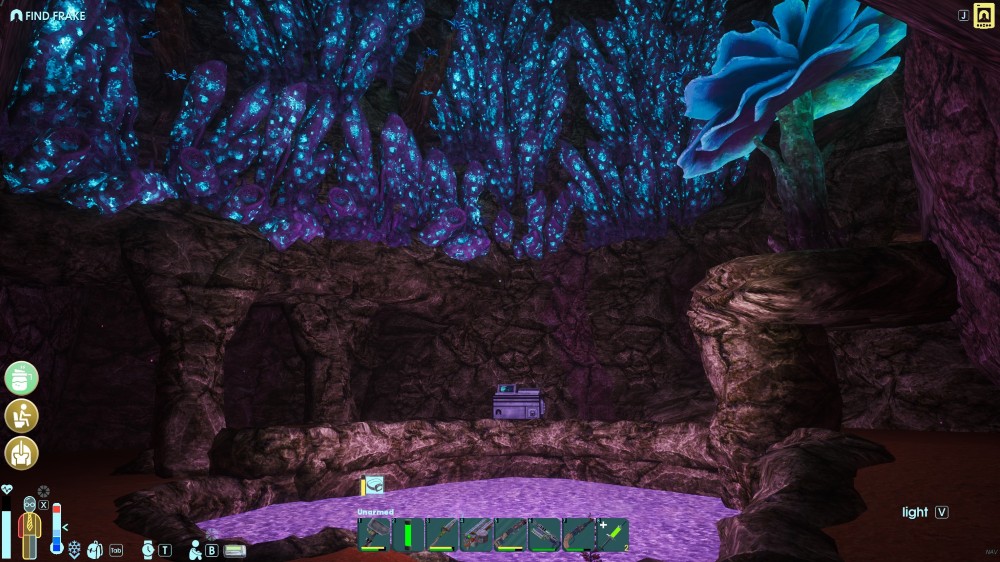
If you are link-averse, Abiotic Factor is essentially a closed-world survival-crafting game set in a SCP meets Half-Life-like setting with a similar plot. I mentioned “closed-world” instead of “linear” earlier because while the game does have an generally predefined path – as opposed to something like ARK – you get to unlock doors and open up shortcuts that will make backtracking more convenient. And there is indeed some backtracking required to collect additional resources to fuel your science machine.
I have found that the way resources are handled is… mostly acceptable. Just about everything in the facility can be stripped down for parts, but once they are gone, they are gone. In the meantime, you will find portals to various “anteverses” that you need to explore and complete. These portals are similar to the general facility in that they are more linear but you can unlock shortcuts for subsequent visits. Emphasis on subsequent visits. Twice every in-game week all portals reset themselves, including any items therein. To an extent, this does lend itself towards a sort of resource speed-run that gets tiresome after a while, especially when you’re looking for just one particular thing (Staplers, Glue, etc).
On the other hand: what other survival-crafting game doesn’t require farming some resources?
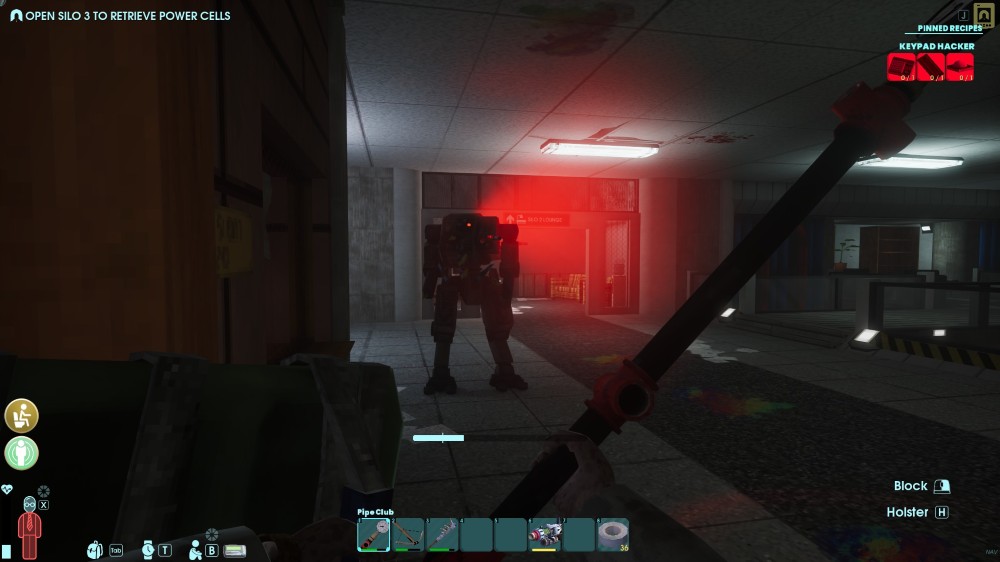
One element I have been surprised about is how well the devs maintained a sense of positive progression. In the beginning, the night is indeed dark and full of terrors – electricity is shut off, hostile security bots patrol, and you’re mostly sitting in the corner somewhere praying the noises of unknown source will just stop. After a while, you learn how to craft batteries and traps and makeshift barriers, creating a safe(r) space for yourself. Exploring further afield leads to longer return trips, which sucks. Then you make a cart, where you can stack your loot and push it back to base. Or you unlock a particularly helpful shortcut cutting down on the commute. You start creating forward bases instead of bringing everything with you. Finally, slightly past the mid-game… absolute bliss. Let’s just say you still need to explore new areas, but returning somewhere is no longer a problem.
At the same time, the general lethality of the game remains high even on Normal difficulty. You can be well armed and provisioned, but some enemies will still be able to take you out in short order. In the endgame where I am, some of the enemies have become a bit bullet-spongy too, but I’m not too mad about it because the difficulty of each encounter is largely in your hands. Having trouble clearing a room? How about setting up a bunch of turrets in the doorway and let them duke it out instead of you? There are power sockets in a bunch of places in the facility, and even if there aren’t, you can always bring your own fully-charged batteries. While not quite on the level of Prey, Abiotic Factor does give you a similar level of freedom.
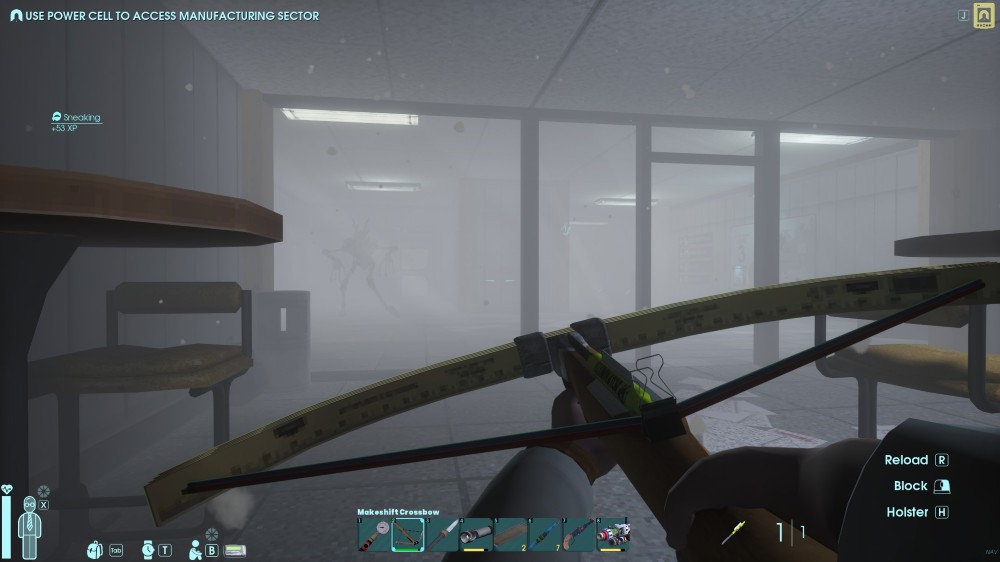
On the negative side, the game is not afraid of sometimes setting you up against (mostly) invulnerable enemies. Usually these act more as mobile traps/hazards, but a not insignificant portion of the game is spent being stalked by the equivalent of a Boo from Mario. It’s spooky and provides plenty of dynamic jump scare opportunities at first… and then the game keeps going for another 20 hours before you get something that can grant you peace. But surprise! There’s another at the endgame. Sigh.
Another downside comes from some lingering rough edges from Early Access. The devs have been very quick with hotfixes to patch various bugs, which is great. But there are some things that need some more love, or semblance of purpose. For example, there are several dozen cooking recipes with complex/rare ingredients that barely provide more sustenance than basic ones. Some weapons serve no discernable purpose, being weaker than what you had access to before. There are several endgame Sharp weapons, but no Blunt ones. Speaking of which, the late game annoyingly introduces you to new weapons and then immediately enemies that are resistant to their damage. Like… why?

These are all fixable problems though, and the devs seem like reasonable people thus far. I’m excited to hear what they have in store for v1.1 and beyond. Mostly. Because at the end of the day, I am very clearly nearing the end of the game. Clocking more than 130 hours is certainly sufficient for my money’s worth, but I’m nevertheless sad that starting over is unlikely to generate the same novel experience. This is where a more traditional, rogue-like survival game (e.g. 7 Days to Die, Minecraft, etc) might pull ahead in the long-term.
Having said all that, well… one hundred and thirty goddamn hours. Abiotic Factor is legit. It’s one of the most novel survival-crafting experiences I have had since Subnautica, and reminded me why I love the genre so much. Play now or play later, but I recommend playing it. Also, it’s on Game Pass.
Impressions: Len’s Island
I try to keep tabs on every survival game that comes out as, despite first appearances, there ain’t actually that many. So, when I got notice several weeks ago that not only has Len’s Island came out of Early Access but was also free to play over the weekend, I quickly jumped aboard.
Unfortunately, after playing about 6 hours or so, the game is a bust.
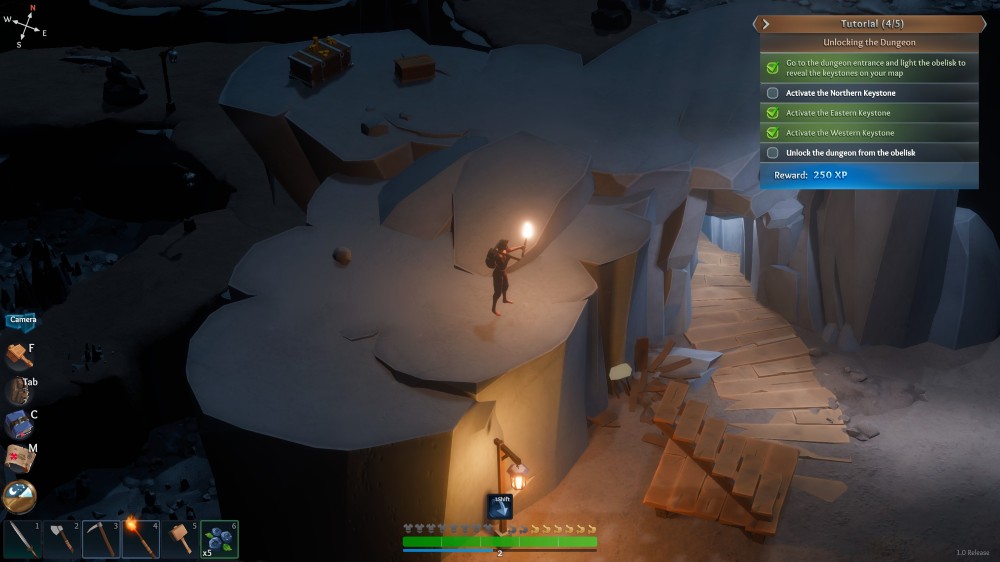
The problem with Len’s Island is that it feels like an A game. As in, one less A than AA. Maybe BB would work better? This is the game’s own description on Steam:
An open-world survival crafting game for 1–8 players, blending intense dungeon crawling and ARPG combat with peaceful farming and creative building. Take on quests and explore a vast, procedurally-generated world full of danger and discovery.
Yeah, no, almost all of that is misleading as fuck. Imagine my surprise when I figured out that in this “open-world survival crafting game” you… can’t actually craft armor. Armor drops from the end chest in dungeons, but not in an ARPG, Diablo-ish way either – it’s a singular, set piece. The only other way to get armor is to purchase some from vendors, who also tie into your general tech/decoration progression. There are like four weapons in the game and you just upgrade them with identical sets of resources for each tier. Quests do exist, but they are achievement/milestone style quests rather than any kind of coherent narrative. Perhaps things get spicy later on, I dunno, but I very much doubt it.
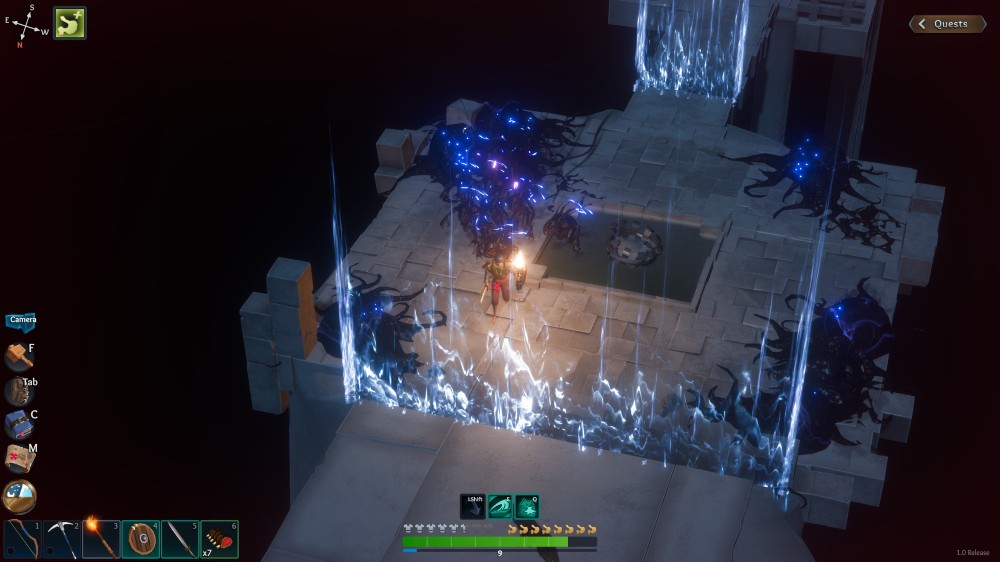
I’m not really sure there is much else to say. The general gameplay is not fun, the survival elements are nonexistent, and crafting itself is perfunctory. I haven’t been this disappointed since Farworld Pioneers.
Winter Sale Radar
There is zero reason why I should be thinking about new videogames for myself. But if I were, here is my list of current deals, snipped from IsThereAnyDeal:
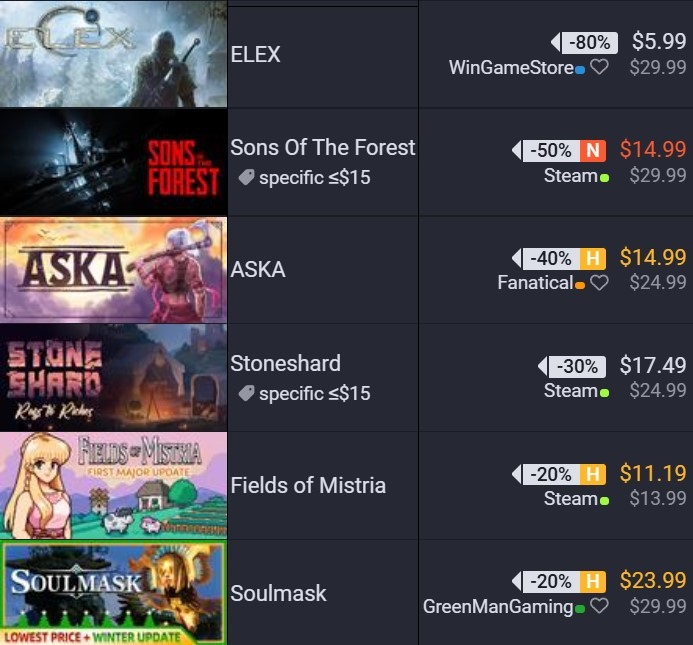
Sons of the Forest, ASKA, and Soulmask are all in there because survival-crafting. I never actually got around to finishing the original Forest though, as horror is not really my jam as it turns out. A sequel that probably doubles-down on the same thing probably isn’t the best idea, but… well, I did get ~25 hours out of the original. I’m hesitating on ASKA because it seems more of a colony sim than survival per the user reviews. Soulmask is more solidly in the strike-zone, if only it was more than 20% off.
Not much to say about Fields of Mistria. It has a Overwhelmingly Positive rating on Steam (10k+ reviews), it’s cute, and a farming sim. It is also very much one of the situations where you’d be better off waiting until it’s out of Early Access and the rest of the game is implemented before diving in.
Stoneshard is one I’m really debating. It is apparently a very punishing game, including having a dumb save system in which you can lose a lot of progress. At the same time, sometimes you feel like being punished, you know? I enjoyed Zero Sievert and its own “lose everything if you die” schtick, so maybe it would be enjoyable too.
Elex is a weird one to include, as I have never played a “Gothic” game or really have any sort of idea why they’re famous. In fact, all of the videos I have watched on the subject lead me to believe it has terrible combat, jank galore, a mid story, and few redeeming features. One of said features is the “freedom to do anything,” but that doesn’t seem especially well-defined. Like, more freedom than any Elder Scrolls or Fallout game? Still, Gothic-likes get talked about and I did notice a few overhaul mods on Nexus that appear to smooth some of the rough gameplay edges.
Not listed above, but Guild Wars 2 is having an expansion sale. I have literally not played in over a year, I believe, certainly not since the latest expansion Secrets of the Obscure came out. The sale makes the latest expansion cost $20, which isn’t terrible. The challenge is always that you end up playing GW2 again, e.g. consume the story content, then farm metas for pocket change to convert into gems to play dress-up. That’s… probably every MMO, to be fair. The problem with GW2 though is that it’s a bit harder to avoid the whole “log into 8 alts to open chests every day before you really start playing” time sink. Plus, you know, I missed months and months of cheap Legendary goodie bags from when the expansion first came out. Feelsbadman.
In any case, I’m going to be sitting on these deals for a bit. The Steam sale continues until January 2nd, so that gives me about a week and a half to see if Epic or Amazon ends up giving the games away for free, or if they appear in a Fanatical bundle, or if I just lose interest altogether.
Beginning Nightingale Tips
Here are some T1 beginning tips on playing Nightingale (post-Realms Rebuilt) that I wish I knew before.

Go Ahead and Build Your House Wherever
Nightingale is a game about portals and traveling to new places all the time. So… where is the best place to build your base? Near the Crossroads? Near a Portal? The actual answer is: wherever you want.
Fast travelling is easier than you think. Press M to bring up your map, and you’ll have two options: Travel to Respite, and Travel to Crossways. Clicking on Respite will take you to wherever you placed your Estate Carine, no matter the realm. That’s fairly straight-forward: porting home, dumping your inventory, and crafting some stuff. But how do you get back to where you were going? That’s where the Crossways comes in. There are portals in the Crossways. Specifically, these portals can only take you to the “Storied Realms” aka plot realms, but chances are that is where you are coming from anyways.
In any case, after you complete the 1st story realm you unlock the ability to craft your own portals wherever you want. So, again, don’t lose sleep over where you should build your base. Just do it.
Hold E to Collect All the Things
Did you just kill and skin a fae creature (you monster!) and see a bunch of Hide, Meat, Essence, and Bones pop out? Hold E to collect everything in one go. Chop down a tree on a slope and see the Wood Bundles start to roll away? Hold E. Mining Tin next to the water? Hold E occasionally. This method will not pick up sticks, rocks, and other interactable “nodes,” but it does work on basically anything that spawns in with the wispy glow around it.
Survivor Inventory is NOT Weight-Based
Early on, you can recruit an NPC to follow you around and fight and collect things for you. Unfortunately, they only have 15 slots of inventory, which means it’s easy to get clogged with all kinds of leaves, pieces of twine, and so on. The good news is that you can relieve them of those burdens, and instead load them down with 50kg stacks of Lumber and Ore, no problem. Extremely useful for when you strip-mining the fae realms for resources.
Don’t Let Survivors Bring a Knife to a Maul Fight
Speaking of survivors, ever wonder why your first survivor is dealing just 3 damage to those zombies trying to eat your face off? Because they’re equipped with 3-damage stone knife. Give them the Maul you aren’t using anyway, and suddenly they’ll be slaying mystical beasts while you sip tea and crumpets. Well, that’s a Tier 3 food, but you get the idea. Open the survivor’s inventory, put the new weapon inside, and then right-click it and choose equip. Don’t forget to give them your hand-me-down clothing after you upgrade as well.
Incidentally, you can also give the survivor a ranged weapon if that’s what you’re into. I recommend sticking to melee weapons though, to encourage them to take beatings on your behalf. If you do give them bows or guns, the good news is that they don’t need nor use up any ammunition.
Essence is of the Essence
When you are starting out, every spent Essence is a progression trade-off. Which crafting station do you unlock first? Is it worth unlocking (and crafting!) the Recovery spell? Once you get further into the game, the decisions become much easier, of course, but it’s also true that T1 Essence remains relevant forever as it is used to Repair even higher-tier gear.
So… pssst… interested in learning how to get some quick T1 Essence on the cheap? Check these out:
- Simple Saw Table – Paper x6 from Wood Bundle x2 [6 Essence]
- Simple Tanning Station – Straps x3 from Hide [3 Essence]
- Simple Workbench – Simple Wood Axe from Stone Block and Wood Bundle [10 Essence]
Once any of the products are created, right-click on them and choose Extract. Bam, enjoy the Essence. The Simple Wood Axe seems a clear winner, especially in the early-early game, but just note that these numbers are without any Augmentations from nearby decorations. And sometimes you just want to chop down a bunch of trees and/or clear all the Hides from your inventory, ya know?
Living the Charmed Life
There are a lot of little ways to enhance your gear in Nightingale, but one you don’t want to sleep on are Charms. These are unlocked under the Magick tab and represent conditional boons (and sometimes banes) that can be applied to tools and clothing. Key word there is apply, by the way – it does nothing in your inventory until you right-click and apply it to something. Ask me how I know.
One of the most useful ones in the early game is Charm of the Mule, which doubles your Carry Weight while reducing your Stealth by half. Seems like quite the tradeoff, but right now Stealth is pretty useless considering Bound always know where you are and using guns at all negates Stealth for several seconds afterwards. Once you get better backpacks you can drop it, if you want. Charm of the Wanderer is also great as it significantly decreases Stamina drain while gliding with the umbrella. Just note that Charms are only active when you have the item equipped. This means you are better off putting as many as possible on your clothing rather than on the items themselves.
Building from a Box
I was pleased to see that Nightingale allows you to use resources stored in chests to craft things at workstations. What struct me as odd at the time though, was how this did not extend to crafting walls, floors, or building the workstations themselves. Turns out, you can build using stored resources, but there’s a reason why you may not want to.
When you open any storage container, there is a gear-looking icon on the right called Container Permissions. It is here where you can toggle whether to allow for the resources inside that specific container to be used for building or not. The default is Not Allowed.
But… why? Well, resources are extremely important in Nightingale because they can imbue crafted items with their attributes. Buildings and Workstations, however, get zero benefit. So, ideally, you want your walls built with regular Wood Bundles from trees you chopped down on the tutorial island rather than the T3 Wood Bundle (Yew) that you could be using to grant tools +6% melee/ranged damage. The game otherwise doesn’t care which resource gets consumed, and it will consume your best resources on a whim if you’re not careful.
The good news is that you can decide on a system that works for you and just keep doing it. For example, I have several “Building: Allowed” containers where I put all the resources I don’t care about, and then everything else stays protected. Or you could do it the other way around.
Three Hots and a Cot
Food buffs are incredibly important for survival in Nightingale, as is the Comfort buff from sleeping. You can have up to three different food buffs at a time and there is never really a reason not to have them rolling. As a note, “different food buffs” is very generously defined in the game – you can get three Roasted Meat buffs as long as each was created with a different base Meat, e.g. Prey, Predator, Bug.
In the early game, I recommend finding and loading up on as many Blueberries as possible, as the Max Stamina bonus from them is significant when your gear isn’t providing a higher baseline. Also, do yourself a favor and unlock Mixed Plants immediately. The initial Roasted Berries recipe requires two berries, but Mixed Plants allows for two separate vegetables, both of which can be the same berry, doubling the attribute gain.
Semi-advanced tip: prioritize unlocking the Feast Minor Realm card if your base is in the Abeyance realm, aka tutorial island. The Feast card massively increases the duration of food buffs when eaten in that realm, and the increased duration persists when you leave. All of a sudden, your food buffs are lasting 40 minutes even while you progress the story in other realms. This is helpful no matter where your base is, but Storied Realms require you to finish them before you can apply Minor Realm cards.
Impressions: Nightingale
I had low expectations rolling into Nightingale – a Mixed review score on Steam and its own game directors professing disappointment will do it – but the game was surprisingly good. To be fair, I only started playing until after the Realms Rebuilt reengineering, so perhaps I would have been less surprised with the original rollout.
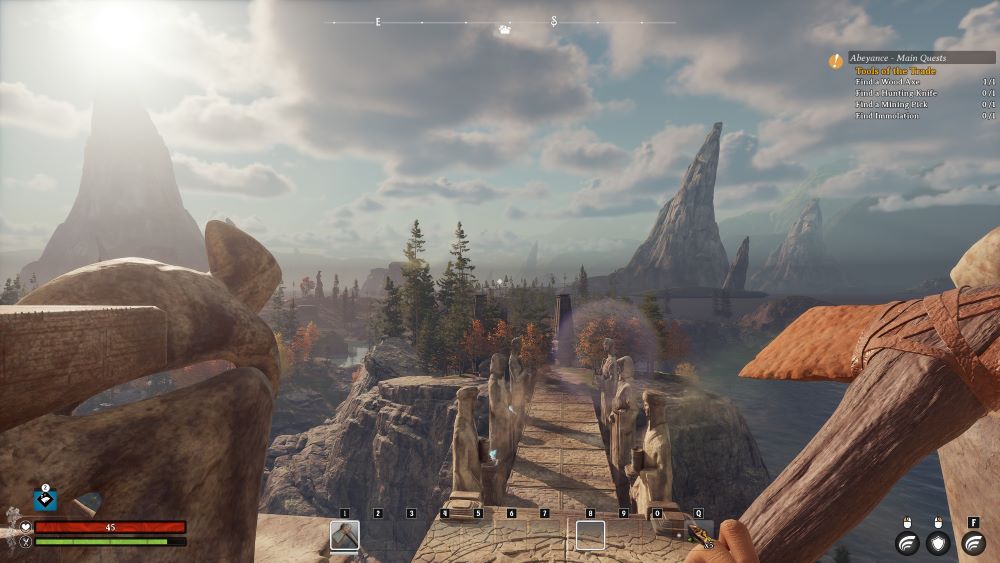
What I do want to note for posterity is my current giddiness and wonder surrounding the principle conceit of the game: portals to fae realms. I have played a lot of survival crafting games in my time, and it’s not particularly often that the world itself (or the potential thereof) excites me. But this initial Abeyance realm? Very excellent first impression. And as I was exploring the island, I kept thinking about how many problems realm-walking solves. Usually, carving up the world into disjointed instances is more of a programmer shortcut than artistic design, but it simply synergizes perfectly here. The only other games that achieved this level of environmental design brilliance for me was Starbound and No Man’s Sky. Getting that same feeling in a non-sci-fi setting is practically unheard of.
Now, it’s important to understand I haven’t actually made it off of this tutorial island yet. All this potentiality in my mind is exactly that: a superposition of imagination not yet intersected with reality. I have no doubt the waveform will eventually collapse and we’ll see, yet again, that the cat died in the box. But regardless of what ends up happening with Nightingale, I do want to see more things like this. I think having a more fae and/or eldritch angle on the genre is an otherwise untapped vein of novelty.
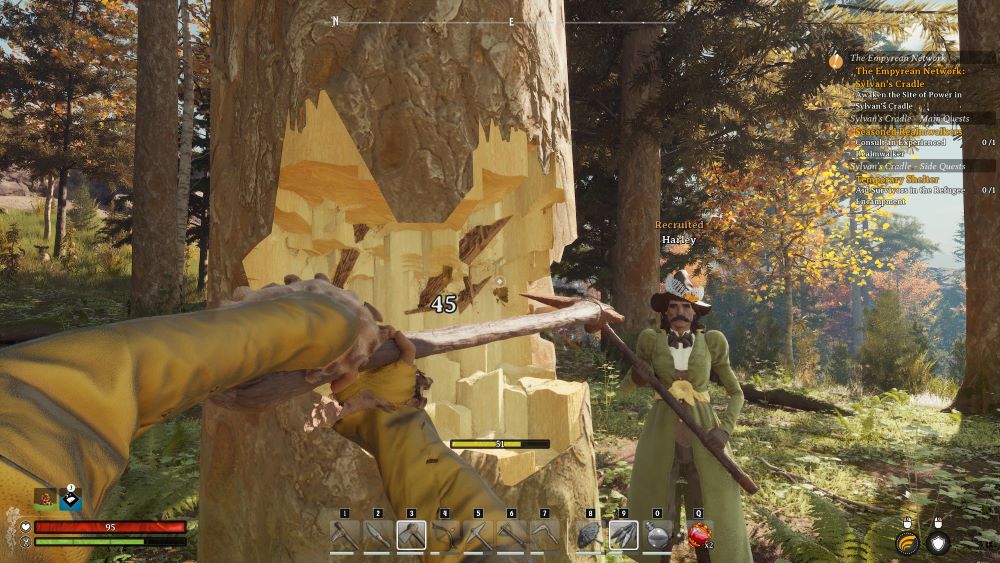
As far as general gameplay, Nightingale again surprised me in several ways. Chopping trees breaks off chunks, mining ore chips away rock where you hit it; little details like that go a long way with me. I remember reading people complaining about combat and the AI, but so far it appears serviceable, if not robust. The pseudo-zombie Bound mobs run, crawl, lurch towards you from multiple angles. Your character can block, get knocked around from attacks, and have a dedicated dodge button. Non-standard traversal is also supported, with a Mary Poppins-style umbrella glide and rock-climbing picks that you can also throw at surfaces to grappling hook yourself up. Again, all on the tutorial island.
One huge innovation that I hardly ever see in any game is the fact that multiple different resources can be used in recipes. For example, one cooking recipe calls for two Raw Edible Plants – this can be satisfied with mushrooms, blueberries, barberries, etc, or mixed and matched. This may not seem like a big deal, but think about all the times you’ve had wolf meat in a game but couldn’t craft something because it required boar meat or whatever. Additionally, all these resources have specific bonuses associated with them. Gloves need Hide to craft? Okay, well, you can use Hide (Prey), Hide (Predator), or Hide (Bug), and they will confer +Stamina, +HP, or +StaminaRegen respectively.
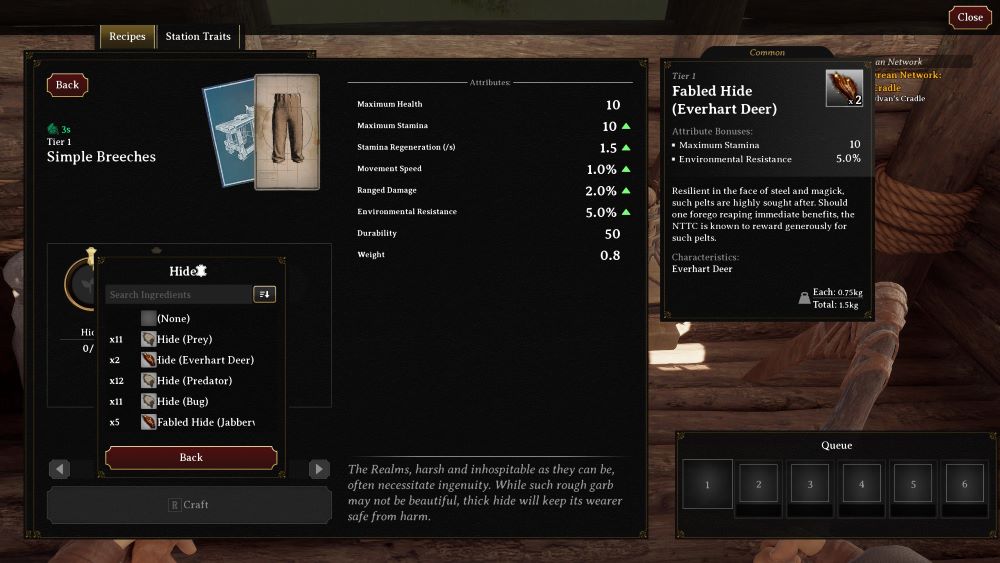
Having said that, there are definitely some… let’s say opportunities for quality of life improvements.
I was able to recruit a follower NPC who helpfully assists me in combat and also picks up resources automatically. That’s great! Their inventory is not weight-based like mine though, it’s item-based. While this works out in my favor if I’m loading them down with heavy resources like wood or stone, they are just as likely to fill their pockets with leaves and twine, necessitating some awkward inventory management. Furthermore, while I greatly appreciate being able to craft from storage, could we craft from NPC inventory too?
Also, while I love the idea of “decorative” objects conferring a bonus to crafting stations and items created, it feels real dumb to have no control over which bonuses take precedent. Maybe this is a “problem” that gets solved later on with higher-tier crafting stations (that have more than two enhancement slots), but once I realized I had to move the Hunting Trophy across the house in order for the Training Dummy to grant my crafted Knife +Critical Damage, I wanted to throw the entire system in the trash. Like, what’s the design intention, folks? Am I supposed to have two separate Crafting Tables set up, one surrounded by objects that grant me 20% ammo per craft and +Damage on ranged weapons, and the other near objects with +Melee modifiers? Or is my “pick it up and place it in another room” workaround the design goal? Just… let us toggle which ones are active.
——
Having made it to the 2nd island, things are getting a bit more abrasive. The enemies are much harder, presumably tuned to be a challenge for players in Tier 2 equipment. But the only real way to get Tier 2 equipment is to gather Tier 2 essence to unlock the upgraded crafting stations. Meanwhile, surprise, the realm has a negative modifier that reduces your HP regeneration. The whole situation was a bit brutal. But now I’ve unlocked a bow that literally deals 100 more damage per arrow than I deal currently, using materials I can gather from my Abeyance realm. Which… is not the way that is typically supposed to work. Anyway, once that gets crafted, I’ll continue onwards to farm mobs for essence to unlock more crafting stations so I can craft the gear that will allow me to be actually successful in exploring the area.
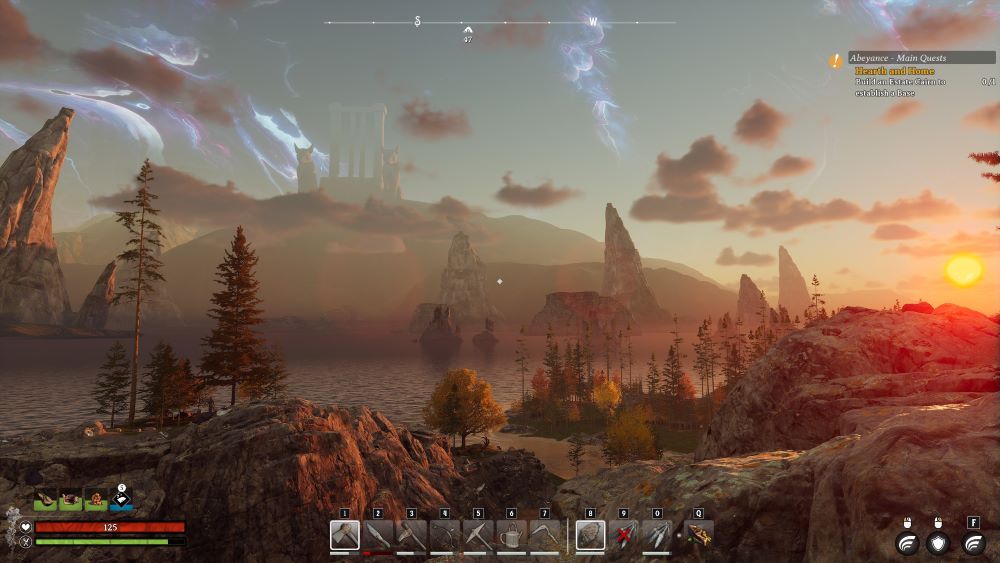
Anyway, if I had to sum up the things I would like addressed over Early Access thus far, it would be:
- Toggle active Augmentations on crafting stations
- Craft from NPC inventory
- Sort by Weight option when viewing NPC inventory
- Remove or reengineer Hunger Meter (Food buffs mean you’re always full anyway)
- Reimagine the Magick/spells system entirely (it’s barely supported and boring to boot)
- Tighten up traversal mechanics, e.g. what can be climbed, grappled, etc
- Allow us to build bridges
Other than that, so far, I’m very impressed.
Wishlist – August 2024
A non-exhaustive list of game wishes at this time interval:
- SCUM ($15.99, 60% off)
- Terminus: Zombie Survivors ($15.99, 20% off)
- ASKA ($19.99, 20% off)
- Enshrouded ($29.99, MSRP)
- Sons of the Forest ($29.99, MSRP)
- Bellwright ($29.99, MSRP)
- Nightingale ($29.99, MSRP)
- Soulmask ($29.99 , MSRP)
SCUM would certainly seem to be the sort of survival crafting game within my strike zone, but there is just something… off-putting about it in the videos I have watched. I’m not opposed to super-realistic/detailed survival games (e.g. Green Hell), but they have a tight fun-rope to walk. Need to balance your macronutrient intake with a literal stomach size constriction? OK. Need to remember to remove dirty pants if you get a laceration on your leg lest you get an infection? Cool.
But what is this all in service towards? “Prevent the player from just eating berries all day in the woods, forcing them into dangerous zones.” I can get behind that. Of course, the actual gameplay looks kinda janky, zombies are all of the same type but a few are randomly screamers that spawn in dozens of new ones to immediately chase you down, etc, etc, etc. All of sudden, it seems a bit less “realistic” and more nakedly game-y. That sort of thing works in 7 Days to Die, but not here.
On the other end, watching videos of Terminus makes it seem like something I’d be interested in. Mostly. It’s a kind of top-down survival roguelike with action points, different builds, meta-progression, and so on. Part of my hesitation though is that it doesn’t feel like the sort of game where you would, you know, actually build a base and stay put. If you’re just going node-to-node, you may as well be playing a more traditional roguelike instead. Also… not to be that guy, but $16 on sale still feels like a lot for an indie game within this visual league. There are amazing 100+ hours experiences with worse graphics, of course, it’s just that this definitely feels like a Game Pass and/or Humble Bundle title. Literally hit 1.0 last week so that’s kinda shitty of me to say, but I said it.
Finally, I must admit it difficult to remember what ASKA is all about off-hand. It arrived in Early Access around the same time as Enshrouded, Nightingale, Bellwright, and Soulmask, all of which are survival crafting games with various shticks. In reviewing the literature, it appears ASKA is the one with “skill based combat” and the recruitment of NPC villagers. Err… the one without masks involved. Or medieval plots against the crown. That one. But, hey, it’s on sale!
The other games aren’t on sale, so I’m not going to talk about them. We don’t MSRP around here.
Vintage Story – Modified
TL;DR: Mods help, fundamental issues remain.

While my Impression post went up on Monday, I actually wrote it few weeks ago. In that time since, I have downloaded the following mods for Vintage Story:
- Primative Survival
- Better Ruins
- A Culinary Artillery / Expanded Foods
- HUD Clock
- XSkills
- Carry On
- Animal Cages
- Prospect Together
As you may imagine from the titles, the mods add a lot of interesting elements to the game. Or at least would, if I was not still gated behind a Copper Saw. But let’s start at the beginning.
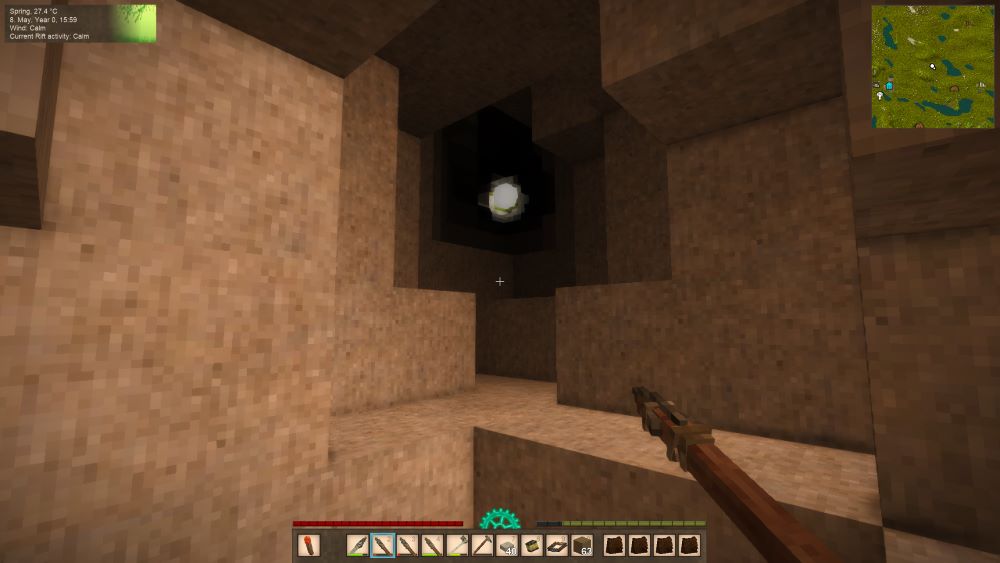
Once I had all the mods installed, I decided to go ahead and start a new game. I left most of the settings as the default, although I did increase the chances of surface copper, and also disabled class-specific recipe locks. Upon zone-in, I found a temporally-stable area, built a dirt house, found some clay, and basically got myself back where I was in my prior save within about 2 hours. While sifting some Bony Dirt, I actually got a Copper Hammer Head, which boosted me significantly into the Copper Age… sorta. I still needed to collect copper for a Pickaxe and then some for a Prospecting Pick, which you use as a method to determine what ore is nearby.
I then proceeded to spend literal hours of my limited gaming free time wandering around the map, prospecting stone to determine where copper might be. Now, you can find surface copper nuggets and then mark that area on your map due to the likelihood of there being copper deposits below there. However, that doesn’t necessarily mean you will find any before your Copper Pickaxe loses all its durability just smacking regular stone. No way of repairing tools, by the way.
Fast-forward some more hours, and I actually found a cave that had real copper nodes clearly visible in the walls. Yay! I collected those went back to base and… just stopped playing. I had enough for a Copper Anvil, which is necessary to create the Copper Saw, but I realized (via Wiki) that you need a Bronze Anvil to craft Iron Tools, and that making Bronze is a better use of your copper than making an anvil. After a few attempts at getting some Tin to make Bronze, I gave up. Arguably, I should have just made the goddamn Copper Anvil and then Saw and then seen what was what.
Fundamentally though, I just wasn’t having fun.
What about the mods though? Well, Primitive Survival adds a lot of food options, including the ability to chop meat into jerky, which helps with preserving food in the early-game. There is also some enhanced fishing capabilities that doesn’t rely on literal fish mobs spawning. The extra food stuff from the other mods didn’t really come into play because I didn’t enter the Wood Board Age. Or maybe I was just too dumb to understand the trick behind easier recipes or whatever.
Out of all of them, XSkills had the most promise. Basically, the mod adds character progression to the game, which is absolutely something I feel Vintage Story lacks. The default XP rate is abysmal, but you can boost it via editing some files. One of the skills grants a chance of collecting Resin from chopping trees, which is essentially all I ever really wanted from the game. There seemed to be some neat stuff in there, amongst the more generic +5% X and similar, but I didn’t earn enough XP to reach anything of particular note. I definitely recommend it though.
Weirdly enough, I do sorta still have a vague desire to play Vintage Story. I’m not quite sure if its the equivalent to Stockholm Syndrome, wherein you spend so much time understanding the intricacies of a game that leaving it makes you yearn for it more, or what. It is fun exploring the map and potentially discovering something amazing right around the next bend. The problem is that everything circles back around to an incredibly dull, “realistic” mining simulation and arbitrary gatekeeping. Fighting feels bad, the lack of armor options feels bad, it feels bad when your map doesn’t spawn any goddamn Horsetail which is the only early-game source of healing items.
It is entirely possible the game is simply not built for someone like me. And I guess that is OK. I’m not even sure what changes they could make in future updates to make it more palatable. Maybe a more cohesive early-game where you can make leather without needing Wood Boards, or perhaps more armor options with just Hides? Maybe not needing to already have copper to mine copper?
We shall see.
Impressions: Vintage Story
Vintage Story is a ponderous, “realistic” survival crafting sandbox in the style of Minecraft. Pretty much the exact style of Minecraft, in fact, although it supposedly has a different codebase that allows it to do some interesting things. How interesting those things are will greatly depend on how slow and methodical you like your gaming.
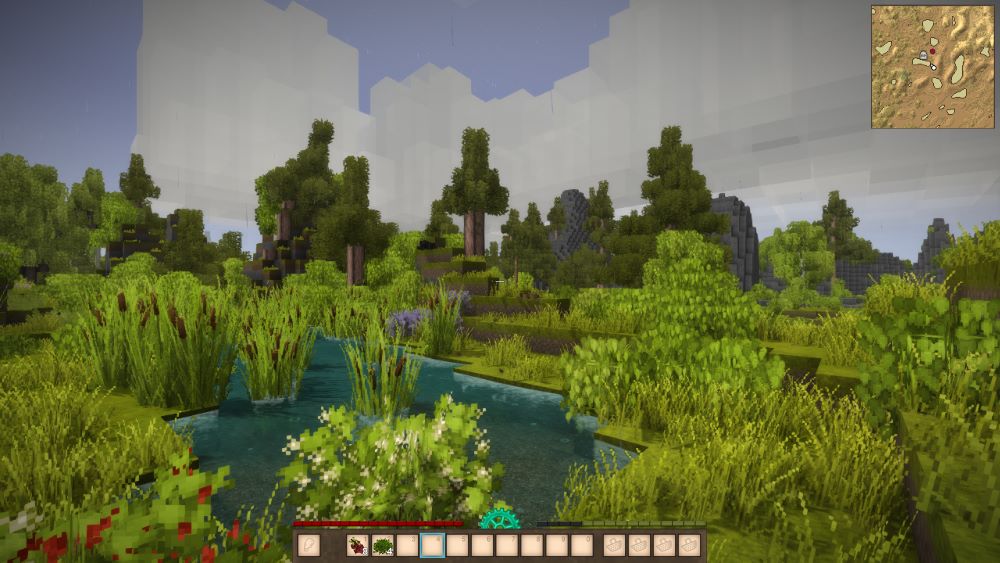
As with most survival games, you start out with just the clothes on your back. From there, you collect flint or some other hard rock to make tools. In Vintage Story though, you literally make the tools: you place the flint down on the ground, and use another piece of flint to “knapp” (e.g. chip) the other piece according to a voxel pattern. Combine the knife head (etc) with a stick in your Minecraft menu and voila, a flint knife. This will allow you to collect things like reeds to be turned into baskets or dry grass to help start a fire. You can’t just punch everything to get the proper resources here.
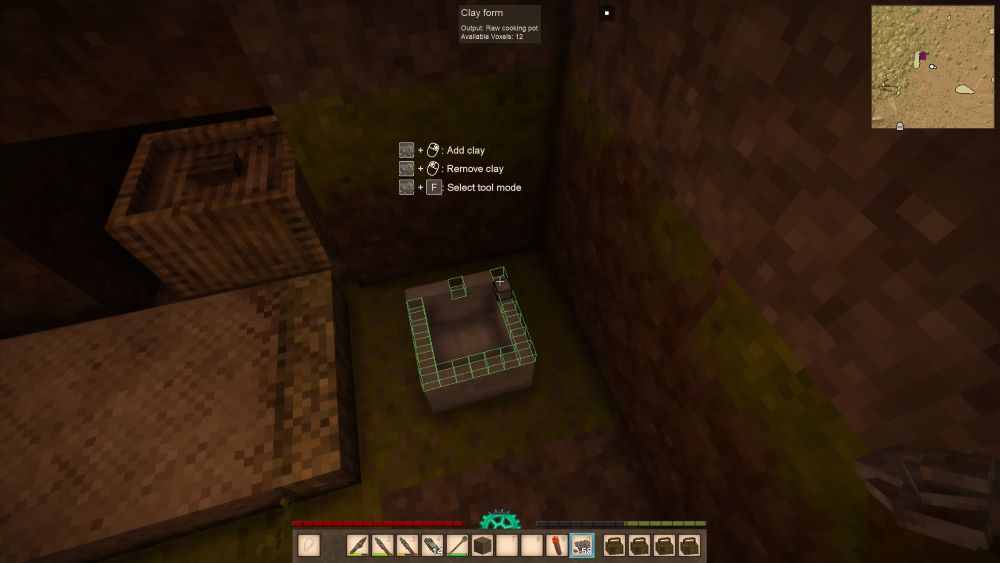
At this point, Vintage Story doubles-down on the intentionality. Flint tools are fine, but you really need clay to get to the next stage of development. Search far and wide for clay deposits, dig up a bunch, and then place some on the ground. You now have the option to create various clay vessels, like bowls, cooking pots, storage vessels, jugs, and so on. Crucially, you will also need tool molds, such as for a pickaxe and hammer. All of these things have to be sculpted, voxel-by-voxel, which is equal parts tedious and zen. Once completed, congratulations… you have still have raw, wet clay. Now you need to dig a hole, fill with dry grass, sticks, and firewood, light it on fire, and then wait 24ish hours for the pieces to harden. Oh, and make sure it’s covered from the rain and also away from flammable material.
Next comes copper. While traveling the overworld, you may come across a few pieces of copper nuggets on the surface. You can collect these – and mark your map since there is ore underground there – but will likely have to pan sand/gravel for additional nuggets. Once you have ~40 copper nuggets, you can begin the smelting process. Which requires charcoal, because firewood cannot hit the necessary temperature. Making charcoal involves digging holes, filling it to the brim with firewood, building a fire on top of that, lighting it, and then covering the whole thing up. A day later, you have charcoal. Go back and heat up the nuggets in a (fired) clay crucible, and using some wooden tongs – can’t have molten copper in your bare hands, of course – pour the copper into the (fired) clay tool molds… and wait. Once it cools, you have a copper pickaxe.
And now, finally, you can dig rocks!
I typed all that out because that is the type of game Vintage Story is. Mostly. Cooked food spoils at a reduced rate inside a clay Storage Vessel, and at an even further reduced rate in a cellar, and at an even more reduced rate if the food itself is stored in a clay Crock Pot sealed with animal fat. Neat. Meanwhile, you can construct your house and cellar by punching dirt blocks and placing them ala vanilla Minecraft. Making flint knives and other tools is a cool process, but the blade and handle are just magically connected somehow. I bring this up because the process of making a bow meanwhile requires twine, made of flax fiber, collected from flax (or looted from Drifters). Getting the first “tier” of armor above basically nothing requires Resin, which only comes from Pine trees at world creation, and only at an extremely limited chance. Like… why? We can hold molten copper in wooden tongs but can’t get some pine resin from pine trees?
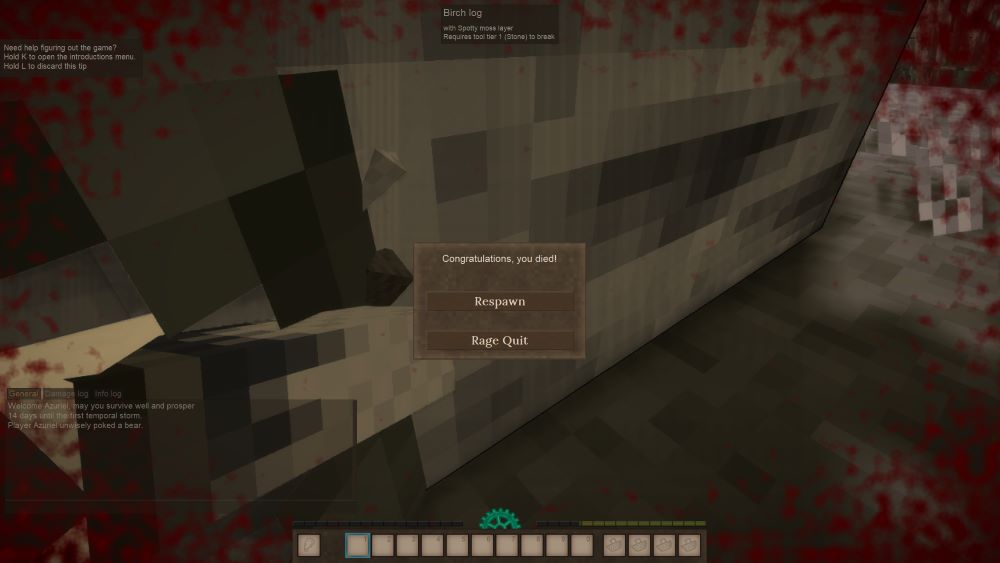
This sort of strained duality extends elsewhere. Wolves and bears are dangerous and will kill you in 1-2 hits. You can avoid them though by using a nerdpole, e.g. quickly placing blocks underneath yourself while jumping. Ore deposits are “realistic” in that they follow veins in specific sort of shapes. Getting to them can be sped up by either digging straight down and nerdpoling your way out, or creating an infinite waterfall via bucket and swimming straight up like in Minecraft. Crops take ages to grow – sometimes more than 1-2 in-game months – but animals generally spawn everywhere. Pemmican doesn’t exist, and not every animal has fat. And so on.
Those design choices are one thing, but the one that’s a bit more unforgivable (IMO) is the back-loading of content. The “real” game doesn’t really start until you can make wooden boards, which requires a copper saw, which requires a copper anvil, which requires enough copper nuggets gained from mining with the copper pickaxe. How do you get copper nuggets to make a copper pickaxe you ask? Panning sand, basically. Anyway, wood boards give you a ton of building and storage options, but the big ones are buckets and barrels, which then allow you to process things into leather, pickle food, and basically… everything. I understand that perhaps the intention was a sort of “congratulations on surviving until the Copper Age!” but that doesn’t mean the early game should be less interesting.
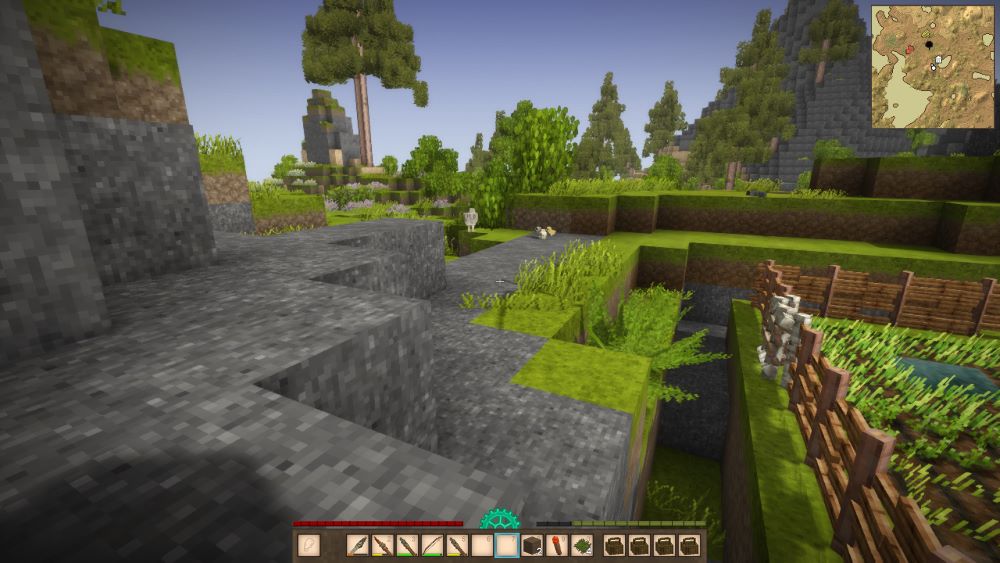
Vintage Story also suffers in the “now what” department. Surviving the first winter with limited resources is a massive struggle. After that? Farms will provide all your caloric needs rather easily. You can eventually craft some windmills and other mechanical tools to automate some tasks too. There are caves to explore and Drifters to fight and teleporter devices that can send you to far distance places. But… that’s it. I’m not saying other survival games do not have a similar endgame issue – there’s no “point” to 7 Days to Die or ARK – but the crucial difference is that playing these other games is, well, fun. They have good moment-to-moment gameplay, they have character progression mechanics that make you want to reach the next level, and so on.
That sort of thing is missing here. Once I finally got my Copper pickaxe and then realized how difficult it was going to be to find copper nodes, I was basically done. Plus, you know, if you lose your Copper Pickaxe somewhere (either by dying in a deep hole or via durability) you have to literally start all over.
Having said all that, Vintage Story is definitely a novel approach to the more traditional survival crafting genre. It is not in early access, still gets beefy updates, and was built from the ground up for mods. Indeed, there are supposedly a lot of mods out there that tackle many of the fundamental issues that I have brought up. I may end up rolling a new world with some of these mods installed and see if that smooths out the experience and make it more interesting.
Which, for the record, it was for a time. Just not enough. For now.
 In An Age
Old Man’s Sky
Sep 11
Posted by Azuriel
They just keep bringing me back, don’t they?
If you haven’t heard the news, No Man’s Sky (NMS) recently released yet another massive free update to the game. This time around, you can build a corvette-class ship that will allow you to… get up and walk around in your ship. That might not sound like much, but it is actually kind of rare even in space games, especially considering you do so with no loading screens. In any case, I decided I need to give things another go after 5 (five!) years.
What I encountered was still one of the worst opening sequences for almost any game.
I apparently have never commented on it before, but NMS starts with you awakening on an alien planet, your suit powering up, and then a number of warnings about your environmental protection waning. Conceptually, this is fine; other survival games start you out in imminent danger too. For example, ARK has you awakening on a beach and sometimes being eaten by a raptor right away. In NMS’s case though, it just feels… bad. Your visor scanner doesn’t work, sometimes you don’t spawn near required resources to refill your environmental protection, and you don’t have the terrain modification gun yet which otherwise trivializes most hostile weather (e.g. dig a tunnel and get underground).
Worse, I actually tried starting things back up by immediately choosing an Expedition. Big mistake. Expeditions were added to the game several patches ago, and they are basically more focused experiences where you start out on predefined planets and need to accomplish specific goals. The problem is that these are absolutely tuned more for advanced players with a good grasp of the underlying mechanics. Well, and the other problem is that everyone is thrown into the same subsets of planets, so you might spawn in an area where everyone has mined most of the nearby ore. More annoyingly to me though, is that when you are looking around for resources, you’re bombarded with dozens of (useless) player base icons, making finding things difficult.
So, yeah, don’t do what I did. Instead, get a foothold in the game and then go into an Expedition – including bringing some good loot in with you! – via a vendor you unlock a few hours in the game.
In any case, since I hate myself, I chose to start a brand new save on Survival difficulty. C’mon, I had 130+ hours logged already, right? Beginning is brutal, as mentioned, and you have to contend with some extra nonsense like smaller stack sizes for material, etc. Within about 15 hours though, I’m back to having 22 million units, 6000 nanites, and unlocking all 10 freighter storage racks.
No Man’s Sky has indeed improved tremendously over the years, but fundamentally it does still have a problem with “but… why?” It’s the same place I landed on five years ago, and unfortunately it does not appear much has changed. Well, OK, there have been a lot of changes. Expeditions, there are now Dissonant planets with corrupted Sentinels, there is a Settlement system, Pirate Dreadnaughts to fight/own, the new bespoke Corvette-class ship building system, and so on.
Fundamentally, though? When you’re on foot, none of the randomly-generated creatures matter; only Sentinels pose any threat whatsoever, and there are only like a half-dozen types. Why even have so many different kinds of weapons for your multi-tool if only one is needed to take down every enemy? Meanwhile, if you spend more than 30 seconds in space, you’re likely to be accosted by fleets of hostile pirates that will absolutely murder you if given half a chance. The space gameplay “loop” is not particularly deep, but nevertheless feels miles more complete than what you are doing in the other 80% of the game, e.g. walking on planets.
Having said all that… yeah, 130+ hours plus however many I muster this time around. I’m harsh on the game because I’m mad. Hello Games have added so much and just inexplicably left such a gaping hole in the center and I don’t understand why. Maybe having Gek pirates running around on foot blasting you would feel too weird or whatever, but apparently it’s fine when they’re faceless ships? OK, just use some of the six trillion randomized alien creatures and make some of them require that fancy mech to fight! Or lean more into those bug aliens that are apparently as ubiquitous as the Sentinels for (presumably) some kind of lore reason.
Or, I guess, ignore all that and hurry up and give me Light No Fire.
Posted in Commentary
2 Comments
Tags: Crafting, No Man's Sky, Patch, Space Combat, Survival, Walking Simulator