Category Archives: Impressions
Impression: Metal Gear Solid 5
As it turns out, Metal Gear Solid 5: the Phantom Fulton is a lot of fun. Like, a lot lot.
The proper tone is set from the very beginning:
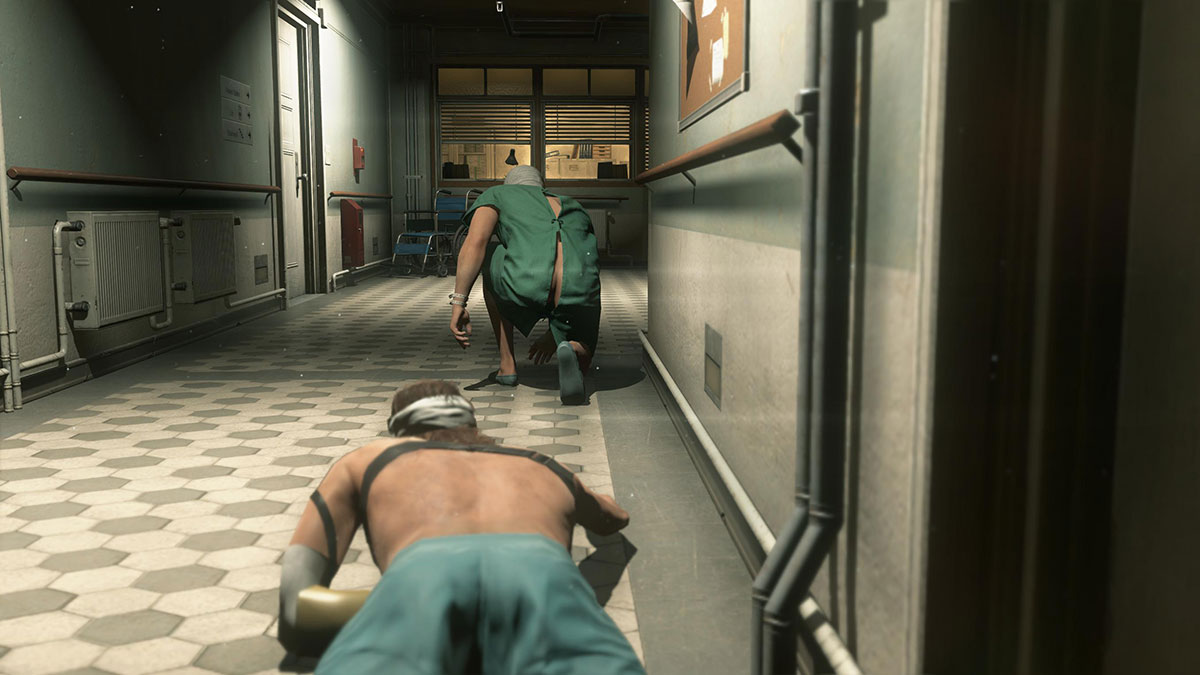
I’ve been playing 12 hours and I still don’t know who’s ass that is.
Like, it’s funny, right? But even crazier is when you think about A) who would come up with this, B) who would allow this to occur, and C) am I actually seeing this? I guess it’s tame in comparison to that one Raiden section in MGS2, but still! This is the sort of esoteric goofiness that is so endearing of Japanese videogames, and the Metal Gear Solid series specifically.
Also, holy shit, 60 FPS on super-max settings. My recently-acquired 970 is smoking this game so hard, it can apparently bump the resolution higher than my monitor can support, and then downscale it to 1080p to cram in more shinies.
Here is a picture of me kidnapping a puppy:
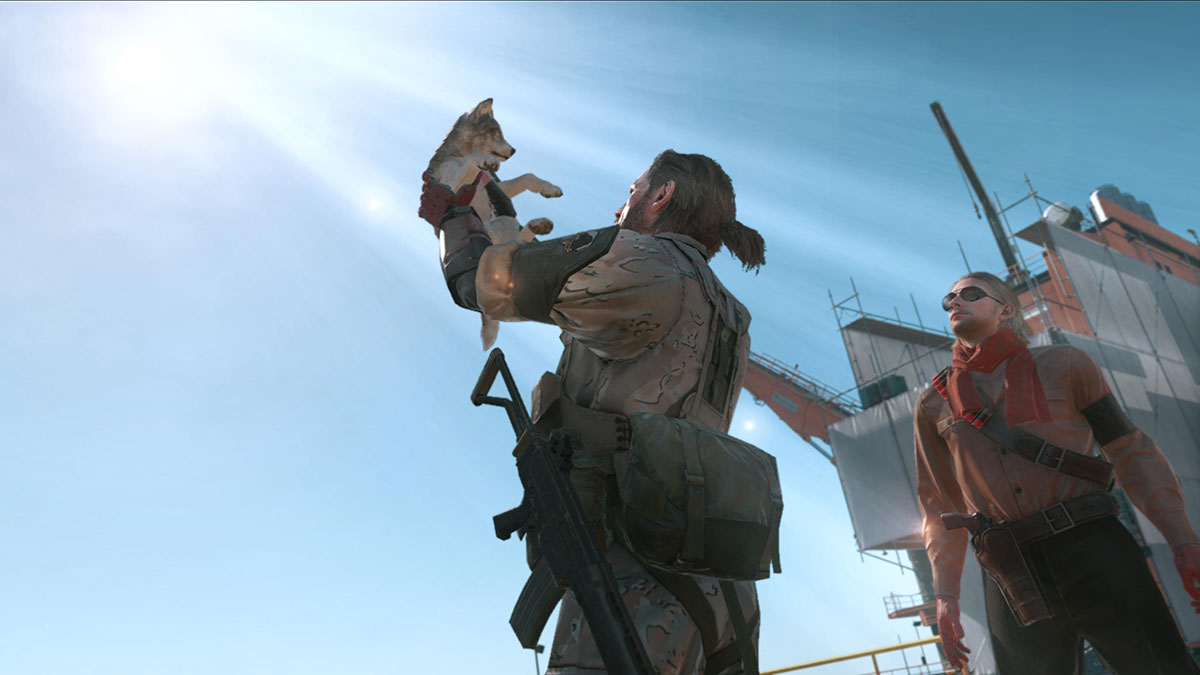
Seems to have recovered from the tranq dart I shot at her face.
Analyzing my own experience playing this game has also been amusing. The MGS series has always had this weird dichotomy in which it gave you 30 weapons to play around with, but made you feel bad for using anything other than the tranq gun in every scenario. Now in MGS 5, they give you the same plethora of guns and frequently tell you to go nuts. Grenade launcher by the 5th mission? Go for it.
In spite of getting the OK for GTA-levels of mayhem though, I’m playing this game like Tenchu.
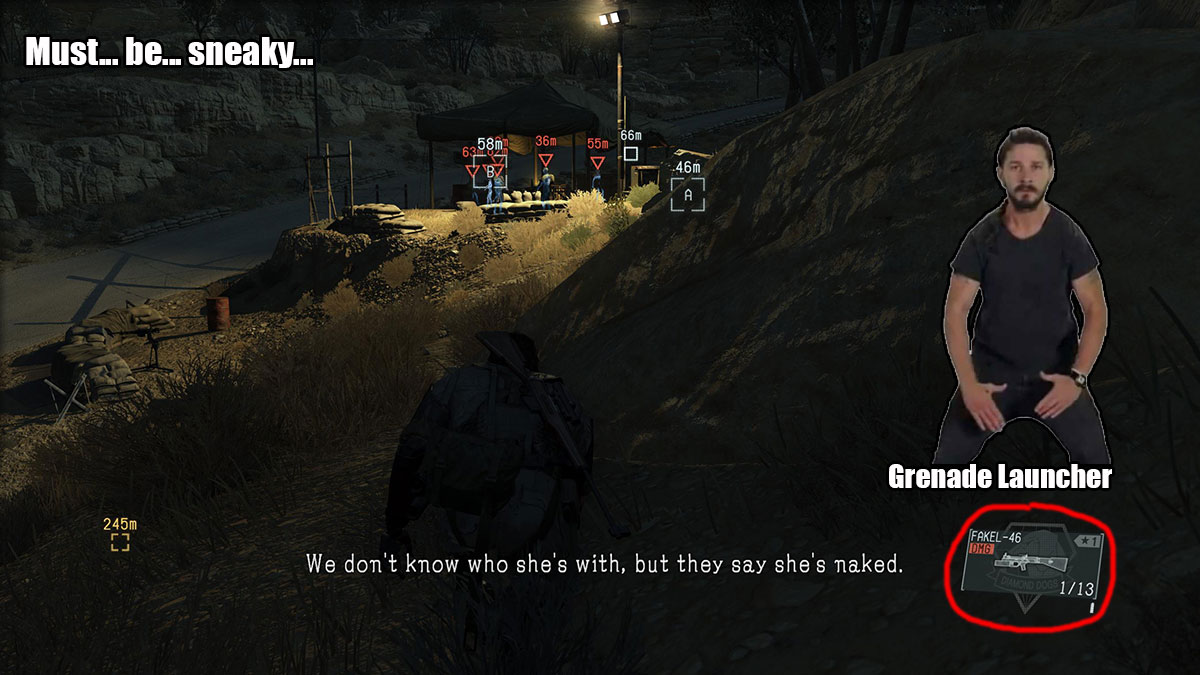
But if I kill them, I can’t break their spirit and brainwash them to join my army…
It’s pretty clever design, I must say. Because while it is certainly worlds easier just sniping everyone from a million miles away, pretty much the entire reward structure of the game encourages sneaking and getting up close and personal. Since you are rebuilding Mother Base, you want to keep the place as fully stocked with brainwashed troops as possible. So instead of killing them, you can knock them out with tranq guns to the face and Fulton them out. But if you managed to sneak up on someone, you can interrogate them into putting resources and other goodies on your map, including diamonds which represent enough currency to make up ~10% of a research upgrade. Once you get the info, you are free to kill them or knock them out at your discretion.
I really do enjoy this sort of design tension, as it is all carrot and no stick. In a hurry? Blow them up. Want to actually play a stealth game? Go ahead and have all the rewards.
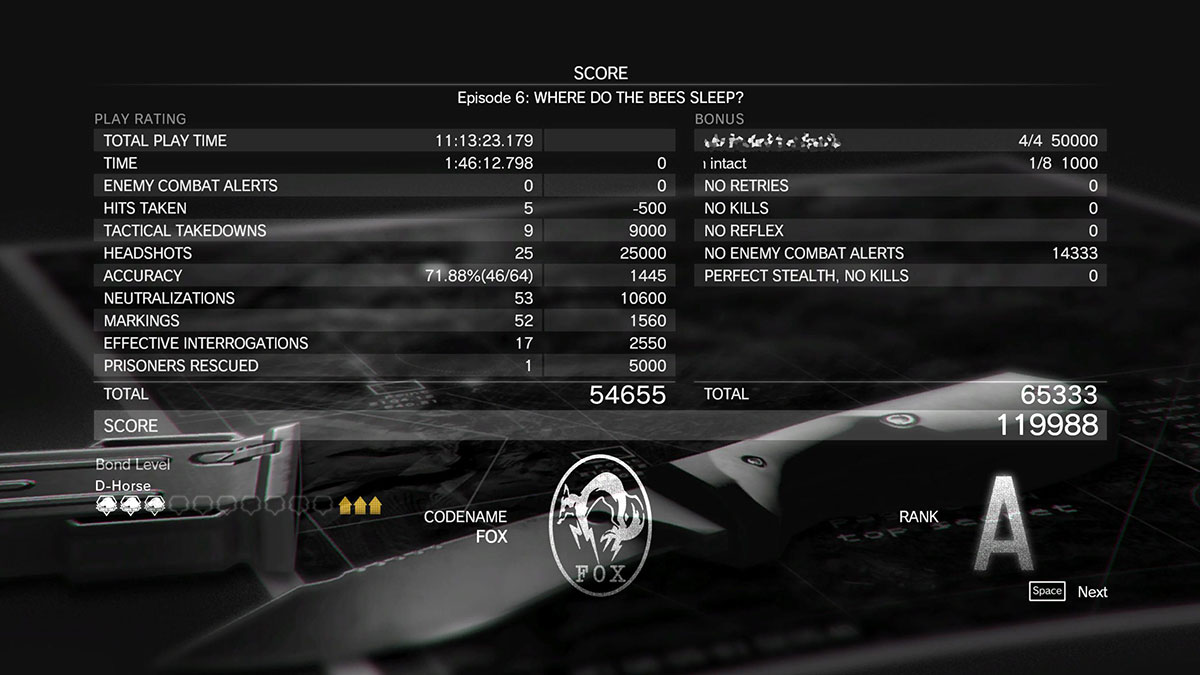
Best score I’ve gotten thus far.
In any case, no doubt you will be hearing more about this game in the following week(s).
Not Sure About Fallout Shelter
[Blaugust Day 20]
Months after it lost almost all topical relevance, Fallout Shelter was finally released on Android systems. After quickly downloading it and playing it for the last two days or so, I’m not entirely sure whether it’s actually good or not.

That room was so busy that I’m not surprised it burst into flame.
In the broad genre that is time management games – in which I place all apps that feature activity timers – Fallout Shelter attempts to ride the line between time management and “normal” games. It features the construction of resource rooms and trying to maintain certain levels of supplies, but the timers themselves are generally incredibly short. A Gold Mine in Clash of Clans might take 12+ hours to fill to capacity, for example, but a fully-staffed room in Fallout Shelter might be ready to be clicked in four minutes or less. String enough of these events along – including tapping Dwellers to level them up, rearranging room makeups, planning ahead, etc – and you can legitimately play for 30 minutes or more at a time.
It is also entirely possible that you enter a depressing death spiral from which there hardly seems to be any escape.
My first Vault was a disaster. I did not think I was expanding too quickly, but my glee at having a one-man repopulation strategy (mainly because it amused me) backfired when six, resource-consuming kids suddenly materialized. As it turns out, bitches be thirsty. The lack of water led to widespread radiation poisoning, reducing all Dweller HP down to 50% and zeroing out their happiness.

It seemed like a good idea at the time…
At that point, I did not have enough Caps to build more Water Treatment rooms, and Caps themselves are a resource that is only gained from A) Wasteland exploring, B) selling items, C) Rushing rooms, or D) spontaneously when collecting other resources. Between the radiation and everything else, I did not have anyone to spare to send into the Wasteland, which subsequently meant I did not have any items to sell. Collecting resources provided no bonus Caps for the last dozen times I collected them. That left Rushing room, which carries a ~30% (and increasing) chance of failure.
Well, let me tell you something: 30% apparently means 99% in the Fallout world because I Rushed six different rooms and failed five times in a row. Each failure is an automatic Incident, which could be a fire or Radroach or even Mole Rat infestation. All of which lowers the HP of anyone in those rooms, by the way. At the end of things, so many of my Dwellers were inches from death that I considered it almost a mercy to wipe that saved game from existence.
Instead of deletion, I went ahead and took advantage of Shelter’s 3 save slots and just started a new Vault. Two of them, in fact. The second is probably the most advanced, but the third ended up netting me multiple Legendary (or at least super powerful) items and some extremely high-stat Dwellers from the half-dozen free cash shop “lunchboxes” every new Vault gets. A friend of mine told me he somehow got a level 30 Dweller complete with Power Armor and an AK-47 right from the start too. All of which makes me think the optimal strategy is creating multiple Vaults from the beginning and deleting the ones that don’t give you good loot.
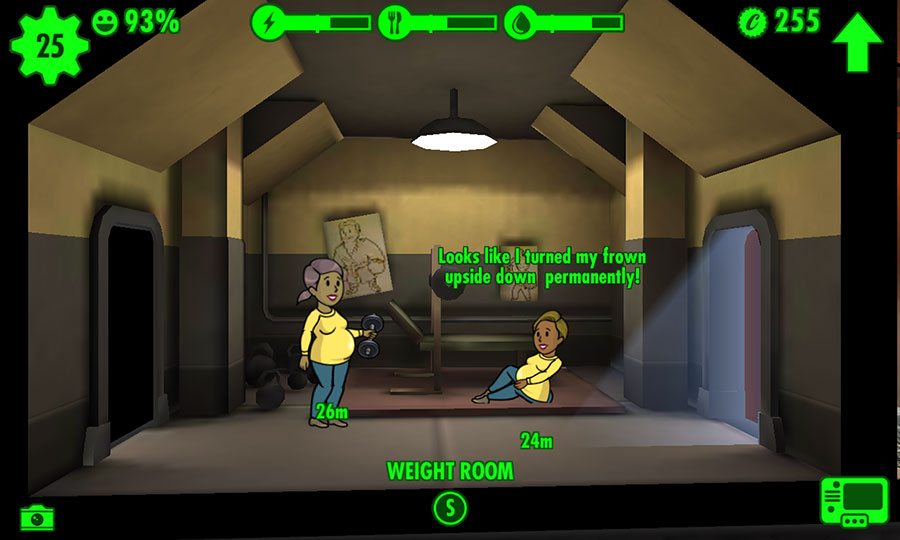
Less smiles, more crunches.
Incidentally, when I finally got back around to poking my head into the original disaster-Vault, everyone was still irradiated but back at 50% HP. I collected my resources and either hit the lottery or perhaps there is a timer-based failsafe on Caps collection. Plus, the six useless kids grew up to be rather useful Water Treatment slaves. The Vault turned around in a hurry, which leads me to believe that Shelter is leaning more towards the more traditional “play for 5 minutes every 5 hours” style.
Which would be nice… if not for the fact that Dwellers sent to explore the Wasteland continue exploring until they drop dead. You can revive them in the field for a (costly) fee, but the setup means they’ll die unless you log in every X hours. Or at least schedule yourself a log-in and send them a Recall signal. Which brings us closer to the “play in real-time spectrum.” Which is not useful for exploring, since the items you encounter are based on how many real-world minutes/hours your Dwellers are out in the wild.
The end result here is a bizarro game that is both fun and feels bad. Was my water death-spiral the result of poor decision-making on my part (probably), or an engineered trap to entice me to purchase lunchboxes (which always contains X Caps)? It’s nice that I can sometimes play for a longer period of time, but I also feel like I’m better off avoiding negative events by not playing for as long as possible. Except now I need to log in every X hours to retrieve my explorers.
Sigh. The things I do for love (of Fallout).
Impression: Craft the World, pt 2
[Blaugust Day 4]
In the time since I wrote yesterday’s post (over the weekend) and today, I’ve “beat” the first campaign level and spent a total of ~18 hours in Craft the World. For the curious, you completing a campaign world involves finding the portal room, and then defeating the guardians in that and in five other rooms before reconstructing the the portal and getting out.
Across the hours, I believe I have figured out why I don’t like the game: the tech tree. Not the idea of a tech tree – which exists as a tutorial mechanism – but simply how poorly it is paced. For example, here is the beginning part:
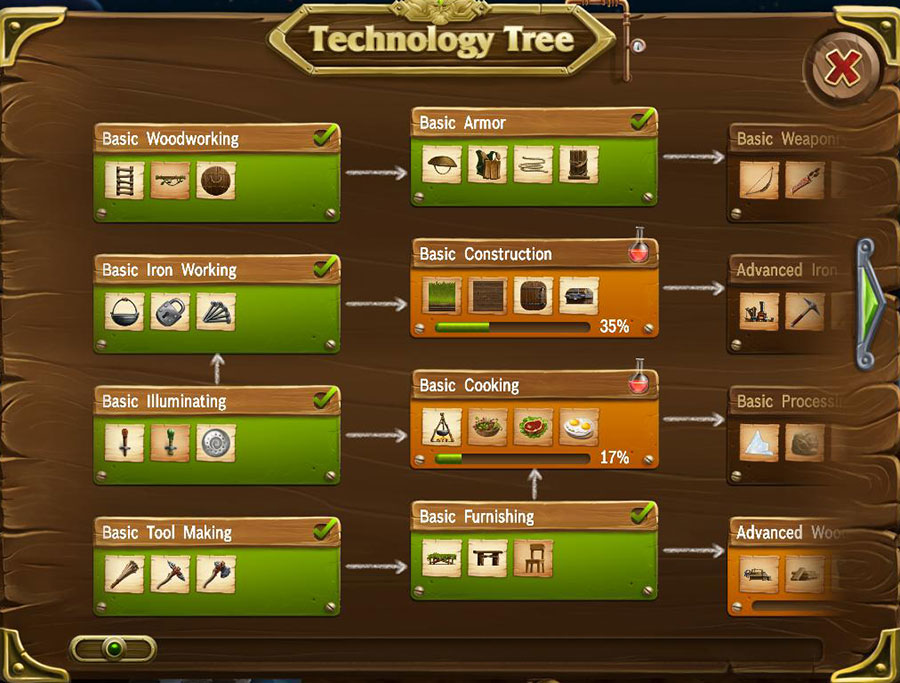
Seriously guys?
Early on, you get the ability to craft wooden armor. Great! For that, you need rope. Which requires wool. Which requires sheep. Which might not be anywhere near your spawning location. In my first world, the sheep were all located beyond a goblin camp, which are a group of extremely tough mobs that you can’t hope to defeat without, you know, some armor. It was only later that I realized that the Portal spell you get at the beginning of the game could be used at any distance, but still.
Another example: wooden doors. One of the first “quests” you receive is to construct a shelter for your dwarves. Like most games, a shelter is only a shelter when the walls (including the background ones) are filled in, with the exception of any doors. You can make a wooden hatch pretty early on, which implies the ole Minecraft shelter approach of just digging a hole. However, your Stash is immovably placed on the surface. Thus, right from the start, you experience the uncomfortable dissonance of either A) building a shelter underground, leaving your Stash exposed, or B) crafting an incomplete shelter around your Stash and waiting possibly hours before unlocking “wooden door” technology.
What is almost worse than this clunkiness is how intentionally bad or misleading the entire scenario appears to be. Creating a Shelter requires you to place a Totem, whose description specifically says:
Creates an aura around the house that protects from monsters.
First, I have never seen it actually “scare off” the ghosts that come each night, so either that functionality doesn’t exist, or it requires the Totem to be closer to the Stockpile and not just within the Shelter, which is unintuitive. Second, for the Totem to even be closer to the Stockpile, you either need Wooden Doors or to construct a goofy system of vertical Wooden Hatches, severely slowing down your dwarves’ harvesting of trees/ground-level resources. Or maybe going even further into the Minecraft approach of boxing yourself in at night, then breaking the walls down in the morning?
Regardless, the Tech Tree is poorly designed and badly paced. I still remember getting about halfway through – which requires a ton of useless crafting – and then… suddenly, inexplicably having fun. Like a lot of fun. I was crafting Mine Carts and Elevators and using Scaffolding to reconstruct the terrible Shelter I had been enduring previously. Instead of creating useless items over and over, I was progressing naturally through the Tech Tree. Things faltered a bit more later, but by that point I still had more than enough things to do to keep me busy as I gathered more resources.
Technically speaking, the Tech Tree is only relevant in Campaign mode; if you enter the Sandbox mode, you can ignore the Tech Tree entirely. But it is one of those things that hold back the entire game with its terribleness. After beating the first Campaign world, I unlocked the next, which is an Ice World. I’ve played about 1-2 hours into that world, but everything that was bad originally is still bad now. Do I seriously want to spend another 5+ hours until I get Scaffolding? Or, you know, make heroic efforts tracking down Sheep in order to get Rope? Nope.
The bottom line here is that Craft the World is servicable if you especially like this genre of games, but only if you have already played the much better titles to death.
Impression: Craft the World
[Note: Day 3 Blaugust]

The aesthetics work really well, actually.
Craft the World is a game billed as “a unique sandbox strategy game, the mix of Dungeon Keeper, Terraria and Dwarf Fortress.” What initially attracted me to the game was the comparison to Dwarf Fortress, which is one of those mythical games that someone you know spent 6000 hours playing, but you didn’t even bother looking at after seeing the screenshots. I am led to believe there are texture packs for Dwarf Fortress, but considering I can’t even bring myself to play FF12 due to graphics alone, I figure I’ll wait until some fan recreates the entire thing in an actual watchable format.
In the meantime… well, Craft the World.
Right now the game still feels like it’s in beta. I am playing in the “Campaign” mode, which I understand to be an extended tutorial. The problem is that I have no idea how to “beat” the campaign. There’s a 40-60 minute timer which dictates when a monster portal opens, and I have been defeating said monters each time they appear. I think I read something about defeating a boss, who will then drop the portal for the next campaign world. Or something about completing all the “tech trees” to unlock it. Or something.
The actual gameplay is both interesting and somewhat vapid. Instead of controlling an actual character, you are the disembodied cursor simply marking which squares you want dug/built/collected/attacked. If a dwarf is available and feels like it, he will go over and start working the squares. So the gameplay cadence is queuing up a lot of work, spending time in the crafting menu, and then watching your dwarves (hopefully) carry it out. Resources are only collected two items at a time, and said items are only actually available once the dwarf makes it back to your Stash. So the end result for me was usually watching the dwarves go about their business, eyes glazed, and then realize 5 minutes later that they were all standing around idle.
Technically, you can control a dwarf directly at any time if you want to get more hands-on. In fact, you pretty much have to to get any sort of reasonable construction project going. Not only do you have an increased object placement range (uncontrolled dwarves can only reach 2 squares instead of 3), but your controlled dwarf has full access to your entire inventory. Otherwise, yep, the dwarves have to carry over the supplies two items at a time; not a whole lot of fun when you’re trying to get them to build a ladder down a mineshaft.
As I mentioned in the beginning though, the game feels Beta-ish. The controls have clearly been designed around an eventual tablet version, as hotkeys are limited and damn near everything revolves around left-click. There are quests/tasks in the Campaign mode which are either broke, or frustratingly vague. For example, one quest was to start a farm by planting Wheat. I actually had some Wheat, but nothing I did seemed to work in terms of getting it planted. Then I thought perhaps I needed “Grain” first, e.g. seeds, but no amount of Wild Wheat harvesting produced any. And, you know, the quest clearly says to plant Wheat, not Grain. I eventually completed the quest after collecting enough Wild Wheat, which shouldn’t have worked based on the description, but whatever.
In the meantime, I’m willing to give it a little bit more time to get more interesting. I can’t help but feel like there is something there, some nugget of fun waiting to be uncovered. At the same time, I also kinda feel like the devs missed everything that was actually fun about the games they were inspired by. Terraria this ain’t, that’s for damn sure.
System Shock 2: That 90s Feeling
System Shock 2 (hereafter SS2) is a game I’ve heard about a lot, but up to this point didn’t have much of an interest to play. I mean, I immensely enjoyed Bioshock and all, but I have found by experience that “spiritual successors” tend to make their source material difficult to play. Which makes total sense, considering a game is a spiritual successor if it emulates and expands upon all the good things about the prior title while discarding the rest.
Plus, you know, 1999 was a long time ago. There is a whole swath of games that are more or less forever unplayable by me simply because I can’t get over the terrible (by today’s standards) graphics. Watching the intro to SS2 did not inspire much confidence:
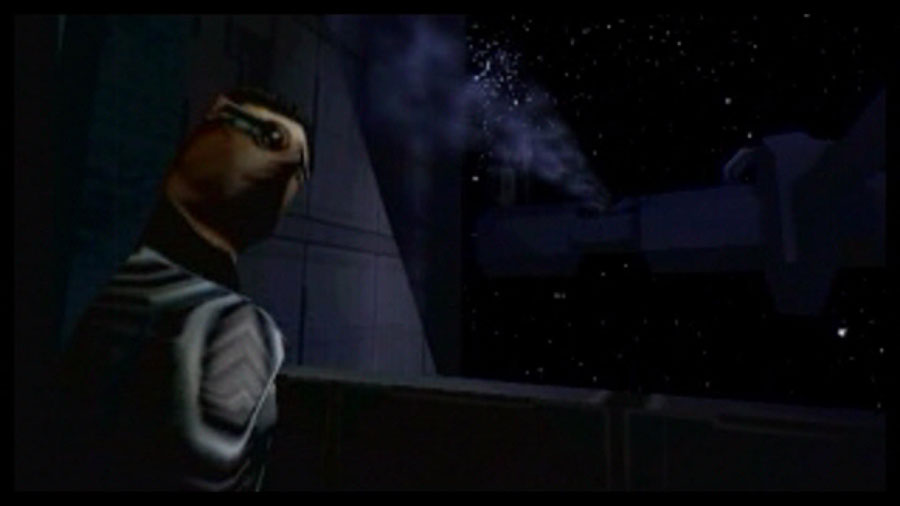
I’m trying to remember a time when this looked amazing.
Luckily for everyone, there is a wide selection of mods out there that more or less brings the game to at least 2004.
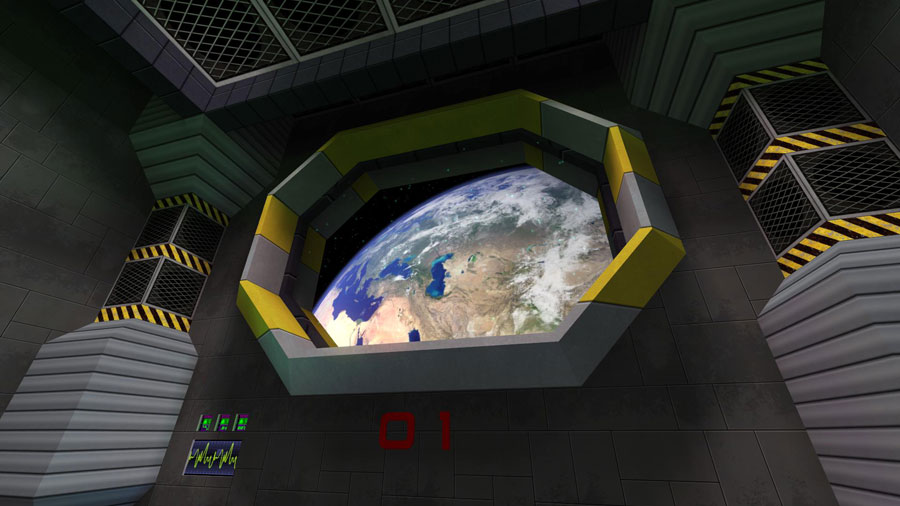
I was actually somewhat impressed.
At this point, I am roughly 10 or so hours into the game and I must admit that SS2 still has value to give. For example: it’s pretty damn scary, but not in the way you might be used to. FEAR has some great moments, Silent Hill definitely gets the horror angle correct, and Resident Evil does “crash through the window” better than most. None of those really capture the unique (as far as I know) dread that is hearing the “whisk” sound of a spaceship door opening behind you. In fact, I find myself developing somewhat of a complex with these doors, as evidenced by nearly jumping out of my chair from the sound of one door – that I had just activated – closing behind me.
Aside from the evil doors, I want to spend a moment and praise the overall sound design of the game in general. For the most part, you can hear nearly every enemy before you actually see them. Which, now that I think about it, is not as common a gaming trope as it should be. What this allows SS2 to do is make the various types of enemies resistant or vulnerable to specific weapons without the player feeling cheated. If you hear a robot walking around nearby and aren’t switching to your energy weapons in anticipation, it’s your own damn fault.
Another thing I can appreciate about SS2’s design is the overall upgrade mechanic. Your character has like four tabs worth of various stats and abilities you can upgrade/purchase with Cybernetic Modules. While you do receive some periodically as “quest” rewards, the vast majority of Cybernetic Modules are stuck in desks, on dead bodies, and sometimes hidden in plain sight on the floor. Combined with a traditional (the de facto back then) non-regenerating health system and the necessity to collect currency for ammo/hacking/etc purposes, Cybernetic Modules provide an immense incentive to explore every inch of the ship. Contrast this with, say, Bioshock Infinite which has painstakingly-designed nooks and crannies without any reason at all to search them.
As an aside, I can understand why some games might not go that route. If you hide a bunch of upgrade currency throughout your game, you are then faced with a dilemma: either that upgrade currency is necessary to realistically defeat the final boss, or it isn’t. If it is necessary, you are forcing everybody to comb your game for supplies, including the people who find that sort of thing tedious. If all the upgrades aren’t necessary, the people who enjoy looting all the things are “rewarded” with trivial encounters for the rest of the game. It is much easier to control your game’s pacing by directly tying upgrades to specific plot points, so no one is ahead or behind. That does make your game more boring and empty however. Hence, dilemma.
In any case, I am likely closing in on the System Shock 2 endgame and should be done in the next day or two. While I do not consider it to be as groundbreaking as something like the original Deus Ex, it is at least in the same parking lot as the ballpark. If you picked it up as part of one of any number of bundles in the last two years, go ahead and spend the 20 minutes or so it takes to set up all the mods and give it a whirl. Part Deus Ex, part Half-Life, and extremely atmospheric.
Impression: Kingdom Rush
So… anyone got mobile strategy(-ish) game recommendations? I’m on a bit of a kick here.
I am currently playing Kingdom Rush and finding it rather fantastic. Tower Defense is one of those genres that seems sort of shallow on the face of it – and perhaps even is in the scheme of things – but I’m liking how it’s presented here in Kingdom Rush. You have the standard lanes, tower placement, and varied enemies with their rock-paper-scissors attributes. Even the implementation of a somewhat controllable hero and magic powers seems almost standard these days.
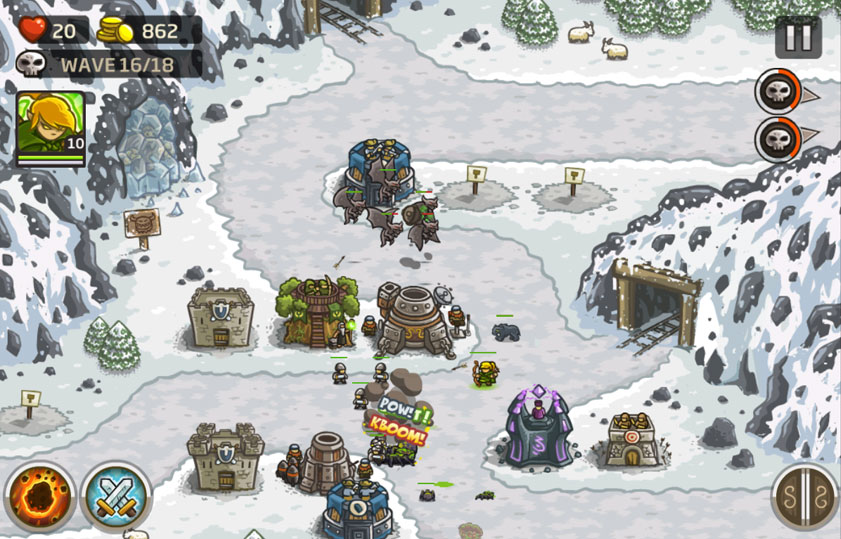
I could go AFK for the next two waves, honestly.
The thing that strikes me though is that the lanes in KR are wide. In other words, the enemies marching down the road and the resulting battles feel a bit more organic, as your soldiers might engage near the edge of the lane and allow a few enemies on the far end slip past. There is a granularity there, a sense that slight tweaks to troop or hero placement will result in better outcomes. Tower choice is such a huge change that there are clearly better options given the enemies you face (high magic defense vs high armor defense). Moving your troops just slightly to the left of the corner though? The result might be better just 5% of the time, but that 5% chance gives you the opportunity to demonstrate mastery over the game mechanics.
Of course, just like with most other Tower Defense games I have played, discovering OP combinations of towers usually results in me going through the motions for the rest of the game’s duration. I am definitely at that stage with Kingdom Rush right now, although it has lasted longer than other, similar games like Bloons.
So, yeah. I’m also playing Clash of Clans (near max TH7 base) at the moment. I have enjoyed the aforementioned Bloons TD 5, iBomber Defense, and the Anomaly series. I recently picked up Ironclad Tactics from the latest Humble Bundle but haven’t played it yet. Heard good things about Card Crawl too, and might actually pick it up if I can mentally prepare myself for playing on my tiny iPod Touch screen. Speaking of iPods, that reminds me of Hero Academy… another good one from back in the day. And presently perhaps? It’s been a while.
Give me your best strategy, Tower Defense, and/or card game games. Apps. Whatever.
Defiance
For the past few weeks or so I have been playing Defiance. As a refresher, Defiance was a subscription-based, TV show tie-in shooter that has since gone F2P. The game plays and handles a lot like an over-the-shoulder Borderlands, in the sense that waves of enemies appear and are dispatched with a large assortment of random weapons.
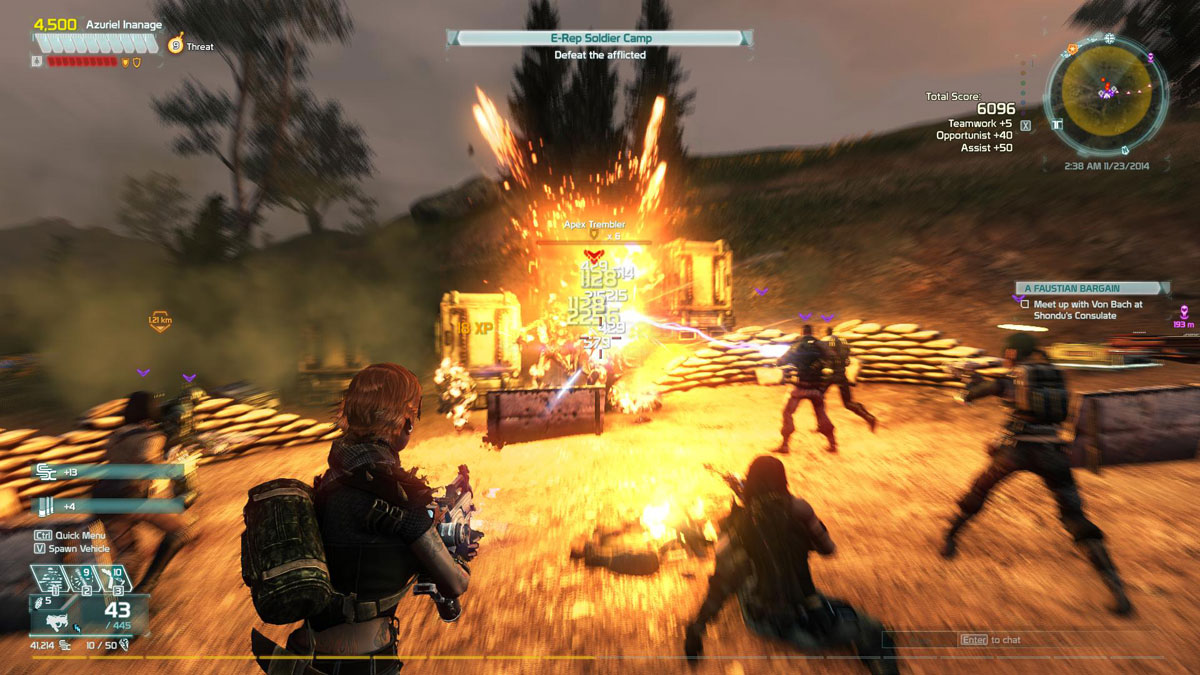
In crowds, enemies become armor-plated bullet sponges.
At this point, I think the show is more popular than the game, and that is too bad. Defiance has story quests that are voice-acted and pretty-well put together. You get a vehicle almost immediately after character creation. There are a number of “arkfalls” at any given time, which are dynamic random events which tend to congregate players around specific points on the map. There are a bunch of (repeatable) side-quests which involve racing, sniping, and other such things.
That said, the biggest problem with Defiance is a more fundamental one: the game is only fun with a fun weapon.
Loot in Defiance is random, just like in Borderlands. There are a number of rarities and status effects and such, but the actual number of gun types are pretty well defined. In the course of my ~20 hours of play, my favorite loadout involves a machine gun that pretty much empties a full 75-bullet clip in three seconds and a shotgun that shoots grenades. I was having a lot of fun running around with these weapons when I got them, but as I have scaled higher in “EGO Rating” (roundabout levels) enemy health has scaled such that my favorite weapons are no longer viable. You can upgrade old weapons to near your EGO Rating, but you can only do so once. And I have since outleveled them again.
In the meantime, I am at the mercy of RNG dropping a higher-level version of the guns I enjoy, or really any weapon that is serviceable. There is somewhat of a push to make all of the weapons viable, but there isn’t much you can do to, say, pistols to make them fun to use. Even with super-high damage and a fast fire rate, you would likely be better off with a LMG with 10x the magazine size. Rocket Launchers face the same sort of issue with faster, higher magazine grenade launchers outputting more DPS overall while giving you a buffer in case you miss your shot.
To say nothing about, you know, a shotgun that shoots grenades with 12-14 rounds in a clip and a 250 shell capacity vs the smaller explosive round.
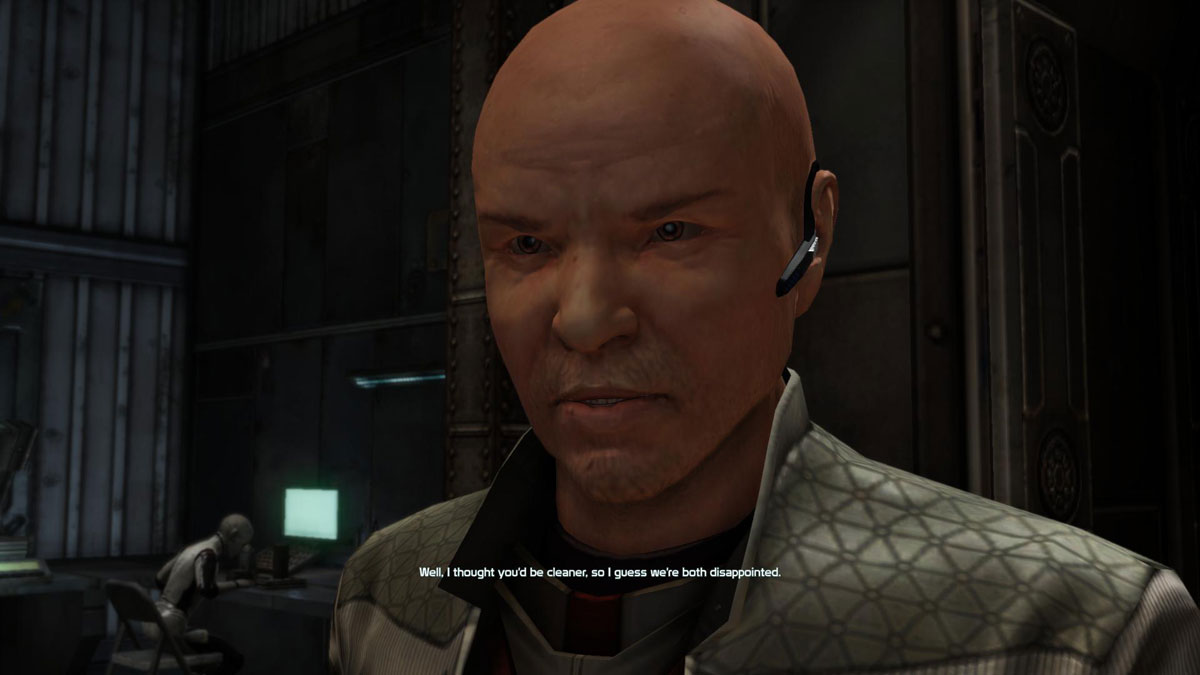
Oh, Von Bach, never change.
In any case, I’m not entirely sure how much longer I will be playing Defiance. As mentioned, the story scenes are actually quite amusing in the sarcastic banter sense, and I’m interested in seeing where it goes. The weapon issue though… it does make it difficult sometimes to slog through waves of enemies with crappy weapons to get there.
Inquisition Update
Considering I was pretty down on Dragon Age: Inquisition at first, I feel like it is only fair to state how I have been pretty obsessively playing it for the last week or so. By the time this post goes Live, I will likely have past the 40 hour mark. There are some rather annoying design decisions that will be examined in my final review, but for the most part I am very pleased. The plot has picked up significantly, and I am enjoying my time – this is what I remembered being good about Dragon Age: Origins.
Also this:

I don’t actually like dragons, conceptually; Dragon Age’s are okay.
In the off-chance you were wondering about how I handled the FPS thing, the short version is I overclocked my i5 2500K processor from the stock 3.3Ghz to 4.2Ghz. It’s actually pretty goofy that I never even tried to do that before, as bumping it from 3.3 to 4.0 appears to be the safest thing in the world; it is only past 4.2 or so that you might need to mess with voltages.
The process I followed was updating BIOS, booting BIOS, clicking Advanced tab, clicking AI tab, clicking manual, and then typing 40 (later 42) and saving. That’s it. My rig was custom built with water cooling already installed, so heat was not that big a deal. I mean, it went from the usual ~30°C to ~60°C under load, but that’s well within acceptable temperatures.
I later tried to overclock my 560ti graphics card using some values I saw on the internet, but after my computer crashed to desktop, I figured the 5-8 FPS I got from the processor overclock was enough. Well, that and I downgraded everything to Medium settings… which is likely where the bulk of my gains were realized. I have since increased Meshes back to High despite the 10 FPS hit for the sake of Scout Harding’s cute freckles. And Varric’s chest hair.
![You can [innuendo] me, any time.](https://inanage.com/wp-content/uploads/2015/01/dai_scoutharding.jpg)
You can [innuendo] me any time, Scout Harding.
Dragon Age Online
After around 20 hours of Dragon Age Inquisition, I am more convinced than ever that this is all an elaborate beta testing of the inevitable MMO sequel. Seeing other Heralds running around and closing rifts would not at all have seemed out of place. Hell, there are already dungeons, bosses, grouping, abilities with cooldowns, action combat, mining and herb gathering every 5 feet, crafting, gear upgrades, something approximating reputation meters, companions, mounts, talent trees, and repeatable/grindy quests.
After 20 hours, I am also convinced I am playing this game all wrong. Witness:

Do all the things.
Basically, I have 4 Inquisition perks, 67 “Power,” and hit level 10… all before recruiting another party member beyond the default ones. No, I did not stay entirely within the Hinterlands; I simply did most of everything aside from the Main Plot that naturally unlocked as I leveled up. If they didn’t want me completing the swamp zone until after the first major encounter with the Chantry, perhaps they should have made the enemies stronger.
Or… maybe they did, and I didn’t notice because I’m goddamn level 10. Oops.
Although I have clearly screwed the game up for myself this way, I am not entirely convinced it is my fault. The genre in general – and Dragon Age in particular – is fond of having plot progression tied to permanently closing areas and eliminating quests. Which isn’t necessarily a bad thing in of itself, but if I am always paranoid that this particular foray into Zone X might be the last chance I have to acquire Something Something Y, you can bet I am going to do all the things.
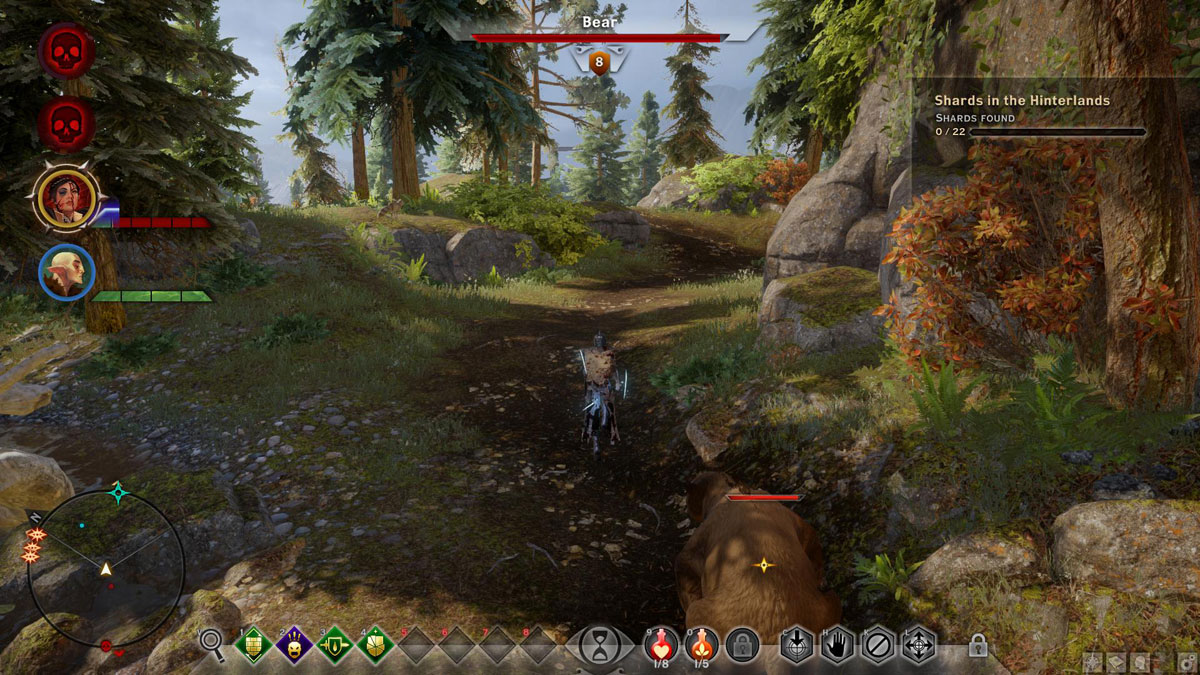
At least I’ll never have to run away from bears again.
It is one of those unfortunate Design Catch-22s wherein you give the player a variety of activities to complete (in case they don’t like a particular kind) and then the player ends up doing everything. What’s the real alternative though? Only having a very limited selection of quests? Relying on a player’s self-control to move on from an area simply because one has become a god amongst men?
Hah! We’re MMO players: we pay by the month for the privilege of performing pointless activities.
In any case, an hour or two after I took that screenshot I advanced the plot by one degree and suddenly recruited four new party members. I am guessing that there is still one more out there somewhere, if only because my total party is otherwise mirror images of each other: male/female shield warrior, male/female mage, male/female ranged rogue, and then just male 2H warrior. Perhaps it will be a melee rogue, just to shake up the symmetry.
I’ll find out eventually, I suspect. Just as soon as I feel like advancing the plot one more degree. In the meantime, I got some more shards to find.


What is Dragon Age Even About?
Jan 8
Posted by Azuriel
I was trying to describe the Dragon Age series to a friend the other day, and failing miserably. You see, this friend is a huge fan of the Mass Effect series. Should be easy, right? “It’s like a fantasy Mass Effect. It’s even made by the same studio!”
Except that is not really true.
I mean, yeah, it’s made by Bioware. But the longer I look at the Dragon Age series as a whole, the less it looks like a coherent narrative and more a mishmash of one-dimensional fantasy tropes. Dragon Age: Origins was a breath of fresh air with the Mage/Templar relationship, turning Elves into wandering Gypsies, and otherwise subverting a lot of traditional fantasy. Perhaps the genre has evolved in parallel or the novelty has worn off, as these days I’m finding the Dragon Age setting floundering for an identity.
I liked the Grey Warden schtick in the first game, even if it ultimately meant you were fighting dragons and orcs. In Dragon Age 2, you really weren’t doing anything of note; things just happened around you. While there is still time for Inquisition to kick into gear plot-wise (no spoilers, please), I’m at a bit of a loss in mustering up the motivation to care about anyone around me. Don’t get me wrong, party banter is pretty much the reason someone plays Bioware games; I just find it hard to like someone when there’s no real context for their decisions or personality.
For example, I have lost all investment in the Mage vs Templar narrative arc. The concept of anti-mage knights overseeing mage initiation rituals was pretty cool in the first game. It evoked a sort of Wheel of Time “mad dog on a leash” image; I started thinking that perhaps a similar thing should exist in the Star Wars universe vis-a-vis Jedi. It gets the mental gears moving, you know?
But now we are left with insane Mage vs insane Templar generic fantasy 101. My next Inquisition plot point indicates I will need to choose between seeking Mage support or Templar support, with the decision being mutually exclusive. I’m honestly about two seconds away from looking it up on the Wiki and making a decision based on which side gives the better loot. Quite simply, the game hasn’t given me any reason to care about the outcome. Compare that to my utter agony over the Genophage decision in Mass Effect 2. Same sort of binary, morally grey decision, but Mass Effect managed to get me to care. Dragon Age doesn’t even try anymore.
If someone asked you to sum up the Mass Effect series, you could say “scrappy Commander gets ship, builds galactic coalition to defeat Reapers.” As for summing up Dragon Age… uh… hmm. “Series of unrelated scrappy heroes collects NPCs and fights mobs.” Obviously it’s a lot harder to come up with a coherent narrative when you change heroes every game, but I’m not sure how much slack Dragon Age deserves. The Far Cry games have nothing to do with one another, and yet I can feel the thread that binds them. Where is the Dragon Age thread? What is Dragon Age even about?
I think Bioware would have been a lot better off sticking to the Grey Warden angle. Having a new Blight every game would be pretty formulaic (and unsustainable), of course, but I would of loved to have seen a more nuanced exploration of what life is like for the condemned Wardens in the post-Blight period. Sort of like a subverted fantasy plot, wherein your coalition and party members start strong and then fade out, slowly ground to dust via political machinations that find the Warden treaties inconvenient once the world is no longer ending. Perhaps there is a schism that develops amongst Wardens that desire children and security for their families. Maybe the Mage vs Templar rebellion could have started by the Mages deciding to free themselves en masse by joining the Warden cause.
Shit, can you imagine? Do you allow the Mages to essentially subvert the Warden code to emancipate themselves? They get their freedom, but there won’t be enough safeguards amongst the Wardens to keep a check on their power. Plus, what of the nobles who suddenly see the Wardens become a stateless army whose treaties supersede their sovereignty? Do the Wardens become complicit in the subjugation of Mages by rejecting them, especially when the Templars crack down extra hard after the attempted mutiny? Meanwhile, an Archdemon stirs from the all the conflict and bloodshed…
That would be an interesting decision. Not choosing between two NPC leaders that I was introduced to 10 seconds ago.
Who knows, maybe Inquisition will turn out to be super interesting in the final analysis. It isn’t terribly interesting now though, and it will have a hell of a time matching the plot I just invented a minute ago. The game is still fun, but I’d rather be playing Skyrim 2. Since I can’t, Inquisition will have to do.
Posted in Commentary, Impressions
15 Comments
Tags: Decisions, Dragon Age: Inquisition, Grey Warden, Mass Effect, Plot