Non-Customization
I don’t know if you’ve been following the new ground the developers of Rust have been breaking, but it’s both interesting and hilarious. The short version is that instead of customizing your character, all of your character’s physical attributes are randomly assigned and permanently tied to your Steam ID. This includes race, penis size, and now gender.
As you might imagine, some corners of the internet are melting down.
There are multiple layers of this design which are fascinating to me. The first is the sheer amount of free PR this generates. I mean, when was the last time you actually heard news about Rust that wasn’t about the size, color, and/or existence of the male sexual organ? Last thing I remember reading was from what feels like years ago, when Rust removed zombies… and people were crafting C4 to break into peoples’ shacks? It’s still a crafting survival game, right? I wouldn’t know.
Philosophically, the intended inability to choose your avatar’s features is also interesting. The money quote from the devs is this one:
To clear up some confusion, when we it does go live you won’t get a choice of whether you’re female or male. We’re not “taking the choice away” from you. You never had a choice. A man’s voice coming out of a woman’s body is no more weird than an 8 year-old boy’s voice coming out of a man’s body.
Some of the criticism is coming from people who don’t want to feel restricted in their character creation, or people who want their avatar to look like them (for RP purposes or otherwise). But in a sense… is this any different from, say, Witcher 3 or any other game with fixed player assets? As the dev mentioned, you never actually had a choice at character creation, so nothing is being taken away. Is it about historical gametype precedent? Or about the fact that the devs could have added customization options but have clearly decided not to?
In any case, I like the cut of this dev team’s jib. They are doing bold things that could go horribly wrong, which is the heart of soul of R&D. Plus, listen to this bit:
“We wanted to lock people to an identity so they could be possibly recognized for their misdeeds, just from their avatar,” he explained. “The idea being that eventually we’d take away player names, and emergent stuff could happen like mistaking someone for a friend, impersonations, etc.”
That sort of “reputation” is asinine in a multi-server scenario IMO, but good for them for going for it. And removing character names altogether? That’s a pretty brilliant social experiment.
I’m not invested in the outcome of Rust, but damned if I don’t feel a tiny bit compelled to see what kind of character gets rolled for me. Not going to lie: if I end up getting stuck as generic white dude #476, I’ll be pretty disappointed.
Good RNG, Bad RNG
I feel kinda bad for having sung the praises for Hearthstone’s Tavern Brawl mode right as they released perhaps the worst iteration of it possible. This past week’s Brawl is “Encounter at the Crossroads,” and follows the (intentional?) pattern of every other week’s Brawl giving you a deck to play with. Instead of being filled with Webspinners, your deck is filled with completely random garbage cards, and up to three Legendaries. It ends up being 15 Neutral cards and 15 Class cards, for the record, and they are completely random – Mad Scientists in decks without Secrets, cards that trigger off of dragons without a single dragon in the deck, and so on.
My utter disgust with this week’s Brawl got me thinking: what’s the big deal? There is RNG everywhere, so why hate this kind? What’s so worse about this RNG as compared to the Webspinner Brawl or the spell one the week before?
I think my biggest problem is that this was Blind, Lingering RNG. Last week, you didn’t know what kind of creature you would summon… other than that it’d be an X mana cost one, it would come before the spell resolved, and you knew what was in the rest of your deck. You knew how much removal you were packing, you knew what synergies existed, you kinda knew what to expect from your opponent.
With a Crossroads deck, you know nothing Jon Snow. You didn’t even know whether to mulligan your shitty opening hand; if you threw anything back, chances are you’d get something even worse.
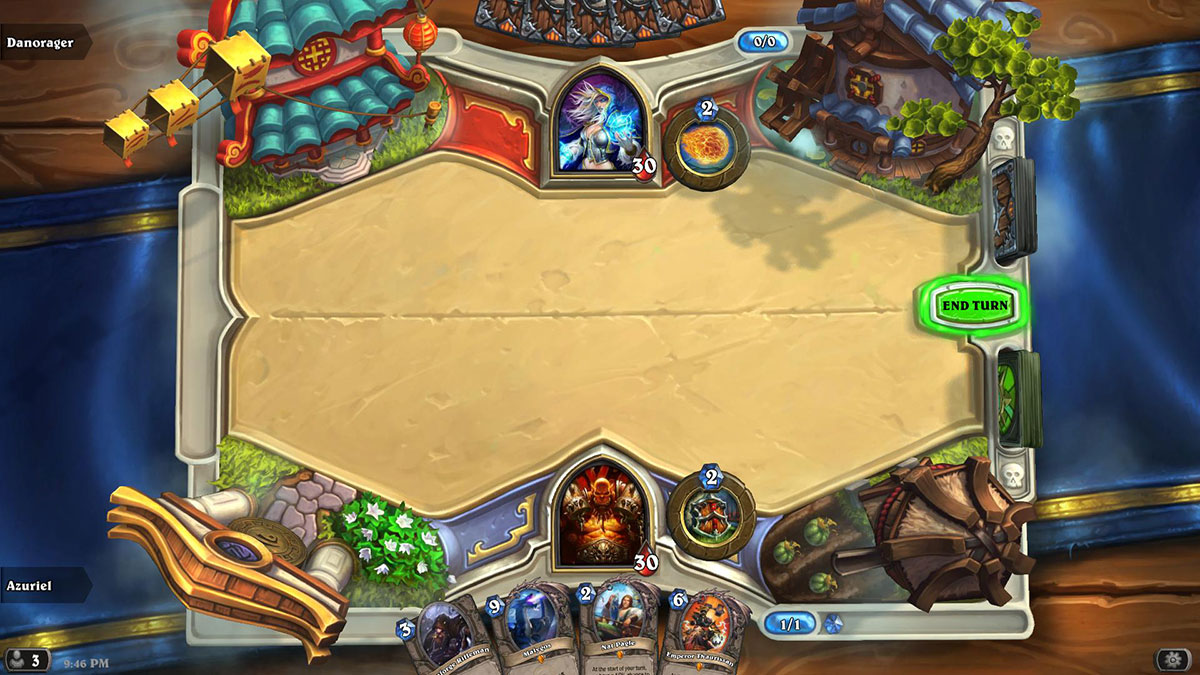
Spoiler alert: I lost this game.
One of the benefits to RNG is the very thing that people often complain about: RNG can determine games. Yes, there will be games that you lose to coin flips. Yes, it feels awful when you’re winning to suddenly fall behind through no fault of your own.
At the same time… randomness can make things interesting. Randomness can challenge you, present you with scenarios you’ve never encountered before, and allow you to overcome defeat through judicious use of probability. Do you play around that 10% chance that the Piloted Shredder pops out something that destroys your strategy, or do you play it safe? That sort of thing is (or can be) an interesting decision, and different people have different thresholds of comfort when it comes to percentages.
I mean, imagine the opposite case with no RNG. Losing from your opening hand. Or at least your only hope being that your opponent has as bad a hand as you do. It feels bad, man.
This is what this Brawl has felt like all weekend long – inevitable lingering losses. I played in the neighborhood of twenty games to complete my dailies, and I was never blessed with those same insane, on-curve openings that I would routinely experience the sharp end of. In most of the games, I would have been better off conceding in the first two turns. Could you imagine someone feeling the same in the Spell-Minion or Webspinner Brawl? Don’t get me wrong, you could get way screwed out of nowhere in those Brawls. But that’s the thing: it’s immediate. It’s more fun, even on the receiving end. At least in comparison to being behind, with nothing good to play this turn, and knowing you have a 99% chance of drawing into even more garbage the next turn.
There’s RNG and then there’s RNG. This is the latter, it sucks, and I hope Blizzard never does it again.
WoW Mercenary Mode
In increasingly typical WoW fashion, Blizzard came up with an incredibly convoluted solution to a rather easily solved problem:
In an upcoming patch, we’ll be adding a feature that allows you to act as a mercenary for the opposite faction in PvP. Whenever your faction is experiencing a long wait time to get into Ashran or unrated Battlegrounds, agents of the enemy faction will appear in your base in Ashran (Stormshield for the Alliance, Warspear for the Horde). These agents will allow you to enter Ashran or Battlegrounds disguised as an enemy player, and actually fight as the opposite faction.
When you compete as a mercenary, you’ll still earn all the same rewards you would have by winning or losing as your own faction (with the exception of faction-specific achievements). You’ll also have your race automatically changed into one appropriate for the opposite faction while you’re still inside the Battleground or Ashran. Perhaps most importantly, however, you’ll experience much shorter queue times, as our matchmaking system will be able to fill up groups much quicker!
To understand exactly how convoluted Blizzard is being, just read this bit of “clarification”:
On racials: The current intention is that the system swaps your race entirely, including your racial ability. We recognize that that puts Humans in a weird spot, so we’re looking into some options there that aren’t “spend your Honor/Conquest on a Medallion.”
It is difficult to imagine a worse implementation, even if I can kinda-sorta-maybe see why Blizzard is going this route. I mean, for better or for worse (hint: the latter), race matters quite a bit in WoW – if you are fighting a Forsaken character, you know that Fear will be less useful against them, while snares will similarly be less useful against Gnomes. This state of affairs makes the easier solution of “stay the same race, but change the character model” largely impossible unsavory. At the same time, it is exactly because racials are so important that this Mercenary implimentation is unwieldy. Not just for Humans turning into anything else, but Night Elf Druids losing Shadowmeld means they’ll lose a roundabout Vanish that might have been an important component of their character strategy.
I was going to add a further example of Blood Elf Paladins losing Arcane Torrent and becoming crippled Paladins, but let’s face it, only Alliance will be getting the Merc option anytime soon.
All of which is terribly ironic given the state of affairs just a year ago. Remember back in May 2014 when Blizzard was offering free Faction Transfers from Horde to Alliance to assauge queue times in the other direction? It makes me wonder if it wasn’t necessarily the Human racial that imbalanced the factions per se, but rather the instant level 90 that came with Warlords that allowed those on-the-fence Horde to seek greener racial pastures without committing dollars to a faction transfer.
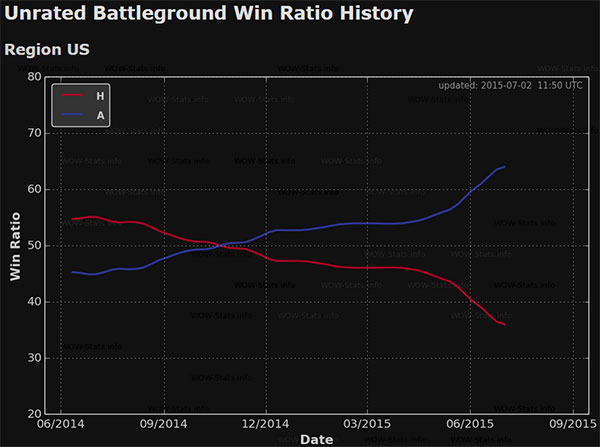
Hmm… I wonder what was released in November 2014?
In any case, in that same post I offered what I consider the best solution to the faction imbalance dilemma: same faction BGs. They already exist for Rated BGs and Arenas, no convoluted mechanical changes necessary. And as I also suggested in that post, if the whole lore and feel of the game is paramount – despite Warlords throwing it away with time travel and alternate universes – there is still an easy solution: sub-factions. It’s not Alliance vs Alliance, it’s Alliance vs Scarlet Crusade. Or Horde vs Twilight Cultists. Would it be weird for Scarlet Crusaders to be defending Frostwolf structures in AV? Sure, maybe. Although it shouldn’t be much more weird than random Alliance characters being faction-changed and defending the same thing under the Merc system.
Incidentally, that sort of highlights why the Merc system isn’t likely to work all that well. More specifically, it’s an “other guy problem.” Queue times suck, no question. But as an Alliance player for more than half the game’s history, let me tell you that instant queues that lead to inevitable losses aren’t all that great either. As an individual, you are better off letting other people utilize the Merc system to give you faster auto-wins. Same faction BGs literally even the playing field, taking away all advantage you might have had based on faction strength.
I dunno. Overall, I am a bit sympathetic to Blizzard’s plight in this regard. The rational design approach would be to get rid of the two factions altogether, as the concept of mutually exclusive factions like Horde and Alliance are quite a bit outdated and inevitably imbalanced. At the same time, there is so much pondorous prescedent, that the potential blow-back from angry veterans would be extreme. Most people are joking when they talk about hatred for Gnomes or whatever, but others are serious insofar as faction identity goes. Blizzard has amped up the faction differences for years and years – remember the motorcycle competition not too long ago? – so complete integration would be a more obvious shark-jumping event.
These halfway solutions though? It’s bad design. Imagine a year from now if the faction balance has shifted back to Horde, and Horde Mercs are entering BGs as Humans. Do they keep their PvP trinkets? Do said trinkets automatically transform into something else?
There are really only three elegant solutions to this problem overall:
- Change the Human racial.
- Disable all racials in PvP.
- Same-faction BGs.
The first is something that’s going to need to happen eventually, wailing and gnashing of teeth aside. It could be changed to either be slightly worse than otherwise default PvP trinket (+15 second cooldown), or Blizzard could be more radical and give the ability to everyone and then come up with something new for Humans. Remember, the Human racial used to be a button that increased the ability to see through stealth; which was still better than the garbage Draenei have been stuck with since inception, but nevermind. The second option of disabling racials is more of the nuclear option. But only the third solution is likely to solve the queue-time issue on a permanent basis.
Mercenaries are a cool concept, but “becoming the opposite faction” is clunky to the extreme, and unlikely to solve the underlying issues to any great degree. I mean, if racials are the underlying issue, getting Alliance to temporarily turn into Horde isn’t going to do anything – Alliance will still win on the aggregate power of their racials. This might be a stopgap queue solution, but it’s development time better spent on something more long-term. Like same-faction BGs.
Tavern Brawl
Taking a cue from Syncaine, I want to talk about Hearthstone for a second.
For a long while there, I had largely stopped playing Hearthstone. For one, I had gotten back into WoW (for two months) and thus did not have room in the game rotation for it. Then when I stopped playing WoW, I wanted to dedicate more time to clearing out my Steam backlog. Even when I did feel the inclination to play, I stopped myself, as I lacked the necessary drive to see what the metagame was up to, updating my decks, and so on. It all just felt like a vicious circle that ensured I wouldn’t boot the game up again.
Enter the Tavern Brawl.
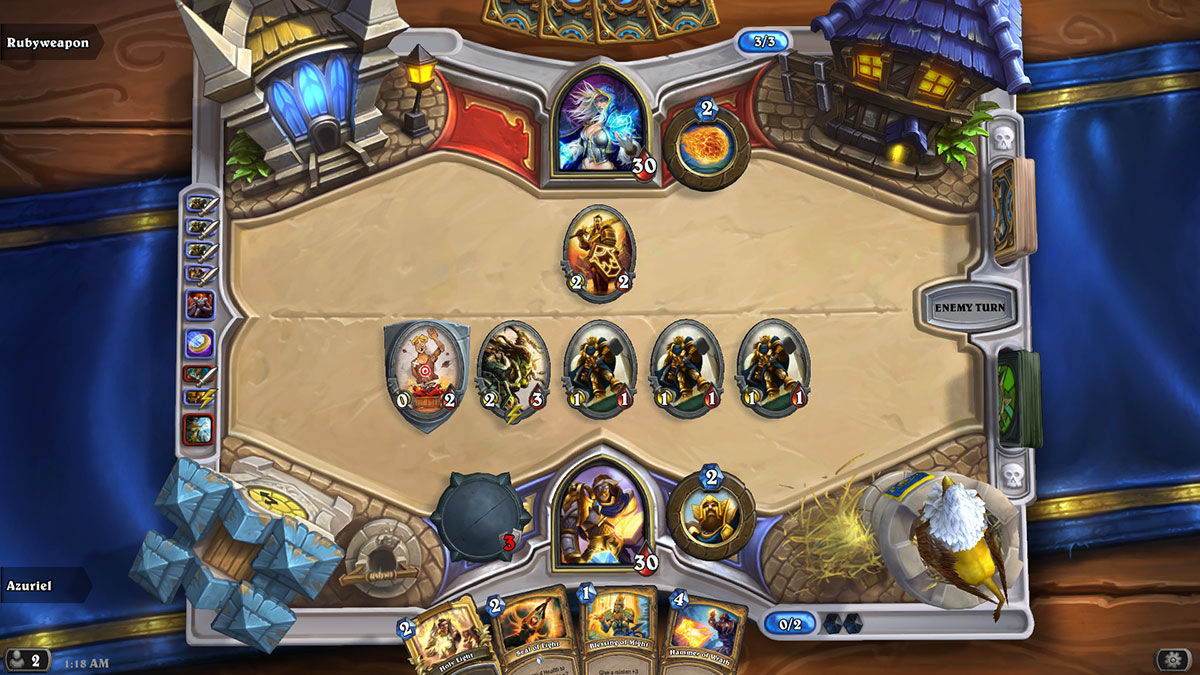
Blizzard fixed Warsong Commander just in time.
Released a little over a month ago, the Tavern Brawl is an additional game mode for Hearthstone that largely evens the playing field between veterans and newbies, whales and F2Pers, all in one brilliant swoop. Each week there has been a new Tavern Brawl with new rules, and each one lasts from Wednesday to Monday before leaving forever. Here are the ones so far:
- Ragnaros vs Nefarion
- All creatures grant a Banana (random de/buff card) on death
- Decks are 7 class spells + 23 Webspinners
- Spells summon a random creature of the same mana cost
For the first and third Brawls, the cards in your collection did not matter in the slightest. The second and fourth Brawls did sorta rely on your specific selection of cards, but the structure was such that you generally wanted to play the game way differently than normal anyway. For example, while you could bring a standard Ladder deck to the Banana Brawl, you could also achieve success by flooding the board with small creatures and relying on the Bananas to buff later creatures enough to close out the game. Similarly, the most recent Great Summonner Brawl rewarded decks just stacking 30 spells and no creatures.
The above isn’t the brilliance of Tavern Brawl though. The brilliance is in the reward structure.
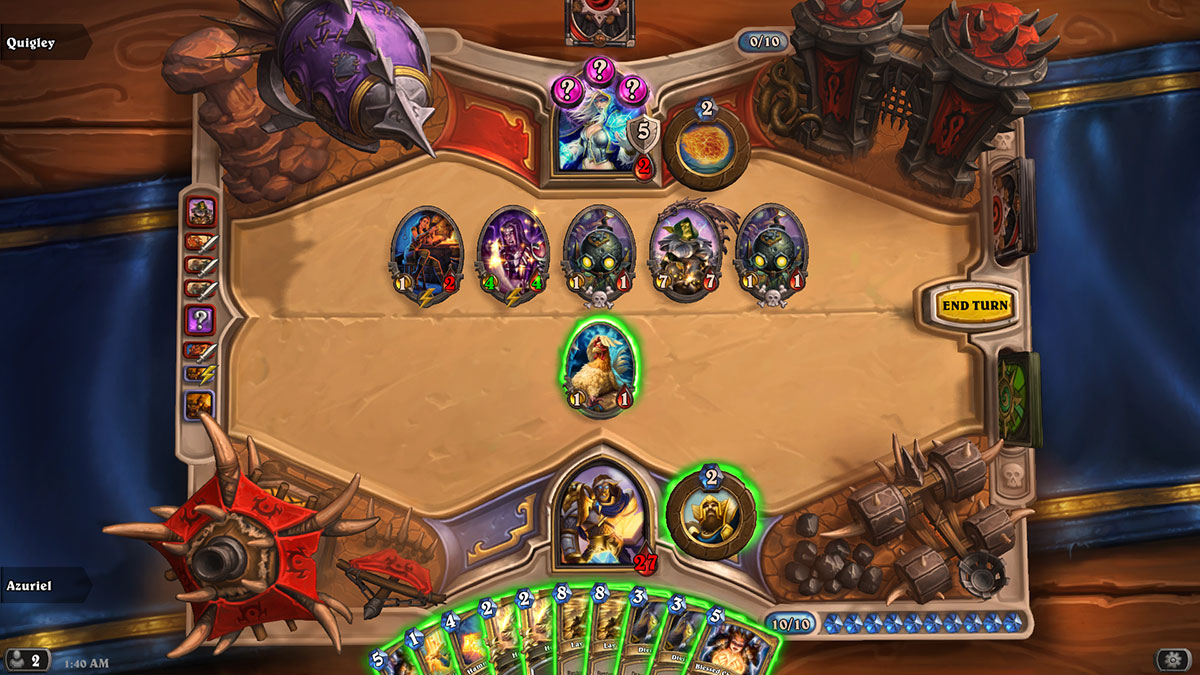
Surprisingly (or not so surprisingly), I lost this one.
To generate interest, Blizzard is giving away a free booster pack for the first Brawl win for the week. That’s fine, whatever. The real genius is that Brawl matches count for your Daily Quest completion. Including, incidentally, the 10g for every 3 wins passive quest.
Up to this point, if you had a Daily Quest to win five games as a Warrior or Paladin, you had to complete them in Arena, Ranked mode, or the even tougher Casual mode (tougher because matchmaking is determined by MMR instead of Rank). That can be stressful, as Hearthstone suffers from the same thing that affects all CCGs: net-decks. Which means your goofy theme deck or whatever is going to be routinely trounced by someone piloting the same well-oiled killing machine they saw a Pro use to hit Legend two days ago. Not even Rank 20 is safe from net-decks, especially since some veterans will tank their Rank down to 20 for some easy wins to complete their own Daily Quests or grind wins (which gives golden character portraits at 500 wins).
Tavern Brawl removes any performance anxiety you might have in terms of completing Dailies. Sure, you still have to win games for most quests. Yeah, most of the Brawls come down to rolling dice. But here’s the thing: rolling dice is fun. Losing to Face Hunter or Freeze Mage is considerably less so. If you don’t care about your Ranking on the Ladder, why should you be matched up with people who do?
Tavern Brawl plugs that gameplay hole so well, you’d swear it had a spot in the Amigara Fault.
Overall, Tavern Brawl is a huge win on every front. It auto-generates news on HearthPwn every week; it offers a wildly different game experience to break up the static Ladder grind; it makes Dailies fun; and it’s rewarding for new players and old. If this is supposed to be the New Blizzard we’re disappointed with, well… they still seem capable of being pretty damn clever with their game design.
No Country for Old Blizzard
One of the more… persuasive talking points when it comes to World of Warcraft is that there is an Old Blizzard and a New Blizzard. The Old Blizzard are the people responsible for the most successful MMO ever created, and the New Blizzard is everyone that is sailing the ship into icebergs. The evidence for such a dichotomy seems almost, well, self-evident:
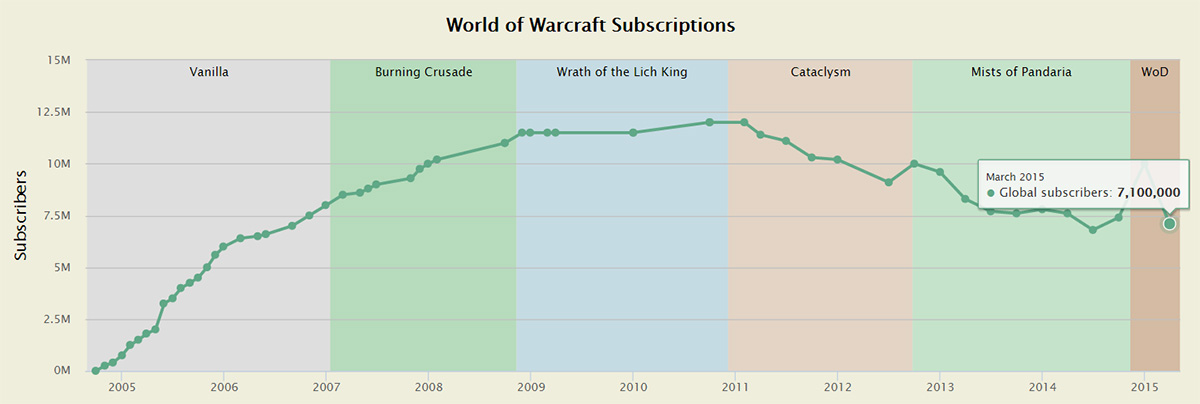
Whiplash.
Syncaine, who is much a fan of the two phrases, likes to point out that the breaking point between the Old and the New came in Wrath of the Lich King. From the graph, that is when WoW stopped growing. There are also a few philosophy changes that occurred during that expansion, such as the introduction of the fully automated LFD system, a full embrace of the Badge system, “bring the player, not the class,” and similar things.
Personally, I think Cataclysm marks a much more sensible breaking point, but nevermind.
As I said before, the Old Blizzard vs New Blizzard narrative is pretty persuasive. Which is rather unfortunate considering how it is factually incorrect: Old Blizzard never left. Below are the Credits screens from vanilla WoW and all the expansions, focusing on Lead Designers or Game Designers. I’m formatting it this way because it’s better than a table that won’t fit on the page:

Apologies for the formatting.
The source is the Credits screen accessed from within the WoW client (Character Select screen // Menu // Credits), which appears to be the only way to access the names. Luckily, you do not need a subscription to the game to access it. I typed it all by hand after taking screenshots, so feel free to check my work¹. Alternatively, just look at this Google Docs spreadsheet.
Notice anything? Like maybe all the duplicate names? In the spreadsheet, I highlighted anyone credited as a Designer in vanilla or TBC and who went on to be a Designer in any other expansion². Of particular note is the fact that of the 20 Designers of TBC, 15 of them went on to be Designers in Wrath. In other words, 68% of the design team of Wrath came from TBC. This includes Tom Chilton and Jeffrey Kaplan, both of whom were credited as Lead Designers in both expansions (and Designers of vanilla WoW besides).
Now, you may be thinking to yourself, “Rob Pardo is the missing link!” He was, after all, the Lead Designer of vanilla WoW and TBC before seemingly falling off the design map. Well, allow me the distinct pleasure of destroying your revisionist narrative dreams once and for all. See, Rob Pardo gave a rather sweeping interview back in 2009, almost at the midpoint of Wrath. The link points to the 1st page of that interview because it’s still that good, but money shots are on the 3rd page:
We had all these suppositions, and as the years went on and we had more and more experience living with WoW as a live game, we realized that they weren’t just truths. They might affect a hardcore minority, but the people we saw weren’t really as hardcore as we thought they were. If we reduced raids from 40 to 25, we saw, it makes it more fun. You might have some hardcore players who get upset, but keeping people out of content isn’t right for the game overall. We mellowed sometimes, and realized we were wrong.
The other piece is that the WoW playerbase is becoming more casual over time. People who were hardcore into MMOs, they joined us first, but the people we’re acquiring over the years are casual. They heard about the game from a friend of a friend, and maybe it’s their first MMO – maybe it’s their first game. The game has to evolve to match the current player.
And what did Rob Pardo think about the much maligned LFD system?
That segues in nicely to this question: Cross-server gameplay. It’s convenient, but do you think that it runs the risk of destroying server communities?
To be completely honest, [the Looking For Group tool] is a feature I wanted in the game when we launched the game. I was really unhappy when we didn’t have it when we first shipped, so it’s been 5 years coming. Maybe it wasn’t the number one thing I wanted in, but it’s definitely one of the top 5 things that I wanted in the game. It’s actually our third try at a proper LFG tool, and this one gets it right. With the Meeting Stones, we didn’t put enough attention into it, we just tried to jam it in, and people didn’t use it. The second tool, it ended up being compromised feature – we tried to cater to too many different audiences.
As for the community question, I used to … I think that 5 years ago, I would have answered this question differently than I would today. I was all about preserving the small realm communities, but already… Well, look at Battlegrounds, it’s a good case in point, because it doesn’t diminish social relationships that matter on a realm. Sure, everyone can bring up “that one guy” that they know, the ninja looter who stole his stuff. But I think your real community isn’t the whole realm, but it’s your guild and the friends you group with, and the cross-server LFG won’t undermine that at all. The Dungeon Finder – by the way, I think we just renamed it the Dungeon Finder last night – We designed it in such a way that it serves the need for guilds and groups and friends. You don’t have to always [join a Pick-Up Group]. If there are four guildies in a group who just need a fifth, they can do that. You can also use it if even you have a full five-person party.
Or, you can do it if you’re on your own and just want to run something, so I don’t think it diminishes it at all.
*mic drop*
…
*picks mic back up*
The argument I’m making is not necessarily that there hasn’t been a decline in quality WoW game design over the years. The argument I’m making is that there isn’t an Old Blizzard vs New Blizzard dichotomy. Tom Chilton has been at the head table every expansion. Jeff Kaplan was still Lead Designer for Wrath, and while he was absent after that, it was because he became the Game Director for Overwatch. Rob Pardo didn’t stick around for Wrath… as a designer. Instead, Rob Pardo became Executive Vice President of Game Design for Wrath and Cataclysm. And, don’t tell Syncaine, but Pardo is also Chief Creative Officer and Executive Producer of Hearthstone.
So who exactly is Old Blizzard again?
The alternative title I was going to use for this post was “the M. Night. Shyamalan Effect.” For those that might not know, he was the Director and Screenwriter to an enormously successful and critically acclaimed film called Sixth Sense – it is a cultural touchstone film still used in comparisons today. His follow-ups included Signs and Unbreakable… followed by 13 years of utter garbage. If you choose to believe in a narrative of WoW’s decline from quality, it is this comparison that fits. We would not say “Old Shyamalan vs New Shyamalan,” and we shouldn’t do the same with Blizzard.
¹ The one conspicuously missing name is Greg Street, aka Ghostcrawler. Greg Street is listed as Lead Systems Designer in Wrath, Cata, and Mists, and that role undoubtedly has something to do with design. However, the position doesn’t exist in vanilla, TBC, or Warlords, and there is another “Additional Designers” category I didn’t include either, simply because I can’t be sure what they do. In any case, they always say design is a collaborative process, so even if Greg Street is the cause of it all, that doesn’t get “Old Blizzard” off the hook.
² I have since color-coded all the designers who had carryover between expansions, and the results are interesting. For example, all but one of the designers from Wrath came over into Cataclysm, making up 91% of the final total. This is both baffling and makes perfect sense, assuming The Shyamalan Effect.
WoW Content Comparison
One of the relatively common criticisms of Warlords overall has been the lack of content in comparison to prior expansions. With 6.2 being confirmed as the last raiding tier and Blizzard rather adamantly opposed to creating new 5-man dungeons – despite them being “one of the greatest strengths of the genre” – I find it increasingly unlikely that a hypothetical 6.3 patch would include either. So what better time than now to offer some data to back up the claim?
For this part, I am taking all info from Blizzard’s own webpage:
| Raids (Boss) | Dungeons | BGs (Arena) | Other | |
|---|---|---|---|---|
| Warlords of Draenor | 3 (30) | 8 | 0 (0) | Garrisons? |
| Mists of Pandaria | 5 (43) | 9 | 3 (2) | 18 Scenarios 1 Race/1 Class |
| Cataclysm | 6 (31) | 14 | 2 (0) | 2 Races World Revamp |
| Wrath of the Lich King | 9 (54) | 16 | 2 (2) | 1 Class |
| The Burning Crusade | 8 (44) | 16 | 1 (3) | 2 Races |
If you found that I made a mistake somewhere in the calculations, let me know.
Otherwise… well, the results kind of speak for themselves, yeah? Cataclysm, hitherto the worst expansion in the game, was the closest to Warlords in terms of raid bosses. And yet it had six more dungeons, introduced two new Battlegrounds, two new races with entirely novel starting areas, and a complete revamp of the entire world. Perhaps not everyone necessarily wanted the old world revamp, but that still represented a rather insane amount of designer attention. The same sort of attention that has seemingly clocked out starting from Day 2 in Warlords.
Indeed, when you start thinking about it a bit deeper, the Warlords situation is even worse than first glance. The devs might have built eight dungeons, for example, but the dungeons were designed for no one to actually use them. I invite you to watch that mea culpa video from Ion Hazzicostas again, or perhaps for the first time. The TL;DR version is this reckoning:
Just to recap, Ion admitted to Blizzard screwing up Reputations, Apexis Dailies, endgame content in general, Professions, Garrisons, Dungeons, Demo Warlocks, requiring Disc Priests for serious raids, and that unfun ability rotations are intended.
I wanted to bring the above up again, just to point out that even if Warlords had a comparable amount of content to other expansions (it doesn’t), the base structure of the game denigrates the content that does exist. For example, suppose you want to include the ten Timerwalker Dungeons into the Warlords count for whatever reason, even though they are only actually available for a limited timeframe and aren’t even revamps of the originals. In that situation, I would argue that Warlords only has ten dungeons overall, since those ten Timewalker Dungeons are the only ones still relevant to anyone in the game (by dropping high-level gear). In contrast, even when you were progressing through ICC in Wrath, running Gundrak was useful in getting you Frost Badges and that much closer to a tier piece.
In a bizarre sense, Warlords is the result of Blizzard’s design working as intended. The devs have said for years that they wanted to get to a place where they could pump out faster expansions. And as players, we all agreed… but not to this. By “faster expansions,” we meant not waiting 12-14 months with zero content. Which, by the way, is still a very real possibility with Warlords.
6.2 is It
So the latest WoW news, delivered once again in a random-ass interview no one saw coming, dropped the following bomb: Patch 6.2 is the last raiding tier. It may very well be the last content patch in Warlords of Draenor too.
I… don’t really know what to say. I pretty much agree with Asmiroth’s points and concerns though. Especially the part about lack of content:
WoD will clearly be marked as the expansion with the least amount of content since launch. 2.5 raid tiers, 8 dungeons, no races, no classes, Garrisons, which killed cities, Ashran which put the final nail in open world PvP, a near-complete destruction of crafting. But we got selfies.
Items that were supposed to be in this expansion (from their Blizzcon): Shattrah raid, Bloodspire and Karabor (cities), Farahlon (zone/pvp). You’d think that would be at least 1 more content patch worth.
Warlords is both the most expensive expansion Blizzard has released and the one with the least amount of content. Even if Blizzard actually delivers on the promises they made in terms of faster expansions, the best case scenario here is… what? BlizzCon is in four months. Will the beta for the next expansion be released at that point? So are we looking at 10 months from now at the earliest?
Here is a more relevant question: is an expansion even what we want at this point? I didn’t even pay full price for Warlords and I’ll be damned if I’m buying another expansion box within a year after this absolute clown show. I say this as a person otherwise sitting on nine (9!) months worth of WoW Tokens and enough gold to buy a dozen more.
By the way, one of the items frequently omitted when talking about all the ways Blizzard fucked up this expansion is arguably one of the most important for casual players: PvP faction balance. This video by Asmongold sums it up. Or perhaps this single picture:
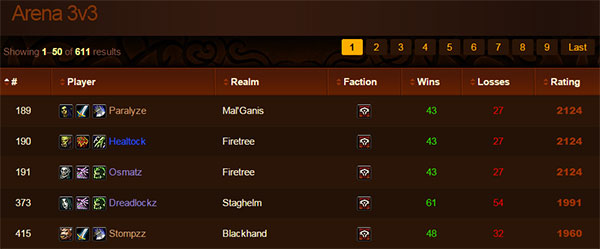
Current as of 7/2/15.
What you’re looking at is the 3v3 Arena leaderboard for Horde. In other words, while Asmongold was slightly off in his video, the very top Horde players in the US are sitting beneath 188 Alliance players. Is it just a complete coincidence that the best PvP players in WoW have all up and faction transferred to Alliance after a decade of Horde dominating basically everything? The answer is clearly no. And at this point, even if Blizzard went forward with a “radical” change like disabling all racials in rated PvP, there is no real reason those top players would pay the blood price Blizzard asks to transfer back.
If you think 3v3 Arena doesn’t have much of an effect on overall balance – and admittedly, the 5v5 numbers are a lot closer – then take a look at this:
How the tables have turned.
So if you have been pleasantly surprised with your Alliance BG experiences lately, the above is why. It can certainly feel good to finely have the shoe on the other foot, but Alliance has taken the Horde’s shoes, socks, and pants, and are now a mile away. Racials likely don’t have much effect in the aggregate when it comes to random BG outcome, but as always, perception is reality. And the reality is that the top Horde players have left the faction, which is discouraging, which then depresses the remainder, which causes further PvP losses, which culminates in a death spiral.
I have no idea how Blizzard can even begin to fix this. Not that I have much faith in their ability to fix anything at this point.
Reviews: Ori and the Blind Forest, The Swapper
Game: Ori and the Blind Forest
Recommended price: $10
Metacritic Score: 88
Completion Time: ~8 hours
Buy If You Like: Journey, Metroidvania, Action Platformers

Random gameplay screenshot, or million-dollar painting?
The simplest summary of Ori and the Blind Forest would be “Journey Metroidvania.”
After playing through the equivalent of the opening scene from the movie Up, you are thrust into the controls of Ori, a sort of cat creature as she (?) begins a quest to return life to the Spirit Tree. While the gameplay can be described as Metroidvania, I consider it more along the Action Platformer scale – certainly the majority of the challenge of the game comes from the platforming elements rather than defeating enemies. As you explore the map and solve various platforming puzzles, you eventually unlock additional movement abilities such as Wall Jumping, Double Jumps, Floating, etc, which allows you both access to brand new areas, and new corners of old spaces.
One thing that shocked me while playing was the difficulty. For as lush and beautiful as the game looks, Ori spares no punches with insta-kill mechanics. While the player can create save locations practically anywhere (at the cost of a renewable resource), the onus is on the player to remember to do so. Spend 15 minutes backtracking to grab that HP power-up, only to get squished by a falling stone trap? Well… I hope that power-up is now worth 30 minutes of your time. Indeed, later stages of the game become absurdly difficult with 2-3 minute (or longer) “chase” sequences in which any mistake is punished with death, forcing you to redo the entire sequence. Reminded me of Super Meatboy in that respect.
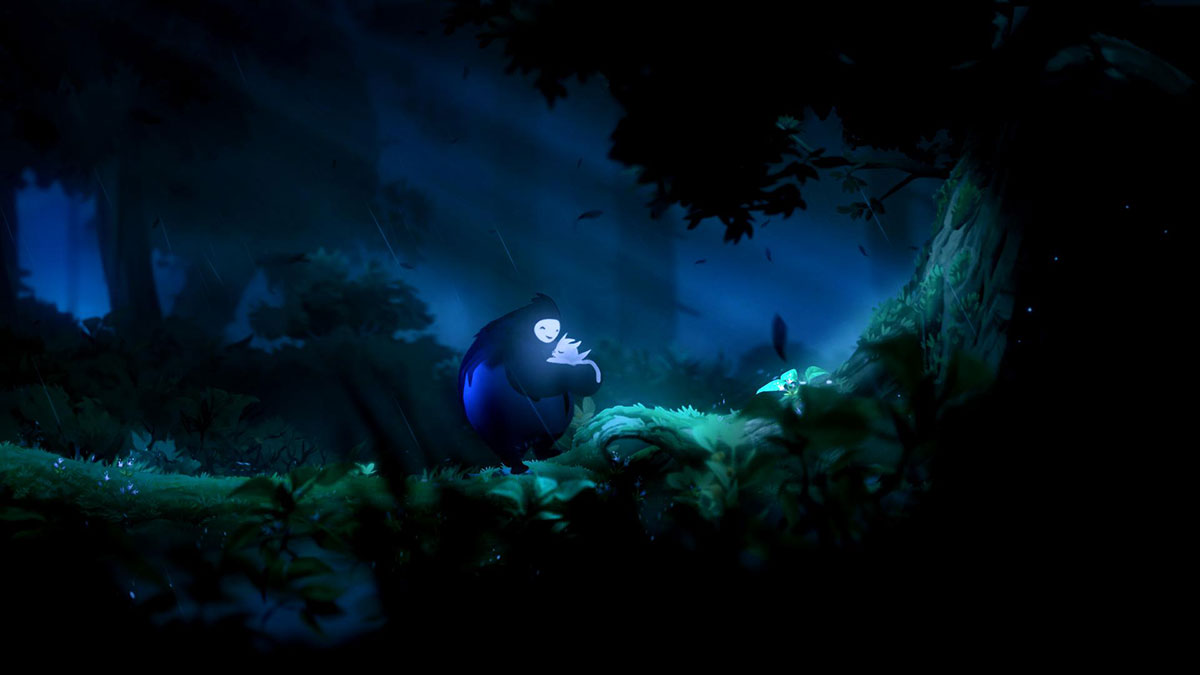
How I felt playing the game.
All that being said, though? I absolutely loved my time spent in Ori. The game is a visual feast, the soundtrack amazing, the animation fluid, and the gameplay interesting. Indeed, one of the movement unlocks later in the game – called “Bash,” which was a complete misnomer – single-handedly took the game from good to great in my eyes; the move allows you to grab enemies or projectiles, pause time, and then rocket yourself one direction and the grabbed object in the other. You end up needing to use Bash a lot by the endgame, but it was fun enough that I would play an entire game based around just that mechanic in the way Ori used it.
Highly recommend picking the game up next time a Steam sale or Humble Bundle comes along.
___________________________________________
Game: The Swapper
Recommended price: $5
Metacritic Score: 87
Completion Time: 5 hours
Buy If You Like: Puzzle Games, Unique Premises, Questioning the Nature of the Soul
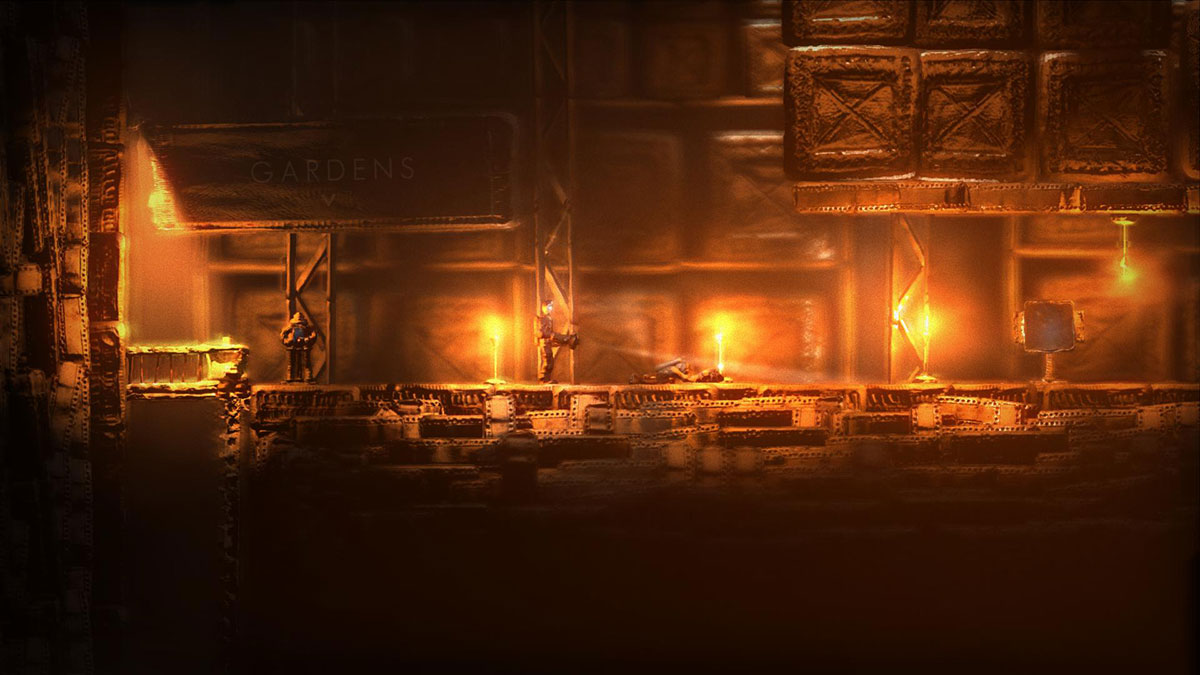
Gazing upon the crumbled remains of myself… and I feel nothing.
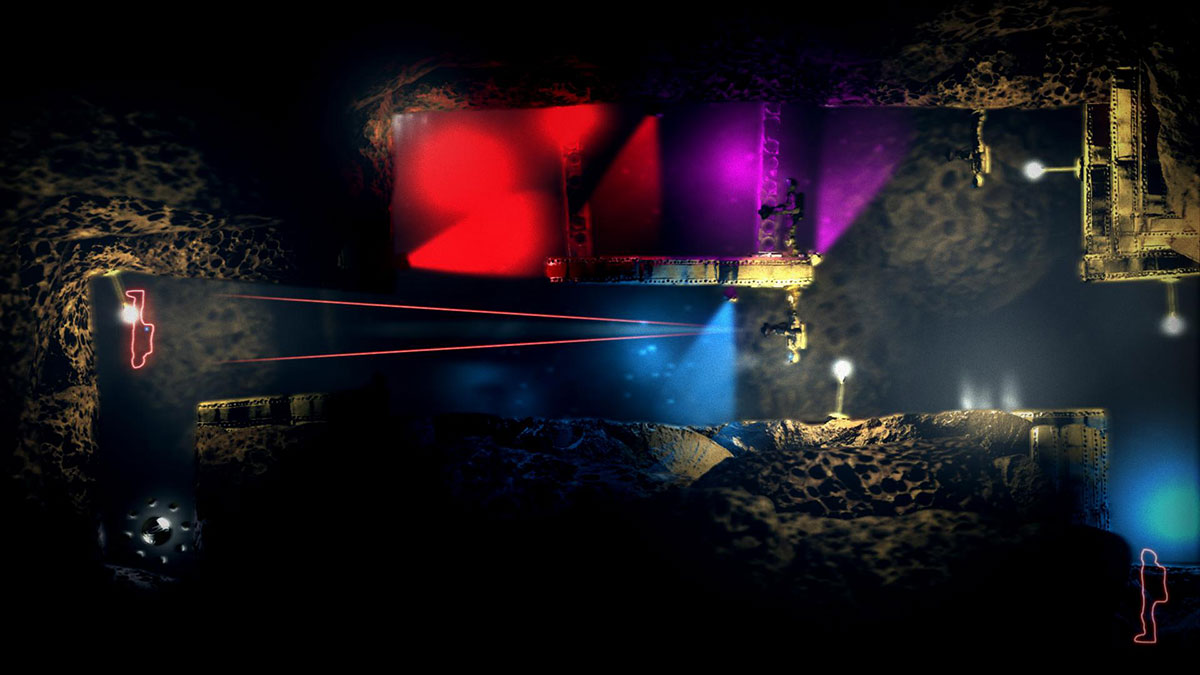
The Swapper is one of the more innovative puzzle games I have ever played. Not so much exactly for its puzzle mechanic – you create clones that mimic your actions, like that level in Braid – but the way in which the mechanic is intertwined with the narrative is unparalleled.
Things are mysterious and surreal and dark from the very start, as you make your way from being stranded on a mining colony to back on a seemingly derelict spaceship. In such a setting, finding a gun that creates clones of yourself doesn’t seem that big a deal. Which then leads you to start being a little cavalier with your clones, as you leap off ledges, slow time down to create a clone already standing on the rapidly approaching floor, then “swapping” your soul between the two as your now-empty original self smashes itself to pieces on the bulkhead below. You can do the same thing in reverse, creating a vertical body of soul bridges, each clone creating one more at the height of its vision, with all but the last falling to his/her death, their last moments spent walking in the void, just as you do, towards a door they shall never reach.
The Swapper is precisely the type of game that inspires sentences like the previous one.
It’s sad that you can’t appreciate exactly how awesome I am in this moment.
The puzzles themselves straddle closely the “too clever for their own good” side of the scale, and a few require more reflexes than I thought entirely necessary. The primary impediments are the different colored lights, which impede clone creation, soul swapping, or both. Beyond that, the majority of the time you are creating, killing, and scratching your head over how to arrange clones on the correct floor switches. While it might sound monotonous, again, the overall mood and narrative absolutely sells the entirety of the five-hour game.
Given the above, I must both recommend that The Swapper gets played, but at a discount. It’s worth a spot on your wishlist in time for the next sale.
This Peeve of Mine: Blind Choices
It is amazing how many games you can work through when you aren’t playing an MMO. For example, I cleared through Metro: Last Light, StarCraft 2, Ori and the Blind Forest, The Swapper, Wolfenstein: the New Order, and am currently plowing through This War of Mine. All in the last two weeks. Granted, many of those all had completion times below ten hours, so perhaps that isn’t too surprising, but nevermind.
While I am not entirely done with This War of Mine yet, I did want to talk about it a bit. Specifically, about how the game has one of my least favorite “features”: blind choices. Or maybe “blind choices” is not entirely the correct term, but rather (unintentional?) obfuscation.
I first complained about blind choices nearly four year ago:
Perhaps I am simply too far down the metagame hole at this point, but how can anyone consider a choice with unknown consequences as meaningful? I mean, fine, all decisions and choices we make technically have unforeseen consequences. But these game designers are literally giving you nonsense to choose between on top of said unforeseen consequences. I don’t consider the choice between door #1 and door #2 to be meaningful at all – I may as well flip a coin or roll a die for as much thinking as it requires.
The game I was referring to at the time was the original Witcher, when the game asked me which quest reward I wanted to choose. While the game didn’t hide the the rewards themselves, the relative utility of each choice was very much in question. A book about vampires, your own hut, or the Wreath of immortelles? I chose the latter because italics, and it allowed me to easily bypass a long, involved quest.
Despite having chose the one with the most overall utility, I did not feel particularly clever because the choice itself had no real meaning. Do we praise the stopped clock for being right twice a day? Avoiding a designer trap only highlights the fact that the designers included a designer trap in their game in the first place, which automatically lowers my view of the overall design. It’s a cheap gimmick – one that is overcome only with knowledge that a player obtains after the choice is made. “Giving players the choice to fail” really just means the designers were unable to give players two or more good (or bad) options to choose between.
This concept get a bit murky when it comes to the roguelike genre though. Many roguelikes specifically include things like colored potions that have randomized effects on each playthrough. Sometimes you can minimize the mayhem such potions can cause, by being at full health and in a safe place before sampling the rainbow of colors you have collected. Such testing technically involves risk assessment and valuing the odds, which are pretty high-brow player skills. I was fine with The Bind of Isaac’s random pill effects, for example, largely because everything else about that game was so random it almost didn’t matter. When you could find out early which pills did what though? It sets you way ahead of the curve.
This War of Mine is more or less a roguelike. While the loot you can scavenge is random, it is also random which “scenario” you might encounter when going to a new location. This is generally fine. Roguelikes need randomness to maintain replayability in what otherwise would be short playthroughs. What I found less fine was when I realized that you didn’t need a lockpick to open locked doors, you simply needed a crowbar. That “makes sense” in a sort of logical way, but not always in a game logic way, especially not in a game that also features vegetables that grow to maturity in four days under a heat lamp.
Should the crowbar’s in-game description mention it opens locked doors? I would say yes. There is still a meaningful choice between crafting a lockpick over a crowbar (specifically the amount of noise it generates) when you know the full depth of information about the two. At the same time… well, Minecraft certainly doesn’t give you all the information you might need for a successful¹ run. I haven’t played it in a while, but the last time I did, I knew there was no way I would have ever guessed the correct configuration of materials necessary to craft a bow or shears.
Examining my discomfort in more detail, I suppose it comes down to wasting resources when outside knowledge is readily available. I had no problem playing Don’t Starve for hours and hours despite dying and losing all progress to the most mundane of causes. Murder Bees are serious business, after all. But chasing down the mats to build a blowgun and darts in what ended up being a nigh-useless tool? That pisses me off. I will happily fail in service to muscle memory, even if I lose progress along the way. I will not, however, be so keen to fail because I didn’t read the Wiki first.
There is a distinction between the two that I can feel, even if I cannot enunciate it clearly.
¹ With what constitutes success in Minecraft being left undefined.


Moving and Ownership
Jul 24
Posted by Azuriel
All this week I have been in the process of packing up my apartment in preparation for a move in meatspace. It is just a move across town, and there isn’t too much stuff, but the process always feels exhausting. Packing up the essentials feels really easy, but then you get to all the miscellaneous stuff that you hardly ever use, but would likely miss if it were discarded. For example, how many of your pots and pans do you use on a weekly basis? Do I really need a colander, much less two of them?
What really struck me though was when I packed up my PlayStation 2. Both the system and the games didn’t take up all that much space, but I pretty much turned on the system once in the last year, during an abortive attempt to play FFXII. I kept the system around because at some point console designers decided backwards compatibility wasn’t a priority, and why get rid of it if I still have all my classic PS1 gems?
It was at that point that I realized that I didn’t really need these things anymore. In fact, why I had physical media of any type was a hold-over from what feels like ages ago. I am pretty sure that all the PS1 games I own are also on the PlayStation Network, or even on Steam. All the games and systems and movies I own could easily fit on the external HD the size of my hand. I should be finished packing by putting on a backpack, minus that behemoth of a PC I use.
At the same time… it’s hard. First, you have to fight against the feeling of conservation. Why throw anything away? It’s something that still has use, still has value, albeit diminished by the passage of time. Second, there are all the what-if scenarios and general optimism. Maybe I’ll suddenly find myself on a retro-gaming kick, yeah? Playing old games in 640×480 resolution blown up on my wall via 100″ projector screen… that’s the life. And what if I suddenly drop everything and go teach English in Japan? Surely I’ll want to pack… err… uh.
The interesting thing to me about this whole experience is my evolving concept of ownership. Back in the day, I fought hard against “all-digital media” and the notion that nobody ever really owned anything, they just licensed it. I was there jeering at Microsoft along with everyone else during the Xbone E3 reveal. The curbing or removal of the secondary game market was an existential threat in my mind.
Now? In the middle of packing up my life, I feel I’d be better off owning less. I’m not going to play Kagero: Deception 2 again. Or any of the Tenchu games. Even if I felt like I had the time and inclination, it’s tough going back to anything less than 720p at this point. The game discs might have retained some value – I certainly made a few hundred dollars selling my SNES classics a few years ago – but is that value worth the time and eBay headaches? When I finish a Steam game, I delete it and then set the Category to “Finished,” which I keep minimized. I don’t think I have ever gone back and played any Finished games.
Games are largely experiences and experiences only. Some have replay value, sure, and others (like MMOs) can keep you entertained and experiencing them for weeks/months/years to come. The vast majority though? One and done. The more time passes, the more I feel these accumulation of games are no different than old newspapers; the hoarding of which is something less deserving of a nostalgic nod and more of a questioning eyebrow.
I’m going to lug around my box of historical gaming debris this time around – there’s no sense to unpack what I’ve already packed – but the odds are good that this will be the last trip they make in my possession, one way or another. And I am becoming increasingly okay with that.
Posted in Commentary
7 Comments
Tags: Digital, Meatspace, Moving, Ownership, Steam